Volcano·Guide
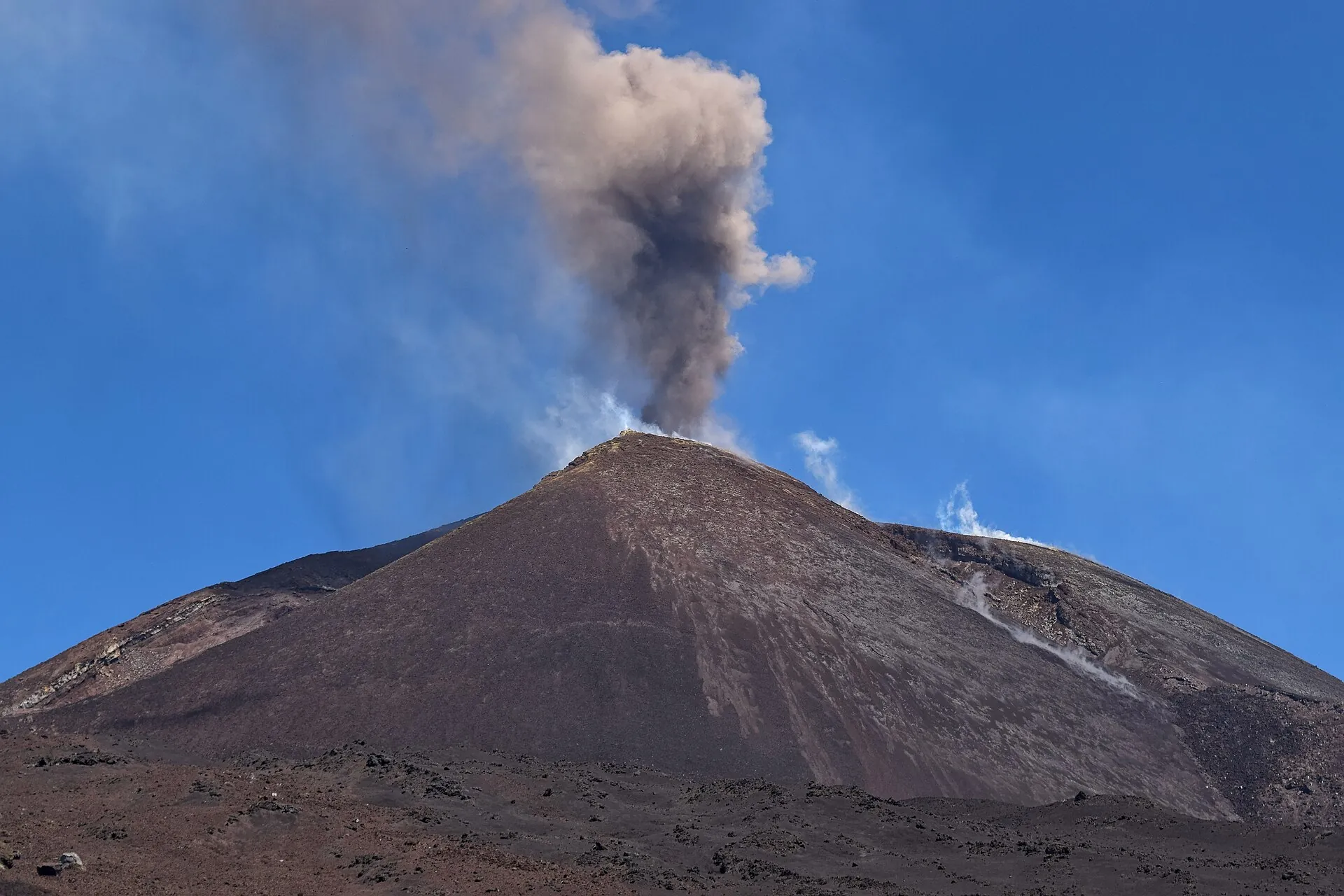
Etna's Southeast Crater with a plume of steam

Volcanoes › Mount Etna

Mount Etna Webcam

Seven cameras watch the mountain around the clock. Three of them can see in the dark.

Photo: The Cosmonaut · CC BY-SA 2.5 ca

The situationMount Etna live: what the mountain is doing right now

Before you read the images, here is the official rating from Italy's civil protection department. We fetch it automatically every morning. It tells you how to weigh what the cameras show. For the access phase, the aviation color code and the eruption record since June, see Mount Etna eruption.

Yellow
Alert level for EtnaCivil protection alert level (green/yellow/orange/red) · checked on 2026-09-25 · Dipartimento della Protezione Civile – Presidenza del Consiglio dei Ministri (CC BY 4.0)

The camerasEtna live cams: seven views of one mountain

All cameras belong to the Istituto Nazionale di Geofisica e Vulcanologia, Catania section. They were set up for monitoring, not for the view, which is why they show the mountain from angles no travel brochure has. A code ending in V is a visible-light camera; one ending in T is a thermal camera. You can tell them apart at a glance, because the thermal images carry a temperature scale.

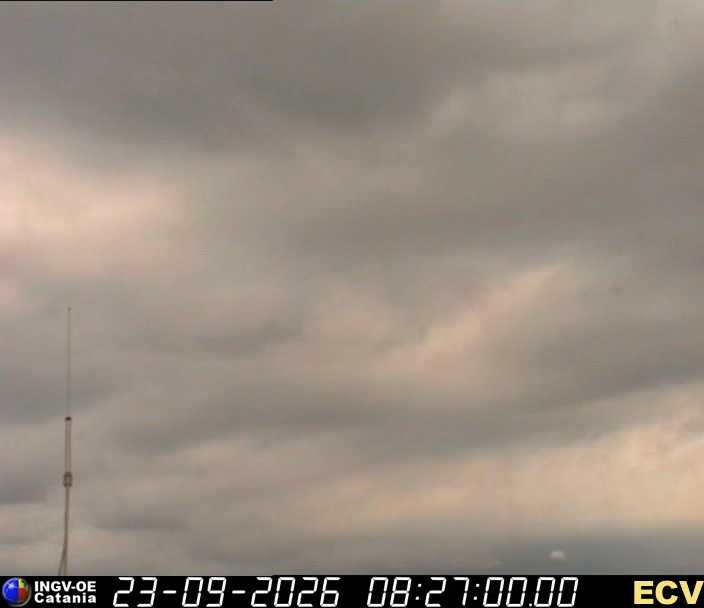
From Catania, looking up at the mountain
From Catania, looking up at the mountainThe widest view: the camera at INGV headquarters in Catania shows the whole cone from about 19 miles (30 km) away. If there is an ash plume, this is where you see it most clearly, and where you can tell which way the wind is carrying it.The capture time is printed in the image, in UTC · INGV Osservatorio Etneo (CC BY 4.0)
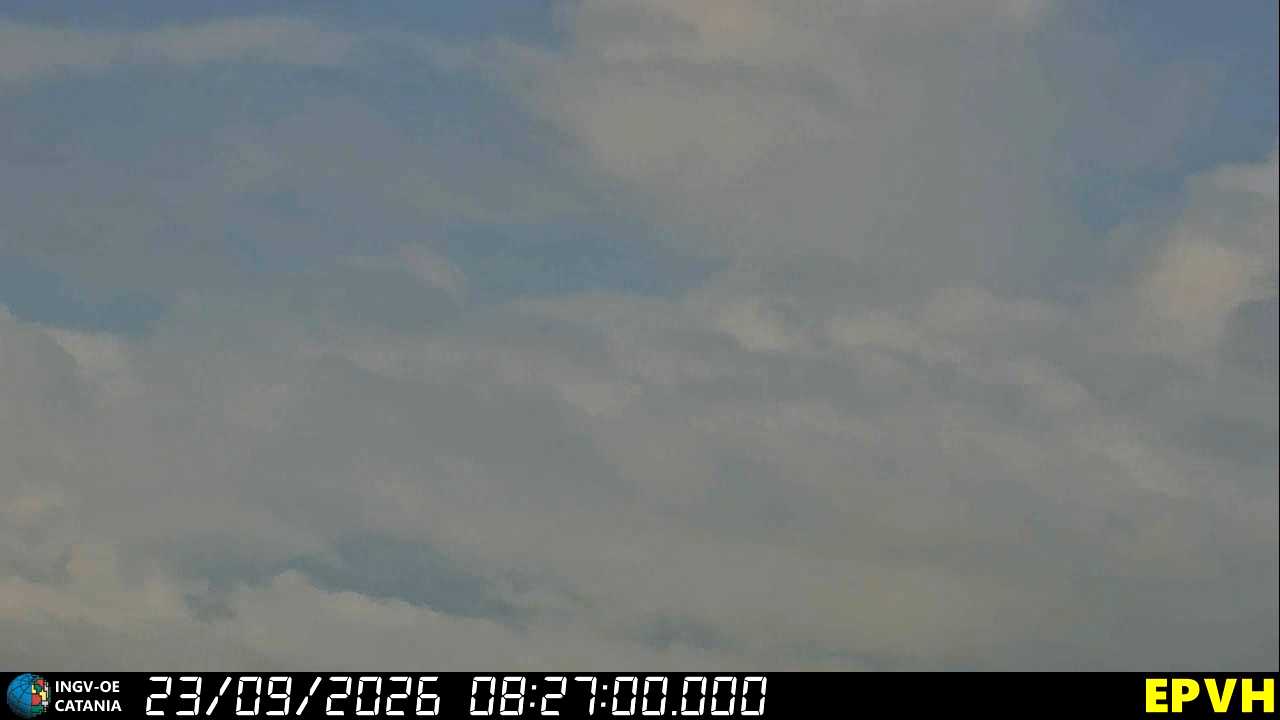
From the Montagnola, looking at the summit craters
From the Montagnola, looking at the summit cratersThis camera sits at 8,530 ft (2,600 m), already in the summit zone. It shows the craters from close range. When the mountain steams, it shows up here before anyone in Catania notices.The capture time is printed in the image, in UTC · INGV Osservatorio Etneo (CC BY 4.0)
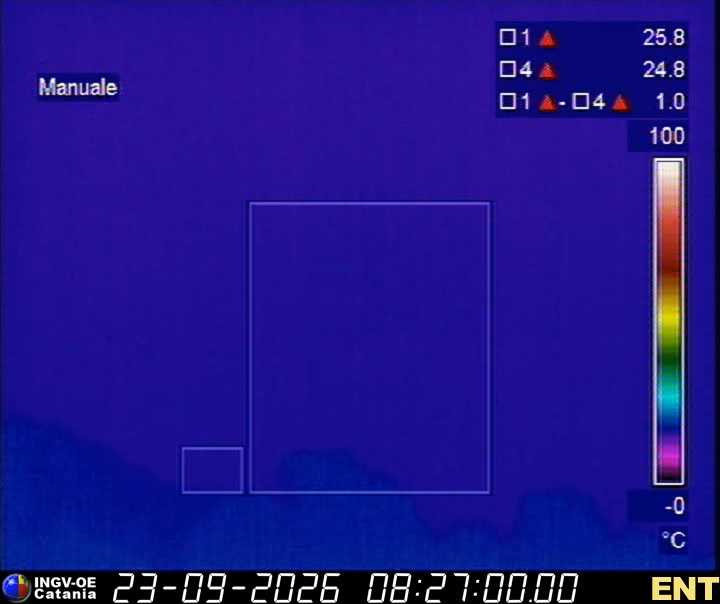
Thermal image from the Montagnola
Thermal image from the MontagnolaThe same field of view as a thermal image. The scale on the edge runs in degrees Celsius: fresh lava and hot gas glow bright, cold rock stays dark. At night and in fog this camera sees more than any regular one.The capture time is printed in the image, in UTC · INGV Osservatorio Etneo (CC BY 4.0)
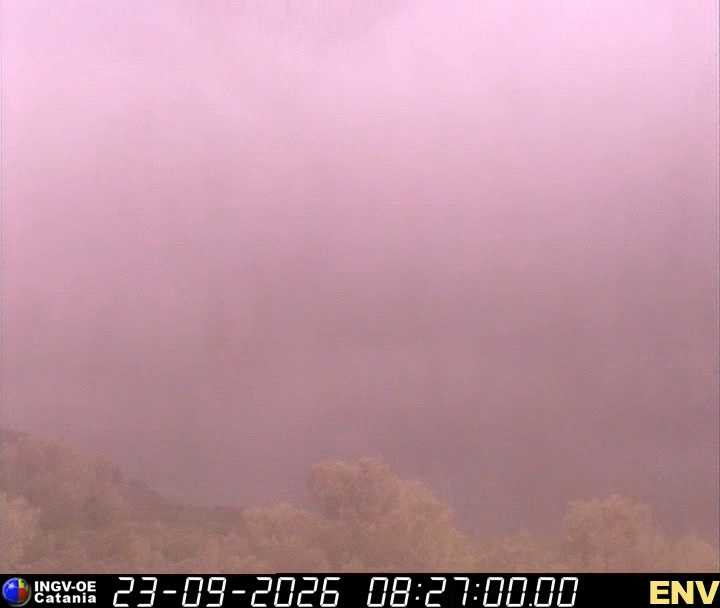
From Nicolosi, the south side
From Nicolosi, the south sideNicolosi sits on the southern flank; the road to the cable car starts there. This image shows what visitors get on a given day: whether the summit stands clear or whether the cloud you will later drive into already hangs at mid-height.The capture time is printed in the image, in UTC · INGV Osservatorio Etneo (CC BY 4.0)
Thermal image from Nicolosi
Thermal image from NicolosiThe thermal camera at the same station. It is the reason INGV still knows what is happening at the summit at night and under cloud cover.The capture time is printed in the image, in UTC · INGV Osservatorio Etneo (CC BY 4.0)
Pizzi Deneri, the north side
Pizzi Deneri, the north sideFrom the volcanological observatory at 9,190 ft (2,800 m) on the northern flank. Visitors rarely see this side, because the access roads come from the south.The capture time is printed in the image, in UTC · INGV Osservatorio Etneo (CC BY 4.0)
Bronte, the west sideThe view of the mountain from the west.This camera is not returning an image right now.

Still images, not live streams: we fetch them ourselves every 30 minutes and store them here, so no request leaves your browser for another server. Times in UTC.

Reading the imagesWhat the Etna volcano live camera shows, and what it does not

A cloud is not ash

Etna often sits in ordinary cloud. An ash plume is gray to brown, has a sharp edge at the crater and drifts with the wind in one direction. A cloud has no source in the image.
At night, only the thermal cameras help

Between sunset and sunrise the regular cameras go black. The thermal cameras keep going: whatever is hot glows, light or no light.

The time stamp is UTC

The images show Coordinated Universal Time. Sicily is two hours ahead in summer and one hour ahead in winter.

The images come from INGV Osservatorio Etneo and are licensed under Creative Commons Attribution 4.0 (Note Legali on ingv.it). We fetch them ourselves every 30 minutes and store them on our server, so viewing this page opens no connection to outside servers. If a camera goes down, a note appears in its place. That is normal at INGV; the stations stand in high mountain terrain.

Sources · accessed on 23.09.2026