Volcano·Guide
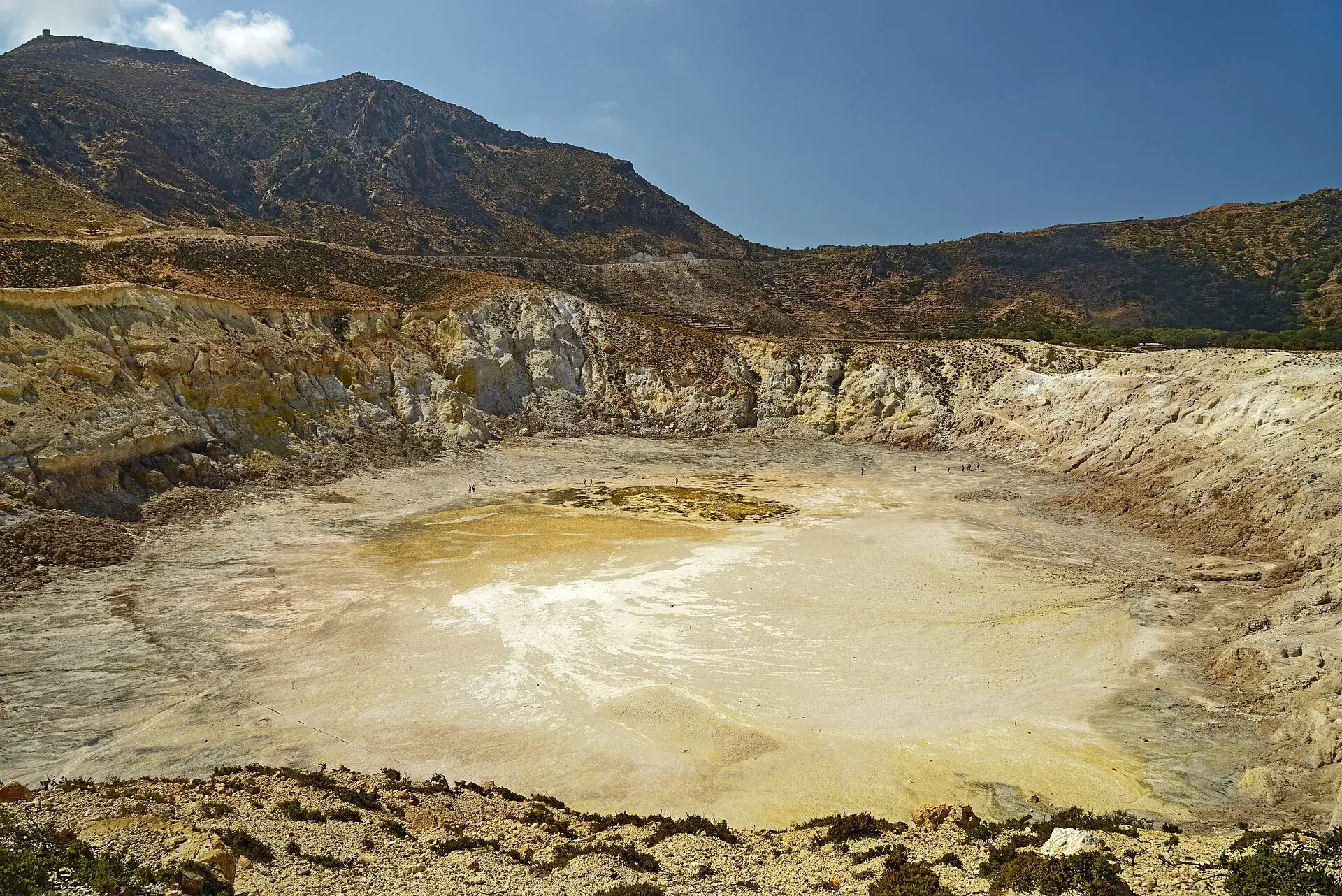
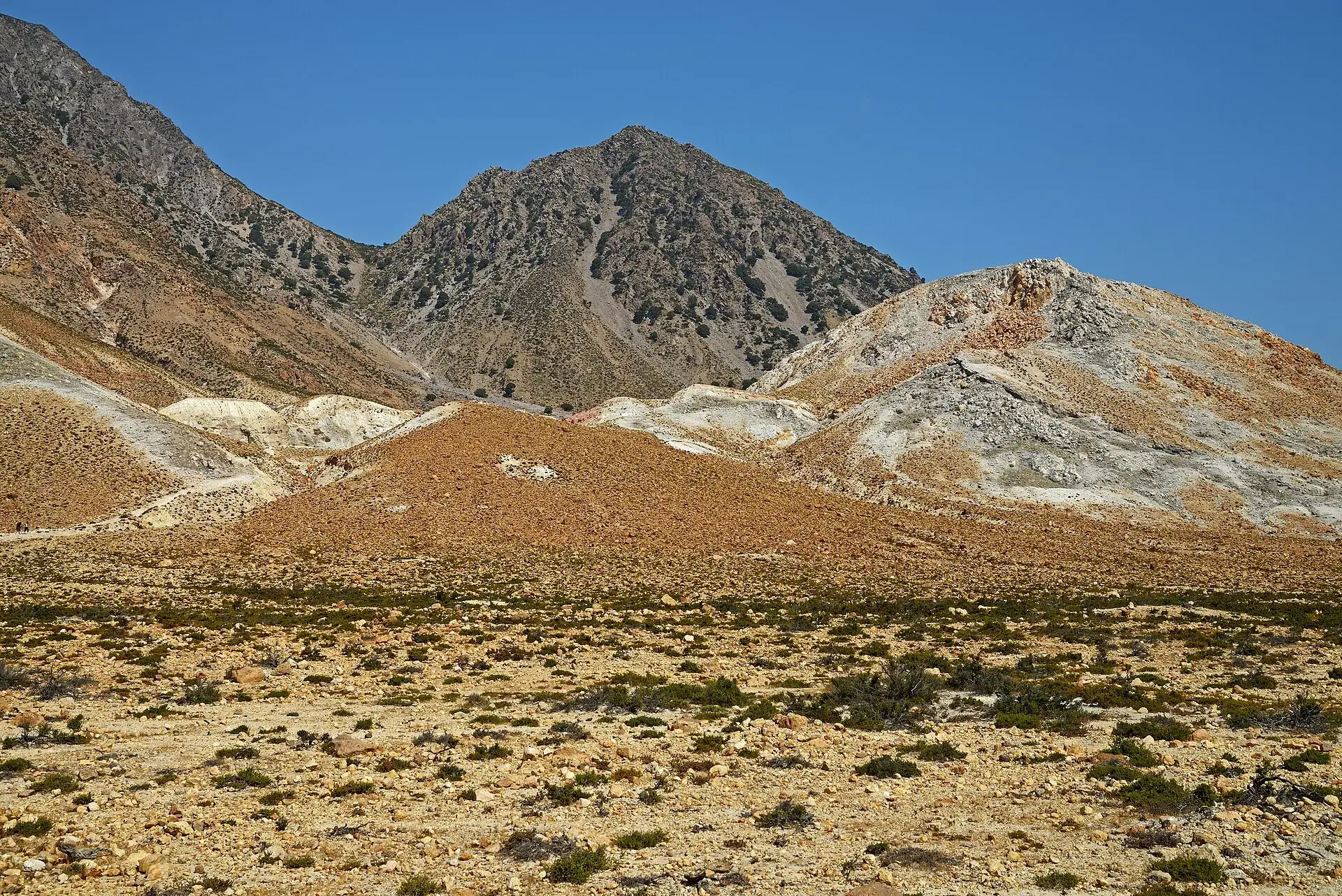
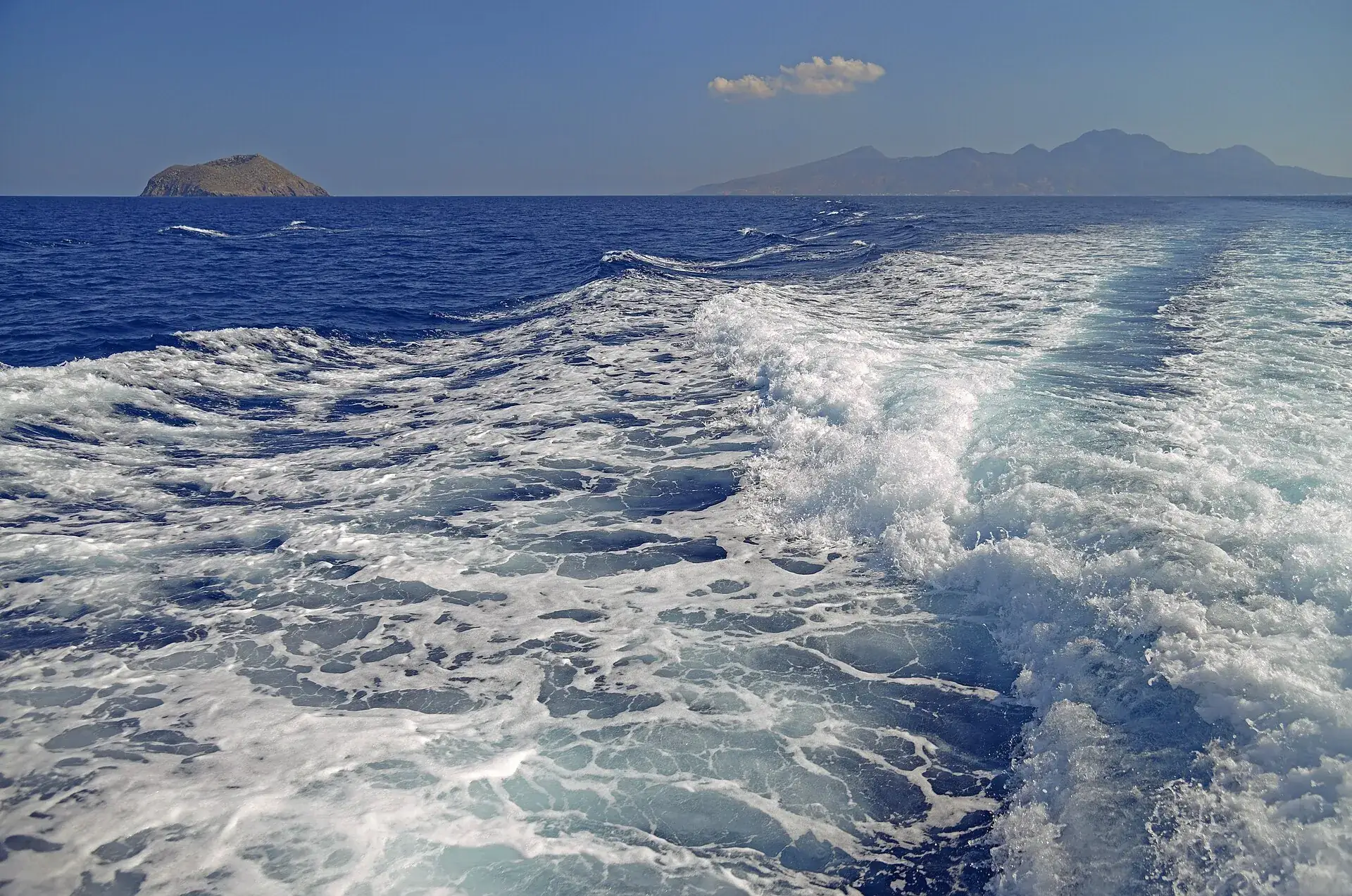
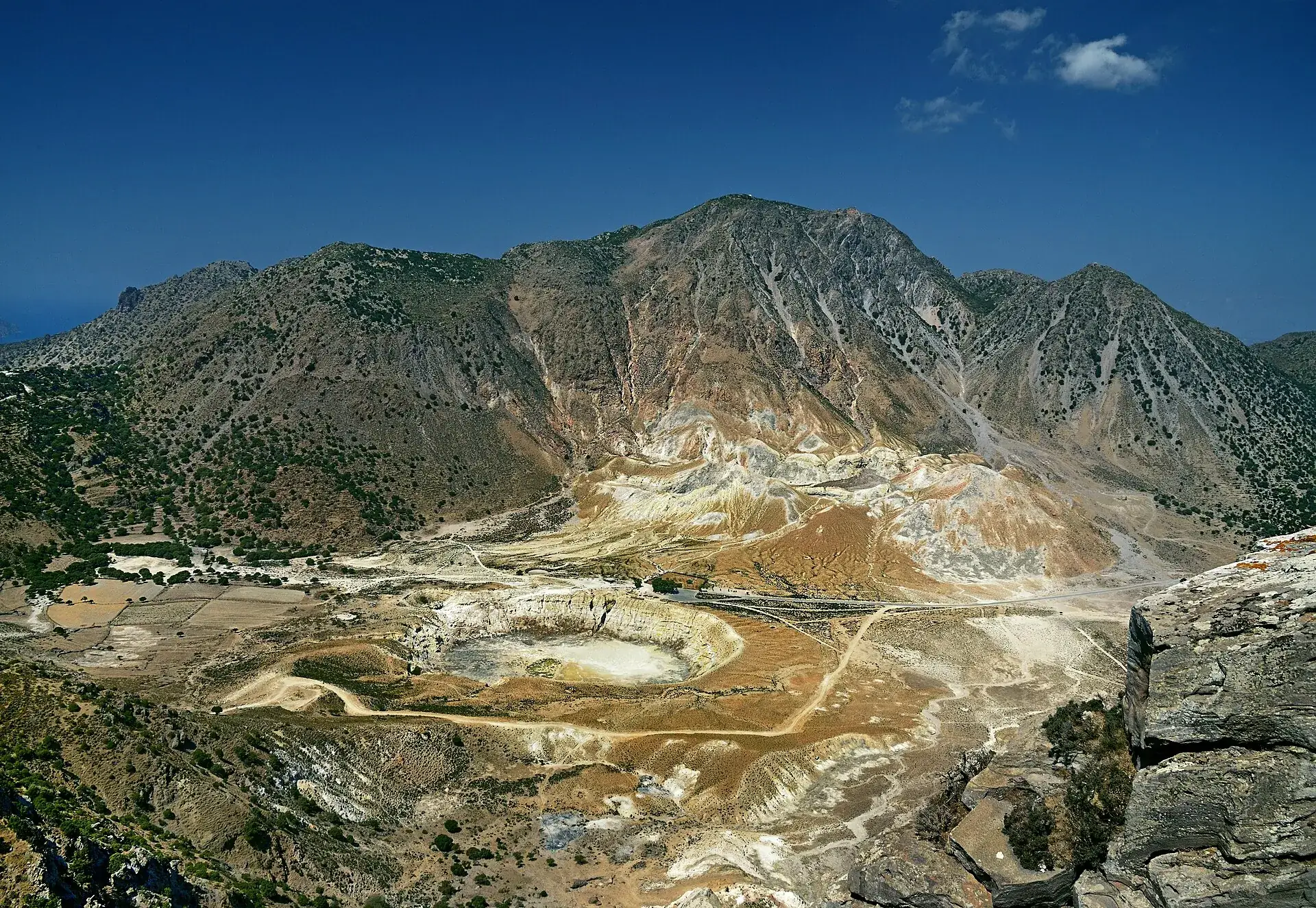
Wake of an excursion boat in the Aegean, on the horizon the islet of Strongyli and the mountains of Nisyros View from the village of Nikia into the caldera of Nisyros with the pale Stefanos crater in the middle The Stefanos crater on Nisyros from the northeast rim: a pale, flat crater floor with yellow sulfur patches, steep walls all around

Nisyros

From the boat, Nisyros is just a dark cone in the sea, an hour from Kos.

From Nikia you look into the caldera – and at the pale patch in its middle.

Down at the rim it smells of sulfur and the ground hisses. You walk in. Without a guide.

Scroll –
from the boat into the crater

As of 22 September 2026Stefanos crater: open, no guide, €5 in cash

The crater is open. There is no alert level, no reservation, no online ticket and no guide requirement: you drive to the parking lot on the crater rim, pay €5 at the booth – if it is staffed – and walk down the stepped path. According to the University of Athens (NKUA), seismic activity in 2026 is “almost non-existent”. The only rule is on the crater floor: the ropes around the mud pools and the thin crust.

no closure

Stefanos crater

260 × 350 m (850 × 1,150 ft), 27 m (90 ft) deep, 5–10 minutes down. Travel reports up to August 2026 describe it as walkable; the last documented closure was in early 2003 after a phase of unrest. If you only look from the rim, you pay nothing.

Admission, cash€5
staffed at midday only

Ticket booth

Next to the parking lot, staffed only while the excursion boats from Kos are on the island – roughly 10 am to 3 pm. Early in the morning and in the evening the access is unattended and in practice free. No cards, no online ticket, no official child rate.

Cantinacloses with the boats
does not go to the crater

Municipal bus

The free municipal bus runs Mon–Sat at 8:00 am, 12:30 pm and 7:00 pm from Mandraki via Pali and Emporeios to Nikia – not into the caldera. To the crater you take the travel agencies' buses (from €8), a taxi or a rental scooter.

Timetable from 29 June 2026€0
since 27 Apr 2026

UNESCO Global Geopark

Since 2026 Nisyros has formally been part of the UNESCO Global Geoparks network (decision fall 2025): 481 km² (186 sq mi) including the islets Gyali, Pacheia, Pergousa, Strongyli and Kandeleousa. Ten marked geo-routes, no escort required.

Geoparkfree
Sources: Nisyros Geopark (crater dimensions, geo-routes); Dimos Nisyrou (bus timetable from 29 June 2026); NKUA statement via the press, 20 July 2026 (seismicity); operators Enetikon Travel, Kos4all and Ticket Travel Kos plus 2026 travel guides (admission €5, booth hours). The crater fee is not documented by a municipal resolution – see sources.
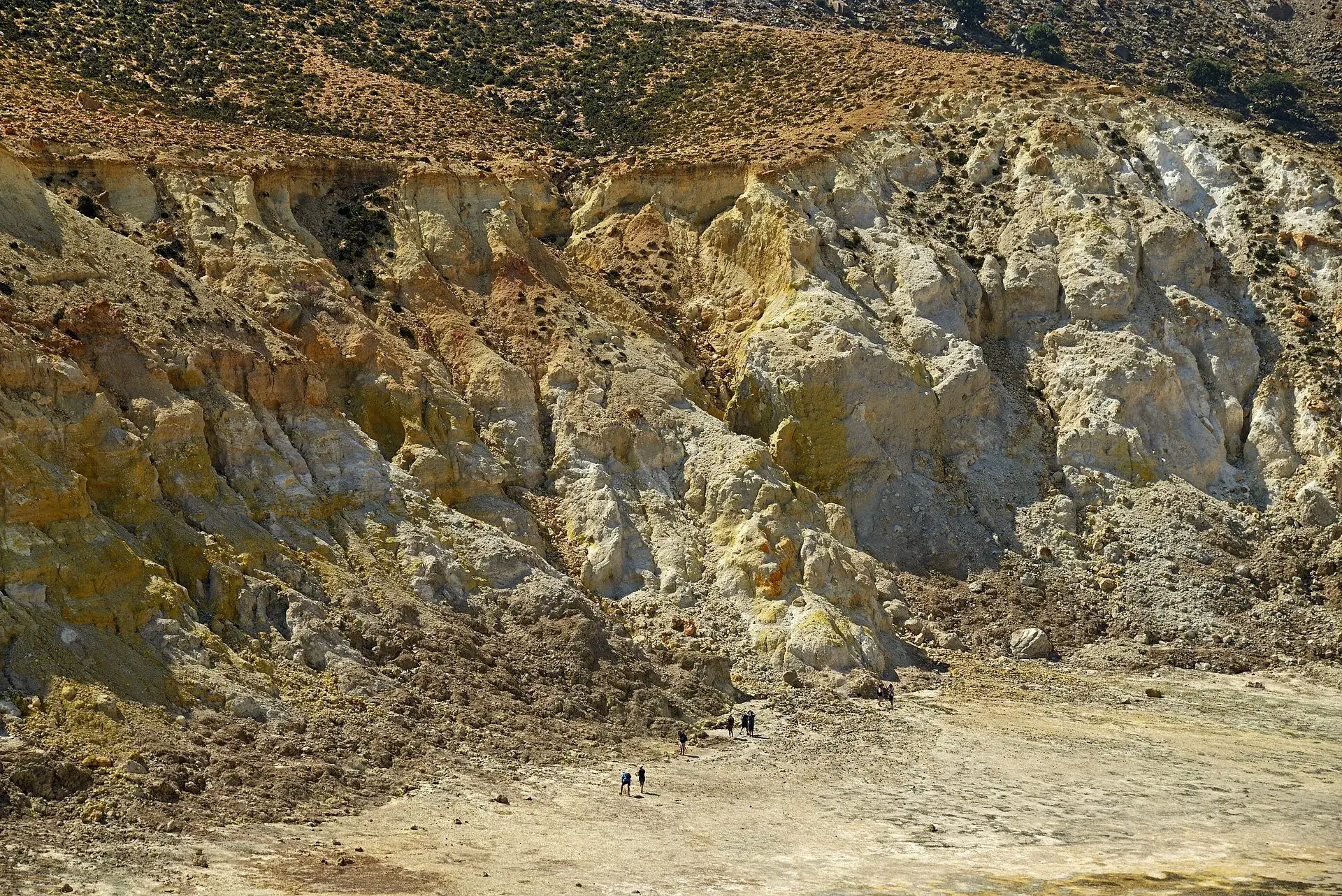
The south wall of the Stefanos crater on Nisyros with yellow sulfur deposits, tiny figures on the crater floor
The people at the foot of the south wall give the scale: 90 feet of wall, and the ground beneath is hot.

Photo: Ввласенко · CC BY-SA 3.0

What you experience down thereInside the Nisyros crater: mud pools, fumaroles, the smell of sulfur

Stefanos is not a crater to look at but to walk into. The floor is flat, pale and warm, in places so hot that flip-flops come apart. Steam above 100 °C (212 °F) hisses out of holes, and yellow sulfur crystals grow around them. In the hollows behind the ropes the mud pools boil. It smells of rotten eggs, and the smell stays in your clothes.

Between 10:30 am and 3 pm you share the crater with the excursion boats from Kos. Before and after, you usually have it to yourself – the booth and cantina are closed then, and the access is open. If you stay overnight you get both: the empty crater in the morning and Nikia in the evening, the village on the caldera rim with the pebble-mosaic square and the volcano museum in the old school.

To be honest: there is no lava here. The last explosion was in 1888, a steam explosion without magma. What Nisyros offers is a hydrothermal system you can touch – and the certainty that beneath the pale floor the temperature is above 350 °C (660 °F). In completely still air, heavy CO₂ collects in the deepest hollows; dizziness is the signal to climb back out.

Affiliate links to GetYourGuide: if you book, we earn a commission and the price stays the same. Prices and ratings as of 22 September 2026. The €5 crater fee is not included in any offer – it is paid in cash on site. In a strong meltemi wind the small excursion boats are cancelled.

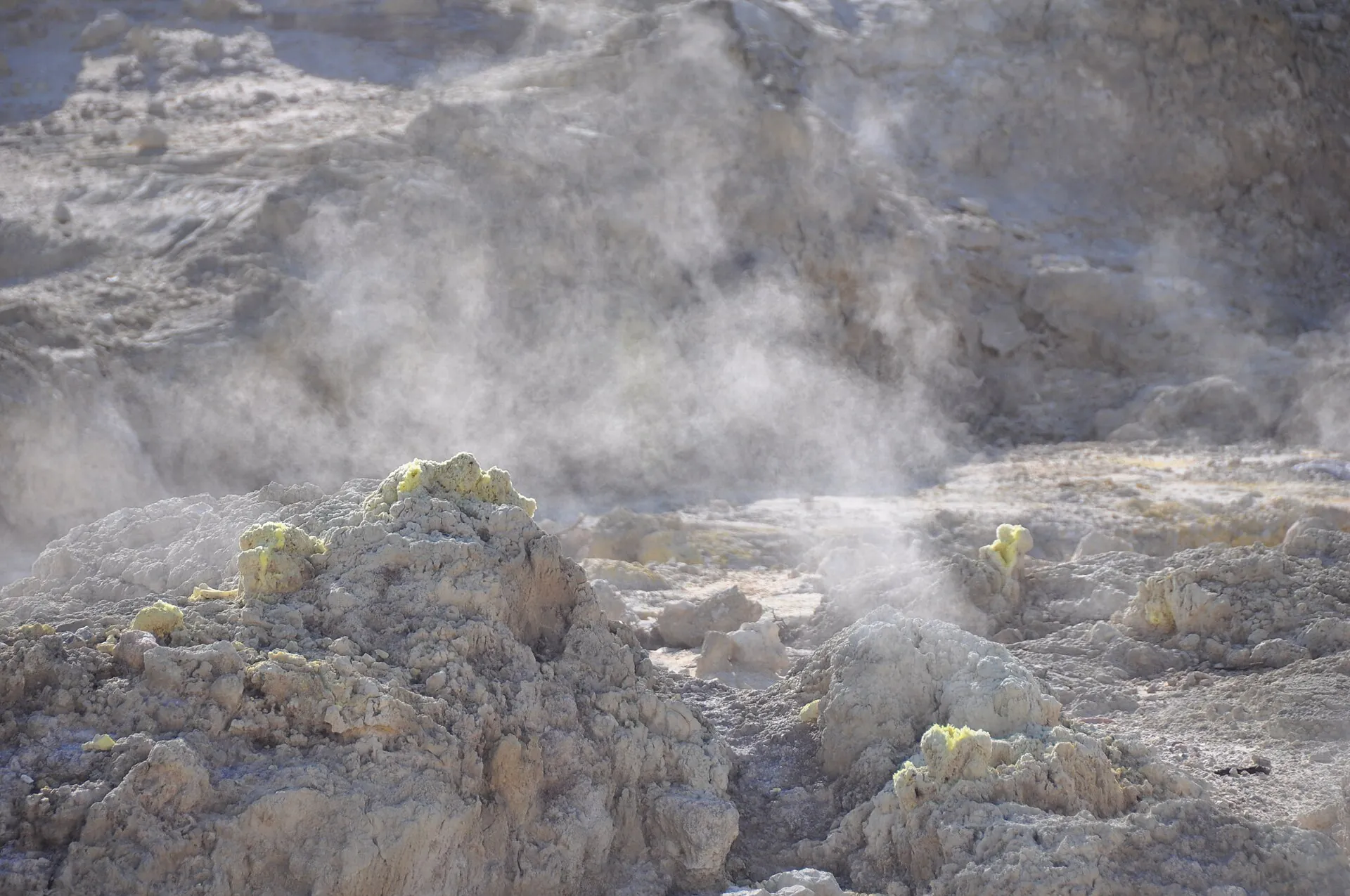
Steam rising from fumaroles on the floor of the Stefanos crater on Nisyros, yellow sulfur crusts around the vents
Above 212 °F at the vent. Steam is the only fire this volcano has shown since 1888 – and it is enough.

Photo: S.Nikolakakos · CC BY-SA 4.0

The ruleNo reservation, no guide requirement – but ropes

Nisyros has fewer rules than any Italian volcano. That is exactly why you have to know them yourself.

1

Keep €5 in coins ready

Cash at the ticket booth next to the parking lot; no card payment documented. If nobody is there, the access is open. No source names a child rate – on the Kos boats children aged 3–13 pay half price.

2

Stay behind the ropes

The crust is thin in places, the mud pools boil at over 100 °C (212 °F), and scalds leave chemical burns. The barriers are the only rule in the crater – and they are meant seriously.

3

No hollows in still air

Heavy CO₂ collects at the bottom of the deepest spots. In completely still air do not linger there; dizziness means: climb out. People with asthma or heart conditions keep the visit short.

4

Sturdy shoes, hat, water

No shade in the crater, above 35 °C (95 °F) in high summer. The ground is hot and the crust is sharp – closed shoes with a thick sole. At least a liter of water per person; the cantina closes when the boats leave.

Prices · as of 09/2026
Admission Stefanos crater (descent), cash at the booth · view from the rim free€5
Volcanological Museum Nikia (travel guide figure 07/2026)€4
Municipal bus Mandraki–Pali–Emporeios–Nikia (not to the crater)free
Volcano bus tour from the port of Mandraki, 2 hours, without crater admissionfrom €8
Boat Kardamena–Nisyros round trip / volcano bus on Nisyros (Ticket Travel Kos)€20 / €10
Full day trip from Kos with hotel transfer, boat and bus (Kos4all)€30
Scheduled ferry Kos town–Nisyros, foot passenger, from€6
Sources: Enetikon Travel, Ticket Travel Kos, Kos4all (operator prices without a date on their pages); Ferryhopper; Dimos Nisyrou (bus). The crater fee and booth hours are documented by operators and 2026 travel reports, not by a municipal resolution; there is no official opening schedule for the crater.
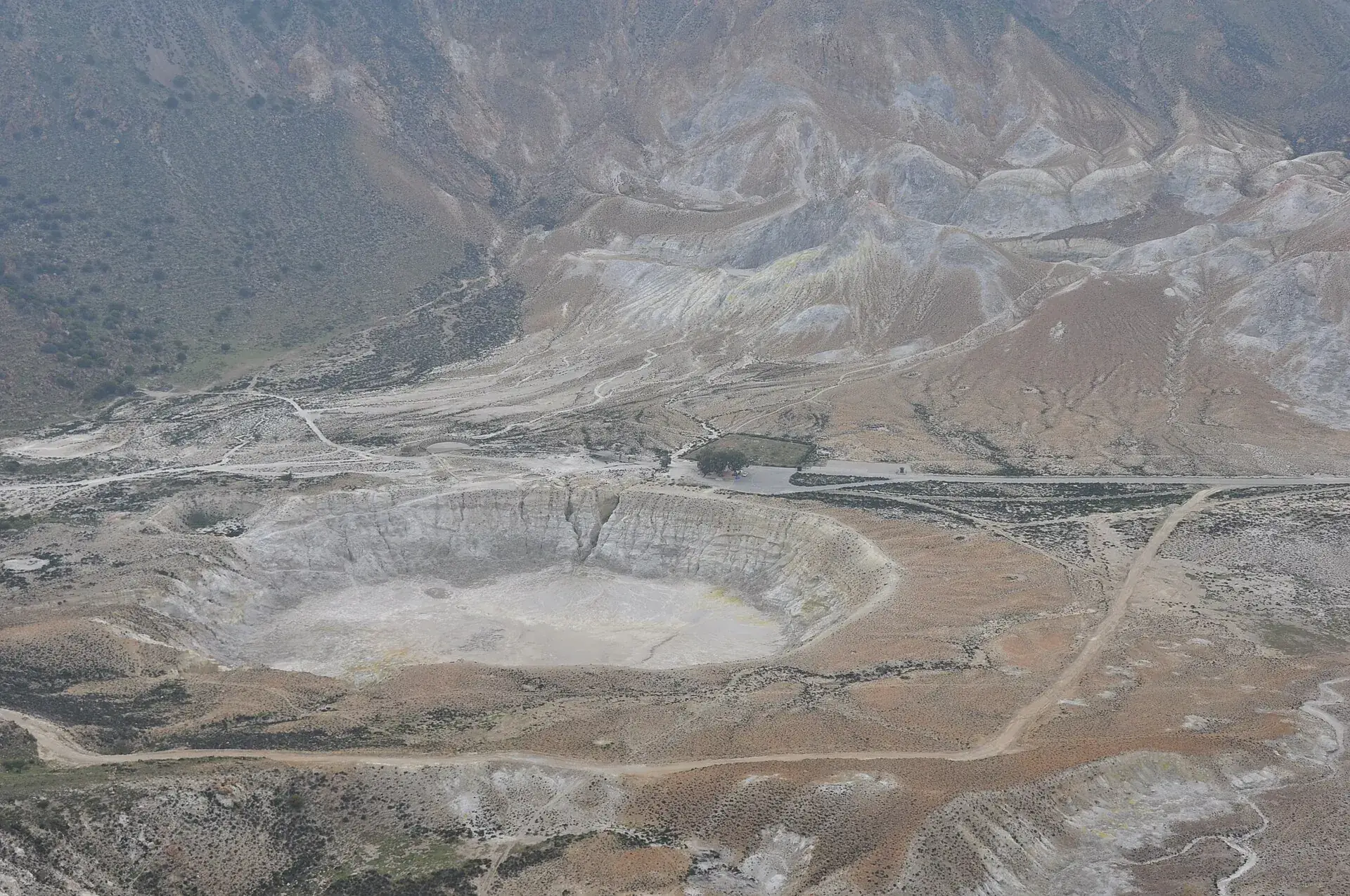
The Stefanos crater on Nisyros from above: the pale crater floor, beside it the parking lot and the access road through the caldera
From above you see why no guide is needed: road, parking lot, steps, crater. The rest is heat.

Photo: S.Nikolakakos · CC BY-SA 4.0

How to get thereNisyros day trip from Kos: Kardamena, Kefalos or Kos town

Three ports on Kos, three different excursions. And on the island itself the question of how you cover the 13 km (8 miles) from the port into the caldera.

1hr

From Kardamena, south coast

Excursion boat daily at 9:30 am, back at 3:30 pm; Mon/Tue/Thu/Fri additionally at 12:00 pm with return at 6:30 pm. Boat €20, volcano bus on Nisyros €10, children 3–13 half price. Roughly May to October; cancelled in strong wind.

Total timeabout 7 hrs
50min

From Kos town, scheduled ferry

Dodekanisos Seaways catamarans in about 50 minutes, Blue Star “Diagoras” in about 1 h 15, from about €6. Year-round, but not always out and back on the same day – the best choice if you stay overnight.

Foot passenger from€6
Tue/Sat

From Kefalos/Kamari, west

Kamari Boats on Tuesdays and Saturdays at 9:45 am (according to a travel forum, no published schedule). Irregular; the alternative is Kardamena, about 25 km (15 miles) away.

Scheduleon request only
8miles

On the island: port to crater

Paved road Mandraki–Emporeios–caldera, 25 minutes. Volcano bus of the travel agencies after the ferry arrives (from €8, 45 minutes at the crater), taxi, or rental scooter/car from about €25 a day. Or the municipal bus to Nikia and the trail down on foot, 45–60 minutes.

Bus tour from Mandrakifrom €8
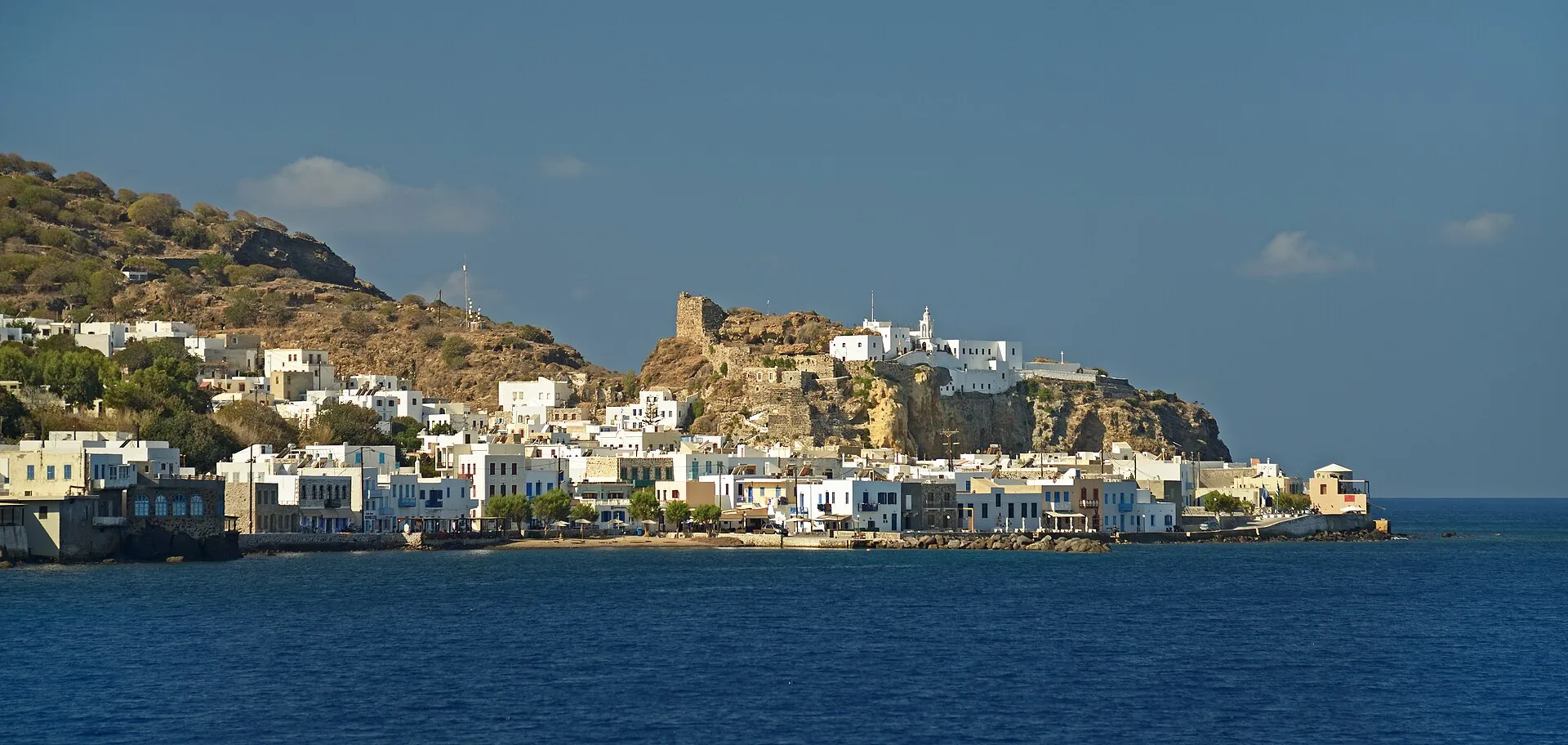
Mandraki on Nisyros seen from the sea: white houses beneath the monastery rock of Panagia Spiliani
Mandraki, where every boat lands. The monastery on the rock is the mandatory stop of the day trips – the crater lies 8 miles behind it.

Photo: Ввласенко · CC BY-SA 3.0

Good to knowGetting to Nisyros, best time, tips

Getting there

Without a car: No airport. Ferries from Kos town (Dodekanisos Seaways about 50 minutes, Blue Star about 1 h 15, ANE Kalymnou), excursion boats from Kardamena (9:30 am/3:30 pm daily, additionally Mon/Tue/Thu/Fri 12:00 pm/6:30 pm) and from Kamari/Kefalos (Tue/Sat 9:45 am); also connections from Rhodes, Tilos, Kalymnos and Piraeus (Blue Star, several times a week). On the island: free municipal bus Mandraki–Pali–Emporeios–Nikia (Mon–Sat 8:00 am, 12:30 pm, 7:00 pm), volcano buses of the travel agencies after ferry arrivals, taxis, scooter and car rental in Mandraki.

By car: Rental car/scooter from Mandraki; the road Mandraki–Emporeios–caldera–crater is paved, about 13 km / 8 miles, 25 minutes. Parking lot on the crater rim next to the booth and cantina. Taking a rental car from Kos only with the rental firm's consent and on a car ferry (Panagia Skiadeni, Blue Star).

  • From Kos town · 50–75 minutes
    Scheduled ferry/catamaran to Mandraki
  • From Kardamena (Kos) · about 1 hour
    Excursion boat 9:30 am, return 3:30 pm
  • From Kefalos/Kamari (Kos) · about 1 hour
    Excursion boat Tue/Sat 9:45 am
  • From Rhodes · 2.5–4 hours
    Dodekanisos Seaways (via Tilos/Symi) or Blue Star
  • From Piraeus · about 12–14 hours
    Blue Star Ferries (several times a week, overnight)

Best time to go

May/June and September/October: warm but still bearable in the shadeless crater, clear views from Nikia into the caldera, boats from Kos run daily. At the crater before 10:30 am (before the Kos boats arrive) or after 3 pm – then you are almost alone, though the booth and cantina are usually closed. Avoid midday in July/August (above 35 °C / 95 °F on the crater floor); in winter the island is quiet, ferries are rarer and the museum is partly closed.

Who it suits

Children
Doable from primary-school age: short stepped descent, flat crater floor. Hold children by the hand – beyond the ropes the mud pools boil, and the ground is hot and thin in places. Children 3–13 pay half price on the Kos boats.
Minimum age
none
Fitness
Low for the crater visit (5–10 minutes down, steep back up); the hike from Nikia is moderate, about 300 m (1,000 ft) of elevation.
Heart and lungs
Hydrogen sulfide and CO₂ on the crater floor; people with asthma, lung or heart conditions and high blood pressure should keep the visit short and stay out of the hollows in still air. Summer heat above 35 °C (95 °F) with no shade.
Wheelchair
Crater rim and cantina reachable by car; the descent (stepped path) is not accessible.
Dogs
no rule found; hot ground unsuitable for paws
Clothing
Hat, sun protection, at least 1 liter of water per person, in summer light long clothing; no shade in the crater.
Footwear
Sturdy, closed shoes with a thick sole – the ground is hot enough for flip-flops to come apart, and the crust is sharp and slippery.

Tips you will need on site

  • Keep €5 in coins or small bills ready for the crater – the booth takes cash only and is staffed only around midday.
  • Take the scheduled ferry from Kos town instead of the excursion boat and stay a night: then you have the crater to yourself between 3:30 pm and 10:30 am and see Nikia and Mandraki without the groups.
  • The free municipal bus (8:00 am, 12:30 pm, 7:00 pm from Mandraki, not on Sundays) takes you to Nikia; from there walk down the geo-route into the crater and return by taxi or hitchhiking – or rent a scooter/car straight away (from about €25).
  • Stay behind the ropes: the crust is thin in places, the mud pools boil at over 100 °C (212 °F), and scalds leave chemical burns.
  • In completely still air do not linger in the deepest hollows – heavy CO₂ collects at ground level; dizziness is the signal to climb out.
  • Sturdy shoes, hat, water: there is no shade in the crater, and the cantina closes when the boats leave.
  • In a meltemi wind call the boat beforehand (Ticket Travel Kos +30 22420 91100); small excursion boats are cancelled, the catamarans from Kos town keep running longer.
  • Keep the return time of the Kos boats (3:30 pm or 6:30 pm) firmly in mind – the next scheduled ferry may not leave until the following day.

A short history

  • From about 150,000 years ago to today: build-up of the volcano in the South Aegean volcanic arc (Methana–Milos–Santorini–Nisyros); collapse of the 3–4 km wide caldera after large pumice eruptions.
  • 2,000–5,000 years ago: hydrothermal explosions create the craters in the middle of the caldera, among them Stefanos (old name Megalo Aloni).
  • 1871 and 1873: steam and ash explosions in the crater field; September 1888: last explosion (Polyvotis group), forming an explosion vent – no eruption since.
  • 1872: municipal bath opened at the Loutra spring; 1895–1930s operation of the Pantelidis baths in Pali; 1912–1947 Italian occupation of the Dodecanese.
  • 1996–98 and 2001–02: unrest phases with earthquake swarms and uplift; in early 2003 the crater is temporarily closed because of rising temperatures and cracks.
  • 2008: opening of the Volcanological Museum in Nikia (initiator Georgios Vougioukalakis).
  • September 2023: build-up of the NKUA seismometer network; July 2026: permanent station HA.EMPO in Emporeios joins the national network.
  • 2025/2026: admission as Greece's 10th UNESCO Global Geopark (decision fall 2025, formal admission 27 April 2026); in 2026 the renovation of the thermal baths is to resume.
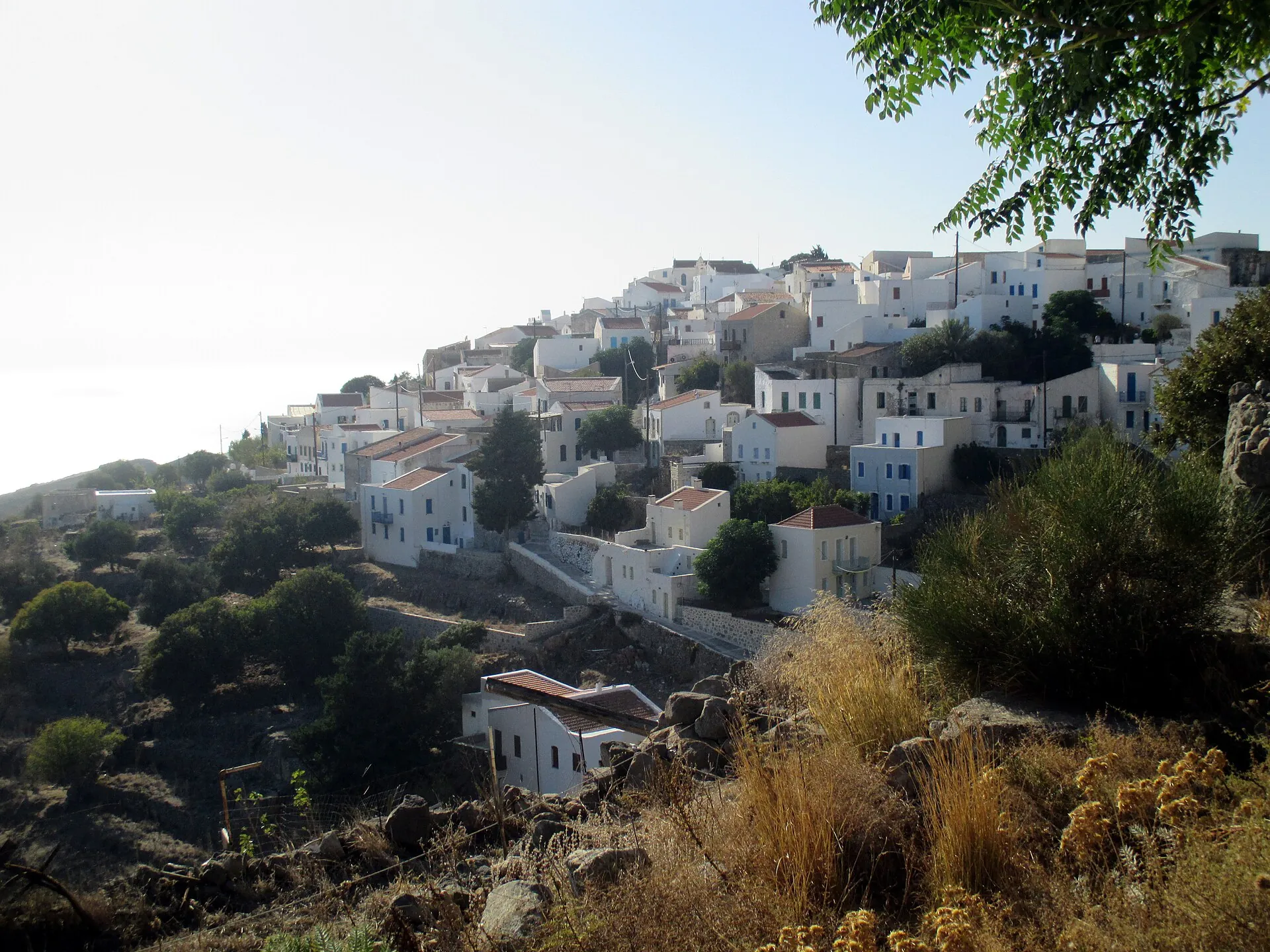
The white houses of Nikia on the caldera rim of Nisyros in evening light, the sea behind
Nikia, 1,300 feet above the crater: end of the municipal bus line, start of the trail down – and the place you stay once the boats have gone.

Photo: Tomisti · CC BY-SA 4.0

With boat, barbecue and swim stopBoat tours from Kos with Nisyros and neighboring islands

The second way to get here: sailing and motorboat tours that combine Nisyros with Gyali and Agios Antonios. Less time at the crater, more time in the water.

Affiliate links to GetYourGuide: if you book, we earn a commission and the price stays the same. Prices and ratings as of 22 September 2026.

View from the Stefanos crater toward the smaller Alexandros and Polyvotis craters in the caldera of Nisyros
West of Stefanos lie Polyvotis and Alexandros – the last explosion happened there in 1888. No booth, no ropes, hardly any people.

Photo: Ввласенко · CC BY-SA 3.0

Outdated onlineWhat other sites get wrong

“Admission €3.”
As of 2025/2026 the descent costs €5 per person; €3 applied until about 2016. The €3 figure is still on Visit Greece today.
“The crater is open daily from 8 am to 8 pm, free in winter.”
There is no official opening schedule. The booth is staffed only while the Kos boats are there; outside those hours the access is open and unpaid – year-round.
“The island bus goes to the volcano.”
The free municipal bus serves only Mandraki–Pali–Emporeios–Nikia (timetable from 29 June 2026). To the crater you take the travel agencies' buses after the ferry arrives, a taxi or a rental vehicle.
“Nisyros has been a UNESCO geopark since 2015.”
UNESCO recognition came in fall 2025, and formal admission to the network on 27 April 2026. Before that, Nisyros was an applicant.
“You can bathe in the thermal bath in Mandraki.”
The municipal bath Loutra is restored but not in operation; the renovation is to continue in 2026. Bathing is possible only at the free springs in the sea near Pali (Thermiani) and in Avlaki bay.

Quick answersBefore the crossing

Can you walk into the volcano on Nisyros?

Yes. A stepped path leads into the Stefanos crater, 5–10 minutes down, without a guide and without a reservation. On the crater floor the mud pools and areas of thin crust are roped off – beyond the ropes is off limits.

How much does the Nisyros volcano cost?

€5 per person, cash at the ticket booth next to the parking lot on the crater rim, as of 2026. The booth is staffed only while the excursion boats from Kos are on the island; if you only look from the rim, you pay nothing.

How long is the trip from Kos to Nisyros?

From Kardamena about 7 hours: departure 9:30 am, an hour's crossing, bus to the crater, Nikia, Mandraki, return at 3:30 pm. The scheduled ferry from Kos town takes 50 to 75 minutes but does not always return the same day.

Can you visit Nisyros on your own?

Yes, and it is worth it: with the scheduled ferry from Kos town, a night in Mandraki and a rental scooter (from about €25) you have the crater to yourself before 10:30 am and after 3 pm. The free municipal bus takes you to Nikia; from there you walk down.

Is the Nisyros volcano active?

Yes, but dormant: the last steam explosion was in 1888, followed by phases of unrest in 1996–98 and 2001–02. According to NKUA, seismicity in 2026 is close to zero; Greece has no official volcano alert level like Italy's.

Nisyros or Santorini – where do you see more volcano?

On Nisyros. The Stefanos crater is walkable, steams and smells; on Santorini the caldera is the backdrop, and the volcano itself sits on the island of Nea Kameni off the coast. Both belong to the same South Aegean volcanic arc.

How much is admission to the crater?

€5 per person, cash at the ticket booth next to the parking lot on the crater rim. The booth is staffed only while the excursion boats from Kos are on the island (about 10 am–3 pm); if you only look from the rim, you pay nothing.

Do you need a guide?

No. The crater is freely accessible; day trips from Kos come with an escort, independent travelers walk down on their own. Rope barriers around the mud pools and thin crust are the only rule.

How do you get from Kos to Nisyros?

Easiest by excursion boat from Kardamena (daily 9:30 am, back 3:30 pm; Mon/Tue/Thu/Fri also 12:00 pm/6:30 pm; €20 plus €10 volcano bus), from Kefalos/Kamari on Tuesdays and Saturdays at 9:45 am, or by scheduled ferry from Kos town (Dodekanisos Seaways about 50 minutes, from about €6).

How long do the crater visit and the excursion take?

The descent takes 5–10 minutes, and you stay 30–60 minutes in the crater; bus tours from Mandraki allow 2 hours, 45 minutes of which at the crater. A day trip from Kos takes about 7 hours including Mandraki and Nikia.

Is the crater suitable for children?

Yes, with supervision: short stepped path, flat floor, but boiling mud pools and hot ground beyond the ropes. Children 3–13 pay half price on the Kos boats; no source gives a child rate at the crater.

What should you wear?

Sturdy closed shoes (flip-flops come apart on the hot ground), hat, sunscreen and plenty of water – there is no shade in the crater, and in high summer it is above 35 °C (95 °F). The sulfur smell clings to clothing.

Is the volcano dangerous?

An eruption is not foreseeable according to the monitoring (last steam explosion 1888). What is dangerous: scalding at mud pools above 100 °C (212 °F), breaking through the thin crust, CO₂ pooling in hollows in still air, and heatstroke. If you stay behind the ropes and do not come at midday, you are safe.

Is there a bus to the volcano?

The free municipal bus runs Mon–Sat at 8:00 am, 12:30 pm and 7:00 pm from Mandraki via Pali and Emporeios to Nikia – not to the crater. To the crater you take the travel agencies' buses (e.g. €8 from the port), a taxi or a rental scooter/car; from Nikia a trail leads down.

When is the best time for the crater?

Before 10:30 am or after 3 pm, when the Kos boats are not there; in summer generally early or late because of the heat. Best months May/June and September/October.

Can you bathe in hot springs on Nisyros?

The historic municipal bath Loutra near Mandraki (water up to 46 °C / 115 °F) is restored but not yet in operation. You can bathe for free at the hot springs in the sea near Pali (Thermiani, 33 °C / 91 °F) and in Avlaki bay (up to 59–61 °C / 138–142 °F), where the water runs straight into the sea.

Who monitors the volcano?

The University of Athens (NKUA) has run a seismometer network on the island since 2023, since July 2026 with a permanent station in Emporeios in the national network; the Institute of Geodynamics of the National Observatory of Athens brings together seismic, GPS/InSAR, gas and thermal data. There is no official volcano alert level as in Italy.
Sources · accessed on 22 September 2026