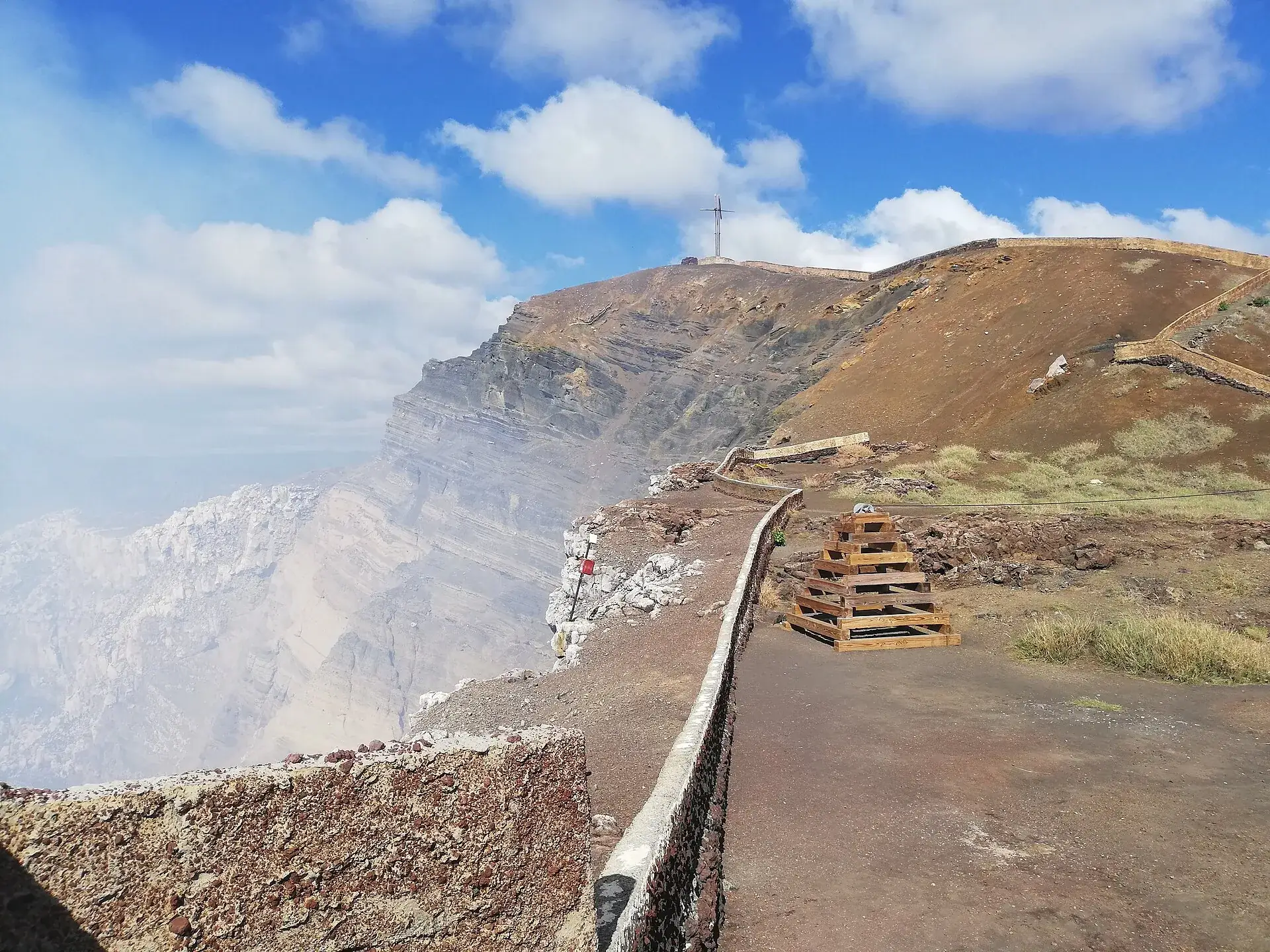
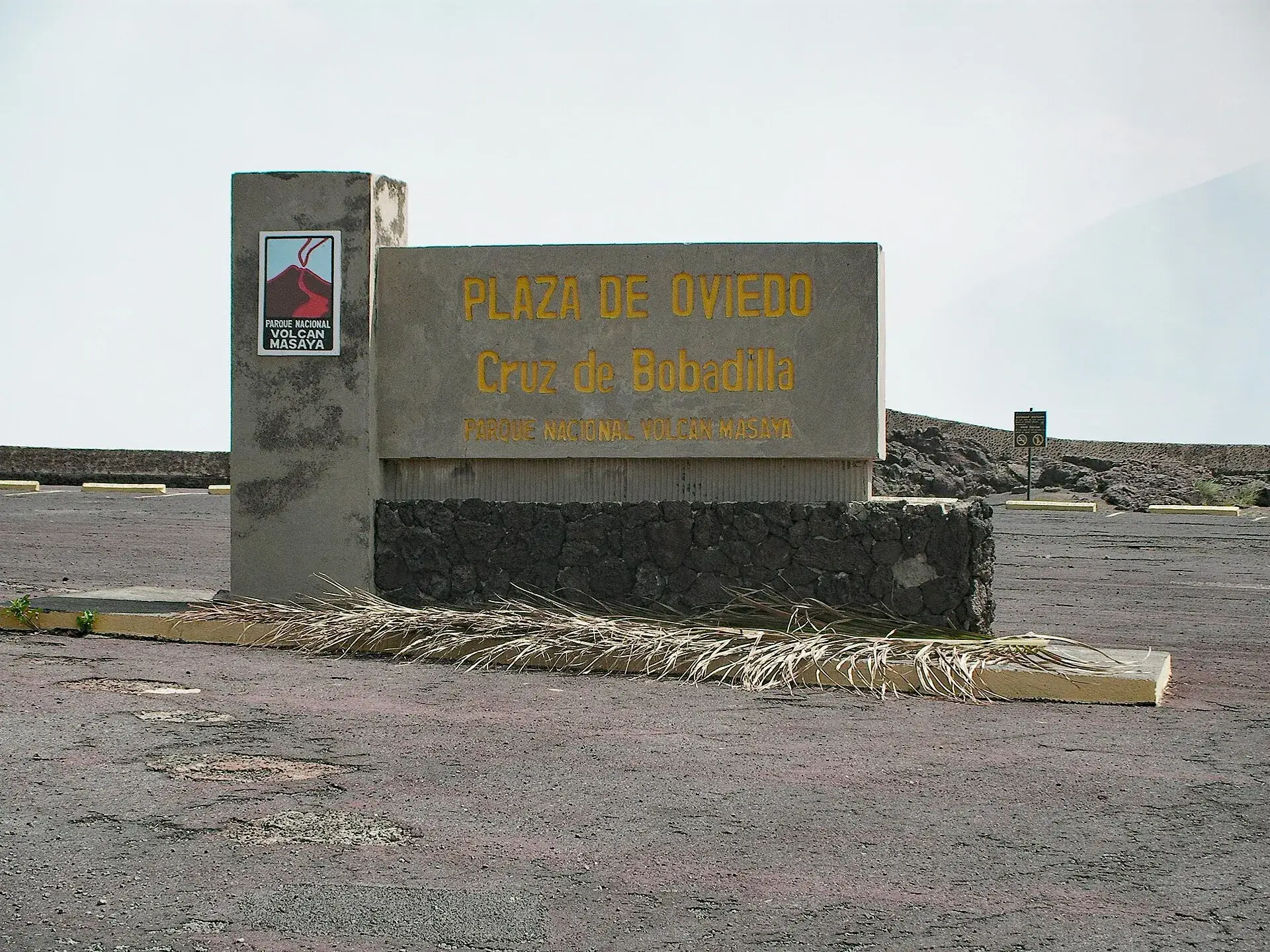
Crater road to Plaza de Oviedo
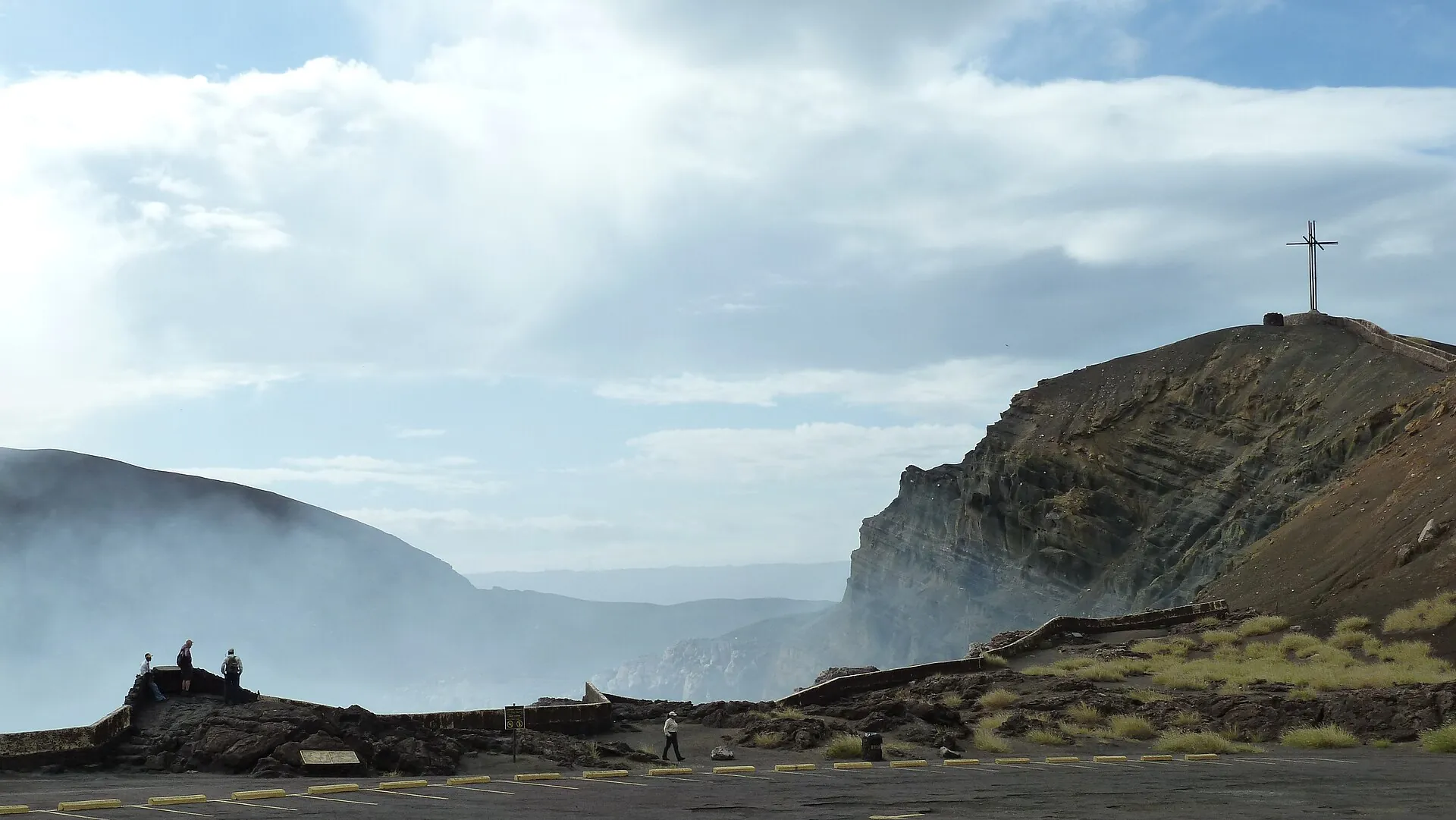
Paved from the entrance to the rim of the Santiago crater, vehicles only – walking the road is prohibited. If you come without a car, hire a driver at the entrance (about $5).
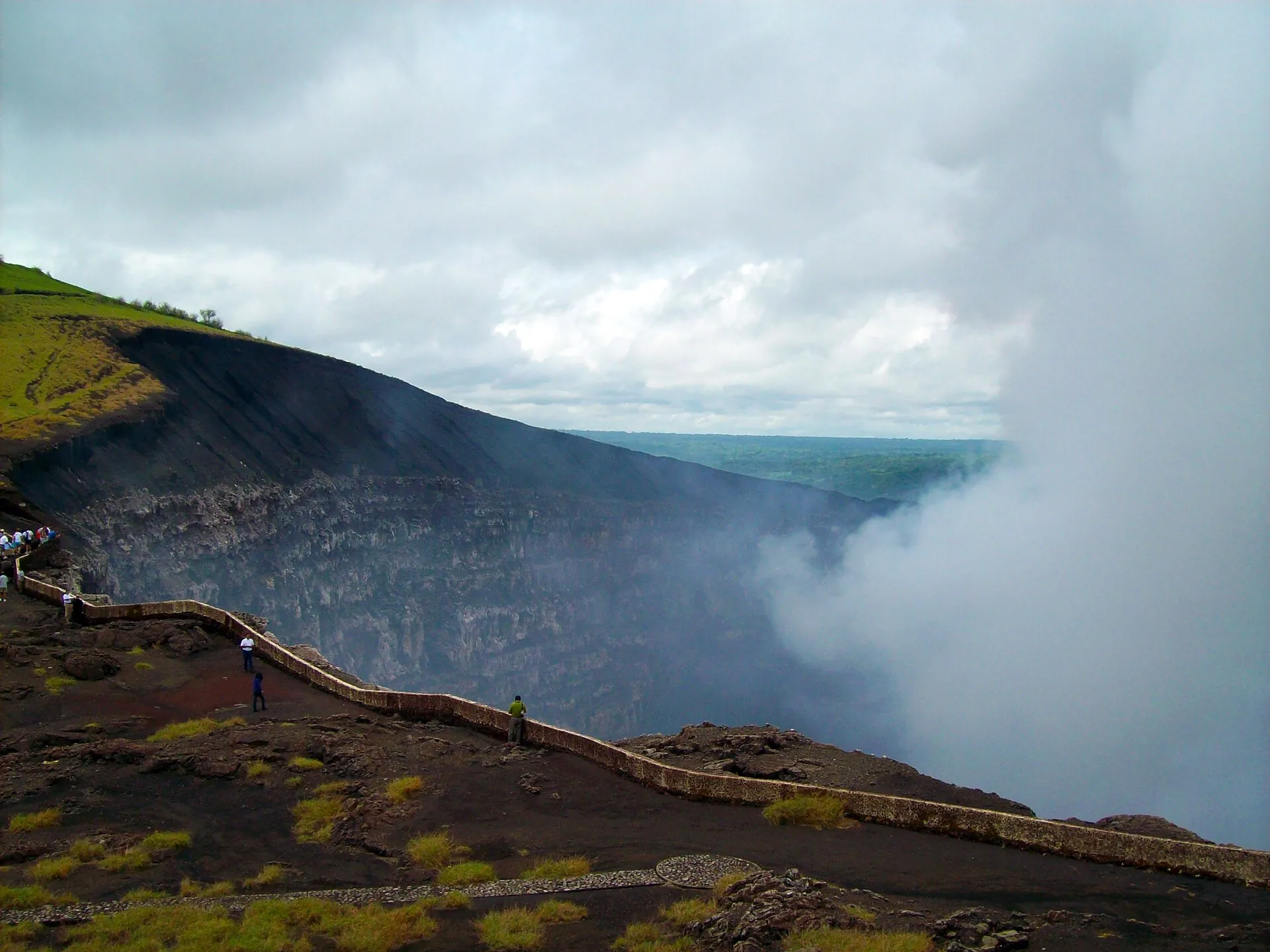
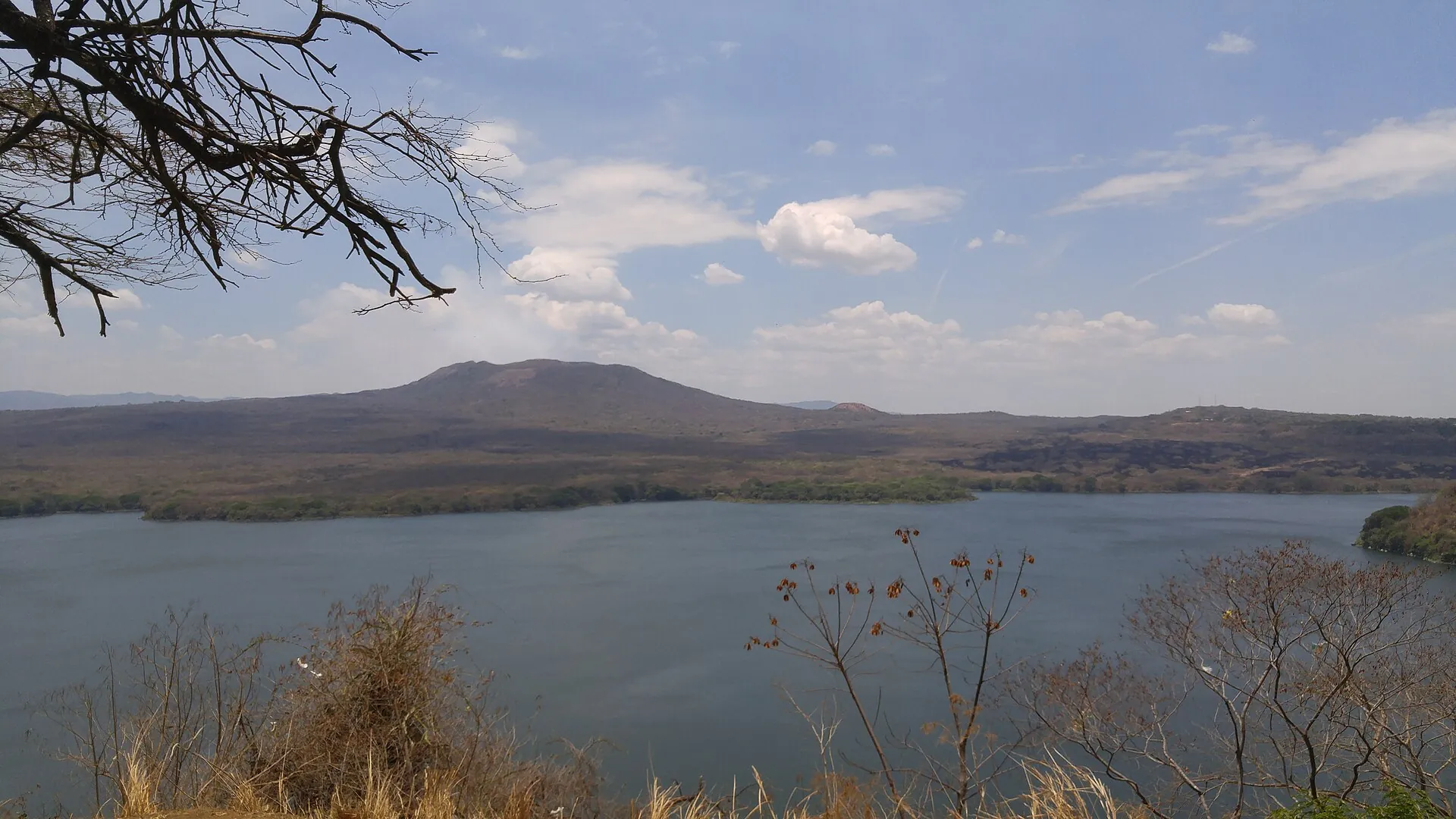
From town it is a low green ridge above the lake.
Then you park at the crater rim – in reverse, that is the rule.
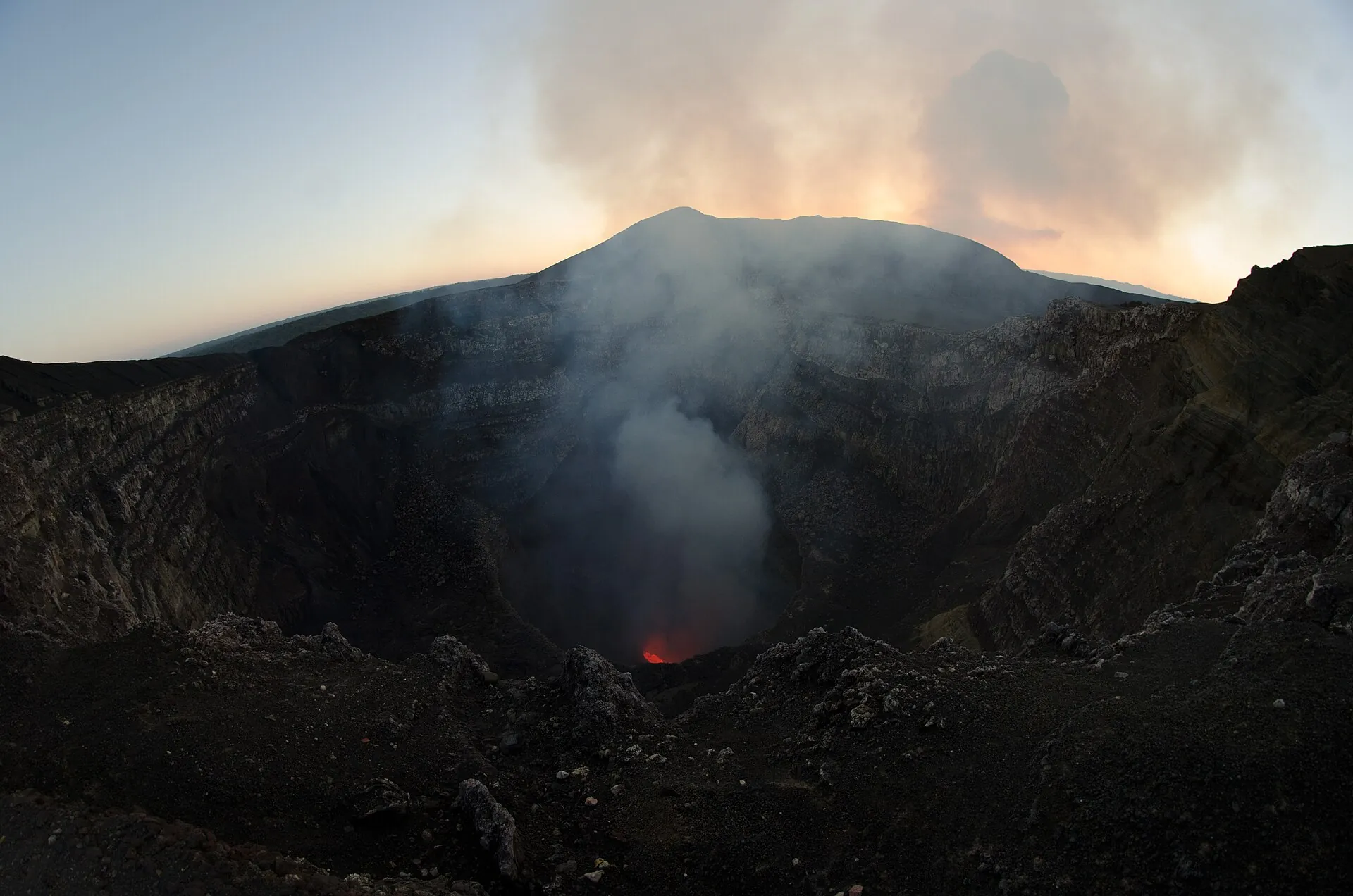
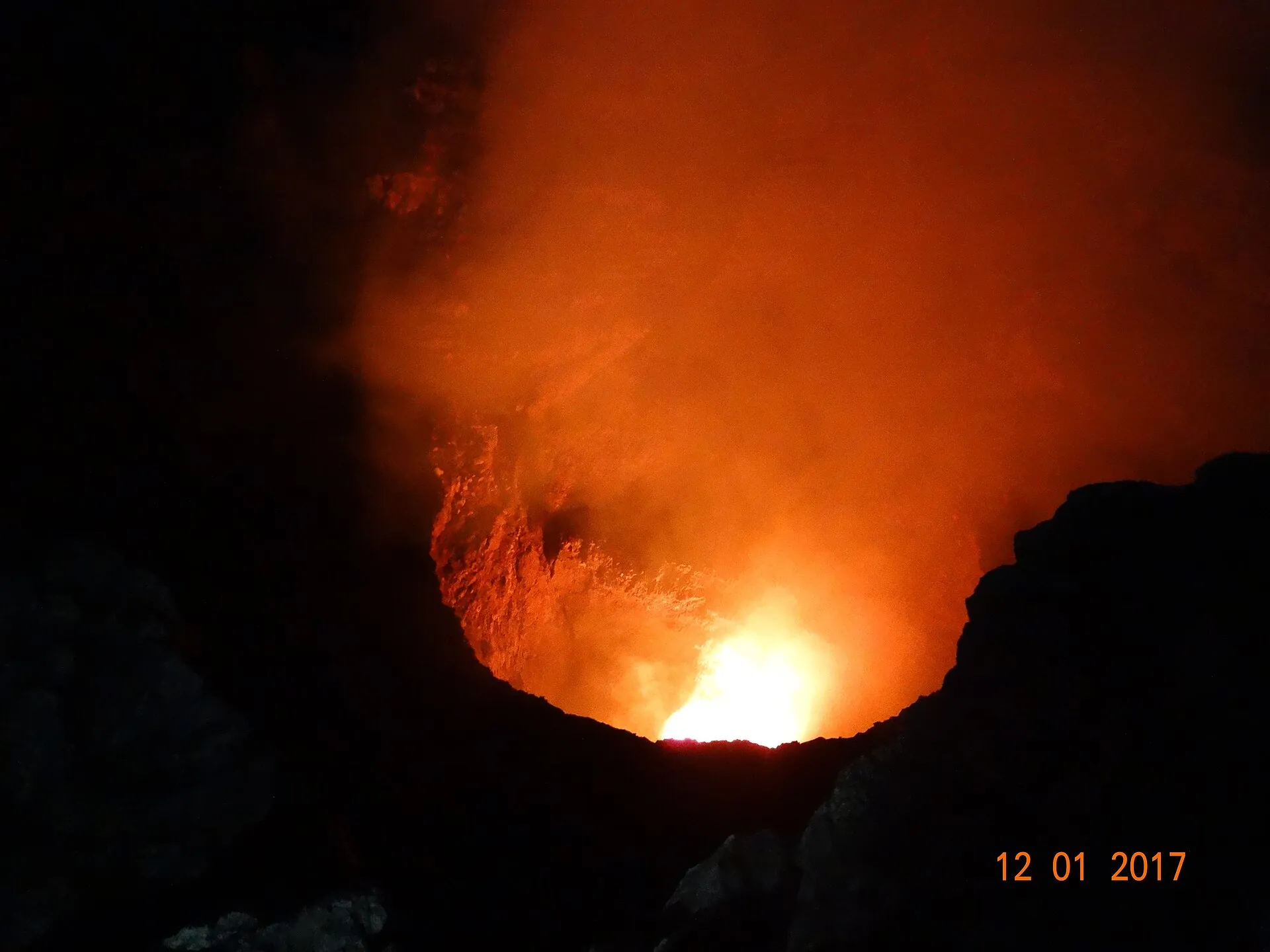
When it gets dark, it glows down there. Less than before 2024, but it glows.
Scroll –
from the lakefront to night at the crater
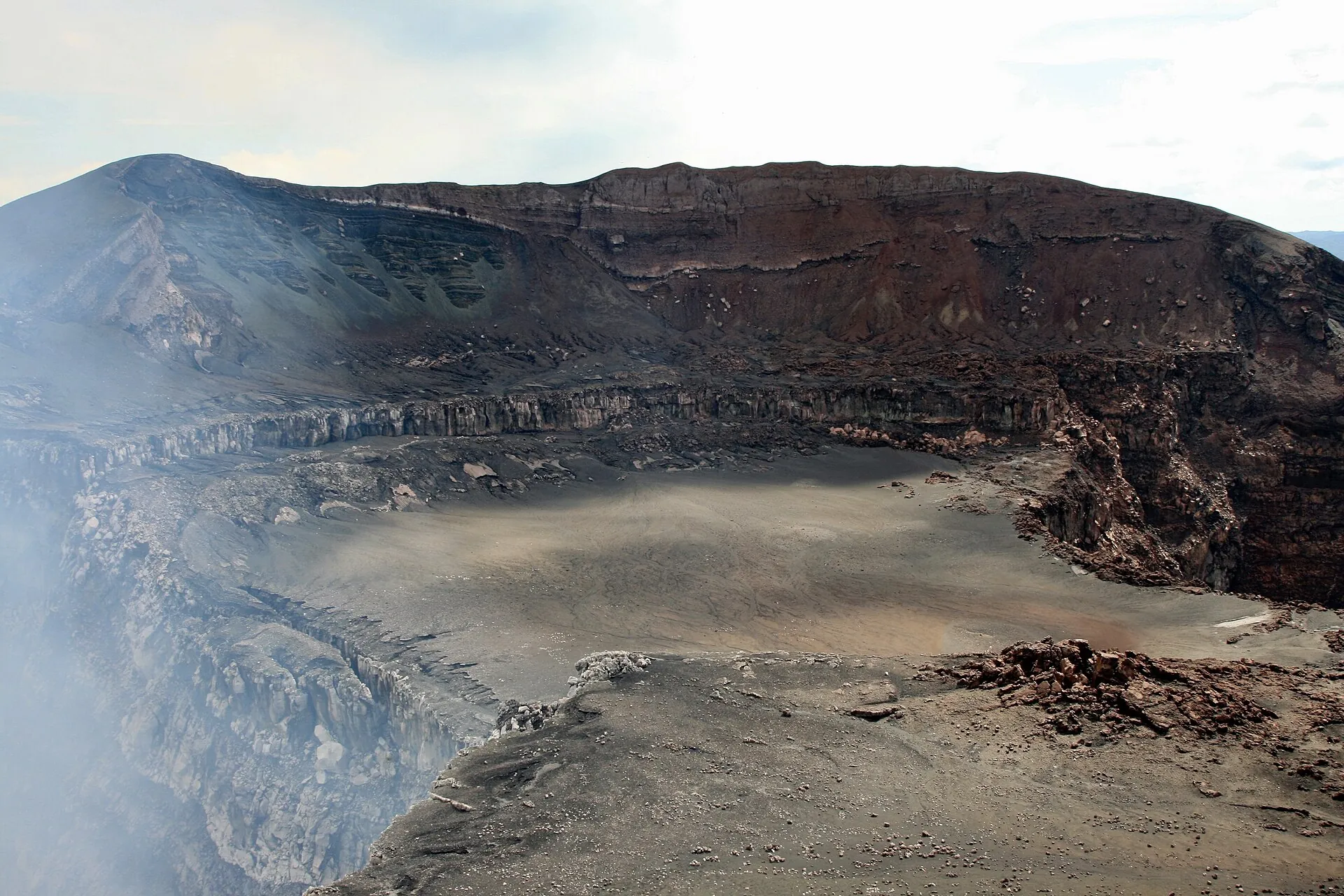
Yes, the park is open: MARENA listed 8:30 a.m. to 4:30 p.m. for the Semana Patria holidays (September 14–20, 2026) and 8:30 a.m. to 7 p.m. in July 2026. The Plaza de Oviedo viewing platform right at the crater has been open again since December 19, 2025 – after two closures many websites do not know about: from March 2024 to July 2025 because of crater-wall collapses, and in December 2025 because of cracks. The lava lake that made the night visits famous has been buried under rubble since the collapse of March 2, 2024. Since mid-2025 a glow is visible again – but no open lake like in the photos from 2016.
Paved from the entrance to the rim of the Santiago crater, vehicles only – walking the road is prohibited. If you come without a car, hire a driver at the entrance (about $5).
At the 2025 reopening MARENA set five minutes per group on the platform; 2026 travel reports mention up to half an hour on the plaza. The rangers give the signal – and close without warning when gas builds up or INETER issues a warning.
Night ticket from 4:30 p.m., last entry about an hour before closing; closing time varied between 4:30 and 8 p.m. in 2025/2026. Call before you drive: +505 7877 4831.

Photo: Leon petrosyan · CC BY-SA 4.0
You drive through the 1772 lava field at 5 p.m., back into a spot at the wall, and two steps later you are at the edge of a hole the conquistadors called the 'Boca del Infierno' – the mouth of hell. It smells of sulfur, the far wall steams, and when the daylight goes, the gray below turns into a red glow. Sometimes lava visibly churns between the rubble, sometimes it is just the light in the gas plumes. Anyone who was here in 2016 sees less. Anyone coming for the first time sees an active crater from five meters away – and then the ranger waves, because the next convoy is waiting.
Affiliate links to GetYourGuide: if you book, we earn a commission and the price stays the same. Prices and ratings as of 22 September 2026. Whether you see lava is up to the mountain – and since 2024 also to the rubble in the crater. If the plaza is closed, the crater visit is off; ask before booking what the operator does then.

Photo: Adalberto Hernández Vega · CC BY 2.0
At Masaya there is no reservation and no mandatory guide for the crater. There is a ticket booth, a road you are not allowed to walk on, and rangers who check which way your car is facing – because in 2012 rocks flew as far as the parking lot.
Pay in córdobas or US dollars, cash. Day ticket until about 4:30 p.m., night ticket after that. Included: the museum at the entrance; trails and the bat cave only with a park guide.
From the entrance to Plaza de Oviedo it is 5 km (3 miles) of pavement. Your own car, a tour bus or a driver from the entrance (about $5 per person). At night vehicles go up to the crater in convoys – waits of up to an hour.
Nose downhill or backed up to the wall, so everyone can drive off immediately if there is an explosion. The rangers insist on it.
MARENA 2025: five minutes per group on the platform. How strictly that applies in 2026 varies with crowds and gas; the rangers give the signal, not the operator.
| Night visit from 4:30 p.m. – foreign visitors · Nicaraguans $5 | $10 |
| Day visit – foreign visitors (tourism board: 100 córdobas; blogs 2025/2026 cite US$4) · Nicaraguans C$30 | C$100 / approx. $4 |
| Driver from the entrance to the crater for visitors without a vehicle (private drivers, not official) | approx. $5 |
| Night tour from Granada or Managua including transport and night ticket (operators) | approx. $20–40 |

Photo: Nolabob · CC BY-SA 4.0
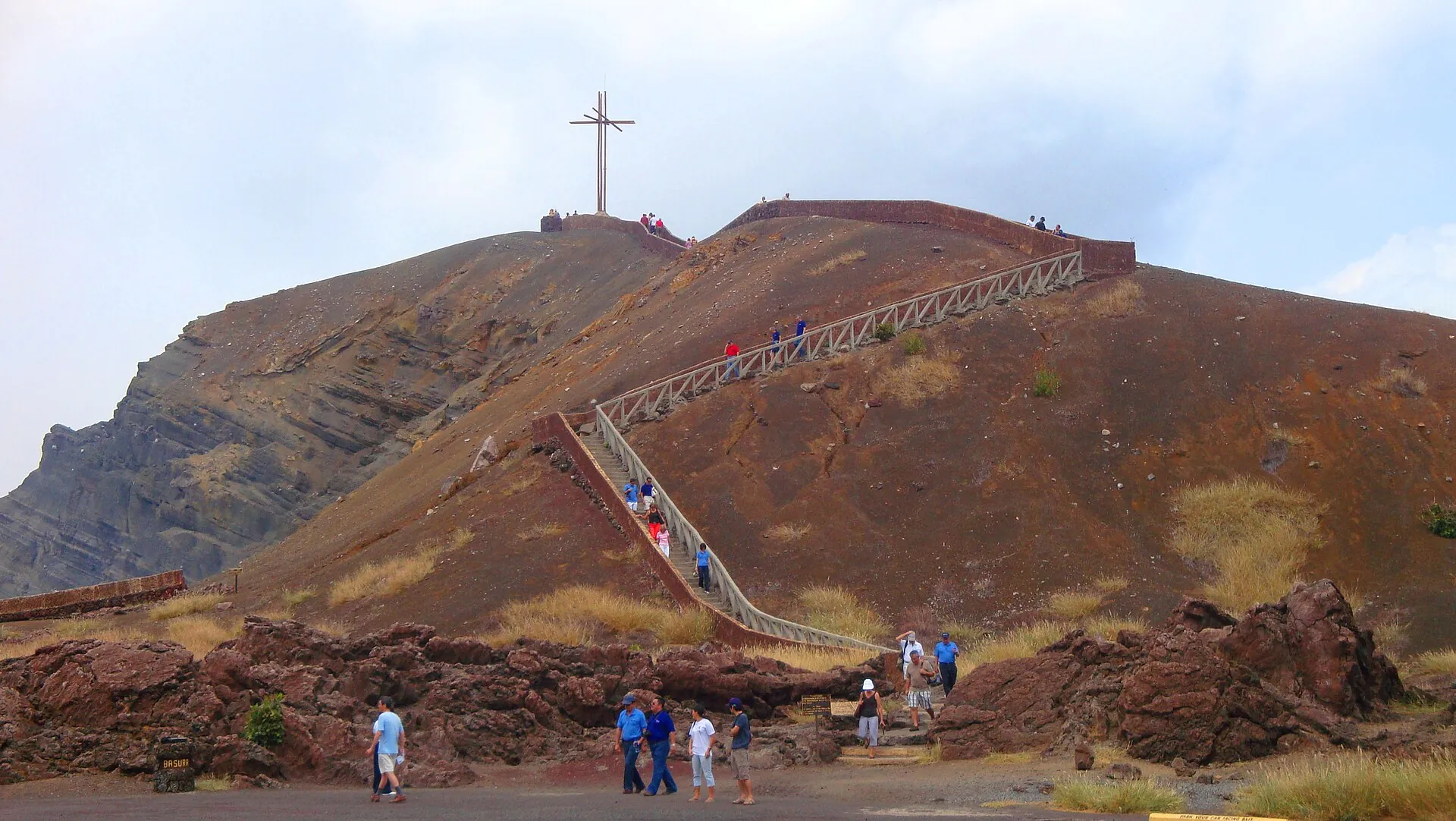
Masaya is the volcano with no climb. The only hike at the crater is the short trail to the cross of 1529 – everything else is driven.
| Crater road from the entrance (about 1,150 ft / 350 m) to Plaza de Oviedo (about 1,970 ft / 600 m) by car, tour bus or driver; time at the crater 5 minutes (MARENA 2025) to a maximum of 30–60 minutes (travel reports 2026) | 10–15 min drive · day ticket approx. $4 / night ticket $10 |
| Cruz de Bobadilla trail: stairway from the plaza onto the Nindirí rim, views of all the craters and Laguna de Masaya – daytime, with a park guide | 20–30 min round trip · included in the day ticket |
| Night tour from Granada (about 12 miles / 20 km) or Managua (about 14 miles / 23 km): hotel pickup, Plaza de Oviedo after dark, transport and night ticket included | 3–4 hours total · approx. $20–40 |

Photo: randreu · CC BY 3.0
Without a car: From Managua (Terminal UCA or Mercado Roberto Huembes) bus toward Masaya/Granada, get off at the park entrance at km 23 (about 1 hour, about C$30); from Granada bus toward Managua, about 40 minutes. You may not walk from the entrance to the crater – drivers at the entrance charge about US$5 per person.
By car: Managua–Masaya highway km 23, entrance signposted; road paved as far as Plaza de Oviedo. Park there facing downhill or in reverse (escape rule). Convoy operation at night, waits of up to an hour.
Shortly after nightfall (5:30–7:00 p.m.) the glow is best seen; if you arrive at 4:30 p.m. you first see the sunset over the caldera and then the red crater. Dry season November to April with fewer clouds; in the rainy season thunderstorms in the late afternoon. Weekends and Nicaraguan holidays are crowded (convoys at the entrance). The wind matters more than the season: when it blows out of the crater, the plaza is gassy and the view poor.

Photo: inga · CC BY-SA 2.0
By day, Masaya is usually one stop among several: the Catarina viewpoint above Laguna de Apoyo, the craft market in Masaya, Granada. If you want the glow, you still need the evening.
Affiliate links to GetYourGuide: if you book, we earn a commission and the price stays the same. Prices and ratings as of 22 September 2026.

Photo: Dr. Alexey Yakovlev · CC BY-SA 2.0
Yes, with adjusted expectations: the crater is active, gassing and glowing at night – from five meters away, no hike needed. If you expect the open lake of 2016–2023 you will be disappointed; if you want to see an active crater, you will not.
Yes, from 8:30 a.m. with a day ticket (about 100 córdobas or US$4). By day you see the crater, the gas and the layered walls, plus the museum, Cruz de Bobadilla and the bat cave – the glow needs darkness.
A tour from Granada or Managua takes 3–4 hours including the drive. At the crater itself it is a few minutes up to half an hour – depending on crowds, gas and the rangers' signal.
About 20 km (12 miles), 30–45 minutes by tour, taxi or bus toward Managua to the entrance at km 23 on the highway. From Managua it is 23 km (14 miles).
From March 18 to 20, 2026 INETER recorded more than 20 quakes up to magnitude 3.4 between the San Fernando crater and Laguna de Masaya. INETER saw no danger to the population; the park stayed open.
As of September 22, 2026: yes. MARENA listed 8:30 a.m.–4:30 p.m. for Semana Patria (September 14–20, 2026) and 8:30 a.m.–7:00 p.m. in July 2026; no closure of Plaza de Oviedo is currently reported. After the earthquake swarm in March 2026 INETER saw no danger. Still call before a night visit: +505 7877 4831.
At night yes, as a red glow and partly churning lava in the Santiago crater. The open lava lake of 2016–2023 has been covered by debris since the wall collapse in March 2024 and is only partly visible.
At night (from 4:30 p.m.) US$10 for foreigners and US$5 for Nicaraguans; by day about C$100 or US$4 (Nicaraguans C$30). If you come without a car, you pay about US$5 at the entrance for a driver to the crater.
Not for the drive to the crater and Plaza de Oviedo. Park guides are only required for the trails and the Tzinaconostoc bat cave; most visitors come on a tour from Granada.
Yes, that is the normal way: 5 km (3 miles) of pavement from the entrance to Plaza de Oviedo. Park in reverse or facing downhill, in convoys at night; the road is closed to pedestrians.
At the 2025 reopening MARENA set five minutes per group on the platform; 2026 travel reports mention up to half an hour on the plaza, depending on crowds and gas. The rangers give the signal to leave.
Arrive 4:30–5:00 p.m.; the glow is best 5:30–7:00 p.m. Dry season November to April, fewer crowds on weekdays.
Very much so, because no hiking is needed. Hold on to them at the rim and go back to the car if the gas smell gets strong.
The volcano is persistently active; in 2012 rocks flew as far as the parking lot, in 2024 crater walls collapsed, in 2025 cracks opened. Hence the driving rule, the escape-parking rule, the time limit and closures by MARENA on the advice of INETER/SINAPRED. If you follow them, the residual risk is low; gases are the everyday problem.
Bus from Managua (Terminal UCA) or Granada to the entrance at km 23, then a driver at the entrance (about US$5) – or a night tour from Granada/Managua for US$20–40 including the ticket.
The paved viewing platform right at the rim of the Santiago crater, the end of the crater road. Access to it is closed when there is danger – as from March 2024 to July 2025 and in December 2025.
Yes, by day with a park guide: the short trail to Cruz de Bobadilla on the Nindirí rim, Sendero Los Coyotes to the 1772 lava fields, and the Tzinaconostoc bat cave.
Sources · accessed on 22 September 2026