290m
On your own
From Stromboli village via the Strada vicinale Parroco and the old mule track. Steep, dusty, pitch dark on the way down: head torch, water, sturdy shoes.
Free · from Ginostra only to 130 m
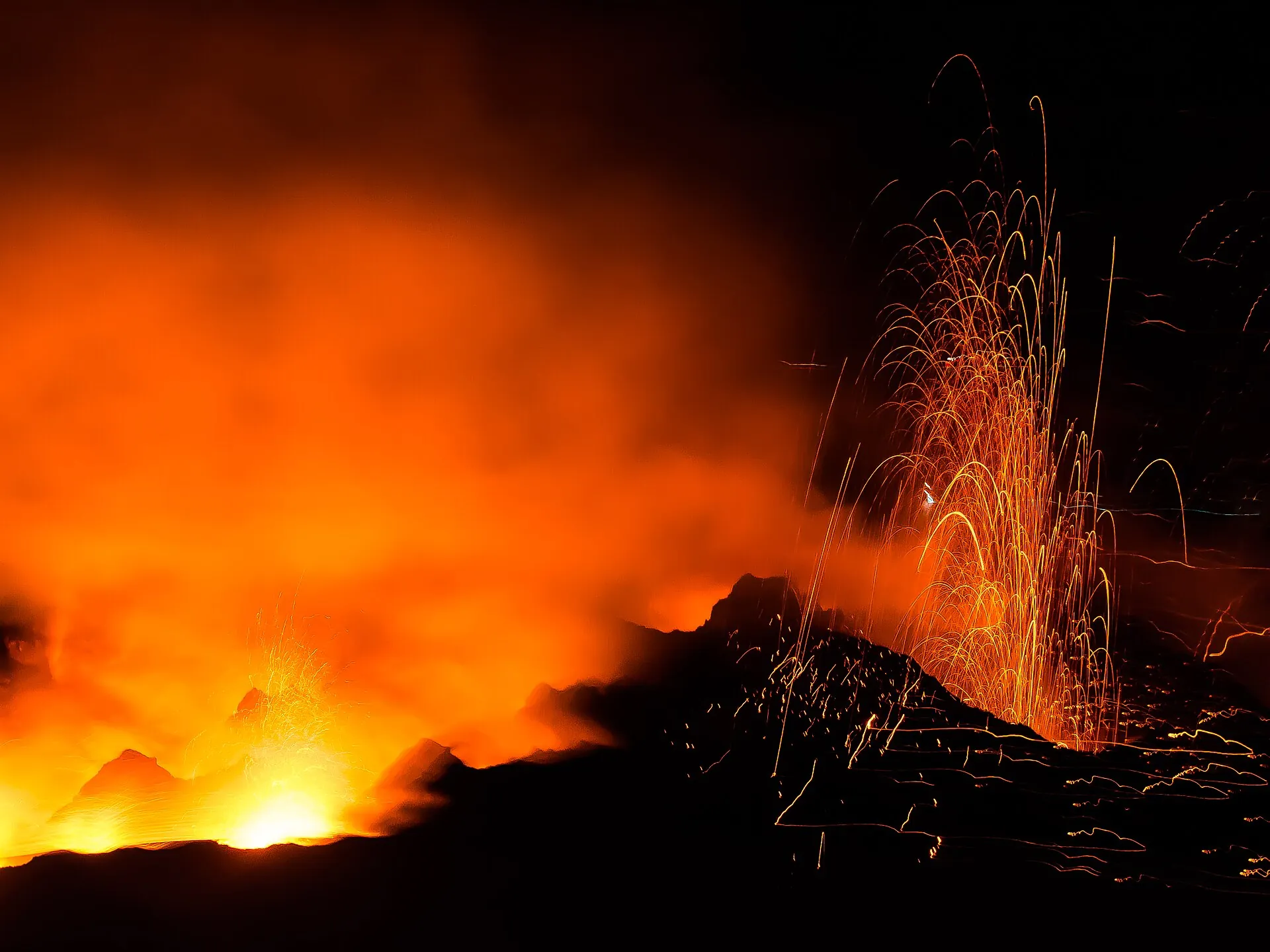
You sit in the dark. And wait.
Every 10 to 20 minutes it throws fire. For thousands of years.
Photo: kuhnmi · CC BY 2.0
Nobody is allowed on the summit any more. It does not matter: the craters lie at about 700 m (2,300 ft), and you look straight into them from below and from the side. It is most powerful after sunset – so set off in the late afternoon and stay a night on the island.
From Stromboli village via the Strada vicinale Parroco and the old mule track. Steep, dusty, pitch dark on the way down: head torch, water, sturdy shoes.
Nobody goes higher. At most 25 guests per guide, 75 people on the mountain at once, tours only between 11 am and midnight. Helmet and dust mask are provided by the guide.
The 'slope of fire' is the black flank down which everything rolls into the sea. In the evening the boats anchor in front of it, engines off – and then you hear it.
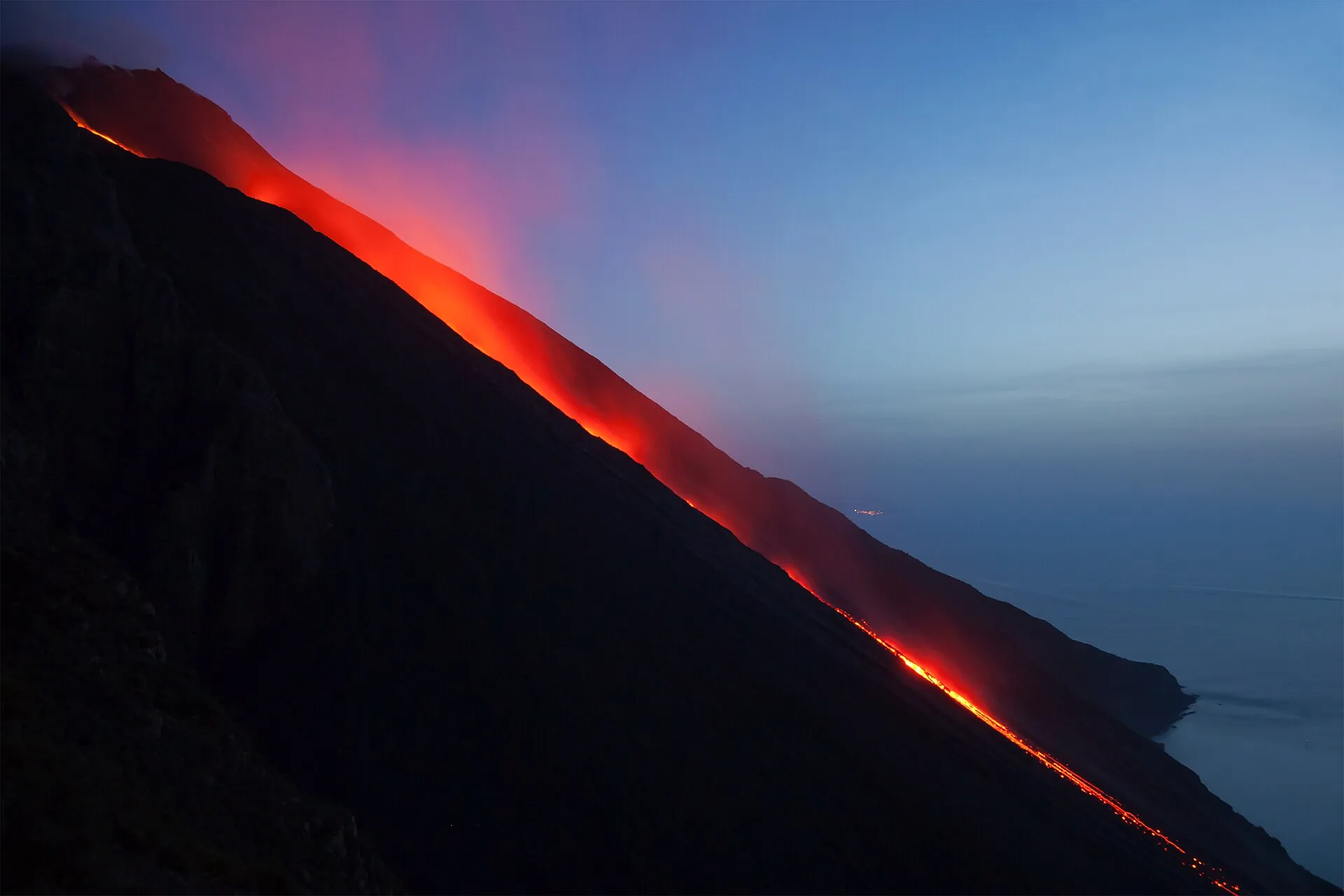
Photo: Unukorno · CC BY 3.0
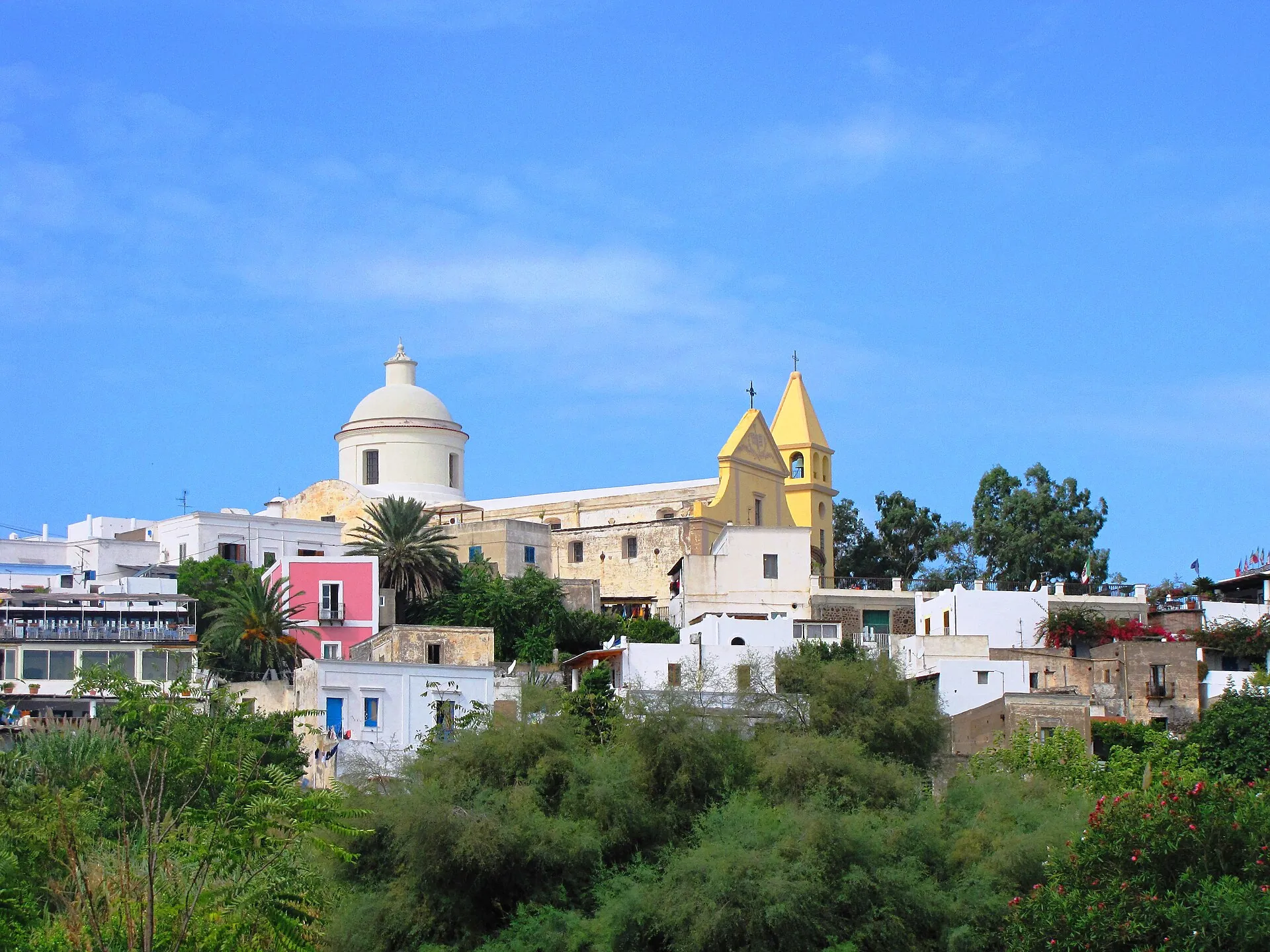
Photo: Hein56didden · CC BY-SA 4.0
On foot to the limit or by boat in front of the flank – both end in the dark with a view of the craters.
Affiliate links to GetYourGuide: if you book, we earn a commission and the price stays the same. Prices and ratings as of 21.09.2026. How often and how strongly it erupts is up to the mountain.
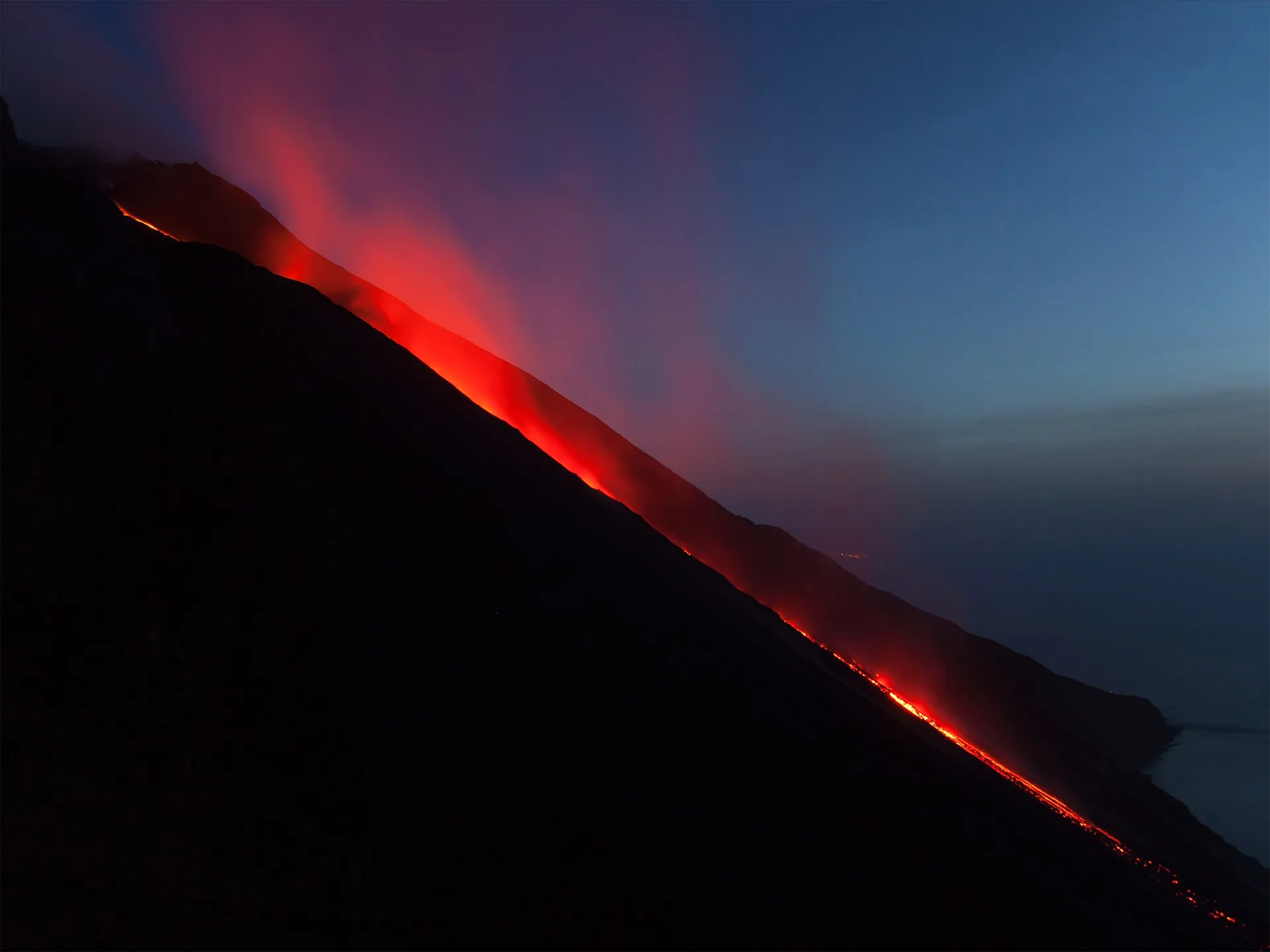
Photo: Unukorno · CC BY 3.0
Civil protection grades the volcano, the mayor of Lipari follows with an ordinance. Between June 2024 and May 2025 the limit changed four times.
Everything above 290 m closed, below only with a guide.
Lava flow to the sea. Climbing banned completely, at night the beaches too.
Free only to the observatory at 100 m, with a guide to 400 m.
290 m free, 400 m with a guide. Still in force today.
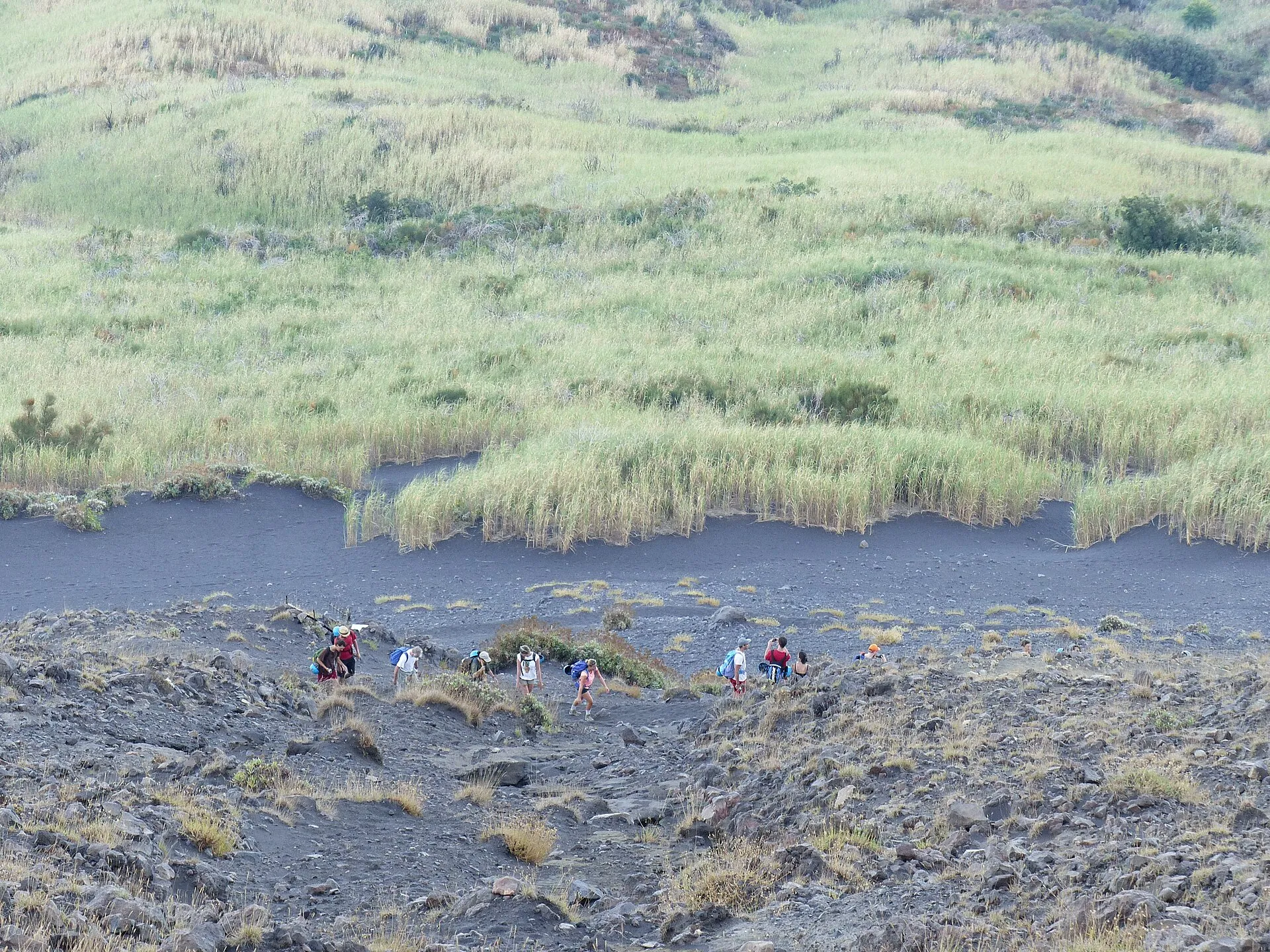
Photo: Benjamín Núñez González · CC BY-SA 4.0
Without a car: By sea only. The main port for the crossing is Milazzo; Liberty Lines hydrofoils call at Stromboli and Ginostra, the car ferries are run by Caronte & Tourist Isole Minori under the Siremar brand.
By car: Leave the car at the port of Milazzo; you do not need one on the island for the volcano.
May/June and September/early October: less hot, boats still run frequently, dusk not too late. The eruptions are most impressive in the dark, so climb in the late afternoon and stay at least one night. From October the timetable thins out (only four departures from Milazzo) and autumn storms cancel the boats more often.
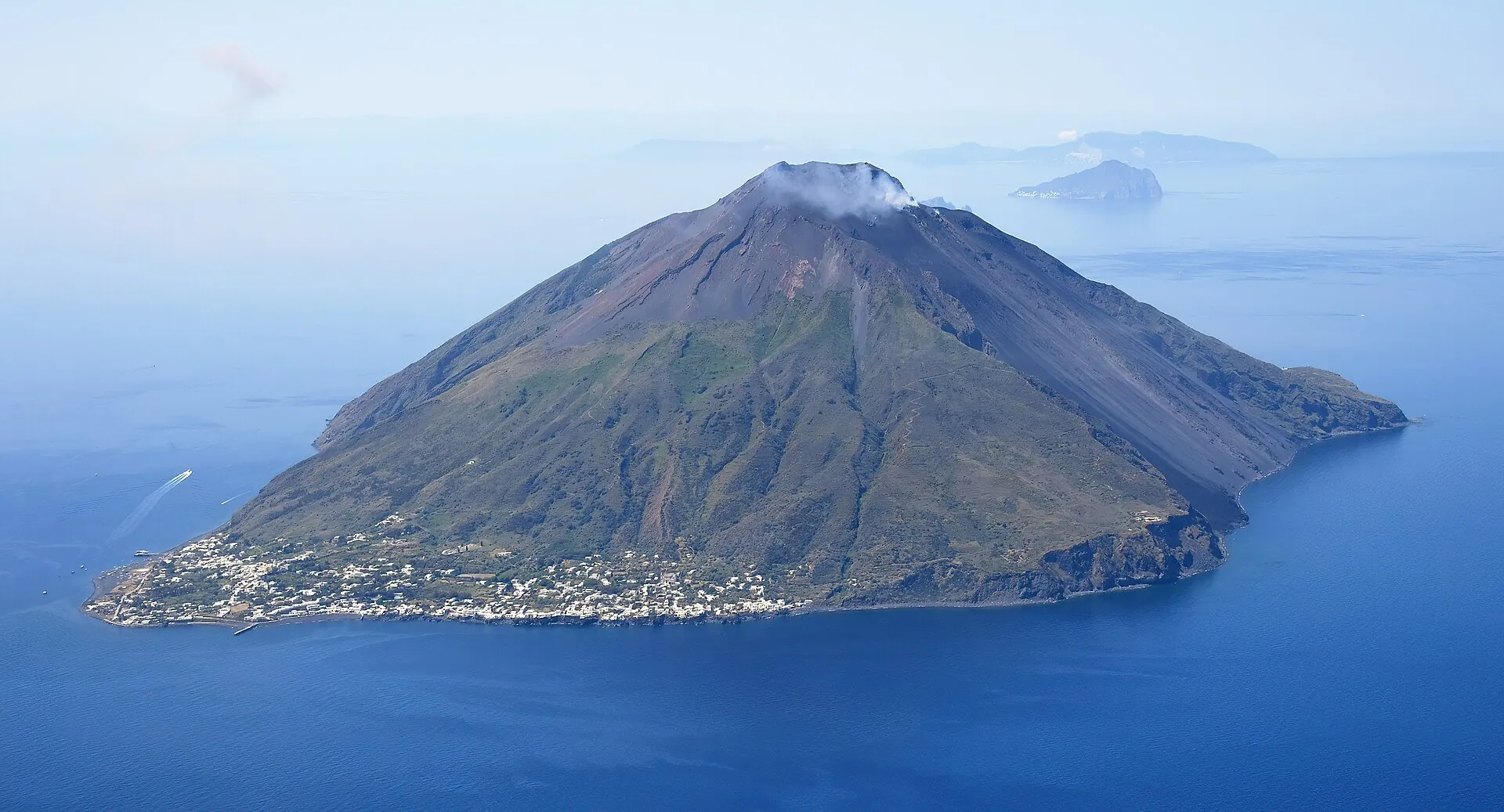
Photo: Carsten Steger · CC BY-SA 4.0
Yes. From both heights you look across the Sciara del Fuoco to the crater terrace at about 700 m. In the dark the lava fragments are easy to see.
Not for the free zone. Between 290 and 400 m you need a licensed guide, who registers the group with the municipality.
By Liberty Lines hydrofoil from Milazzo: up to nine departures a day in summer 2026, four from 1 October. Autumn storms cancel the boats more often.
The path to 290 m works with sure-footed children, but it is steep, dusty and dark on the way down. There is no official minimum age; for guided tours the offices decide.
No. Above 400 m the volcano is closed to visitors, even with a guide. The basis is ordinance no. 16 of the mayor of Lipari of 5 May 2025, which on 21 September 2026 was the most recent one to be found.
From Stromboli village up to 290 m (950 ft) above sea level, and only via the Strada vicinale Parroco and the Mulattiera Salvatore di Losa. From Ginostra it is 130 m. The Sentiero Natura is closed.
An administrative fine of €500 per person, in more serious cases criminal proceedings as well. There are checkpoints on the paths.
The path to 290 m is possible with sure-footed children, but it is steep, dusty and dark on the way down. There is no official minimum age; for guided tours the offices decide.
Trekking boots, head torch, water, food and a jacket for the evening – the ordinance names this equipment explicitly. Helmet and mask are provided above 290 m by the guide.
Normal activity is harmless from the permitted zone. Rarely there are paroxysms that hurl blocks for kilometres, and tsunamis – most recently a 40 cm wave in July 2024. Hence the altitude limits and the siren system.
As of 21 September 2026: alert level yellow, 290 m free, 400 m with a guide. This can change within a day – what counts is the DPC alert level and the ordinances of the municipality of Lipari.
Yes. The island has two villages: Stromboli in the north-east and tiny Ginostra in the south-west, reachable only by boat. Wikipedia gives about 540 permanent residents, around 30 of them in Ginostra; there are hotels, guesthouses, restaurants and black lava beaches, but no cars – only electric carts and scooters. Civil protection keeps the island on yellow, two siren systems warn of paroxysms and tsunamis; a normal holiday is possible as long as you know the rules of conduct. An overnight stay is worth it, because the eruptions are most impressive after sunset.
Stromboli erupts constantly – every 10 to 20 minutes. Beyond the normal level, the most recent events were two 'major explosions' on 23 May 2026 and 12 June 2026 (INGV). The last serious crisis was in summer 2024: on 4 July a lava flow into the sea, a pyroclastic flow and alert level red, on 11 July 2024 a paroxysm. In the paroxysm of 5 April 2003 ejected material even reached inhabited areas, according to civil protection. Civil protection says major explosions occur several times a year, paroxysms every few years.
Sources · accessed on 21 September 2026
.jpg)


.jpg)