Volcano·Guide
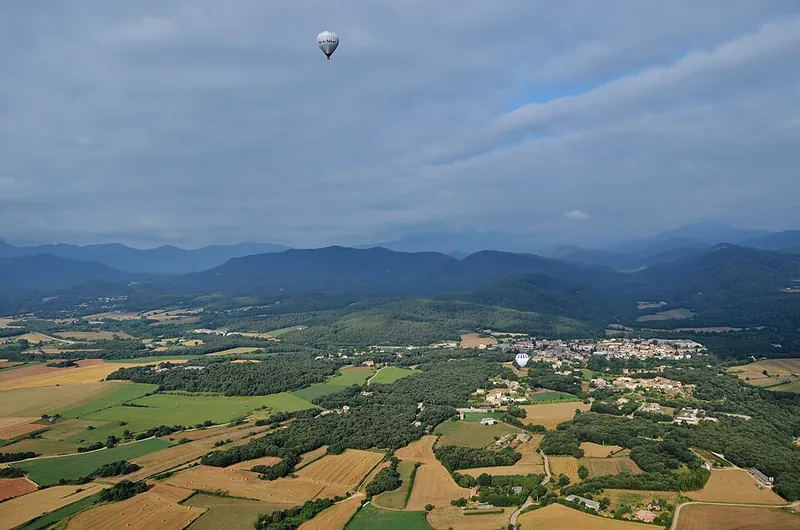
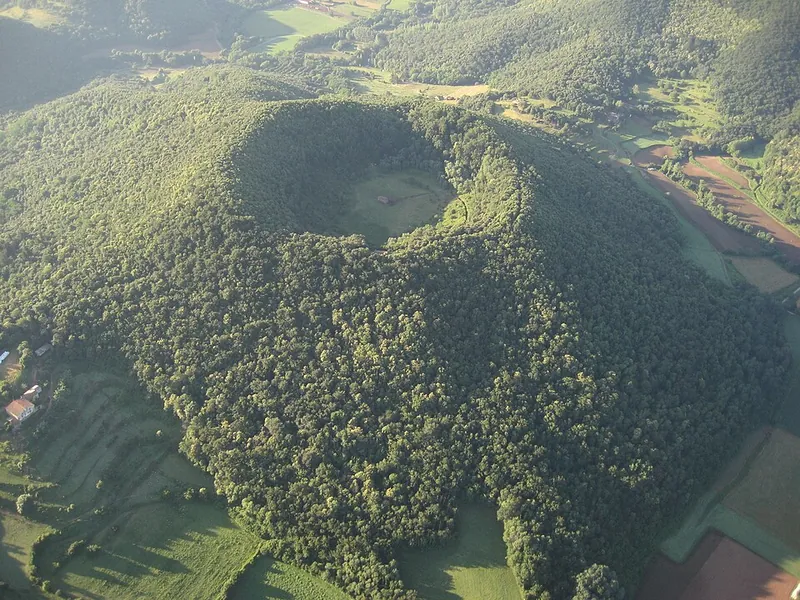
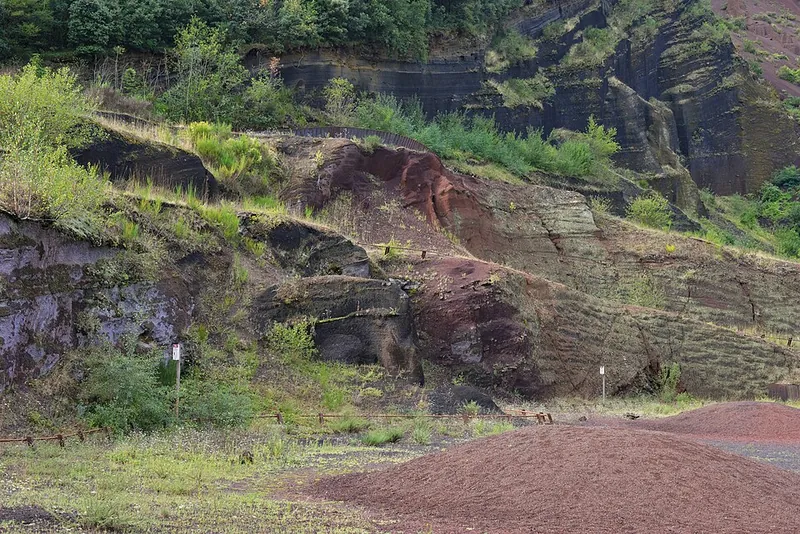
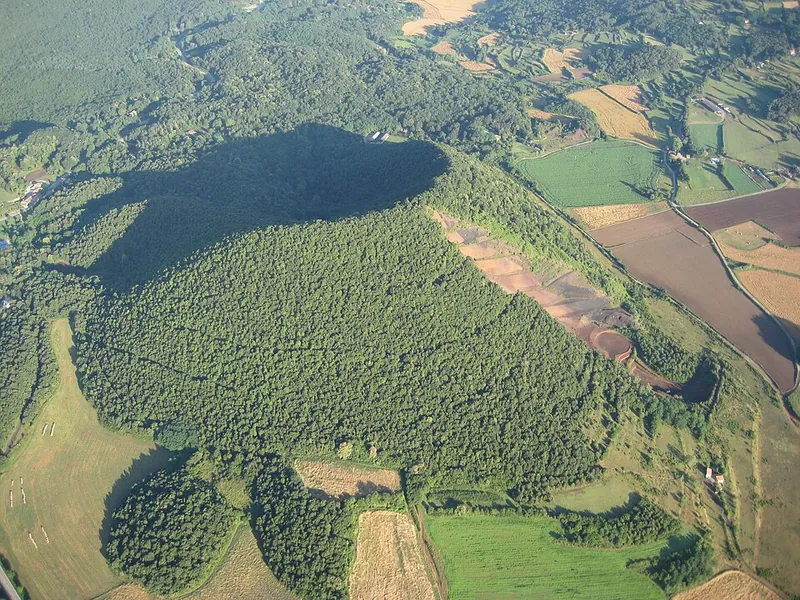
The cut-open northeast flank of the Croscat in the Garrotxa: red and black lapilli layers of the old quarry The wooded cone of the Croscat from the air, the quarry wound on one side, fields all around A hot-air balloon above the Garrotxa plain, fields and the cones of the volcanic zone below

Garrotxa Volcanoes

On the ground you stand inside a volcano cut in half.

From above the cut becomes a wound in a green cone.

And at seven in the morning you hang in a basket above it.

Scroll –
up into the balloon

As of September 22, 2026No admission – you only pay for parking

About 40 cinder cones and 20 lava flows lie between Olot and Santa Pau, the youngest volcanic field on the Iberian Peninsula. The whole natural park can be walked on marked itineraries without a ticket, guide or reservation. What costs money are the two parking lots on the GI-524 road – and the balloon flight.

Open
2,579ft

Croscat and its quarry

The highest cone in the field, cut open as a lapilli quarry until 1991. Boardwalks take you inside the 330 ft (100 m) high, 1,640 ft (500 m) long quarry face (Itinerary 15, 1.8 miles from the Santa Margarida parking lot). Can Passavent information center 10 am–4 pm.

trail free, parking extra€0
Open
1,150ft across

Santa Margarida crater

A perfectly round crater, 260 ft (79 m) deep, with a Romanesque chapel on the meadow in the middle. About 30 minutes' climb from the parking lot on the GI-524 (km 6.5).

parking, car, on paying days€4
Open
1,800ft

Fageda d'en Jordà

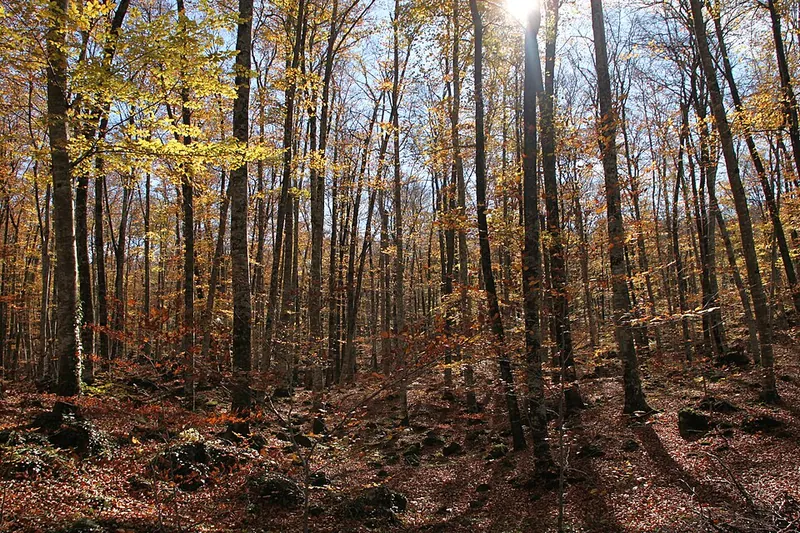
A beech forest on a Croscat lava flow, unusually low for beeches. Flat 0.9-mile loop from Can Serra (km 4). Fall colors from late October to mid-November.

parking Can Serra, about€2/h
Sources: Parc Natural de la Zona Volcànica de la Garrotxa (Generalitat de Catalunya) – Itineraries 1, 2 and 15, parking-fee leaflet (undated), information centers. Closures during high wildfire risk (Pla Alfa) or after storms are posted by the park at parcsnaturals.gencat.cat.
The perfectly round, wooded crater of the Santa Margarida volcano in the Garrotxa from the air, the meadow with the chapel in the middle
Santa Margarida from above: a perfect circle, and in the middle a chapel rebuilt after the earthquake of 1428.

Photo: Carquinyol · CC BY-SA 2.0

The experienceThree volcanoes, one morning

From the Santa Margarida parking lot you first climb to the crater rim and drop down to the meadow: silence, a chapel, beeches and oaks all around. Then over to the Croscat, where boardwalks lead into the cut-open flank – red, black, ocher, layer by layer you read the eruption of 11,500 years ago. Finally the beech forest, where the ground beneath the leaves is solidified lava. If you want to see the cones whole, take the balloon first.

Affiliate links to GetYourGuide: if you book, we earn a commission and the price stays the same. Prices and ratings as of 22 September 2026. Whether you fly is decided by the wind in the morning.

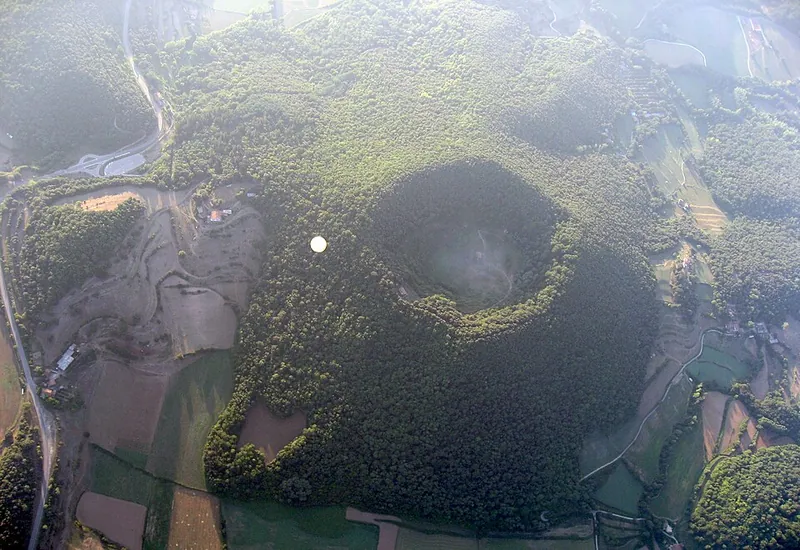
View from a hot-air balloon onto the wooded crater of Santa Margarida in the Garrotxa, a second balloon floating below
From the basket: only from above do you understand that every one of these wooded hills is a crater.

Photo: Abel Garcia Villena · CC BY-SA 3.0

The rulesParking, groups, dogs – what really applies

For individual visitors there is no hurdle. The park's rules concern cars, organized groups and respect for private property – almost all the land belongs to farmers.

1

Two parking lots, two systems

Can Serra (km 4): machine, by the minute, card only, payment 24 hours a day. Santa Margarida (km 6.5): flat daily rate, cash only, only on weekends, holidays and vacation periods. Parking along the GI-524 is fined.

2

Groups need a reservation

Organized groups (schools, operators) reserve the Croscat quarry at Can Passavent and go with a park guide, at most 20 people. Individual visitors just set off.

3

Dogs on a leash

Allowed throughout the park, but only on a leash or in a carrier; pick up after your dog. The Agents Rurals check on fall weekends.

4

No camping, no drones

Camping is banned in the park, and so are overnight stays in the Santa Margarida parking lot (year-round 8 pm–8:30 am). Drones below 300 m are not allowed. The quarry is closed outside the boardwalks.

Official prices · as of 09/2026
Admission to the natural park, all itinerariesfree
Can Serra parking lot, car · machine, card only · first two hours €0.034/min, then €0.017/minabout €2/h
Santa Margarida parking lot, car · flat daily rate, cash only, paying days only · motorcycle €2, motorhome €6, coach €8€4
Rumbus Les Preses – Olot – Fageda – Santa Margarida – Santa Pau, day ticket€2
Espai Cràter Olot (volcano museum), adults · reduced €5.50 · up to age 4 free€7.50
Vol de Coloms balloon flight, shared basket, weekday / weekendfrom €195 / €225
Sources: parking-fee leaflet of the natural park (undated; the paying days match the 2026 calendar), Consell Comarcal de la Garrotxa (Rumbus, launched 07/2023), Ajuntament d'Olot (Espai Cràter), voldecoloms.cat. Paying days at Santa Margarida: weekends, holidays, Easter week, July, August, September 1–11, October 13/30/31, December 1–10.
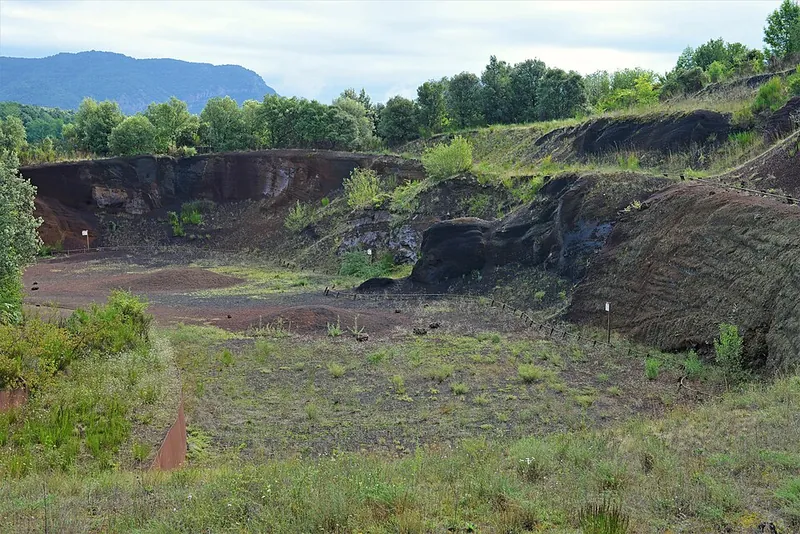
Red and black lapilli layers in the quarry face of the Croscat, the flat floor of the former quarry in front
The quarry wounded the mountain – and made it readable. Every layer a pulse of the eruption.

Photo: Alberto-g-rovi · CC BY 3.0

TrailsFour ways to the volcanoes

All itineraries are marked and free. Bikes and horses are not allowed on the core trails.

The trails · as of 09/2026
Itinerary 15 – Grederes del Croscat · from the Santa Margarida parking lot (km 6.5)1.8 miles (2.9 km) there and back, about 40 minutes, easy. Boardwalks into the quarry face, Can Passavent information center with exhibition and restrooms (10 am–4 pm).
Climb to the Santa Margarida crater · from the same parking lotAbout 30 minutes up to the rim, then down to the crater meadow and the chapel. Not wheelchair-accessible.
Itinerary 2 – Sender Joan Maragall · from Can Serra (km 4)0.9 miles (1.5 km), about 35 minutes, flat, family-friendly, through the underpass beneath the GI-524 into the beech forest.
Itinerary 1 – the big loop · Fageda, Santa Margarida, Croscat7.5 miles (12 km), about 4 hours 20 minutes, moderate, less than 650 ft (200 m) of climbing. The only water point is at the Santa Margarida parking lot. Muddy in the forest after rain.
Vol de Coloms balloon flight · launch site at the Croscat, Santa PauLaunch 6:30–7:30 am depending on season, 1–1.5 hours in the air, 3–4 hours with setup and farmhouse breakfast. From €195 on weekdays, €225 on weekends; postponed in wind or fog.
Sources: natural park (itinerary pages 1, 2, 15), Catalan Wikipedia (Santa Margarida crater dimensions), Vol de Coloms (product page). The park does not give elevation figures for the trails.
Fall beech forest Fageda d'en Jordà in the Garrotxa, golden-yellow foliage and a carpet of leaves on the ground
The Fageda in November: under the leaves lies a lava flow – and on weekends a line of cars lies in front of it.

Photo: Catalaalatac · CC BY-SA 3.0

Good to knowGetting there, best time, tips

Getting there

Without a car: Teisa bus from Girona (bus station) to Olot via Amer or Banyoles, about 1 hour 15 minutes, €7.95–8.90; from Barcelona (stops C/ Aragó 271, Gran Via 658, C/ Tarragona 129 near Sants) via Banyoles or Amer, about 2–2.5 hours, €21.70–26. From Olot into the core area with the Rumbus (Teisa) Les Preses – Olot – Fageda d'en Jordà (Can Serra) – Àrea Santa Margarida – Santa Pau: hourly on weekends, holidays, long weekends and in summer, every half hour when busy, day ticket €2. On ordinary weekdays outside the season no bus runs to the parking lots.

By car: From Olot on the GI-524 toward Santa Pau: Can Serra at km 4 (Fageda), Àrea de Santa Margarida at km 6.5 (start for Croscat and Santa Margarida). Both charge (see prices), Can Serra card only, Santa Margarida cash only. Full from mid-morning on fall weekends; parking along the GI-524 is fined. From Barcelona about 120 km (75 miles) via the C-17/C-37 or AP-7 and C-66/A-26, 1.5–2 hours; from Girona 55 km (34 miles) via the C-66/A-26, about 50 minutes.

  • From Olot · 10 minutes by car
    GI-524, Rumbus or on foot via the itinerary network
  • From Girona · 50 minutes by car, 1 h 15 by bus
    C-66 / A-26 or Teisa bus
  • From Barcelona · 1.5–2 hours by car, 2–2.5 hours by bus
    AP-7 and C-66/A-26 or C-17/C-37 (Bracons tunnel); Teisa bus
  • From Figueres · about 50 minutes
    N-260 / A-26 via Besalú

Best time to go

October to mid-November for the foliage of the Fageda – but then on a weekday or before 10 am, because the parking lots are full on weekends and Santa Margarida charges for parking. Spring for green craters and balloon weather; summer is hot, so walk early. Balloon flights launch at daybreak year-round, with the clearest air in winter.

Who it suits

Children
Very good: the Fageda loop is flat and short, Santa Margarida is reached in 30 minutes, the Croscat boardwalks have an exhibition. The balloon takes children (family flight), minimum age see unsicher.
Minimum age
none for the trails
Fitness
Low to moderate; the 12 km loop is rated 'moderate' but has less than 200 m (650 ft) of climbing.
Heart and lungs
no restrictions
Wheelchair
Parts of the museum space at the Croscat and the trails around Can Serra are paved; disabled parking at Can Serra; driving permit for closed tracks at the information centers. The Santa Margarida crater trail is not wheelchair-accessible.
Dogs
Allowed, but throughout the park only on a leash or in a carrier; pick up after your dog (protection of livestock and wildlife).
Clothing
Weatherproof – the Garrotxa is the rainiest corner of Catalonia; cool and damp in the beech forest, balloon passengers need warm layers early in the morning.
Footwear
Sneakers are enough for the Fageda and the Croscat, hiking boots for the 12 km loop after rain

Tips you will need on site

  • On weekends park at Santa Margarida, not at Can Serra: there you pay a €4 flat rate instead of a per-minute price, and both the Croscat and the crater start right at the parking lot. Bring cash – the attendant does not take cards.
  • On weekdays outside vacation periods Santa Margarida is free; Can Serra always charges (card only).
  • Walk the Itinerary 1 loop counterclockwise from Santa Margarida: first the crater and chapel, then the Croscat quarry, then the Fageda – that way you do the climbs in the morning.
  • For the Croscat quarry use Can Passavent's opening hours (10 am–4 pm); the exhibition and restrooms are there.
  • Put the balloon flight on your first day: if it is windy it gets postponed, and then you have backup dates.
  • Without a car: bus to Olot, stay there and take the Rumbus (€2 day ticket) into the park on the weekend; on winter weekdays nothing runs – then taxi or on foot from Olot (itinerary via the Montsacopa and the Fageda, about 8 km / 5 miles).
  • Dog on a leash, also in the beech forest; the Agents Rurals check on fall weekends.
  • Leave the drone at home – flying below 300 m is not allowed in the park.
  • Always a rain jacket: Olot is the rainiest corner of Catalonia.

A short history

  • The Garrotxa volcanic field has been active for about 700,000 years; each cone formed in a single eruption (monogenetic).
  • The Croscat (786 m / 2,579 ft, cone height about 160–190 m) is the highest and, by the classic dating of 11,500 ± 1,500 years, the youngest volcano on the Iberian Peninsula; according to a 2011 study Santa Margarida belongs to the same eruption.
  • Sediment cores from the Vall d'en Bas (IPHES, 2023) move the last volcanic activity to about 8,300 years ago.
  • The earthquakes of 1427/1428 destroyed Olot and parts of the county; the 1428 quake also killed people in Barcelona. The Romanesque chapel in the Santa Margarida crater was rebuilt afterwards.
  • From the 1960s lapilli was quarried at the Croscat; the quarry cut a wound over 100 m (330 ft) high and 500 m (1,640 ft) long into the northeast flank. Protests in the 1970s led to Llei 2/1982 and the natural park.
  • Quarrying ended in 1991 after the Generalitat took over a majority of the mining company; in the 1990s the quarry was turned into a 'museum space'.
  • The Fageda d'en Jordà beech forest grows on a Croscat lava flow at only 550 m (1,800 ft) – unusually low for beeches; Joan Maragall's poem of 1904 made it famous.
  • Since July 2023 the Rumbus has linked Olot with the parking lots of the core area to reduce car traffic on the GI-524.
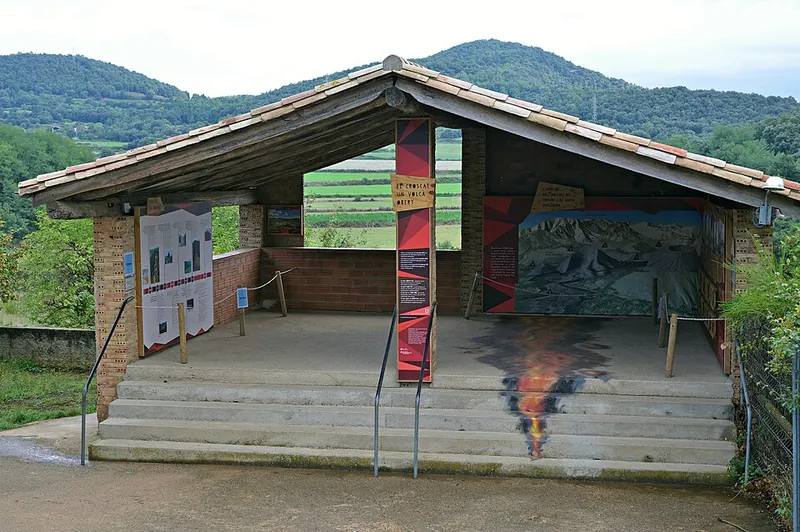
The open wooden pavilion of the Can Passavent information center at the Croscat with display panels, wooded hills of the Garrotxa behind
Can Passavent at the end of the trail: exhibition, restrooms – and the place where groups have to reserve.

Photo: Alberto-g-rovi · CC BY 3.0

All aroundOlot, Santa Pau, Castellfollit

The volcanoes do not stop at the parking lot. Olot itself sits on four cones, and six miles to the north a village perches on two superimposed lava flows.

Espai Cràter and Montsacopa, Olot

The town's volcano museum lies beneath the Montsacopa, the town volcano you climb in 20 minutes from the center – chapel, crater and a view of the cones all around at the top. Espai Cràter €7.50, cards only.

museum, adults€7.50

Santa Pau

Medieval village with an arcaded square and a castle on the eastern edge of the park, terminus of the Rumbus. Known for its beans, fesols de Santa Pau.

free

Castellfollit de la Roca

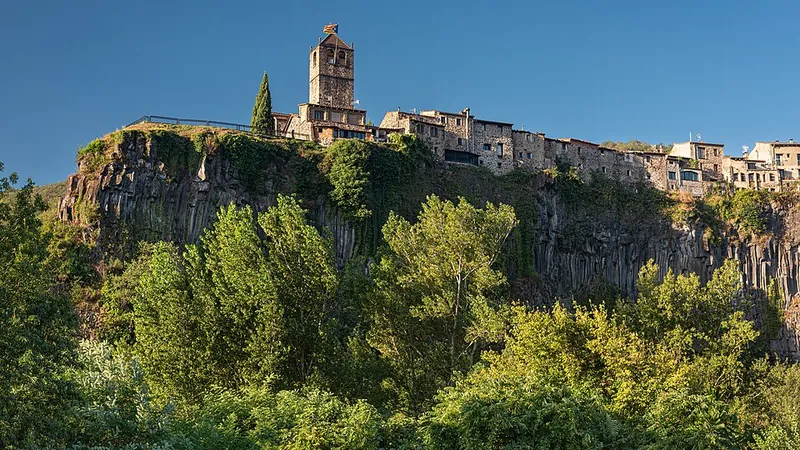
A village on a 165 ft (50 m) basalt cliff made of two lava flows, 6 miles (10 km) north of Olot on the A-26. Best photographed from the riverbank.

free
Castellfollit de la Roca: houses and church tower on the edge of a dark basalt cliff above the river
Castellfollit de la Roca: the cliff under the village is two solidified lava flows, laid bare by the river.

Photo: Jorge Franganillo · CC BY 2.0

Outdated onlineWhat other sites get wrong

“At 11,000 years the Croscat is the youngest volcano in Spain.”
The youngest on the mainland, yes – the Canaries were last active in 2021 on La Palma. And a 2023 sediment study (IPHES) dates the last Garrotxa activity to about 8,300 years ago.
“You need a ticket for the park.”
There is no admission. You only pay for parking – and at Santa Margarida outside the paying days not even that.
“A tourist train runs into the Croscat.”
The interior of the quarry is reached only on foot via Itinerary 15. Tourist trains run only on public roads between the parking lots and the Fageda.
“Dogs are banned in the Fageda.”
They are allowed, but must stay on a leash throughout the park.
“Parking costs a flat €4 everywhere.”
Only at Santa Margarida and only on paying days. Can Serra charges by the minute (about €2/hour) and takes cards only.

Quick answersBefore the drive to Olot

Does the Garrotxa natural park charge admission?

No. All trails, the Santa Margarida crater, the Croscat quarry and the Fageda d'en Jordà are free. You only pay for parking: Can Serra by the minute (card only), Santa Margarida €4 per car on paying days (cash only).

How much does a balloon flight over the Garrotxa volcanoes cost?

With Vol de Coloms from €195 on weekdays and from €225 on weekends in a shared basket, with cava on board and a farmhouse breakfast afterwards. Launch early in the morning at the Croscat near Santa Pau, 1–1.5 hours in the air.

How long is the hike to the Croscat and Santa Margarida?

From the Santa Margarida parking lot 1.8 miles (2.9 km) there and back to the Croscat quarry, about 40 minutes, plus about 30 minutes up to the Santa Margarida crater rim. The big loop via the Fageda is 7.5 miles (12 km) and takes a good four hours.

How do I get to the Garrotxa from Barcelona without a car?

By Teisa bus to Olot (2–2.5 hours, €21.70–26). From Olot the Rumbus runs to Can Serra, Santa Margarida and Santa Pau on weekends, holidays and in summer, day ticket €2. On weekdays outside the season no bus goes into the park.

When is the best time for the Fageda d'en Jordà?

Late October to mid-November for the foliage – but then on a weekday or before 10 am, because the parking lots fill up early on weekends.

Are the Garrotxa volcanoes still active?

They have been dormant for at least 8,000 years; there is no volcanic alert level. The region is seismically active – the earthquakes of 1427/1428 destroyed Olot. For visitors, wildfire warnings in summer are what count.

Do I need a guide for the Garrotxa volcanoes?

No, all itineraries are marked and open to individual visitors. Only organized groups have to reserve the Croscat quarry at Can Passavent and are accompanied by a park guide (max. 20 people).

Is the Garrotxa suitable for children?

Very much so: short, flat trails, a crater with a chapel to walk into, and boardwalks inside a cut-open volcano. Strollers manage the Fageda loop from Can Serra and parts of the Croscat trail.

Where do the balloon flights over the volcanoes start and what do they cost?

Vol de Coloms launches early in the morning (6:30–7:30 am) at the Croscat near Santa Pau. The shared flight costs from €195 on weekdays and from €225 on weekends, with cava in the basket and a farmhouse breakfast afterwards; 1–1.5 hours in the air.

Can I bring my dog into the park?

Yes, on a leash or in a carrier – unleashed dogs are banned throughout the park, and you must pick up after them. On the Rumbus, Teisa's conditions apply.

Is the park currently open?

As of September 22, 2026 no closures are known; the park is open around the clock. During high wildfire risk (Pla Alfa) or storms the Generalitat closes individual trails – notices at parcsnaturals.gencat.cat/garrotxa and in the information centers.

When was the last eruption in the Garrotxa?

The Croscat, at about 11,500 years, is classically considered the youngest volcano on the Iberian Peninsula. A sediment study published in 2023 (IPHES) shows activity as recently as about 8,300 years ago.

Can I camp in the park or sleep in a motorhome?

No. Camping is banned in the park, and overnight stays in the Santa Margarida (year-round 8 pm–8:30 am) and Can Serra (Easter week) parking lots are not allowed. There are campgrounds in Olot, Santa Pau and Les Preses.
Sources · accessed on 22 September 2026