Volcano·Guide
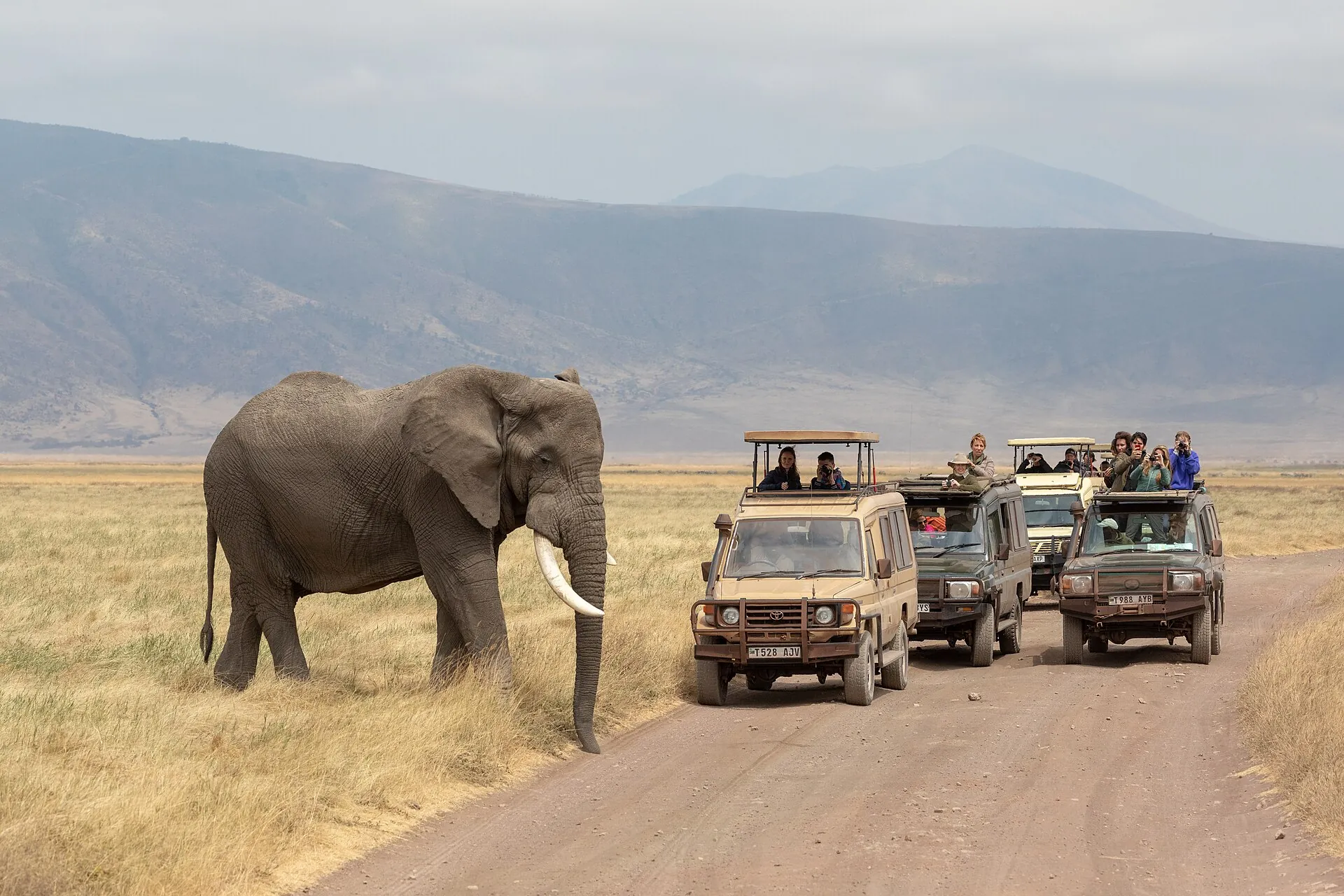
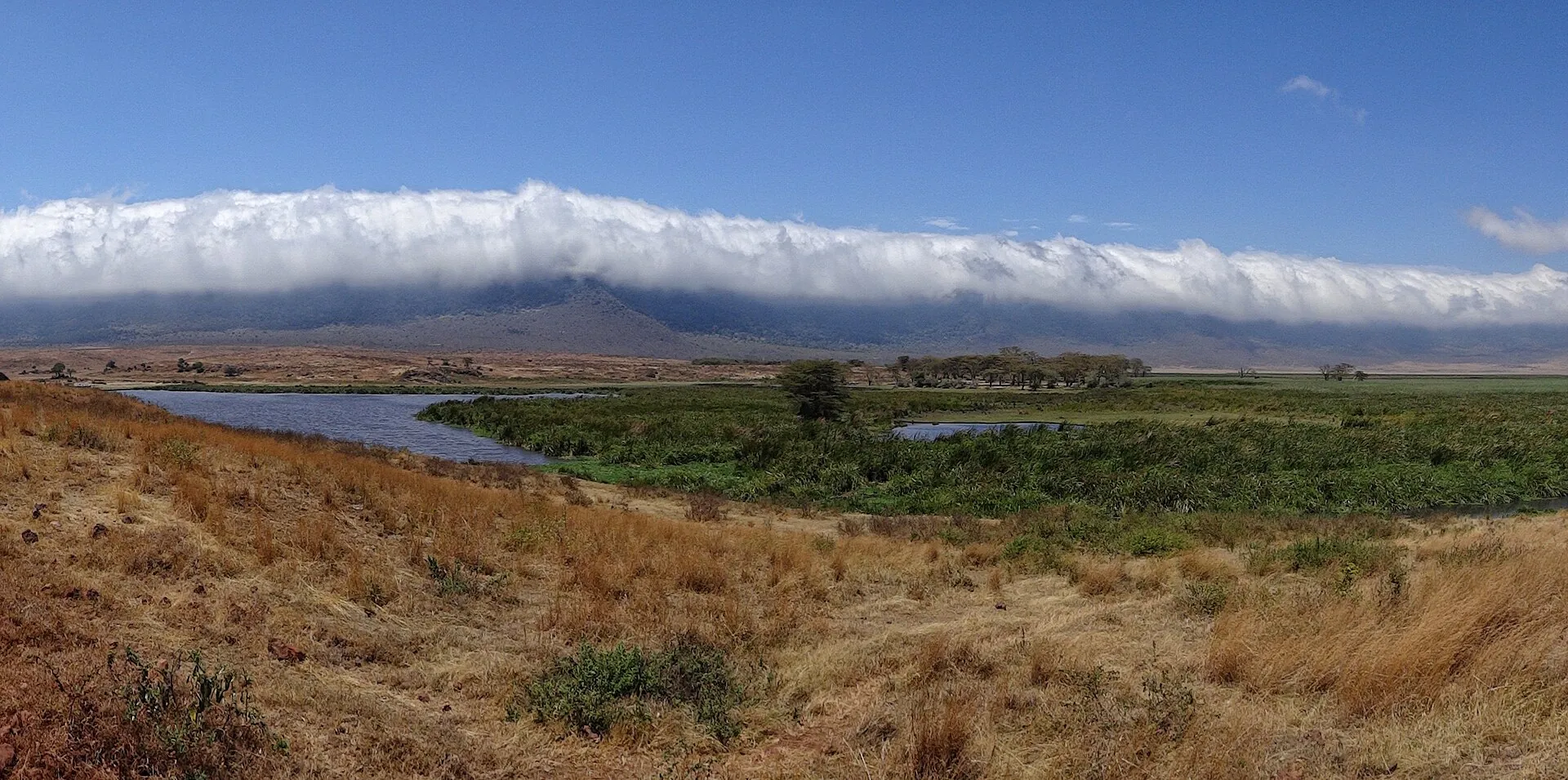
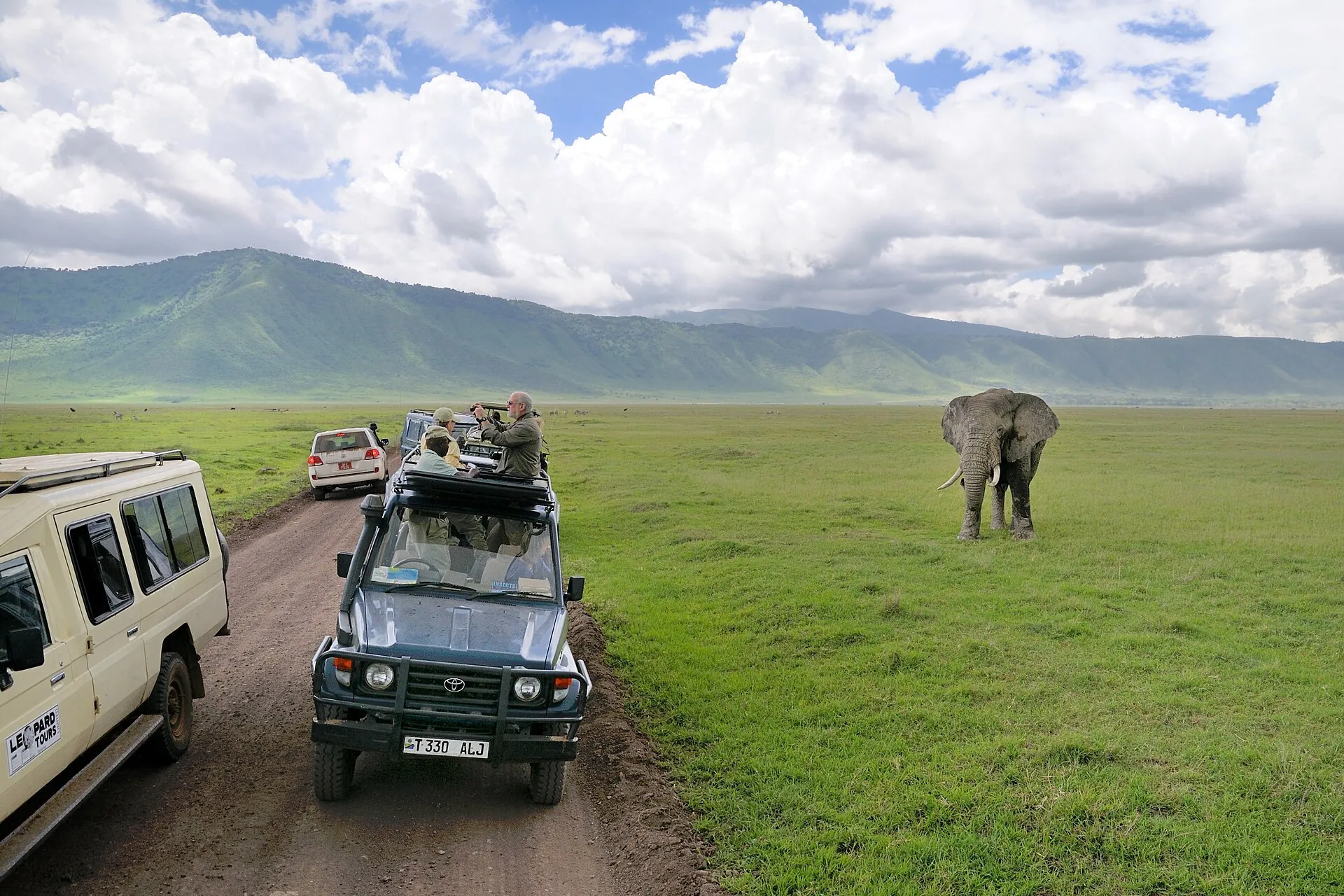
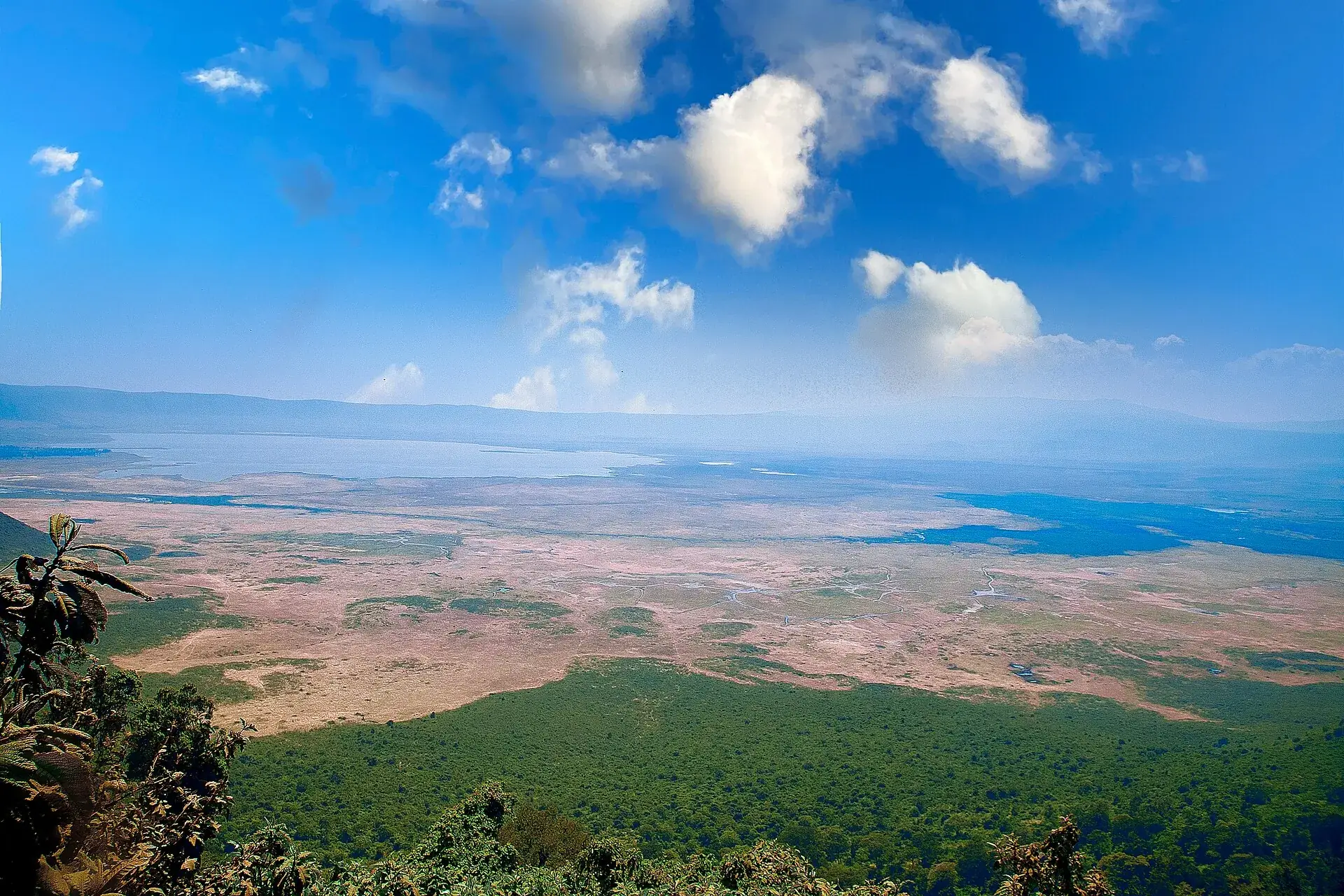
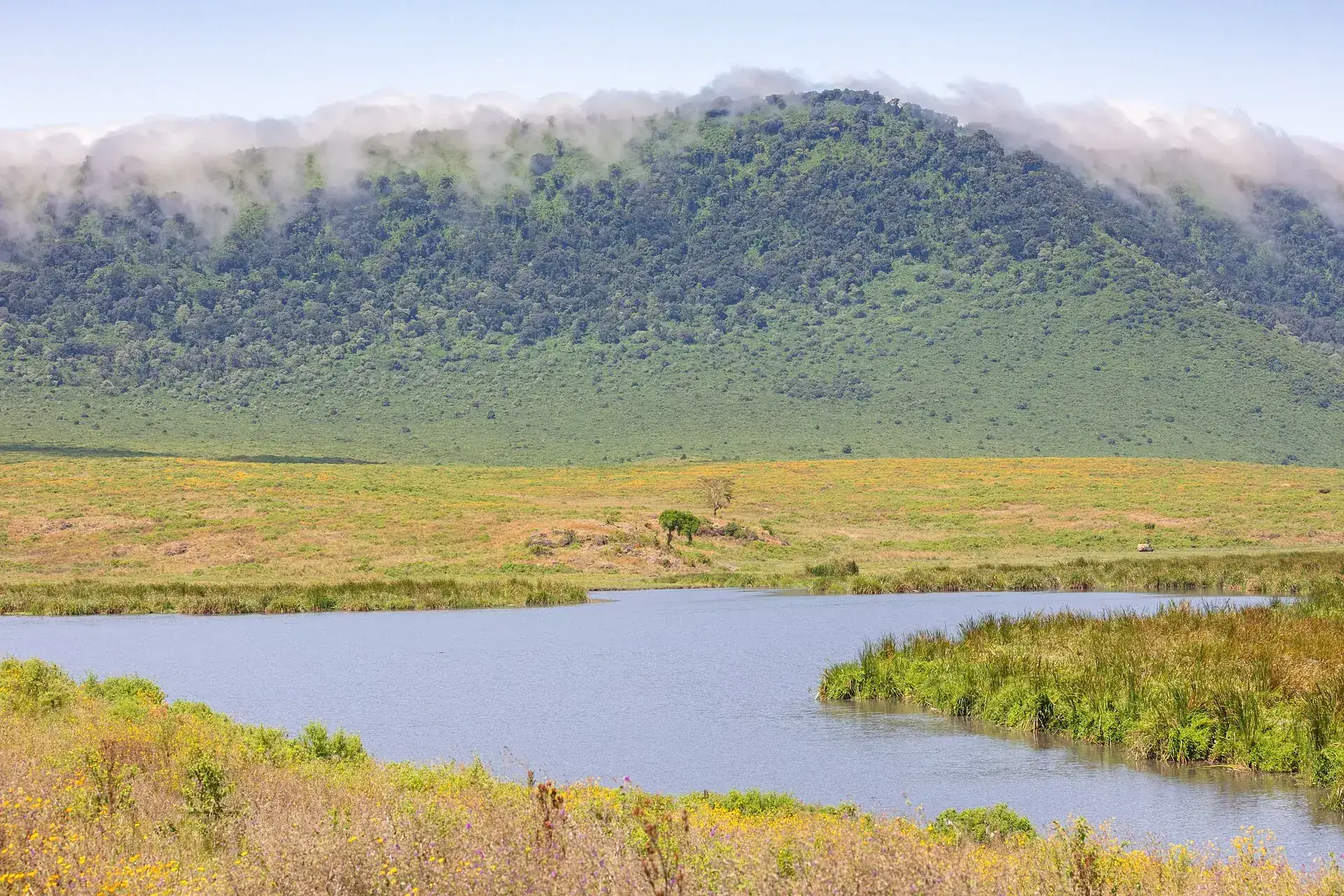
View from the rim of Ngorongoro Crater across the floor with the pale Lake Magadi, 610 meters below Clouds spill like a waterfall over the forested rim of Ngorongoro Crater, a lake on the floor below An elephant crosses the track inside Ngorongoro Crater while three safari vehicles with open roofs wait

Ngorongoro Crater

From the rim the crater reads like a map: 260 square kilometers, 610 meters down.

The track tips downhill while the clouds pour over the edge.

At the bottom an elephant stands in the road – and nobody gets out.

Scroll –
down into the crater

As of 23 September 2026Ngorongoro Crater today: open, but only in a 4x4

The crater is open – as of 23 September 2026 neither the park authority NCAA nor national travel advice lists a closure or a warning for the conservation area. But nobody simply drives in: you reach the floor only in a closed four-wheel-drive vehicle with a licensed guide, the descent closes at 4 pm, and payment is cashless – in practice settled in advance by your operator.

Open
6–4am–pm

The descent into the crater (Seneto)

The Seneto road on the west side has been descent-only since 14 July 2022, with entry between 6 am and 4 pm. You come back up on the Lerai road in the south – and every vehicle has to be out of the crater by 6 pm.

Crater service fee per vehicle and descent$295
Open
6–6am–pm

The gates of the conservation area

Loduare (14 km from Karatu), Naabi, Endoro and Nasera Rock open daily 6 am to 6 pm. The permit covers one entry within 24 hours – go down on two days and you pay the crater fee twice.

Entry per person aged 16 and over, 18% VAT included$70.80
Closed

Walking on the crater floor

You may leave the vehicle only at the marked picnic and toilet sites, such as the Ngoitokitok Spring. Walking happens outside the crater only – Empakaai, Olmoti, the rim – and only with an armed NCAA ranger.

Walking safari with a ranger, 1–4 hours, per person$23.60
Sources: NCAA visitor rules, tariff page and information page (ncaa.go.tz), accessed 22 September 2026 · TATO report on the opening of the Seneto road, 14 July 2022 · German Federal Foreign Office travel advice for Tanzania, as of 22 September 2026 (unchanged since 25 August 2026): the situation after the October 2025 elections remains volatile, avoid demonstrations, elevated crime – no warning that touches northern Tanzania or the safari parks. Weather closures of the steep crater roads are possible but are not published online; the NCAA news page was last updated in 2023.
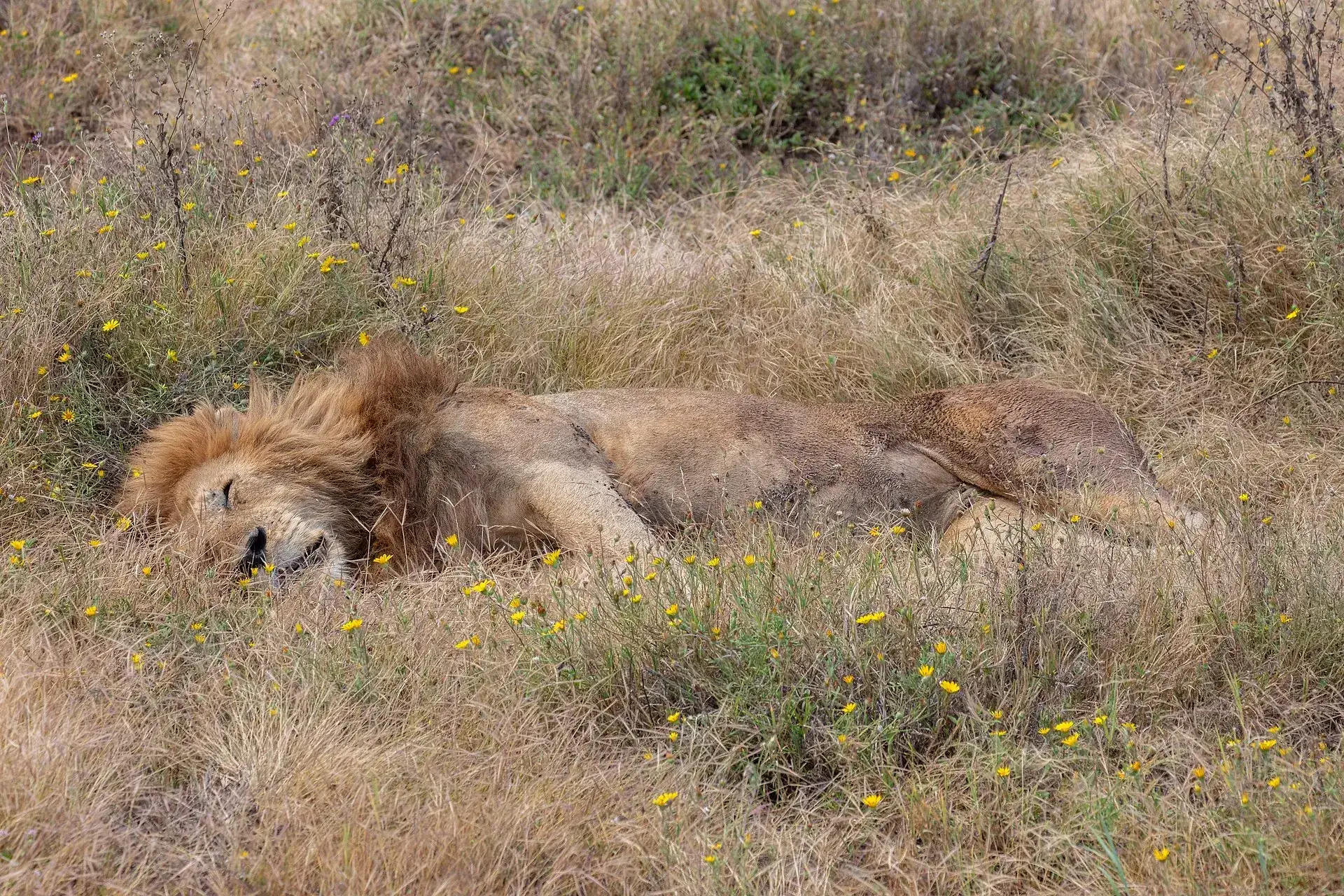
A male lion sleeps in the tall grass of Ngorongoro Crater, yellow flowers around him
Around 25,000 large animals on 260 square kilometers – and the lions are in no hurry.

Photo: Diego Delso · CC BY-SA 4.0

The safari arenaA day in the Ngorongoro Crater

The caldera of a volcano that died out two million years ago, 19 to 20 km (12 miles) across, ringed by walls 610 m (2,000 ft) high. Volcanically nothing happens here any more. What happens is down on the floor.

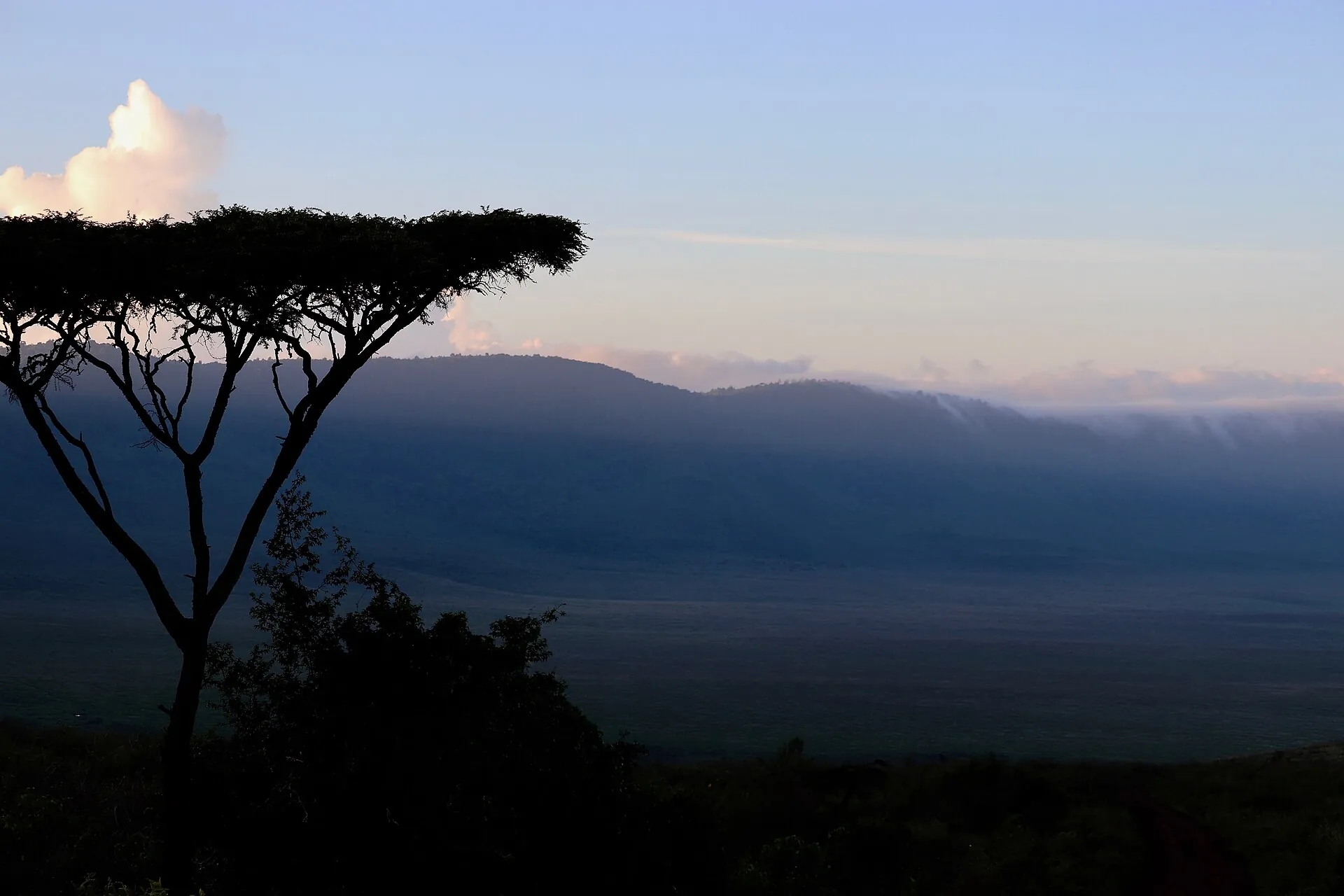
At six in the morning the vehicle waits at the Seneto gate, the rim sits in fog and it is 8 °C (46 °F). Then the track tips down, and every meter gets warmer. Five hundred meters lower the floor is a plain without a horizon: grass, the white rim of Lake Magadi, and behind it the wall the clouds run over.

What sets the crater apart from any other safari is the density. The animals barely leave the caldera: wildebeest, zebras, buffalo, hyenas, lions and the few black rhinos live all year on the same 260 square kilometers. You do not have to search, you only have to look. Giraffes are missing – the steep walls and the lack of acacias keep them out.

By midday the sun stands overhead, it is above 25 °C (77 °F) in the vehicle, and at the Ngoitokitok Spring black kites take sandwiches out of your hand. By 6 pm the vehicle has to be back on top via the Lerai road – and most people leave much earlier, because the predators hunt in the morning.

Affiliate links to GetYourGuide: if you book, we earn a commission and the price stays the same. Prices and ratings as of 22 September 2026. The choice here is thin: only the first tour has more than 50 reviews. Before booking, check whether the park entry and the crater fee are included in the price.

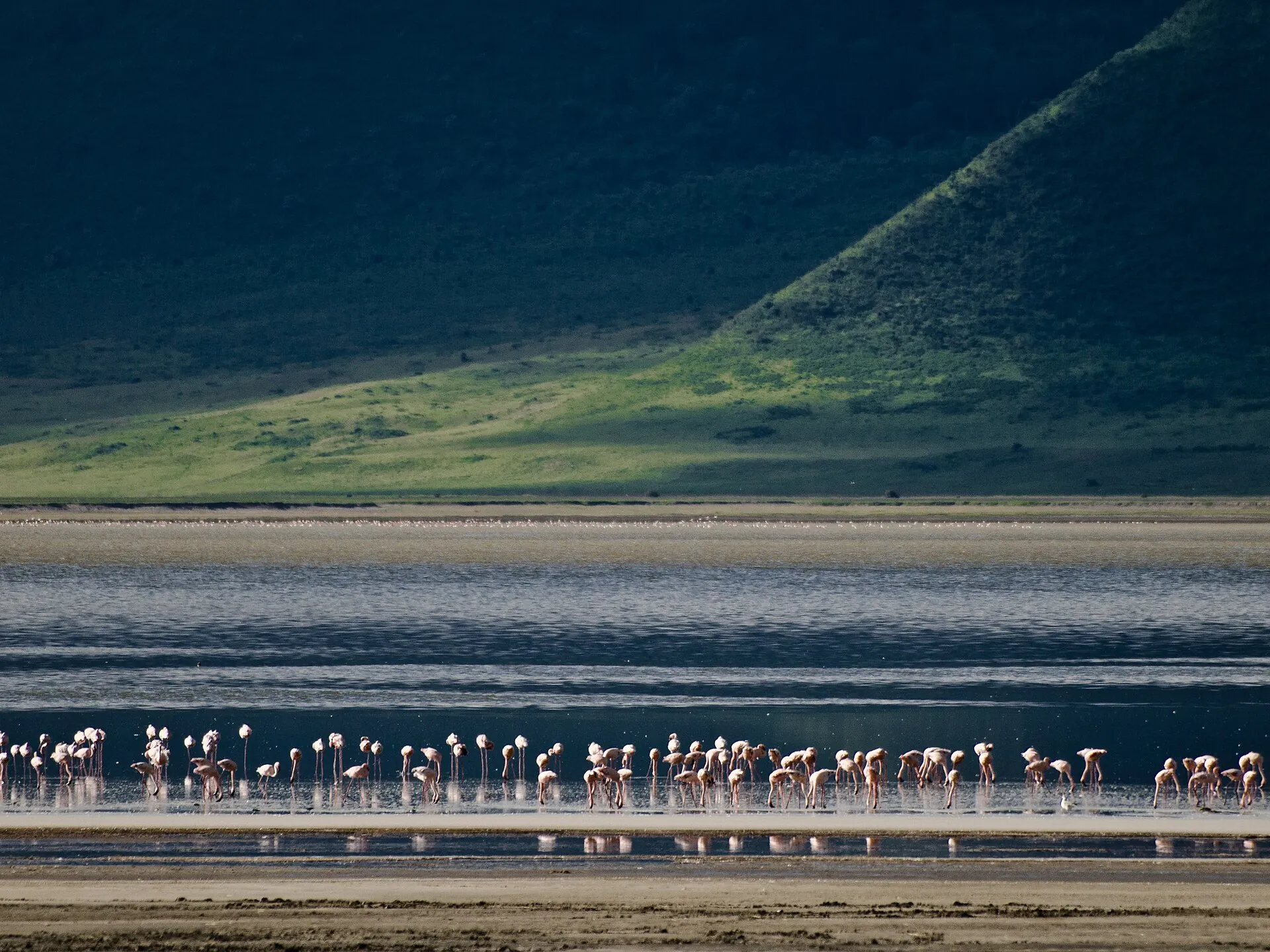
Lesser flamingos in the shallow water of Lake Magadi in Ngorongoro Crater, the forested crater wall behind
Lake Magadi is a soda lake – which is why the flamingos are here, and why the shore is white.

Photo: William Warby from London, England · CC BY 2.0

Permit, guide, gate timesWhat the NCAA requires

Ngorongoro is not a national park but a multiple land use conservation area with its own authority and its own tariff. The Ngorongoro Conservation Area Authority sets who may enter, in what, and when – and it takes no cash.

1

No operator, no permit

Entry, vehicle permit and crater service permit are issued in advance in the NCAA system – in practice by the safari operator. Self-drivers should settle beforehand who issues the permit: the NCAA names only the means of payment, not the procedure, and a self-drive portal states that no permits are sold at the gate.

2

4x4 up to 3,500 kg, guide required

Only closed four-wheel-drive vehicles up to 3,500 kg unladen weight may enter the crater, accompanied by a licensed guide or an NCAA guide. Self-drivers take an NCAA ranger along, who rides with you but does not drive (a self-drive portal quotes $40 in cash).

3

Cashless at every gate

Visa, MasterCard or Tanzanian mobile money (M-Pesa, Tigo Pesa, Airtel Money), in shillings or US dollars. The gates take no cash; the alternative is paying in advance by bank deposit.

4

Stay in the car, 25 km/h

Get out only at the marked sites, drive off-road only with permission, and keep to 50 km/h in the conservation area and 25 km/h in the crater. Pets and plastic bags are banned, and photographs of Maasai are allowed only in the paid cultural villages. Violations bring fines – the NCAA does not say how much.

Official NCAA rates · as of 09/2026 · amounts include 18% VAT
NCA entry, foreign visitors aged 16 and over, per person and 24 hours$70.80
Entry for children 5–15 (the NCAA only says 'reduced'; amount per operators) · under 5 free$23.60
Crater service fee per vehicle and descent into the crater, one entry$295
Vehicle permit, foreign plates, up to 2,000 kg · 2,001–3,000 kg $177$47.20
Public campsite (Simba A on the rim) per person and night · special campsite $70.80, booked ahead$35.40
Walking safari with an armed ranger, 1–4 hours, per adult · over 4 hours $29.50$23.60
Olduvai Gorge and Shifting Sands (16+) · Laetoli footprints $23.60 · Maasai cultural boma $20 per vehicle$35.40
Source: NCAA tariff page ncaa.go.tz/tariffs, accessed 22 September 2026. The page carries no date and no VAT note; that the amounts include VAT follows from the arithmetic ($60 + 18%) and from operator statements. Whether new rates were adopted for the 2026/27 financial year could not be established – on 22 September 2026 the page showed the amounts above; the government froze the fees in May 2025 for at least twelve months.
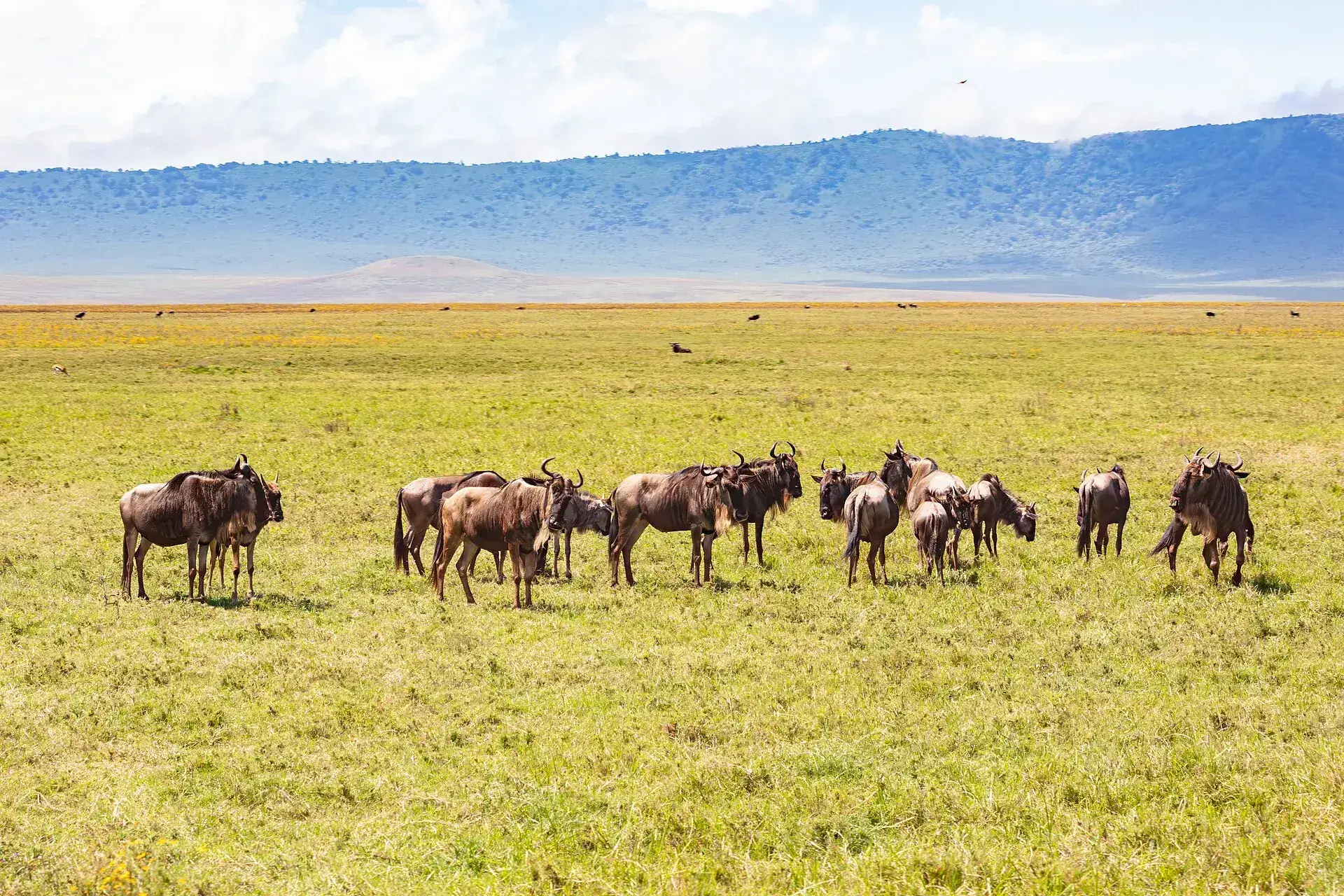
A herd of blue wildebeest grazing on the green floor of Ngorongoro Crater, the blue crater wall behind them
The wildebeest here do not migrate. They have no reason to – water and grass last all year.

Photo: Diego Delso · CC BY-SA 4.0

Descent, ascent, walksThe ways into the crater – and the ways around it

Route → what to expect
Game drive: Seneto descent (west) → crater floor → Lerai ascent (south) · 5–6 hoursFrom the rim at about 2,300 m (7,550 ft) it takes roughly 30 minutes down to about 1,800 m (5,900 ft). Loops run around Lake Magadi, through the Lerai forest and to the Ngoitokitok Spring; 5 to 6 hours is usual, because the crater permit allows one entry. Entry 6 am to 4 pm, exit by 6 pm. Muddy in the long rains (March to May), but passable.
Empakaai Crater walk · about 45 km northeast · 2–3 hoursDown to the soda lake that covers more than 75% of the crater floor, with flamingos; operators say 2 to 3 hours down and back. Only with an armed NCAA ranger; walking safari fee $23.60 (1–4 hours) plus NCA entry.
Olmoti Crater and Munge Waterfall walk · 1–2 hoursFrom Nainokanoka village on the northern rim up to the rim of Olmoti, with a view of Lolmalasin, the third-highest mountain in Tanzania; operators say 1 to 2 hours. Same fee as Empakaai, ranger required.
Olduvai Gorge and Laetoli · on the way to the SerengetiWhere the hominid fossils were found, with a museum, 6 km off the main road; entry $35.40 for visitors aged 16 and over. The Laetoli footprints, 3.6 million years old, on the southern edge of the Serengeti plains cost $23.60.
Sources: NCAA visitor rules, tourism page and tariff page (ncaa.go.tz), accessed 22 September 2026. Times and elevations of the walks are operator figures; the figures for the rim and the crater floor vary between sources.
View from the floor of Ngorongoro Crater up to the southern wall with a bank of cloud hanging over it, grass and a pool in front
From below you see why nothing leaves: 610 meters of wall, with the clouds caught on top.

Photo: Bjørn Christian Tørrissen · CC BY-SA 3.0

Good to knowGetting there, best time, tips

Getting there

Without a car: There is no public transport into the conservation area. Buses and daladalas run Arusha–Karatu; from Karatu you need a safari vehicle with an operator, because permits are not issued at the gate to pedestrians or taxis. Nearest airstrip: Ngorongoro Airstrip on the rim (charter and bush flights from Arusha), plus Manyara Airport (74 km / 46 miles) and Ndutu Airstrip.

By car: From Arusha on the paved A104/B144 via Makuyuni and Mto wa Mbu to Karatu (about 140 km / 87 miles, 3 hours), then 14 km to the Loduare Gate. Self-drivers: only 4x4 vehicles up to 3,500 kg unladen weight may enter the crater, off-road driving is banned, the speed limit is 50 km/h in the NCA and 25 km/h in the crater, and an NCAA ranger is mandatory (a self-drive portal quotes $40 in cash). Park only at the designated places (rim viewpoints, picnic sites).

  • From Arusha · 3 to 4 hours to the crater rim
    Car or safari vehicle via Karatu, paved all the way to the Loduare Gate
  • From Karatu · 30 minutes to the gate, about 1.5 hours to the Seneto descent
    Paved road to the Loduare Gate, then a track to the rim (about 15 km, 30 to 60 minutes)
  • From Kilimanjaro International Airport (JRO) · 4 to 5 hours
    Car via Arusha and Karatu (the NCAA gives 227.3 km / 141 miles)
  • From Serengeti (Seronera) · about 3 hours without wildlife stops
    Track via the Naabi Gate and Olduvai

Best time to go

Worth it all year, because the animals barely leave the crater. Dry season June to October: the clearest views and best roads, but the most vehicles and the highest lodge prices. January and February: a green crater, calving season, fewer people. March to May (long rains): mud and fog on the rim, but empty roads and low-season prices. Whatever the month, go in as early as you can: the Seneto gate opens at 6 am, when the floor is still empty and the predators are active; after 4 pm no one may descend.

Who it suits

Children
Works well, because everything happens from the vehicle; children under 5 pay no entry fee, 5 to 15 pay a reduced rate. The long drives (3 to 4 hours from Arusha) and 5 to 6 hours of game driving are hard on small children.
Minimum age
None for the crater; balloon flights from age 8 (NCAA tariff)
Fitness
None needed – you stay in the vehicle. The Empakaai and Olmoti walks are easy to moderate (2 to 3 hours, with a ranger).
Altitude
Rim about 2,300 m (7,550 ft), floor about 1,800 m (5,900 ft) – no problem for healthy visitors. Lodges on the rim sit above 2,200 m and nights drop to 0–10 °C (32–50 °F).
Heart and lungs
Dust on the crater floor in the dry season (bring a scarf or mask); otherwise no particular strain. The nearest hospitals are in Karatu and Arusha, air evacuation through Flying Doctors – check your insurance.
Wheelchair
Possible with limits: the visit happens in the vehicle, so the hurdles are climbing into a high 4x4 and the toilets at the picnic sites. No official accessibility information.
Dogs
Pets are banned in the conservation area (NCAA visitor rules).
Clothing
Layers: mornings on the rim are often below 10 °C (50 °F) and foggy, midday in the crater above 25 °C (77 °F). Fleece and windbreaker, sun hat, sunscreen, binoculars. Plastic bags are banned in Tanzania.
Footwear
Comfortable closed shoes are enough; hiking boots for Empakaai and Olmoti.

Tips you will need on site

  • The $295 crater service fee is charged per vehicle and per descent – split between six passengers that is under $50 a head, and a second descent the next day costs it again.
  • No cash at the gates: permits are booked in advance by the operator and paid by card or mobile money; if you self-drive, settle beforehand who issues the permit.
  • Go in as early as you can (Seneto opens at 6 am) – the last descent is at 4 pm, and most vehicles arrive between 8 and 10 am.
  • Do not get out in the crater except at the picnic sites; at the Ngoitokitok Spring black kites steal sandwiches out of your hand, so eat in the car.
  • Dress warm: the rim is at about 2,300 m (7,550 ft) and mornings are often below 10 °C (50 °F) and foggy.
  • Staying on the rim is expensive (lodges start in the hundreds of dollars); Karatu, 30 to 45 minutes away, is far cheaper. The only budget option on the rim is the Simba public campsite ($35.40).
  • Leave the drone at home – flying is banned in Tanzanian protected areas; photographs of Maasai only in the paid cultural bomas (NCAA rule).
  • Plastic bags are banned in Tanzania; small resealable bags for liquids are exempt.

A short history

  • About 2.45 to 2 million years ago Ngorongoro was an active volcano, estimated at 4,500 to 5,800 m (14,800–19,000 ft) high; once its magma chamber emptied the summit collapsed and left today's caldera, 610 m (2,000 ft) deep with a 260 km² (100 sq mi) floor.
  • 1959: the Ngorongoro Conservation Area Ordinance separates the area from Serengeti National Park and creates the NCAA, with the aim of combining conservation, tourism and Maasai pastoralism.
  • 1979: listed as a UNESCO World Heritage Site (natural); in 2010 extended to a mixed natural and cultural site because of Olduvai and Laetoli.
  • Between 1993 and 2018 the number of black rhinos in the crater grew from 13 to 55; the Maasai population of the NCA rose from about 8,700 (1966) to 93,136 (2017).
  • July 2016: fees switch to 18% VAT-inclusive pricing – the crater service fee has cost $295 since then (previously $250 or $300, depending on the source).
  • 14 July 2022: the newly built Seneto descent road opens; the Lerai road has been ascent-only ever since.
  • Financial year 2022/23: 752,232 visitors in the NCA; in 2025 the NCAA advertised itself as 'Africa's #1 Tourist Attraction'.
  • 26 May 2025: Tanzania freezes TANAPA and NCAA park fees for at least 12 months, with changes possible from March 2026 at the earliest – as of 22 September 2026 the NCAA tariff page still shows $70.80 and $295.
Silhouette of an umbrella acacia on the rim of Ngorongoro Crater in morning light, the misty caldera behind
Just after six on the rim: eight degrees, fog, and down below the crater waking up.

Photo: James Wagner · CC BY-SA 4.0

More toursDay trips from Moshi and Karatu

If you are already at Kilimanjaro you can book the crater as a day trip from Moshi – a long day with 4 to 5 hours of driving each way. From Karatu, 14 km short of the Loduare Gate, it is far more relaxed.

Affiliate links to GetYourGuide: if you book, we earn a commission and the price stays the same. Prices and ratings as of 22 September 2026. At around €100 a head, check carefully whether entry and the crater fee are really included – the NCAA fees alone are $70.80 per person plus $295 per vehicle.

Two open-roofed safari vehicles on a track in Ngorongoro Crater as an elephant walks toward them across the grass
The rule is simple: the elephant sets the distance, not the driver.

Photo: George Lamson · CC BY-SA 2.0

Outdated onlineWhat other sites get wrong

“Ngorongoro is a national park.”
It is not – it is a multiple land use conservation area under the 1959 Ordinance, with its own authority (NCAA) and its own rates. The TANAPA national park tariff does not apply here.
“Entry $60, crater fee $250.”
Those are the net amounts. The NCAA tariff page gives $70.80 and $295 including 18% VAT. Adding another 18% on top of $70.80 counts the tax twice.
“You are only allowed six hours in the crater.”
The six-hour rule is not in the NCAA visitor rules. What is official: entry until 4 pm and exit by 6 pm. Operators plan 5 to 6 hours because the crater permit covers one entry.
“You can pay cash at the gate.”
The gates are cashless: card or mobile money, in shillings or US dollars. Normally the operator books and pays the permits in advance.
“You are guaranteed to see the Big Five.”
Leopards are rare in the crater and giraffes are absent altogether. Lions, buffalo, elephants and with luck a black rhino – nobody serious promises more.

Quick answersBefore the safari

Is the Ngorongoro Crater a volcano?

Yes – the collapsed caldera of a volcano that died out about two million years ago and is thought to have stood 4,500 to 5,800 m high. Volcanically nothing happens here any more; the nearest active volcano is Ol Doinyo Lengai, about 60 km (37 miles) to the northeast.

What does a Ngorongoro safari from Arusha cost?

Day trips from Arusha start at about €320 per person on GetYourGuide, three-day safaris with the Serengeti at about €785 (as of 22 September 2026). That includes the NCAA fees: $70.80 entry per person plus $295 crater fee per vehicle – which is why the cost per head drops the fuller the car is.

Does the Ngorongoro Crater work as a day trip from Arusha?

Yes, but it makes for a long day: 180 km (112 miles) of paved road to the Loduare Gate, 3 to 4 hours each way, plus 5 to 6 hours in the crater. To be at the Seneto gate at 6 am, stay in Karatu or on the rim.

Is the Ngorongoro Crater worth it in the rainy season?

Yes: the animals stay, the crater is green, the roads are empty and the lodges cheaper. March to May is muddy and foggy on the rim, but the crater roads usually stay passable.

How do you combine Ngorongoro and the Serengeti?

The crater sits on the way: from Seronera in the Serengeti it is about 140 km (87 miles) of track via the Naabi Gate and Olduvai, roughly 3 hours without wildlife stops. Most 3-day safaris from Arusha do the Serengeti and Ngorongoro back to back.

Is the Ngorongoro Crater open right now?

Yes. As of 22 September 2026 neither the NCAA website nor national travel advice lists a closure or warning for the NCA. The gates open daily 6 am to 6 pm, the crater descent 6 am to 4 pm.

How much does the Ngorongoro Crater cost?

$70.80 per person for 24 hours in the NCA (children 5–15: $23.60, under 5 free) plus a $295 crater service fee per vehicle and descent plus the vehicle fee (from $47.20). The NCAA tariff amounts already include 18% VAT (as of September 2026).

Can you visit the Ngorongoro Crater without a guide or on your own?

No. The NCAA requires a licensed guide or an NCAA guide for every crater visit, and nobody may walk down. Self-drivers need a 4x4 of up to 3,500 kg, a permit issued in advance and an NCAA ranger in the car.

How long can you stay in the crater?

Officially: entry at the Seneto gate only between 6 am and 4 pm, exit by 6 pm. The six-hour limit you often read about is an operator practice; the crater permit covers a single entry.

Can you get out of the vehicle in the crater?

Only at the designated picnic sites with toilets, such as the Ngoitokitok Spring. Everywhere else you stay in the car; walking is possible only with an armed ranger outside the crater (Empakaai, Olmoti, the rim).

Is Ngorongoro an active volcano? Is it dangerous?

No, the caldera formed about two million years ago when an extinct volcano collapsed. The only real risk is the wildlife, which is why you stay in the vehicle. The nearest active volcano is Ol Doinyo Lengai, about 60 km (37 miles) to the northeast.

How do you get to the Ngorongoro Crater?

From Arusha it is 180 km (112 miles) of paved road via Karatu to the Loduare Gate, 3 to 4 hours; from Kilimanjaro International Airport about 227 km (141 miles). There is an airstrip on the rim for bush flights from Arusha. Without a safari vehicle and an operator you will not get in.

Can you pay at the gate by card or in cash?

Cashless only: the NCAA accepts Visa, MasterCard and Tanzanian mobile money, in shillings or US dollars. The gates take no cash; normally the operator books and pays the permits in advance.

When is the best time for the Ngorongoro Crater?

You see animals year-round. June to October is dry and busy, January and February green with young animals and quieter, March to May wet and empty. Whatever the month: be at the Seneto gate at 6 am.

Is the crater suitable for children?

Yes, because there is no walking and children under 5 pay nothing. Plan for the long drives and 5 to 6 hours in the vehicle, though; picnic breaks are possible only at the designated sites.

How high is the Ngorongoro Crater and does it get cold?

The rim sits at about 2,300 m (7,550 ft), the floor 610 m lower at about 1,800 m (5,900 ft). Mornings on the rim at 5–10 °C (41–50 °F) with fog are normal, midday in the crater above 25 °C (77 °F) – dress in layers.

What is the crater service fee and is it per person?

The $295 crater service fee is a vehicle fee per descent, regardless of how many people are inside; Tanzanians pay TZS 11,800. Go down on two days and you pay it twice.
Sources · accessed on 22 September 2026