Volcano·Guide
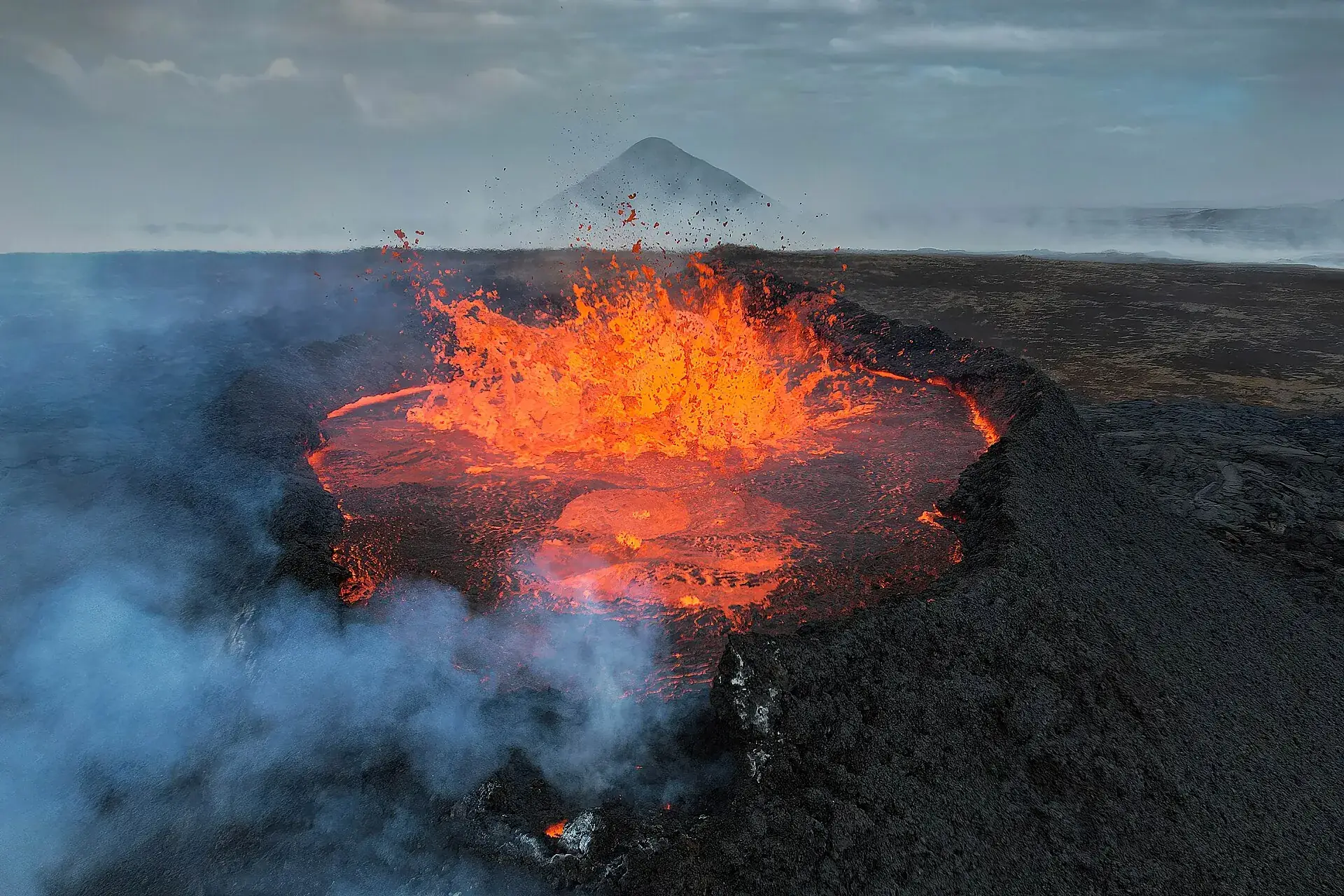
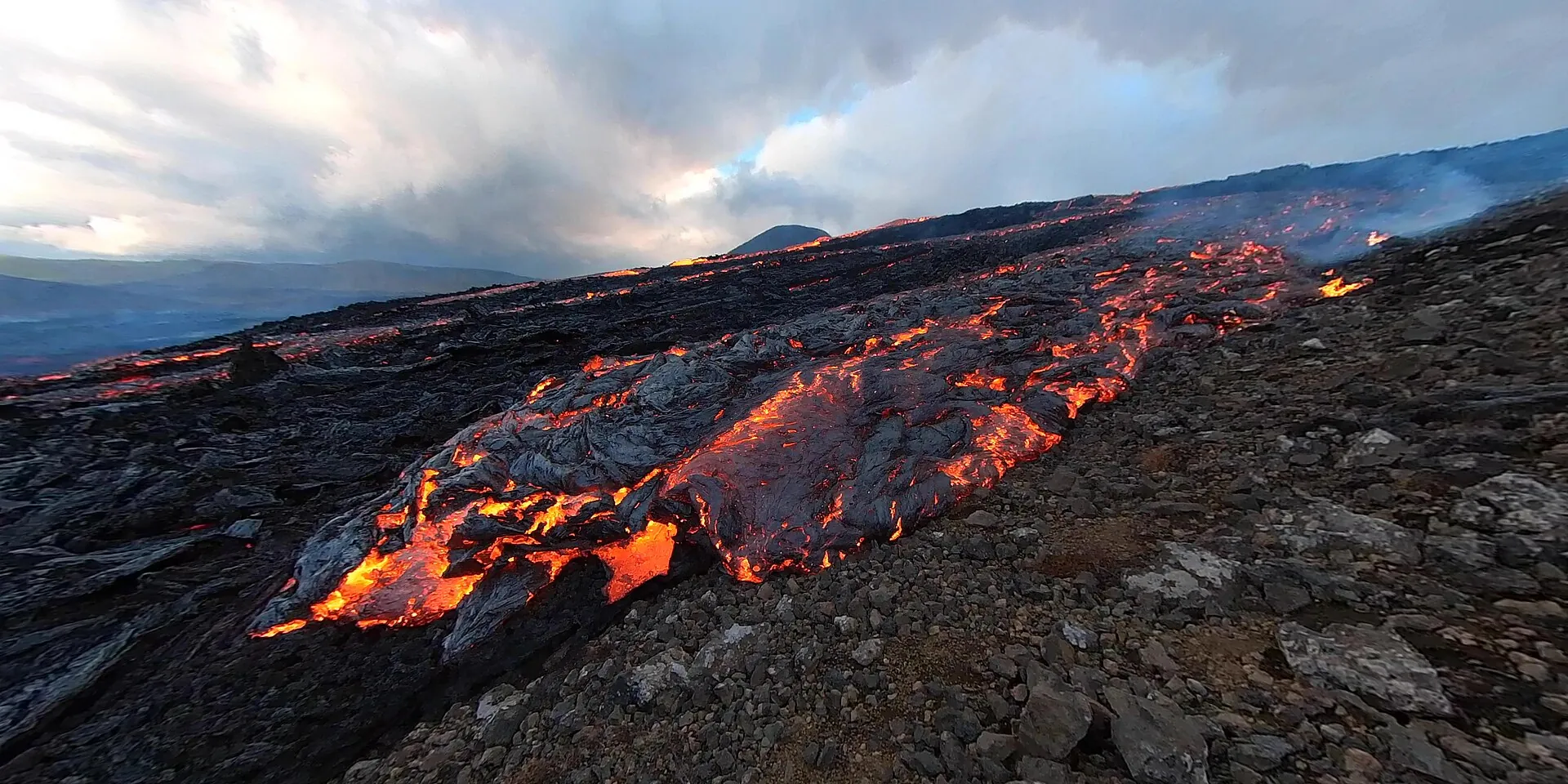
The eruption at Litli-Hrútur on the Reykjanes peninsula in July 2023: a crater full of glowing lava Fresh lava flows at Fagradalsfjall, glowing under a dark crust

Iceland

Since 2021 the earth on Reykjanes has kept tearing open. Twelve times so far.

Today it is quiet. Beneath Svartsengi the next magma is collecting.

Scroll

As of 21 September 2026What is open – and what is not

The last eruption lasted from 16 July to 5 August 2025. The Icelandic Met Office considers another one the most likely scenario; the warning time so far has been between 20 minutes and a good four hours. So here more than anywhere else: check the status on the morning of your visit.

Yellow
Reykjanes / SvartsengiAviation colour code · checked on 2026-09-22 · Icelandic Meteorological Office (CC BY 4.0)
Green
FagradalsfjallAviation colour code · checked on 2026-09-22 · Icelandic Meteorological Office (CC BY 4.0)
Open

Fagradalsfjall

The cooled lava fields of the 2021 to 2023 eruptions, on marked trails from car parks P1 and P2. No guide, no permit, no admission. From the short Nátthagi trail (2 km) to the day hike to Litli-Hrútur (18–20 km).

Parking per car and day1,000 ISK
Closed

Sundhnúkur crater row

The area of the nine eruptions since December 2023 is closed to the public. Banned everywhere: stepping onto the lava – the crust can be thin.

Open

Grindavík and the Blue Lagoon

The town has been freely accessible again since 21 October 2024, at your own risk: stay on the paths, note the evacuation routes. When an eruption starts, both are cleared.

Daily status: safetravel.is · Visit Reykjanes · hazard map of the Icelandic Met Office. Closures are ordered by the police commissioner of Suðurnes together with civil protection. Parking: cashless via Parka within 24 hours, otherwise a 1,960 ISK surcharge.
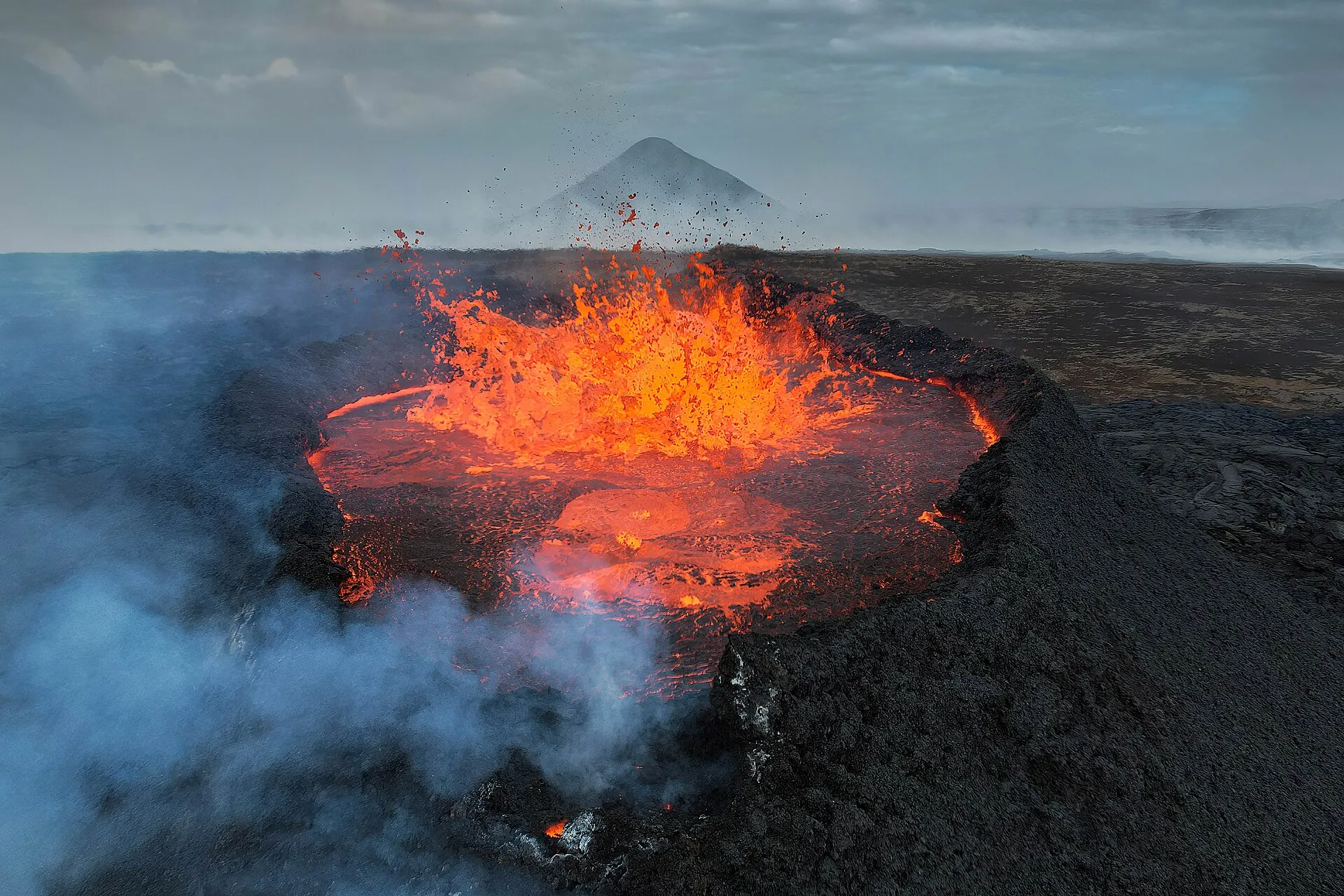
The crater of Litli-Hrútur on Reykjanes in July 2023: an orange-red lava lake in the black cone, steam drifting across
Litli-Hrútur, summer 2023 – the third of what are now many eruptions on the Reykjanes peninsula since 2021. This is what it looks like when the daily status says 'eruption'.

Photo: Giles Laurent · CC BY-SA 4.0

Without a hire car – or undergroundVolcano experiences from Reykjavík

Glowing lava is currently only to be had at the Lava Show – real lava is melted there and poured into the hall. Plus hikes with geologists across the young lava fields and the Raufarhólshellir lava tunnel.

Affiliate links to GetYourGuide: if you book, we earn a commission and the price stays the same. Prices and ratings as of 21.09.2026. If an eruption starts, operators change routes at short notice – or cancel.

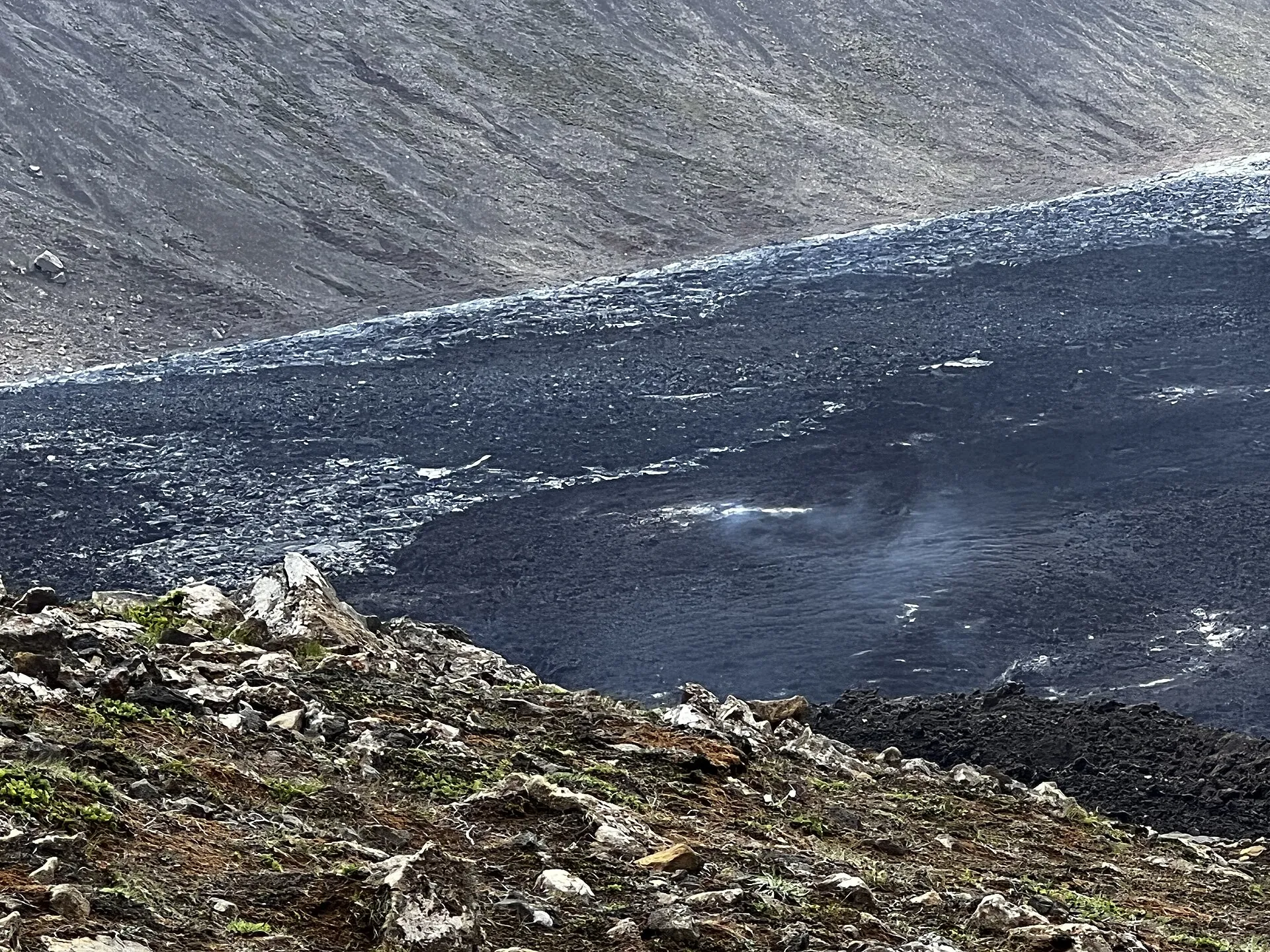
A fresh, glossy black lava field fills a valley near Geldingadalir, still steaming at the edge, a grey slope behind
The 2021 lava at Geldingadalir: where the tours go when no eruption is under way – cooled, but still warm at the edges.

Photo: Stefan mohanu · CC BY-SA 4.0

Good to knowGetting there, best time, tips

Getting there

Without a car: No scheduled bus to the car parks is documented; without a car the guided tour from Reykjavík remains.

By car: Via road 43 (Grindavíkurvegur) or road 427 (Suðurstrandarvegur) to P1/P2 east of Grindavík; enter the number plate at Parka and pay within 24 hours of leaving. Park only in the designated areas.

  • From Reykjavík
    Hire car via roads 41 and 43
  • From Keflavík airport
    Hire car

Best time to go

May to September: long daylight for the 4–20 km trails and rarely snow. In winter there is snow on the heights, and Safetravel issues storm warnings more often with the advice not to go up. Regardless of the season, check Safetravel warnings and the gas forecast on the morning of your visit.

Who it suits

Children
In quiet conditions the shorter trails are feasible with children. During an eruption the authorities advise against visits with children because of gas; the police commissioner explicitly calls Grindavík 'not a safe environment for children'.
Minimum age
none set
Fitness
Trails A–C moderate with gravel, uneven ground and steep slopes; trail E long and demanding.
Heart and lungs
Volcanic gases (SO2) can occur even after an eruption has ended – check the gas forecast; asthmatics should turn back if affected.
Wheelchair
Trails not suitable for wheelchairs (gravel, steep sections) – no accessible viewing platform documented.
Dogs
not regulated in the sources checked – see 'unsicher'
Clothing
Warm layers, waterproof and windproof outer layer; in winter also spikes and head torch.
Footwear
Sturdy hiking boots; lava is sharp-edged, trails are gravelly.

Tips you will need on site

  • In the morning open three pages: Safetravel warnings, Eruption News from Visit Reykjanes and the gas map loftgaedi.is. It takes two minutes and saves a drive to a closed trail.
  • Enter the hire car's number plate at Parka and pay straight away – the deadline runs 24 hours, after that 1,960 ISK is added, often plus the rental company's handling fee.
  • Short on time: Nátthagi (2 km) shows the 2021 lava tongue up close; trail C gives the overview of all three Fagradalsfjall eruptions.
  • Never step onto the lava – not even old lava. The crust can be thin, and underneath it is still hot in places.
  • In Grindavík stay on the paths (fissures in the ground) and note the exits; if the sirens sound, leave the town immediately.
  • Lodge a travel plan with Safetravel if you walk trail E alone.
  • In storms or closures: plan the Lava Show or Perlan in Reykjavík as a substitute.

A short history

  • March 2021: start of the eruption in the Geldingadalir at Fagradalsfjall – the opening of a new volcanic cycle on the peninsula after about 800 years of relative calm (last phase about AD 780–1240).
  • 2022 and July 2023 (Litli-Hrútur): second and third eruption in the Fagradalsfjall system; trails A, C and E date from this period.
  • 25 October 2023: uncertainty level declared because of the earthquakes near Svartsengi; on 10 November 2023 Grindavík is evacuated.
  • 18 December 2023 to August 2025: nine fissure eruptions at the Sundhnúkur crater row (starting 18 Dec 2023, 14 Jan, 8 Feb, 16 Mar, 29 May, 22 Aug, 20 Nov 2024, 1 Apr and 16 Jul 2025); on 14 January 2024 lava destroys three houses in Grindavík.
  • 31 July 2024: the police commissioner of Suðurnes rules that tourists may not enter Grindavík and that eruption sites and lava are inaccessible to visitors (checkpoints on Grindavíkurvegur, Bláalónsvegur, Nesvegur, Suðurstrandarvegur).
  • 21 October 2024, 6 am: Grindavík is reopened to everyone without checkpoints – presence at your own risk.
  • 16 July – 5 August 2025: twelfth eruption of the series; since then magma has been accumulating again beneath Svartsengi (about 29 million m³ by 15 September 2026).
  • 2026: a working group appointed by the Ministry of Justice criticises that decisions on access to Grindavík were poorly documented and communicated, but considers the police commissioner's approach measured overall.
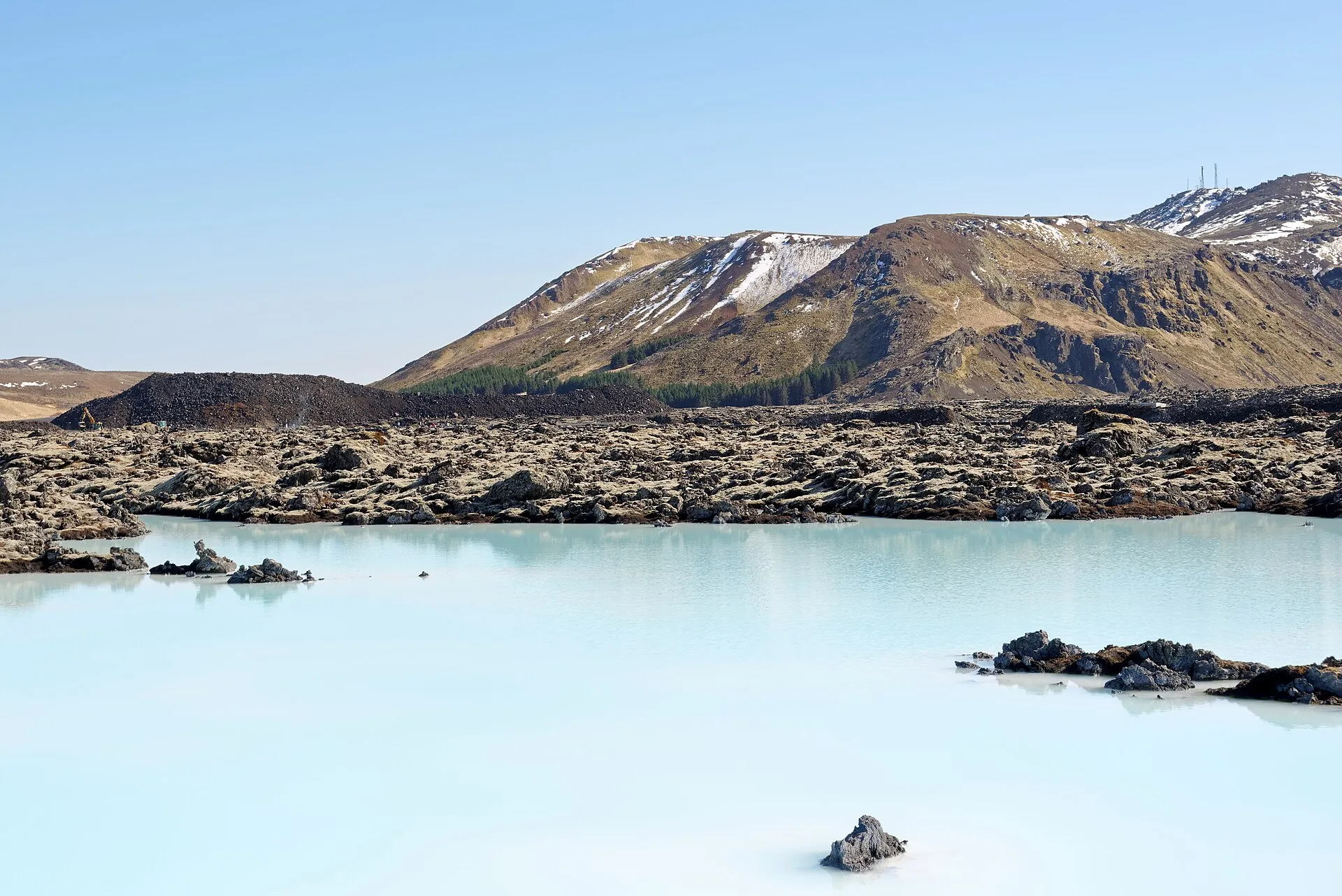
The milky-blue Blue Lagoon in front of black lava, the mountain Þorbjörn with patches of snow behind
The Blue Lagoon lies in the middle of the eruption area: evacuated several times in 2024 and reopened behind lava barriers – check the status before booking.

Photo: Jakub Hałun · CC BY-SA 4.0

Out of date onlineWhat other sites get wrong

“Grindavík is closed.”
Out of date. The town has been freely accessible again since 21 October 2024 – even the Visit Reykjanes FAQ still contains the old sentence.
“You can hike to the active volcano.”
Currently wrong. No eruption is under way, and the young Sundhnúkur craters are closed; only the older area at Fagradalsfjall can be walked.
“The visit is free.”
Only the trail. Parking costs 1,000 ISK a day and is enforced by camera.
“The danger is over.”
No. The Met Office keeps the Reykjanes system at alert level 2 (orange); beneath Svartsengi about 29 million cubic metres of magma have accumulated since July 2025.

Quick questionsBefore the hike

Is the volcano on Reykjanes active right now?

As of 21 September 2026 there is no eruption in progress; the last one ended on 5 August 2025. But the ground beneath Svartsengi continues to rise.

Can you hike to the volcano without a guide?

Yes. For the marked trails at Fagradalsfjall you need neither guide nor permit.

How long does the hike take?

Depending on the trail, between 2 km (Nátthagi) and 18–20 km there and back. The classic trail A is 6–8 km each way, so a good four to five hours in total.

When is the best time?

May to September: long daylight and rarely snow. In winter Safetravel issues storm warnings more often.

What does a visit to Fagradalsfjall cost?

The trails are free. Parking at P1 or P2 costs 1,000 ISK per car and day, payable via Parka within 24 hours of parking; otherwise a 1,960 ISK surcharge applies.

Is Grindavík open to tourists?

Yes, since 21 October 2024 without checkpoints. Presence is at your own risk; you should stay on the paths because of fissures and note the evacuation routes.

Are you allowed to walk on the lava?

No, that is expressly forbidden – even after an eruption has ended. The crust can be thin and there may still be hot material underneath.

Is a visit possible with children?

In quiet conditions on the short trails, yes. During an eruption the authorities advise against it because of the gases, and for Grindavík itself the police commissioner says it is not a safe environment for children.

What should you wear?

Sturdy hiking boots, warm layers and a waterproof outer layer. In winter add spikes and a head torch.

Who closes the area, and where is that published?

The police commissioner of Suðurnes together with civil protection, based on the Met Office hazard map. Current notices are on safetravel.is and in the Eruption News on visitreykjanes.is.

Is the Blue Lagoon closed because of the volcano?

As of September 2026 it is operating. But it lies in the Svartsengi hazard zone and is evacuated as a precaution with every new magma intrusion.

Is the Blue Lagoon open at the moment?

Yes, as of 21 September 2026: the operator's website shows no closure notice, and tickets for the same day were bookable. Winter hours apply, 8 am–10 pm (21 August to 31 January; from 1 February 8 am–8 pm), and you must leave the water 30 minutes before closing. 'Comfort' admission starts at €86, 'Premium' at €108, 'Signature' at €133; advance booking is compulsory. The lagoon lies in the Svartsengi hazard zone behind protective barriers and is evacuated as a precaution with every new magma intrusion – short-notice closures remain possible, so check the operator's site on the day. Access is via Grindavíkurvegur (road 43).

Which volcano in Iceland is active right now?

As of 21 September 2026 no eruption is under way in Iceland. Closest to one is the Reykjanes/Svartsengi system with the Sundhnúkur crater row: the Icelandic Met Office (IMO) lists it at alert level 2 of 3 ('elevated unrest', orange) and with aviation colour code yellow; the last eruption there lasted from 16 July to 5 August 2025. Bárðarbunga and Ljósufjöll are also at level 1 (yellow, 'unrest'); all other monitored volcanoes – including Katla, Hekla, Grímsvötn and Askja – are green. The IMO publishes the current status daily.
Sources · accessed on 21 September 2026

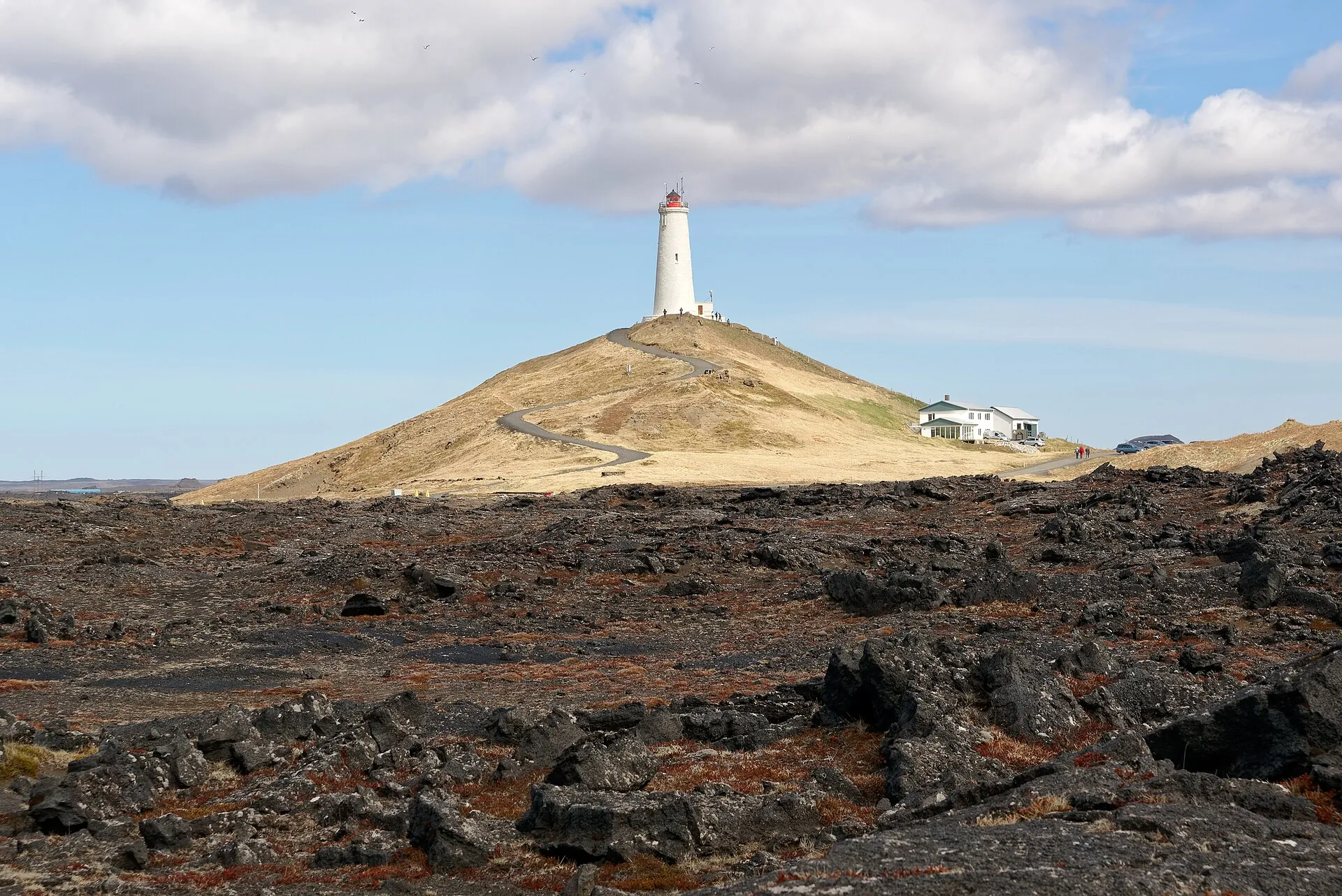
The white Reykjanesviti lighthouse on a grassy hill above an old lava field, clouds in the sky
Reykjanesviti on the south-west tip: Iceland's oldest lighthouse stands on lava – and the Gunnuhver geothermal area steams right next to it.

Photo: Jakub Hałun · CC BY-SA 4.0