Volcano·Guide
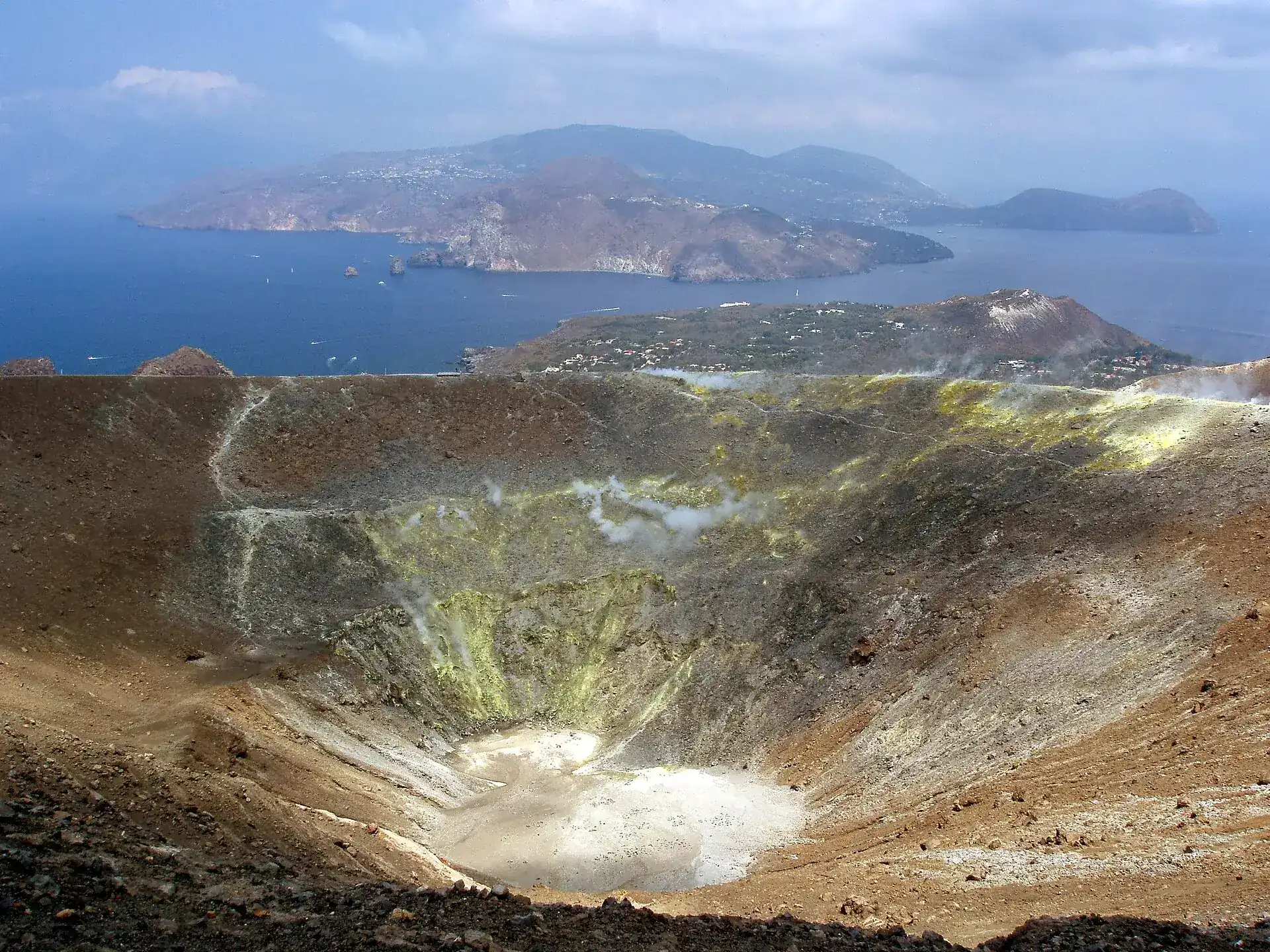
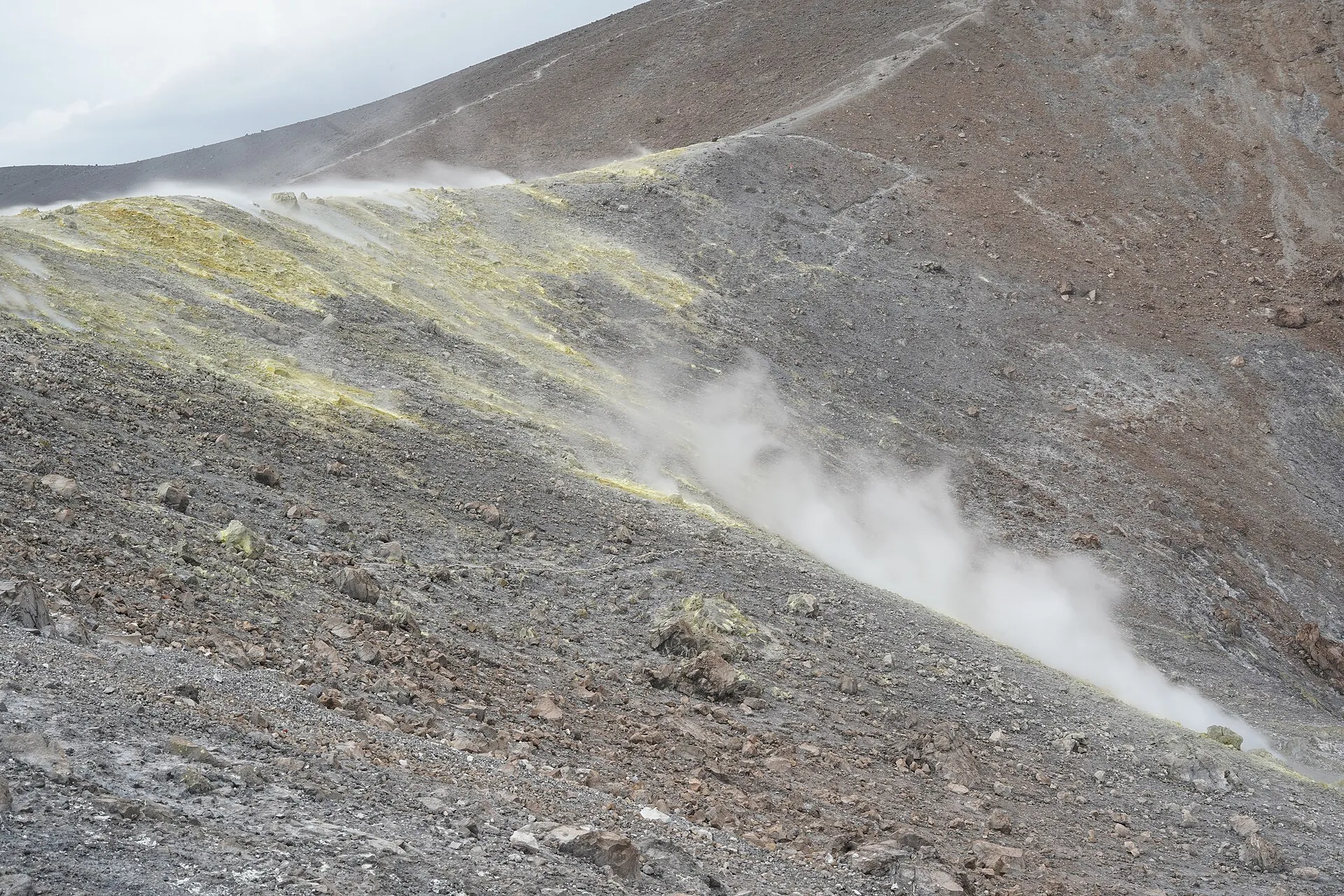
The Gran Cratere on Vulcano from above, Lipari and the other Aeolian Islands in the sea behind Fumaroles on the crater rim of Vulcano: white steam over sulphur-yellow rock

Vulcano

The island that gave all volcanoes their name.

It rests. But it breathes – sulphur, steam, carbon dioxide.

Scroll –
to the rim

Open again since April 2023Up – when the light shows green

Because of the gases the crater was closed completely from October 2021 to April 2023. Today the climb is free, without a guide and without admission – but the municipality of Lipari regulates it more strictly than any other path on the islands.

Green
Alert level VulcanoCivil protection alert level (green/yellow/orange/red) · checked on 2026-09-22 · Dipartimento della Protezione Civile – Presidenza del Consiglio dei Ministri (CC BY 4.0)
1

The traffic light at the start of the path decides

Green means open. Red or switched off means closed: then the wind is blowing the gases across the path. The access is under video surveillance.
2

In summer only mornings and evenings

1 April to 20 October: 6:30–10:30 am and 4:00–7:30 pm. 21 October to 31 March: continuously 7:30 am–4:30 pm. Day visitors arriving at noon find the path closed.

3

Never alone

There is no guide requirement – but you must go at least in pairs, so that someone can help immediately in an emergency.

4

Stay on the path

Fumarole field, crater floor and the hollows on the inner rim are an exclusion zone. The new path deliberately skirts them. Violations cost €500 per person.

Costs · as of 09/2026
Climb to the craterfree
Landing tax of the municipality of Lipari, June to September (as of 2023)€5
Landing tax October to May€2.50
Source: municipality of Lipari, ordinance no. 17 of 23 April 2023; rules on the municipal website last updated on 2 October 2025. No newer ordinance could be found on 21 September 2026. Civil protection alert level: green since 19 December 2023.
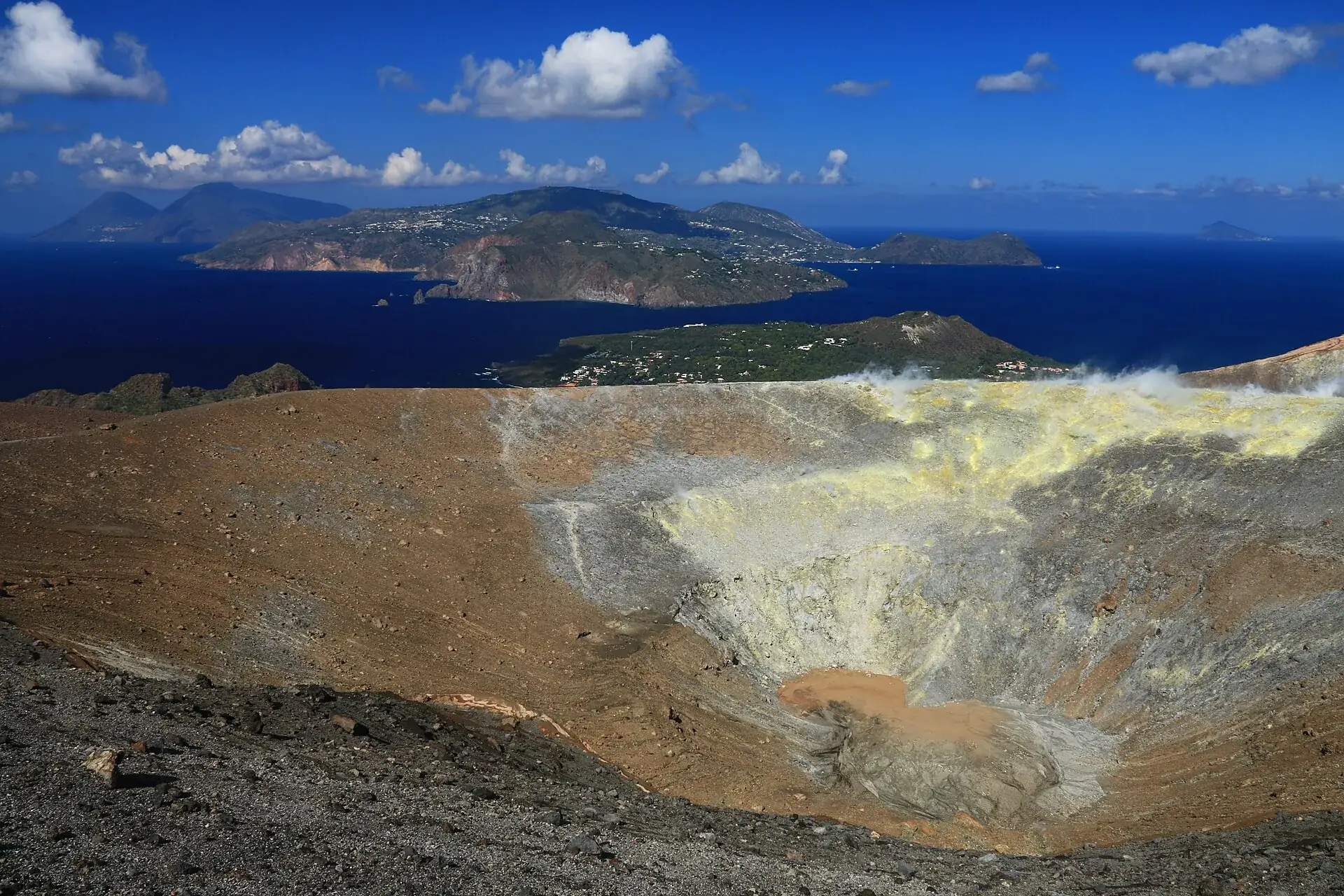
View from the rim of the Gran Cratere across the strait to Lipari
From the top the whole archipelago lies at your feet.

Photo: Man77 · CC BY-SA 3.0

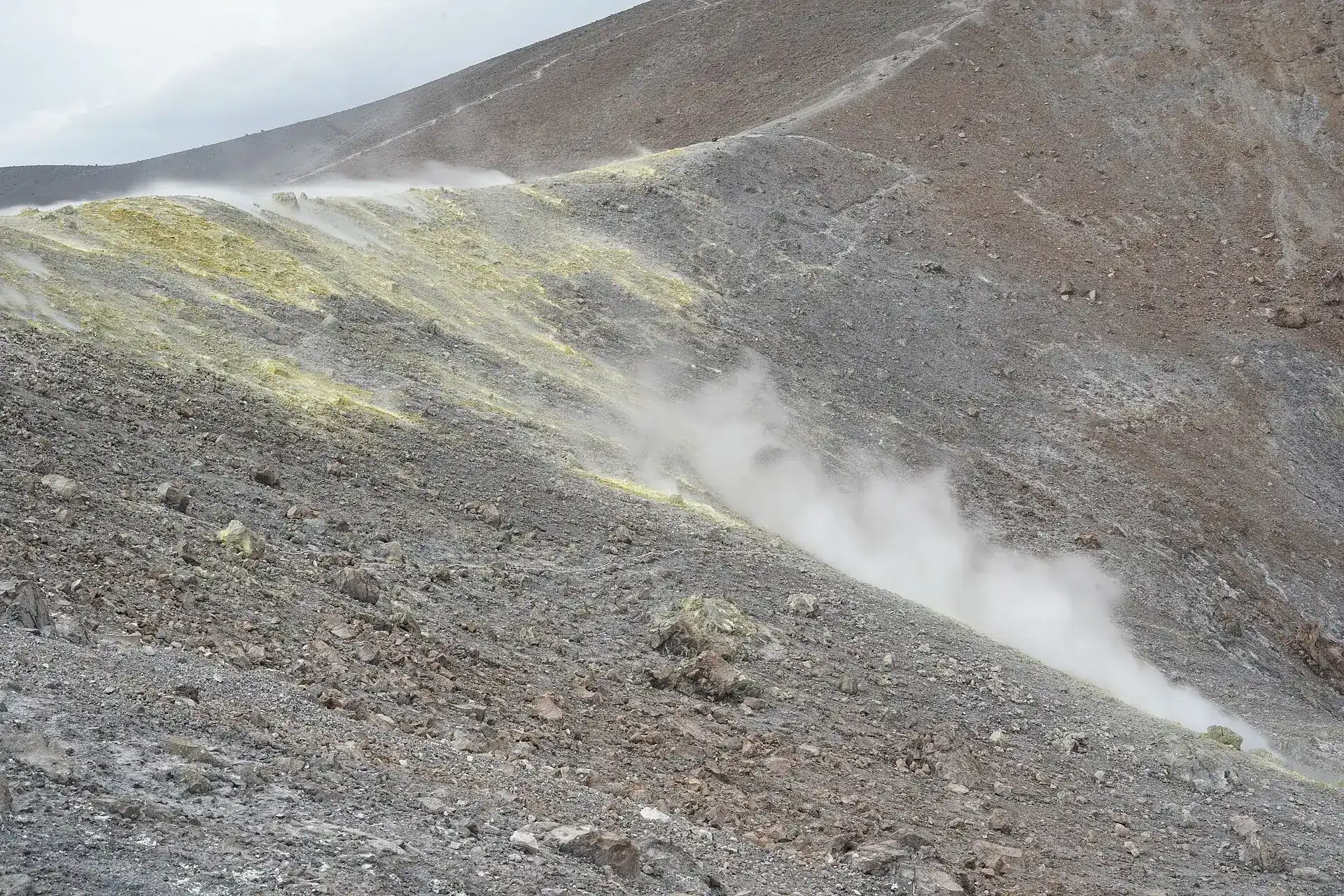
The rim of the Gran Cratere on Vulcano: yellow sulphur deposits on the slope, white steam rising from the ground
The fumaroles on the crater rim are the reason for the traffic light: when gas output is high the path stays closed – the colour is shown at the start of the climb.

Photo: Francesco Tosoni · CC BY-SA 4.0

Usually a day tripBy boat from Milazzo

Most people come for a day – by hydrofoil or on a tour that combines Lipari and Vulcano. If you want the crater in summer, stay overnight: the permitted hours are early morning and late afternoon.

Affiliate links to GetYourGuide: if you book, we earn a commission and the price stays the same. Prices and ratings as of 21.09.2026. In summer, day tours often do not leave enough time for the crater – check the time on the island before booking.
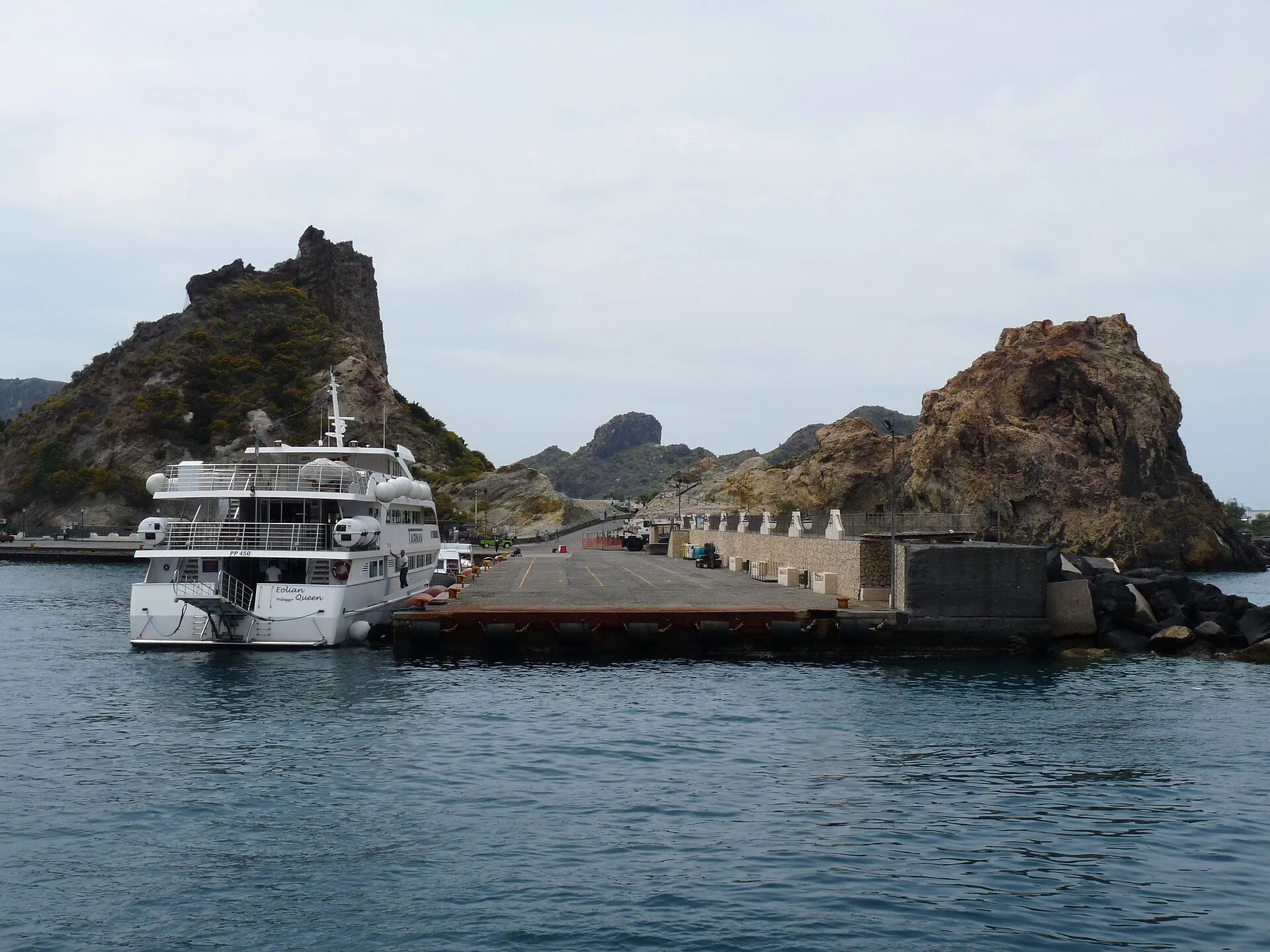
A hydrofoil moored at Porto di Levante on Vulcano, the Faraglione rock and the houses of the village behind
Porto di Levante: the hydrofoils from Milazzo dock right below the Faraglione – it is a fifteen-minute walk to the start of the crater path.

Photo: Ji-Elle · CC BY-SA 3.0

Good to knowGetting there, best time, tips

Getting there

Without a car: By sea only, usually from Milazzo: Liberty Lines hydrofoils, car ferries by Caronte & Tourist Isole Minori (Siremar brand). Vulcano is the first island from Milazzo and lies right next to Lipari. The start of the crater path is within walking distance of the port.

By car: Leave the car at the port of Milazzo. In summer vehicles of non-residents are not allowed to land on Vulcano (according to a secondary source, from 1 June to 30 September in 2026).

  • From Milazzo
    Liberty Lines hydrofoil, almost hourly in summer
  • From Catania
    Car or bus to Milazzo (A18/A20), then boat
  • From Taormina
    Car to Milazzo, then boat – feasible as a day trip if you can do without the morning window until 10:30 am and climb in the afternoon from 4 pm

Best time to go

April/May and October: milder temperatures, and from 21 October the crater is open continuously from 7:30 am to 4:30 pm. In summer use the morning window (start around 6:30–8:00 am); day visitors arriving at noon find the path closed and have to wait until 4 pm.
Who it suits

Children
Possible, but the municipality points out explicitly that children and older people react more sensitively to bad air – watch them constantly and turn back at the first irritation.
Minimum age
none set
Fitness
Path grade E (escursionistico); the ground alternates between sand, packed earth, scree and blocks. The municipality requires 'excellent' health.
Heart and lungs
Not advisable with respiratory or heart disease: H2S, SO2 and CO2 irritate eyes and airways. An FFP2/FFP3 mask must be carried and put on in case of irritation, shortness of breath or a strong smell of rotten eggs.
Wheelchair
not possible
Clothing
Layers, light breathable and rainproof clothing, hat, water, snacks, phone – these are the municipality's self-protection rules.
Footwear
Trekking boots (all terrain) are mandatory.

Tips you will need on site

  • Check the time windows before booking the boat: in summer, anyone standing at the start of the path after 10:30 am may not go up again until 4 pm.
  • A red or dark traffic light means closed – even if others set off anyway. The access is filmed, the fine is €500.
  • Do not go alone: solo climbs are banned. Solo travellers join others at the start of the path.
  • Carry an FFP2 mask; at the top do not rest in hollows or in the lee of the fumaroles, CO2 collects at ground level.
  • Stay on the marked path – the former route through the fumarole field and the descent into the crater are closed.
  • Plenty of water and sun protection: no shade, dark ground.
  • If you feel unwell, descend immediately and see the island's Guardia Medica; the municipality expressly asks for symptoms to be reported.

A short history

  • From September 2021 the INGV recorded rising gas concentrations and fumarole temperatures; on 1 October 2021 civil protection raised the alert level from green to yellow.
  • 14 October 2021: ordinance no. 115 bans access to the La Fossa crater.
  • 29 December 2021: the cabinet declares a national state of emergency for Vulcano because of high gas concentrations (OCDPC no. 854 of 2 January 2022).
  • 2022/2023: closed CO2 zones in the village (including the Camping Sicilia area), bathing and night-time bans at the Spiaggia delle Acque Calde; the last such ordinance, no. 32 of 30 June 2023, applied until 31 December 2023.
  • 24 April 2023: reopening of the crater on a new path away from the fumarole field, with traffic light, time windows and video surveillance (ordinance no. 17).
  • 19 December 2023: alert level back to green.
  • 11 April 2026: the mud bath reopens after the public prosecutor of Barcellona Pozzo di Gotto released it on 3 April 2026.
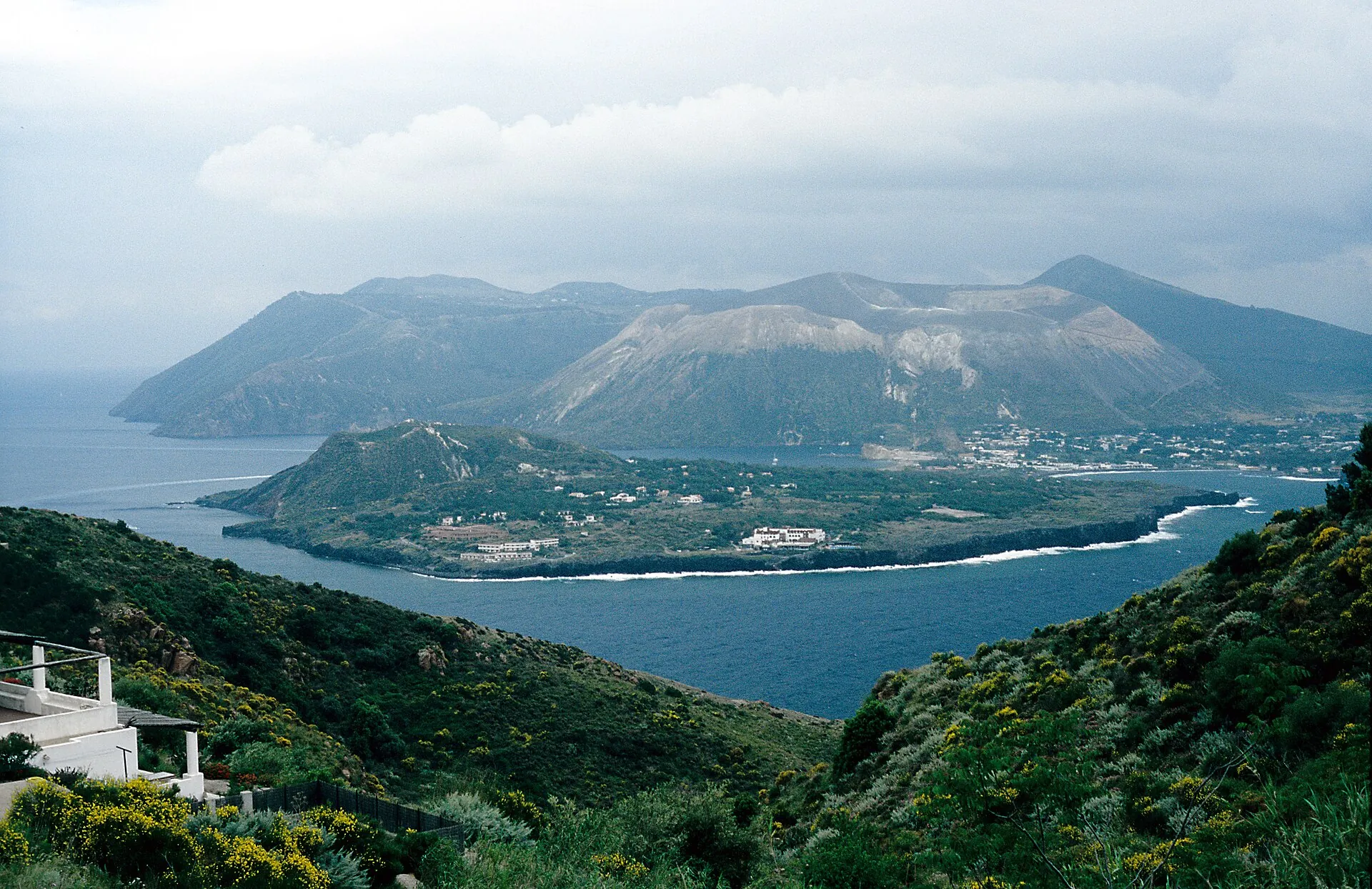
View from Lipari across to Vulcano: the Vulcanello peninsula in front, the pale cone of La Fossa with steam over the crater behind
From Lipari you see the whole volcano – Vulcanello in front, La Fossa behind. The crossing takes ten minutes.

Photo: Falk2 · CC BY-SA 4.0

Out of date onlineWhat other sites get wrong

“The crater is closed because of gas.”
The ban of 14 October 2021 was lifted on 24 April 2023. Since then the climb has been allowed again – with traffic light and time windows.
“You need a guide for the crater.”
The rules in force explicitly call the excursions free; the only requirement is to go at least in pairs.
“You can walk through the fumaroles and down into the crater.”
Fumarole field, crater floor and hollows on the inner rim are an exclusion zone.
“The mud bath is permanently closed.”
It was closed for a long time and seized in 2025, but has been open again since 11 April 2026 (report by the news agency ANSA).

Quick questionsBefore the climb

Is the crater of Vulcano open in 2026?

Yes, according to all sources found the rules of 23 April 2023 still apply: free ascent in fixed time windows when the traffic light at the start of the path shows green.

How dangerous are the gases?

Carbon dioxide is odourless, heavier than air and collects in hollows in calm conditions; hydrogen sulphide smells of rotten eggs and irritates eyes and airways. On the open path with a green light the risk is low – an FFP2 mask must be carried according to the ordinance.

Is the climb suitable for children?

For children who enjoy walking, yes, but they react more sensitively to the gases. The municipality advises watching children and older people constantly and descending immediately if irritation occurs.

Do you need a ticket?

No. The ordinance provides for neither admission nor a guide requirement. On arrival on the island the landing tax of the municipality of Lipari is due.

When are you allowed on the crater?

From 1 April to 20 October from 6:30 to 10:30 am and from 4:00 to 7:30 pm; from 21 October to 31 March continuously from 7:30 am to 4:30 pm. The times apply to being at the top, not just to setting off.

What does the traffic light at the start of the path mean?

The municipality switches it automatically according to wind and weather. Green means open, red or off means closed because the wind is blowing the fumarole gases across the path.

What should you wear?

Trekking boots are mandatory. Plus light clothing in layers, a hat, plenty of water and an FFP2 mask.

How do you get to Vulcano?

By Liberty Lines hydrofoil from Milazzo; in summer 2026 there were 15 departures a day, from October 13. Car ferries run under the Siremar brand. Milazzo is reached from Catania via the A18/A20.

What does a violation cost?

€500 per person, for instance for climbing despite a red light, outside the hours or off the path. The entrance is monitored by video.

Can you bathe in the mud again?

Yes, the Pozza dei Fanghi has been open again since 11 April 2026. Prices and opening hours of the private operator Geoterme were not checked here.

Sources · accessed on 21 September 2026