The eruption in Halemaʻumaʻu
WATCH / ORANGE, notice 2026/H445 of September 20, 2026. Precursors to episode 55, no fountains. All lava stays inside the closed crater. There is no documented forecast window today.
Episodes since Dec 23, 202454
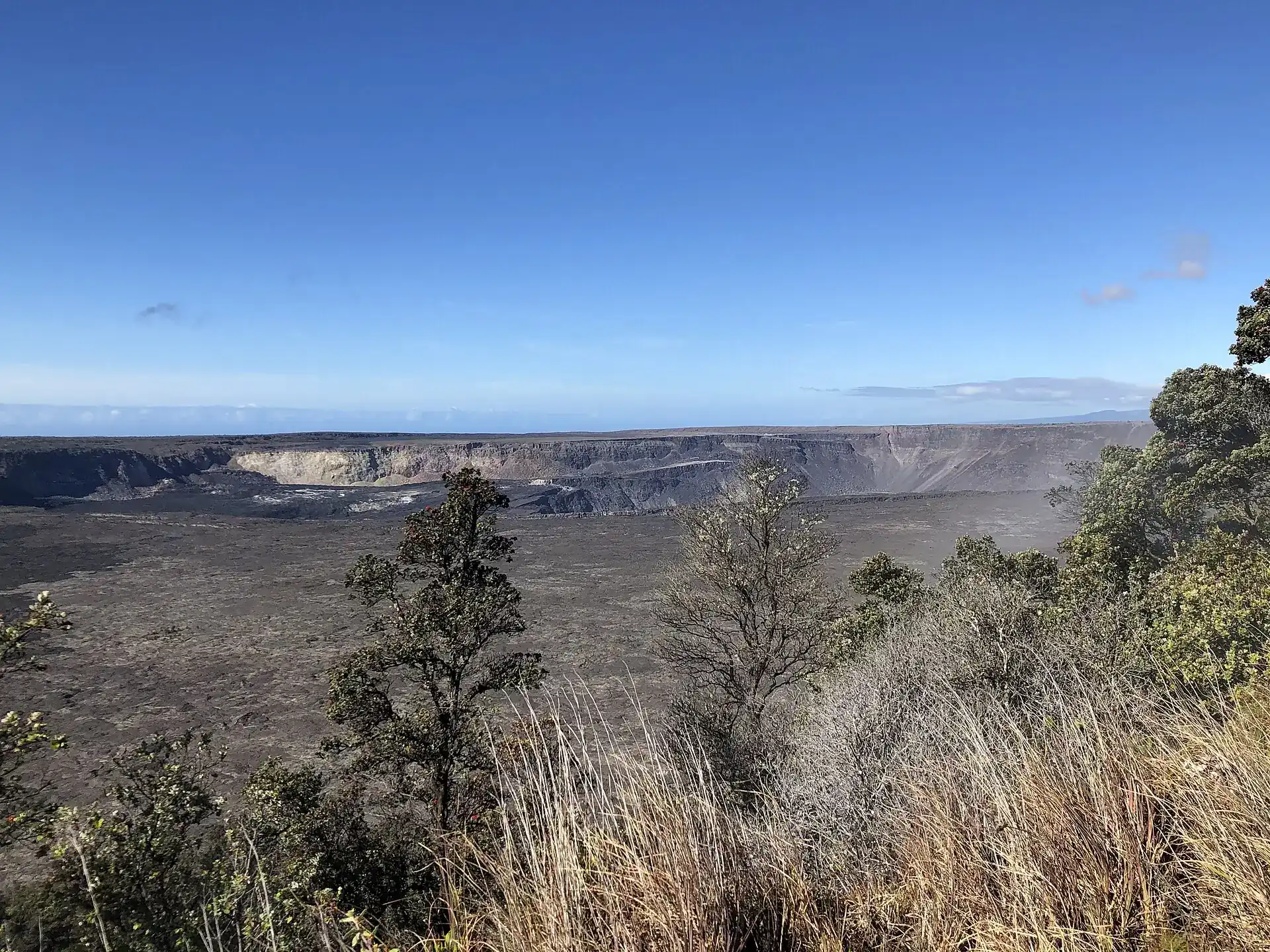
By day: a gray caldera with steam rising out of it.
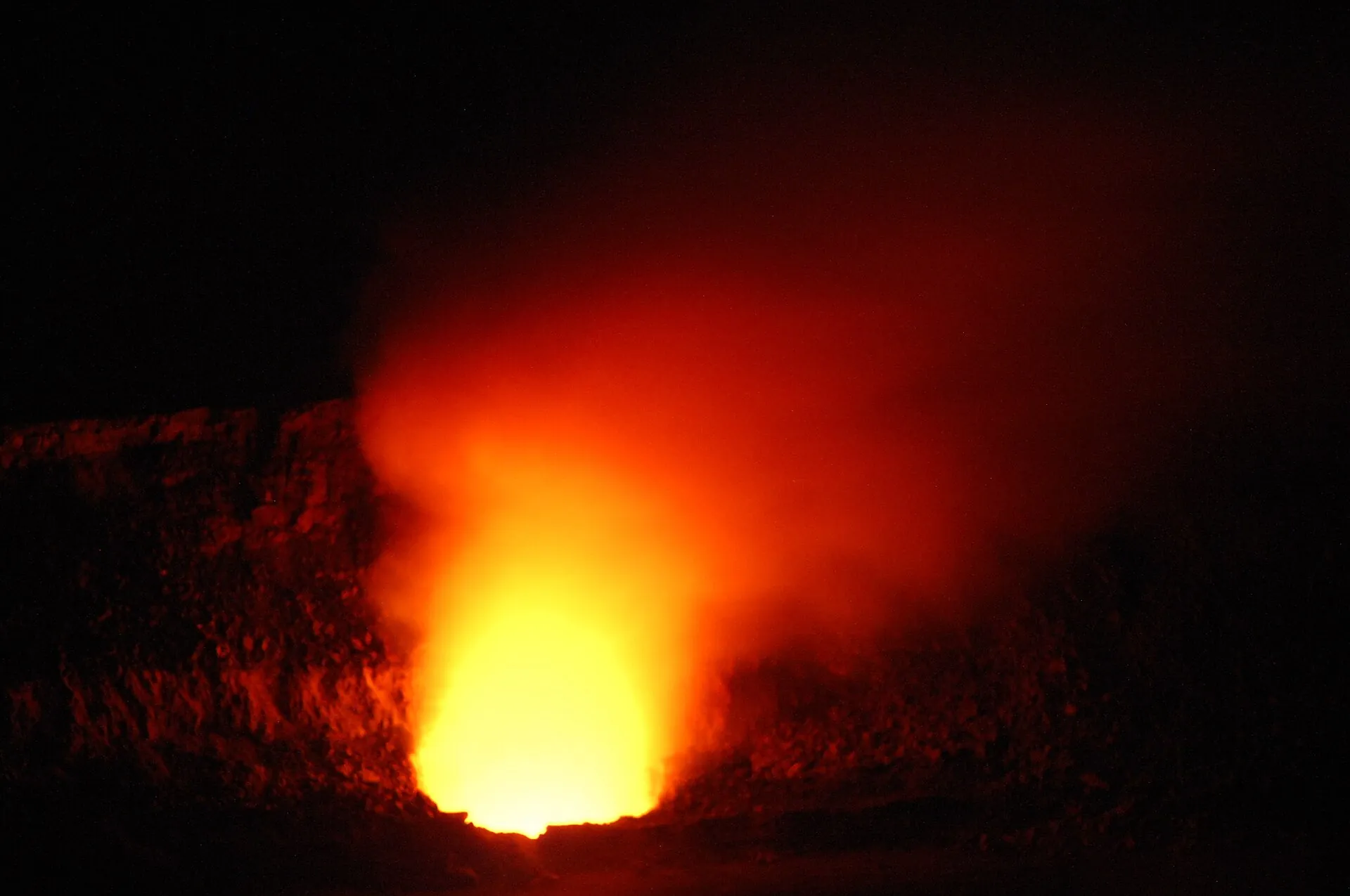
When the light goes, the steam turns red – and on most evenings, that is all.
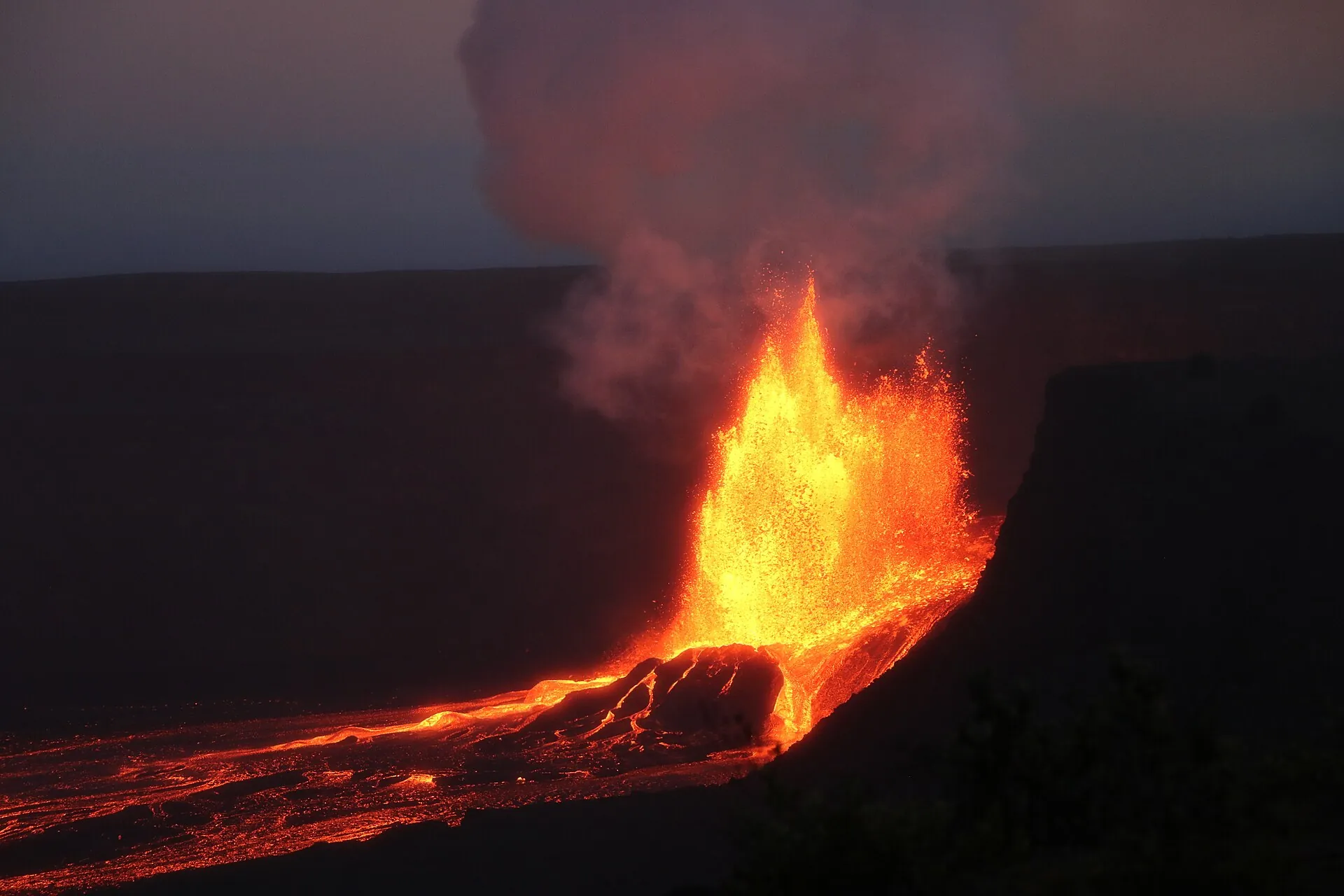
And on a few days, lava shoots hundreds of feet into the air.
Scroll –
night falls over the crater
Not today. The USGS Hawaiian Volcano Observatory (HVO) reports WATCH / ORANGE and lists the eruption as paused. Since December 23, 2024, Kīlauea has been erupting in episodes inside Halemaʻumaʻu, its summit crater – 54 so far, the latest on August 25, 2026. Fountains and lava flows are visible only during an episode: hours, sometimes a day or two. In between come pauses of days to weeks, with steam and at most a faint glow at night.
Precursory activity for episode 55 has been under way since September 7: sluggish overflows at the north vent and, since September 14, several small new vents on the northwest wall of the crater. We cannot tell you when fountaining will start – in the HVO notice of September 20, the spot where the forecast window normally appears held only unfilled placeholder text. What to check on the day you go: the HVO status page and the USGS webcams linked from it. If it says “paused,” there are no fountains – whatever a travel blog promises.
WATCH / ORANGE, notice 2026/H445 of September 20, 2026. Precursors to episode 55, no fountains. All lava stays inside the closed crater. There is no documented forecast window today.
The park is open around the clock, with no reservation and no timed entry. Crater views from Crater Rim Drive: Welcome Center, Kilauea Overlook and Uēkahuna on the west side, Kilauea Iki and Devastation on the east.
The rim around Halemaʻumaʻu has been closed to the public since late 2007. You cannot walk to the lava, and there is currently no ocean entry. During heavy tephra fall, rangers also clear the entire summit.
Closed since February 18, 2025 for a full renovation; reopening announced for late 2026. Rangers, maps and the park store are at the Welcome Center in Kilauea Military Camp, about 1.2 miles (2 km) past the entrance.
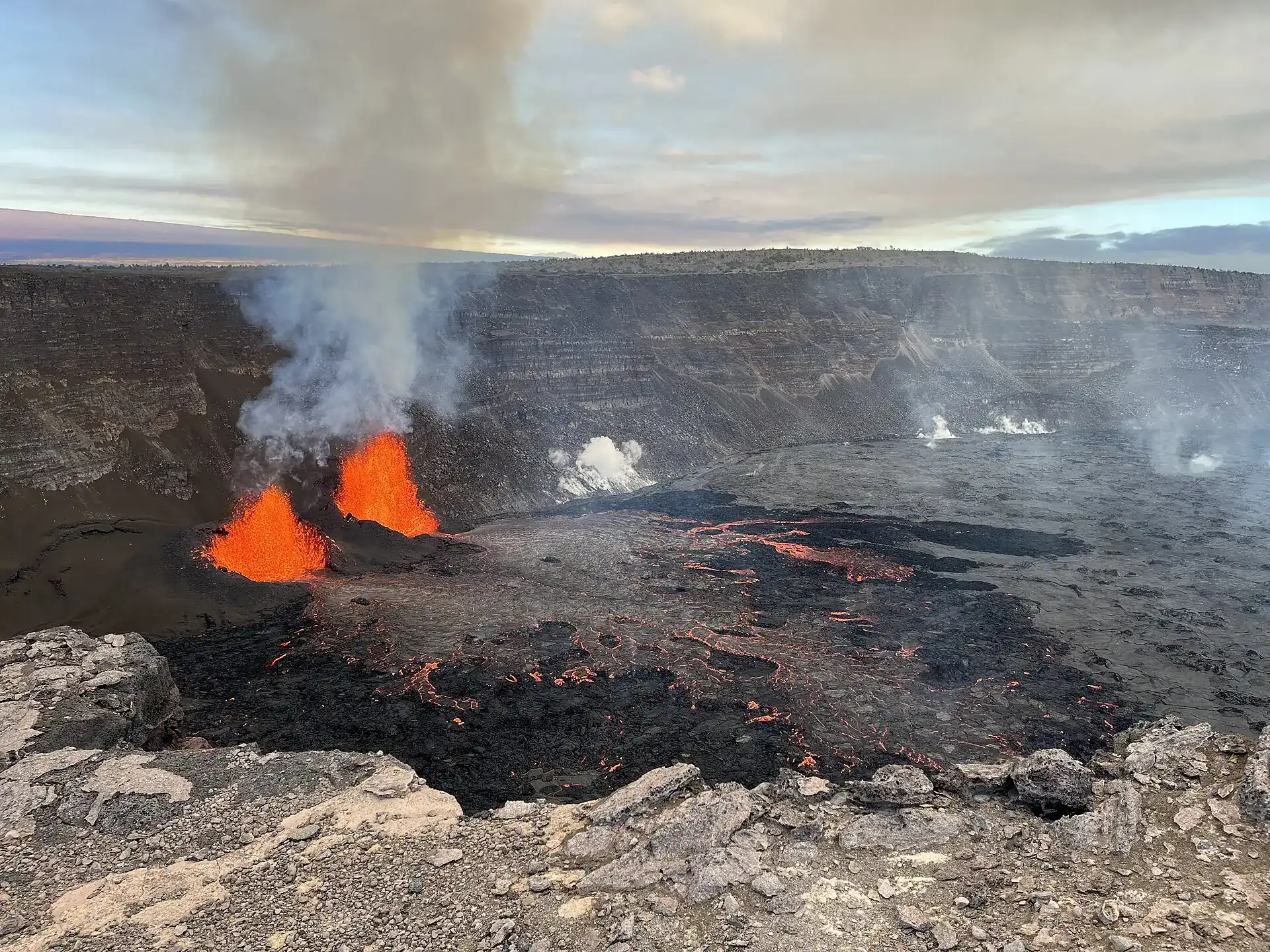
Photo: USGS / K. Lynn · Public domain
You stand at a railing at about 4,000 ft (1,200 m), with the collapsed caldera and Halemaʻumaʻu crater in front of you. During a pause, steam rises from the ground, the wind sometimes carries a sulfur smell, and after sunset the plume above the vent turns faintly orange. That is the normal day.
During an episode it is a different place. The fountains can be seen from the overlooks along Crater Rim Drive, and at night the whole caldera is lit. In episode 43 on March 10, 2026, they reached roughly 1,300 ft (400 m) – tephra rained down as far as Highway 11 and rangers cleared the summit. Pele's hair, fine strands of volcanic glass, travels for miles; do not touch it.
For Native Hawaiians, Halemaʻumaʻu is a sacred place. The National Park Service explicitly asks visitors to watch the eruption respectfully.
You do not need a guide for any of this, and you do not need a reservation. A tour makes sense if you are staying in Kona or Waikoloa and would rather not drive two to two and a half hours each way – or if you want to see the park in half a day with someone who knows it. No operator can promise you lava.
Affiliate links to GetYourGuide: if you book, we earn a commission and the price stays the same. Prices and ratings as of 21 September 2026. Whether lava is visible is up to the volcano – none of these tours can promise it.
Kīlauea is the least complicated active volcano we know of: no timed entry, no daily cap, no mandatory guide. There are still three things to know before you reach the entrance station.
You pay at the park entrance – by card only. The pass is valid for seven days, so a second visit at night costs nothing extra.
Since January 1, 2026, the $80 America the Beautiful pass is for US residents only. Visitors from abroad pay $250. The additional $100 non-resident fee applies to eleven parks on the mainland – not to the Hawaiian parks.
Behind them are earth cracks and undercut cliff edges. In 2017, 13 tourists inside the closed area were cited for $100 plus a $30 processing fee each, and their guide faced up to $5,000 and six months in jail. Whether the same amounts apply in 2026 has not been confirmed. Drones are banned throughout the park.
| Private vehicle (up to 15 people), valid 7 days | $30 |
| Motorcycle, 7 days | $25 |
| Pedestrians and cyclists age 16 and up, 7 days · under 16 free | $15 |
| Hawaiʻi Tri-Park Annual Pass: Hawaiʻi Volcanoes, Haleakalā, Puʻuhonua o Hōnaunau · 12 months | $55 |
| America the Beautiful annual pass, US residents | $80 |
| America the Beautiful annual pass, non-US residents (since January 1, 2026) | $250 |
| Backcountry permit per site (overnight trips only, as of 11/2025) | $10 |
Everything here is covered by the entrance fee. According to the NPS, summit parking lots are usually full by 10 am – the west side of Crater Rim Drive generally has more space.
| Crater Rim Drive West: entrance → Welcome Center → Kilauea Overlook → Uēkahuna | The road to the eruption overlooks, open year-round, 24 hours a day. The Welcome Center is about 1.2 miles (2 km) past the entrance; Uēkahuna, with a viewing platform and restrooms, is at the end. Vehicles longer than 25 ft are not allowed to Uēkahuna. Closed on short notice during tephra fall, storms or high gas levels. |
| Chain of Craters Road: from Crater Rim Drive to the coast | 18.8 miles (30.3 km) each way, ending at hardened lava fields – lava flows have buried almost 9 miles (14.5 km) of the former road. No food, water or fuel along the way; restrooms only at the Maunaulu parking area and at the end of the road. Closed from August 14, 2026 because of Hurricane Lala; since August 28 it no longer appears on the NPS closure list, but we did not find an explicit reopening notice. |
| Kilauea Iki: loop across the hardened 1959 lava lake | 3.3–6 miles (5.3–9.7 km) depending on the variant, 2–5 hours, 400 ft (122 m) down and back up. The NPS rates it moderate to challenging: steep, rocky, with cracks and sharp lava on the crater floor. Kilauea Iki Overlook has very few parking spaces; the alternative is Devastation Trailhead. |
| Crater Rim Drive: Chain of Craters Road junction → Keanakākoʻi | Permanently closed to cars, open as a walking route. |
| Kahuku Unit: separate section of the park on Highway 11 between mile markers 70 and 71 | About an hour southwest of the summit, with trails on the southwest flank of Mauna Loa. Open Thursday to Sunday only, 8 am–4 pm. Open again since September 3, 2026; four-wheel drive is recommended above Lower Palm Trailhead, and upper Kahuku Road is closed. |
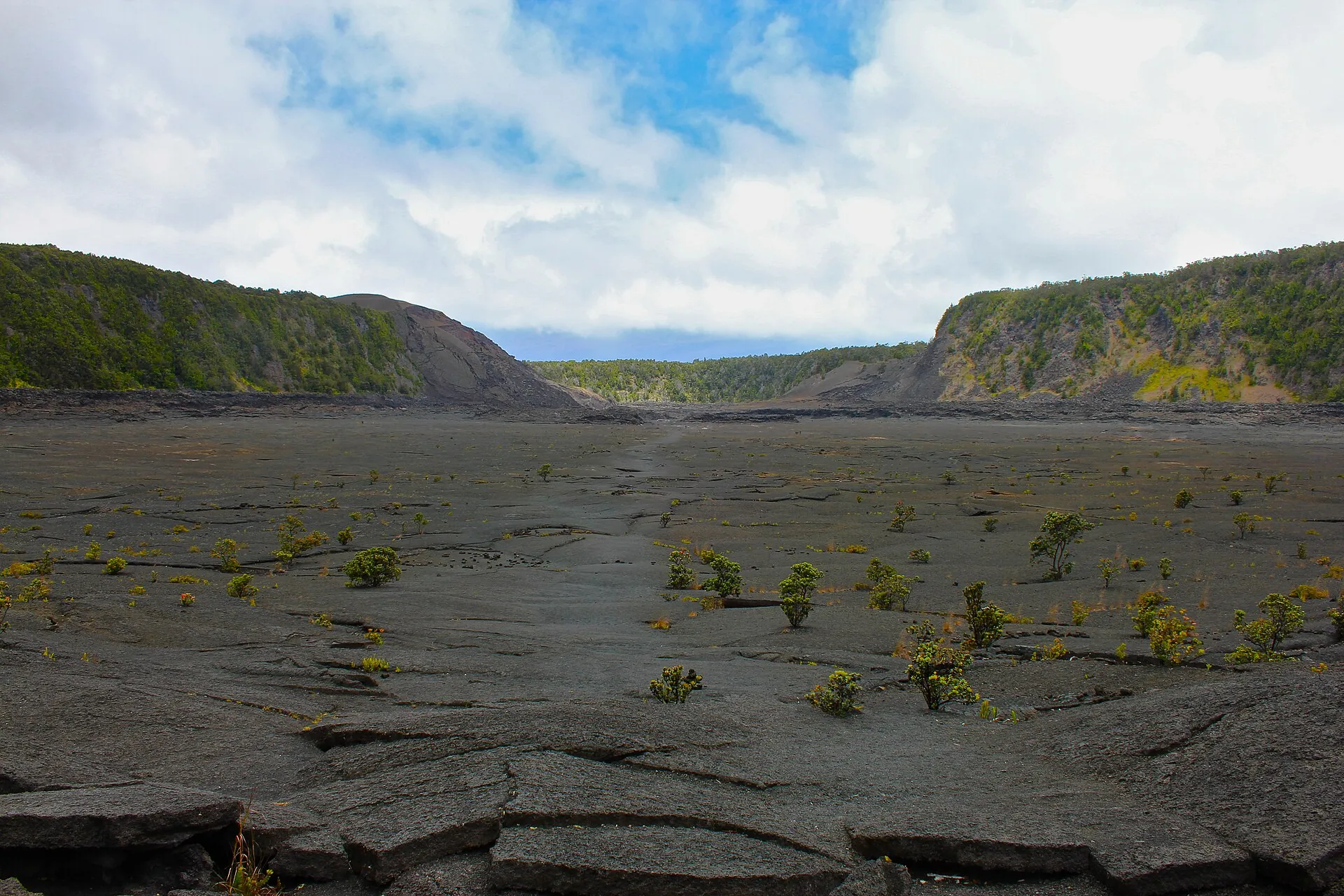
Photo: Navin Rajagopalan · CC BY-SA 2.0
Without a car: There is no shuttle or public transit inside the park. The county's Hele-On Bus serves the park only on a limited basis, and schedules can change. Ride services such as Uber are hard to find because of the remote location – realistically, you need a rental car.
By car: Access is via Highway 11. Summit parking lots are usually full by 10 am; the west side of Crater Rim Drive (Welcome Center, Kilauea Overlook, Uēkahuna) generally has more space. At the Welcome Center you park at the ball field. There is no fuel along Chain of Craters Road.
If you want to see lava, go by the HVO status, not by the season: fountains run for only hours to days, and in between there is at most a faint glow. The observatory publishes forecast windows for the next episode. Time of day: before 10 am or at night – parking is available then and the glow is easiest to see; the park is open around the clock. Hurricane season (2026: Lala in August) and winter storms (March 2026) can close the park for days.
Four options for different starting points: volcano and night sky in one day, the park plus a beach from Hilo, the view from a helicopter – and a day tour for anyone staying on Oʻahu. What exactly is included is listed in each description.
Affiliate links to GetYourGuide: if you book, we earn a commission and the price stays the same. Prices and ratings as of 21 September 2026. Whether lava is visible is up to the volcano.
Nobody knows to the day. The Hawaiian Volcano Observatory publishes forecast windows ahead of episodes; in the notice of September 20, 2026, that spot was not filled in. Precursory activity for episode 55 has been under way since September 7. The USGS “Volcano Updates” page shows today's status.
From the overlooks along Crater Rim Drive: Welcome Center (Kilauea Military Camp), Kilauea Overlook and Uēkahuna on the west side; Kilauea Iki, Devastation and the start of Chain of Craters Road on the east. Fountains only happen during an episode – during pauses there is usually just a faint glow at night.
Yes, if you come with the right expectations: a steaming caldera, the trail across the hardened lava lake in Kilauea Iki, Chain of Craters Road down to the coast. The pass is valid for seven days – if an episode starts during that time, you simply drive back.
Yes, but it is a long day: 95 miles (153 km) from Kailua-Kona, 2 to 2.5 hours each way. From Hilo it is only 30 miles (48 km), about 45 minutes. Public buses offer limited service – realistically it is a rental car or a tour.
No. It has been closed for renovation since February 18, 2025, with reopening announced for late 2026. The replacement is the Welcome Center at Kilauea Military Camp, open daily from 9:00 am to 4:45 pm.
No, Hawaiʻi Volcanoes National Park accepts cards only. $30 per vehicle, valid for seven days.
Yes, in the sense that an eruption is ongoing. Since December 23, 2024, an episodic eruption has been under way in the summit crater Halemaʻumaʻu, with 54 fountaining episodes so far. On September 21, 2026, the Hawaiian Volcano Observatory reports alert level WATCH / ORANGE and a pause; precursory activity for episode 55 has been observed since September 7. The USGS Volcano Updates page shows the current status.
Only during an episode or shortly before and after one. Then fountains and lava flows can be seen from the overlooks along Crater Rim Drive, and the glow at night. During pauses there is usually just a faint glow. You cannot walk up to the lava – it is inside the closed area.
$30 per vehicle, $25 per motorcycle or $15 per pedestrian or cyclist age 16 and up. The pass is valid for seven days. Payment is by card only; the park does not accept cash.
No. There is no timed entry and no daily cap, and the park is open around the clock. Only backcountry overnight stays require a permit, at $10 per site.
No, there is no mandatory guide anywhere in the park. You can visit all overlooks and day-hiking trails on your own. Guided tours are a convenience, not a requirement.
On the open trails and platforms the risk is manageable. The hazards are volcanic gases, tephra fall during high fountaining, earth cracks and undercut cliff edges. During heavy tephra fall rangers clear the summit, as they did on March 10, 2026.
The National Park Service lists infants, children, pregnant women and people with heart or respiratory conditions as groups sensitive to volcanic gases. A visit is possible, but check air quality continually and leave the area if there is vog or a sulfur smell.
From Hilo it is 30 miles (48 km) on Highway 11, about 45 minutes. From Kailua-Kona you drive 95 miles (153 km), which takes 2 to 2.5 hours. Public buses offer only limited service, and there is no shuttle inside the park.
Two to three hours are enough for the overlooks along Crater Rim Drive. Add Chain of Craters Road (18.8 miles each way) and a hike such as Kilauea Iki (2 to 5 hours) and it becomes a full day. Because the pass is valid for seven days, a second visit at night is worthwhile.
It was closed from August 14, 2026 because of Hurricane Lala; according to the NPS, most of the park has been open again since August 28, and the road no longer appears on the list of closed areas. The park's “Alerts & Conditions” page is the binding source. There is no water or fuel along the way.
In 2017, 13 tourists inside the closed area at Halemaʻumaʻu were each cited for $100 plus a $30 fee; their tour guide faced up to $5,000 and six months in jail. On top of that comes the real risk from gas, cracks and collapsing crater walls.
No. Launching, landing and operating unmanned aircraft is prohibited throughout Hawaiʻi Volcanoes National Park unless the superintendent has approved it in writing.
Sources · accessed on 21 September 2026
.jpg)
.JPG)
_of_Kilauea%27s_December_2024_eruption.jpg)

