1
Down to the old port
Cable car from Fira or the stepped path of almost 600 steps. Both are open again after the 2025 closures.
Cable car each way · children €5€10
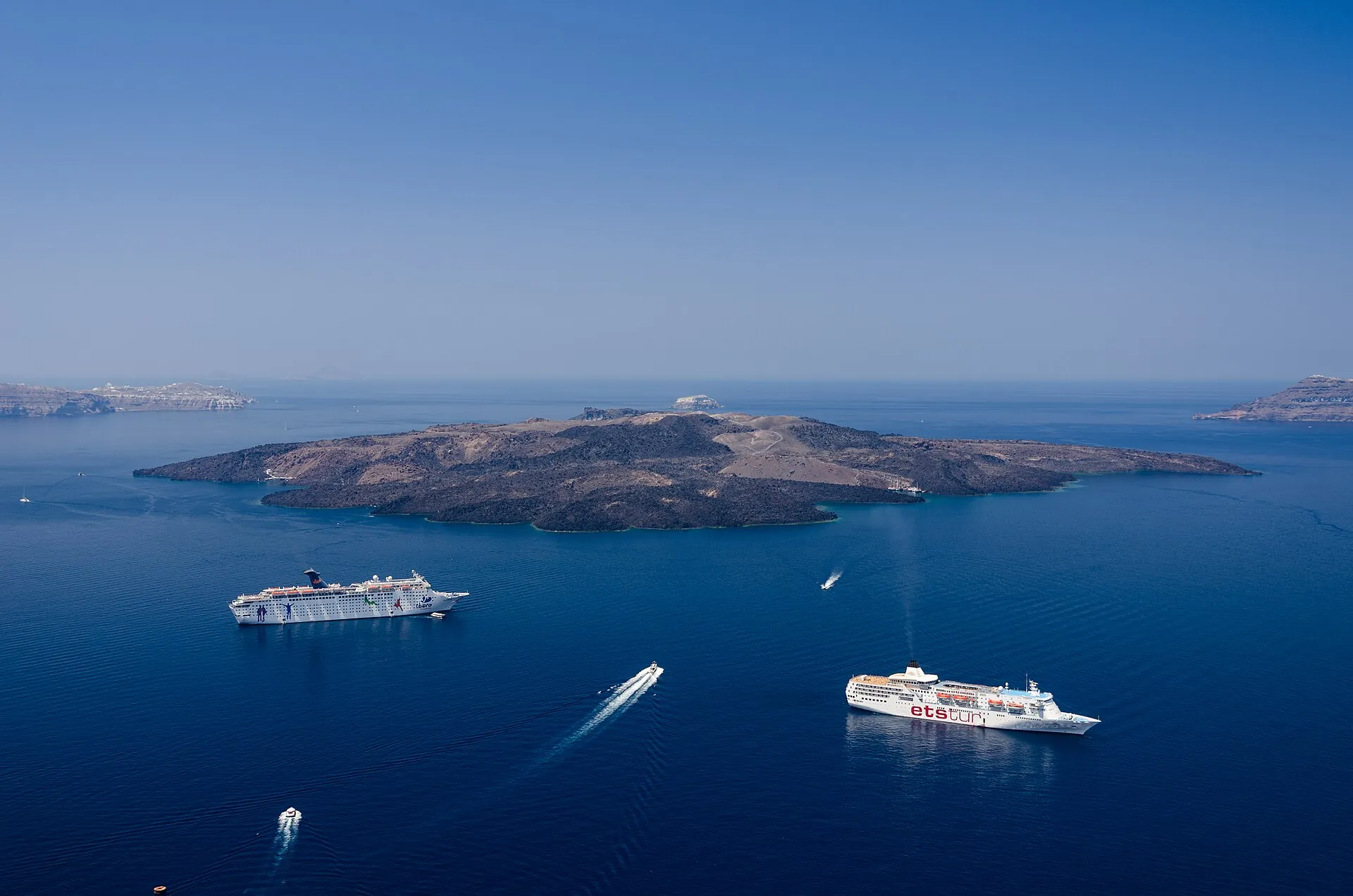
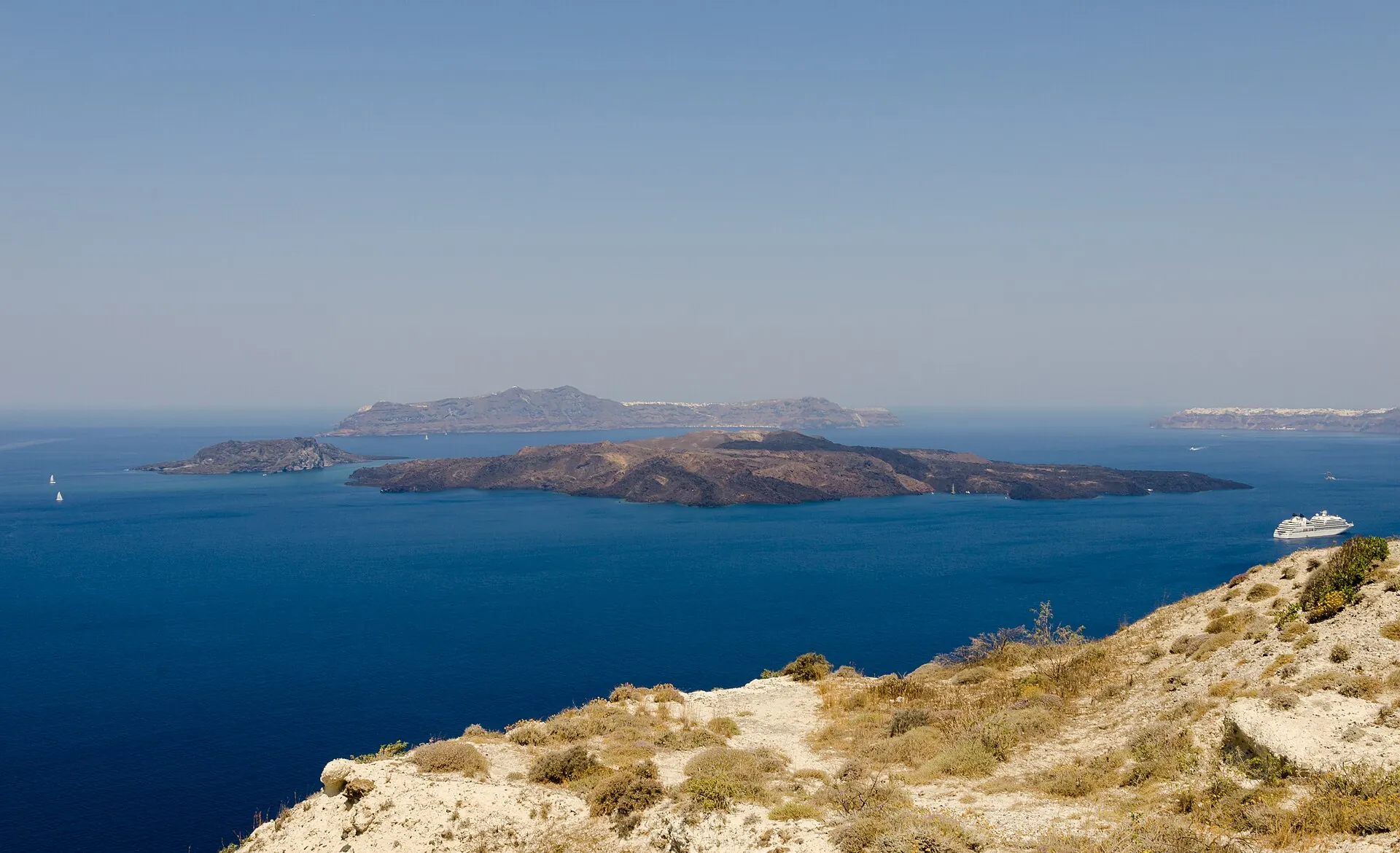
The white villages stand on the rim of a collapsed volcano.
The new one is growing in the middle. Most recently in 1950.
Scroll –
across to the island
Nea Kameni is uninhabited and has no ferry – you can only get there on an excursion boat. The standard tour: 20 minutes' crossing, an hour and a half on the island, then a swimming stop off Palea Kameni.
Cable car from Fira or the stepped path of almost 600 steps. Both are open again after the 2025 closures.
The municipal company Geothira sells the ticket at the jetty. It is almost never included in the boat price; a voucher alone is not enough.
Without a guide, marked, easily done in the usual time. Fumaroles, sulphur, no shade – closed shoes, hat, water.
From the boat you swim about 30 metres through open sea into the rust-brown bay. Only for confident swimmers; the iron-rich water stains light swimwear.
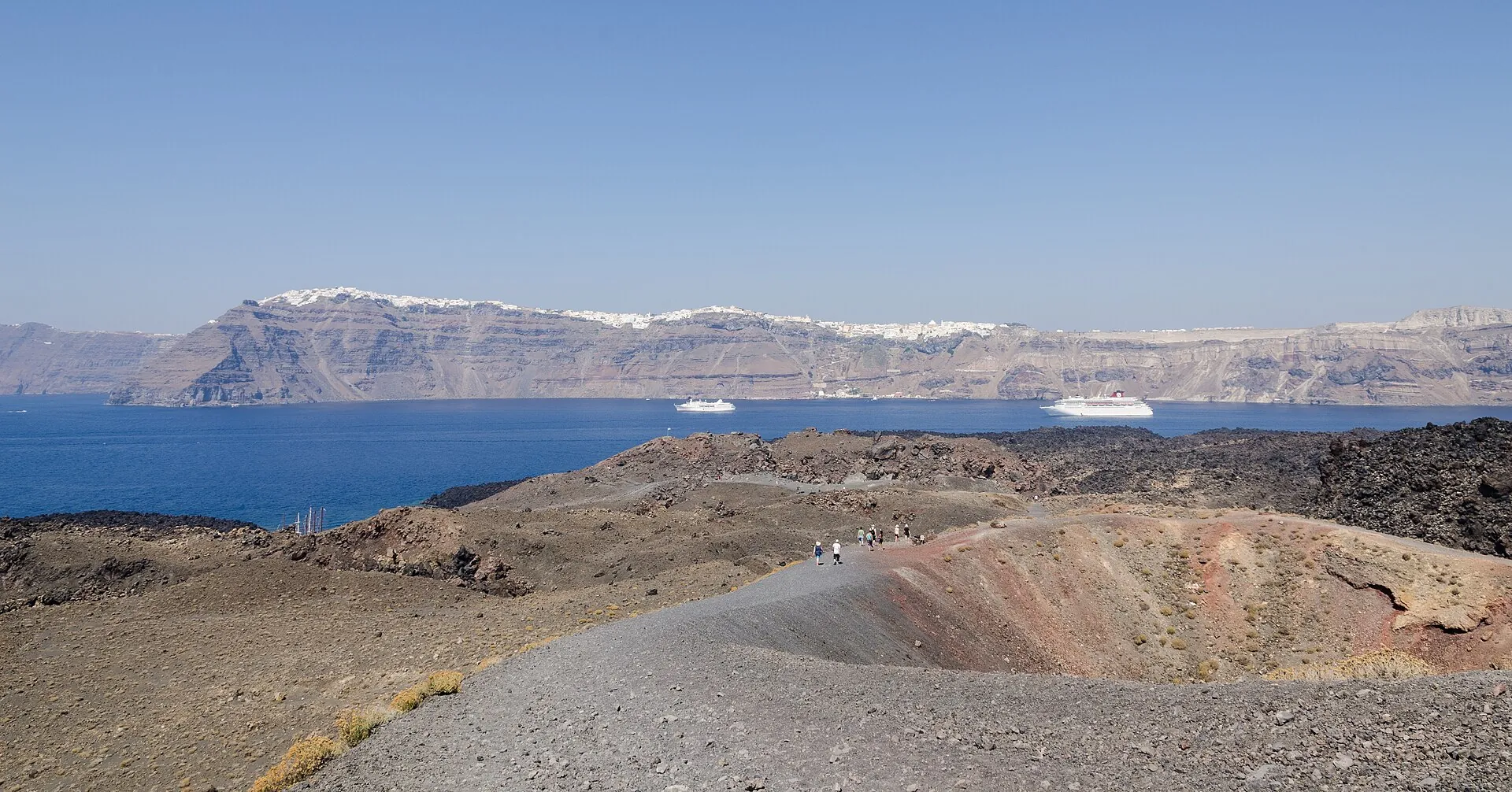
Photo: Norbert Nagel · CC BY-SA 3.0
No. At the end of January 2025 a series of earthquakes began, with the strongest shock on 5 February; the state of emergency lasted until 3 March. Closed were slope areas and ports because of rockfall – not the volcanic islands. The civil-protection decision renewed in April 2026 applies until 31 March 2027: the old port of Fira is open again apart from one zone, and Nea Kameni and Palea Kameni are not closed in it. There is no official colour-coded alert level for Santorini as there is in Italy or Iceland.
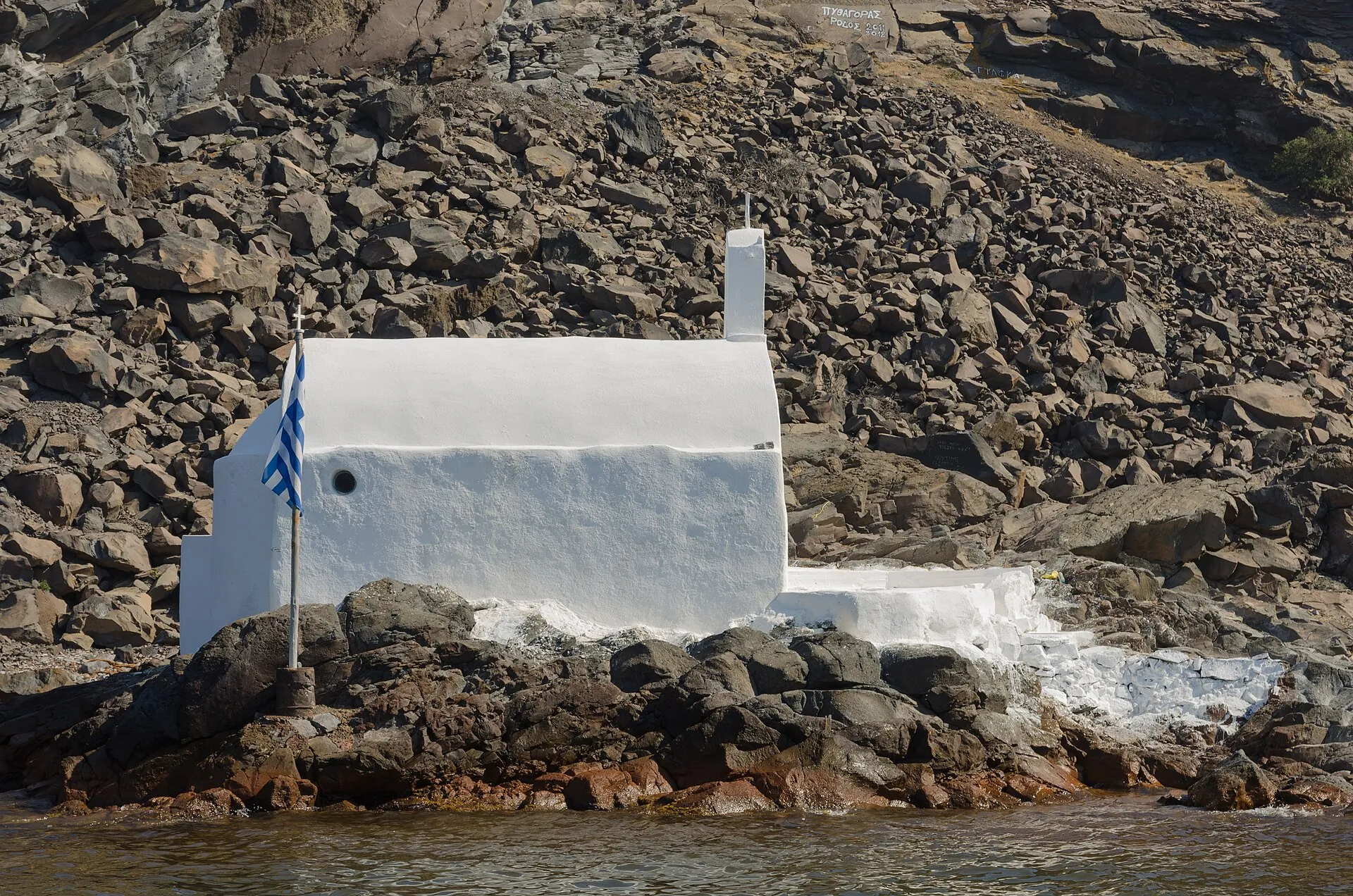
Photo: Norbert Nagel · CC BY-SA 3.0
The short tour is enough for the volcano. The long ones add Thirasia and the sunset off Oia.
Affiliate links to GetYourGuide: if you book, we earn a commission and the price stays the same. Prices and ratings as of 21.09.2026. Admission to Nea Kameni (€5) is usually extra.
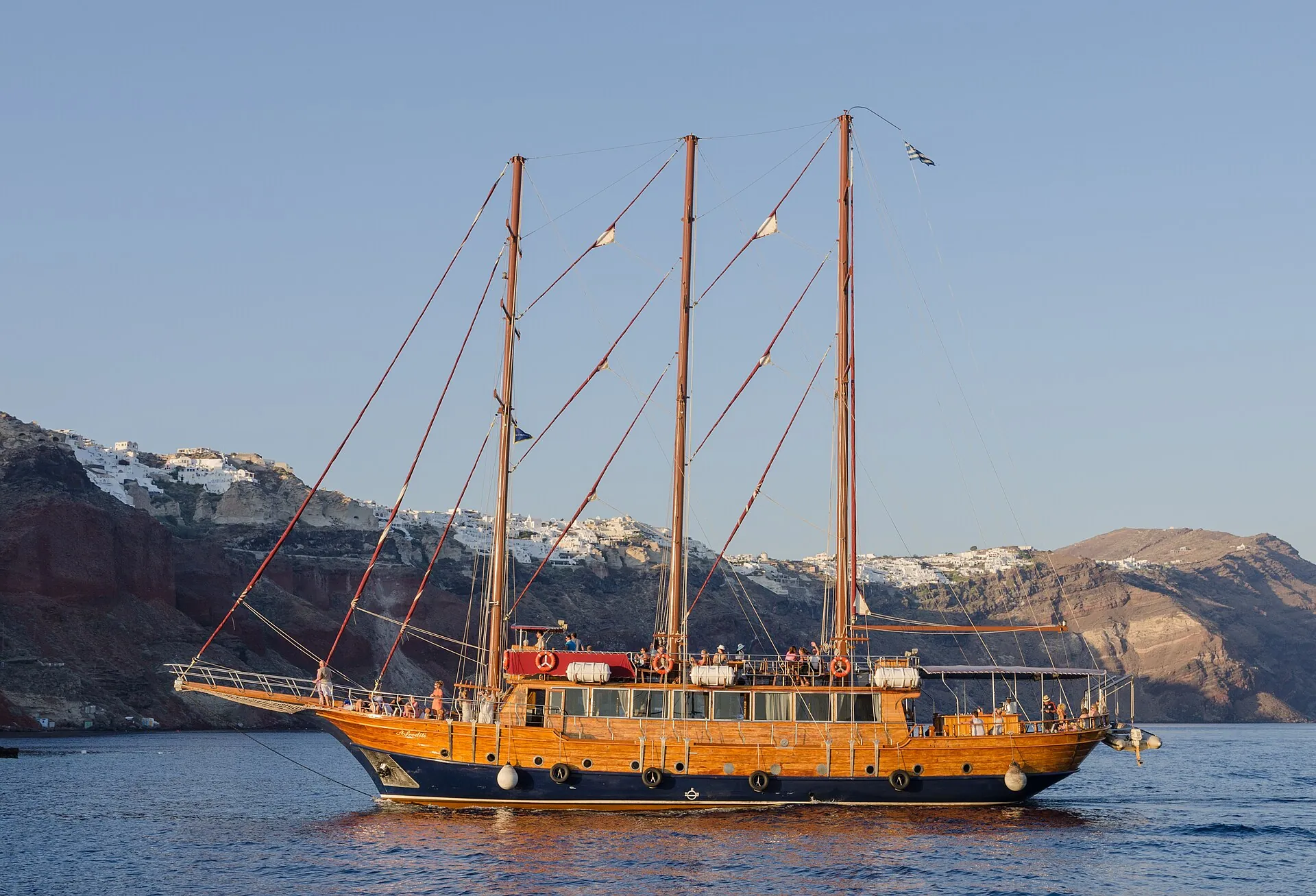
Photo: Norbert Nagel · CC BY-SA 3.0
Without a car: The starting point is Fira; from there by cable car or steps to the old port. Bus connections to Fira were not checked. Many tour prices do not include a hotel transfer.
By car: There is no road to the old port; in Athinios the 2026 joint ministerial decision regulates traffic while ships are being handled.
Avoid the 11 am departure when cruise ships are anchored off Fira – then the cable car and ticket desk get congested. There is no shade on the island; in July/August the afternoon tour is very hot, in May, June, September and October much more pleasant.
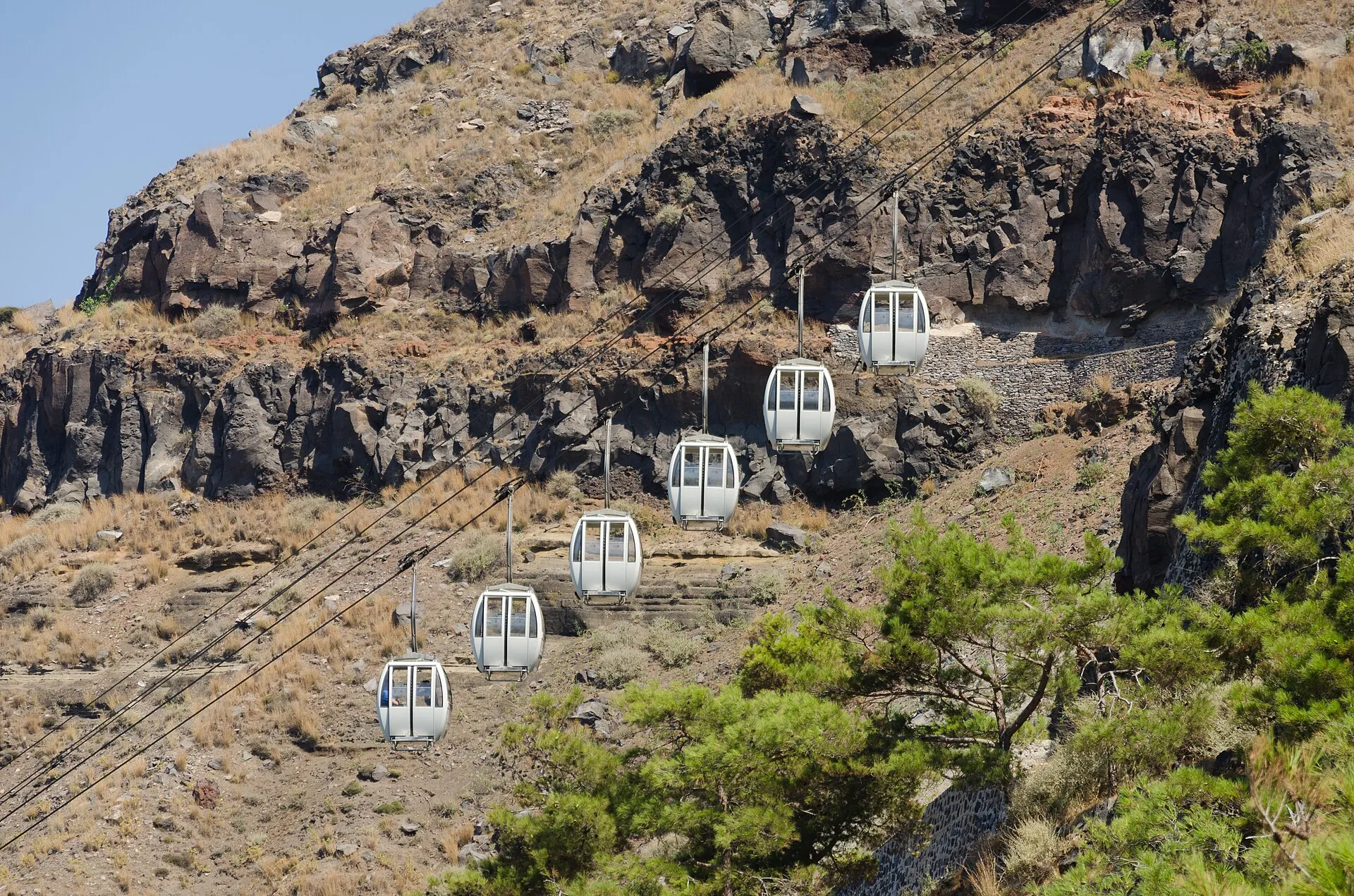
Photo: Norbert Nagel · CC BY-SA 3.0
Without a guide yes, without a boat no. There is no scheduled ferry; you book an excursion boat and walk the marked path on the island on your own.
Yes, the path is short. Pushchairs do not work on the gravel. Only confident swimmers should go to the springs.
May, June, September and October. Avoid the 11 am departure when cruise ships are anchored off Fira – then the cable car and ticket desk get congested.
€5 per person, reduced €2.50 (including children 5–12, students, over-65s), children under 5 free. It is collected by the municipal company Geothira directly at the jetty on Nea Kameni.
The standard tour from the old port of Fira takes about three hours: 20 minutes' crossing, 1.5 hours on Nea Kameni, 30 minutes' swimming stop at Palea Kameni. Tours including Thirasia and Oia take five to six hours.
By cable car (€10 each way, children €5) or on foot down the stepped path of almost 600 steps. Both are open again according to the 2026 civil-protection decision.
Closed shoes, sun hat, sunscreen and water. For the springs dark swimwear, because the iron-rich water stains light fabrics.
It is considered active; the last eruption was in 1950. In 2024/25 there was an unrest phase with a strong earthquake swarm, triggered by a magma dike north-east of the island. ISMOSAV and the National Observatory of Athens monitor the area continuously.
As of September 2026 there is no closure of the volcanic islands; the civil-protection measures in force until 31 March 2027 concern individual port zones and paths on the main island. On any given day the visit depends on whether the boats sail in the wind.
ISMOSAV with monitoring networks for earthquakes, ground deformation, temperature and CO2, scientifically supported by the University of Thessaloniki; earthquakes are also located by the Geodynamic Institute of the NOA.
Sources · accessed on 21 September 2026
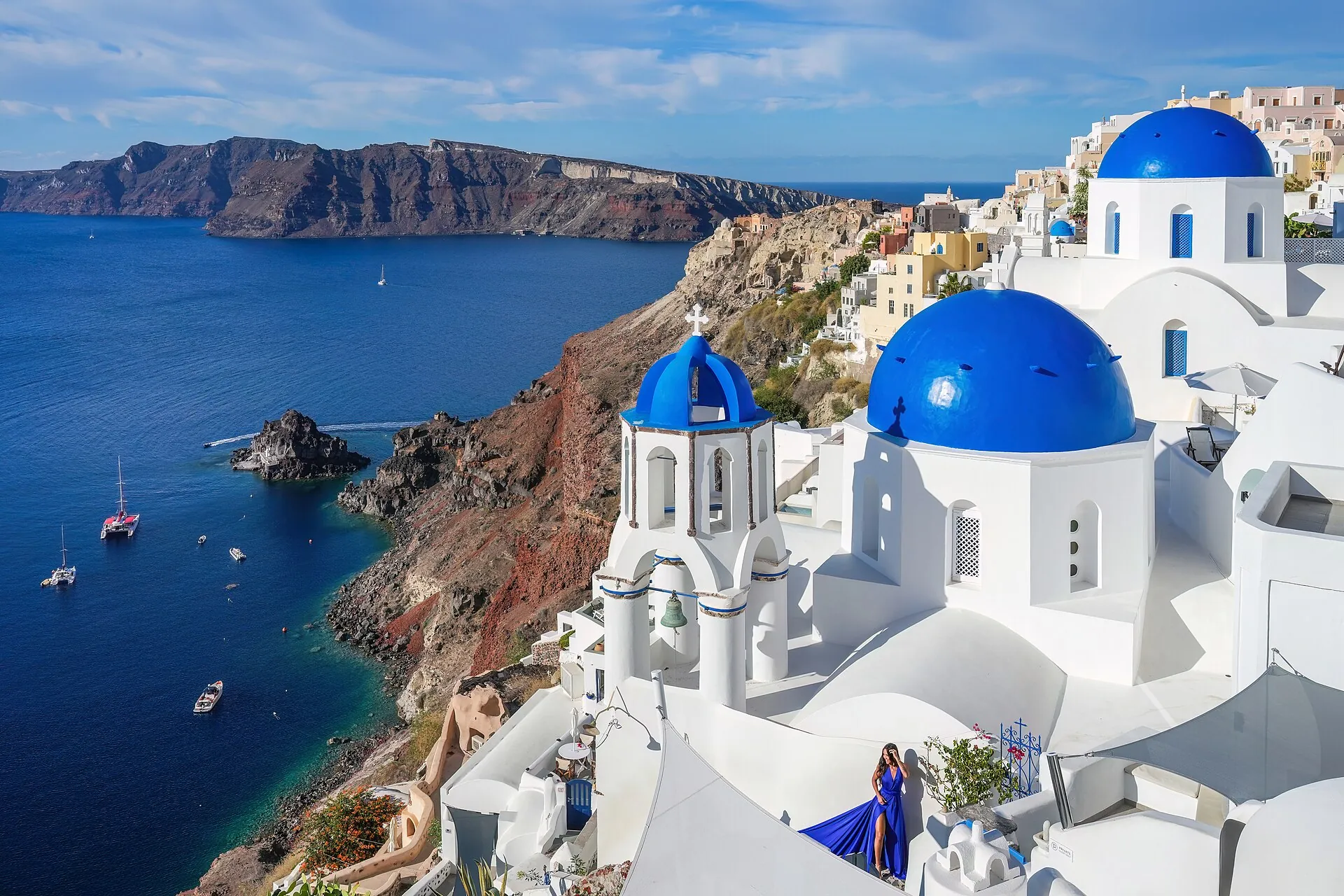
Photo: Giles Laurent · CC BY-SA 4.0


