Can you hike Hallasan without a reservation?
Not to the summit. Seongpanak and Gwaneumsa require a booking; QR code and ID are checked at the trailhead. Without one you still have the secondary trails Eorimok, Yeongsil and Donnaeko up to Witseoreum shelter at 1,700 m – free to walk, but no crater lake.
When does the Hallasan reservation open?
On the first working day of each month at 9 am Korean time, for the whole following month. Weekend and holiday slots are gone within minutes according to guidebooks; weekdays stay free longer, and cancellations release slots continuously.
Which trail is better, Seongpanak or Gwaneumsa?
Seongpanak is longer (9.6 km) but more even and has the better bus link (route 281). Gwaneumsa is shorter (8.7 km), steeper, with a suspension bridge and more views – and closed above Samgakbong until 23 September 2026. Many go up Gwaneumsa and down Seongpanak.
Is the Gwaneumsa Trail closed?
Until 23 September 2026 yes, above Samgakbong shelter, for rockfall protection. From 24 September 2026, 5 am, it is open again; booking for 24–30 September started on 21 September. The work is the start of a five-year plan covering all five main trails, so further closures are to be expected.
Do you need crampons on Hallasan in winter?
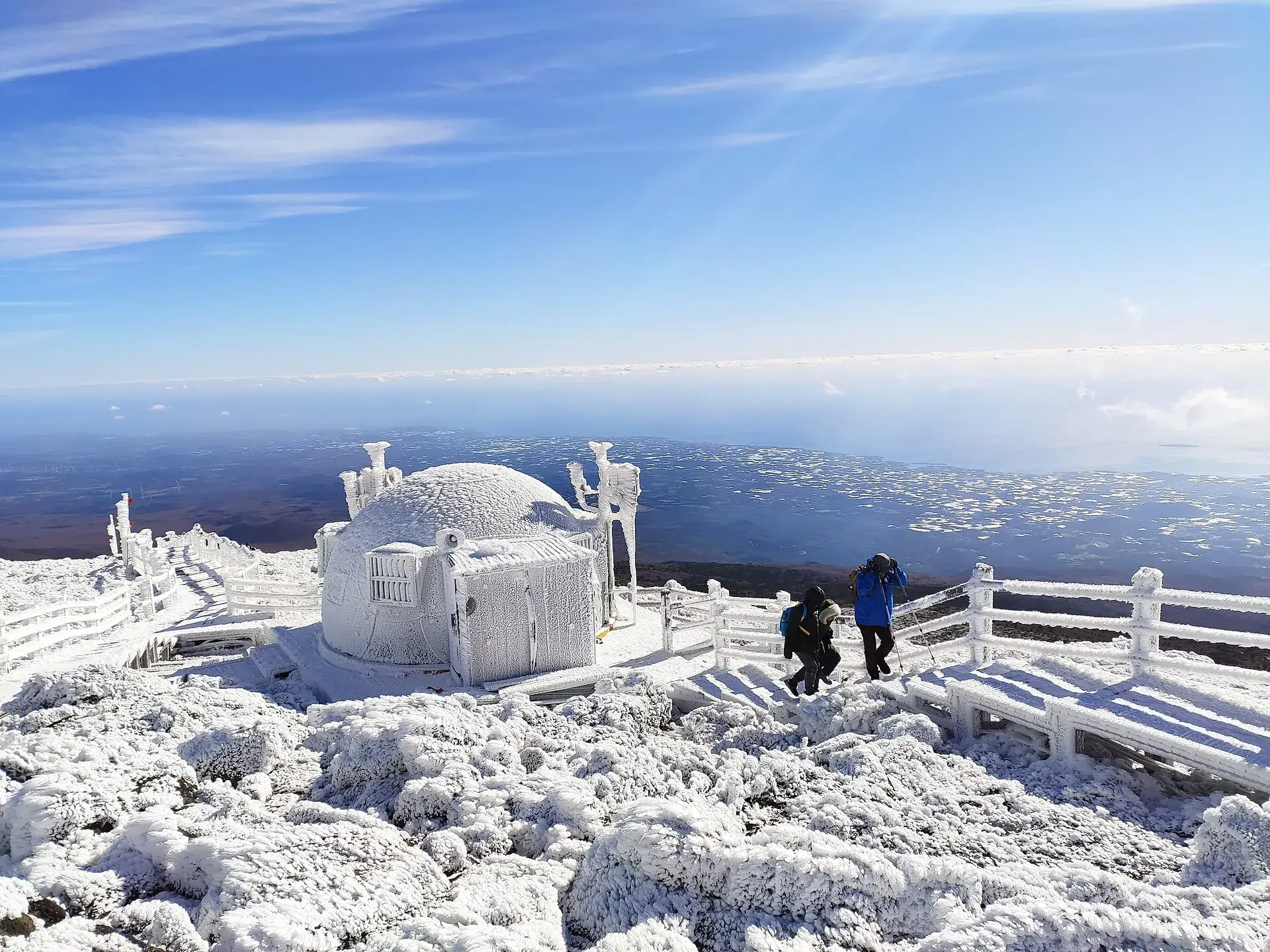
Yes. From roughly late November to March you are not let in without microspikes, according to guidebooks; park management lists them as required gear on its home page. Rentals are in outdoor shops in Jeju City, not in the park.
How do you reach the Seongpanak trailhead without a car?
Bus 281 from Jeju bus terminal (every 10–14 minutes from about 6 am) stops right at the trailhead on Route 5.16; express buses 181/182 run every 30–50 minutes, with 181 taking 40–50 minutes from the airport. We could not verify the fares officially; guidebooks quote up to 3,000 KRW.
Is Hallasan open right now?
As of 22 September 2026, yes. The Seongpanak Trail is operating normally; the Gwaneumsa Trail was closed for construction above Samgakbong until 30 September and reopens on 24 September 2026 at 5 am. Short-notice weather closures are posted daily in the reservation system visithalla.jeju.go.kr.
Do you need a reservation for Hallasan?
For the two summit trails Seongpanak and Gwaneumsa, yes – free, online, with a QR code and ID check at the trailhead. Booking opens on the first working day of the previous month at 9 am Korean time. The secondary trails Eorimok, Yeongsil and Donnaeko can be walked without a reservation but do not lead to the summit.
How much does Hallasan cost?
Nothing. Entrance and reservation are free. You only pay for parking (1,000 KRW for the first hour, then 500 KRW per 20 minutes, at most 13,000 KRW per day) or, if you want, the summit certificate.
How many people are allowed on Hallasan per day?
There are daily quotas per trail; guides quote 1,000 places for Seongpanak and 500 for Gwaneumsa for 2026. The park management shows the free places in the booking system. Weekends and holidays are usually sold out within minutes.
By what time do you have to be at the top?
The cut-off applies at the intermediate shelter: Jindallaebat (Seongpanak) or Samgakbong (Gwaneumsa) must be passed by 12 noon in winter, 12:30 pm in spring/fall and 1 pm in summer. The summit must be left by 1:30, 2:00 or 2:30 pm. Entry is from 6, 5:30 or 5 am.
How long does the hike to Baengnokdam take?
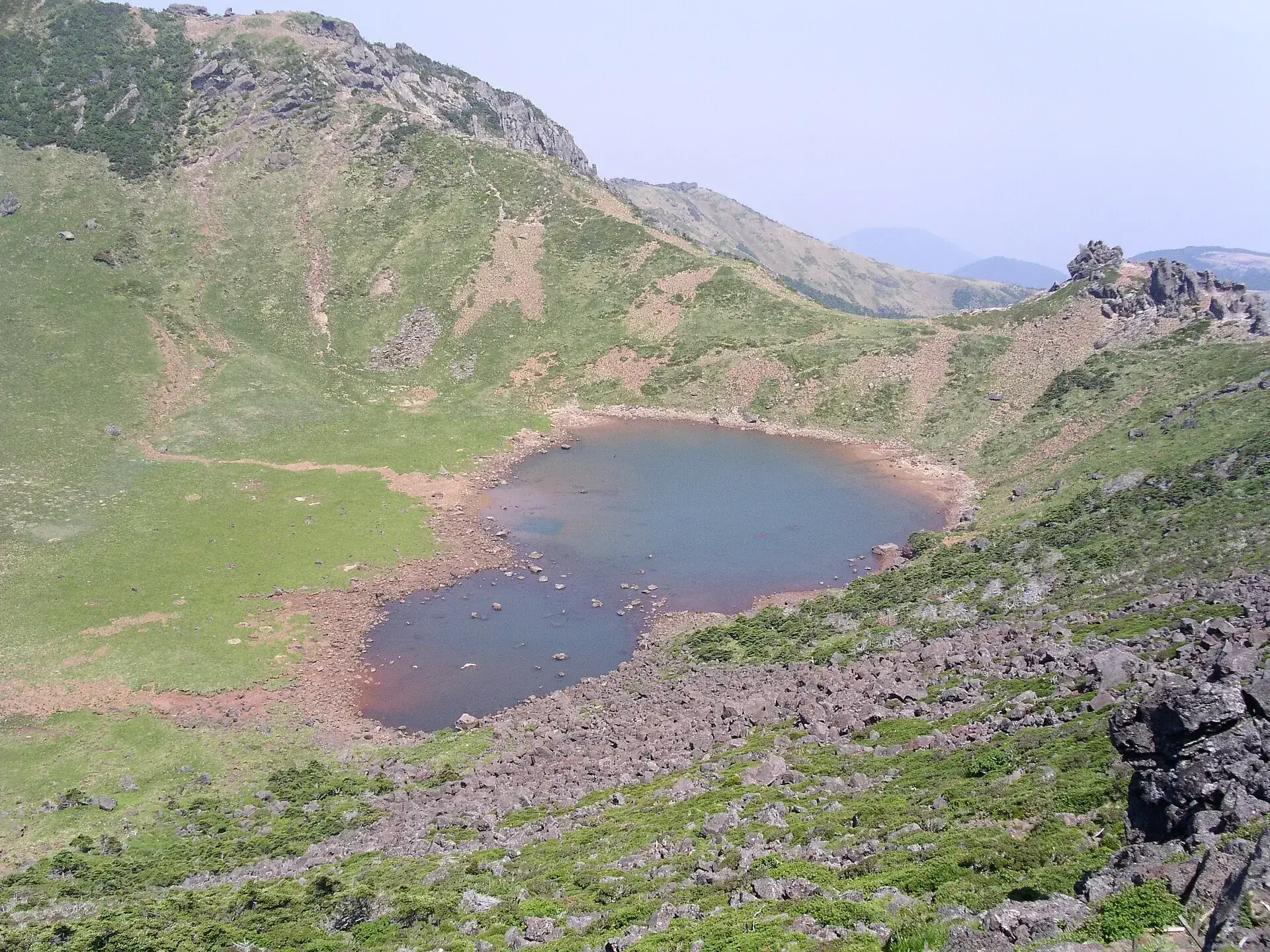
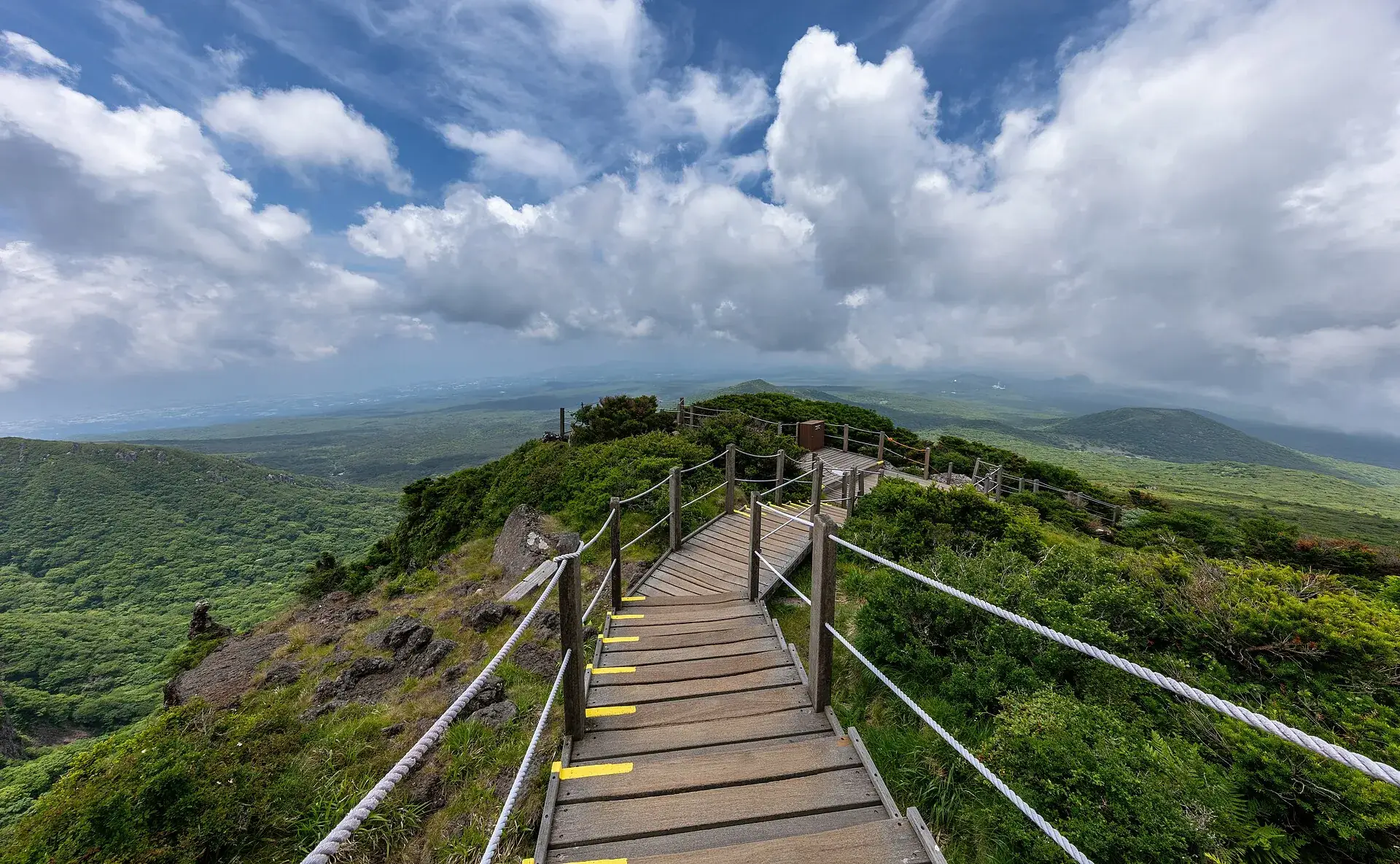
Via Seongpanak the park allows 4.5 hours one way, via Gwaneumsa 5 hours; round trip is 8–10 hours. With breaks and photo stops at the crater lake, plan the whole day and start early.
Can you climb Hallasan without a guide?
Yes, there is no guide requirement. The trails are marked, with shelters and kilometer posts. The park only advises against going alone because the summit trails are long and strenuous.
Is Hallasan doable with children?
The summit is for fit children from about age ten – 19 km (12 miles) and 1,200 m (3,900 ft) of climbing. With smaller children, Eorimok or Yeongsil to the Witseoreum shelter (1,700 m) are better; no reservation is needed for those.
What should you wear and bring?
Sturdy hiking boots, wind and rain jacket, a warm layer for the summit, 1.5–2 liters of water, food and a trash bag. In winter microspikes are mandatory, plus gaiters, hat and gloves. Nothing is sold on the trails or at the shelters.
How do you get to Hallasan?
To the Seongpanak trailhead: bus 281 (from Jeju Bus Terminal, every 10–14 minutes) and express buses 181/182 (181 from the airport, 40–50 minutes). To the Gwaneumsa trailhead: bus 475 from 6:20 am every 45–90 minutes; many take an early taxi. The Seongpanak lot (156 spaces) is full before dawn; overflow lot with shuttle at Jeju International University.
Is Hallasan an active volcano? Is it dangerous?
It is considered dormant: no eruption for about a thousand years, no gases, no reported unrest. The dangers are weather changes, wind and ice on the summit plateau, and time pressure from the cut-off times – not the volcano.
What happens if you do not show up for your reservation?
Anyone who does not come and does not cancel is banned from booking for three months, one year the second time. Anyone passing on their QR code is banned for a year. Cancelling online up to the day before has no consequences.
Is Seongsan Ilchulbong worth adding?
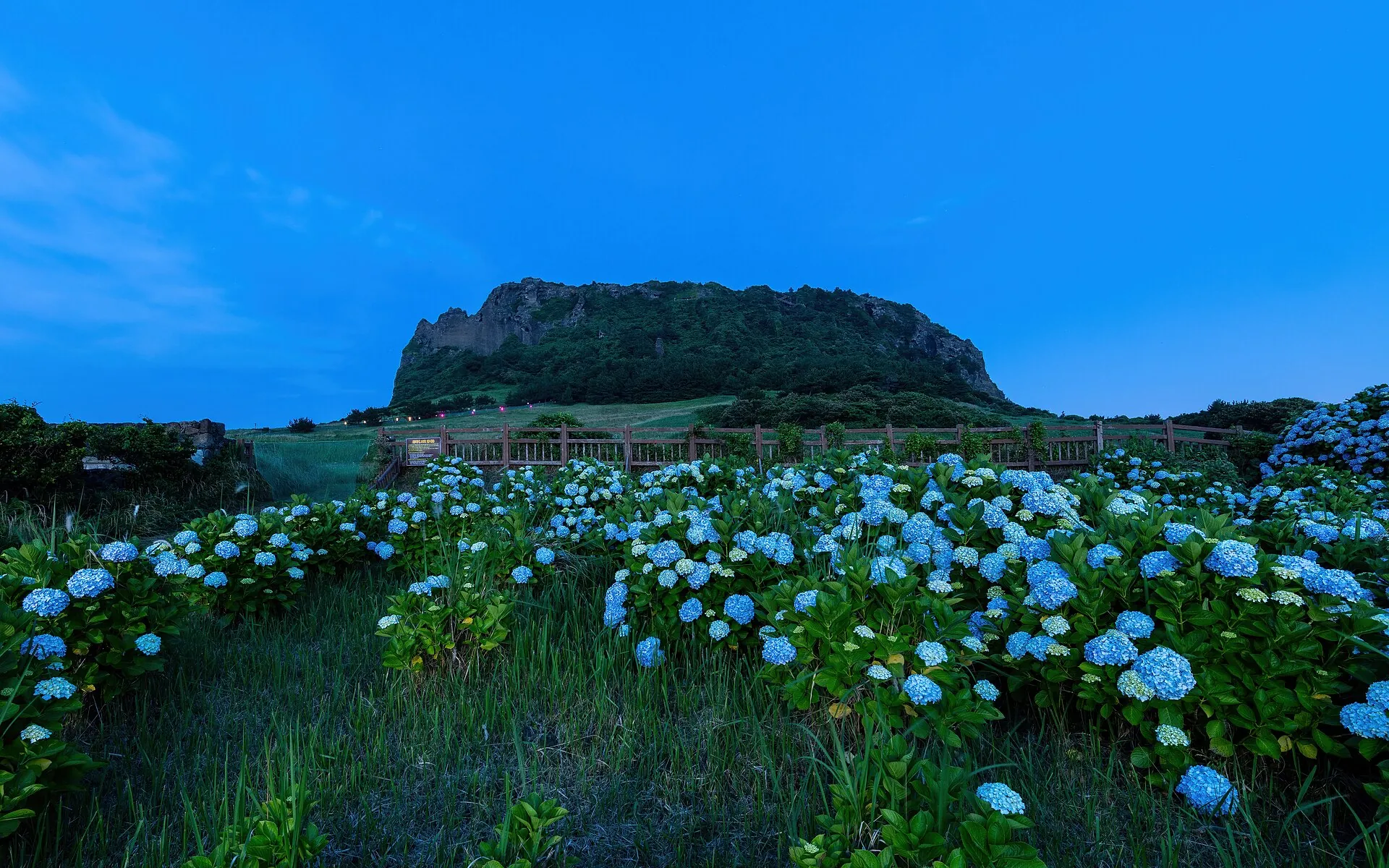
Yes, as a half-day trip on the east coast: 182 m (597 ft) tuff cone, UNESCO World Heritage, 20–30 minutes of stairs to the crater rim, 5,000 KRW (Jeju residents free), sunrise opening from 4:30–6 am depending on season, closed the first Monday of the month. The coastal path below is free.

.jpg)


