Volcano·Guide
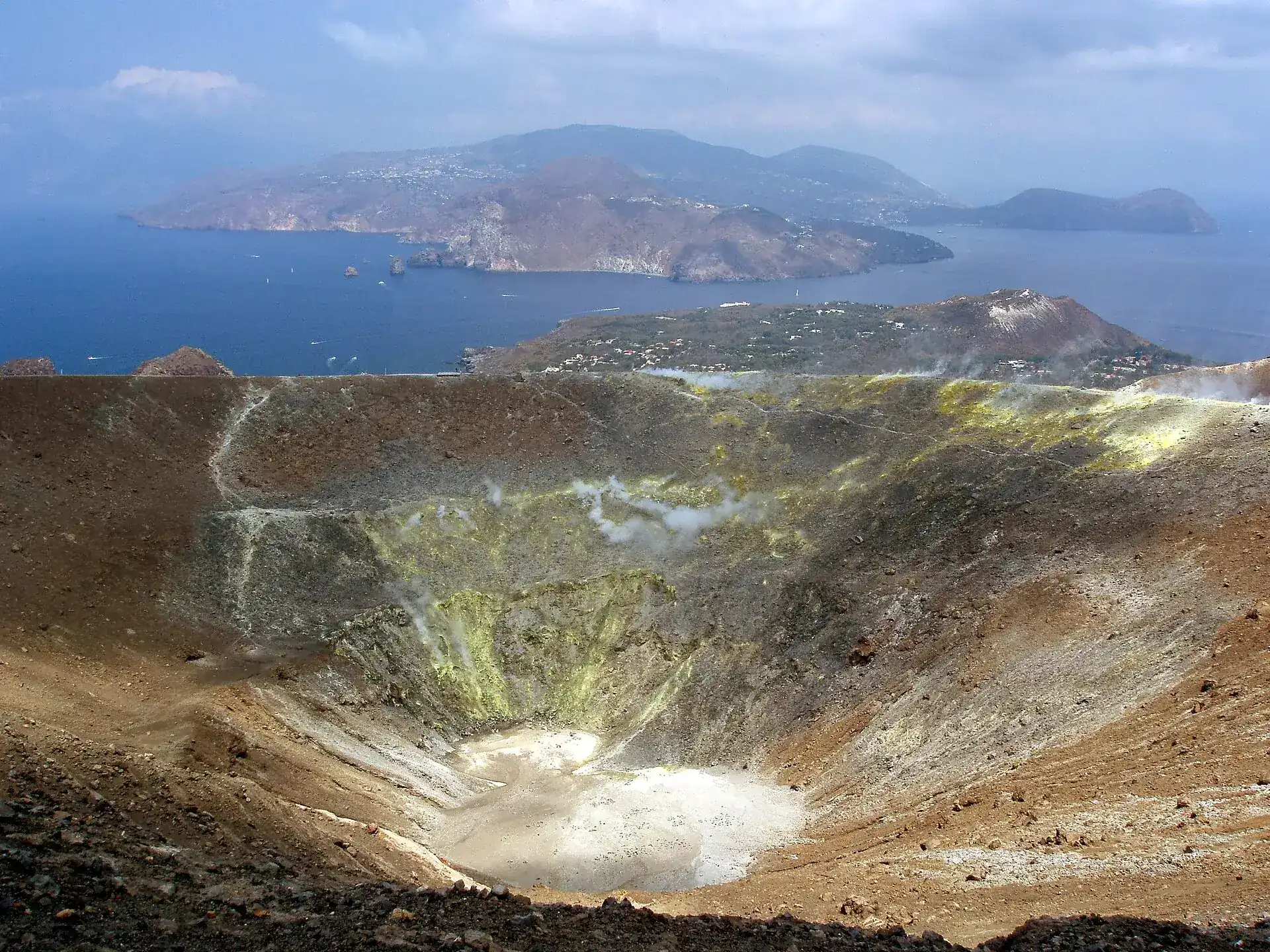
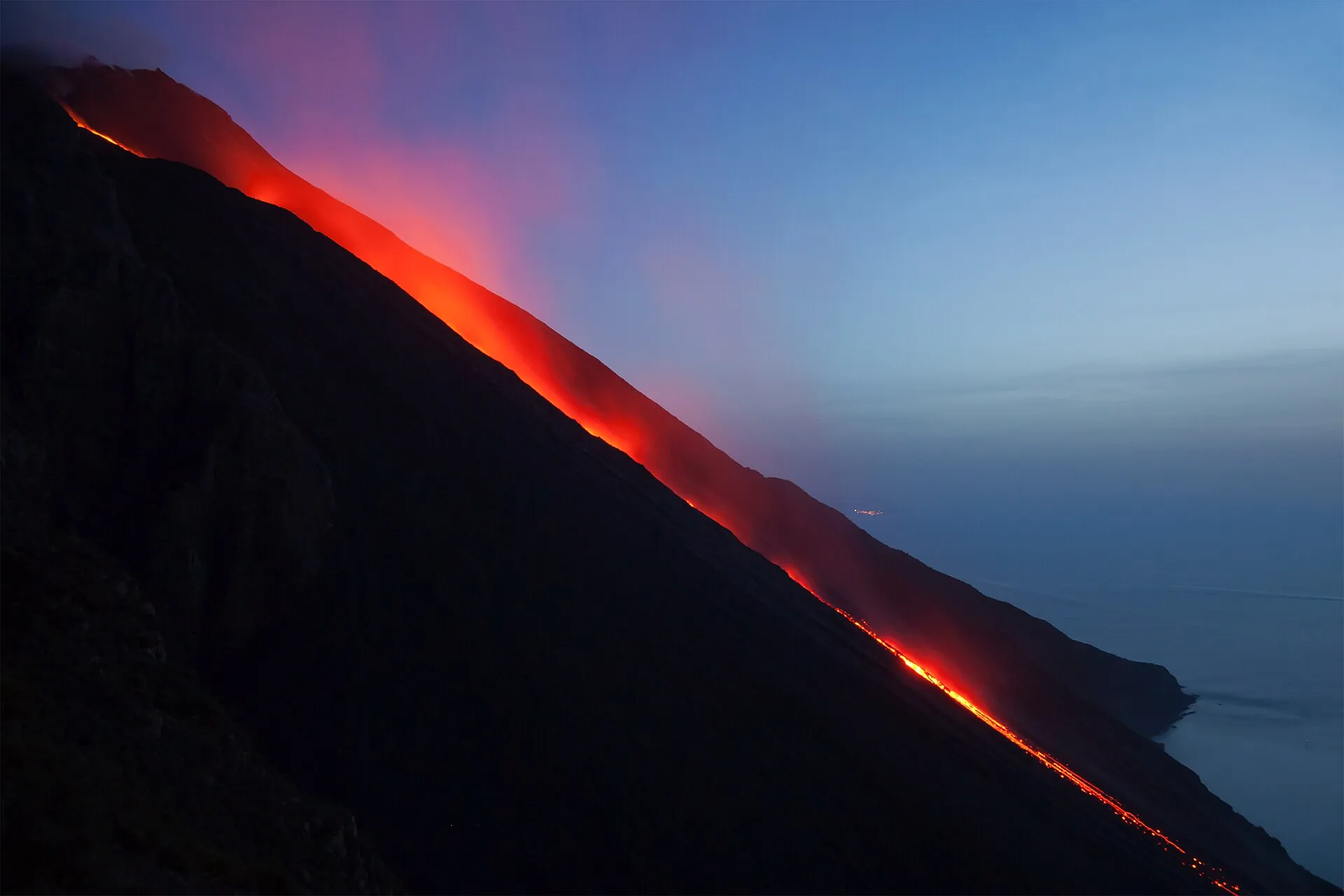
View from the crater rim on Vulcano across the strait to Lipari The Sciara del Fuoco on Stromboli at dusk with a glowing lava flow

Aeolian Islands

Seven islands off Sicily. All of them volcanoes.

Two are still awake.

Scroll –
out to the islands

Aeolian or Lipari Islands – it is the same archipelagoSeven islands, seven characters

Seven inhabited volcanic islands in the Tyrrhenian Sea north of Sicily, 115.4 km² (44.6 sq mi) in total. Two are active – Stromboli with eruptions every 10 to 20 minutes and Vulcano with its steaming crater –, the others range from lively Lipari via green Salina and chic Panarea to the almost car-free outposts of Filicudi and Alicudi. You can only get there by boat, usually from Milazzo; then the islands can be hopped by hydrofoil like bus stops.

Yellow
Alert level StromboliCivil protection alert level (green/yellow/orange/red) · checked on 2026-09-22 · Dipartimento della Protezione Civile – Presidenza del Consiglio dei Ministri (CC BY 4.0)
Green
Alert level VulcanoCivil protection alert level (green/yellow/orange/red) · checked on 2026-09-22 · Dipartimento della Protezione Civile – Presidenza del Consiglio dei Ministri (CC BY 4.0)
37.5km²

Lipari

The largest and liveliest island with the only real town, castle rock, archaeological museum and the white pumice slopes and obsidian flows of Monte Pilato in the north-east. Hub of all shipping lines and therefore the best base.

Volcano
dormant – no recent eruptions; visible are the pumice and obsidian deposits of Monte Pilato
Best for
first-time visitors, families, anyone without a car who wants day trips to the neighbouring islands
From Milazzo
about 1 hour direct, about 1 h 15 min with a stop at Vulcano (derived from the departure times of the Liberty Lines timetable from 1 October 2026)
Highest point
602 m · Population: about 10,000 (Wikipedia, rounded)
21.2km²

Vulcano

The first island from Milazzo and namesake of all volcanoes: the La Fossa crater (about 400 m) steams from sulphur fumaroles, the climb starts almost at the port. Plus black beaches, mud pools and warm underwater springs.

Volcano
yes – dormant since the 1888–1890 eruption, but with strong gas and steam activity; alert level green (as of 21 September 2026), access rules by ordinance of the municipality of Lipari
Best for
volcano hikers, day-trippers; sensitive noses are bothered by the sulphur smell
From Milazzo
about 50–55 minutes (derived from the departure times of the Liberty Lines timetable from 1 October 2026)
Highest point
500 m · Population: 715 (2001 census)
26.8km²

Salina

The greenest and highest island with the twin peaks Monte Fossa delle Felci (962 m) and Monte dei Porri, known for capers and Malvasia wine. Three municipalities of its own, two ports (Santa Marina Salina and Rinella), quieter than Lipari.

Volcano
no – extinct
Best for
hikers, food lovers, couples; easy to explore by rental scooter or bus
From Milazzo
Santa Marina Salina about 1 h 40–1 h 50 min, Rinella about 2 hours (derived from the departure times of the Liberty Lines timetable from 1 October 2026)
Highest point
962 m · Population: about 2,500 (Wikipedia, rounded)
3.4km²

Panarea

The smallest island of the archipelago, white houses, no cars, in August the meeting place of Italy's jet set with prices to match. Off the coast lie islets such as Basiluzzo and Lisca Bianca, on Capo Milazzese a Bronze Age village.

Volcano
no crater on land; underwater gas vents between the offshore islets (see 'unsicher')
Best for
boat trippers, nightlife in high summer, generous budgets
From Milazzo
about 1.5 hours with few stops, up to about 2 h 20 min via Salina (derived from the departure times of the Liberty Lines timetable from 1 October 2026)
Highest point
421 m · Population: 241 (2001 census)
12.6km²

Stromboli

The permanent performer: an explosion every 10 to 20 minutes, visible in the evening as a fountain of fire above the Sciara del Fuoco. Allowed are 290 m without and 400 m with a guide; two villages, Stromboli and tiny Ginostra.

Volcano
yes – permanently active; alert level yellow (as of 21 September 2026); larger explosions most recently on 23 May and 12 June 2026, last serious crisis in July 2024
Best for
anyone who wants to see an active volcano – plan at least one overnight stay
From Milazzo
about 2 h 15 min to around 3 hours, depending on the number of stops (derived from the departure times of the Liberty Lines timetable from 1 October 2026)
Highest point
926 m · Population: about 540, of whom about 30 in Ginostra (Wikipedia)
9.5km²

Filicudi

Remote and quiet, with stone-paved mule tracks, the Bronze Age village on Capo Graziano and the rock needle La Canna off the coast. Little infrastructure, but a lot of peace and clear water.

Volcano
no – extinct
Best for
those seeking peace, divers and snorkellers, hikers
From Milazzo
about 2.5 hours (derived from the departure times of the Liberty Lines timetable from 1 October 2026)
Highest point
774 m · Population: 235 (Wikipedia)
5.2km²

Alicudi

The westernmost and loneliest island: no road network, the houses are linked by centuries-old stepped paths, loads are carried by mules. A single village at the port, very few places to stay.

Volcano
no – extinct
Best for
temporary drop-outs; not for people with limited mobility or anyone who needs variety
From Milazzo
about 3 hours (derived from the departure times of the Liberty Lines timetable from 1 October 2026)
Highest point
675 m · Population: about 100 (Wikipedia)
Areas, heights and populations: Wikipedia (partly 2001 census). Crossing times: derived from the departure times in the Liberty Lines timetable from 1 October 2026 – the company does not publish journey durations. UNESCO natural World Heritage site since 2000.
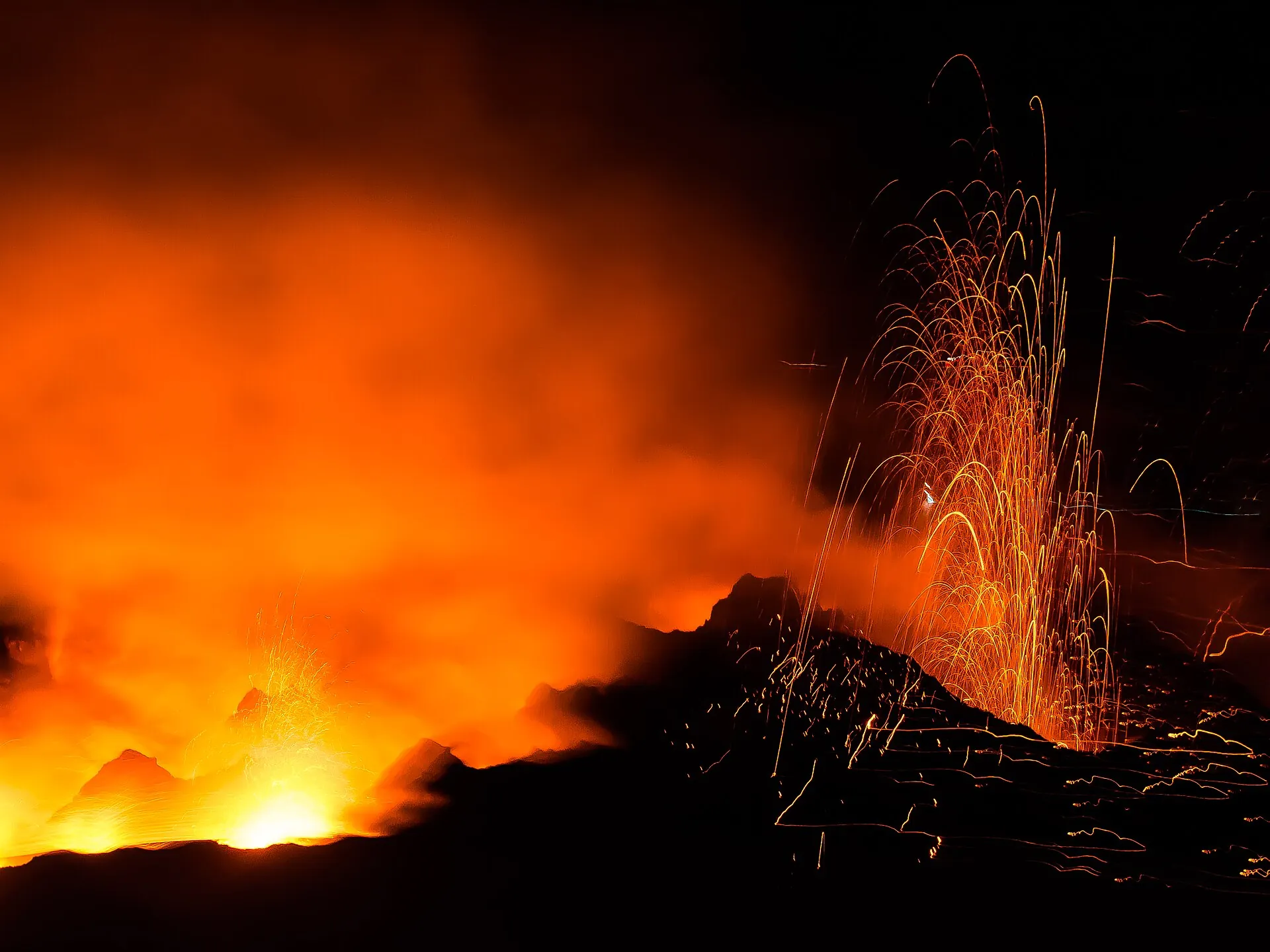
Eruption at Stromboli by night
A night on Stromboli belongs in every plan.

Photo: kuhnmi · CC BY 2.0

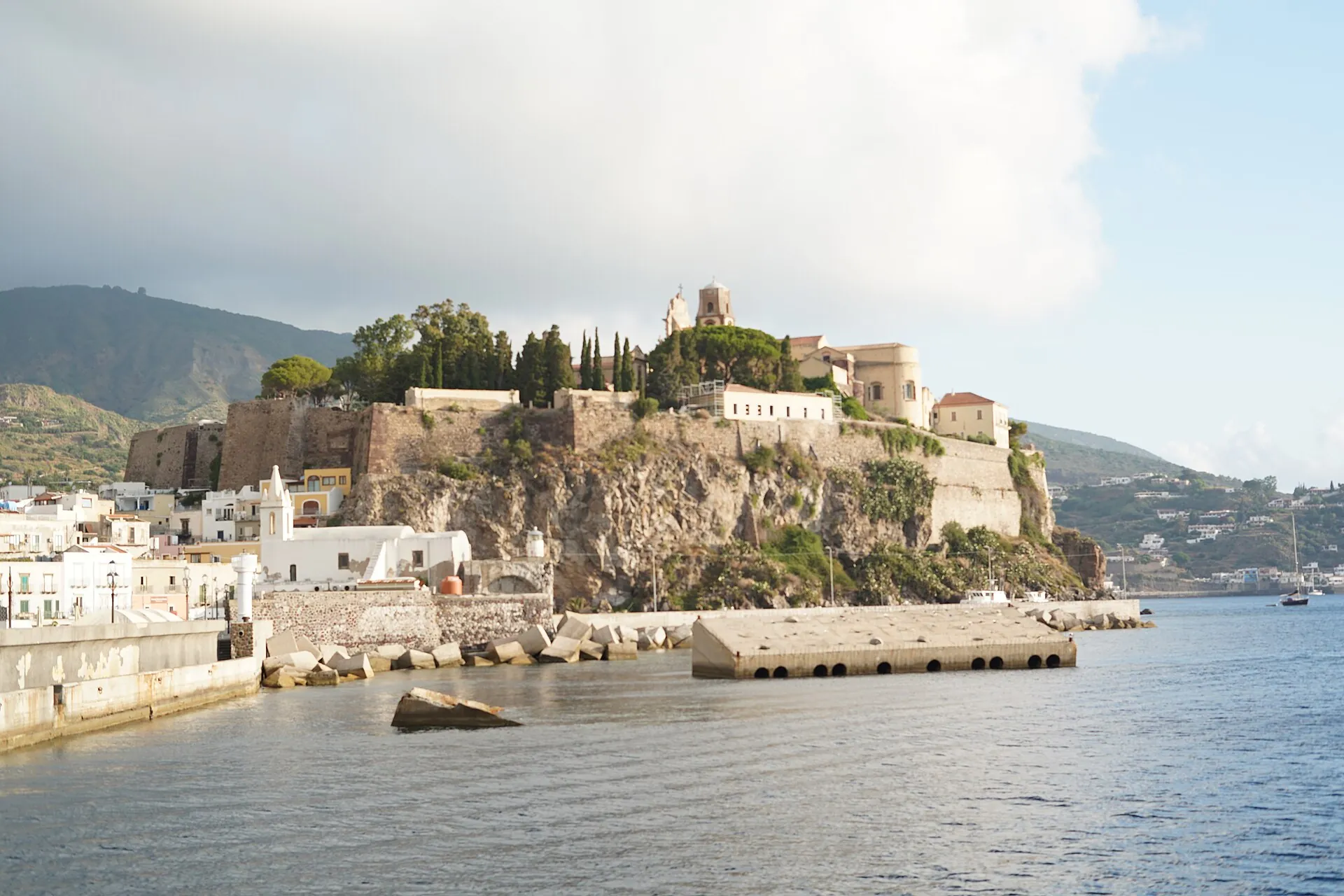
The Castello of Lipari on its rock above the Marina Corta harbour, the mole and white houses in front
Lipari, the main island: from the Castello you head for the other six – ferries, hydrofoils and the museum are all here.

Photo: Francesco Tosoni · CC BY-SA 4.0

How many days?Island hopping

Three to four days are enough for Lipari, Vulcano and a night on Stromboli. A week allows Salina and Panarea as well; if you also want to see Filicudi and Alicudi, plan ten days to two weeks, because in the winter timetable only three boats a day go there.

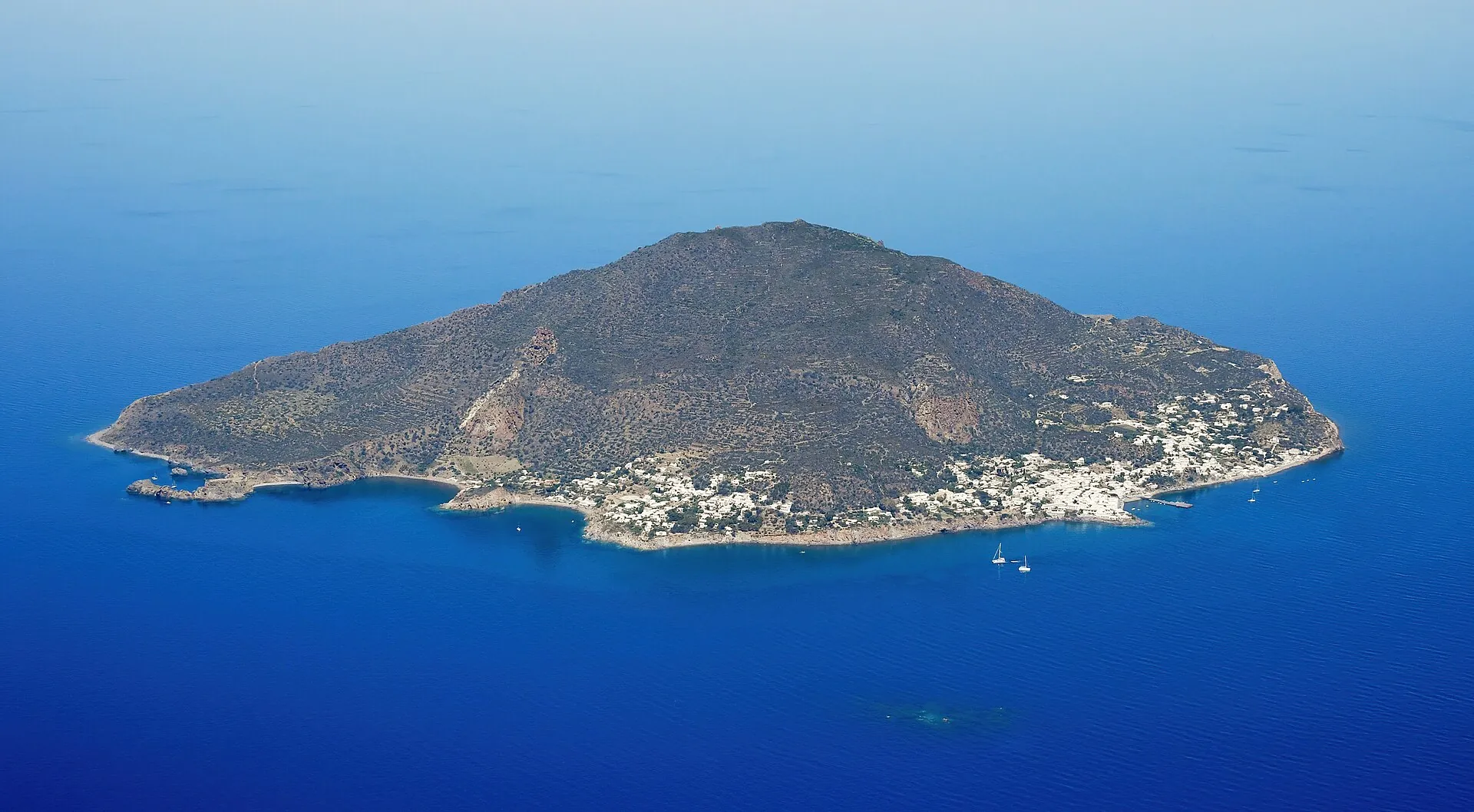
Aerial view of Panarea from the south-east: the flat island with white houses on the east coast in the deep blue sea
Panarea is the smallest inhabited island and the most expensive – ideal as a stopover between Lipari and Stromboli, not for everyone as a place to sleep.

Photo: Carsten Steger · CC BY-SA 4.0

Without an overnight stayAs a day trip from Milazzo or Tropea

If you are on holiday in Sicily or Calabria, you can see two or three islands in a day – in the evening by boat in front of Stromboli's slope of fire.

Affiliate links to GetYourGuide: if you book, we earn a commission and the price stays the same. Prices and ratings as of 21.09.2026. In storms the boats are cancelled – more often in autumn.

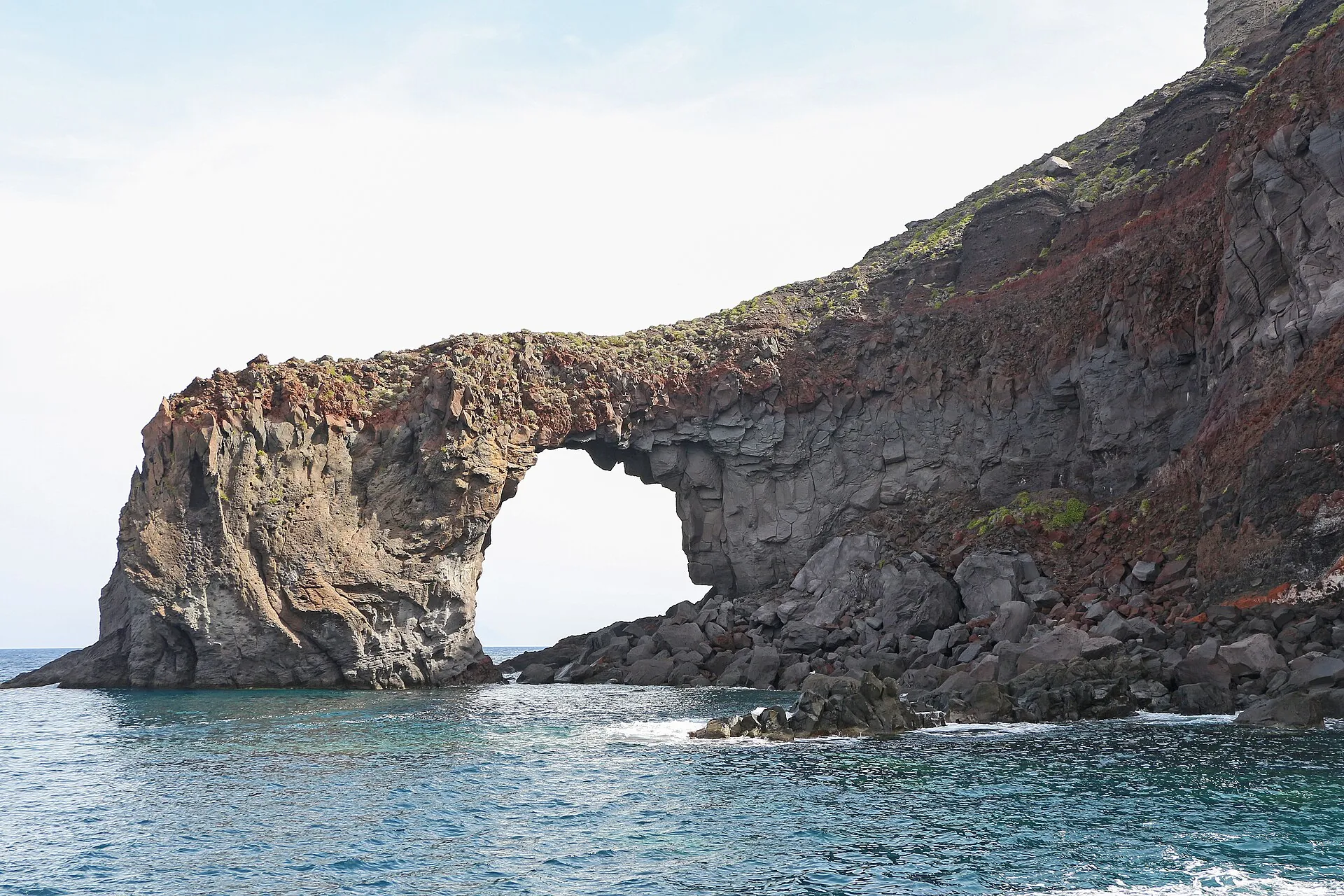
The rock arch Punta del Perciato on the coast of Salina, dark volcanic rock above turquoise water
Punta del Perciato near Pollara on Salina: boat trips stop here for the photo everyone takes home.

Photo: Bernard Gagnon · CC BY 4.0

Good to knowGetting there, best time, tips

Getting there

Without a car: By sea only. The main port is Milazzo on Sicily's north coast: year-round hydrofoils (Liberty Lines) and car ferries (Siremar) to all seven islands. Further Liberty Lines connections from Palermo, Messina and Reggio Calabria, in summer also from Vibo Valentia. From Naples in summer the SNAV hydrofoil (30 May–14 September 2026) and the Siremar ferry Naples – Aeolian Islands – Milazzo (1 June–30 September). The nearest airport is Catania; from there by bus or car to Milazzo.

By car: Leave the car in Milazzo in one of the guarded car parks at the port – you do not need one on the islands, and in summer vehicles of non-residents are banned from landing (see 'unsicher').

  • From Milazzo · 50 minutes (Vulcano) to about 3 hours (Alicudi, Stromboli)
    Liberty Lines hydrofoil or Siremar ferry
  • From Catania (airport)
    Bus or car via A18/A20 to Milazzo, then boat
  • From Palermo
    Liberty Lines direct, in the timetable from 1 October 2026 departing 1:30 pm (check days of operation in the booking form)
  • From Messina / Reggio Calabria
    Liberty Lines, in the timetable from 1 October 2026 one early connection from the islands (check days of operation)
  • From Naples · SNAV: 4.5 hours to Stromboli, 6 hours to Lipari
    SNAV hydrofoil from Mergellina (summer only) or Siremar night ferry (1 June–30 September)

Best time to go

May/June and September to early October: the sea is warm enough, the dense Liberty Lines summer timetable runs from early June to 30 September, and the islands are not overrun. July and above all August bring full boats, sold-out accommodation and peak prices (Panarea!) – and the higher landing tax applies from June to September. From November to March far fewer boats run (only 3–4 a day to Stromboli and the western islands), hydrofoils are cancelled in storms and much is closed; for Stromboli fans with time to spare it can still be appealing.

Who it suits

Children
Lipari, Salina and Vulcano are family-friendly; Alicudi (steps only) and the Stromboli tour to 400 m (5 hours, 8 km) rather from school age.
Fitness
None for the villages and beaches; for the volcano climbs see the Vulcano and Stromboli pages.
Heart and lungs
Sulphur gases on Vulcano can irritate the airways – see the Vulcano page.
Wheelchair
Difficult: hydrofoils, steep lanes; Panarea, Stromboli, Filicudi and Alicudi have few or no roads. Liberty Lines has its own rules for passengers with reduced mobility.
Dogs
Liberty Lines has its own carriage rules for pets ('Pets' page) – not checked in detail.
Clothing
In summer sun protection and water shoes (pebble and lava beaches); for evening tours on Stromboli a warm jacket and head torch.
Footwear
Sturdy shoes for crater and hiking paths

Tips you will need on site

  • Choose Lipari as your base: from there a boat leaves almost hourly for Vulcano and Salina.
  • Always plan Stromboli with an overnight stay – and leave a buffer day before your flight home, because hydrofoils are cancelled in rough seas.
  • In July/August book boats and accommodation in advance; in the low season the counter at the port is enough.
  • The landing tax is collected with the ticket for each landing – when island hopping it adds up.
  • Bring cash: on Alicudi, Filicudi and in Ginostra cash machines cannot be taken for granted (not officially verified).
  • Salina has two ports – when booking, look for Santa Marina Salina or Rinella.
  • If you arrive from Naples: SNAV only runs from late May to mid-September, in 2026 until 14 September.

A short history

  • Obsidian has been quarried on Lipari since the Neolithic; finds of it exist all over the western Mediterranean.
  • Ancient authors located the seat of the wind god Aeolus (Aiolos) on one of the islands – hence the name Aeolian Islands.
  • The most recent eruption on Vulcano lasted from 1888 to 1890; today's crater (600 m across) dates from that eruption.
  • Under fascism Lipari was a place of exile for thousands of opponents of the regime; in 1941 an internment camp was added, closed in summer 1943.
  • In 2000 UNESCO inscribes the islands as a natural World Heritage site; pumice quarrying on Lipari ends as a result.
  • 5 April 2003: a paroxysm of Stromboli hurls material as far as inhabited areas.
  • July 2024: lava flow into the sea, pyroclastic flow and alert level red at Stromboli; paroxysm on 11 July.
  • Since September 2021 Vulcano has shown elevated gas readings that led to access restrictions; as of 21 September 2026 the island is back on green.
Landing tax: last documented (Giornale di Sicilia, 31 May 2023): €5 per person from 1 June to 30 September, €2.50 from 1 October to 31 May – for non-residents, in the ports of the municipality of Lipari and in Santa Marina Salina and Leni.
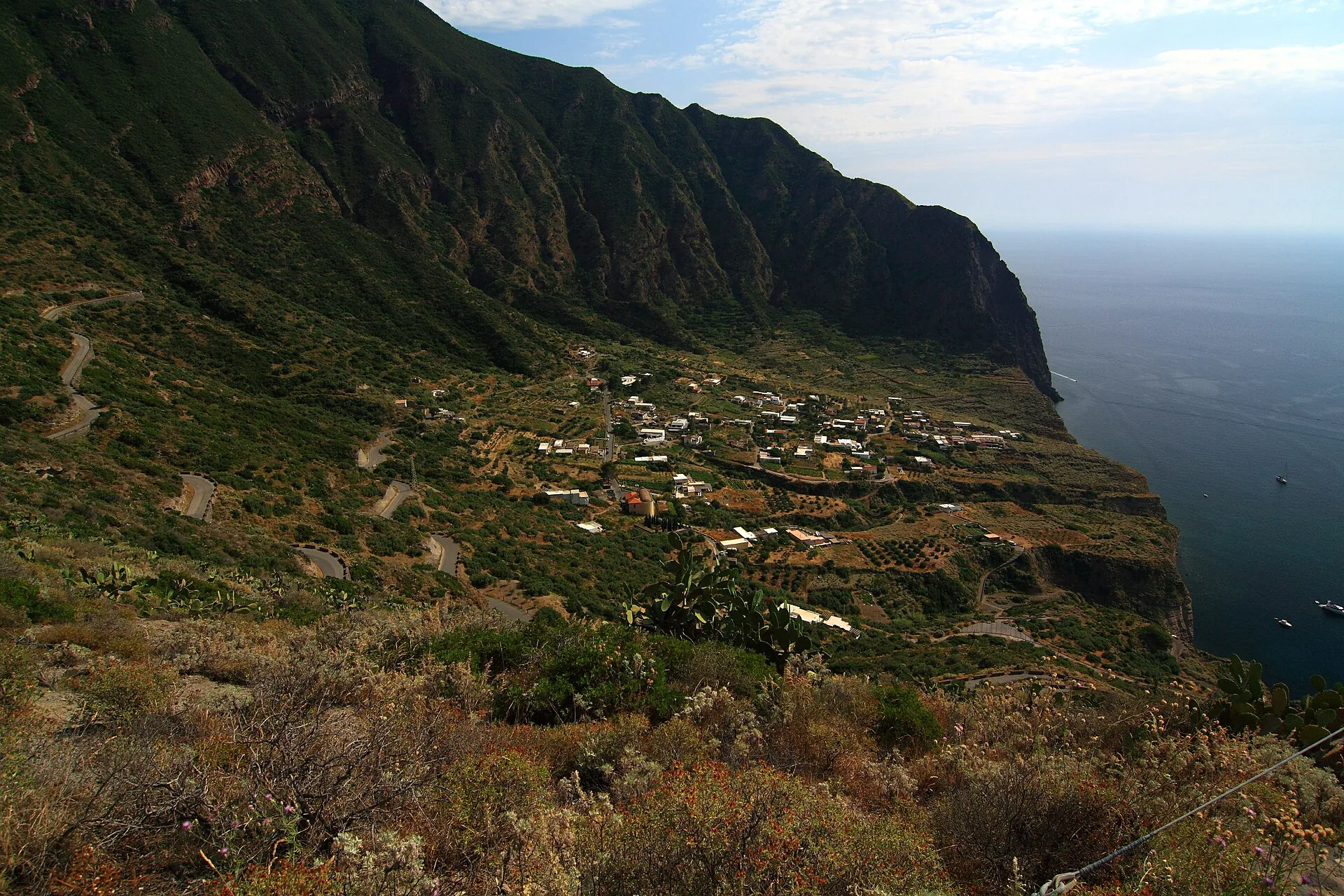
The Pollara caldera on Salina: a semicircular green basin open to the sea, with a few houses on the slope
Pollara, the half caldera on Salina where 'Il Postino' was filmed – sunset from the edge, then back to Santa Marina.

Photo: Ghost-in-the-Shell · CC BY 2.0

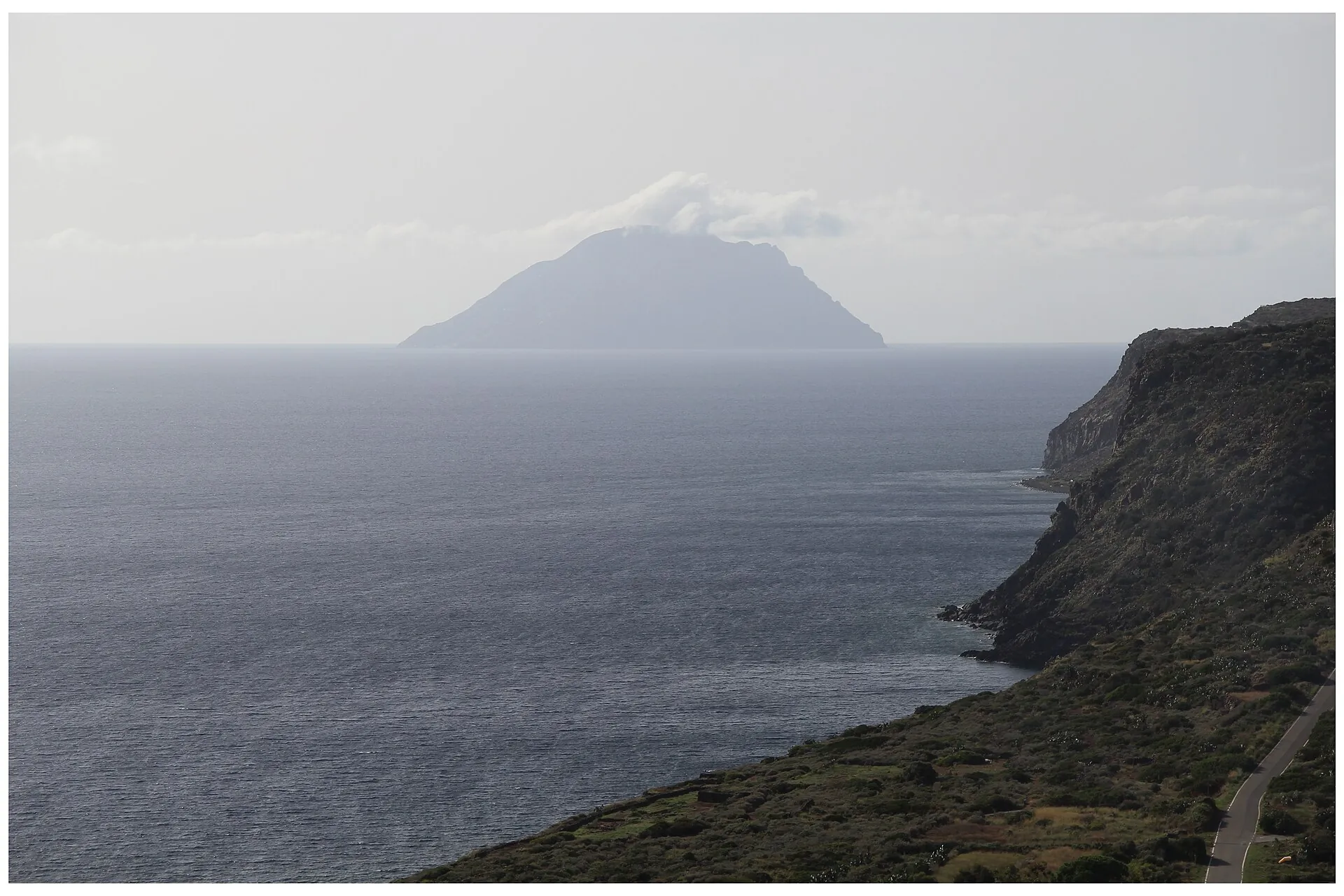
View from Filicudi across to Alicudi: a single dark cone in the haze above the sea
Alicudi from Filicudi: the westernmost and quietest of the seven – no roads, no cars, just steps and mules.

Photo: GerritR · CC BY-SA 4.0

Out of date onlineWhat other sites get wrong

“The Lipari Islands and the Aeolian Islands are two different groups”
Wrong – they are two names for the same archipelago (Italian Isole Eolie, less often Isole Lipari).
“All seven islands belong to the municipality of Lipari”
Only six. Salina is independent and has three municipalities (Santa Marina Salina, Malfa, Leni).
“The landing tax is €1.50”
That is the figure from the very first regulation of 2012 (€0.50 until the end of 2012, then €1.50), still available as a PDF on ferry company websites.
“You can climb to the summit of Stromboli with a guide”
Not for years. Permitted are 290 m free and 400 m with a guide (ordinance no. 16 of 5 May 2025).
“Stromboli is the only active volcano of the islands”
Vulcano also counts as active (last eruption 1888–1890, persistent fumaroles) and is monitored by the INGV.

Quick questionsBefore the crossing

What are the names of the 7 Aeolian Islands?

Lipari, Vulcano, Salina, Panarea, Stromboli, Filicudi and Alicudi. Lipari at 37.5 km² is the largest, Panarea at 3.4 km² the smallest; together they cover 115.4 km² (44.6 sq mi). Add uninhabited islets such as Basiluzzo or Strombolicchio.

Aeolian or Lipari Islands – what is the difference?

None. 'Lipari Islands' derives from the main island Lipari, 'Aeolian Islands' (Italian Isole Eolie) from the wind god Aeolus, whom ancient authors placed here. In Italy and at UNESCO 'Isole Eolie' is the usual name; in English 'Aeolian Islands' is standard.

Which of the Aeolian Islands is the most beautiful?

A matter of taste – the better question is what you are looking for. Volcano experience: Stromboli (eruptions) and Vulcano (crater). Green, hiking, wine and capers: Salina. A town with life, a museum and the best connections: Lipari. Chic and expensive: Panarea. Silence without cars: Filicudi and above all Alicudi.

How do you get to the Aeolian Islands?

By sea only. The standard route is Milazzo in Sicily: Liberty Lines hydrofoils take about 50 minutes to Vulcano, about an hour to Lipari and up to three hours to Stromboli or Alicudi; car ferries are run by Siremar. Further boats leave from Palermo, Messina and Reggio Calabria, in summer also from Naples (SNAV, in 2026 from 30 May to 14 September). The nearest airport is Catania.

When is the best time to visit the Aeolian Islands?

May, June and September to early October: beach weather, a dense timetable, but without the crowds and prices of August. In winter far fewer boats run, many places to stay are closed, and hydrofoils are cancelled in storms.

How many days do you need for the Aeolian Islands?

Three to four days for Lipari, Vulcano and a night on Stromboli. A week for five islands including Salina and Panarea. For all seven, ten days to two weeks, because Filicudi and Alicudi have only a few connections.

Which Aeolian Islands have active volcanoes?

Two: Stromboli is permanently active with explosions every 10 to 20 minutes (alert level yellow), Vulcano has been dormant since 1890 but emits plenty of gas and steam (alert level green, as of 21 September 2026). Off Panarea gases rise under water. Lipari, Salina, Filicudi and Alicudi are considered dormant or extinct.

Do you have to pay admission on the Aeolian Islands?

No admission, but a landing tax of the municipality of Lipari, collected by the shipping company with the ticket. The last documented rates are €5 from June to September and €2.50 for the rest of the year for non-residents (press 2023); no current official rate for 2026 could be found. An additional access fee for the volcano zones is provided for in the regulations, but there is no evidence it is actually charged.

Do you need a car on the Aeolian Islands?

No. Panarea, Stromboli and Alicudi have practically no roads; on Lipari and Salina buses run and scooters can be hired. Your own car is best left in Milazzo; in summer vehicles of non-residents are banned from landing anyway.

Which island is best to stay on?

If you want to see a lot, Lipari: most boats leave from there in all directions. Salina is the quieter alternative with good connections. Stromboli deserves a night of its own, because the eruptions only come into their own after sunset.

Are the Aeolian Islands a UNESCO World Heritage site?

Yes, since 2000 as a natural World Heritage site under criterion (viii), World Heritage area 1,216 hectares. Reasoning: the islands have given volcanology two textbook eruption types – Vulcanian and Strombolian.

Is a holiday on the Aeolian Islands dangerous?

Not in everyday life. Risks exist at the two active volcanoes: at Stromboli paroxysms and tsunamis triggered by landslides can occur – hence sirens and altitude limits –, on Vulcano it is gases in hollows and at the crater. Anyone who observes the ordinances of the municipality of Lipari and the civil protection alert levels is on the safe side.
Sources · accessed on 21 September 2026