3,776m
Summit and all four trails
Yoshida, Subashiri, Gotemba and Fujinomiya are closed above the checkpoints, and so is the crater rim loop. No huts, no toilets, no first aid on the mountain.
2026 season: 1 or 10 July – 10 September
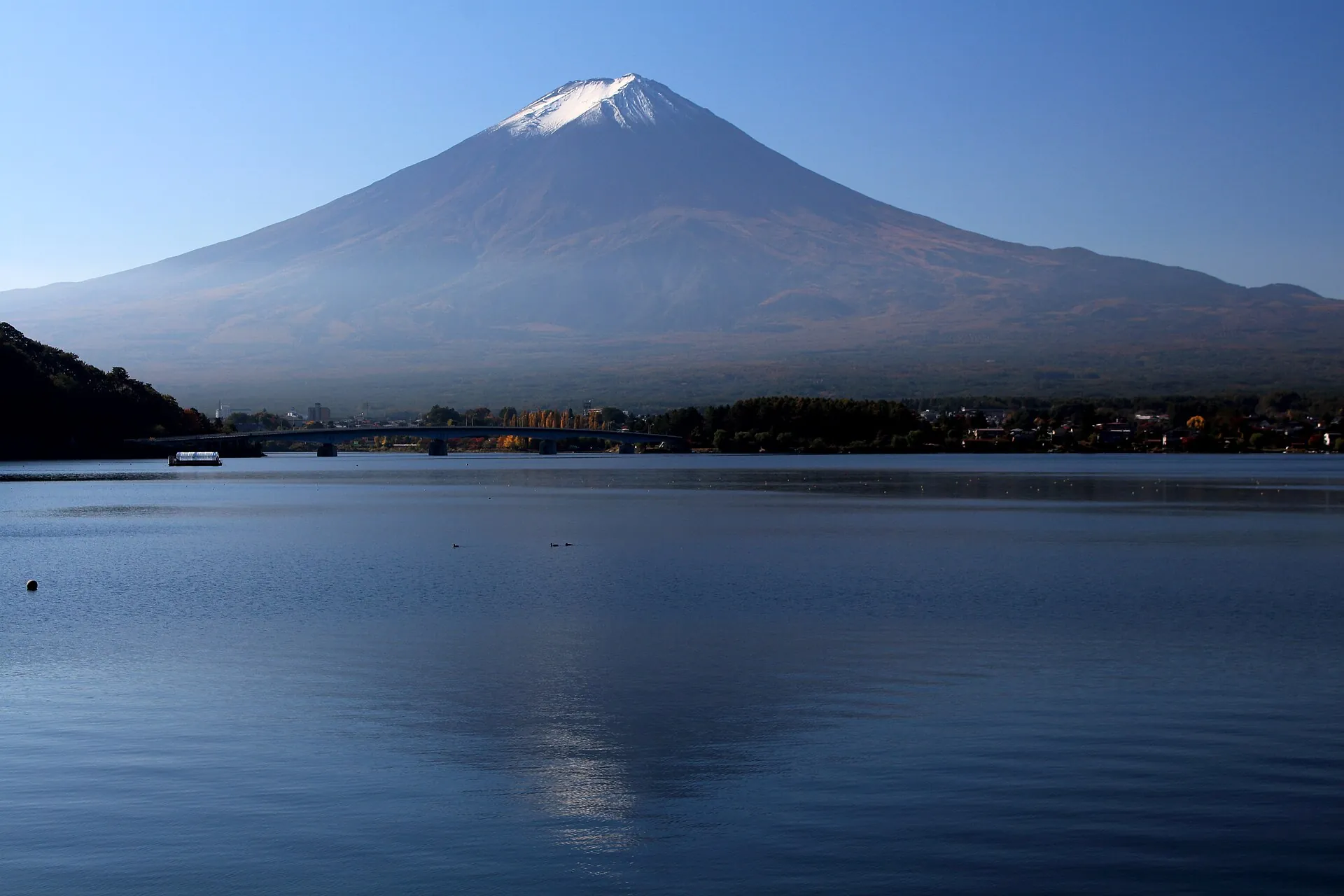
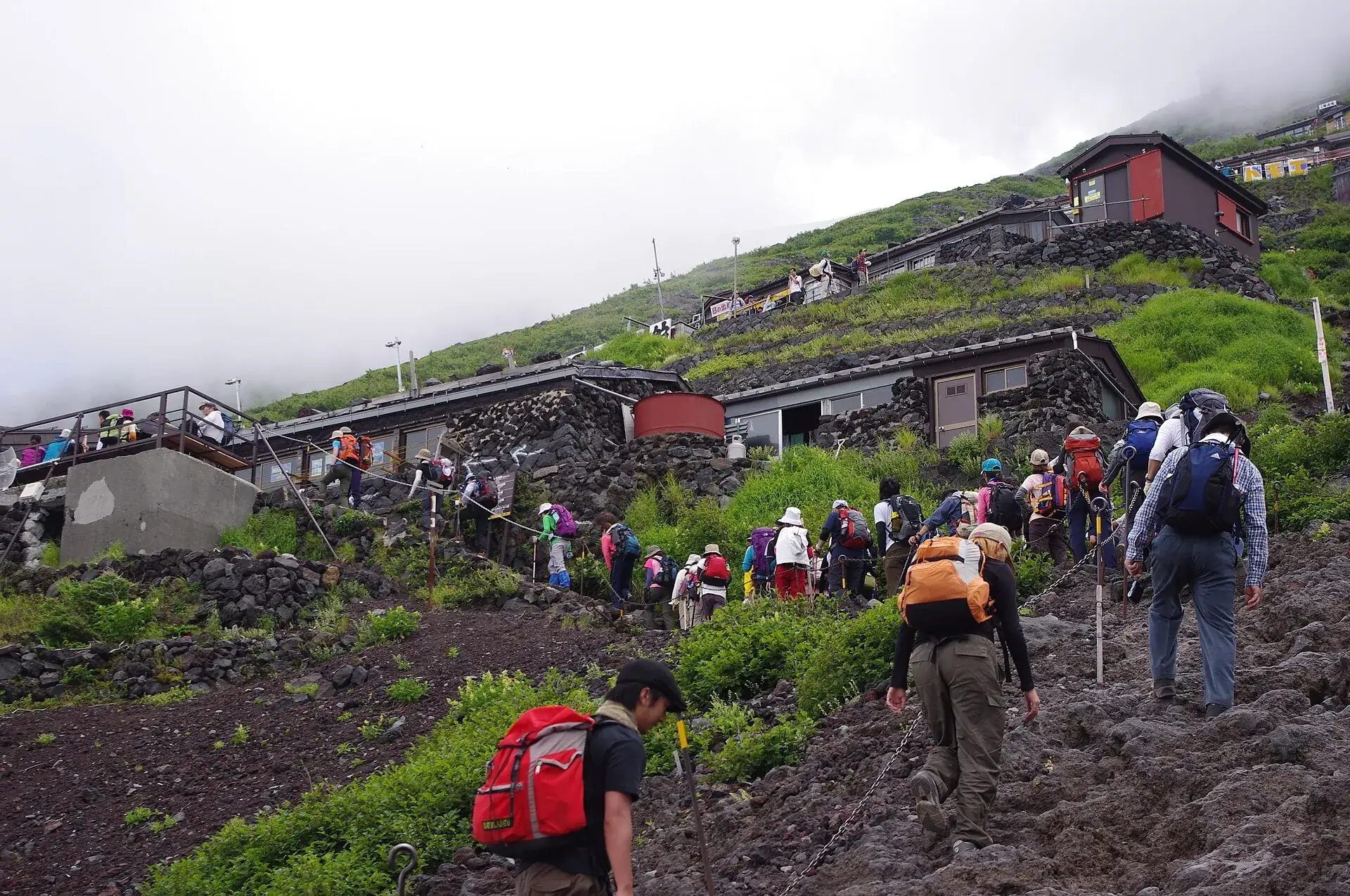
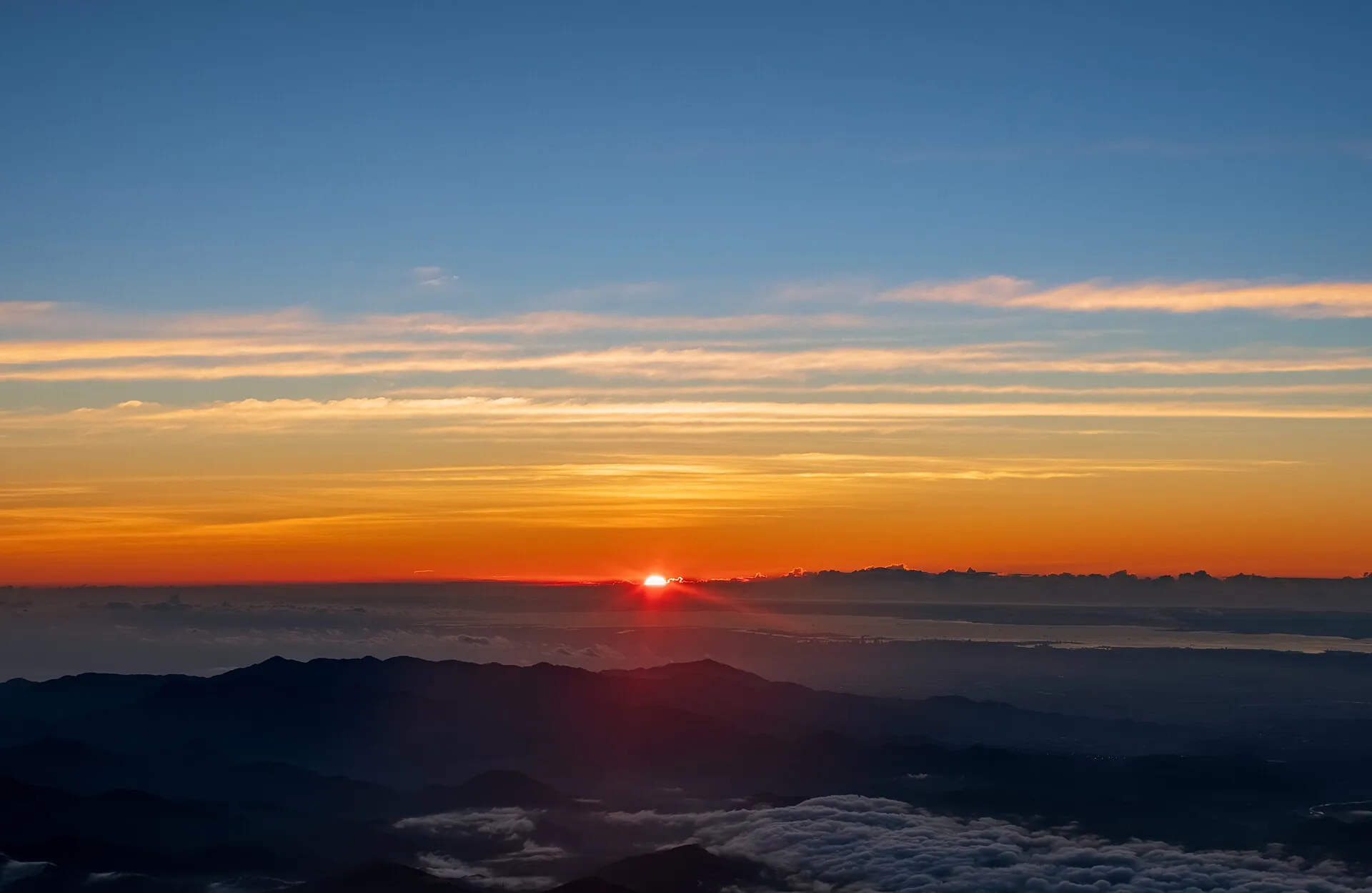
From the lake it is a picture. Still, symmetrical, far away.
Then you are standing in it: lava gravel, thin air, one hut after another.
And at five in the morning the sun comes up at 3,776 meters.
Scroll –
from the lake to the summit
All four trails to the summit have been closed since 10 September 2026. The official site reads: “Mt. Fuji is currently closed.” Huts, toilets and first-aid stations are shut. What you can do now is the other Mount Fuji – the one you look at: from the 5th Station at about 2,300 m (7,500 ft) and from Lake Kawaguchi. Fall and winter are the better seasons for that anyway.
Yoshida, Subashiri, Gotemba and Fujinomiya are closed above the checkpoints, and so is the crater rim loop. No huts, no toilets, no first aid on the mountain.
No fee, no registration. The local bus from Kawaguchiko Station runs until 30 October under the 2026 timetable, about 65 minutes each way. The summer ban on private cars ended on 10 September; the toll (¥2,800) is cash only. The road closes in storms or heavy rain.
The classic view of the north face – and the last stop of the highway bus from Shinjuku (about 1 hr 45 min). The summit is clear most often from November to February, and more often in the morning than in the afternoon.
On the south side, the short stretch between the 5th and 6th Station is free and stays open until early November in 2026. The 6th Station is the end of the line – the closed section starts there.
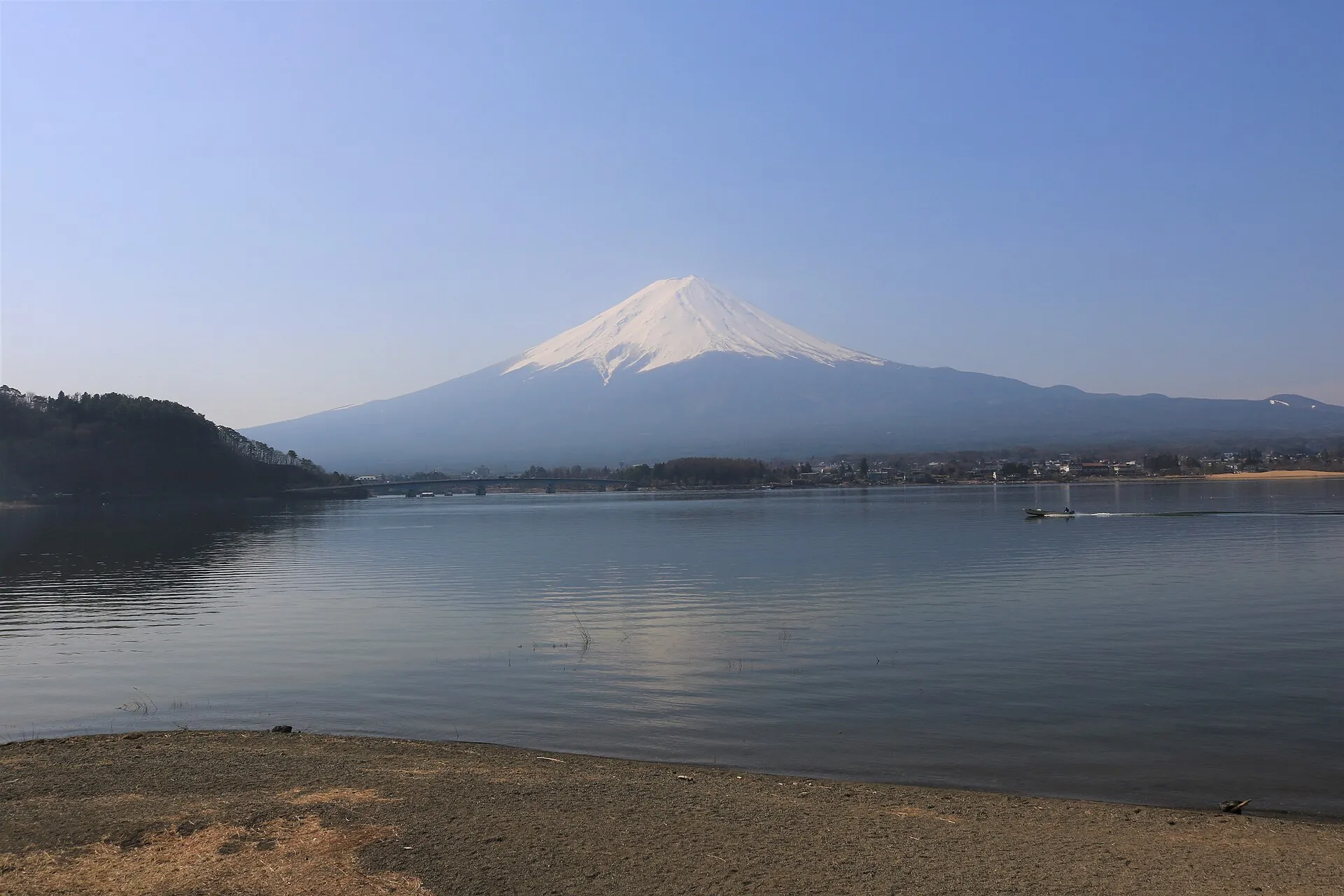
Photo: Alpsdake · CC BY-SA 4.0
Most visitors do not want to stand on Mount Fuji; they want to see it. That works as a day trip from Tokyo, and it depends almost entirely on the weather. The city of Fuji has checked every day since 1990: in 2025 the whole mountain was visible at 8 am on 136 days. In February on 22 days, in June on 2.
What it is like: at Lake Kawaguchi the mountain stands alone above the water, almost too even to look real. A good hour later, at the 5th Station, it is no longer a picture but ground – reddish-brown lava gravel, wind, 2,300 meters, and for the first time you look down on the clouds instead of up. Even at this height some people get a mild headache.
On your own: take the highway bus from Busta Shinjuku to Kawaguchiko (¥2,750, or ¥2,450 online, all seats reserved) or the Fuji Excursion limited express, direct in about two hours. From Kawaguchiko the local bus continues to the 5th Station. A Mount Fuji tour saves you the transfers and covers several viewpoints in one day – which ones is stated in each title.
Affiliate links to GetYourGuide: if you book, we earn a commission and the price stays the same. Prices and ratings as of 21 September 2026. Whether Mount Fuji is visible is up to the weather – no tour can promise it. Guided summit climbs were not in our selection on 21 September 2026. Prices were collected in euros.
Since 2025 every one of the four trails has charged a fee, and between 2 pm and 3 am nobody gets through the checkpoint without a hut reservation. The rules for 2027 have not been announced. We expect a similar framework – but do not plan around it until the prefectures have published it.
Per person, on each of the four trails. Hut guests pay it too. The former voluntary ¥1,000 donation no longer appears in the 2026 rules.
On every trail. During those hours only climbers who can show a hut booking get through. This is how the authorities want to end “bullet climbing” – going up through the night without a rest. Descending is allowed at any time.
Only the Yoshida Trail (Yamanashi Prefecture) has a daily cap; hut guests are not counted. In 2026 you could reserve up to the day itself while places lasted. Staff at the 5th Station check three things: warm clothing, a rain jacket plus rain pants, and hiking boots.
For Subashiri, Gotemba and Fujinomiya everything ran through the “Shizuoka Prefecture FUJI NAVI” app: an e-learning course with a final test, trip details, payment, QR code, and a wristband at the trailhead. No daily cap, free cancellation until you check in.
| Mandatory climbing fee, all four trails, per person | ¥4,000 |
| Local bus Kawaguchiko / Fujisan Station – 5th Station, round trip / one way · children half price | ¥3,400 / ¥2,000 |
| Highway bus Shinjuku – Kawaguchiko, one way (¥2,450 online) | ¥2,750 |
| Highway bus Shinjuku – 5th Station direct, one way, summer only (¥4,500 online) | ¥4,800 |
| Fuji Subaru Line toll, car, round trip · cash or prepaid toll cards only, no credit cards, no ETC | ¥2,800 |
| Fujisan Parking during the private-car ban, per entry · shuttle bus to the 5th Station ¥3,400 round trip | ¥1,000 |
The FUJI NAVI app starts taking registrations for Subashiri, Gotemba and Fujinomiya.
The crater rim loop stays closed at first because of leftover snow.
Private cars – hybrids included – have to stay at Fujisan Parking. Fully electric cars may drive up with a confirmation.
Gotemba, Fujinomiya and the crater rim loop open.
Access roads closed, buses suspended. Both prefectures refund the fee for those days automatically.
All trails close; the car ban ends at 6 pm.
All four trails start at a 5th Station and end at the crater rim. They differ in season, rules and above all in facilities. The official pages give no walking times or difficulty grades – so neither do we.
| Yoshida (Yamanashi) · from Fuji Subaru Line 5th Station, about 2,300 m (7,500 ft) | 1 July – 10 September. Roughly 1,450 m (4,760 ft) of climbing to the summit. The most facilities: around 17 huts between the 5th and 8th Station and several first-aid stations. Daily cap of 4,000, gear check at the gate. |
| Subashiri (Shizuoka) · from Subashiri 5th Station | 1 July – 10 September. Joins the Yoshida Trail near the top – on the way down, watch the signs near the 8th Station or you end up in the wrong prefecture. First aid at the 5th Station. |
| Gotemba (Shizuoka) · from Gotemba New 5th Station | 10 July – 10 September. No first-aid station on the trail. The official 2026 notice lists no private-car ban here. |
| Fujinomiya (Shizuoka) · from Fujinomiya 5th Station, checkpoint at the 6th Station | 10 July – 10 September. Private-car ban on the Mt. Fuji Skyline, change to the shuttle at Mizugatsuka parking lot. First aid at the 8th Station. |
| Crater rim loop (Ohachi-meguri) | 10 July – 10 September, depending on snow. Included in the trail fee. |
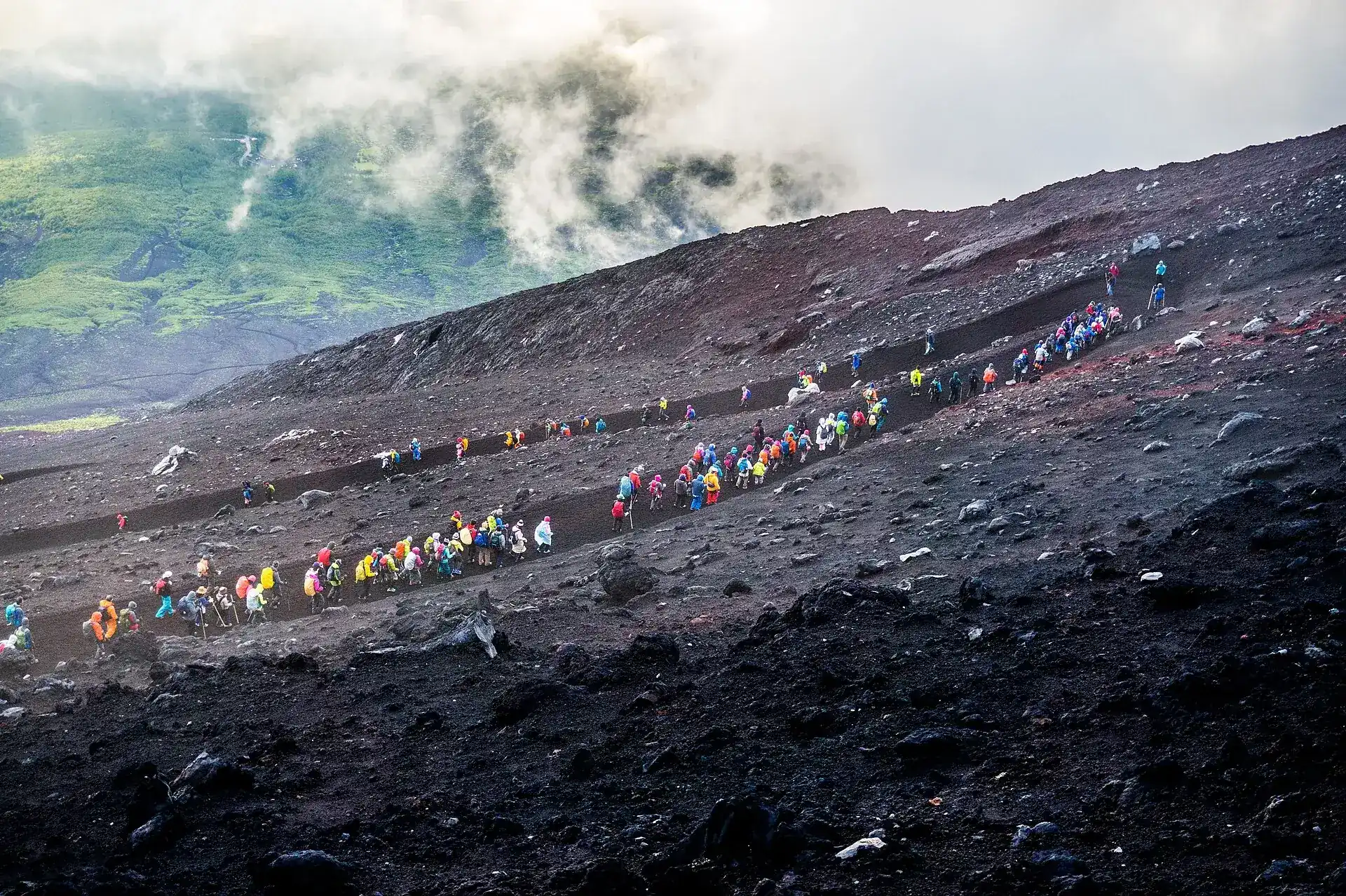
Photo: Flittergreeze · CC BY-SA 4.0
Without a car: Two direct ways from Tokyo to the north side. Highway bus from Busta Shinjuku (Fujikyu/Keio, all seats reserved, bookable from one month ahead): to Kawaguchiko Station in about 1 hr 45 min, ¥2,750, or ¥2,450 online. During the climbing season, direct buses run Shinjuku – Fuji Subaru Line 5th Station in about 2 hr 30 min for ¥4,800 (¥4,500 online): in 2026 from 1 July to 31 August without stopping at the lakes, from 1 to 10 September via Kawaguchiko; plus, from 3 July, a night bus leaving Shinjuku at 11:25 pm and arriving around 2:00 am (until 9 September) – timed for the gate opening at 3 am. Train: the Fuji Excursion limited express runs direct from Shinjuku to Kawaguchiko (around 2 hours, all seats reserved). From Kawaguchiko or Fujisan Station, continue by local bus to the 5th Station (about 65 min).
By car: The Fuji Subaru Line is a toll road (cars ¥2,800 round trip, cash or prepaid toll cards only). “My car” restriction 2026: from 3 July, 6 pm, to 10 September, 6 pm, private cars may not drive up – hybrids included. Exempt are buses, taxis, bicycles, vehicles carrying people with disabilities, and fully electric and fuel-cell cars, which must pick up a confirmation at Fujisan Parking beforehand. Everyone else parks at Fujisan Parking in Fujiyoshida (¥1,000 per entry, also motorcycles of 125 cc and over) and takes the shuttle bus (¥3,400 round trip, ¥2,000 one way; in service 4 July – 10 September 2026). Shizuoka side: private-car ban on the Mt. Fuji Skyline (Fujinomiya) 10 July, 9 am – 10 September, 6 pm; on the Fuji Azami Line (Subashiri) 1 July, 9 am – 10 September, 6 pm.
For the climb there is no choice: only 1 or 10 July to 10 September. For seeing the mountain, that is exactly the worst time. The city of Fuji has observed the mountain daily from city hall since 1990 (8 am, noon and 4 pm): in 2025 the mountain was fully visible at 8 am on 136 days and fully or partly visible on 231 days. January and February did best (19 and 22 days of full visibility), June worst (2 days). The long-term record shows the same pattern – lots of visibility from November to February, little from June to August – and a clear daily rhythm: the earlier in the morning, the more often the summit is clear. If you are going to Lake Kawaguchi for the view of Mount Fuji, plan for late fall or winter and the early morning; in summer a cloud-free Fuji is a matter of luck.
Many day tours from Tokyo combine Mount Fuji with Hakone, the active volcano about 25 km (16 miles) to the southeast. That is why the same tours also appear on our Hakone page. One thing to know: Ōwakudani has a serious volcanic gas warning for people with asthma, lung or heart conditions.
Affiliate links to GetYourGuide: if you book, we earn a commission and the price stays the same. Prices and ratings as of 21 September 2026. If the ropeway is stopped by wind or gas, the itinerary changes.
No. The 2026 season ended on 10 September; since then the trails above the 5th Station (Fujinomiya: 6th Station) and the crater rim loop have been closed. Huts, toilets and first-aid stations are shut. The 5th Stations and the lakes stay open.
That has not been decided. In 2026 the Yoshida and Subashiri trails opened on 1 July, Gotemba and Fujinomiya on 10 July. Shizuoka published its 2026 rules on 14 May; new dates will appear on fujisan-climb.jp. Heavy leftover snow can push the start back.
Take the highway bus from Busta Shinjuku to Kawaguchiko in about 1 hour 45 minutes (¥2,750, or ¥2,450 online) or the Fuji Excursion limited express. From there the local bus reaches the 5th Station in about 65 minutes (¥3,400 round trip, 2026 timetable until 30 October). Start early: the summit is clear most often in the morning.
In 2026, yes in practice. The Yoshida Trail had a cap of 4,000 climbers a day and the prefecture recommended booking ahead; the three Shizuoka trails required registration with a short online course and test, which could also be done on site. Huts are a separate booking.
A guide is not mandatory, but Yamanashi Prefecture explicitly recommends a professional mountain guide for inexperienced climbers. Our selection of 21 September 2026 contained only sightseeing day tours, no summit climbs.
It is the sunrise seen from the summit of Mount Fuji – for many the reason for the whole climb. It is only possible with a hut stay or a start after 3 am: anyone who arrives at the gate at night without a hut reservation is turned away.
Mount Fuji is about the mountain itself: the view from the lake, the 5th Station, and the climb in summer. Hakone is an active volcanic valley with steam, a ropeway and a lake – and a view of Mount Fuji when the sky is clear. Many day tours from Tokyo combine the two.
¥4,000 per person on all four trails. The fee is mandatory; on the Yoshida Trail it is paid with the online reservation, on the Shizuoka trails through the FUJI NAVI app. On top of that come transport, a hut if you use one, and toilet fees along the way.
For the Yoshida Trail it is strongly recommended: there is a cap of 4,000 people a day, and once it is reached the gate closes. For Subashiri, Gotemba and Fujinomiya, advance registration with a short online course and test is required; according to Shizuoka Prefecture it can also be done on site. There is no daily cap there.
By 2 pm. Between 2 pm and 3 am only people who can show a hut reservation get through – this applies on all four trails. You may descend at any hour.
It means climbing through the night in one push for sunrise, without sleeping in a hut. The authorities see it as the main cause of altitude sickness, hypothermia and rescue call-outs. The gate closure from 2 pm to 3 am is meant to prevent exactly that.
On the Yoshida Trail, staff at the 5th Station check three things: warm clothing, rainwear consisting of jacket and pants, and proper hiking boots. If one is missing, you are not let through. A headlamp, gloves, cash and enough water are also sensible.
It is allowed if you pass the gate between 3 am and 2 pm. The authorities recommend staying overnight, though, because otherwise the body has hardly any time to adjust to the altitude. If you try it, start very early and turn back if you get symptoms.
The easiest way is the highway bus from Busta Shinjuku: about 1 hour 45 minutes to Kawaguchiko (¥2,750, or ¥2,450 online) or, in summer, direct to the 5th Station in around 2.5 hours (¥4,800). Alternatively the Fuji Excursion limited express runs direct from Shinjuku to Kawaguchiko. From there the local bus to the 5th Station takes about 65 minutes.
Outside midsummer, yes, via the Fuji Subaru Line toll road (¥2,800 round trip, cash only). From 3 July to 10 September 2026 private cars, hybrids included, were banned; you parked at Fujisan Parking for ¥1,000 and took the shuttle bus for ¥3,400 round trip. Fully electric cars were allowed up with a prior confirmation.
Yes. The 5th Station at about 2,300 m (7,500 ft) can be visited without a fee, and Lake Kawaguchi has the best-known view of the north side – both work as a day trip from Tokyo. The season matters: in summer the summit is usually in cloud; your best chances are from November to February, early in the morning.
In winter, according to the daily observations of the city of Fuji: in 2025 the mountain was fully visible at 8 am on 22 days in February and 19 days in January, but only 2 days in June. Over the year there were 136 days of full visibility. The chance is consistently higher in the morning than in the afternoon.
Mount Fuji is an active volcano, but the Japan Meteorological Agency has it at the lowest Alert Level, 1; there are no signs of an eruption. The last eruption was in 1707. The real dangers are altitude, cold, rockfall and sudden weather changes – and, outside the season, the lack of any facilities.
Not so far. In September 2026, however, Yamanashi Prefecture announced that it will charge for helicopter missions outside the season: ¥8,000 per five minutes of flight for anyone who has not filed a climbing plan. It is due to start with the winter closure from September 2027, provided the ordinance is passed.
Sources · accessed on 21 September 2026
.jpg)


