8 am–2 pm
The Misterios del Tenorio trail
Daily, no closing day. Entry only within your booked time slot, up to 40 minutes after the chosen time; you can stay in the park until 4 pm.
Admission, online only$13.56
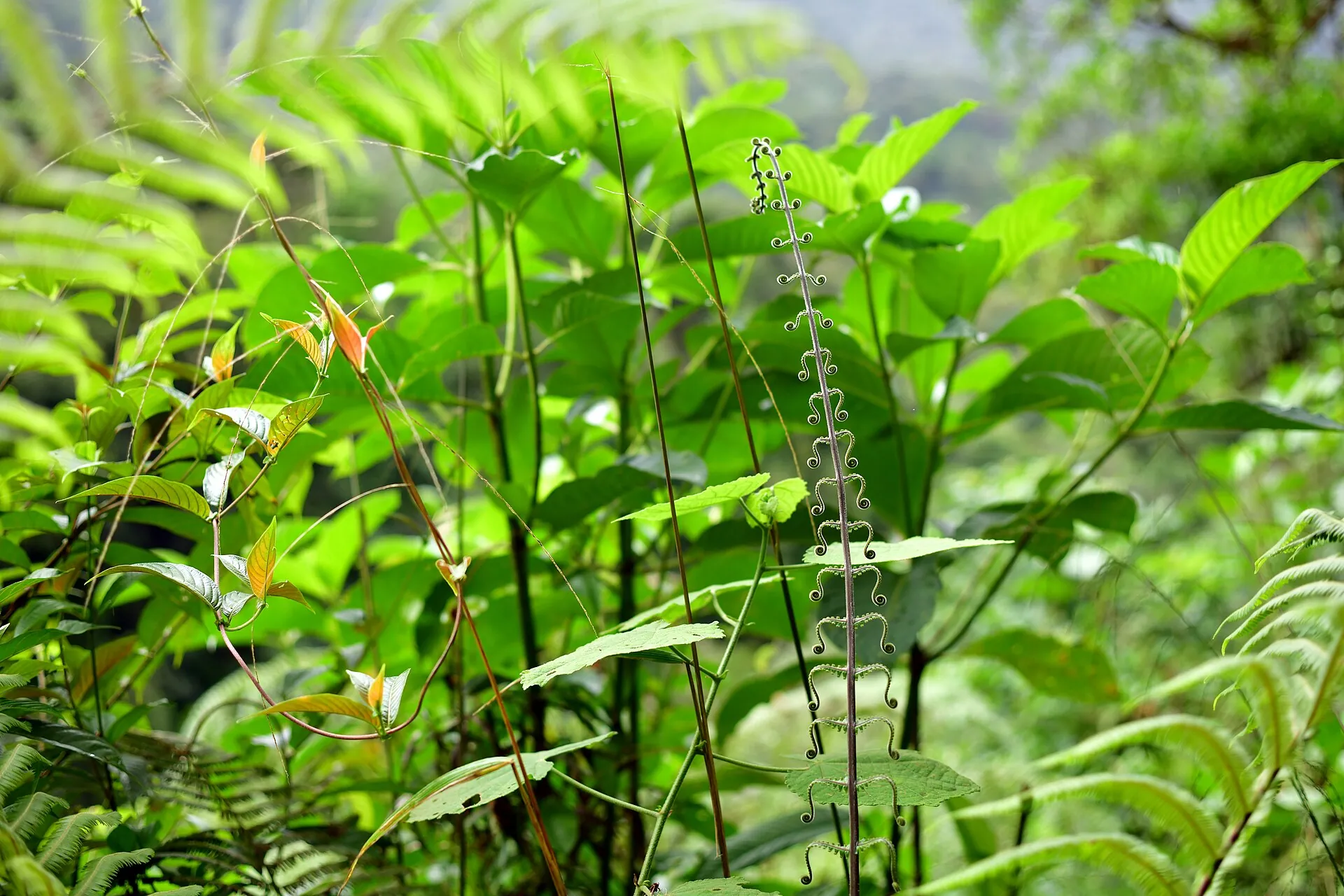
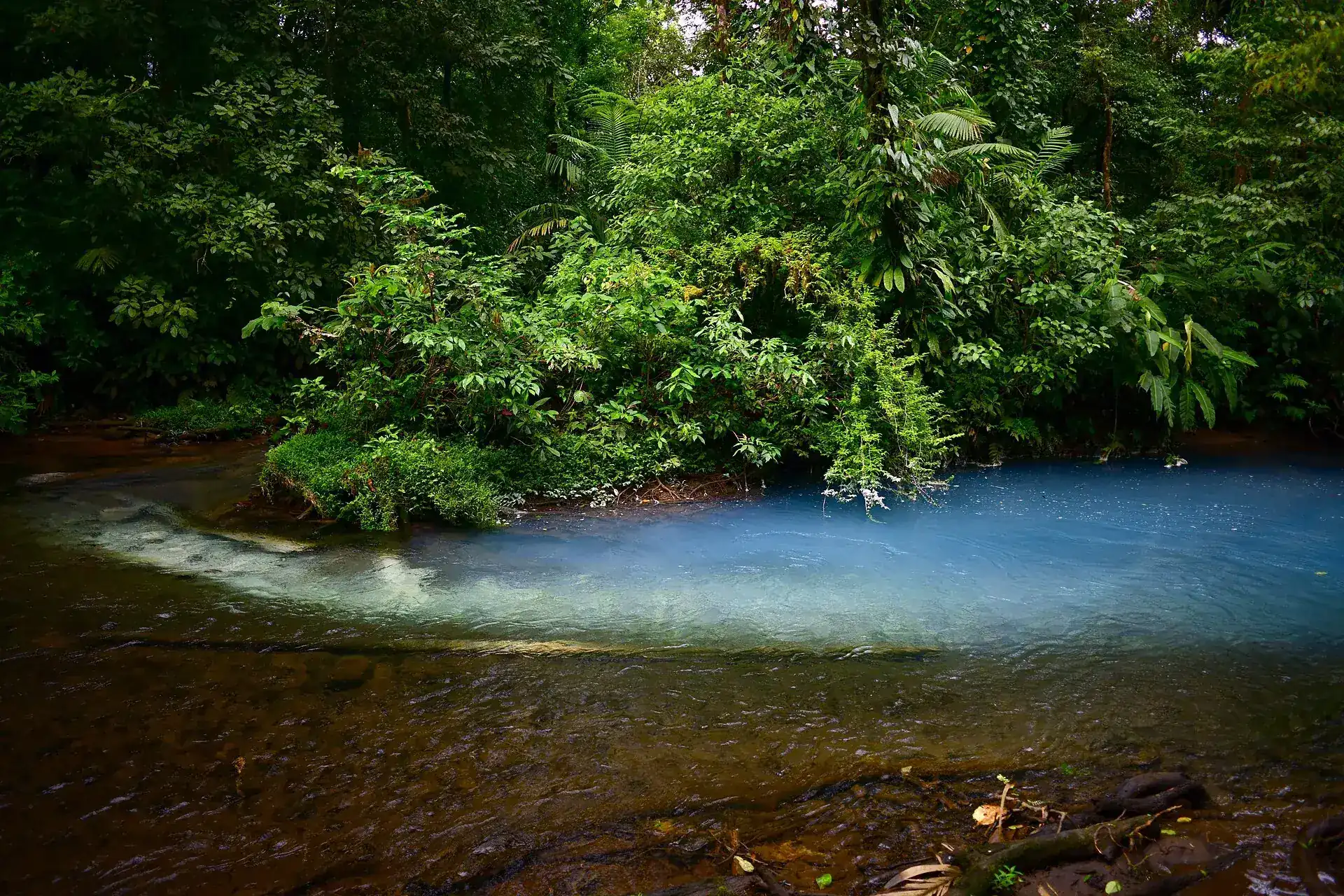
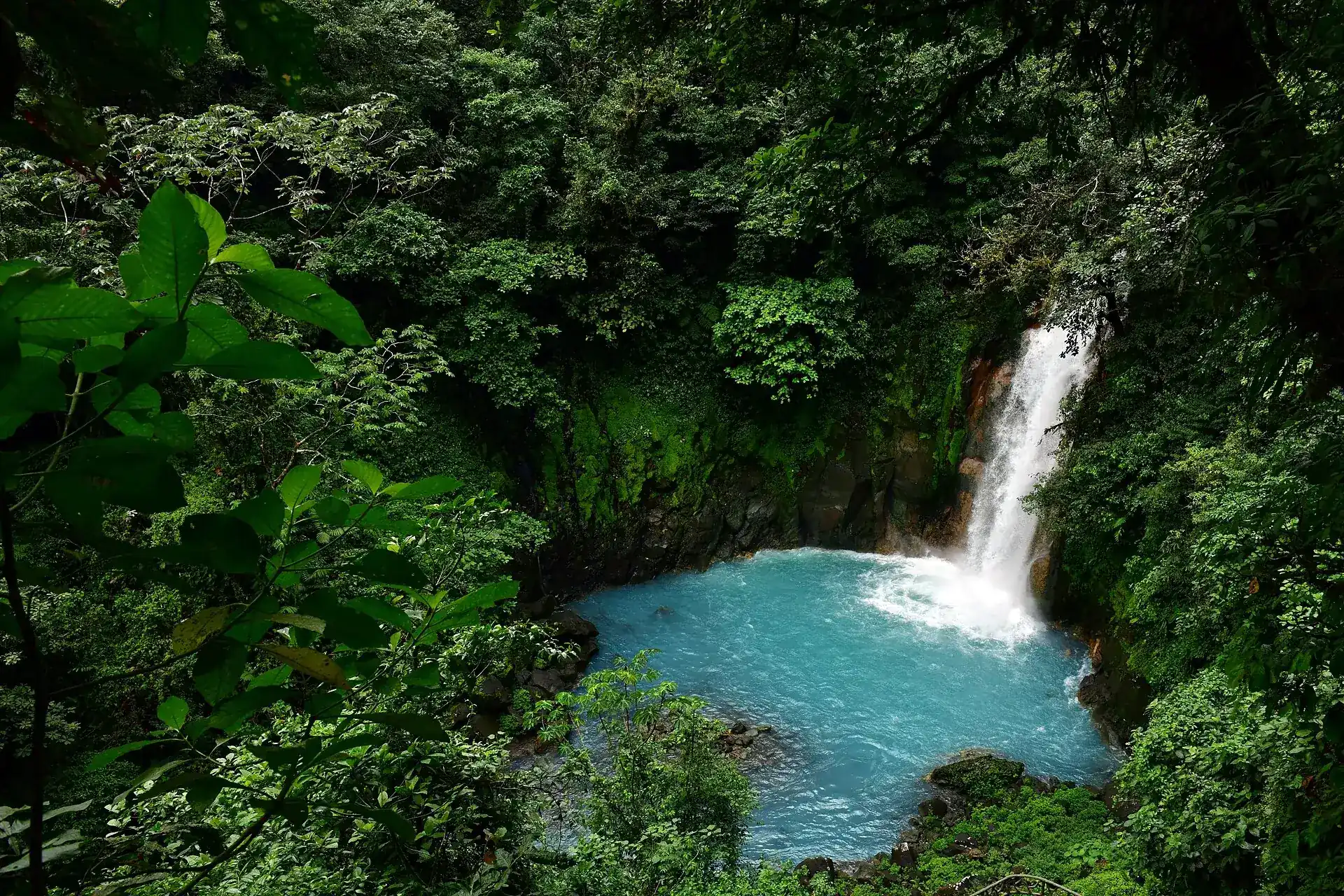
Parque Nacional Volcán Tenorio. At first, just rainforest, mud and roots.
Then two clear streams meet – and the water turns blue.
Downstream it drops as a waterfall into a turquoise pool.
Scroll –
until the water turns blue
The national park is open daily; you get in only with an online ticket booked in advance for a set time. Tenorio volcano itself plays no role in the visit: it's considered dormant and OVSICORI has it at the lowest level, "Calma." What closes trails here is the weather – heavy rain, falling branches, landslides.
Check the booking system before you travel: on 21 September 2026, "PN Volcán Tenorio" appeared in the FAQ list of parks bookable online but was missing from the public "Disponibilidad de Parques Nacionales" selection menu on the homepage of serviciosenlinea.sinac.go.cr. We could not check without an account whether the park is bookable after logging in; the park's Facebook page still points to this system. So book before you drive to Bijagua – there's no ticket at the entrance.
Daily, no closing day. Entry only within your booked time slot, up to 40 minutes after the chosen time; you can stay in the park until 4 pm.
Officially open only halfway since 13 June 2025, with immediate evacuation in heavy rain. Travel portals reported the lower platform still closed into February/March 2026. No confirmation is available for September 2026.
Banned throughout the national park – at the waterfall as well as at Laguna Azul and the Teñideros. There is no official swimming pool in the park. Swimming happens downstream, outside the park boundary.
After heavy rain the river turns brown or gray for hours to days. SINAC explicitly gives no refund in that case. If it poured overnight, the river will be brown in the morning.
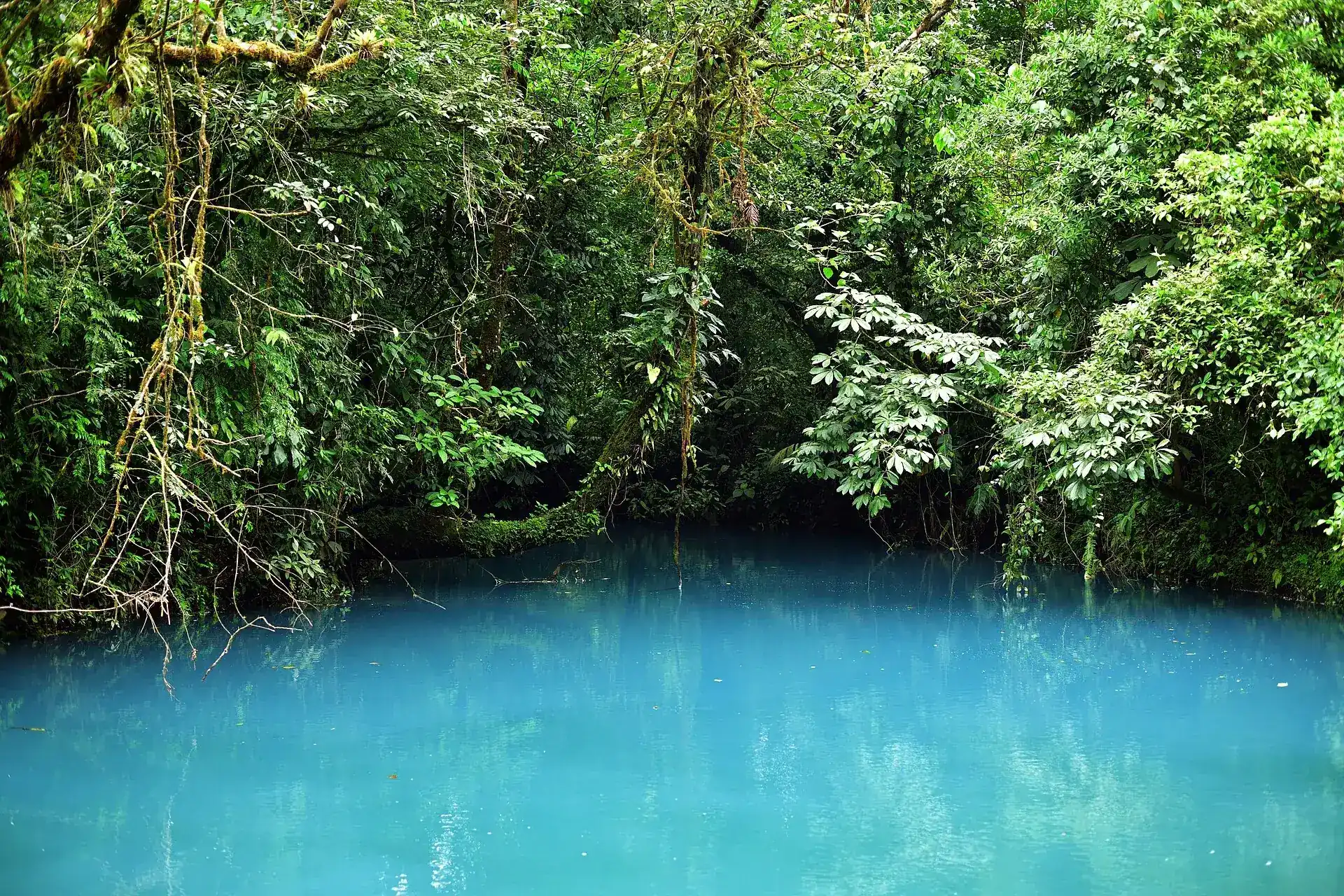
Photo: Panegyrics of Granovetter · CC BY-SA 2.0
There's exactly one trail, the Sendero Misterios del Tenorio. It starts at the El Pilón ranger station and runs through wet rainforest – roots, mud, all year round. After about 1.5 km (0.9 miles) the staircase to the waterfall branches off, roughly 250 steep steps. Most people turn back here. Keep going.
Beyond the waterfall come a viewpoint, the still Laguna Azul, and the Borbollones: spots where gas rises through the riverbed and the water bubbles – it smells of sulfur here, the volcano's only sign of life. Hanging bridges lead on to the Teñideros. There, two clear streams flow together, and right at the seam the water turns milky turquoise in an instant. That's the real reason to come here.
It's about 3 km (1.9 miles) to the Teñideros, and you go back the same way: 6 to 7 km (3.7–4.3 miles) total, about three hours, up to four with breaks. A guide isn't required.
Affiliate links to GetYourGuide: if you book, we earn a commission and the price stays the same. Prices and ratings as of 21 September 2026. Whether the river is blue is up to the weather – even on a booked tour. For comparison: official admission through SINAC costs $13.56 (approx. €12).
Since 1 August 2023, the park service SINAC has sold admission only through its online system SICORE. There's no more ticket booth in the park. "Arrive early and buy at the entrance" – that advice from older guidebooks now just leads to a closed gate.
There's no refund if rain turns the river brown. If you're flexible, decide based on the previous evening's forecast – staying overnight in Bijagua gives you that room. In high season and on weekends, the early slots go first.
Create an account at serviciosenlinea.sinac.go.cr, then choose the park, date and one of six time slots between 8 am and 2 pm. Enter each visitor's name, ID number and home country, and pay by card. Maximum 10 tickets per transaction.
You may enter up to 40 minutes after your chosen time, after which the slot expires. Show your booking code and passport at the entrance – a clearly legible photo of your passport is enough.
The trail is still empty then, and there's no line at the half-closed waterfall staircase. You must be out by 4 pm – the full route takes a good three hours.
| Foreign adults ($12 + 13% VAT) | $13.56 (approx. €12) |
| Foreign children 2–12 · free under 2 | $5.65 (approx. €5) |
| Costa Ricans and residents: adults / children | ₡904 / ₡565 |
| Parking at the entrance – privately run, not included in the ticket (per travel portals, 02/2026) | ₡3,000 |
| 24 August, National Parks Day – online booking still required | free admission |
Moderate fitness is enough: no major elevation change, but a slippery, uneven surface. Treaded, waterproof shoes – or rent rubber boots at the entrance if it has rained.
| Río Celeste waterfall | after about 1.5 km (0.9 miles), about 30 minutes. A turnoff with about 250 steps; the staircase has officially been open only halfway since 13 June 2025, current status unconfirmed. |
| Viewpoint and Laguna Azul | A viewpoint, then the still blue pool in the forest. Swimming banned. |
| Borbollones | Gas vents in the riverbed, the water bubbles, a smell of sulfur. |
| Hanging bridges and Teñideros | after about 3 km (1.9 miles): the confluence where the water turns blue. End of the trail – the volcano's summit is not developed for visitors. |
| Total | 6–7 km (3.7–4.3 miles) round trip on the same trail, about 3 hours, up to 4 with breaks. |
Not because of copper, not because of sulfur, and there's no dye in the water. It's physics.
At the Teñideros, two clear streams meet. As they mix, aluminosilicate particles grow to a size that scatters mainly the blue part of sunlight – scientists call this Mie scattering. Researchers from the Universidad Nacional and the Universidad de Costa Rica demonstrated this in 2013; we rely here on secondary sources and have not reviewed the original study.
That's also why the color vanishes so quickly: after heavy rain the river carries sediment, and the turquoise gives way to brown or gray – sometimes for a whole day.
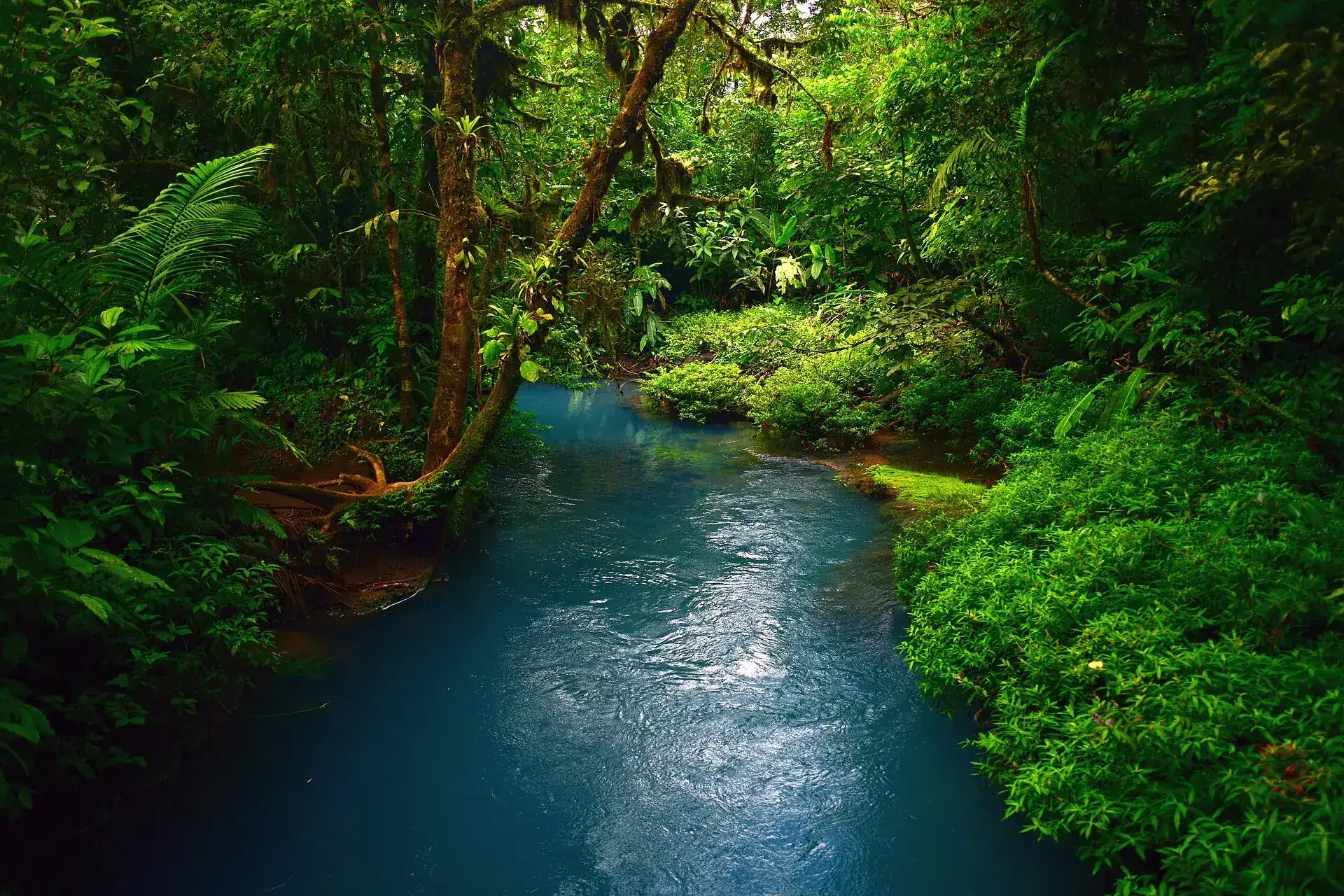
Photo: Panegyrics of Granovetter · CC BY-SA 2.0
On timing, there's no official climate data we can rely on: that the river is most reliably turquoise from about January to April, and that most outages fall between October and February, comes from travel portals. More reliable than any calendar is checking last night's weather.
By car: From Route 6 (Cañas–Upala) turn east in Bijagua, about 9 km (5.6 miles) to the El Pilón entrance. The parking lot sits opposite the ranger station and is paid separately. Access can be rough in the rainy season; a car with ground clearance helps.
The color depends on the weather: after heavy rain the river turns brown or gray for hours to days, and there is no refund for that. It is most reliably turquoise in the drier months from about January to April; the main rainy season with the most outages falls between October and February. Choose the first, 8 am time slot – the trail is still empty then (later, up to 500 people are on it at once), and there's no line at the half-closed waterfall staircase. If you're flexible, decide based on the previous evening's forecast; staying overnight in Bijagua gives you that flexibility.
Downstream of the park boundary the river is just as blue and freely accessible – swimming is allowed there. Local operators run tubing trips down the blue river. None of this has anything to do with the national park or the SINAC ticket.
Affiliate links to GetYourGuide: if you book, we earn a commission and the price stays the same. Prices and ratings as of 21 September 2026. The same rule applies here: after heavy rain the river turns brown.
It can be, but you carry the risk: after heavy rain the river turns brown or gray, and SINAC won't refund the ticket. Best to book only the evening before, based on the forecast, and take the 8 am slot. That January to April are the most reliable months comes from travel portals, not official climate data.
Yes. By rental car it's about 1.5 to 2.5 hours depending on the route, via San Rafael de Guatuso and Katira; organized day tours also run from La Fortuna. You'll need about three hours for the trail itself.
No. Nothing is sold at the entrance. If a time slot is full, only another slot or another day remains.
That's unclear. On 21 September 2026 the park was missing from the booking system's public availability menu but appeared in its FAQ list of bookable parks. We could not check without an account whether it shows up after logging in. Check the system before you travel, or call the park: 2200-0135 or 2206-5369.
No. The summit is not developed for visitors; the only trail ends at the Teñideros.
Only online at serviciosenlinea.sinac.go.cr, the booking system of the national park service SINAC. You create an account, choose a date and one of six time slots, enter the passport details of everyone visiting, and pay by card. No tickets have been sold at the park entrance since August 2023.
Foreign adults pay $12 plus 13% VAT, so $13.56 (about €12); children 2 to 12 pay $5.65. Parking costs extra, about ₡3,000 per travel portals.
Not inside the national park – the ban covers the waterfall, the Blue Lagoon and every other spot. Outside the park boundary the river is just as blue and freely accessible; swimming is allowed there.
Plan about three hours for the full route to the Teñideros and back, which is 6 to 7 km (3.7–4.3 miles). To the waterfall alone is about 30 minutes.
Daily, with no closing day. Entry runs from 8 am to 2 pm within your booked time slot; you may stay in the park until 4 pm.
SINAC states a cap of 1,200 people per day and no more than 500 on the trail at once. In high season and on weekends the early slots sell out first.
After heavy rain the river turns brown or gray, sometimes for a whole day. SINAC gives no refund for that. In severe weather the park can close sections or the entire trail; the waterfall staircase is evacuated immediately in heavy rain.
No. There is only one marked trail, and you can walk it alone. A nature guide from Bijagua is worthwhile if you want to spot wildlife.
At the Teñideros, two clear streams flow together. This forms aluminosilicate particles at a size that scatters mainly the blue part of sunlight. So it's an optical effect, not a dye in the water.
You can view the waterfall, but the staircase has officially been open only halfway since June 2025. Check the park's Facebook page shortly before your visit to see whether the lower platform has reopened.
It is considered dormant, no historical eruptions are known, and OVSICORI has it at the lowest level, "Calma." The real risks in the park are weather, falling branches and slippery trails.
Yes to the waterfall, if the kids are sure-footed. The full route is tough for small children because of mud, roots and about 250 steps, and strollers can't get through.
By rental car to Bijagua on Route 6, then about 9 km (5.6 miles) east to the El Pilón entrance. It's about an hour and a half from Liberia, about three and a half hours from San José; organized day tours run from La Fortuna.
The same basic rule applies to all four: admission only with an online ticket from the SINAC system.
Sources · accessed on 21 September 2026


