Sunrise in the Summit District
To drive in during these four hours you need a vehicle reservation from Recreation.gov. Without one you are turned away at the gate and cannot enter until 7 a.m. – no tickets are sold at the gate.
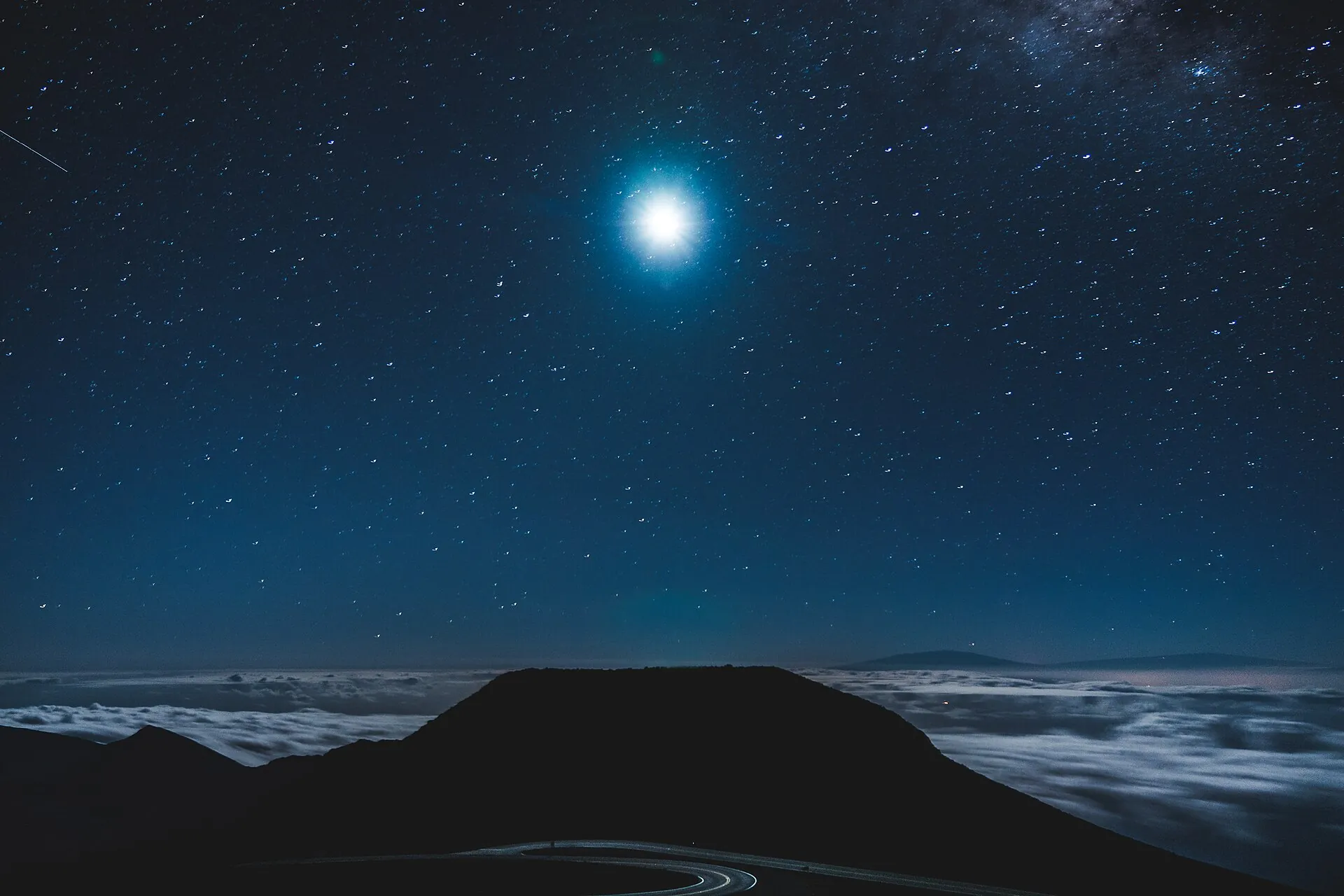
At four in the morning it is dark up here, windy, and cold as winter.
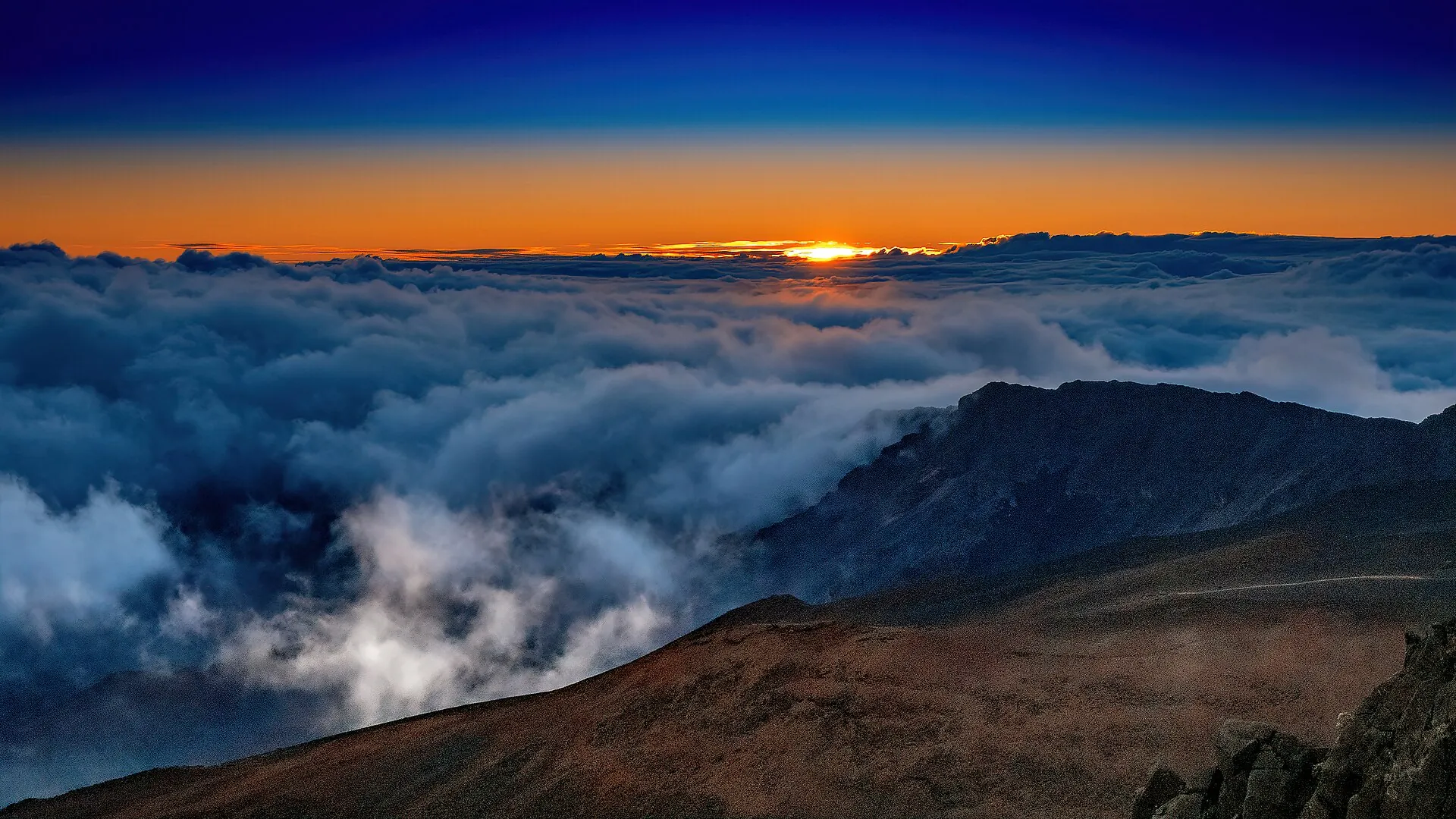
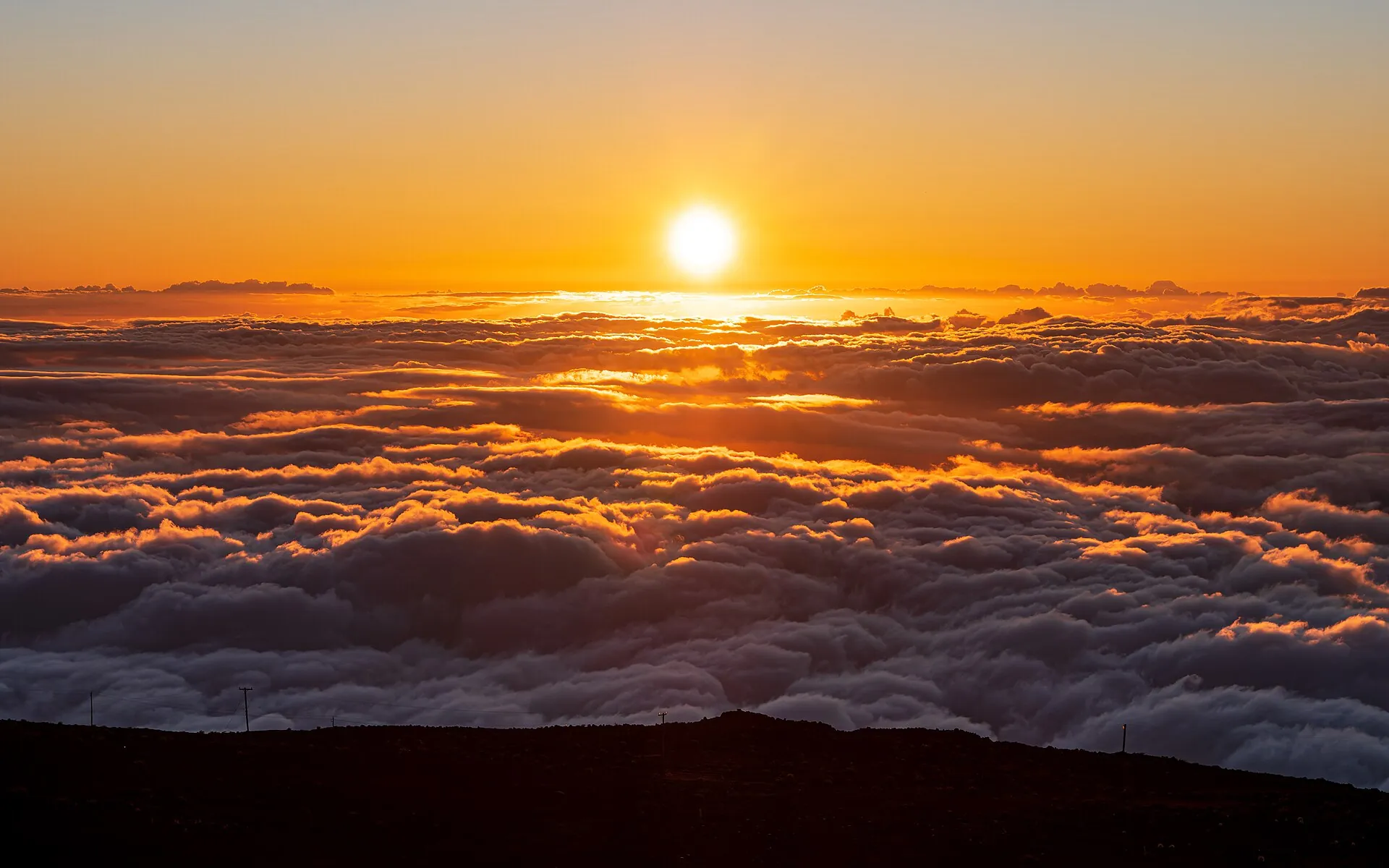
Then the edge of the clouds takes on color – and 10,000 feet below you, day begins.
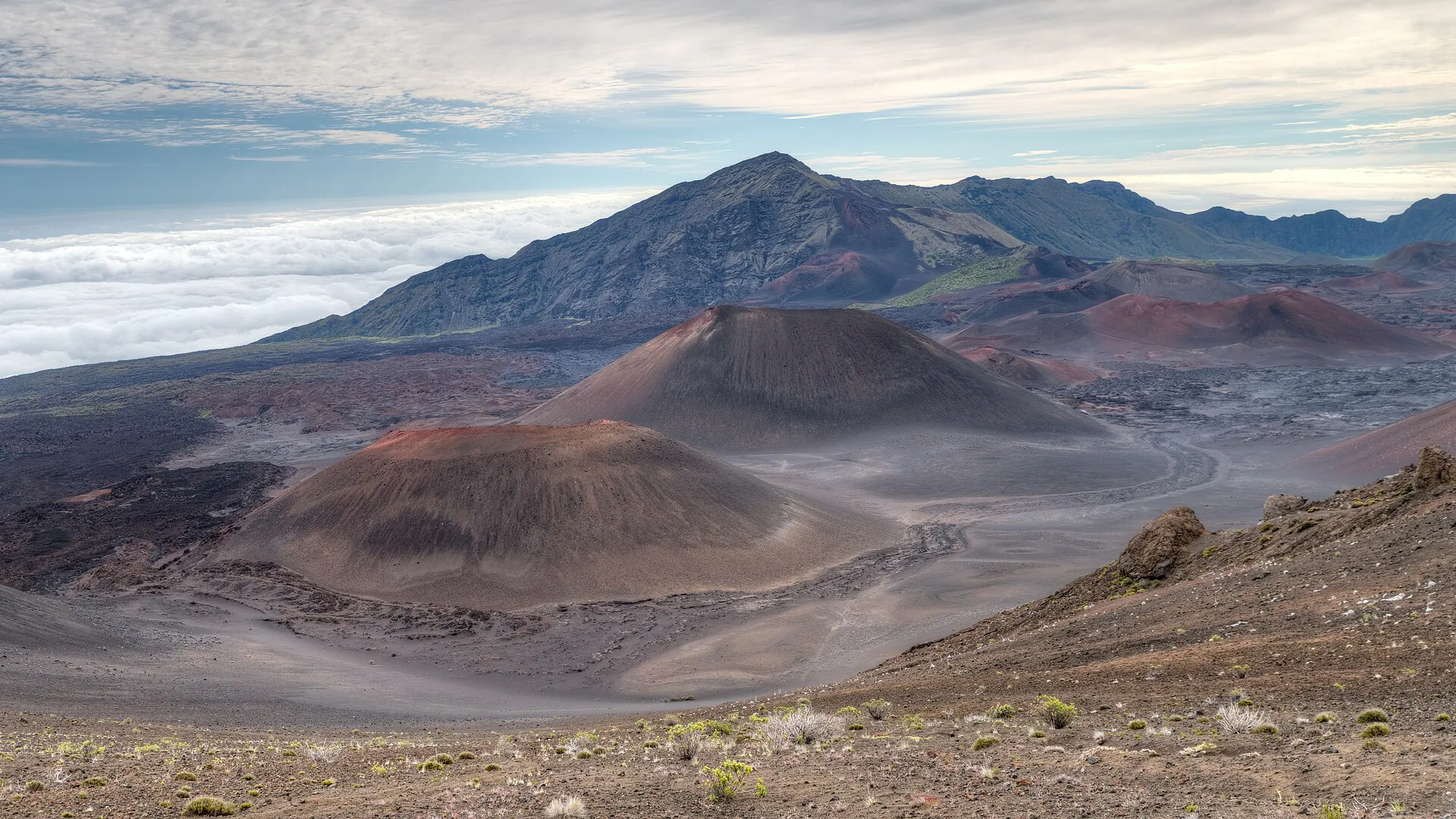
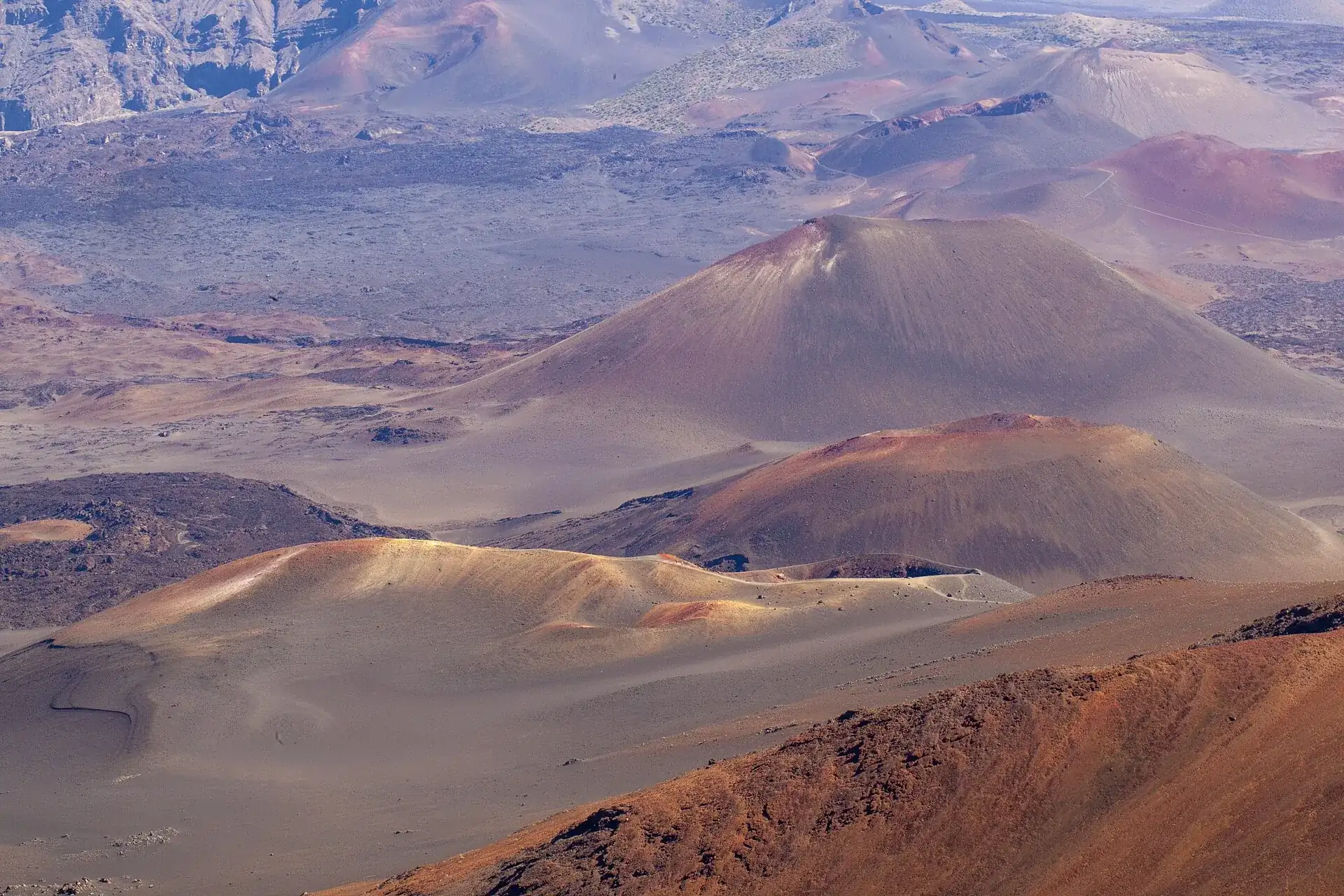
Only in the light do you see where you are standing: above a basin full of cinder cones.
Scroll –
the sun comes up
Both districts have been open again since 25 August 2026; Tropical Storm Lala had closed the park from 14 August. The Hawaiian Volcano Observatory lists Haleakalā at NORMAL / GREEN (update of 3 September 2026). Only one thing is restricted: driving into the Summit District between 3 and 7 a.m.
To drive in during these four hours you need a vehicle reservation from Recreation.gov. Without one you are turned away at the gate and cannot enter until 7 a.m. – no tickets are sold at the gate.
From 7 a.m. until 3 a.m. the regular entrance fee is all you need. There is no reservation system for sunset. You pay at the entrance by card only – the park does not take cash.
The district on the Hāna Highway needs no reservation and is covered by the same 3-day entrance fee. The Pools of ʻOheʻo are closed to swimming (flash floods, rockfall); you can see them from the Kūloa Point Trail.

Photo: Felipe Perez · CC BY-SA 4.0
Haleakalā means “House of the Sun.” You drive in the dark from sea level to 10,023 feet (3,055 m), step out into the wind – and wait with numb fingers for the horizon to take on color.
Before sunrise the summit is regularly wet, windy and below freezing, according to the National Park Service. A hotel blanket is not enough: winter jacket, hat, gloves, long pants. During the day it reaches 50 to 60 °F (10 to 15 °C) up there.
Often the clouds lie below you. When the sun rises over their edge, the light hits the crater walls first, then the cones on the floor of the basin. Nobody knows in advance whether the sky will be clear – and for clouds or rain there is neither a refund nor a replacement date.
Haleakalā is dormant. Its last eruption was between 1480 and 1600, according to USGS. There is no glow and no lava to see here; the real risks are the altitude, the cold and the drive in the dark.
Affiliate links to GetYourGuide: if you book, we earn a commission and the price stays the same. Prices and ratings as of 21 September 2026. Park-authorized operators enter on their own permits, so you do not need a reservation of your own. Before you book, ask whether the operator is on the list on the NPS sunrise page. Whether the view is clear is up to the weather.
The reservation is per vehicle, not per person, and valid only for the day you booked. It is issued through Recreation.gov and nowhere else. The NPS FAQ gives 150 vehicles per morning – and the park says the first batch is often gone within 15 minutes.
Sign up, have a credit card ready, and be logged in before the release. Booking page: Haleakalā National Park Summit Sunrise. Only one reservation per customer every three days.
7:00 a.m. Hawaii time is 10 a.m. Pacific / 1 p.m. Eastern in summer, and 9 a.m. Pacific / noon Eastern in winter. Set an alarm: NPS says these tickets are often gone within a quarter of an hour.
A further share of the tickets appears two days before the date at the same time. That is the second and last regular chance.
There is no gas station and no charger in the park; the last gas on the way up is in Pukalani. Print the confirmation and save it on your phone: Recreation.gov accepts either, the NPS FAQ asks for paper – which version applies at the gate is not settled.
The person who booked must be in the car and show photo ID. The reservation cannot be passed on or moved to another date. You pay the $30 entrance fee here on top, by card only.
The reservation covers Summit, Haleakalā Visitor Center, Kalahaku and Leleiwi – it does not secure a particular lot. The park recommends the quieter Leleiwi and Kalahaku overlooks.
| Sunrise reservation (3–7 a.m.), per vehicle · non-refundable | $1 |
| Entrance fee, private vehicle, 3 days, both districts | $30 |
| Motorcycle, 3 days | $25 |
| Pedestrian or cyclist, 3 days | $15 |
| Hawaiʻi Tri-Park Annual Pass (Haleakalā, Hawaiʻi Volcanoes, Puʻuhonua o Hōnaunau) | $55 |
| America the Beautiful annual pass, U.S. residents · non-U.S. residents $250 since 1 January 2026 | $80 |
Sold out does not mean the mountain is off. The National Park Service itself names three ways out – and one of them costs nothing extra.
The second batch appears at 7:00 a.m. HST. Be logged in, load the page shortly before, book right away.
There is no reservation system for it. It is milder than in the morning, you drive up in daylight, and the stars come out afterward. For many people the more relaxed choice.
Operators authorized by the National Park Service hold their own permits. It costs far more than driving yourself, but spares you the booking and the night drive up the switchbacks.
The National Park Service contradicts itself. The park's FAQ gives short drive times; the same park's directions page gives more than twice as long. The park gives no distances. We cannot resolve the contradiction – so plan with the long figure. Arrive too early and you shiver for an extra half hour. Arrive too late and you have missed the sunrise.
| Kahului → summit (Routes 37, 377, 378) | 45–60 min / 2.5 hrs |
| Kīhei or Wailea → summit | 1–1.5 hrs / 3 hrs |
| Lahaina → summit | 1.5–2 hrs / 3.5 hrs |
| Kahului → Kīpahulu via the Hāna Highway | 2.5–3 hrs / about 4 hrs |
A road leads to the summit. On foot you go down into the basin from there – which means the hard part comes last, uphill, in thin air. All trails are included in the entrance fee.
| Summit road from Kahului to Puʻu ʻUlaʻula (10,023 ft / 3,055 m) · year-round, 24 hours, 3–7 a.m. with reservation only | 0 → 10,023 ft |
| Keoneheʻeheʻe Trail (Sliding Sands) from Haleakalā Visitor Center · to the first overlook; full crossing 11 miles (17.7 km) with about 2,500 ft (760 m) of elevation change, strenuous | 0.5 mi (0.8 km) round trip |
| Halemauʻu Trail to the crater overlook with the “Rainbow Bridge” · about 400 ft (120 m) of elevation change, moderate | 2.2 mi (3.5 km) round trip |
| Short walks: Pā Kaʻoao 0.4 mi · Leleiwi Overlook 0.3 mi · Hosmer Grove 0.6 mi loop – all easy | 0.3–0.6 mi (0.5–0.9 km) |
| Pīpīwai Trail in Kīpahulu, Hāna Highway mile marker 41 · bamboo forest and waterfalls, about 800 ft (245 m) of climbing; flash flood risk, stay out of the streams | 4 mi (6.4 km) round trip |

Photo: Sergei Mutovkin · CC BY 2.0
Without a car: There is no public transportation to either district of the park.
By car: Summit: Route 37 → 377 → 378 (GPS: 30,000 Haleakalā Hwy, Kula). Kīpahulu: Route 36 → 360 → 31 (Hāna Highway, mile marker 41). No gas station and no EV charger in the park; fill up in Pukalani before the summit, in Pāʻia before Kīpahulu.
Sunrise: possible year-round, usually clearest outside the rainy season (November to March brings more rain and wind, according to NPS). Without a reservation, go for sunset – no booking, milder temperatures and stargazing afterward. During the day clouds often drift into the crater; early morning from 7 a.m. is the most reliable time for hikes. Book exactly 60 days ahead at 7:00 a.m. HST (10 a.m. PDT / 1 p.m. EDT in summer; 9 a.m. PST / noon EST in winter).
If you would rather not drive yourself, or prefer the evening: these tours are currently listed on GetYourGuide. The selection is small, and so are some of the review counts – we show them as they are.
Affiliate links to GetYourGuide: if you book, we earn a commission and the price stays the same. Prices and ratings as of 21 September 2026.
At 7:00 a.m. Hawaii time. In summer that is 10 a.m. Pacific and 1 p.m. Eastern; in winter 9 a.m. Pacific and noon Eastern. Tickets are released 60 days before the date, and a second batch follows two days ahead.
It is the uncomplicated option: no reservation, milder temperatures, the drive up in daylight and the stars afterward. You pay only the regular $30 entrance fee per car.
No, provided the operator is authorized by the National Park Service – those operators hold their own permits. The list is on the park's sunrise page; if in doubt, ask the operator before booking.
Better safe than sorry: bring both. Recreation.gov accepts the confirmation on a device or a printout, while the NPS FAQ asks for paper. Which version applies at the gate is not settled. You always need the photo ID of the person who booked.
The park gives two contradictory drive times from Kahului: 45 to 60 minutes in its FAQ, 2.5 hours on its directions page. Plan with the long figure and add the check at the gate and the walk from the parking lot.
$1 per vehicle, regardless of how many people are in it. The regular entrance fee of $30 per car, valid for three days, is extra. Both are paid by card only; there are no refunds.
The NPS FAQ gives 150 vehicles per morning for the four overlook parking lots: Summit, Haleakalā Visitor Center, Kalahaku and Leleiwi. The reservation does not guarantee a specific lot.
Try for the remaining tickets two days ahead at 7 a.m. HST, book a tour with an authorized operator, or switch to sunset. There is no reservation system for sunset.
Before sunrise, summit temperatures are often at or below 32 °F (0 °C), with wind and frequently moisture on top. During the day it reaches about 50 to 60 °F (10 to 15 °C). Winter clothing makes sense even in midsummer.
The NPS FAQ says 45 to 60 minutes to the Summit District, while the park's directions page says 2.5 hours. Because of darkness, switchbacks and checks at the gate, plan generously. There are no public buses.
The park advises caution: there are no chargers and no gas stations, and according to NPS even fully charged electric cars have had trouble reaching the summit. Gas-powered cars should fill up in Pukalani.
There is no age limit. But the quick ascent to more than 10,000 ft (3,000 m) can cause headache, nausea and dizziness; NPS explicitly warns of altitude sickness in the summit area. If symptoms appear, the only remedy is to drive down.
It is dormant, but not considered extinct. The last eruption was between 1480 and 1600, according to USGS. The current alert level is NORMAL / GREEN (HVO update of 3 September 2026).
No. The park keeps the pools in Kīpahulu closed to swimmers because of flash floods and rockfall. You can view them from the Kūloa Point Trail.
Yes, both districts have been open again since 25 August 2026, after Tropical Storm Lala closed the park from 14 August. Current alerts are on the park's “Alerts & Conditions” page.
No. Overnight stays are allowed only at the Hosmer Grove and Kīpahulu campgrounds (with a reservation through Recreation.gov) – sleeping in a vehicle is explicitly prohibited.
Sources · accessed on 21 September 2026