6–6a.m.–p.m.
Entry for out-of-state visitors
Entry is sold online only, for a fixed time slot, up to 30 days in advance. There is no ticket window, and cash is not accepted. Children 3 and under are free.
per person$5
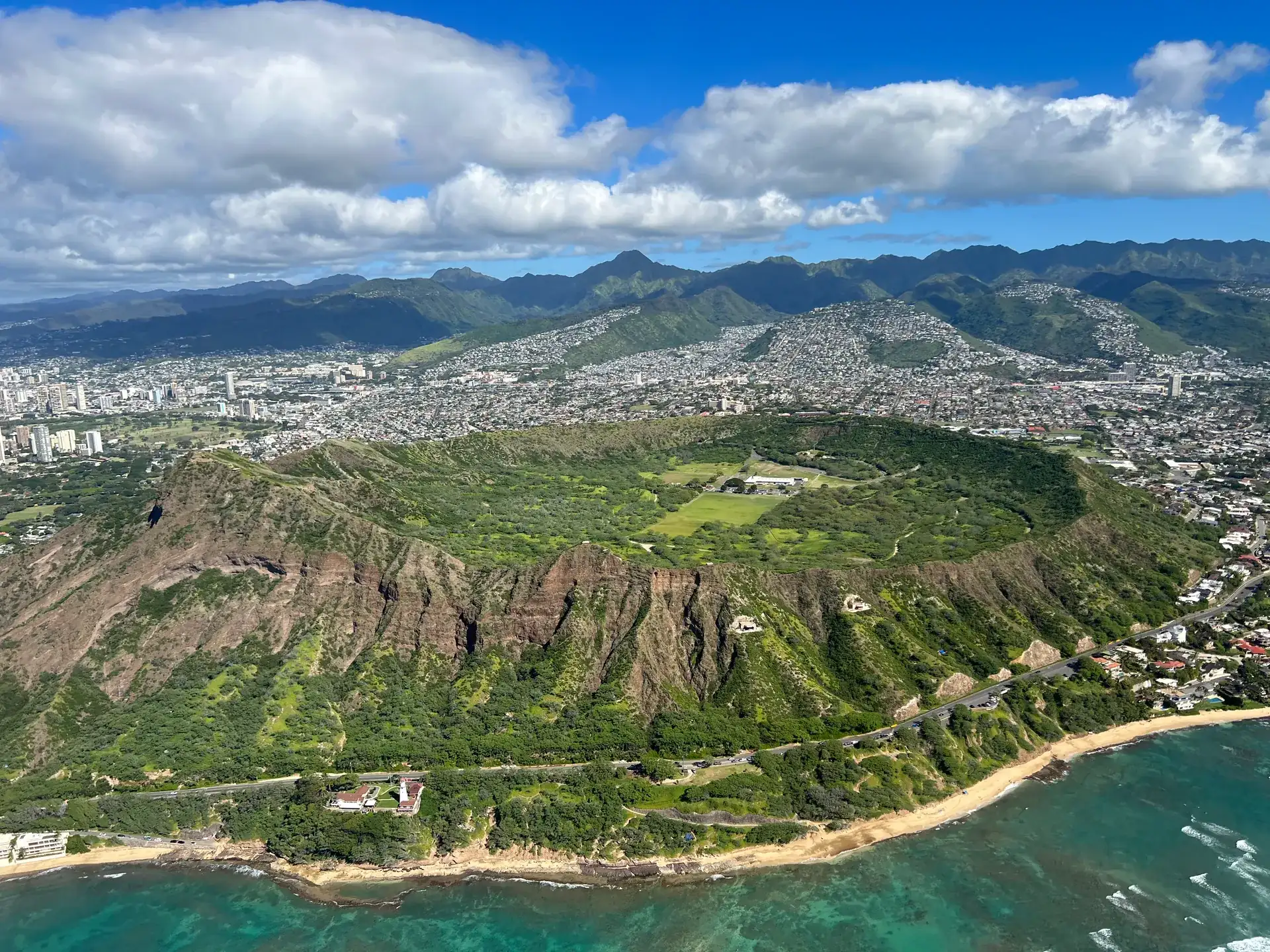
From above it is an almost closed ring of tuff, right by the ocean.
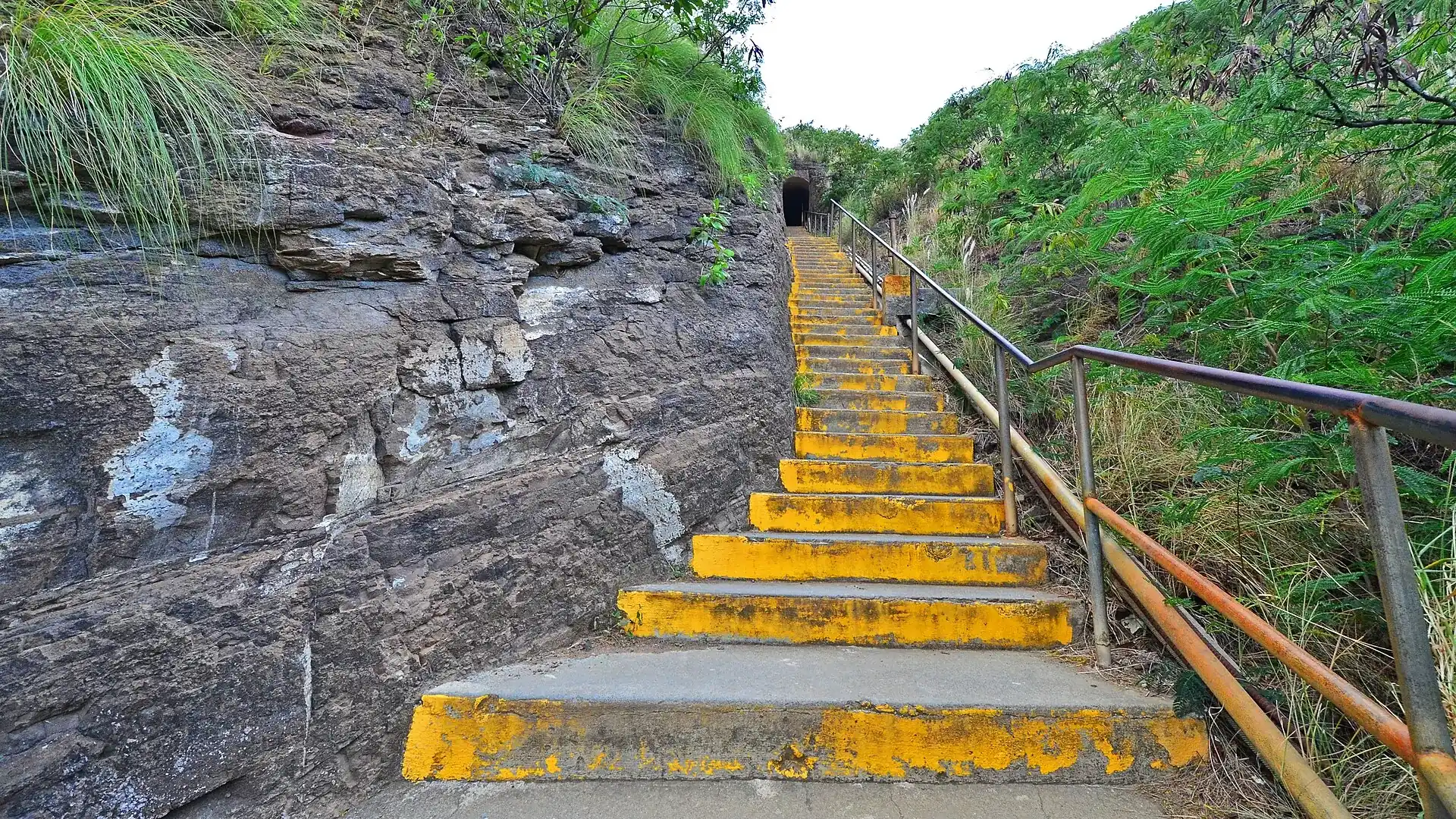
You get in through a tunnel and up by stairs – with no shade.
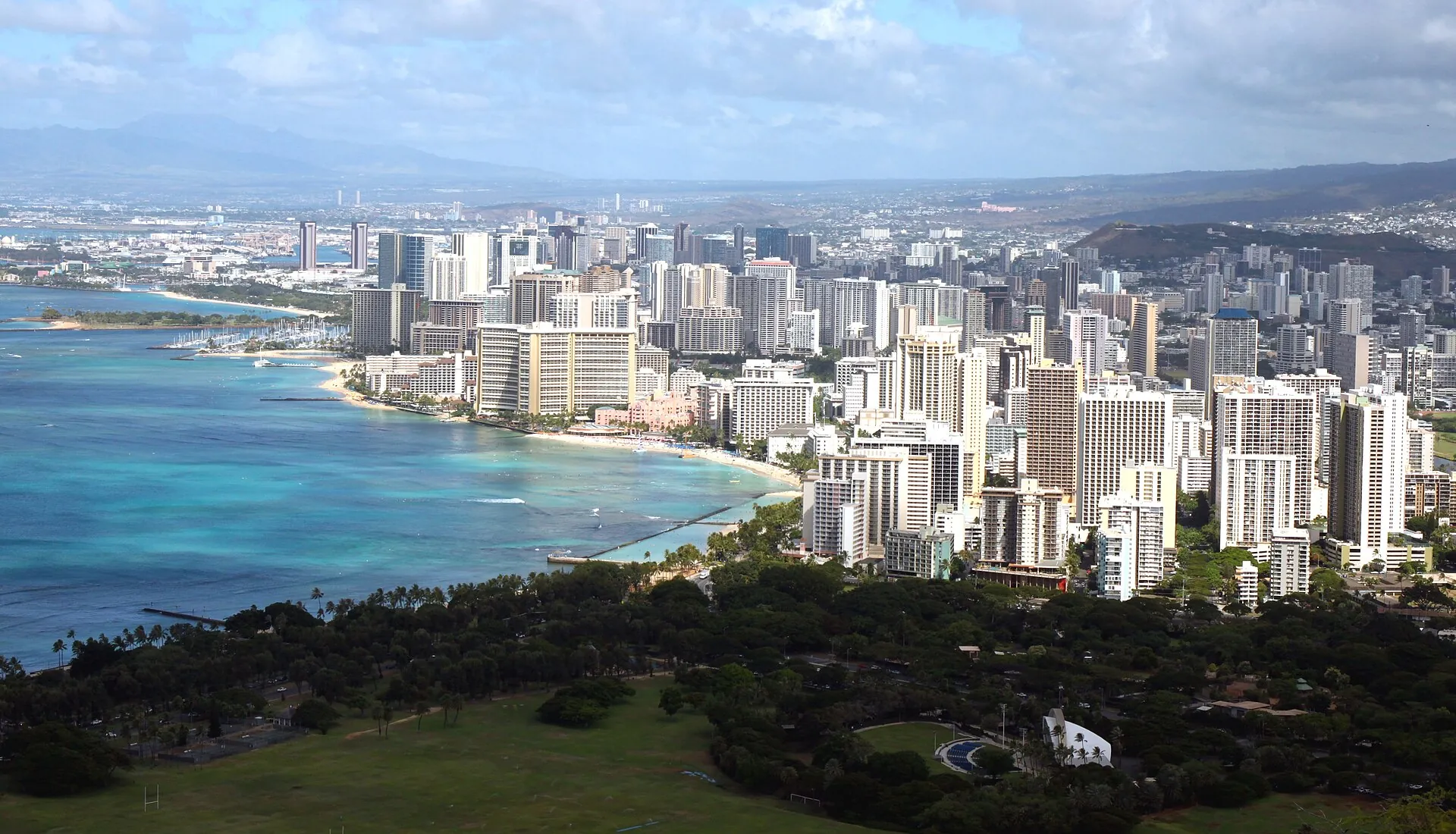
At the top, Waikīkī lies below you. There is no glow here: this crater has been quiet for hundreds of thousands of years.
Scroll
If you do not live in Hawaii, you will not even get through the access tunnel without a time slot booked in advance. Because of Hurricane Lala the monument was closed from mid-August 2026; one travel portal reports that it reopened on 9 September 2026 – we had no confirmation of that from State Parks. Current notices appear at the top of the DLNR park page.
Entry is sold online only, for a fixed time slot, up to 30 days in advance. There is no ticket window, and cash is not accepted. Children 3 and under are free.
Very few stalls, bookable as two-hour slots starting at 6 a.m. You must be out again by the end of the slot. Without a car, book “Entry only” and arrive on foot, by bus or by taxi.
The last time slot starts at 4:00 p.m., and you must be admitted by 4:30 p.m. at the latest. The gates are locked at 6 p.m.; anyone found in the crater after that can be prosecuted.
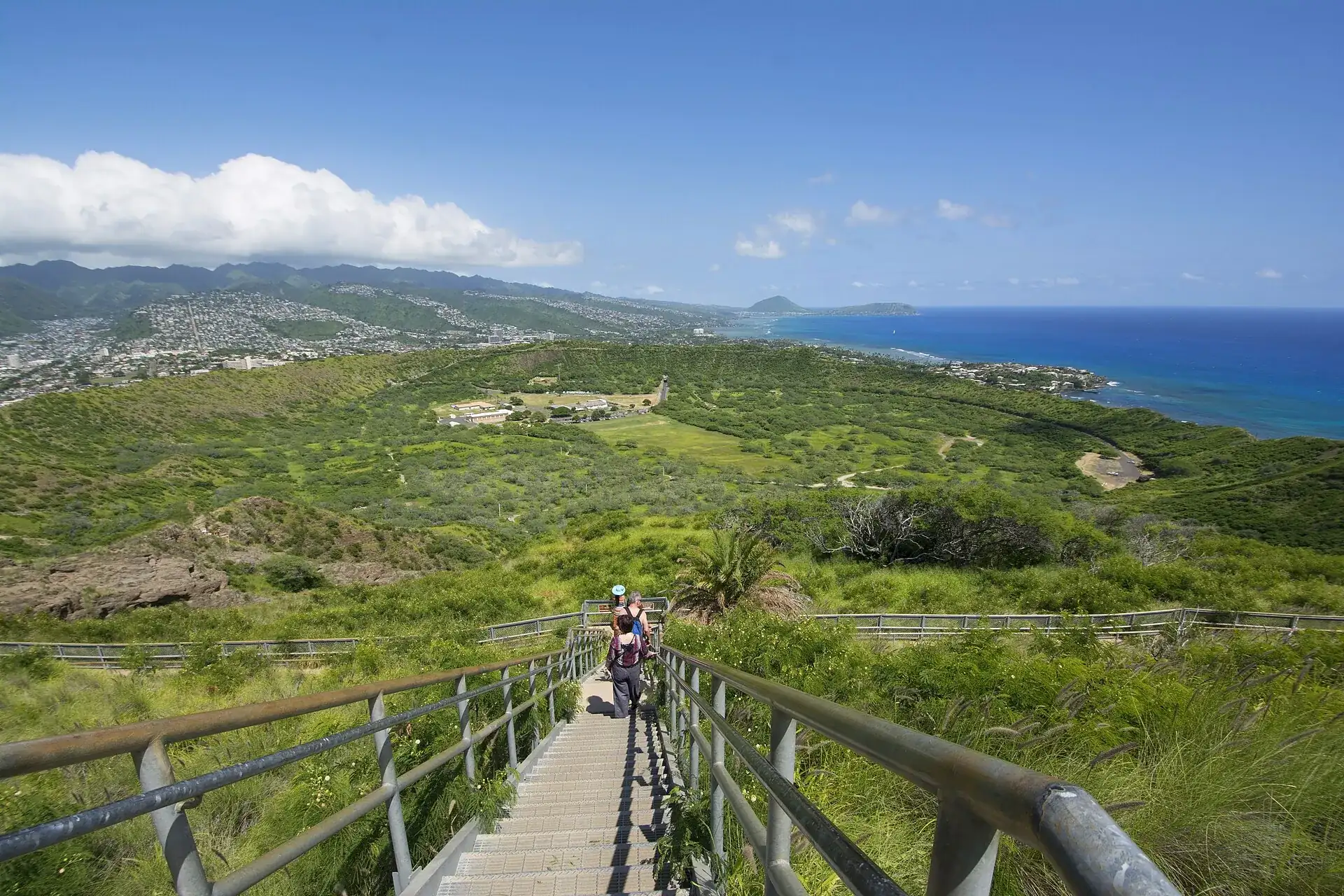
Photo: Daniel Ramirez · CC BY 2.0
Diamond Head – Lēʻahi in Hawaiian – is a tuff cone at the end of Waikīkī Beach. It formed in a single explosive eruption and has been quiet ever since. There is no glow here, no steam vents, no alert level. What there is: an Army trail from 1908 and the view over Honolulu.
The trail starts on the crater floor, the first 0.2 mile on concrete. Then the tuff turns uneven and the switchbacks work their way up the inner slope. Steep stairs follow, then a lighted 225-foot (69 m) tunnel; the last tenth of a mile is nothing but steps. At the top stands the 1911 Fire Control Station, from which the coastal artillery was directed.
0.8 mile (1.3 km) each way, 560 feet (171 m) of climbing: that does not sound like much, and it is no mountain expedition. But State Parks itself calls the trail “steep and strenuous” and the terrain hot and dry. Water, a hat and good walking shoes are not overkill.
From the summit you see Waikīkī, the 1917 lighthouse on the coast below and, in winter with some luck, humpback whales passing by.
Affiliate links to GetYourGuide: if you book, we earn a commission and the price stays the same. Prices and ratings as of 21 September 2026. The selection is small. Commercial operators book their entries through a separate State Parks portal; whether entry and the reservation are included in the price is stated in each tour's description – check before you book. Doing it yourself costs $5 per person.
There is exactly one official place: gostateparks.hawaii.gov/diamondhead. Hawaii residents with state ID get in free and without a reservation – their out-of-state companions do not.
The portal states a 30-day window. It does not state a time of day for the daily release. The 6 a.m. slot is the most sought after and the first to go; State Parks deliberately steers visitors toward the afternoon.
“Parking and entry” for anyone who wants to park in the crater, “Entry only” for people arriving on foot, by bus or by taxi. Up to 15 entries per booking. Even those who do not hike need an entry ticket. Cards only.
Drivers book two-hour slots (two in a row are possible); walk-ins book one-hour entry slots and may then stay until 6 p.m. These lengths come from the 2022 news release, which announced later adjustments – what counts is what the booking dialog shows.
Arrive more than 30 minutes after your slot begins and you can be turned away – without a refund. Save the QR code offline beforehand; it is checked at the entrance.
The last bookable slot starts at 4:00 p.m. 4:30 p.m. is merely the latest time you will still be admitted with that ticket.
Refunds are given only if you cancel at least three days before the date, minus $5 and the service fee. Changes are possible until midnight Hawaii time the day before, subject to availability. Rain is no reason for a refund – only an official park closure is.
| Entry for out-of-state visitors, per person · children 3 and under free | $5 |
| Parking in the crater, non-commercial vehicle | $10 |
| Hawaii residents with state ID or driver's license: entry and parking | $0 |
| Cancellation fee for refunds at least 3 days ahead | $5 plus service fee |
Cheaper, and there is no time pressure when leaving: once admitted you may stay until 6 p.m. From the entrance on Diamond Head Road (between Makapuʻu Avenue and 18th Avenue) you walk through the tunnel into the crater.
The lot is right at the trailhead but has very few stalls. The slot ends hard after two hours; if you want to linger at the top, book two slots in a row. State Parks explicitly wants to curb overflow parking in the residential streets nearby.
State Parks allows 1.5 to 2 hours for the round trip, the reservation portal 60 to 90 minutes. The trail is rated moderate. Mountain bikes, dogs and open fires are prohibited.
The first 0.2 mile (about 300 m) from the parking lot on the crater floor is paved with concrete.
After that the ground turns uneven. Many switchbacks lead up the inner slope – hot, dry, hardly any shade.
Steep stairs lead into a lighted tunnel 225 feet (69 m) long.
The last tenth of a mile is all stairs, up to the 1911 Fire Control Station on the crater rim.
| Diamond Head Summit Trail · from the parking lot on the crater floor to the summit · year-round 6 a.m.–6 p.m., last entry 4:30 p.m. | 0.8 mi (1.3 km) each way · 560 ft (171 m) |
| On foot or by bus from Waikīkī (“Entry only”) · one-hour entry slot, no fixed exit time · check bus routes and fare on thebus.org beforehand | $5 per person |
| By car into the crater (“Parking and entry”) · the only access is through the tunnel · 2-hour parking slot, at most two in a row | $10 + $5 per person |
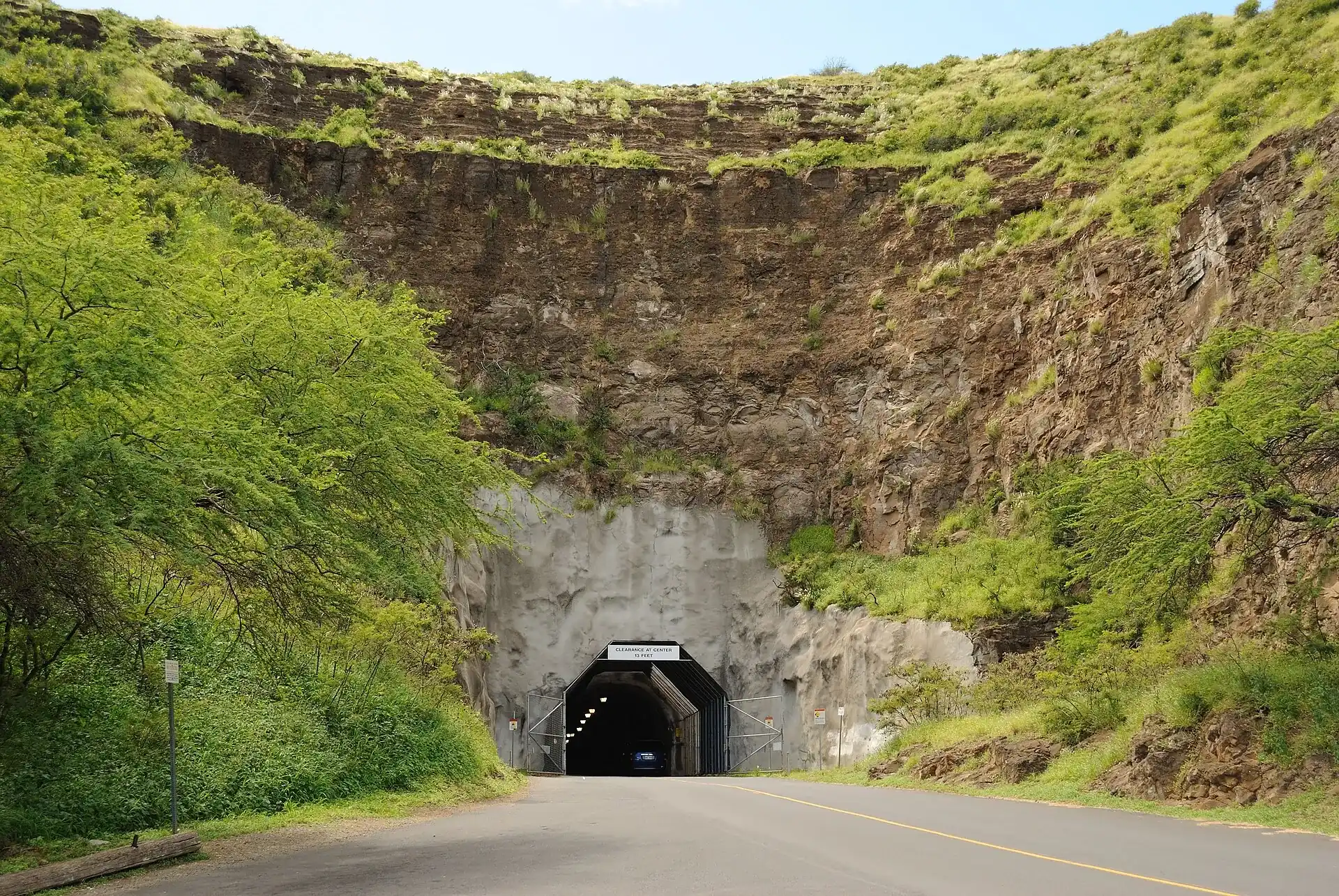
Photo: Daniel Ramirez · CC BY 2.0
Diamond Head at sunrise means booking the 6 a.m. slot. The gate does not open any earlier – whether the sun is already above the horizon by then depends on the time of year.
Without a car: From Waikīkī, according to travel portals, TheBus routes 2 and 23 run from Kūhiō Avenue to the stop on Diamond Head Road near Kapiʻolani Community College; from there you walk uphill through the tunnel into the crater. Check route numbers, frequency and fare on thebus.org before you go.
By car: Entrance on Diamond Head Road between Makapuʻu Avenue and 18th Avenue; the parking lot is inside the crater and reached only through the single access tunnel. Parking only with a booked parking slot ($10). State Parks explicitly wants the system to curb overflow parking in the residential streets around the crater as well.
The 6 a.m. slot is the most sought after because of the sunrise light and the cool air, and it sells out first. State Parks itself recommends the less crowded afternoon – though by then it is hot and shadeless, and the last slot starts at 4 p.m. In winter, according to DLNR, you may with some luck spot passing humpback whales from the summit. If you are planning around the holidays: 25 December and 1 January are closed.
Yes – but one that is finished. The crater formed in a single, brief explosion, when ash and fine particles cemented into tuff.
How long ago that was depends on the source: State Parks says about 300,000 years, the U.S. Geological Survey 400,000 to 500,000 years. So we give the range: 300,000 to 500,000 years.
Together with Punchbowl, Koko Head, Koko Crater and Hanauma Bay, Diamond Head belongs to the Honolulu Volcanics, a late rejuvenation stage of the long-extinct Koʻolau volcano. USGS maintains no alert level for Oʻahu. It does not rule out new eruptions of this series altogether, but considers them very unlikely within the lifetimes of people living today and of many generations to come.
If you want to see lava or glow, this is the wrong place – for that there is Kīlauea on the Big Island.
The earliest time slot starts at 6 a.m.; before that the gate is closed. That slot is the most sought after because of the light and the cool air, and it sells out first – so book as early as possible within the 30-day window.
State Parks gives no number; it speaks of very few stalls, some of them set aside for residents. Parking costs $10 per vehicle and is possible only with a booked two-hour slot.
No. There is no ticket window, and cash is not accepted. Entry and parking are sold only through gostateparks.hawaii.gov/diamondhead and checked by QR code.
Between 300,000 and 500,000 years, depending on the source: State Parks says about 300,000 years, USGS 400,000 to 500,000 years. The crater formed in a single explosive eruption.
No. The tuff cone has been quiet since it formed; there is no glow, no steam and no alert level. Active volcanism in Hawaii is found on the Big Island.
Yes, if you do not live in Hawaii. Since 12 May 2022, entry and, if needed, parking must be booked online in advance for a fixed time slot. Without a booking you are turned away at the entrance. Hawaii residents get in with state ID and no reservation.
$5 entry per person and $10 per car for parking in the crater. Children three and under are free. You pay online by card; cash is not accepted.
Only on the official portal gostateparks.hawaii.gov/diamondhead. There you choose “Parking and entry” or “Entry only,” the number of people and the time slot. You show the QR code at the entrance.
Up to 30 days in advance. According to State Parks the morning is in highest demand, the afternoon less so. You can cancel for a refund up to three days ahead and change the booking until the day before.
The trail is 0.8 mile (1.3 km) each way and climbs 560 ft (171 m). The reservation portal reckons with 60 to 90 minutes; State Parks recommends allowing 1.5 to 2 hours. If you park, you have a two-hour slot.
It is rated moderate: short but steep, with switchbacks, a 225 ft (69 m) tunnel and many stairs at the end. There is hardly any shade. With sturdy shoes, water and breaks, inexperienced hikers manage it too.
With kids yes, with a stroller no – the trail has stairs and uneven tuff and, according to State Parks, is not accessible. Children three and under pay no entry fee. The facilities on the crater floor are accessible.
On foot, by city bus (routes 2 and 23 from Kūhiō Avenue, according to travel portals), by taxi or by rental car. Drivers must have a parking reservation; everyone else books “Entry only.” From the entrance on Diamond Head Road you walk through a tunnel into the crater.
Daily from 6 a.m. to 6 p.m., closed only on 25 December and 1 January. The last time slot starts at 4 p.m., and you must be inside by 4:30 p.m. at the latest. The gates are locked at 6 p.m.
You must show up within the first 30 minutes of the slot you booked. After that, staff can refuse entry and parking, and there is no refund. If you can see you will not make it, change the booking by the day before.
No. The crater formed several hundred thousand years ago in a single explosive eruption and has been quiet ever since. USGS maintains no alert level for Oʻahu and considers new eruptions in the area very unlikely.
No, pets are prohibited throughout the State Monument. The only exception is service animals.
The monument was closed from mid-August 2026 because of Hurricane Lala; travel portals report that it reopened on 9 September 2026. State Parks automatically refunds tickets for closure days. Current notices appear at the top of the park's DLNR page.
Sources · accessed on 21 September 2026

.jpg)
.jpg)
.jpg)
