Volcano·Guide
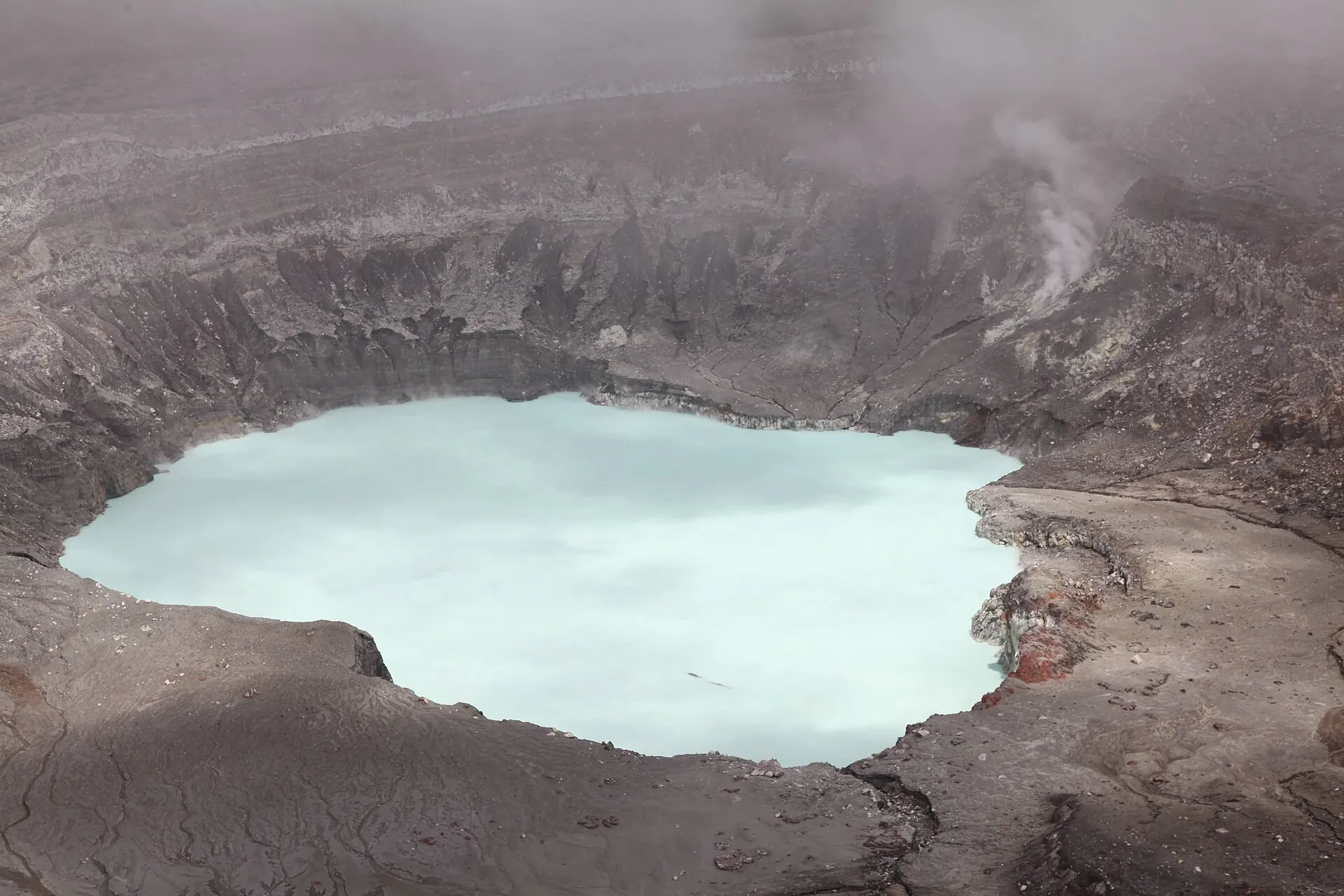
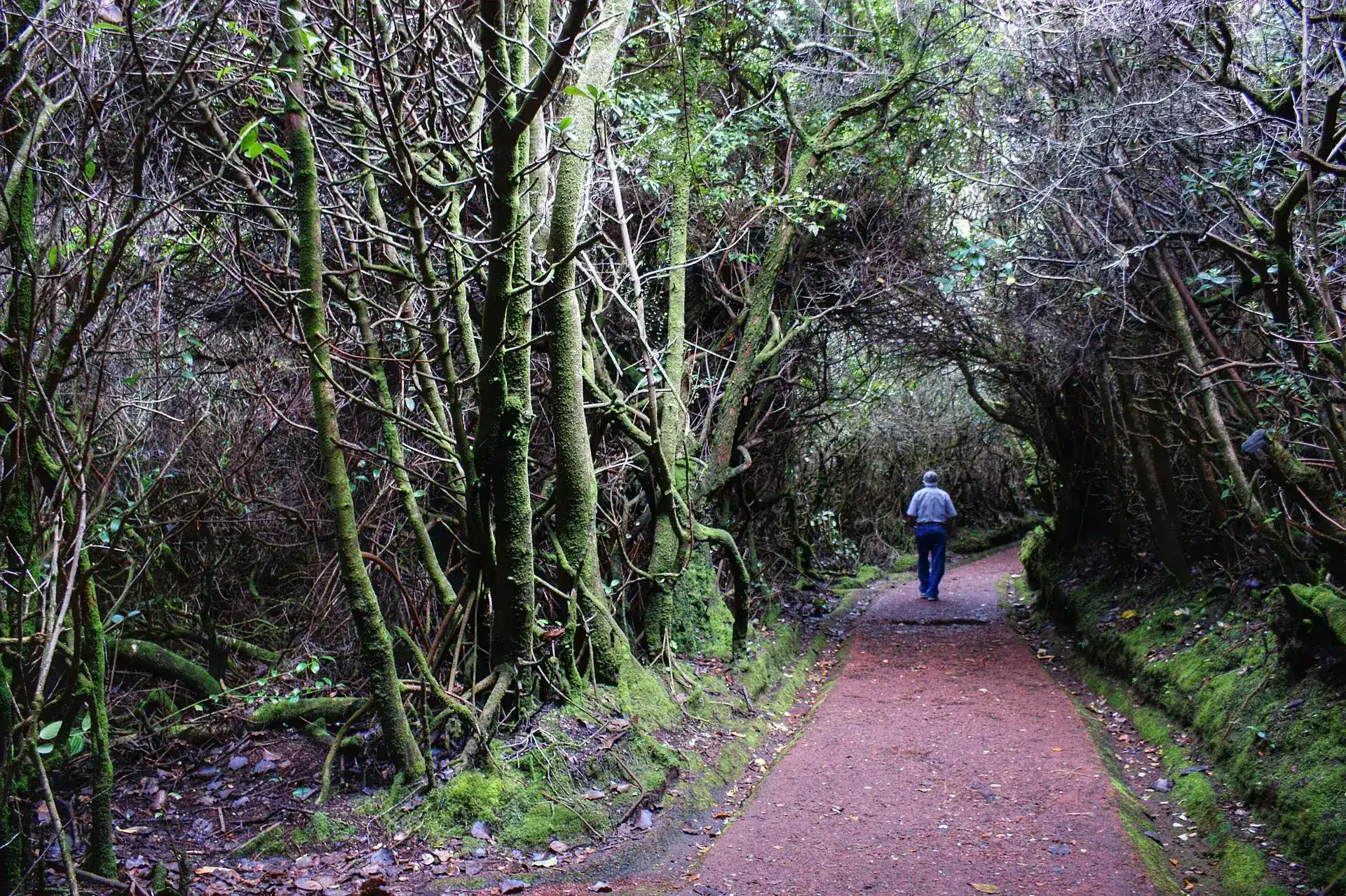
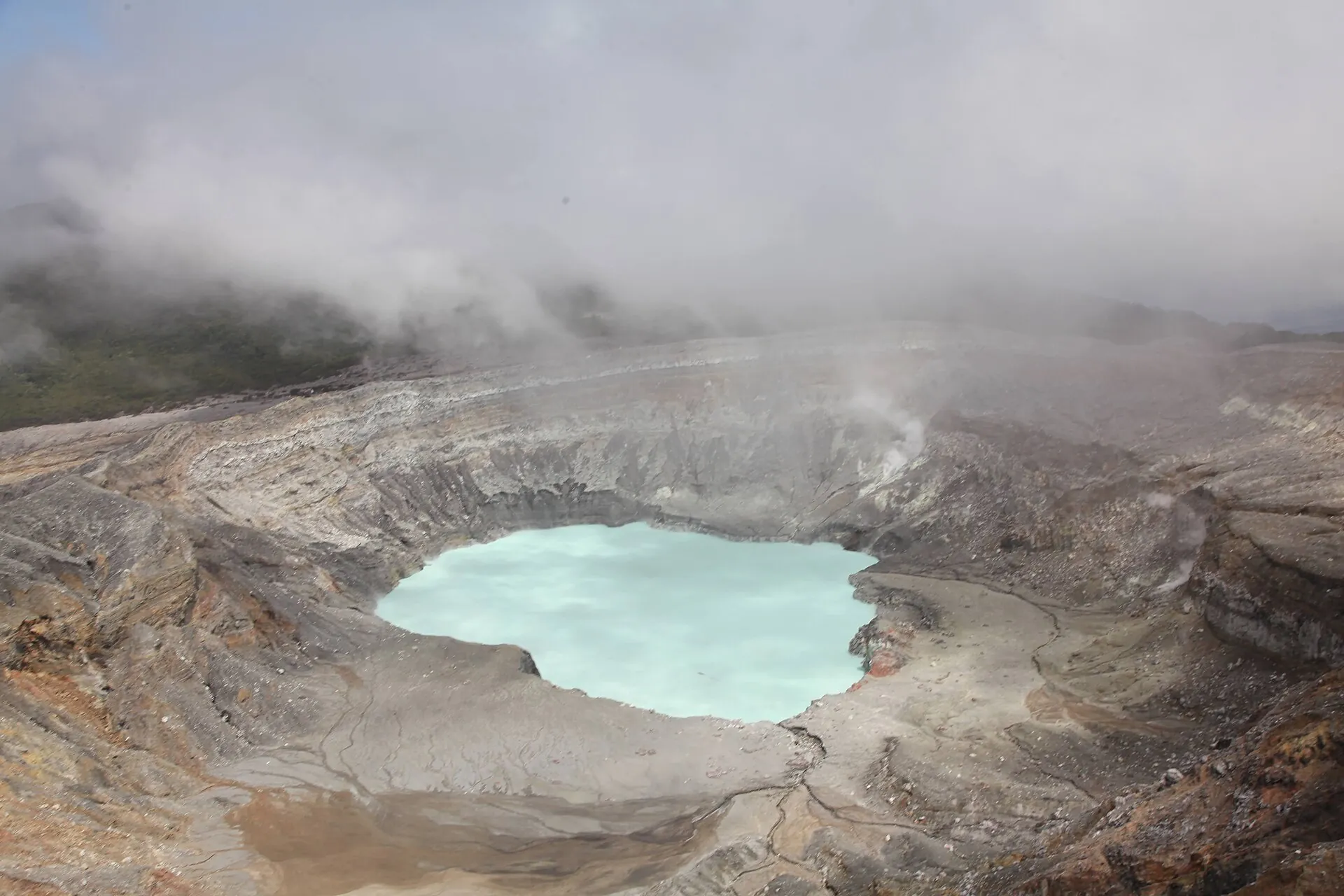
Paved trail through the moss-covered dwarf forest in Poás Volcano National Park, a visitor walking ahead View from the rim into the main crater of Poás Volcano: gray ash slopes, a milky turquoise acid lake, clouds drifting over the edge Laguna Caliente, the acid lake in the crater of Poás Volcano, seen up close, with a plume of steam rising from a fumarole on the shore

Poás Volcano

The walk starts out harmless: a few hundred meters through gnarled cloud forest.

Then the trees open up – and in front of you is a hole almost a mile across.

At the bottom, a lake with a pH close to zero. It steams. You have twenty minutes.

Scroll –
from the cloud forest to the crater rim

As of 21 September 2026Is Poás Volcano open? Yes – with helmets, time slots and half the capacity

Poás Volcano National Park is open. On 27 August 2026 an eruption during the night threw material about 600 m (2,000 ft) from the crater; the next day the park authority SINAC tightened the rules. Since then only 1,064 visitors a day are allowed in, and helmets are mandatory at the viewpoint. There is no end date – and a same-day closure remains possible at any time.

Open with restrictions
20min

Main trail to the crater viewpoint

A paved, nearly level path from the visitor center to the mirador on the rim of the main crater. Entry only at the booked time, no more than 56 people at once and a maximum of 20 minutes at the mirador, helmets mandatory. Last entry at 2:00 pm according to the Tico Times.

Admission for foreign visitors aged 13 and over, incl. 13% VATUS$16.95
Open with helmet

Sendero Sombrilla de Pobre

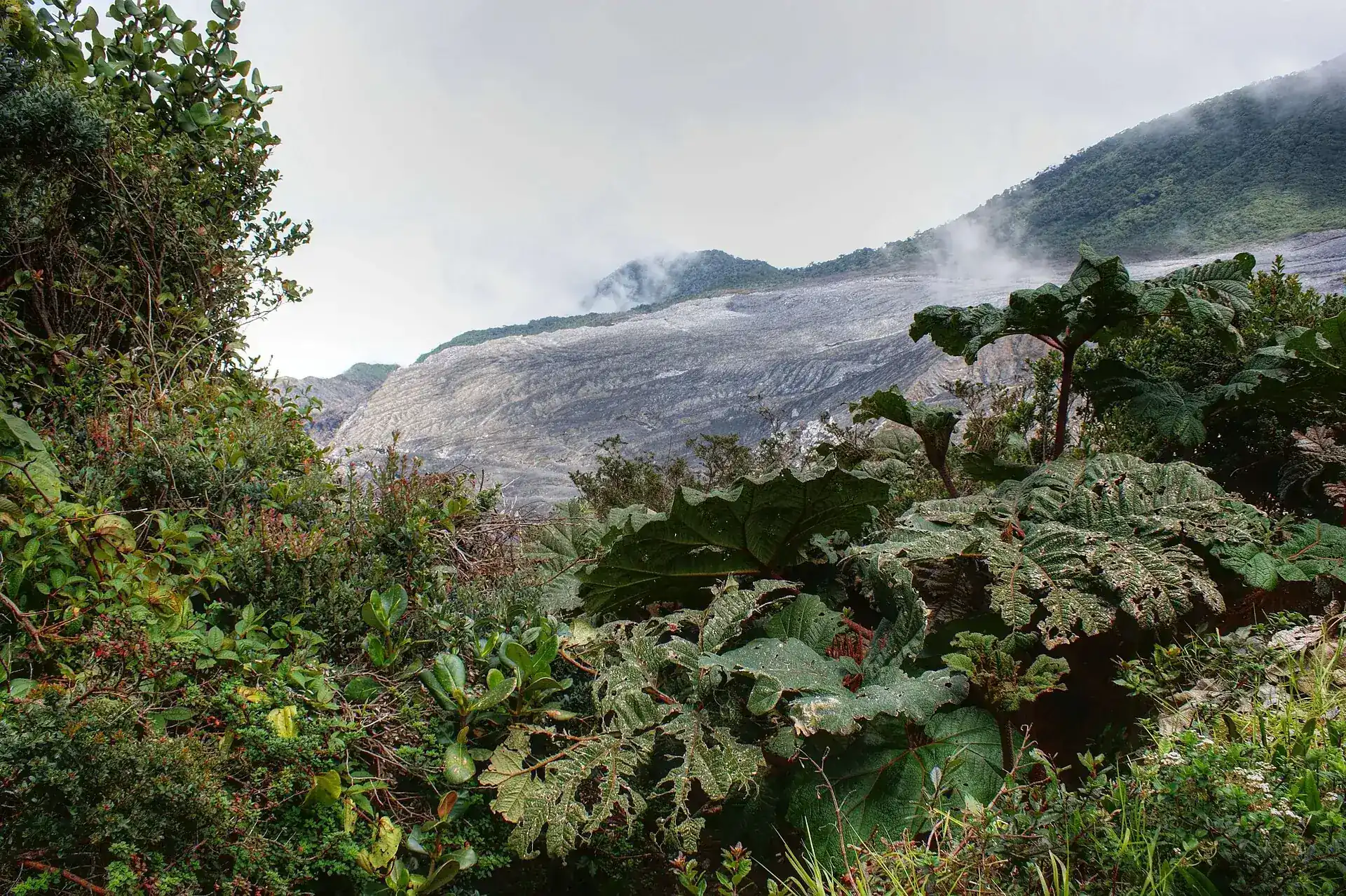
A short nature trail through the dwarf forest, named after the giant Gunnera leaves along it (“poor man's umbrella”). Listed as open in the reports of 28 August and 3 September 2026 – also with a helmet.

included in admission
Status unclear

Trail to Laguna Botos

The trail to the cold rainwater lake in an extinct side crater was closed as a precaution in 2024 and 2025. The 2026 reports name only the main trail and Sombrilla de Pobre as open. We found no evidence of its status today – do not build your plan around it.

ask at the park or by email
Closed

The crater and everything off the trails

The crater itself and the ground beside the approved trails are off limits. Since 30 April 2026, Law 10,861 sets the fine: three base salaries, considerably more for guides, plus the cost of any rescue.

fine in 2026₡1,386,600
How solid is this? The restrictions in force since 28 August 2026 (daily capacity 1,064 instead of 2,052, 56 people and 20 minutes at the mirador, mandatory helmets, last entry 2:00 pm) come from press reports on SINAC and CNE announcementsTico Times, 28 August 2026, El Observador and Monumental, 3 September 2026. SINAC's official park page and the CNE website could not be reached on 21 September 2026. Checked first-hand: the SICORE booking system (terms) and the OVSICORI activity level. We found no report of a new closure between 3 and 21 September 2026.
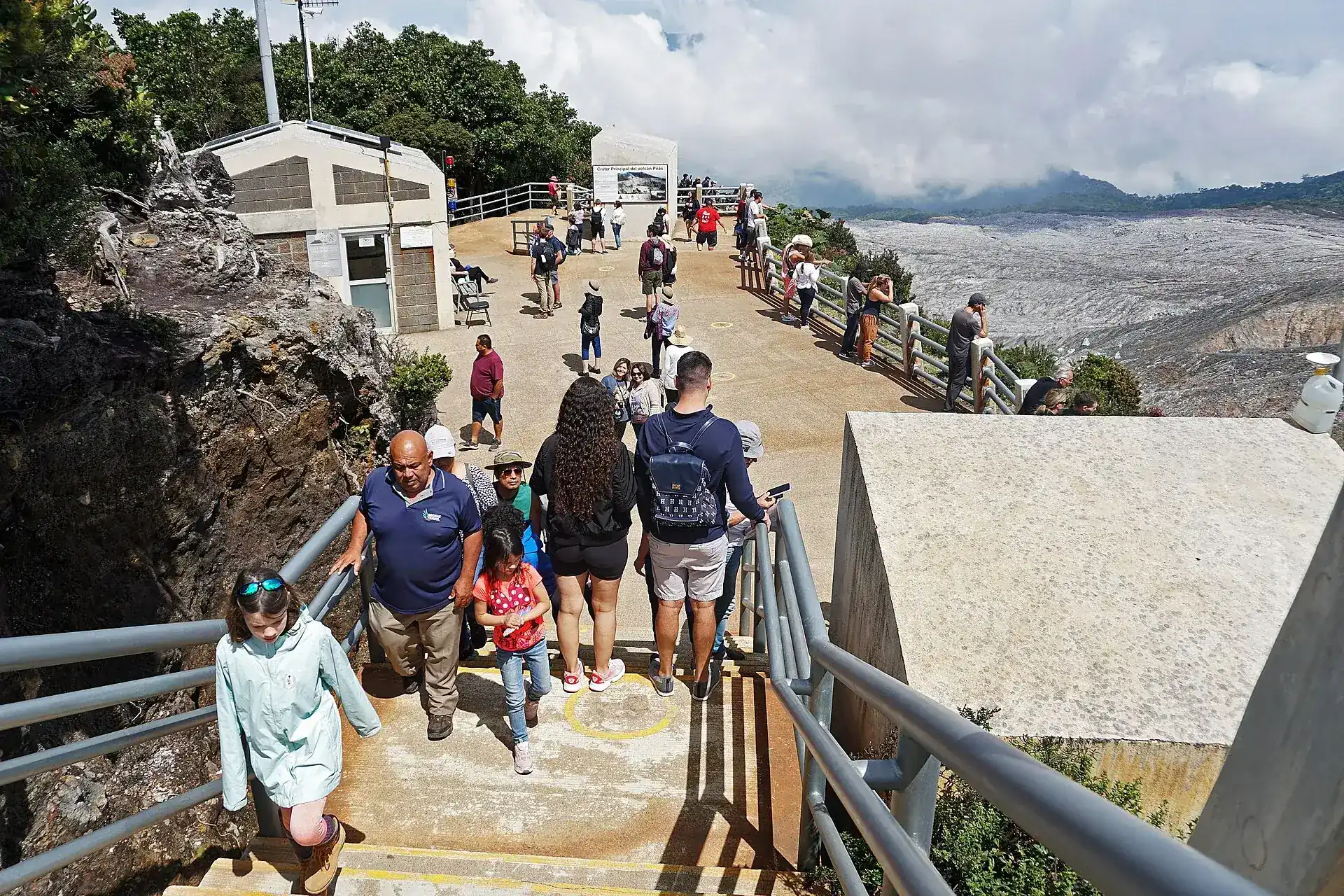
Visitors on the viewing platform at the crater rim of Poás Volcano next to a concrete shelter, the gray crater slopes in the background (April 2023)
The concrete boxes are not kiosks. They are shelters against flying rock.

Photo: Mariordo (Mario Roberto Durán Ortiz) · CC BY-SA 4.0

What it is likeTwenty minutes on the rim of an active crater

Poás is one of the few active craters in the world where you walk to the rim on a paved path. That is exactly why the visit is timed so tightly.

From the visitor center it is a few hundred meters, nearly level, through low, wind-bent forest. Then you are standing at a railing and the ground drops 300 m (about 1,000 ft). The main crater is roughly 1.5 km (0.9 miles) across. At the bottom lies Laguna Caliente, a milky turquoise lake with a pH close to zero – one of the most acidic in the world. Steam and gas rise from its shore, and when the wind turns, you smell the sulfur.

At around 2,700 m (8,900 ft) it is windy and much colder than in San José. Automatic sensors measure sulfur dioxide and hydrogen sulfide around the clock. The shelters at the mirador hold exactly 56 people – hence the limit. After 20 minutes it is the next group's turn.

And sometimes you see nothing at all. From late morning, fog rises into the crater almost every day; in the rainy season from May to November often by around 10:00 am. There is no refund for that. Booking the earliest available time slot gives you the best odds.

Without a rental carPoás Volcano tours from San José

The crater visit itself is short: a few hundred meters of trail and at most 20 minutes at the mirador. Tours from San José therefore pair it with a coffee farm and La Paz waterfall. According to the operators, tours from San José include the national park ticket – check the inclusions before you book, because nobody gets through the gate without a named online ticket.

Affiliate links to GetYourGuide: if you book, we earn a commission and the price stays the same. Prices and ratings as of 21 September 2026. Whether the crater is clear or full of fog is up to the mountain – and if SINAC closes the park, the crater stop is canceled.

The rulePoás Volcano tickets: national park reservations are online only

There is no ticket office at the park gate – not since the 2018 reopening, and the environment ministry MINAE confirmed it again in 2025. Tickets are sold exclusively through SINAC's SICORE system at serviciosenlinea.sinac.go.cr. Here is how the reservation works:

  1. Step 1 · at homeCreate an account

    Register a user account in SICORE. The password arrives by email, sometimes with a delay. If it has not come after a day, write to reservaciones.sinac@sinac.go.cr. SINAC recommends Chrome or Edge in incognito mode.

  2. Step 2Choose the park, date and time

    Select “Parque Nacional Volcán Poás”, then the day and time slot. Take the earliest one available. Since the capacity was halved, slots on weekends and holidays go quickly.

  3. Step 3Enter passport numbers

    Name, ID number and country of origin for every person. Tickets are issued by name, and names cannot be changed afterward. No more than 10 tickets per transaction.

  4. Step 4Pay by card

    Credit or debit card with 3-D Secure; allow pop-ups in your browser. Adults US$16.95, children aged 2 to 12 US$5.65.

  5. Step 5 · at the gateShow the booking code and that exact ID

    You are admitted only at the booked time. If you are running late, the park asks you to let them know by email beforehand.

  6. ImportantNo refunds

    Not for fog or rain either, and tickets cannot be transferred to other parks. Only if the park closes because of an emergency will SINAC move you to another date, by email.

Poás Volcano National Park admission · official · as of 09/2026
Foreign visitors aged 13 and over (US$15 + 13% VAT)US$16.95
Foreign children aged 2–12 (US$5 + VAT)US$5.65
Children under 2free
Costa Rican nationals and residents: adults / children (no VAT)₡1,000 / ₡500
24 August (National Parks Day) – a ticket is still required and the quota still appliesfree admission
Sources: booking terms in the SINAC SICORE system, accessed 21 September 2026 (registration, binding time slot, no refunds, rebooking after an emergency closure, 10 tickets maximum, card payment) · Costa Rican Tourism Board ICT (US$15/US$5 net rate) · Área de Conservación Guanacaste (gross prices US$16.95/US$5.65). How many weeks ahead you can book and exactly when the time slots start could not be seen without a login.

Since 28 August 2026Helmets, 56 people, 20 minutes: the current rules

One day after the 27 August eruption, SINAC put the visit back on its strictest model. The park stays open, but with half as many places as before.

1,064

Visitors per day

It used to be 2,052. If you want to come on a weekend or holiday, book the ticket first – and the rental car or hotel after that.

56

People at the mirador

That is how many fit under the shelters against volcanic projectiles. The number applies at any one time; after 20 minutes at most, the group changes.

Helmet

Mandatory on both trails

On the main trail and on Sombrilla de Pobre. Whether helmets are handed out at the entrance, and whether that costs anything, is not stated in any source we could access.

2pm

Last entry

According to the Tico Times the park is open from 8:00 am to 4:00 pm, with last entry at 2:00 pm. The tourism board ICT gives 8:00 am to 3:30 pm. What counts is the time on your ticket.

All four rules according to press reports on SINAC and CNE announcements: Tico Times, 28 August 2026 · El Observador, 09/2026. We did not have the wording of an official publication. That 56 matches the capacity of the shelters: delfino.cr, January 2024.

The plain factsHow active is Poás Volcano? The 2025 and 2026 eruptions

Poás does not erupt with lava flows but with sudden explosions of steam, mud and ash. There is no glow for visitors to see. Two agencies assess the situation independently of each other.

  1. 26 March 2025Closed indefinitely

    The start of the most violent phase since 2017. On 21 and 23 April ash columns rise more than 4 km (2.5 miles), and the emergency commission CNE declares a red alert for the park. Last major eruption: 19 May 2025.

  2. 30 July 2025Reopening after four months

    The CNE drops back to green on 2 July. The park opens with 19 groups of no more than 108 people at 20-minute intervals, tickets online only.

  3. 27 August 2026Eruption at 2:36 am

    Material lands about 600 m (2,000 ft) away – in the middle of the night, outside opening hours. The next day SINAC halves the daily capacity and brings back mandatory helmets and the limit of 56.

  4. Early September 2026CNE: Alerta Verde

    A preventive civil-protection alert for the national park and five surrounding districts. According to the CNE, the activity may last days, weeks or months. On 7 September OVSICORI reports that Poás keeps degassing, with no notable deformation.

  5. TodayOVSICORI: level 2 of 4 – “Advertencia”

    Yellow on the volcano observatory's scale: marked activity, small eruptions, acid gases, projectiles close to the crater, light ashfall possible. Chart dated 24 July 2026, accessed 21 September 2026.

Sources: OVSICORI-UNA, activity levels · Tico Times, 28 August 2026 · El Observador and Monumental, 3 and 7 September 2026 · delfino.cr and La Nación on the 2025 phase. At Poás, a “green” CNE alert does not mean “everything is normal”. It means: open with restrictions, and an immediate closure possible at any time.

Inside the parkTrails in Poás Volcano National Park

Poás is not a hike. The path to the crater is paved, nearly level and a few hundred meters long. No source we could check gives lengths or walking times for the side trails.

Trail → what to expect · as of 09/2026
Main trail to the Mirador Cráter PrincipalFrom the visitor center at the parking lot to the viewing platform on the rim of the main crater, with shelters. Paved, nearly level. 20 minutes maximum at the mirador, helmets mandatory. Included in admission.
Sendero Sombrilla de PobreShort nature trail through the dwarf forest with giant Gunnera leaves. Open according to reports of 28 August and 3 September 2026, helmets mandatory. Included in admission.
Trail to Laguna BotosFrom the mirador to a cold rainwater lake in an extinct side crater. Reported closed as a precaution since January 2024 and again March 2025; status in 2026 not documented.
Giant Gunnera leaves (sombrilla de pobre) in Poás Volcano National Park, with the bare gray slopes of the crater under clouds behind them
Everything grows here. A hundred meters on, nothing does.

Photo: MongeNajera · CC BY-SA 3.0

Good to knowGetting to Poás Volcano from San José, best time, tips

Getting there

By car: From San José/Alajuela airport via Alajuela and Fraijanes, or via Heredia and Vara Blanca, to Poasito and on to the park gate (three routes according to ICT). Parking lot at the visitor center.

  • From San José · about 1.5 hours
    Rental car via Alajuela–Fraijanes–Poasito; organized half-day tours from San José
  • From La Fortuna · about 2.5 hours
    Rental car via San Miguel de Sarapiquí and Vara Blanca
  • From Liberia · about 4 hours
    Interamericana highway to Alajuela, then up to Poasito – hardly practical as a day trip

Best time to go

Book the earliest available time slot: from late morning, fog rises into the crater almost every day, in the rainy season (May to November) often by around 10:00 am. December to April brings the most clear mornings but is also the most heavily booked; since the daily capacity was halved in late August 2026, weekends and holidays are especially tight. On the morning of your visit, check the OVSICORI webcam and the SINAC channels – closures come without notice.

Who it suits

Children
Possible; the path is short and level. When the safety model started in 2018, however, SINAC advised against visiting with children under 12; whether that recommendation is still in the 2026 booking terms is unknown.
Minimum age
no binding minimum age documented
Fitness
Very easy: paved path, a few hundred meters.
Altitude
The crater rim is at about 2,600–2,700 m (8,500–8,900 ft). Coming straight from the lowlands you may feel slightly short of breath; serious altitude sickness is unlikely on such a short stay.
Heart and lungs
Caution: a Universidad Nacional study measured short SO2 peaks of 7.4 ppm at the mirador (15-minute limit: 5 ppm). In 2018 SINAC advised people over 65 and anyone with health conditions against visiting. With asthma, COPD or heart disease, check with your doctor first and turn back at once if you smell sulfur.
Wheelchair
The main trail is paved and nearly level; we found no official statement on accessibility under the current restrictions.
Dogs
Prohibited in all SINAC protected areas.
Clothing
Warm jacket and rain gear: at 2,700 m it is windy and much colder than in San José.
Footwear
Ordinary sturdy shoes are enough.

Tips you will need on site

  • Book the ticket before you settle on a rental car or tour – nobody gets through the gate without an online ticket, and since late August 2026 there are only half as many places.
  • Create your SINAC account at home: the password arrives by email, sometimes with a delay. The system asks for a passport number for every person.
  • Bring the exact ID whose number is on the ticket; names cannot be changed afterward.
  • Choose the earliest slot and be on time. Fog is not grounds for a refund.
  • On the morning of your visit, check the OVSICORI webcam and the SINAC/CNE notices. If the park closes, ask for a new date by email to reservaciones.sinac@sinac.go.cr.
  • The helmet and the 20-minute limit are not red tape: the shelters at the mirador hold exactly 56 people. Follow rangers' instructions immediately, and go to the shelter if the alarm sounds.
  • Pack a jacket – at the crater rim it is often only around 10 °C (50 °F) and windy.
  • Pets are prohibited; you may bring food, but trash has to go back out with you.

A short history

  • The main crater measures about 1.5 km (0.9 miles) across and is 300 m (about 1,000 ft) deep. Its lake, Laguna Caliente, is among the most acidic in the world, with pH values close to zero; Laguna Botos fills a side crater that has been extinct for thousands of years.
  • In 1910 Poás threw up a large fountain of mud and ash; from 1953 to 1955 a long phase followed with tall eruption columns of mud, scoria and rock.
  • On 12 April 2017 phreatomagmatic eruptions began that destroyed the lava dome in the crater and dried out the lake. The park stayed closed for almost 17 months.
  • When it reopened on 1 September 2018, SINAC introduced today's safety model: online tickets, groups of 50, 20 minutes at the mirador, gas sensors, helmets and shelters.
  • In January 2024, after the strongest eruption since 2019, the number of people at the mirador was limited to 56 – that is how many fit under the shelters against projectiles. From 2 to 8 April 2024 the park was briefly closed.
  • 2025 brought the most violent phase since 2017: closure from 26 March, ash columns over 4 km (2.5 miles) high and a CNE red alert on 21/23 April, last major eruption on 19 May, downgrade to green on 2 July, reopening on 30 July 2025 with 19 groups of no more than 108 people at 20-minute intervals.
  • On 27 August 2026 an eruption at 2:36 am threw material about 600 m (2,000 ft). The next day SINAC halved the daily capacity to 1,064, limited the mirador to 56 people again and brought back mandatory helmets; in early September the CNE declared an Alerta Verde for the park and five districts.
  • In October 2022 the IUGS included Poás in its list of the first 100 Geological Heritage Sites.

Smaller groups, other starting pointsMore Poás Volcano tours

The selection is thin here: these tours have only a few reviews so far. We list them because they offer something different – a semi-private group, a guided visit to the park alone, or a start in Alajuela near the airport.

Affiliate links to GetYourGuide: if you book, we earn a commission and the price stays the same. Prices and ratings as of 21 September 2026. Before booking, check that park admission is listed in the inclusions.

Outdated onlineWhat other sites get wrong

“Poás is closed because of the eruptions.”
Outdated. It was closed from 26 March to 30 July 2025. As of 21 September 2026 the park is open – with mandatory helmets, 56 people at the mirador and half the daily capacity. An immediate closure remains possible.
“You can buy tickets at the park entrance.”
Not since 2018. Tickets are sold electronically only, through the SINAC system.
“You book at sinacweb.sinac.go.cr.”
The official system is called SICORE and runs at serviciosenlinea.sinac.go.cr. Ticket portals sell the same ticket at a markup.
“Admission is 15 dollars.”
That is the net price. With 13% VAT you pay US$16.95, and US$5.65 for children.
“The first time slot is at 7 am, and 50 people are let in per slot.”
Both date from 2018. The park now opens at 8:00 am with last entry at 2:00 pm; no more than 56 people stand at the mirador at once, 1,064 a day.

Quick answersBefore you visit Poás Volcano

Is Poás Volcano open right now?

Yes, as of 21 September 2026 the national park is open. According to press reports on SINAC announcements, stricter rules have applied since 28 August 2026: only 1,064 visitors a day, no more than 56 at the crater at once, mandatory helmets. The authorities can close the park at short notice at any time.

Where do I buy Poás Volcano tickets?

Online only, in SINAC's SICORE system at serviciosenlinea.sinac.go.cr. Create an account, choose the date and time, enter a name and passport number for every person, and pay by card. No tickets are sold at the park.

Can I cancel or change a Poás Volcano reservation?

There are no refunds, not for fog or rain either. Only after an emergency closure of the park will SINAC move you to a new date – by email to reservaciones.sinac@sinac.go.cr.

Does a Poás Volcano tour from San José include the ticket?

According to the operators, tours from San José include the ticket. Do not take it on faith: read the inclusions before booking, because tickets are issued by name and nobody is admitted at the gate without one.

Is Poás Volcano worth it in fog?

In thick fog you see nothing of the crater, and there is no refund. Your odds are best in the earliest time slot, and the dry season from December to April brings the most clear mornings. On the day, check the OVSICORI webcam.

Can you see lava at Poás Volcano?

No. Poás is active, but its eruptions are explosions of steam, mud and ash. What you see is the acid lake, fumaroles and gas plumes.

How much is admission to Poás Volcano in 2026?

Foreign adults pay US$15 plus 13% VAT, so US$16.95 (about €15). Children aged 2 to 12 pay US$5.65, toddlers nothing.

How long can you stay at the crater?

No more than 20 minutes at the viewpoint, and never more than 56 people at once. That number matches the places under the shelters against volcanic projectiles.

Do you have to wear a helmet at Poás Volcano?

Currently, yes. Since 28 August 2026 safety helmets have been mandatory on the main trail to the crater and on the Sombrilla de Pobre trail. The rule applies until the activity subsides.

Do I need a guide for Poás Volcano?

No. You visit on your own, on a short paved path. The only binding things are the booked time slot and the rangers' instructions.

What happens if the park closes on my day?

You do not get your money back, but after an emergency closure SINAC will move you to another date. Write to reservaciones.sinac@sinac.go.cr. Fog or rain do not count as a reason.

When is the best time to see the crater?

In the first time slot from 8:00 am if at all possible. During the morning the crater fills with fog almost every day, especially early in the rainy season. The clearest mornings come in the dry season from December to April.

Is Poás Volcano dangerous?

It is an active volcano with sudden explosions of steam and ash; most recently, on 27 August 2026, material landed 600 m (2,000 ft) away. OVSICORI has it at level 2 of 4, and the CNE has declared an Alerta Verde. The visitor model with sensors, helmets, shelters and a short stay is meant to keep the remaining risk small – nobody can rule it out.

Is Poás Volcano suitable for children and older people?

The path is easy; the issues are the gases and the elevation of about 2,700 m (8,900 ft). In 2018 SINAC advised against visiting with children under 12, for people over 65 and with health conditions. With asthma or heart problems, get medical advice first.

How do I get from San José to Poás Volcano?

By rental car via Alajuela and Fraijanes to Poasito, roughly an hour and a half. Many operators run half-day tours from San José; the ticket has to be booked in advance in that case too.

Can you hike to Laguna Botos?

That is uncertain. The trail was closed as a precaution in 2024 and 2025, and the current reports name only the main trail and Sombrilla de Pobre as open. Your best bet is to ask at the park or by email.
Sources · accessed on 21 September 2026