Sulphur Springs Park
Daily 9 a.m. to 5 p.m., weekends included. Pay at the gate; the guided walk through the fumarole field is included. The mud pools are downstream.
non-residents, mud bathabout US$10
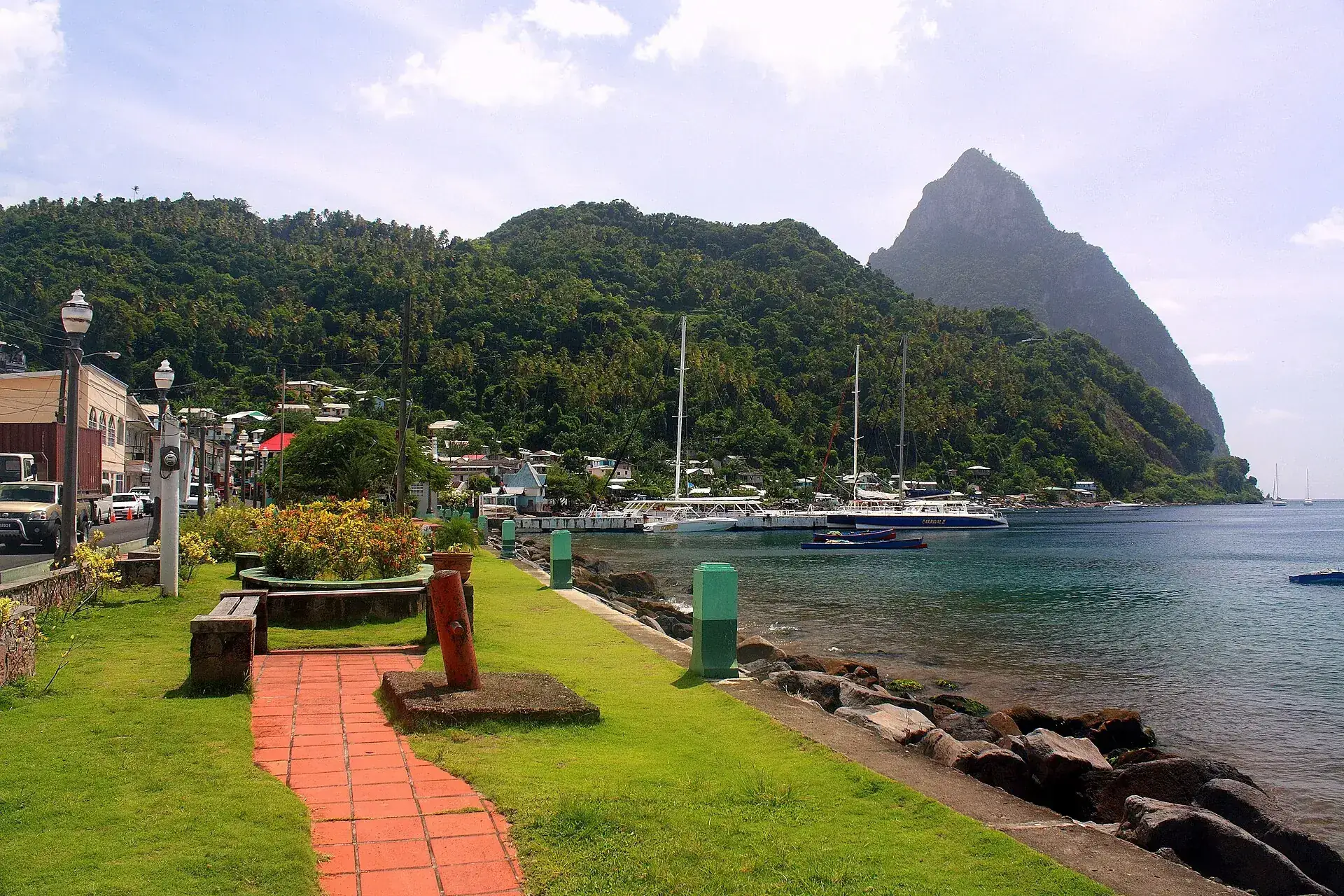
From the harbor in Soufrière the two Pitons stand in the water like a pair of teeth.
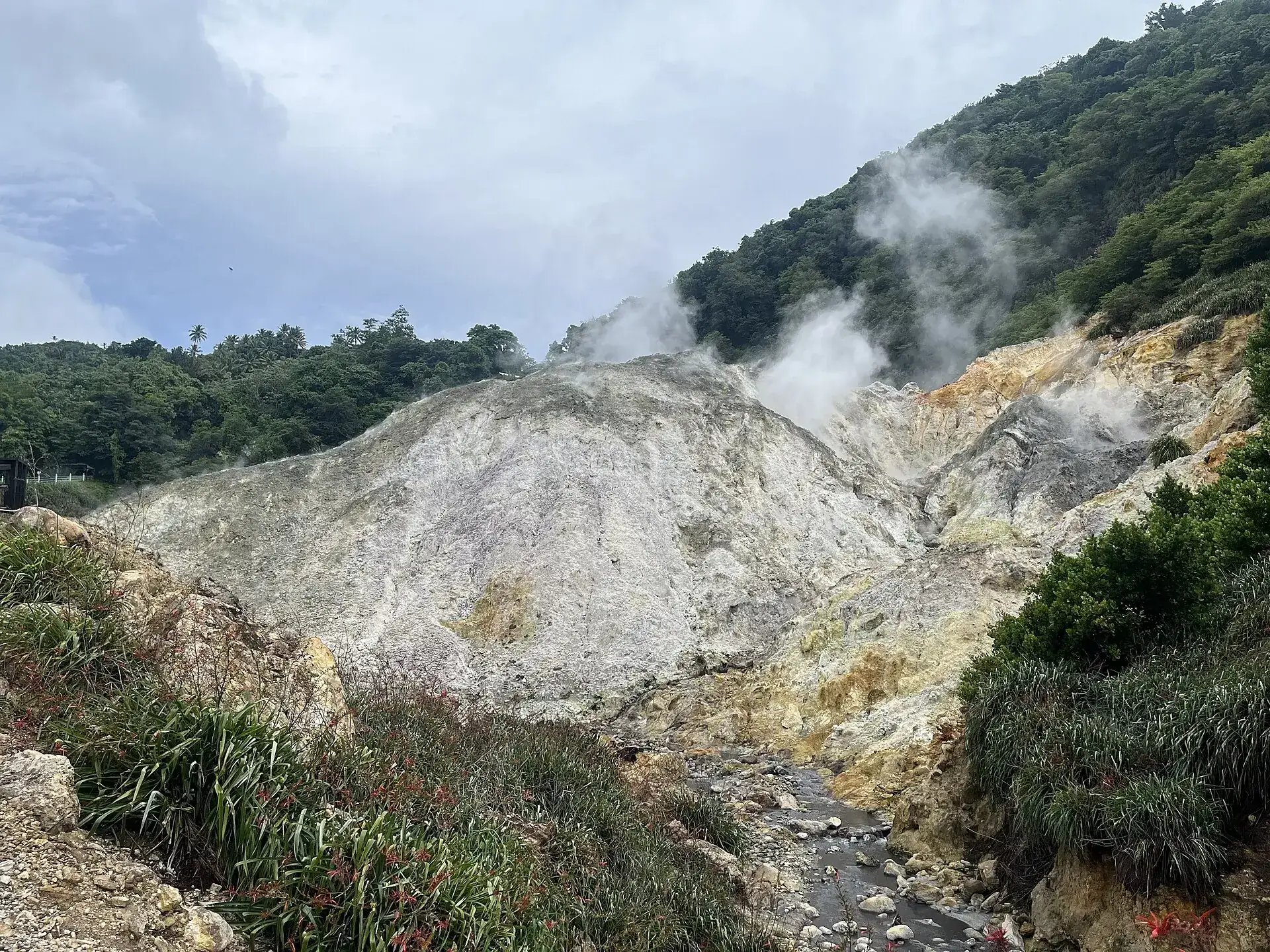
Ten minutes up the road the ground steams — and the car goes all the way in.
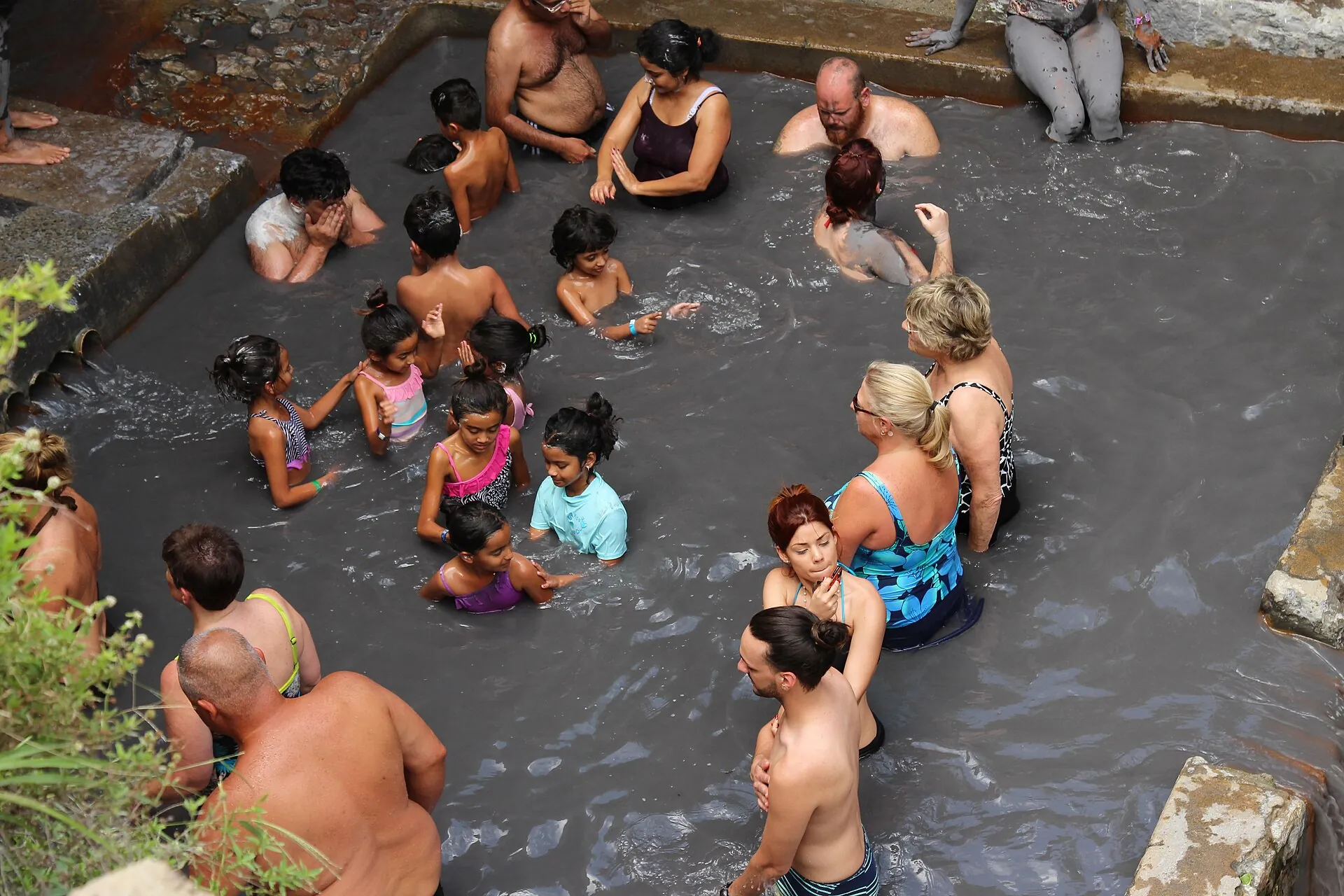
A little farther downstream you sit in warm gray mud.
Scroll –
into the caldera
Sulphur Springs Park sits inside the Qualibou caldera and is marketed as a "drive-in volcano": you park a few steps away, walk a short level path and stand in front of boiling mud pots. Nobody enters that ground alone — the guided walk is part of the ticket. Everything around it is free: the road through the caldera, the view of the Pitons, the town itself.
The volcanic center sits at alert level green. That means no volcano-related closures and no restrictions for visitors. St. Lucia has no daily status page with a date on it; any change would come through the UWI Seismic Research Centre and the national disaster office NEMO.
Daily 9 a.m. to 5 p.m., weekends included. Pay at the gate; the guided walk through the fumarole field is included. The mud pools are downstream.
2,619 ft (798 m), the only Piton with a regular trail. Register at the Interpretive Centre in Fond Gens Libre; if no guide is free, nobody starts.
2,438 ft (743 m), with near-vertical sections and fixed ropes. Operators say the climb is not state-sanctioned; there is no marked route and no official fee.
The UWI Seismic Research Centre lists the Soufrière Volcanic Centre as the island's one "live" volcanic center, currently at green: earthquakes and fumaroles at normal levels.
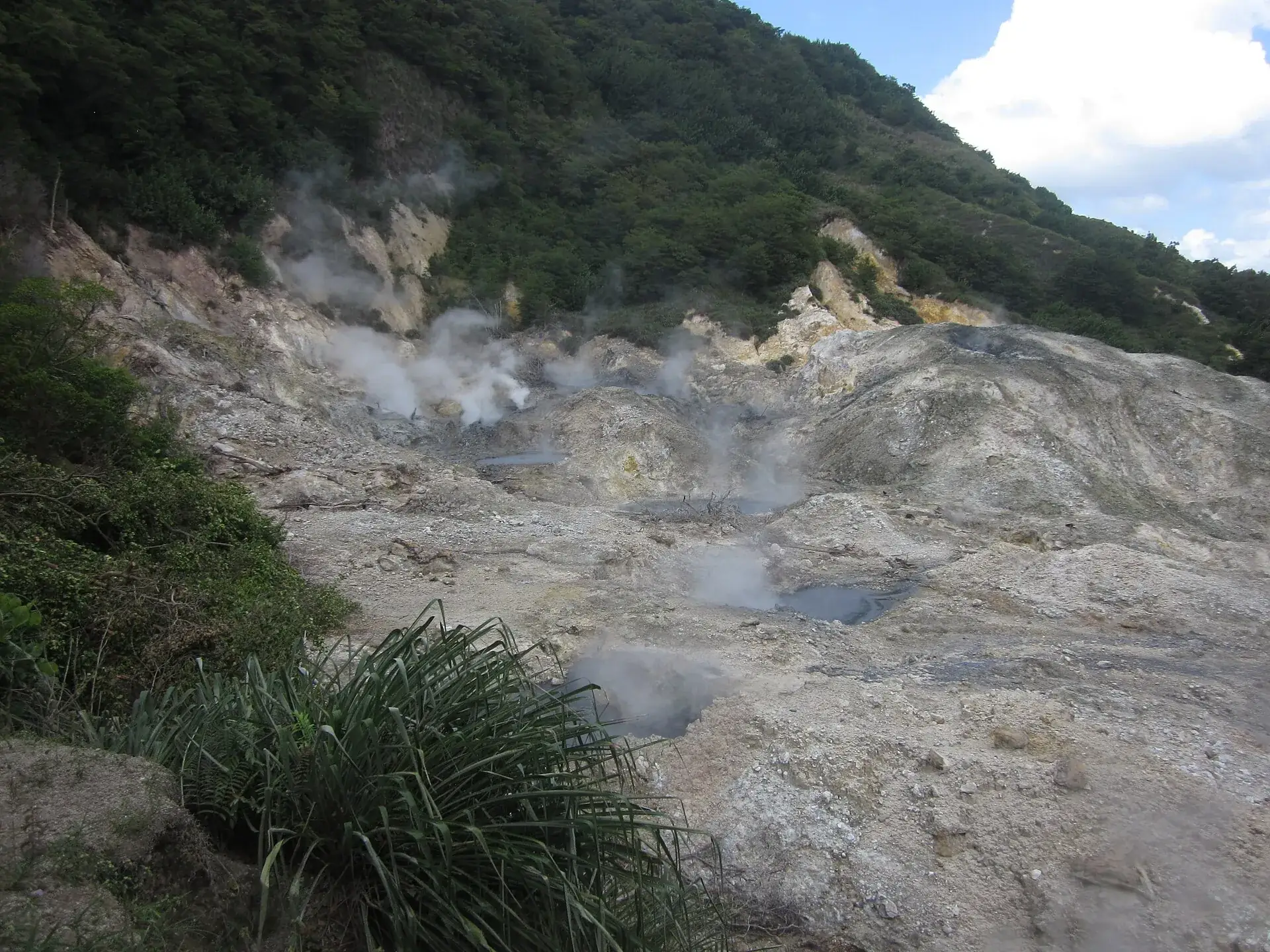
Photo: Sfearion · CC BY 4.0
You smell it before you get out of the car. Rotten eggs, warm, everywhere. Then a short level path leads to a wooden platform, and underneath it the ground boils: gray pots throwing bubbles, yellow crusts, steam drifting across the slope.
Your guide will tell you about Gabriel. In the mid-1990s a guide stepped onto the crust to show that it held. It did not. He suffered second-degree burns, the spot has been called "Gabriel's Hole" ever since, and the path has ended at the platform since then. Knowing that, people keep their distance on their own.
The bathing happens downstream, where the water has cooled to roughly 100–113 °F (38–45 °C). You take the mud from buckets set out for that purpose, spread it on, let it dry and rinse it off in the showers. Light-colored swimwear comes out gray and rust-brown — sulfur and iron do not wash out. Wear something dark, and something you can throw away afterward.
Cruise groups usually arrive between 10 a.m. and 2 p.m. Right at opening or after 3 p.m. the pool is noticeably quieter.
Affiliate links to GetYourGuide: if you book, we earn a commission and the price stays the same. Prices and ratings as of 22 September 2026. Most tours include park admission — check the listing, or you pay again at the gate. Whether the large black pool is open depends on how far the rebuilding work has come.
None of this has to be booked in advance. There is no time slot, no quota and no online requirement — just a cash desk at the entrance and a guide who walks with you.
Payment is on site; visitors report both cash and cards. Residents and non-residents pay different rates, and the resident rate requires proof.
The walk through the fumarole field is not an add-on — it is how you get in. It takes about 30 minutes; with the mud bath and rinsing off, plan on 1 to 1.5 hours.
From there you look at the boiling pots from a few dozen yards away. The crust has been off limits since the accident in the 1990s, even where it looks solid.
Sign in and pay at the Interpretive Centre in Fond Gens Libre and a guide is assigned. No reservations, no quota — but if no guide is free, there is no start.
| Sulphur Springs Park, non-residents, mud bath, adults | US$10 |
| Sulphur Springs Park, non-residents, mud bath, children | US$5 |
| Sulphur Springs Park, non-residents, guided tour only | US$9 |
| Combined tour and bath, adults / children — visitor reports, not official | US$11 / US$5 |
| Sulphur Springs Park, residents, adults / children under 12 (since December 15, 2020) | EC$10 / EC$5 |
| Gros Piton Nature Trail, non-residents, per person, required guide included | US$50 |
| Gros Piton Nature Trail, residents, adults / children under 12 | EC$25 / EC$10 |
| Tet Paul Nature Trail, adults / children under 12 — guide and walking stick included | US$10 / US$5 |
| Taxi Hewanorra airport (UVF) to Soufrière, flat rate per vehicle for up to 4 people | US$70–85 |
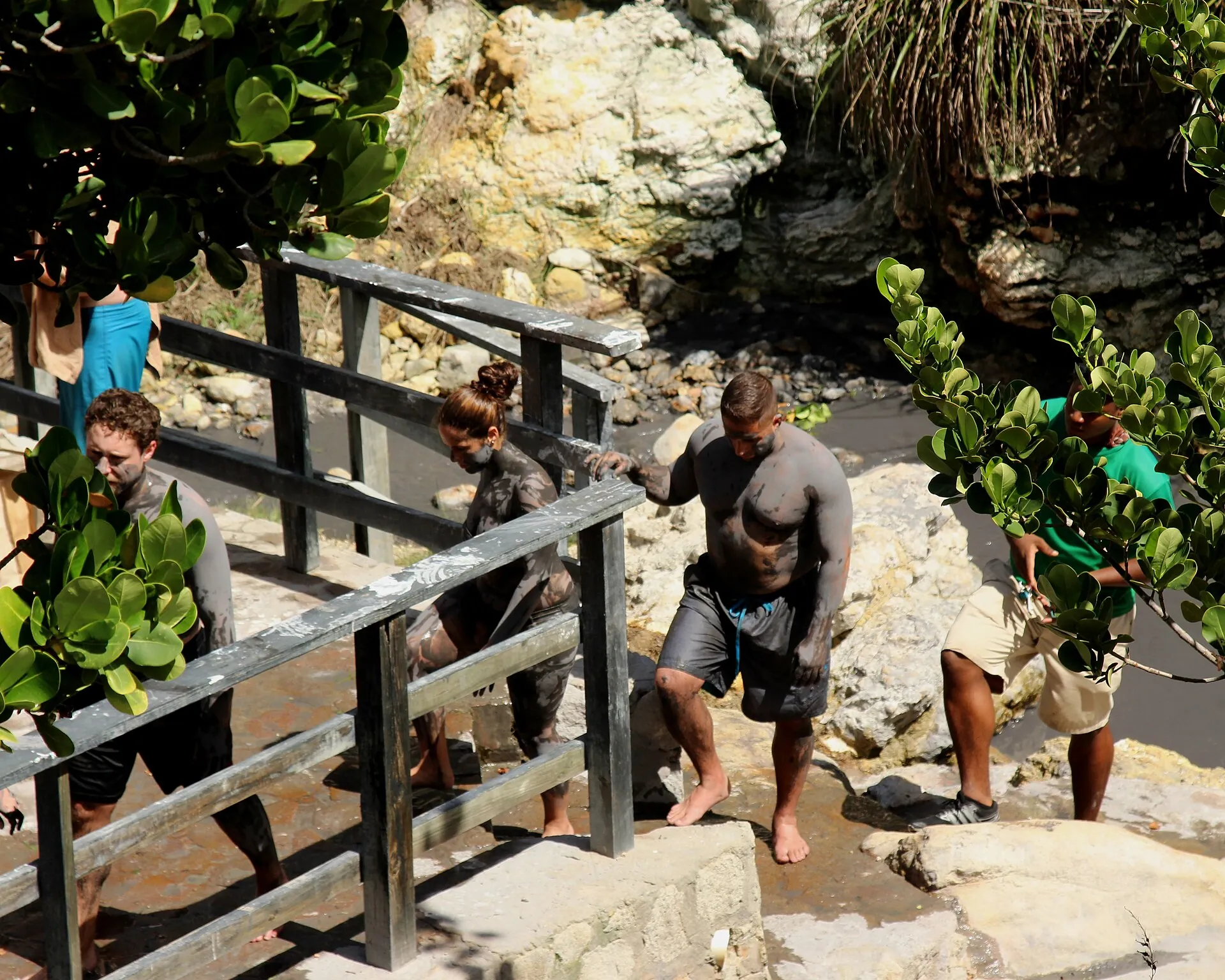
Photo: Prayitno · CC BY 2.0
The park itself takes an hour and a half. If you want more, there are three options — and only one of them is a real mountain day.
| Sulphur Springs Park — drive to the parking lot, short level path to the viewing platform in front of the boiling pots, then the mud pools downstream; roughly 755–853 ft (230–260 m) above sea level | guided walk about 30 min · with the bath 1–1.5 h |
| Gros Piton Nature Trail — from the Interpretive Centre at Fond Gens Libre, about 656 ft (200 m), up to 2,619 ft (798 m); roughly 2.5–2.9 miles (4–4.7 km) one way, about 1,800–1,970 ft (550–600 m) of climbing over roots and knee-high rock steps, four fixed rest stops | 4–6 h round trip · US$50 |
| Tet Paul Nature Trail — loop at Chateau Belair, about 0.6 miles (1 km) up the "Stairway to Heaven" stone steps to a 360-degree view of both Pitons and Jalousie Bay; daily 8 a.m.–5 p.m. | about 45 min · US$10 |
| Petit Piton — no officially marked route: near-vertical sections, fixed ropes to pull yourself up, dry rock and an experienced mountain guide only; start early in the morning | 3–6 h · no official fee |
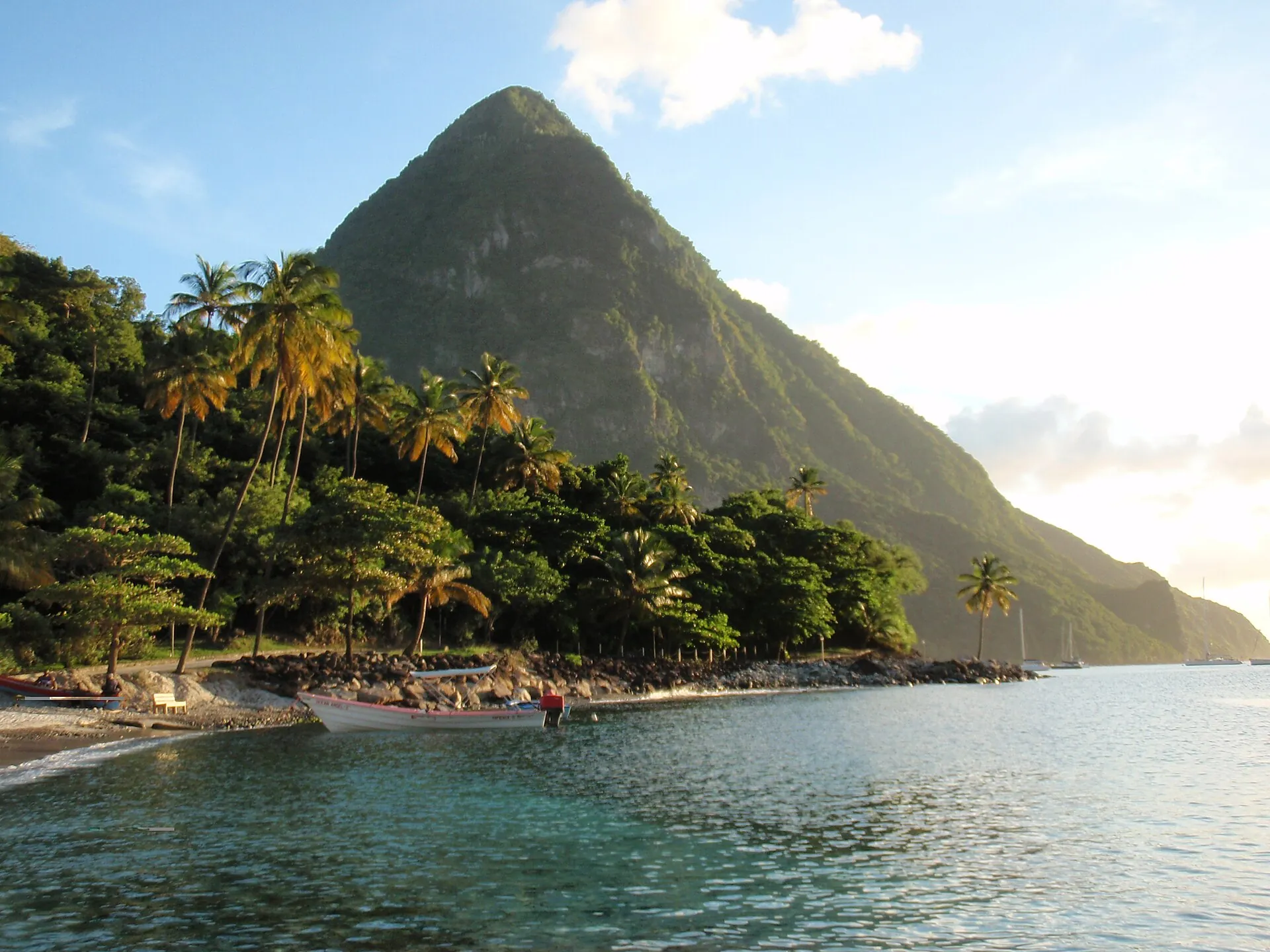
Photo: XeresNelro · CC BY-SA 4.0
Without a car: Minibuses (Route 4) run from Castries to Soufrière, about 1 hour via the west coast road; from Soufrière to the park by taxi or minibus. To Fond Gens Libre (Gros Piton) from Soufrière by taxi or about 20 minutes on foot from the main road. Diamond Falls: minibus from Soufrière about US$1–2, 10–15 minutes.
By car: The park lies on the signposted Sulphur Springs Road (access from the coastal road Soufrière–Vieux Fort); paved road to the parking lot. Gros Piton: free parking at the Interpretive Centre, access road in poor condition after rain. Tet Paul: ignore misleading signs, drive to the end of the road.
Dry season December to April (driest months February–March); hurricane season officially June to November, highest risk August to October, rainy season June–December with short heavy showers. In the park, right after opening at 9 a.m. or from 3 p.m.: cooler, fewer cruise-ship groups (tourism authority). Always start Gros Piton early (7–8 a.m.); in the afternoon it is hot and visibility is worse.
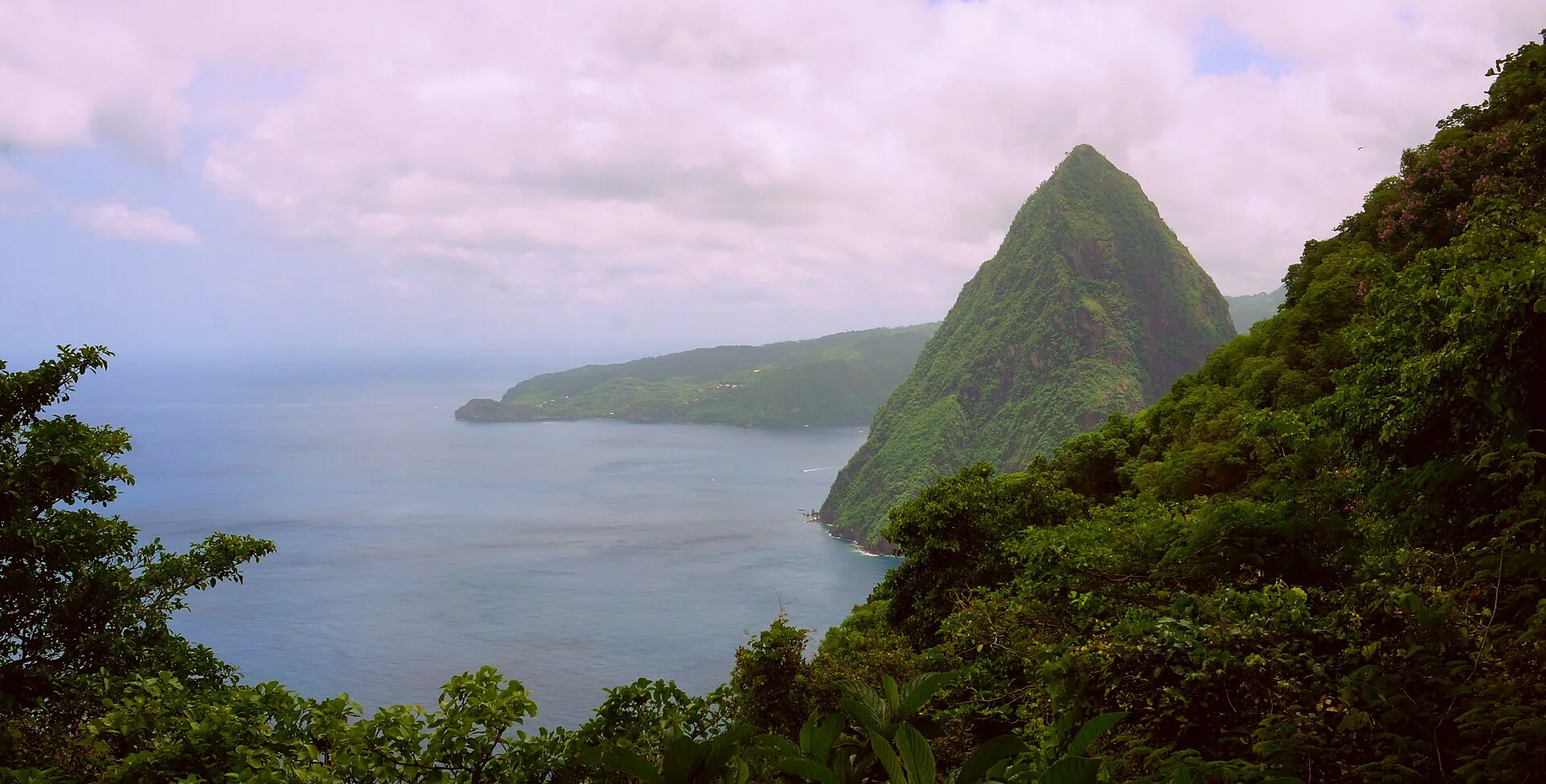
Photo: Aneil Lutchman · CC BY-SA 2.0
Soufrière lies 28 miles (45 km) south of Castries, a good 75 to 90 minutes along the winding west coast road. A taxi runs US$80–95 per vehicle each way — for two people or more, a catamaran day trip is often cheaper and includes the park, a waterfall and a snorkeling stop.
Affiliate links to GetYourGuide: if you book, we earn a commission and the price stays the same. Prices and ratings as of 22 September 2026. On Gros Piton the operator does not supply the trail guide, so the US$50 at the Interpretive Centre may still apply. Ask what the price covers before you book.
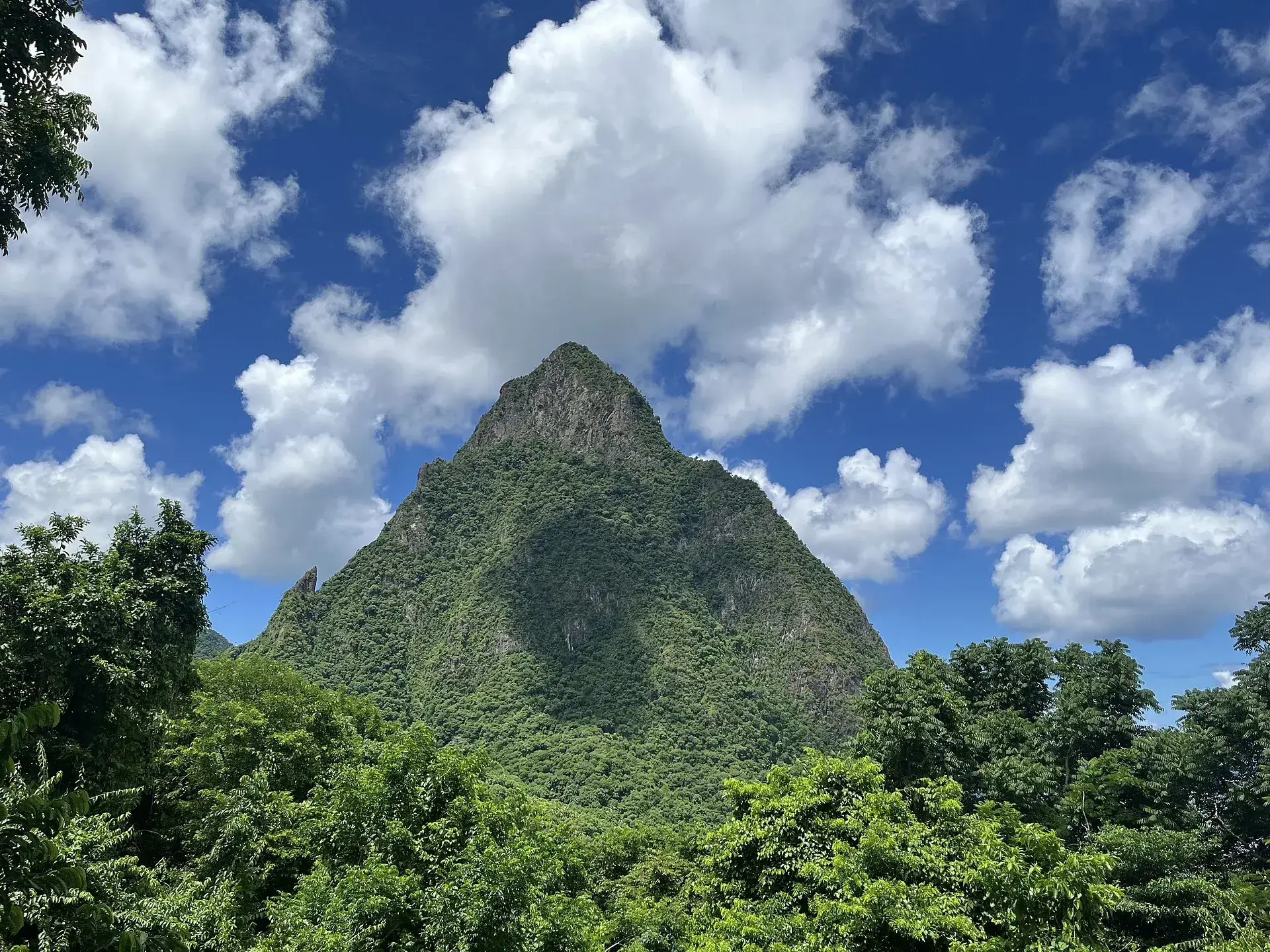
Photo: DavidMPyle · CC BY 4.0
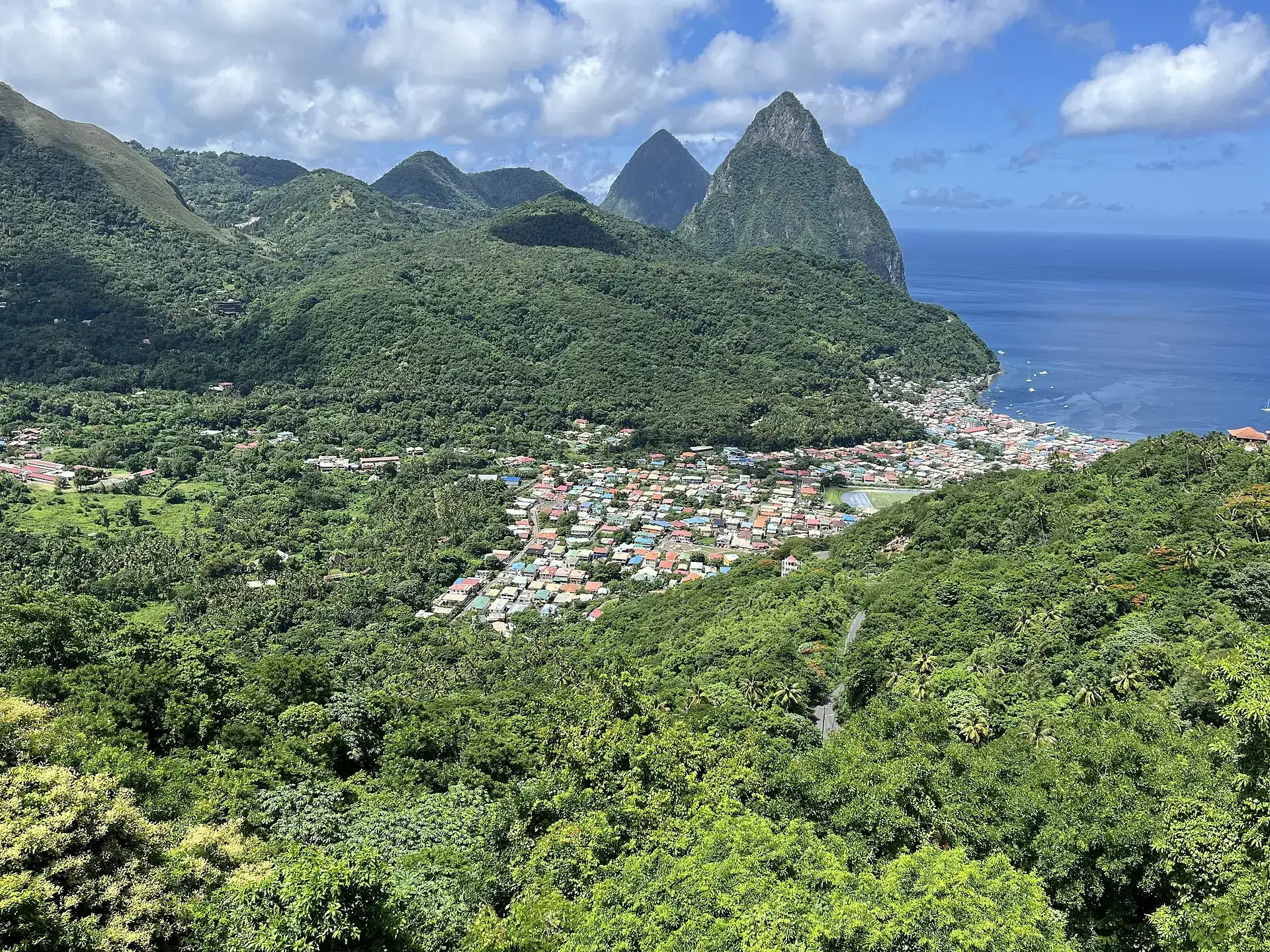
Photo: DavidMPyle · CC BY 4.0
For non-residents the SRDF quoted about US$10 for the mud bath and US$9 for the guided tour in 2025; visitors report a combined ticket around US$11. An increase to US$12 was suspended on June 7, 2025 after protests. Budget US$10 to US$12 on site.
No. The geothermal field itself is entered only with an SRDF park guide, and that walk is included in the ticket. The road through the caldera and the view from outside are free.
The guided walk runs about 30 minutes. With the mud bath, rinsing off and changing, plan on 1 to 1.5 hours. One day is enough for the park, Diamond Falls and the Tet Paul trail.
Dark swimwear you are willing to lose: sulfur and iron stain light fabric permanently. Bring a towel, a change of clothes, sun protection and shoes that can get wet. There are showers at the pool.
Yes. You register at the Interpretive Centre in Fond Gens Libre and the guide is included in the US$50. If no guide is free, nobody starts. Go early — cruise groups arrive between 10 and 11 a.m.
No. The Soufrière Volcanic Centre is at alert level green and there are no volcano-related closures. The island has no daily status page with a date; any change would come through NEMO and the UWI Seismic Research Centre.
As of 22 September 2026, the UWI Seismic Research Centre has the Soufrière Volcanic Centre at alert level Green: quiet, earthquakes and steam activity within the normal range. The park is open. The only real hazard on site is the thin crust around the boiling pots – which is why you stay on the platform.
Yes, there is no age limit, operators take children from age 2 and the walk is short. The water is warm (about 100–102 °F / 38–39 °C), the sulfur smell strong – small children do not always find that pleasant. Children up to 12 pay half price.
By taxi (fixed price per vehicle, about US$80–95, 75–90 minutes), by minibus Route 4 (about 1 hour to Soufrière, then taxi to the park) or by catamaran/water taxi along the west coast. From Hewanorra airport in the south it is 45–60 minutes, taxi about US$70–85.
No. At the Interpretive Centre in Fond Gens Libre you register, pay (US$50 per person, residents EC$25) and are assigned a local guide; if none is available, there is no start. No reservation is needed; starts are from about 7 a.m. to 2 p.m.
About 1,800–1,970 ft (550–600 m) of elevation gain over roots and high rock steps, 4–6 hours round trip – strenuous, but no climbing. There is no official minimum age; blogs advise against children under 8, guides have taken five-year-olds. Pregnant women and people with heart conditions should skip it.
There is no official trail and no SRDF fee; operators write that the climb is not government-sanctioned. If you want to do it anyway, you need an experienced mountain guide, dry rock and arm strength – the steep sections go up on fixed ropes.
December to April is the dry season with the best visibility and dry trails. Hurricane season runs from June to November, with the greatest risk between August and October. In the park, early morning and late afternoon are the quietest.
Around 1766 there was a small steam explosion at Sulphur Springs; since then only springs and fumaroles. The last earthquake swarms beneath the south of the island were in 1990 and 2000/01; both subsided without an eruption.
Yes, as a combination: the private garden with the mineral-colored waterfall and the historic mineral baths is only 1.2 miles (2 km) from town and is fed by the same hydrothermal system. Bring cash only; on Sundays it closes as early as 3 p.m.
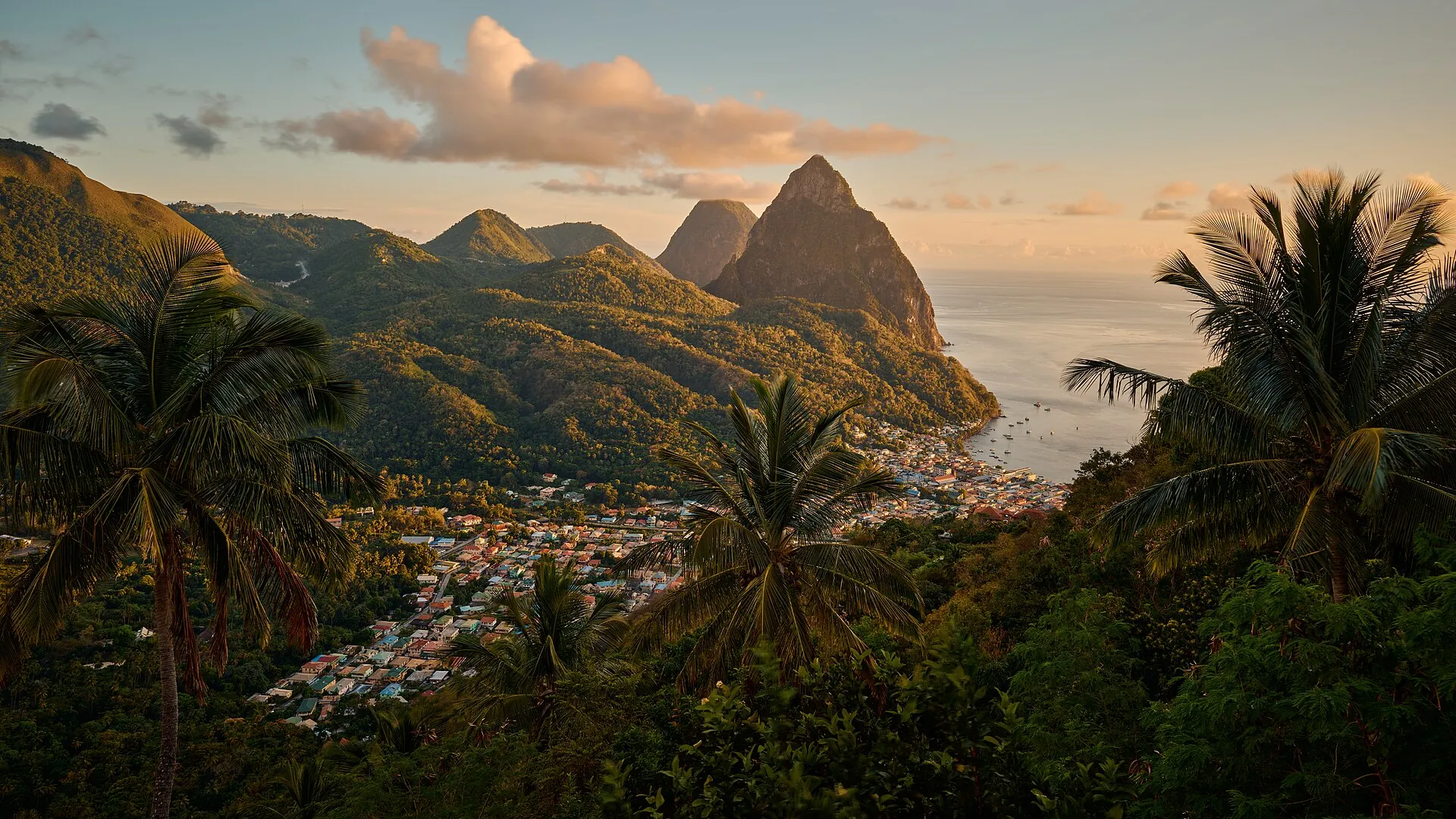
Photo: Jim Vajda · CC BY 2.0
Sources · accessed on 22 September 2026
.jpg)

.jpg)
.jpg)
.jpg)


