Volcano·Guide
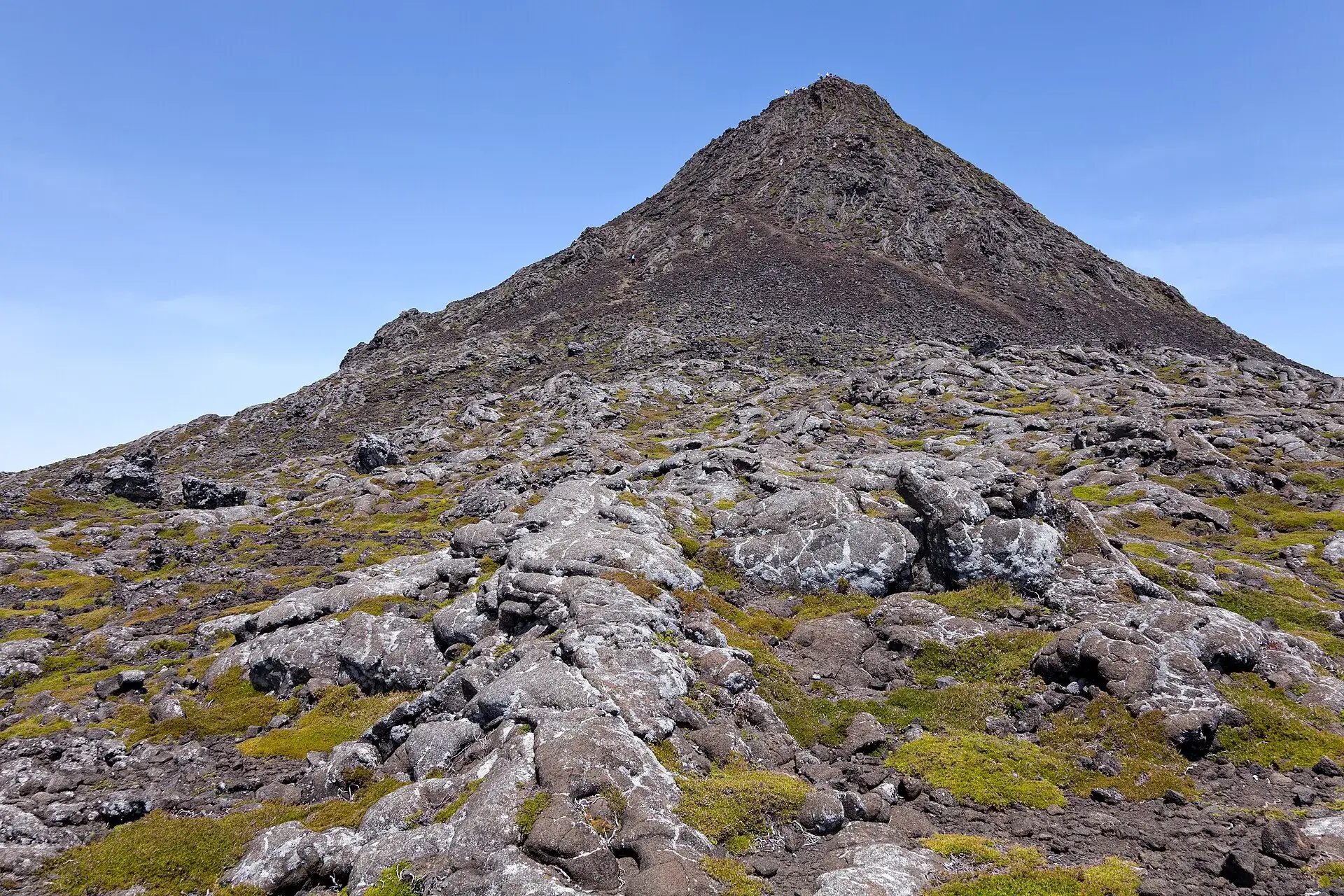
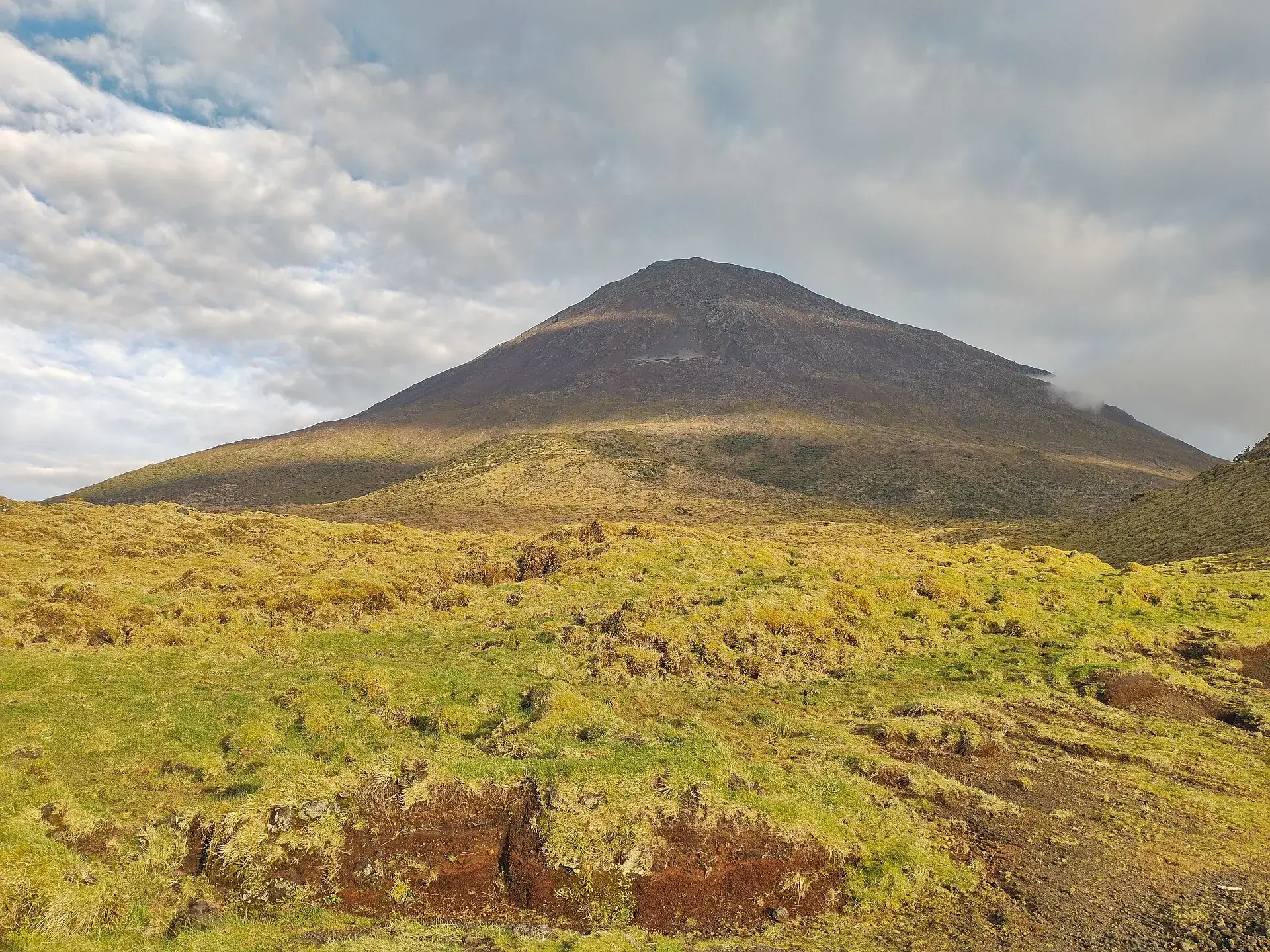
Mount Pico from below: the broad volcanic cone above yellow-green heathland, the summit in cloud The Pico trail above a closed cloud layer, a marker post at the edge, the sea of clouds below The Piquinho, the summit cone of Pico: 70 meters of dark lava against a blue sky, hikers on the crater rim

Mount Pico

From below, a cone above the pastures. 7,713 ft, the highest mountain in Portugal.

Above 1,200 m only with registration and a tracker. Then you climb through the clouds.

At the top, the Piquinho: 70 meters of lava, steaming cracks, 20 minutes to stay.

Scroll –
up through the clouds

As of 22 September 2026Open – with registration, a tracker and a daily limit

The PRC4 PIC trail is open, the volcano is dormant (V0), and the Casa da Montanha is staffed around the clock until the end of September. What many travel sites get wrong: there is no general guide requirement. There is mandatory registration, a GPS tracker, fees, 320 places a day – and a €1,200 rescue flat rate for anyone who does not stick to the rules.

Open
320a day

PRC4 PIC trail to the Piquinho

The only permitted route, 3.8 km (2.4 miles) and 1,150 m (3,770 ft) of climbing from the Casa da Montanha. No more than 320 people a day, 160 at a time, 30 on the Piquinho. Closed on orange or red IPMA weather warnings; advised against on yellow.

on your own · through an operator €5€15
24 h
1,200m

Casa da Montanha

Registration, briefing, tracker issue. Staffed around the clock from 1 May to 30 September, in April and October 8 am–8 pm (continuously on weekends), from November to March 8 am–6 pm. Outside those hours only with a recognized mountain guide.

tel. +351 967 303 519mandatory
V0
1720last eruption

The volcano

CIVISA lists no alert for Pico on 22 September 2026. Under the Faial–Pico channel there were two earthquake swarms at V1 in 2026 (April, May into summer); access to the mountain was never affected. Cracks on the Piquinho steam – sulfur, avoid if you have asthma.

civisa.pt/alertasdormant
Sources: Regulamento de Acesso à Reserva Natural da Montanha do Pico as amended by Portaria n.º 64/2023 of 27 July 2023 (Art. 4, 7, 8, 11, 13); montanhapico.azores.gov.pt (opening hours, equipment, capacities); CIVISA alert page of 22 September 2026. The fees are as set in the 2023 regulation and are still listed unchanged as a mandatory fee on the official site in September 2026.
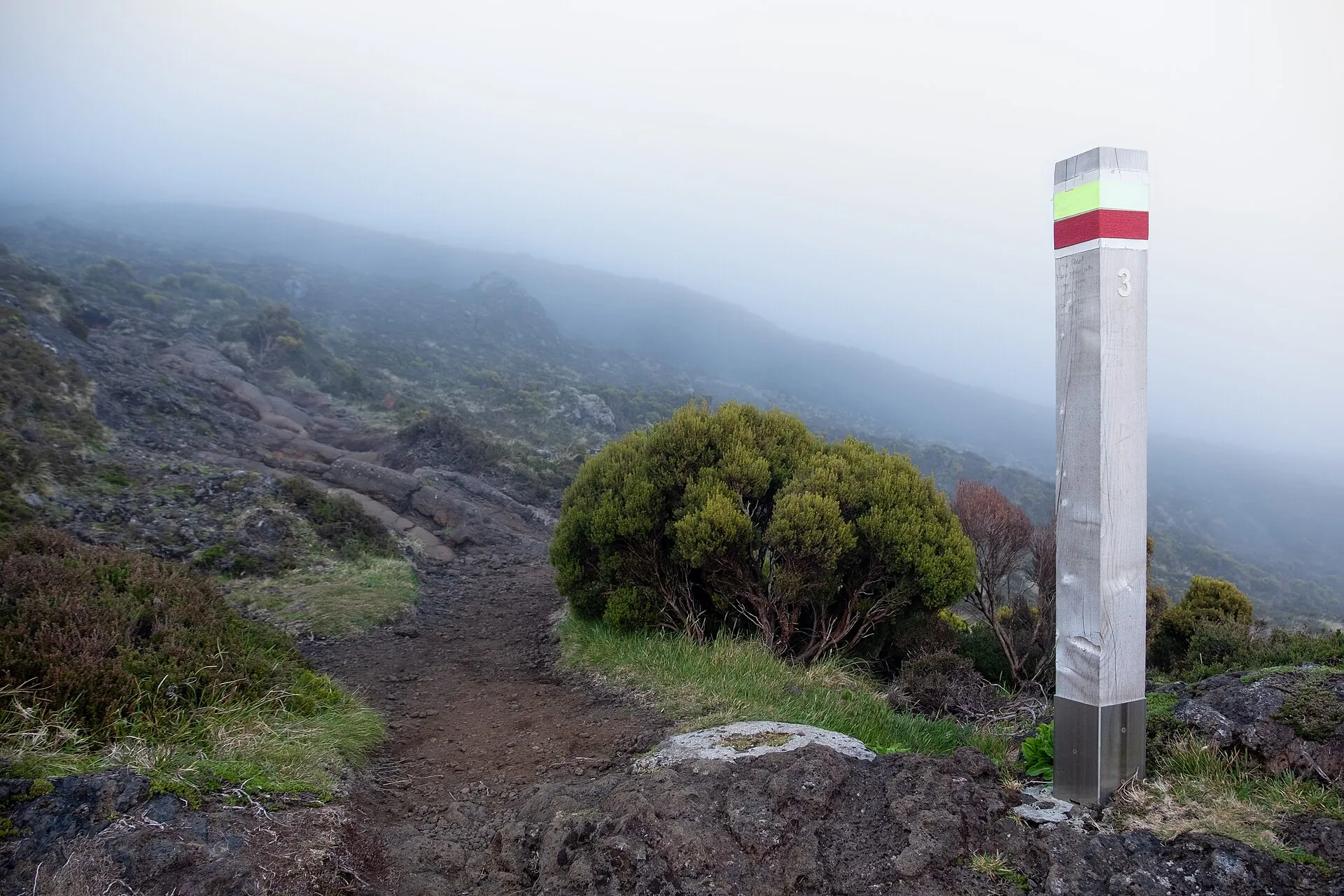
Marker post number 3 with red and yellow markings on the Pico trail, the path disappearing into fog behind it
47 posts to the crater. If you see no next one half an hour after the last, you turn back.

Photo: Jules Verne Times Two · CC BY-SA 4.0

The experienceThrough the clouds to the roof of Portugal

The Casa da Montanha stands at 1,200 m (3,940 ft) in a heath of juniper and lava. Usually the cloud hangs here. You sign, get the tracker strapped to your arm, listen to the briefing – and then you walk into the gray, post by post.

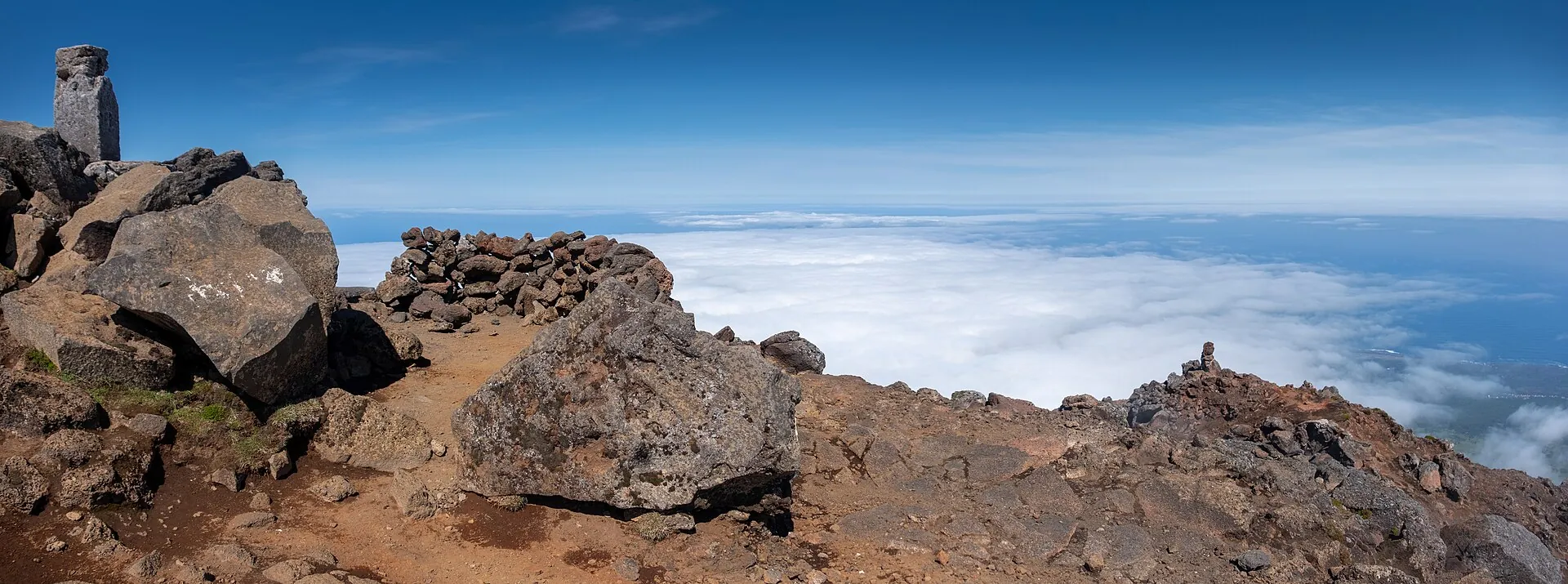
The trail is not a trail but a line of 47 wooden posts over earth, rock, scree and lava blocks. 3.8 km (2.4 miles), 1,150 m (3,770 ft) of climbing, three to four hours. At some point, usually between 1,500 and 1,800 m (4,900 and 5,900 ft), it gets bright: you step out of the top of the cloud, and below you lies a white sea with Faial and São Jorge sticking out of it.

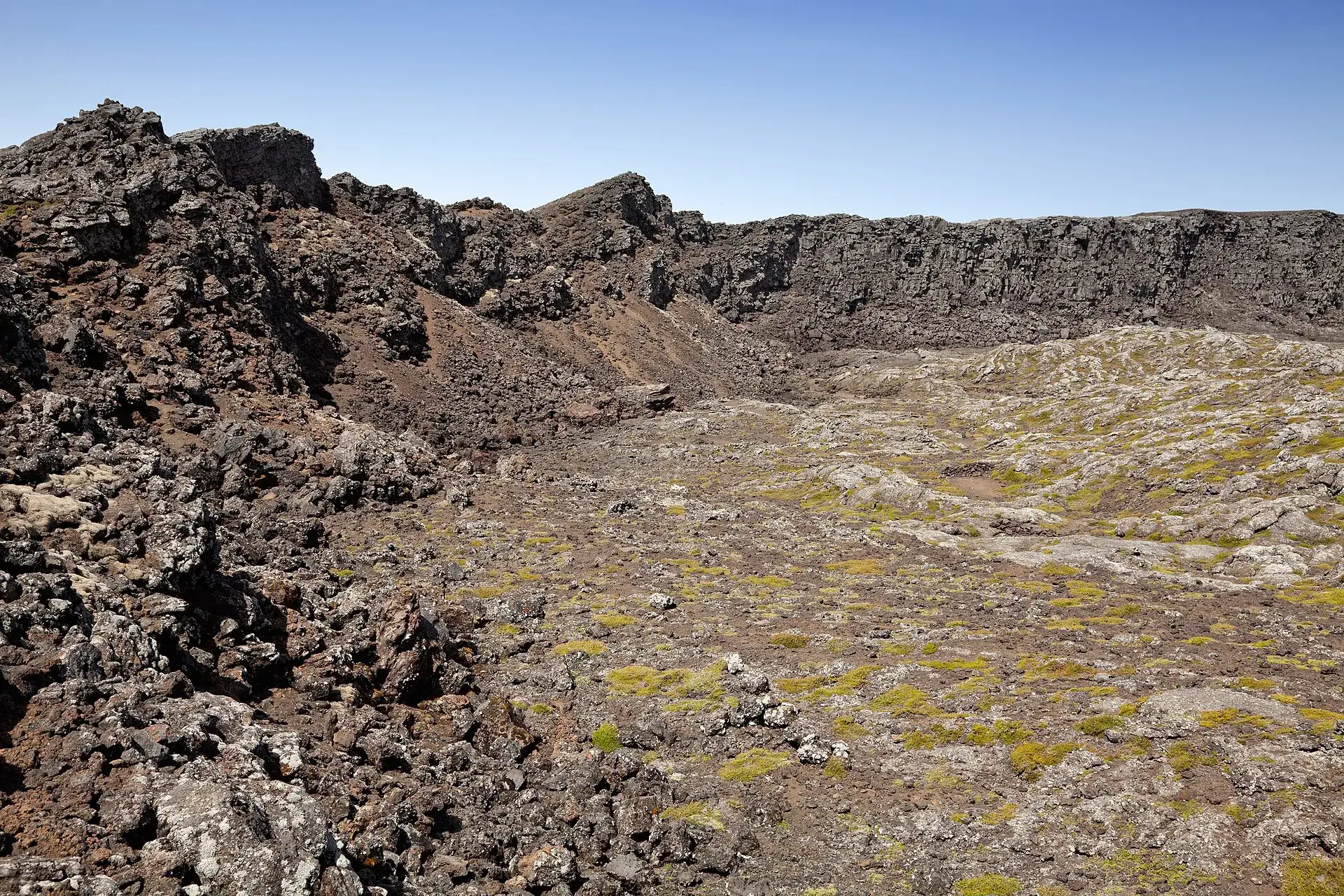
The crater rim at 2,280 m (7,480 ft) is a ring of lava 500 m (1,640 ft) across. In its middle stands the Piquinho, a 70 m (230 ft) cone you scramble up on all fours. Warm sulfur steam rises from cracks. At the top Portugal ends – 2,351 m (7,713 ft), and nothing above but wind.

You may stay twenty minutes. Then comes the descent, which costs you your knees, and at the bottom the sign-out at the Casa. If you do not hand in the tracker, a search is started – and a search without cause costs €1,200.

Affiliate links to GetYourGuide: if you book, we earn a commission and the price stays the same. Prices and ratings as of 22 September 2026. With an operator you pay the park only €5 + €5 instead of €15 + €10 – the rest is the guide. Whether it is clear at the top is up to the mountain.
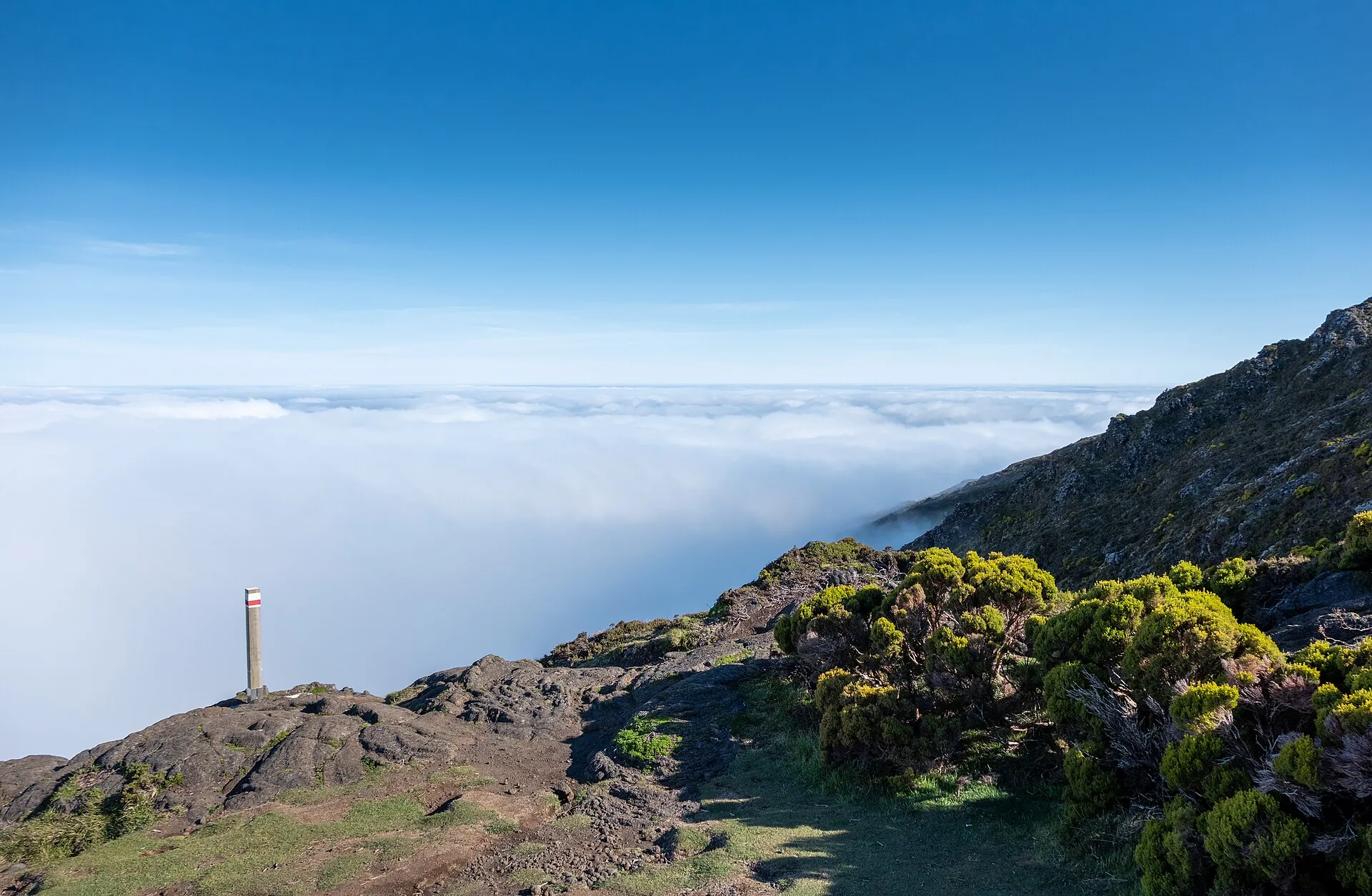
On the summit of Pico: cairns and lava blocks, the sea of clouds over the Atlantic behind
Above the clouds: what was fog at 3,940 ft is a blanket under your feet at 7,500 ft.

Photo: Jules Verne Times Two · CC BY-SA 4.0

The rulesRegistration, tracker, fee – and the rescue flat rate

Since 2020 a regulation of the Azores government has governed access; it was tightened in 2023. It expressly allows an independent climb – but only under conditions you should know beforehand.

1

Reserve online, register in person

Reservation at servicos-sraa.azores.gov.pt/gamp, payment within 48 hours or the booking is cancelled. Everyone still has to appear in person at the Casa da Montanha – no later than 2 hours after the booked start time – sign the form and liability waiver and collect the GPS tracker. 90 % of places go online, the rest on site.

2

€5 · €15 · +€10

To the Furna Abrigo €5, full climb to the crater €15, Piquinho supplement €10, overnight in the crater €10. Through a licensed operator €2 / €5 / €5. Azores residents free. Optional €30 liability waiver for the tracker, otherwise up to €300 for loss or damage.

3

No guide needed – except at night in winter

Within the Casa da Montanha's opening hours you may go alone. A recognized Guia da Montanha do Pico is mandatory when the Casa is closed (at night from October to April, on New Year's Day and Christmas Day) and for every commercial tour: one guide per 12 guests.

4

Closure and rescue

On orange or red IPMA warnings or a civil protection warning the mountain is closed; on yellow the climb is advised against. Anyone who goes anyway, leaves the trail or calls for help without cause and has to be rescued pays a flat €1,200 – first known to have been applied in July 2025. Fatigue does not count as a reason for rescue.

Official fees under Art. 8 of the regulation · Portaria 64/2023, unchanged on the official site 09/2026
Climb to the Furna Abrigo, on your own / through a licensed operator€5 / €2
Full climb to the crater, on your own / through an operator€15 / €5
Piquinho supplement (the actual summit), on your own / through an operator€10 / €5
Overnight-in-the-crater supplement, on your own · reservation at least 24 hours ahead, 32 people per night€10
Optional liability waiver for the GPS tracker · without it: up to €300 for loss or damage€30
Rescue after a rule violation, after a climb advised against, or requested without cause€1,200
Azores residents (proof: Cartão de Cidadão)free
Atlânticoline ferry Horta–Madalena, one way / round trip (non-residents)€8.20 / €16.40
Source: Portaria n.º 64/2023 of 27 July 2023, Art. 8 (fees), Art. 9 (payment, refund on closure), Art. 10 (tracker), Art. 13 (rescue). The 'Pagamentos' subpage of the reservation platform could not be accessed without a login; no change in the amounts after 2023 is known, but it cannot be ruled out. Ferry fare per the Atlânticoline tariff via a private information site.

Ways upOne trail, three versions

There is only the PRC4 PIC trail. But you can walk it short, walk it whole – or stay the night.

The three versions · as of 09/2026
Short version to the Furna Abrigo – 1,000 m (0.6 miles) of trail from the Casa da Montanha to the lava cave that serves as a shelter; the family-friendly alternativeabout 45 minutes · €5
PRC4 PIC Montanha trail – Casa da Montanha (about 1,200 m / 3,940 ft) past 47 posts to the crater rim (about 2,280 m / 7,480 ft) and up the Piquinho (2,351 m / 7,713 ft); 3.8 km (2.4 miles), 1,150 m (3,770 ft) of climbing, 'not technical, but moderately to highly difficult'; start the descent no later than 4 hours before sunset3–4 hours each way · €15 + €10
Overnight in the crater (Pernoita) – start between 4 pm and midnight (June–September) or 2 pm and midnight (October–May), tent and sleeping bag mandatory, descent after 8 am; sunrise from the Piquinho; outside the Casa's opening hours only with an operator and guideone night · €15 + €10 (+ €10 Piquinho)
The summit crater of Pico: dark lava walls enclose the flat crater floor, the Piquinho stands at the rim
The crater at 7,480 ft: 1,640 ft across, 100 ft deep. Post 47 stands here – and this is where you camp.

Photo: Unukorno · CC BY-SA 3.0

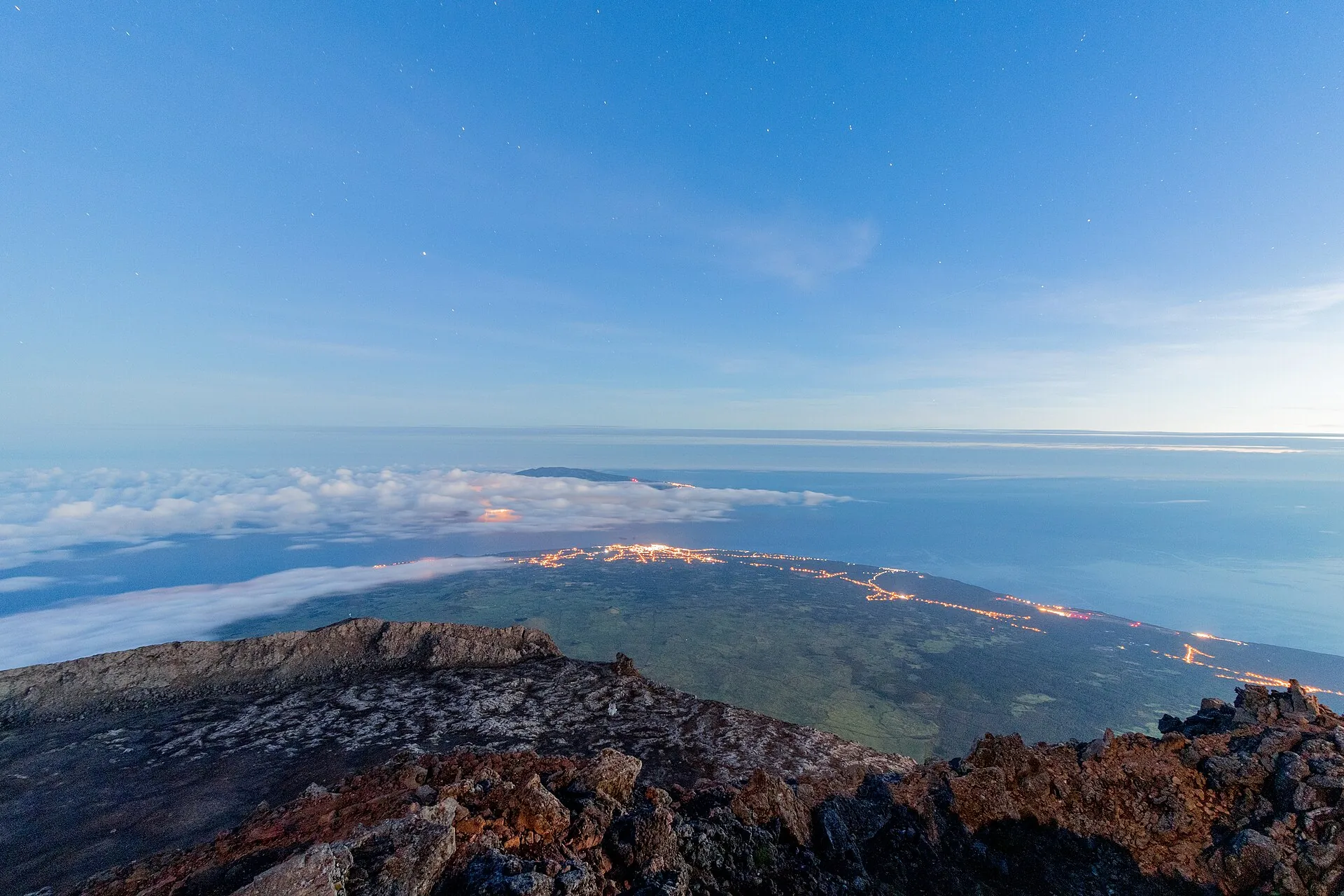
Sunrise from the summit of Pico: the lights of Madalena glow beneath the cloud layer, the island of Faial behind
From May to September you may do this without a guide: start around 1 am, lamp mandatory, on top when the sun comes.

Photo: Pablosievert · CC BY-SA 4.0

Good to knowGetting there, best time, tips

Getting there

Without a car: No public bus to the Casa da Montanha. On Pico, island buses run between Madalena, the airport and the main towns; to the Casa da Montanha (about 15 minutes' drive from Madalena via the EN3 and Caminho Florestal 9) you take a taxi, a rental car or a tour operator's transfer.

By car: From Madalena on the EN3 toward Lajes/São Roque uphill, turnoff to the Casa da Montanha signposted (Candelária, Caminho Florestal n.º 9). Car park at the Casa da Montanha; for night climbs leave nothing visible in the car.

  • From Madalena (ferry port) · about 15–20 minutes
    Taxi or rental car via the EN3 and Caminho Florestal 9
  • From Horta (Faial) · about 1 hour
    Atlânticoline ferry Horta–Madalena (25–30 minutes, several times a day, €8.20 one way), then taxi/rental car
  • From Ponta Delgada (São Miguel) · about 2 hours incl. transfer
    SATA Air Açores flight to Pico (PIX), about 55 minutes, several times a day; airport 9 km (5.6 miles) from Madalena (taxi €10–20)
  • From Lisbon · 2.5-hour direct flight
    Direct flight to Pico (TAP/Azores Airlines, seasonal) or via Ponta Delgada/Terceira

Best time to go

May to September: Casa da Montanha staffed around the clock, longest days, most stable visibility, night and sunrise climbs possible without a guide; but July/August bring crowds up to the daily limit – book early and start early. April and October are quieter with often good weather, then mind the opening hours. From November to March there is often snow or ice on the summit (crampons mandatory), the Casa closes at 6 pm and storms close the mountain; then only with a guide and flexible planning. Basic rule: start early in the morning, begin the descent no later than four hours before sunset.

Who it suits

Children
Allowed from age 5; 5- to 16-year-olds only accompanied by a parent or legal guardian who signs a declaration of responsibility (Art. 11 para. 3). For children under about 10 the climb with 1,150 m (3,770 ft) of ascent on loose lava rock is very demanding; the short version to the Furna Abrigo is the family-friendly alternative.
Minimum age
5 years (regulation Art. 11 para. 2 c)
Fitness
Officially 'not technical, but moderately to highly difficult': 3.8 km (2.4 miles) with 1,150 m (3,770 ft) of ascent, steep sections on earth, rock, scree and mud, scrambling over lava blocks at the top; total time 6–8 hours. The administration explicitly warns of knee and joint problems on the descent. Anyone who regularly does mountain hikes with 1,000+ m of climbing copes well.
Altitude
No real altitude sickness to be expected at 2,351 m (7,713 ft); air noticeably thinner, quick ascent from sea level.
Heart and lungs
The administration advises adjusting pace and effort to your own fitness; fatigue explicitly does not count as a reason for rescue (Art. 13 para. 4) – if you cannot go on, you have to descend yourself. Avoid the sulfur fumes at the Piquinho if you have asthma.
Wheelchair
not possible; the Casa da Montanha itself can be reached by car (view of Faial)
Dogs
prohibited – no access with pets (Art. 11 para. 2 d)
Clothing
Mandatory under the regulation and the Casa da Montanha: mountain clothing, at least 1.5 l of water, food; a headlamp at night; for an overnight stay a tent, sleeping bag, extra warm clothing; crampons in snow/ice. Recommended: rain jacket, hat, gloves, sunglasses, sunscreen, poles. On average it is 10 °C (18 °F) colder at the top than at the coast, and there is no shade.
Footwear
Mountain boots or closed trekking shoes with grip are mandatory; sneakers are turned away.

Tips you will need on site

  • Reserve online (servicos-sraa.azores.gov.pt/gamp) and pay within 48 hours, otherwise the booking lapses; in the last 48 hours before the climb only immediate payment counts.
  • Despite the online booking, show up in person at the Casa da Montanha – no later than 2 hours after the booked start time, or the place is cancelled.
  • The €30 liability waiver for the tracker is a trade-off: after a fall on lava you otherwise pay up to €300.
  • At least 1.5 liters of water are mandatory; there is no spring and no shade on the mountain.
  • In fog the 30-minute rule applies: if you see no next wooden post half an hour after the last one, go back to the last one. If there is vegetation under your feet, you have left the trail.
  • At the Piquinho the limits are 30 people at a time and a 20-minute stay – do not dawdle at the top, that is an administrative offense.
  • After the descent, sign out and hand in the tracker; otherwise a search is started – and a search without cause costs €1,200.
  • For sunrise without a guide: May to September only (Casa staffed 24 h), lamp mandatory, start usually around 1–2 am; to camp in the crater, reserve at least 24 hours ahead (32 places/day).

A short history

  • Pico is geologically very young: radiocarbon dating puts the summit structure at less than 6,000 years old; the island itself formed about 300,000 years ago on the Mid-Atlantic Ridge.
  • 1562–1564: flank eruption with lava flows reaching the sea – the 'Mistérios' (lava fields) shape the landscape to this day.
  • 1718 and December 1720: last eruptions, again on the flank; the volcano has been quiet since, but the Piquinho keeps steaming.
  • March 1972 and Decreto Regional 15/82/A (1982): the mountain above 1,200 m becomes a nature reserve (about 1,500 ha); 2008 incorporation into the Pico Island Natural Park.
  • 1998: an observatory for measuring atmospheric aerosols over the North Atlantic is set up on the summit.
  • 2004: the vineyard landscape at the foot of the mountain becomes UNESCO World Heritage.
  • 11 March 2020: Portaria 25/2020 introduces mandatory registration, GPS trackers, fees and the daily limit of 320 people; 27 July 2023: Portaria 64/2023 transfers operations to the environment department after the dissolution of AZORINA, sets the €1,200 rescue flat rate and clarifies opening hours and overnight rules.
  • July 2025: first publicly known application of the €1,200 flat rate, against a tourist who had to be rescued by helicopter after climbing without registration and off the trail.
  • April–July 2026: earthquake swarms under the Faial–Pico channel; CIVISA raises the alert for the Cachorro system to V1 twice, access to the mountain stays open.
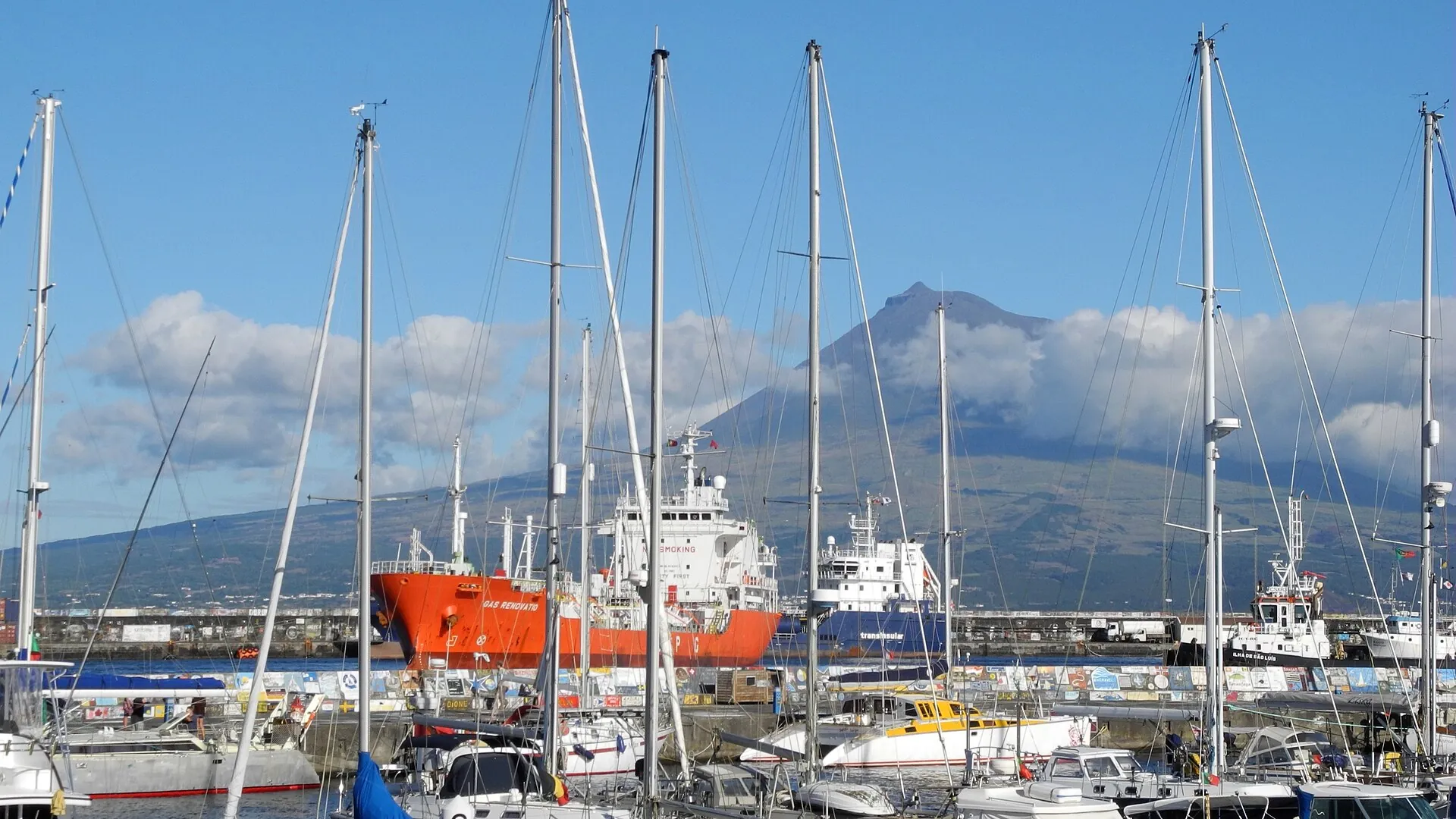
The Horta marina on Faial with sailboat masts, the cone of Pico across the channel behind
From Horta, Pico is half an hour away by ferry – and the view from here is the classic one.

Photo: Franzfoto · CC BY-SA 3.0

Around the mountainPico without the summit: vineyards, lava tubes, a night in the crater

At the foot of the mountain lies the vineyard landscape of black lava walls, World Heritage since 2004. If you do not want the summit or cannot do it, you have a day here – and if you want more, you stay up top overnight.

Affiliate links to GetYourGuide: if you book, we earn a commission and the price stays the same. Prices and ratings as of 22 September 2026. The selection for Pico is small – these tours have few reviews.

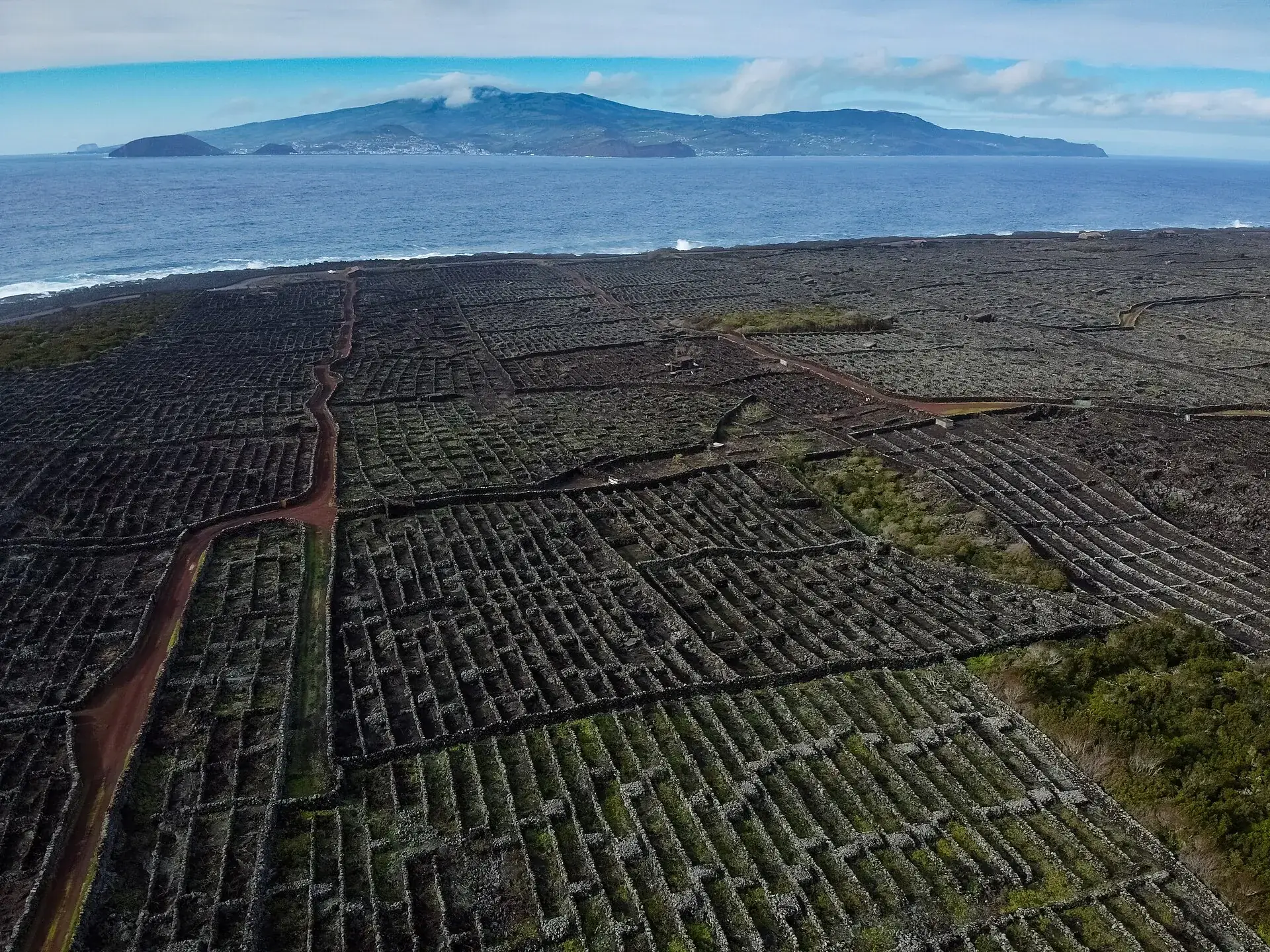
The Criação Velha vineyard landscape on Pico from above: vines between black lava walls, the sea and the island of Faial behind
Currais: vines in chambers of lava, UNESCO World Heritage since 2004. Freely accessible, three marked trails.

Photo: Manuel Silveira · CC BY-SA 4.0

Outdated onlineWhat other sites get wrong

“Pico may only be climbed with a mountain guide.”
The regulation allows an independent climb with registration, fee and GPS tracker. A guide is mandatory only outside the Casa da Montanha's opening hours and for commercial tours (Art. 3 and 7, Portaria 64/2023).
“The climb costs €10.”
Outdated. €15 for an independent climb to the crater plus €10 for the Piquinho – €25 to the very top. Through an operator €5 + €5. Only the Furna Abrigo costs €5.
“You can go up spontaneously at any time.”
320 places a day, 160 at a time, 90 % of them online. In summer the mountain can be full. On orange and red weather warnings it is closed.
“The trail has 45 marker posts.”
The official site gives 47. The last one stands in the crater and points the way to the Piquinho.
“Rescue is free, as everywhere in Portugal.”
On Pico a rescue after a rule violation, a climb advised against or without cause costs a flat €1,200 (Art. 13). In July 2025 a tourist who was recovered by helicopter off the trail without registration had to pay exactly that.
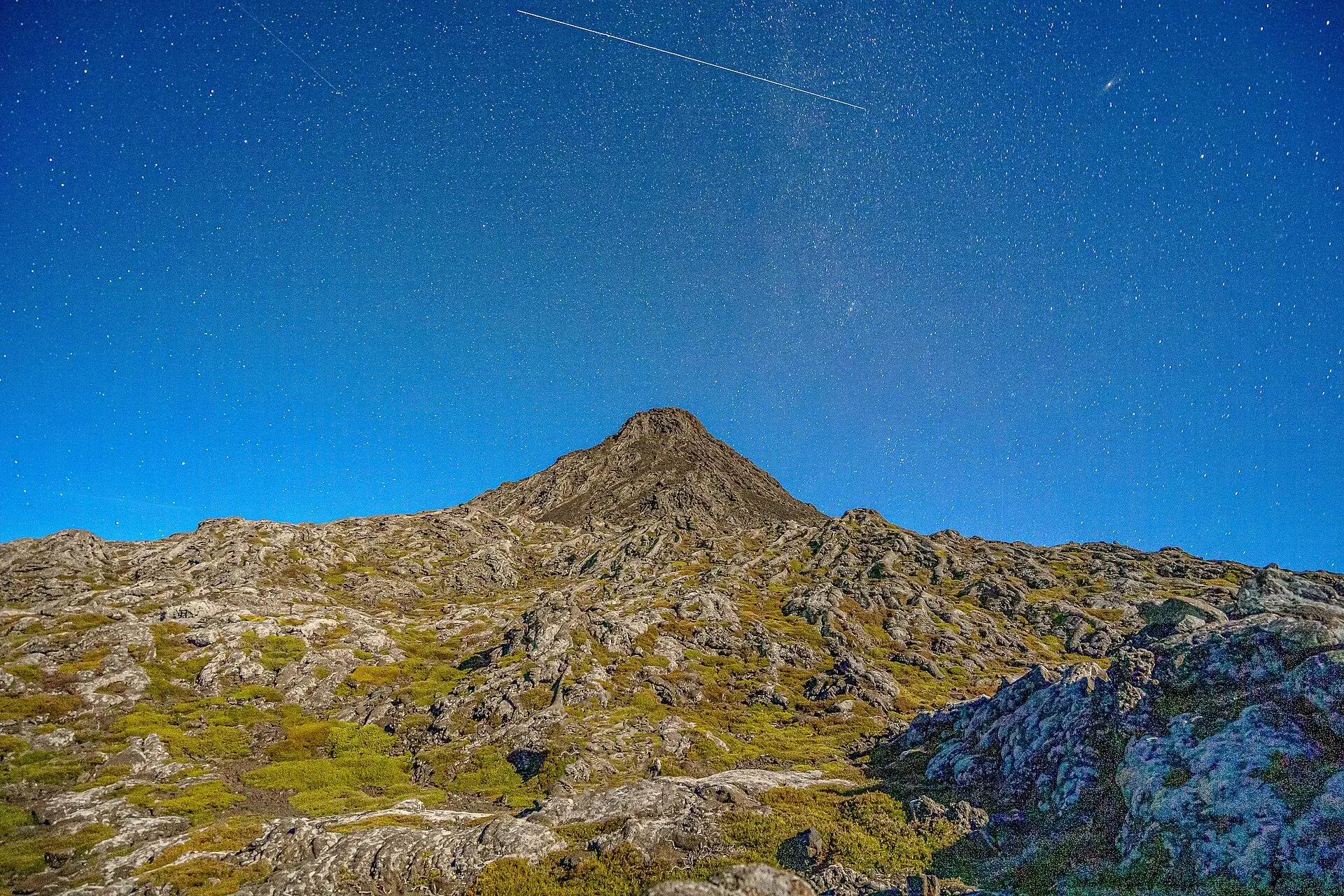
Pico at night under a starry sky, lichen-covered lava fields in the foreground, the trail of a comet in the sky
At night the mountain belongs to those who are registered: May to September even without a guide, headlamp mandatory.

Photo: Pedroemanuelp · CC BY-SA 4.0

Quick answersBefore the climb

How hard is the Mount Pico hike?

Officially 'not technical, but moderately to highly difficult': 3.8 km (2.4 miles) with 1,150 m (3,770 ft) of climbing over earth, rock, scree and lava blocks, a scramble up the Piquinho at the top, 6–8 hours in total. If you regularly climb 3,000 ft, you will cope; the descent is hard on the knees.

What is the Piquinho?

The 70 m (230 ft) summit cone in the middle of the crater, the actual highest point at 2,351 m (7,713 ft). It costs a €10 supplement, holds 30 people at a time, and you may stay 20 minutes. Sulfur steam rises from cracks.

What happens if the mountain is closed?

On closure or an express recommendation against climbing by the Casa da Montanha the fee is refunded in full (Art. 9 para. 4). A date can be changed online free of charge up to 2 hours before the start.

How does the GPS tracker work?

You get it at registration, wear it the whole way and return it after the descent – at the Casa or, outside its hours, at the Bombeiros in Madalena. It shows the rescue team your position. Loss or damage costs up to €300, a liability waiver €30.

How do you get to Pico?

By ferry from Horta on Faial to Madalena in 25–30 minutes (€8.20 one way) or by plane from Ponta Delgada (about 55 minutes) and seasonally from Lisbon. From Madalena to the Casa da Montanha 15–20 minutes by taxi or rental car; there is no public bus.

Is there water on the mountain?

No, no spring and no shade. At least 1.5 liters per person are mandatory; without it you are turned away at the Casa da Montanha.

Is Pico open right now, and is the volcano dangerous?

As of 22 September 2026 the trail is open; the CIVISA alert page shows no alert for Pico or the Faial–Pico channel (V0). The volcano has been quiet since 1720. The real dangers are weather changes, fog and the steep descent – hence registration, GPS trackers and closures on severe-weather warnings.

Do you need a mountain guide for Pico?

No, within the Casa da Montanha's opening hours you may go alone with registration, fee and tracker. A recognized mountain guide is mandatory only when the Casa da Montanha is closed (e.g. at night from October to April) or if you go through an operator.

How much does it cost to climb Pico?

On your own €15 to the crater plus €10 for the Piquinho, i.e. €25 to the very top; only to the Furna Abrigo €5. Through a licensed operator you pay the park only €5 + €5, plus the tour price. Azores residents are free. Optional €30 tracker liability waiver.

Do you have to reserve Pico in advance?

Not strictly, but strongly recommended: there are only 320 places per day, 90 % of them online via servicos-sraa.azores.gov.pt/gamp. Payment is due within 48 hours, and despite the reservation you have to register in person at the Casa da Montanha and collect the tracker.

How long does the Pico climb take?

Officially 3–4 hours each way up and down, so 6–8 hours for 3.8 km (2.4 miles) and 1,150 m (3,770 ft) of ascent. The descent must begin no later than four hours before sunset.

Is Pico suitable for children?

Allowed from age 5, up to 16 only with a parent or legal guardian and a declaration of responsibility. Realistically the summit is something for athletic children from about 10–12; for younger ones the 45-minute version to the Furna Abrigo is the option.

What do you need to wear and bring?

Mandatory: mountain boots or sturdy trekking shoes, mountain clothing, at least 1.5 l of water, food; a headlamp at night, crampons in snow, a tent and sleeping bag for an overnight stay. It is about 10 °C (18 °F) colder at the top than at the coast and there is no shade – pack a rain jacket, hat, gloves and sunscreen.

Can you climb Pico at night or for sunrise?

Yes. From May to September the Casa da Montanha is staffed around the clock, so it works without a guide then (lamp mandatory). In the other months the Casa is closed at night; then only licensed operators with a mountain guide may start, online reservation mandatory.

Can you spend the night in the Pico crater?

Yes, with a reservation at least 24 hours in advance, a tent and a sleeping bag; at most 32 people per night, €10 supplement. Any climb that starts between 4 pm and midnight in summer (winter 2 pm–midnight) and ends after 8 am the next day counts as an overnight stay.

What happens if you leave the trail or need rescuing?

The tracker shows the rescue team your position. Rescues for genuine injuries are free; but anyone who broke the rules, went despite being advised against it or calls for help without cause pays a flat €1,200 – as happened in July 2025. Fatigue does not count as a reason for rescue.

How many markers does the trail have, and what do you do in fog?

47 numbered wooden posts; the last one stands in the crater and points to the Piquinho. In fog: if you see no next post 30 minutes after one, go back to the last one. If you are stepping on plants, you have left the trail.

Sources · accessed on 22 September 2026