Volcano·Guide
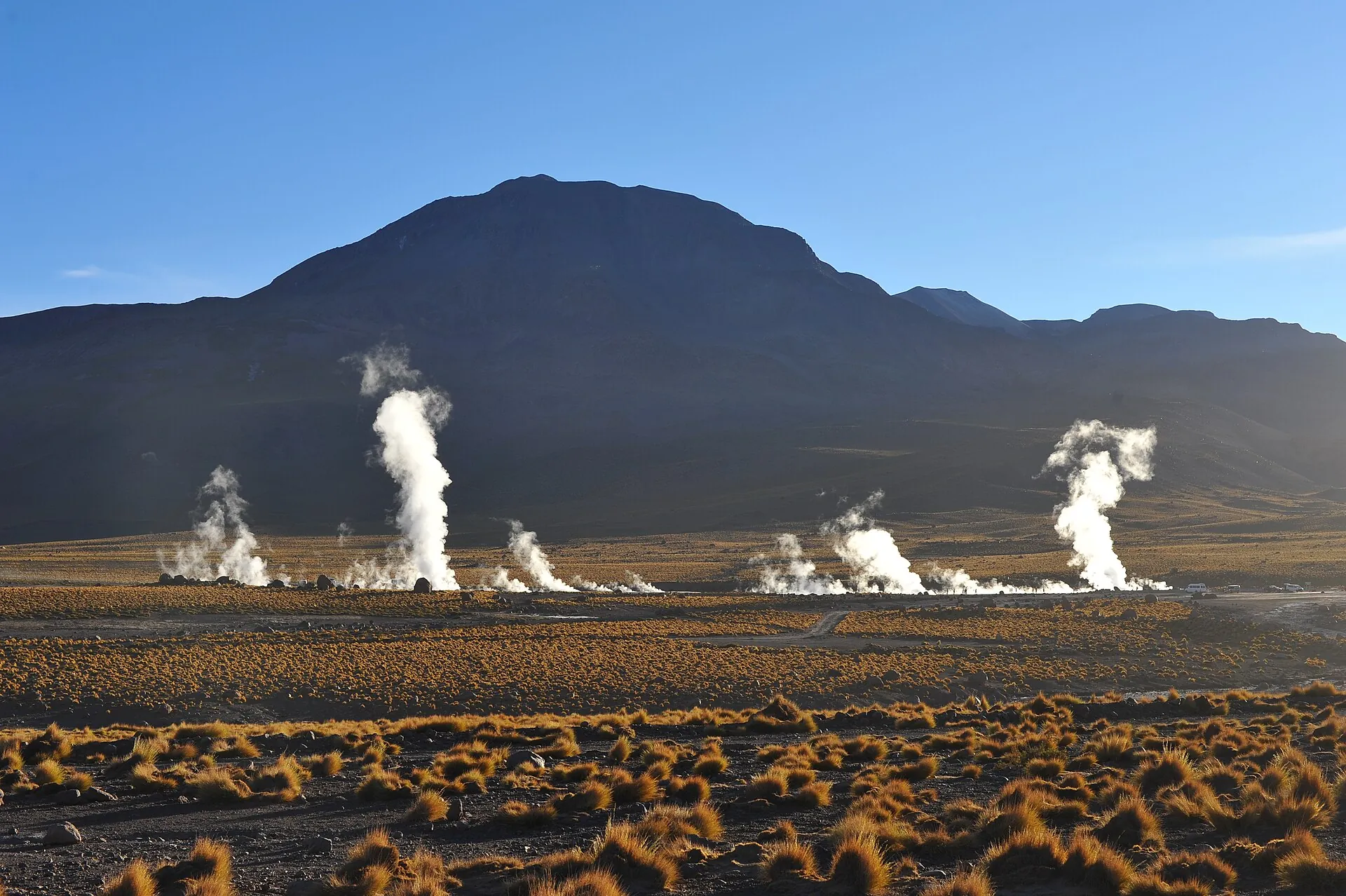
People in silhouette in the blue pre-dawn light at the El Tatio geyser field, dense columns of steam above the ground A geyser erupting at El Tatio in the first morning light, the mountains of the Altiplano behind White columns of steam rising over the El Tatio geyser field, the morning sun turning the grass golden

El Tatio Geysers

At six it is 5 °F, and all you see is steam and the outlines of the others.

Then the first light comes over the mountains, and the columns begin to glow.

An hour later it is warm, the steam thins – and the field looks like a field.

Scroll –
the sun is coming

As of September 22, 2026Closed because of snow – and what applies otherwise

At 4,320 m (14,170 ft) El Tatio is the highest geyser field in the world, run by the Atacameño communities of Toconce and Caspana. On September 17, 2026, after snowfalls, the SEREMI de Transportes closed the access roads B-245, B-223 and B-157 (Resolución 1221/2026); the operator reports the field closed because the paths cannot be walked safely. No reopening date is known – the closure ends once SENAPRED, Vialidad and Carabineros clear the roads.

Closed
4,320m

The geyser field

“Geiser cerrado por condiciones climáticas adversas” – the operator's notice on September 22, 2026. On August 11, 2026 the B-223 at Machuca was already blocked by snow. In winter (June–September) this happens repeatedly; agencies rebook or refund.

Daily status: eltatio.net/comunicados
When open
15,000CLP

Entry for everyone from age 9

Flat rate for Chileans and foreigners, about €14, unchanged since 2021. Members of indigenous peoples CLP 5,000, people with disabilities free. Paid at the entrance; on tours usually not included and collected in cash the day before.

6 am–4 pm · no guide required · own car allowed
Not admitted
0–8years

Children under 9, pregnant women

The house rules exclude children aged 0 to 8 without exception – altitude, cold, gases, boiling water. Pregnant women too; over-70s are advised against it, and from 60 you should report at the entrance.

Operator's rates page; the notices page still lists children as “free” – clarify before booking
Sources: Administradora El Tatio Ltda. – Comunicados and Tarifas (accessed September 22, 2026); Calama en Línea (August 11, 2026). The wording on Resolución 1221/2026 comes from the operator's notice of September 17, 2026; on September 22, 2026 only the closure note remained on the page. There is no volcanic alert level for the field – the operator and the road authorities decide.
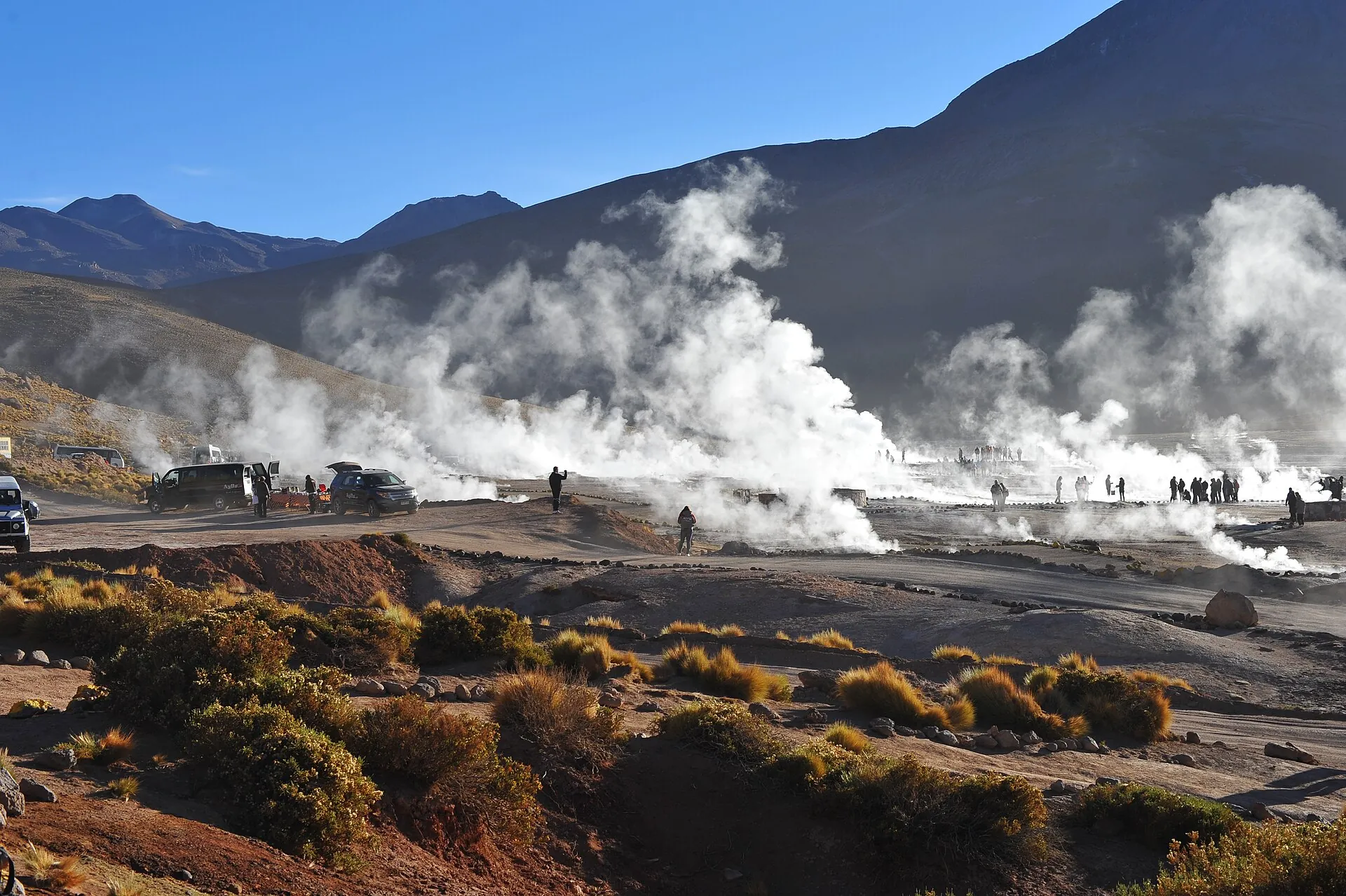
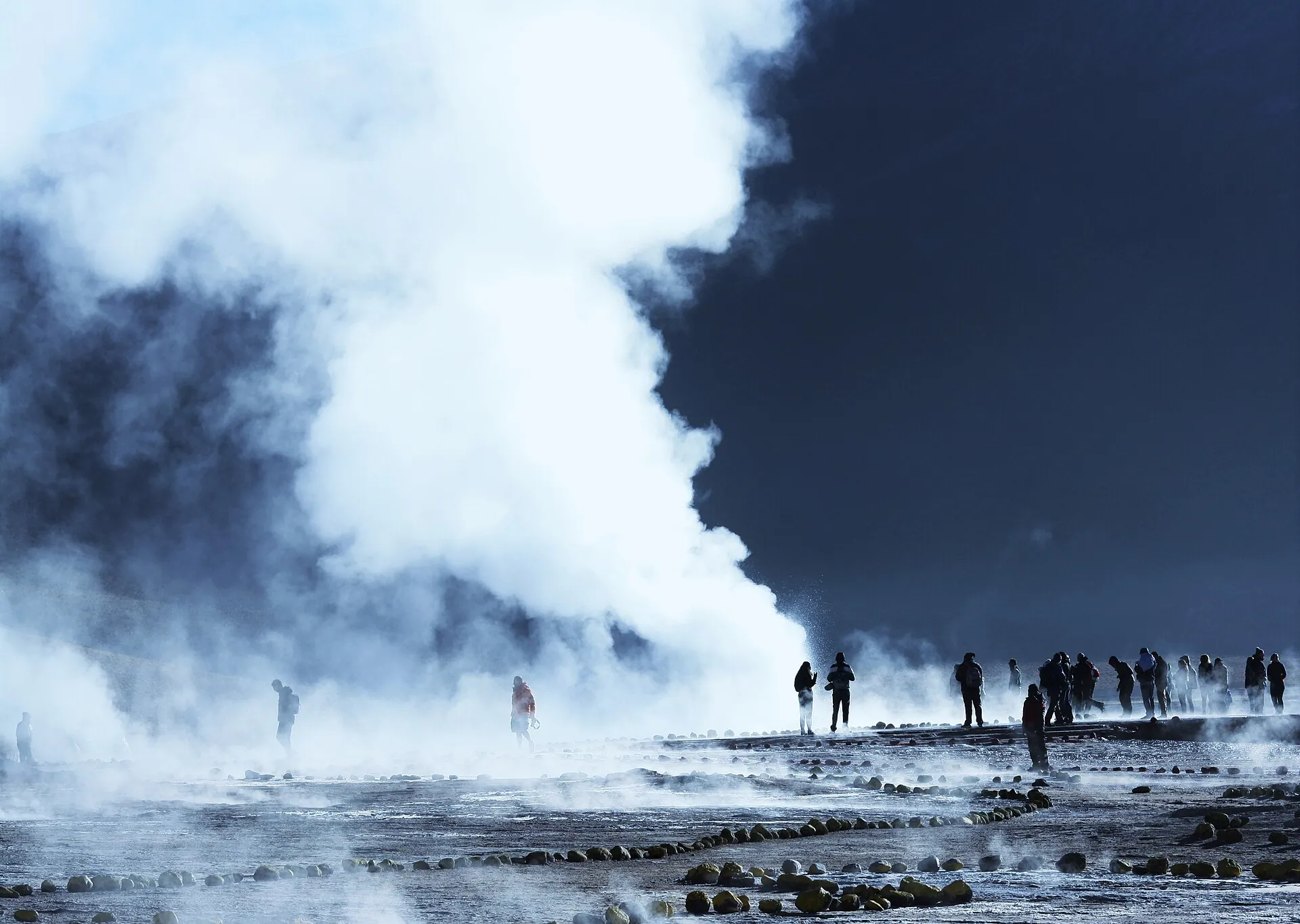
Groups of visitors and minibuses among the steam columns of the El Tatio geyser field in the morning, brown mountains behind
By seven everyone is here: 80 percent of visitors come on a tour from San Pedro – and all at the same hour.

Photo: Chris Hunkeler · CC BY-SA 2.0

The experienceSunrise at 4,320 meters

The alarm goes off at four in San Pedro, the bus rolls at five, and at six you are standing in the dark on the field. It is usually minus 10 to minus 20 °C (14 to –4 °F), and the colder it is, the higher the steam columns – up to 10 m (33 ft). The geysers themselves are small, most fountains under a meter. What you see is backlit steam, boiling water in pools, sinter cones like petrified cauliflower – and, in between, your own breath.

After breakfast at the field you head back via Machuca (a village at 4,000 m / 13,100 ft, church, llama skewers) or the Vado de Putana wetland with its vicuñas and flamingos. You are back in San Pedro around noon. Anyone who underestimated the altitude has a headache by then.

Affiliate links to GetYourGuide: if you book, we earn a commission and the price stays the same. Prices and ratings as of 22 September 2026. The entry fee (CLP 15,000) is included in almost no tour. If the road is closed, the agency decides on rebooking or refund.

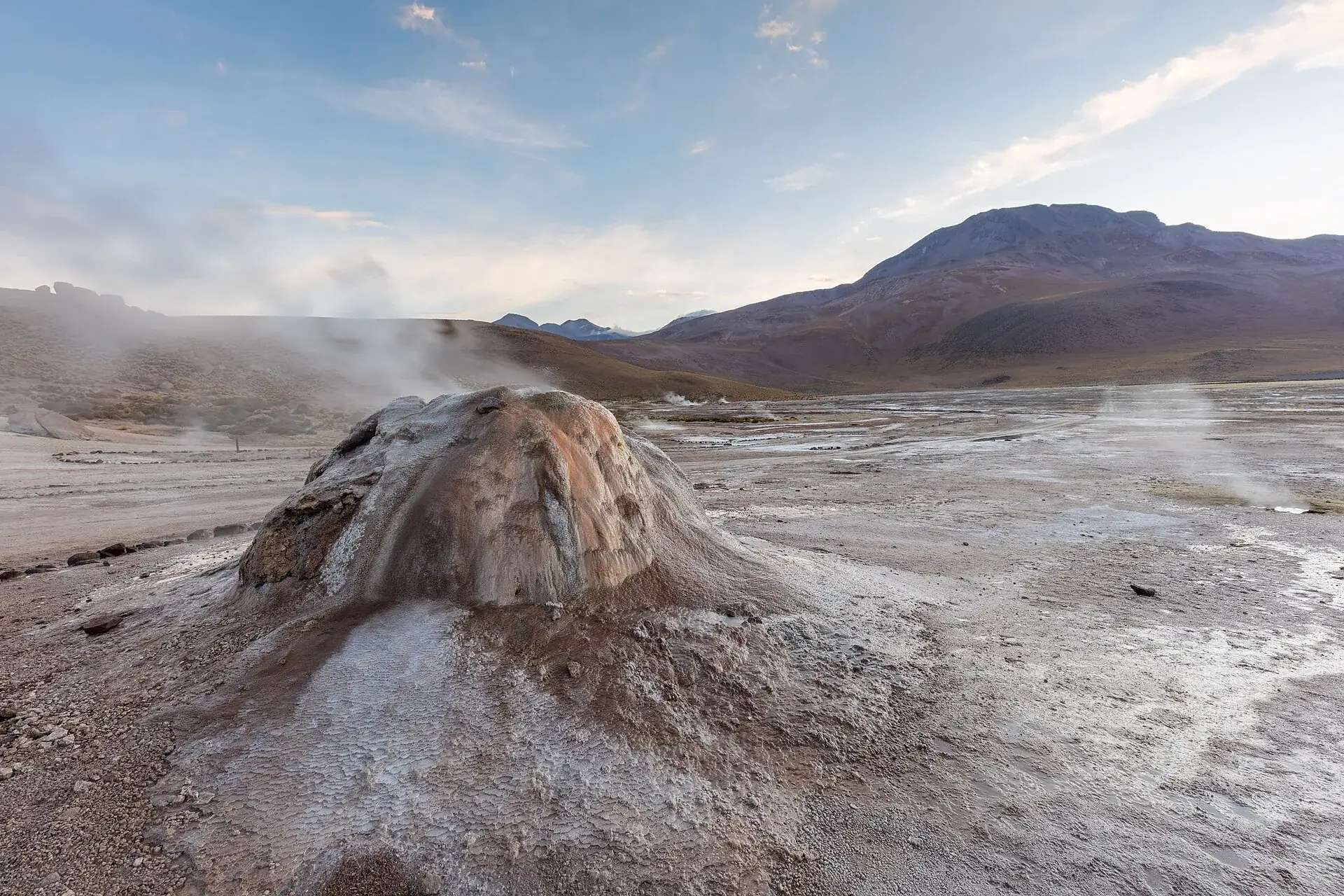
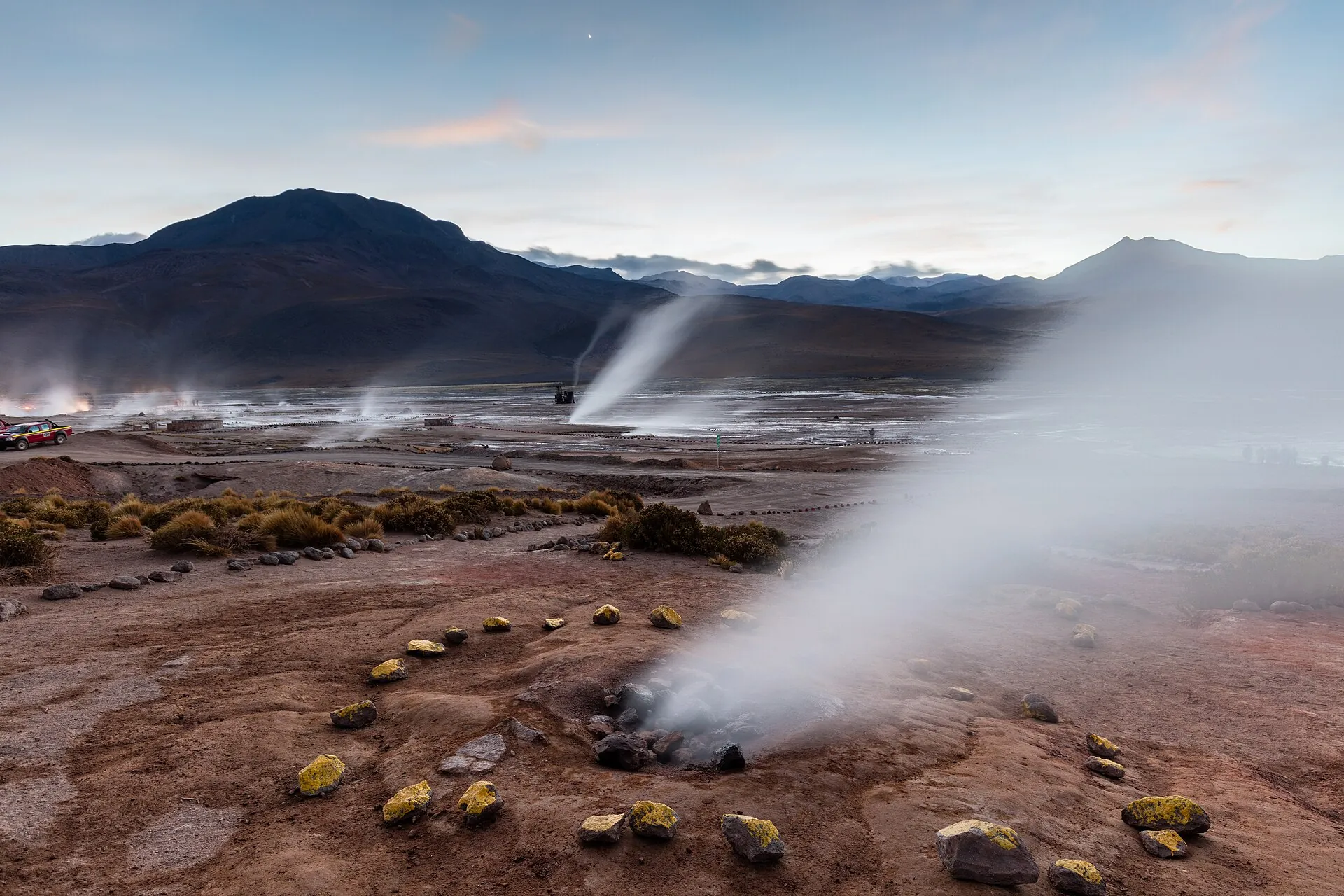
A reddish-brown sinter cone in the El Tatio geyser field, steam rising from its top, bare mountains behind
Sinter cones like this one grow over centuries from the minerals the water brings up. Do not touch – the water is 85 °C (185 °F).

Photo: Diego Delso · CC BY-SA 4.0

The rulesHouse rules of the Toconce and Caspana communities

El Tatio is not a national park. The field is state land that the government handed to the two Atacameño communities in 2014 under a free 30-year concession. So neither Pases Parques nor CONAF rates apply – the operating company's rules do.

1

Ticket at the entrance, everyone is registered

CLP 15,000 for everyone from age 9; per the operator by card or bank transfer, agencies collect cash. Every person, including children, goes on the entrance form. Bring cash – there is no signal up there.

2

No guide required

You may enter with your own vehicle (4x4 recommended), pay at the entrance and stay as long as you like – until 4 pm. Agencies need to be registered in the operator's system.

3

Stay on the paths

The rows of stones mark the safe ground. Beside them the crust is thin and the water boils. In 2015 a 69-year-old tourist died after stepping behind the barrier for a photo. Touch nothing, feed nothing, no drones without permission.

4

Minimum age 9, thermal pool closed

Children under 9 and pregnant women are excluded, over-70s advised against it. The thermal pool at the field is not in operation according to the operator – if you want to bathe, stop at the Termas de Puritama on the way back.

Official prices · as of 09/2026 (rate since 2021) · €1 ≈ CLP 1,080
Entry, Chileans and foreigners from age 9 · about €14CLP 15,000
Members of indigenous peoples with CONADI certificate · about €4.60CLP 5,000
People with disabilities (Registro Nacional de Discapacidad)free
Children 0–8 yearsno entry
Group tour from San Pedro (operators), without entry · about €32from about CLP 35,000
Sources: eltatio.net/tarifas (operator), concession by the Ministerio de Bienes Nacionales of September 27, 2014 (1,533 ha, 30 years). The opening hours of 6 am–4 pm are from the rates page without a date; whether they apply in winter is open. Tour prices are operator figures and vary.

Ways up1,900 meters of climbing in under two hours

Getting there and the loop · as of 09/2026
Road B-245 from San Pedro de Atacama (via Machuca)80–90 km (50–56 miles) of washboard and bends from 2,450 m to 4,320 m (8,040 to 14,170 ft), 1.5–2 hours; snow and ice in winter. Road free, ticket CLP 15,000. Own car: 4x4 or high clearance only, full tank, leave before 5 am. Closed as of September 22, 2026 (Res. 1221/2026).
Guided tour from San PedroHotel pickup 4–5 am, sunrise and breakfast at the field, return via Machuca or Vado de Putana, back 12–1 pm. 7–8 hours, from about CLP 35,000 in a group plus entry. If the road is closed, rebooking or refund by the agency.
Loop inside the geyser fieldMarked paths between geysers, pools and fumaroles, flat, 1–1.5 hours – walk slowly, this is 4,320 m (14,170 ft). With snow or ice on the paths the field stays closed.
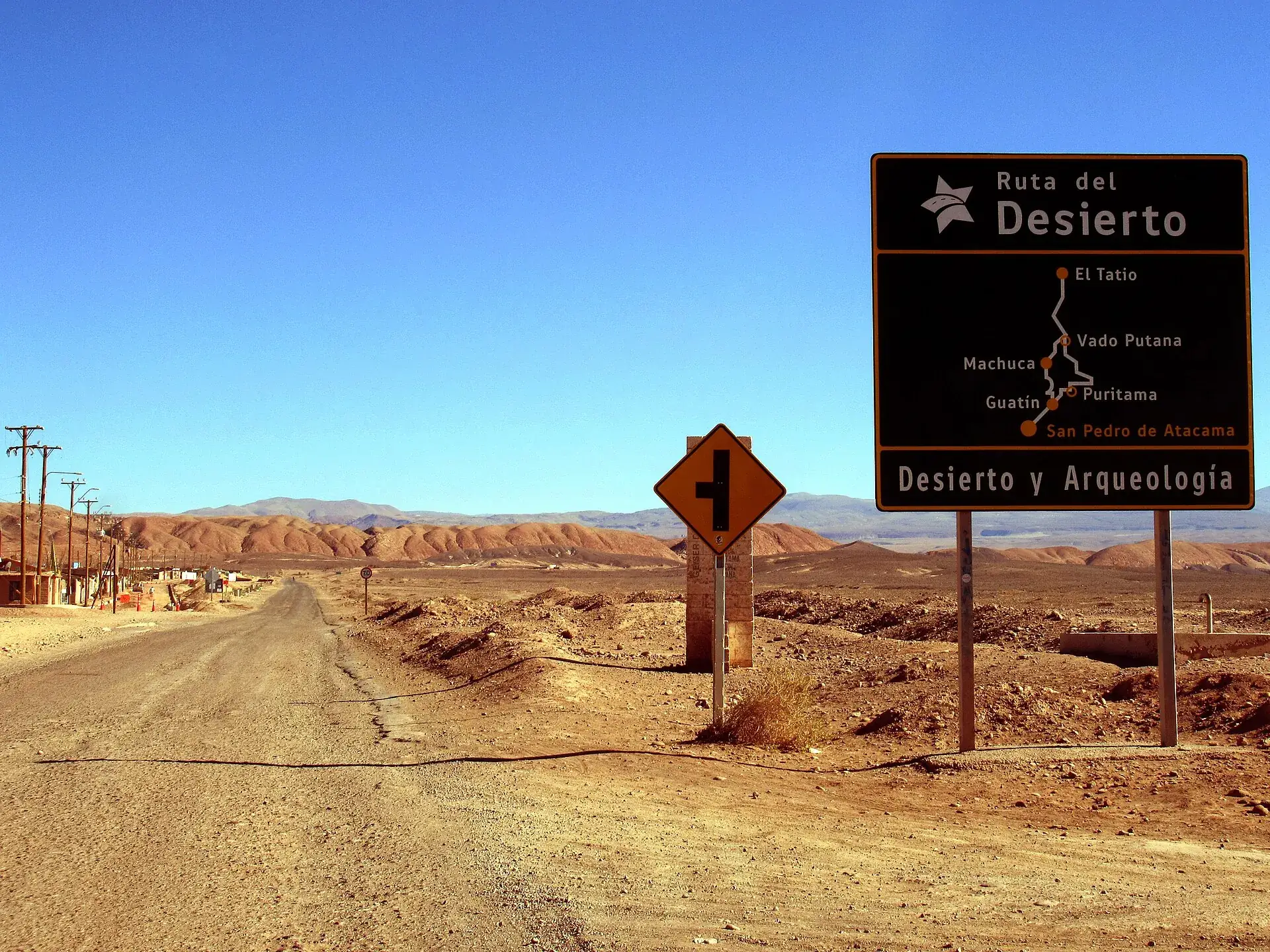
A “Ruta del Desierto” signpost on a gravel road near San Pedro de Atacama, listing the stages Guatín, Puritama, Machuca, El Tatio
The B-245 starts as a gravel road at the edge of San Pedro. Via Guatín, Puritama and Machuca it climbs 1,900 m (6,200 ft) to the geysers.

Photo: WeHaKa · CC BY-SA 4.0

Good to knowGetting to El Tatio, best time, tips

Getting there

Without a car: No public transport; practically all visitors come by tour from San Pedro de Atacama. San Pedro is reached from Calama (El Loa airport, 100 km / 62 miles, 1.5 h) by transfer or bus; from Santiago by bus about 24 h.

By car: From San Pedro head north on the B-245 via Guatín/Machuca, 80–90 km (50–56 miles) of unpaved road, 1.5–2 h; 4x4 or high-clearance vehicle recommended, driving in the dark, wildlife and washboard. From Calama alternatively Ruta 21 and B-355 directly. Parking for private visitors at the entrance (separate area). Only with a full tank and a warm car – no gas station, no signal.

  • From San Pedro de Atacama · 1.5–2 hours
    Tour or own 4x4 via B-245
  • From Calama · about 3 hours
    Ruta 21 / B-355 (direct route without San Pedro) or via San Pedro

Best time to go

Year-round before sunrise (arrival 6–7 am): the colder the air, the higher the steam columns; later in the morning the steam disappears. April to November the air is clear and dry, but June to September snow closures loom (2026: August 11 and from September 17). January/February the 'invierno altiplánico' brings thunderstorms and mud. Best combination of visibility, road and bearable cold: March–May and October–November.

Who it suits

Children
Children under 9 are not admitted under the house rules, without exception (altitude, cold, gases, boiling water). Older children only if they stay behind the barriers – the ground beside the paths is thin and hot.
Minimum age
9 years (operator, no exceptions)
Fitness
Hardly any exertion, but 4,320 m (14,170 ft): shortness of breath, headache and nausea are common because you drive up from 2,450 m (8,040 ft) in under two hours.
Altitude
High risk of 'puna': the operator recommends coca tea, no red meat the evening before, no alcohol, no smoking; agencies advise scheduling the tour at the end of your stay in San Pedro and drinking a lot. With severe symptoms drive down immediately – descent is the only treatment. Germany's Federal Foreign Office warns against day trips above 4,000 m, especially for older people.
Heart and lungs
Pregnant women are excluded, over-70s 'not recommended'; seniors from 60 and the chronically ill should report at the entrance. Sulfur gases and thin air strain heart and lungs – check with a doctor.
Wheelchair
Entrance area and restrooms yes; the paths in the field are natural ground, partly passable with help. People with disabilities enter free.
Dogs
not allowed (fauna, hot springs); no explicit rule published
Clothing
Winter clothing in layers: down jacket, hat, gloves, scarf, thermal underwear; –10 to –20 °C (14 to –4 °F) in the morning, warming up quickly after sunrise, plus sunscreen and sunglasses (UV). Swimwear only if the pool reopens.
Footwear
Sturdy, closed hiking shoes with tread – the paths are slippery in frost; no sandals.

Tips you will need on site

  • Check eltatio.net/comunicados before booking – in winter the authorities often close the roads for days (most recently from September 17, 2026).
  • Schedule the tour at the end of your Atacama stay, not on the first day: two to three nights at 2,450 m (8,040 ft) noticeably reduce the puna risk.
  • Eat lightly the evening before, no alcohol, lots of water; coca tea is sold at the market in San Pedro.
  • The CLP 15,000 entry is almost never in the tour price – bring cash, even though the operator accepts cards.
  • Children under 9 do not get in; agencies book them anyway – clarify beforehand.
  • Never step behind the rows of stones, not even for a photo: the crust is thin, the water boils. The 2015 death happened exactly that way.
  • Gloves, hat and down jacket even in summer – on arrival it is usually below –10 °C (14 °F), an hour later it is sunny.
  • Own car: 4x4/high clearance only, full tank, leave before 5 am and register at the entrance; self-drivers may stay as long as they like (until 4 pm).

A short history

  • El Tatio lies at 4,320 m (14,170 ft) and with about 80 geysers (roughly 8% of all geysers worldwide) is the third largest geyser field on Earth after Yellowstone and Kronotsky; the water emerges at 80–85 °C (176–185 °F), the fountains average under a meter, on cold mornings the steam reaches 10 m (33 ft).
  • 1920s–1970s: geothermal exploration, most recently by the state agency CORFO; abandoned boreholes still mark parts of the field.
  • Since 1994 (CONADI law) Caspana, Toconce and Machuca have claimed the area as ancestral land.
  • 2006: first concession to Toconce and Caspana, construction of the administration building, restrooms and entrance area; 2013 thermal pool and changing rooms.
  • September 8, 2009: during a geothermal drilling a 60 m (200 ft) steam fountain shoots from the ground, stopped only on October 4, 2009 – nationwide protests, the project is abandoned.
  • September 27, 2014: Bienes Nacionales grants the communities of Toconce and Caspana (about 140 families) a free concession over 1,533 ha for 30 years.
  • October 8, 2015: a 69-year-old Belgian woman falls backwards into a geyser while photographing behind the barrier, 85% burns, dies on October 15, 2015; an earlier death in 2004.
  • 2021: entry raised to CLP 15,000; 2026: snow closures in August and from September 17.
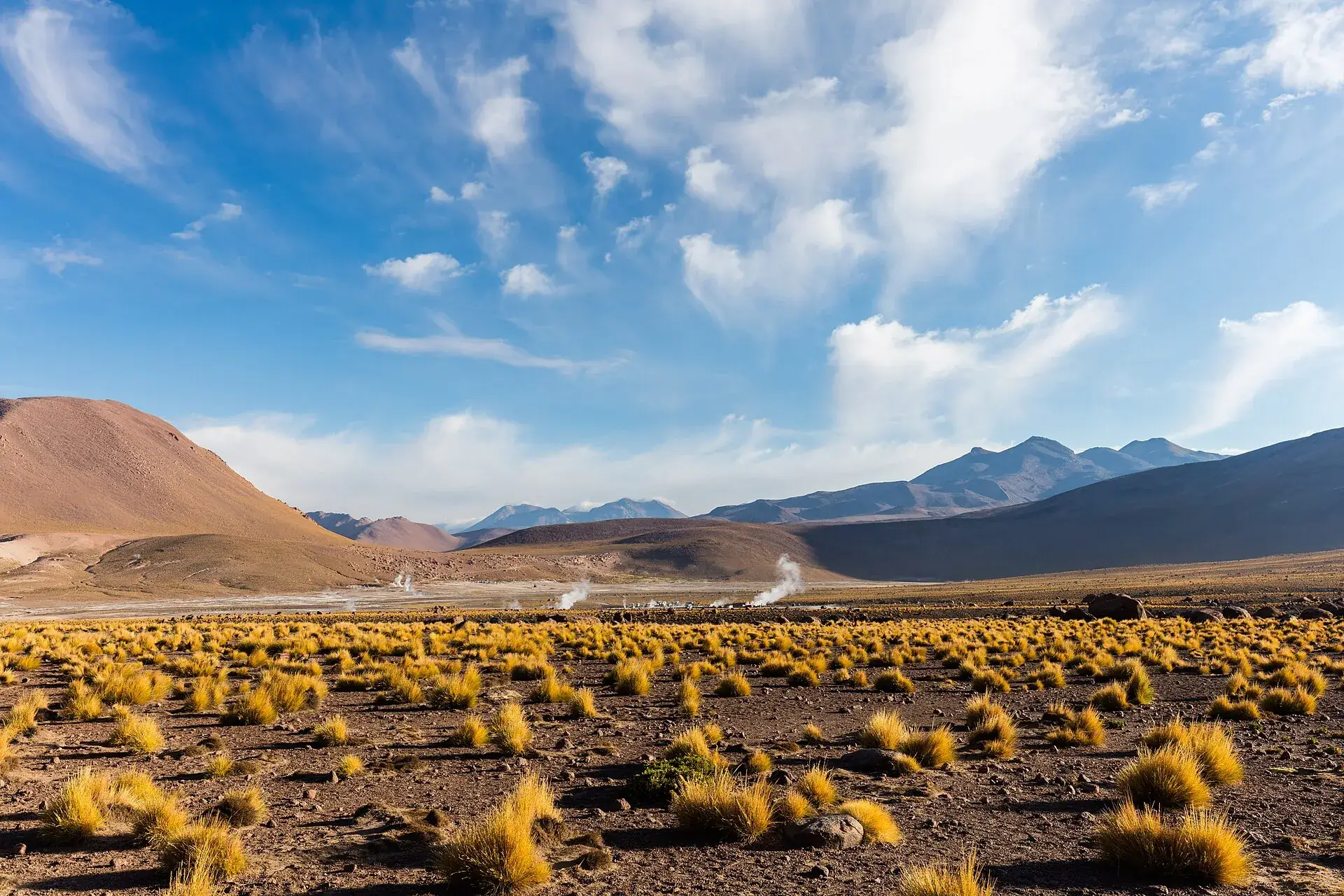
The El Tatio geyser field in the late morning: yellow ichu grass, a few steam columns and the volcanoes of the Altiplano under clouds
By late morning the steam is almost gone. Anyone who avoids the cold and arrives at ten sees a high valley with smoke signals.

Photo: Diego Delso · CC BY-SA 4.0

More than the sunriseEl Tatio with Machuca or the Moon Valley

With only two days in San Pedro, combine the geysers in the morning with the Valle de la Luna in the evening – or take the version with a stop in Machuca.

Affiliate links to GetYourGuide: if you book, we earn a commission and the price stays the same. Prices and ratings as of 22 September 2026. Do not put the geysers on your first day – two or three nights at 2,450 m (8,040 ft) lower the risk of altitude sickness.

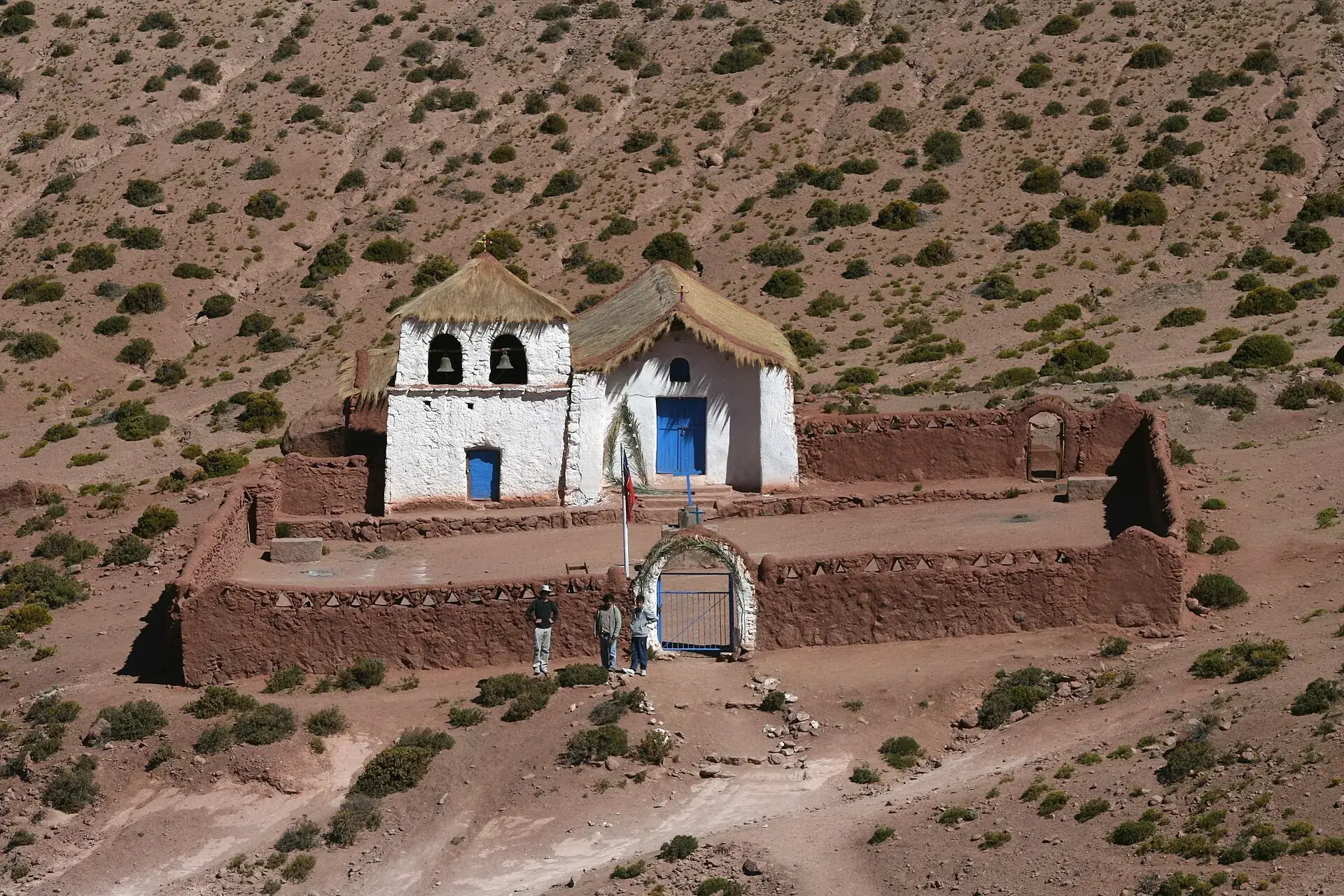
The white adobe church of Machuca with its thatched roof and stone wall at 4,000 m, brown hills behind
Machuca on the way back: a dozen houses, a 17th-century church and llama skewers for the buses.

Photo: Till Niermann · CC BY-SA 3.0

Outdated onlineWhat other sites get wrong

“Entry is 10,000 pesos for foreigners, 7,000 for Chileans.”
Since 2021 the operator has charged a flat CLP 15,000 for everyone from age 9. Discounts only for indigenous people (CLP 5,000) and people with disabilities (free).
“Children come along for free.”
The house rules prohibit entry for ages 0 to 8 without exception – because of altitude, cold, gases and boiling water.
“After the geysers you bathe in the hot pool.”
The thermal pool is not in operation according to the operator (“Piscina Geotérmica NO HABILITADA”). The alternative is the Termas de Puritama.
“El Tatio is a CONAF national park.”
The field is state land under concession to the communities of Toconce and Caspana. CONAF is not responsible, and Pases Parques sells no tickets.
“The geysers shoot meters high like in Iceland.”
The fountains are mostly under a meter high. What is spectacular are the steam columns in the morning cold – up to 10 m (33 ft).

Quick answersBefore the 4 am alarm

Are the El Tatio geysers open right now?

As of September 22, 2026: no. After snowfalls the SEREMI de Transportes closed the access roads from September 17, 2026 by Resolución 1221/2026; the operator reports the field closed because the paths are unsafe. Daily status at eltatio.net/comunicados.

How much is the El Tatio geysers tour?

Group tours from San Pedro from about CLP 35,000 (about €32), on GetYourGuide €44–71. On top comes, almost always, the entry fee of CLP 15,000, paid in cash the day before or at the entrance.

Can you visit El Tatio without a tour?

Yes, with your own vehicle (4x4 recommended) on the B-245. Ticket at the entrance, registration, no guide required. Stay on the paths and be out before 4 pm.

How cold is it at the El Tatio geysers?

On arrival at dawn usually –10 to –20 °C (14 to –4 °F), in summer around –6 °C (21 °F). After sunrise it warms up fast. Down jacket, hat, gloves – and sunscreen for the way back.

Will you get altitude sickness at El Tatio?

Often: from 2,450 m (8,040 ft) you go up to 4,320 m (14,170 ft) in under two hours. Headache, nausea, breathlessness. Go only after two or three nights in San Pedro, eat lightly the evening before, no alcohol, drink a lot.

Can children go to the El Tatio geysers?

Only from age 9. The operating company excludes children aged 0 to 8 without exception. Agencies book them anyway – clarify beforehand.

How much is entry to the geysers?

CLP 15,000 (about €14) for everyone from age 9, Chileans and foreigners alike; members of indigenous peoples pay CLP 5,000, people with disabilities nothing. Tours from San Pedro cost from about CLP 35,000 on top.

How cold is it and what should you wear?

On arrival at dawn usually –10 to –20 °C (14 to –4 °F), in summer around –6 °C (21 °F); after sunrise it warms up fast. Down jacket, hat, gloves, thermal layers, sturdy shoes – and sunscreen for the way back.

How do you get from San Pedro to the geysers?

80–90 km (50–56 miles) of unpaved road on the B-245 (via Machuca), 1.5–2 hours. Tours pick up at hotels between 4 and 5 am so you are up there by 6; there is no public transport.

How long does the tour take?

About 7–8 hours: departure 4–5 am, sunrise and breakfast at the field, a walk of a good hour, return with a stop in Machuca or at Vado de Putana, back around 12–1 pm.

Is El Tatio dangerous?

Only if you ignore the barriers: the water boils at over 80 °C (176 °F), the crust beside the paths is thin. In 2015 a tourist died who stepped behind the stones for a photo. The second hazard is the altitude, the third the icy road in winter.

Can you bathe in the thermal pool?

Not at the moment – the operator lists the geothermal pool as 'not in operation'. If you want to bathe, stop at the Termas de Puritama on the way back.

Who runs El Tatio?

The Atacameño communities of Toconce and Caspana through their company Administradora y Explotadora Turística El Tatio Ltda.; the state granted them a 30-year concession over 1,533 ha in 2014. CONAF is not responsible.

When is the best time to visit El Tatio?

Always at sunrise; the clearest and safest months for the road are March–May and October–November. June to September snow closures loom, January/February thunderstorms of the Altiplano winter.
Sources · accessed on 22 September 2026