Volcano·Guide
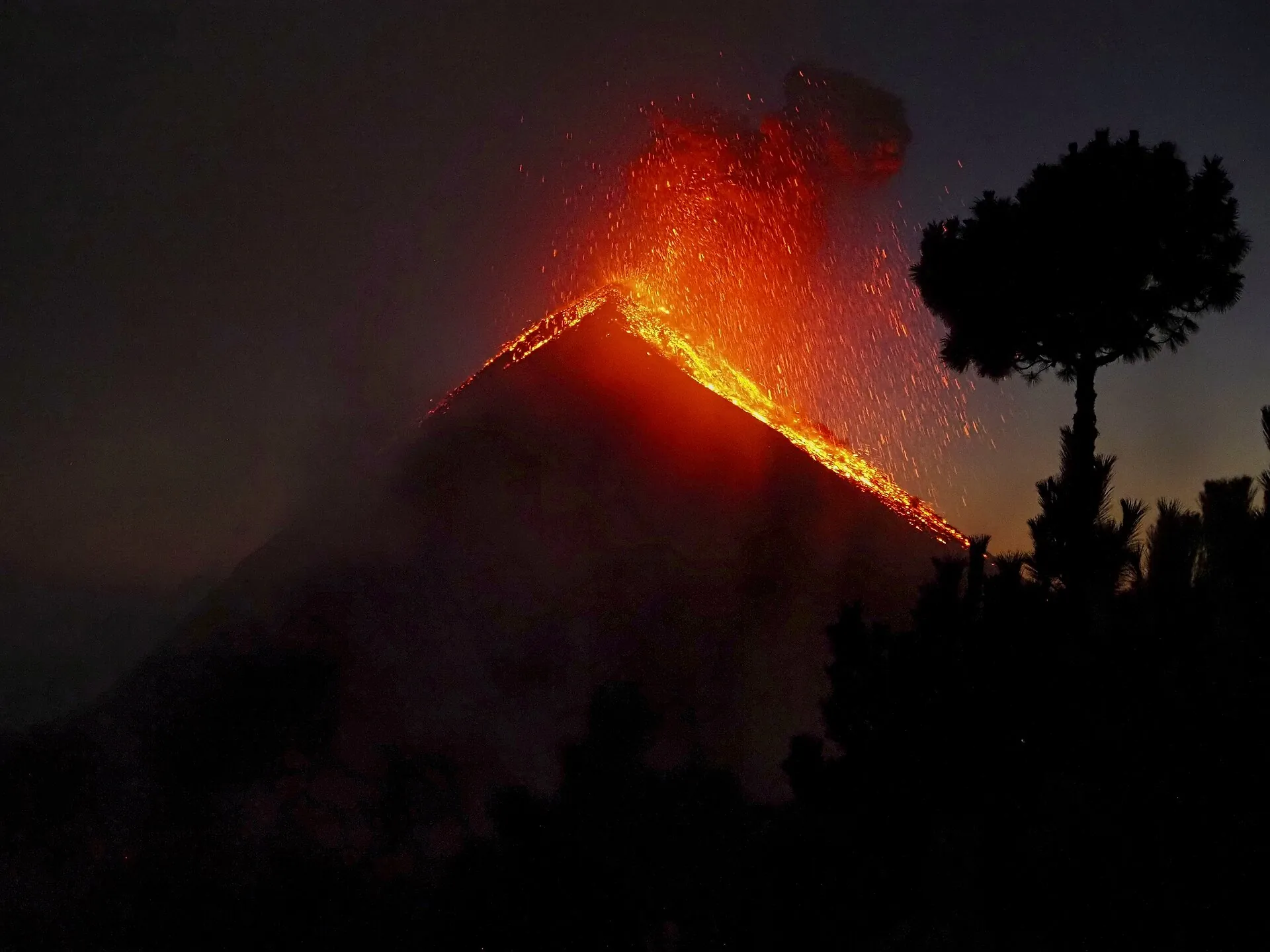
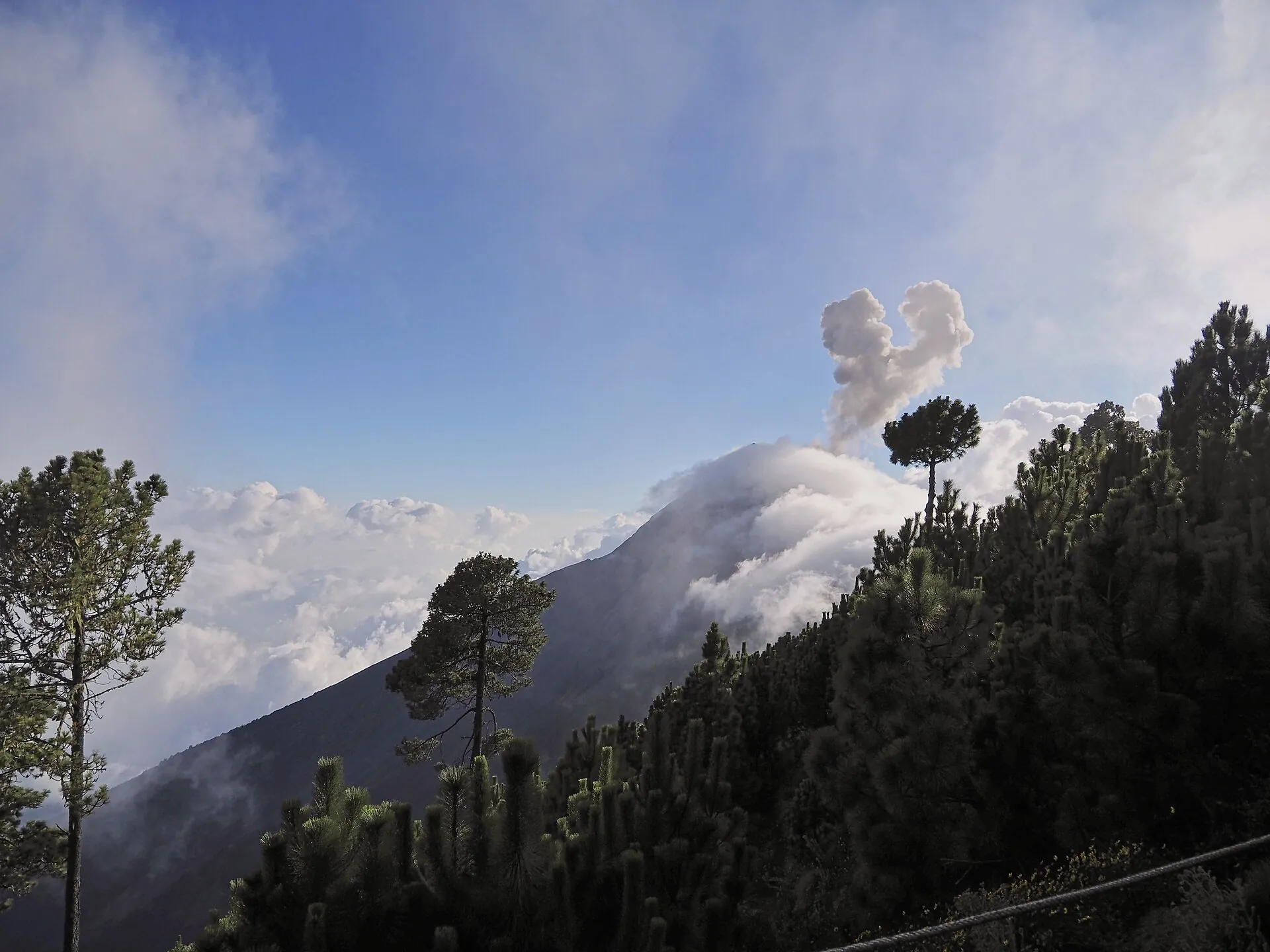
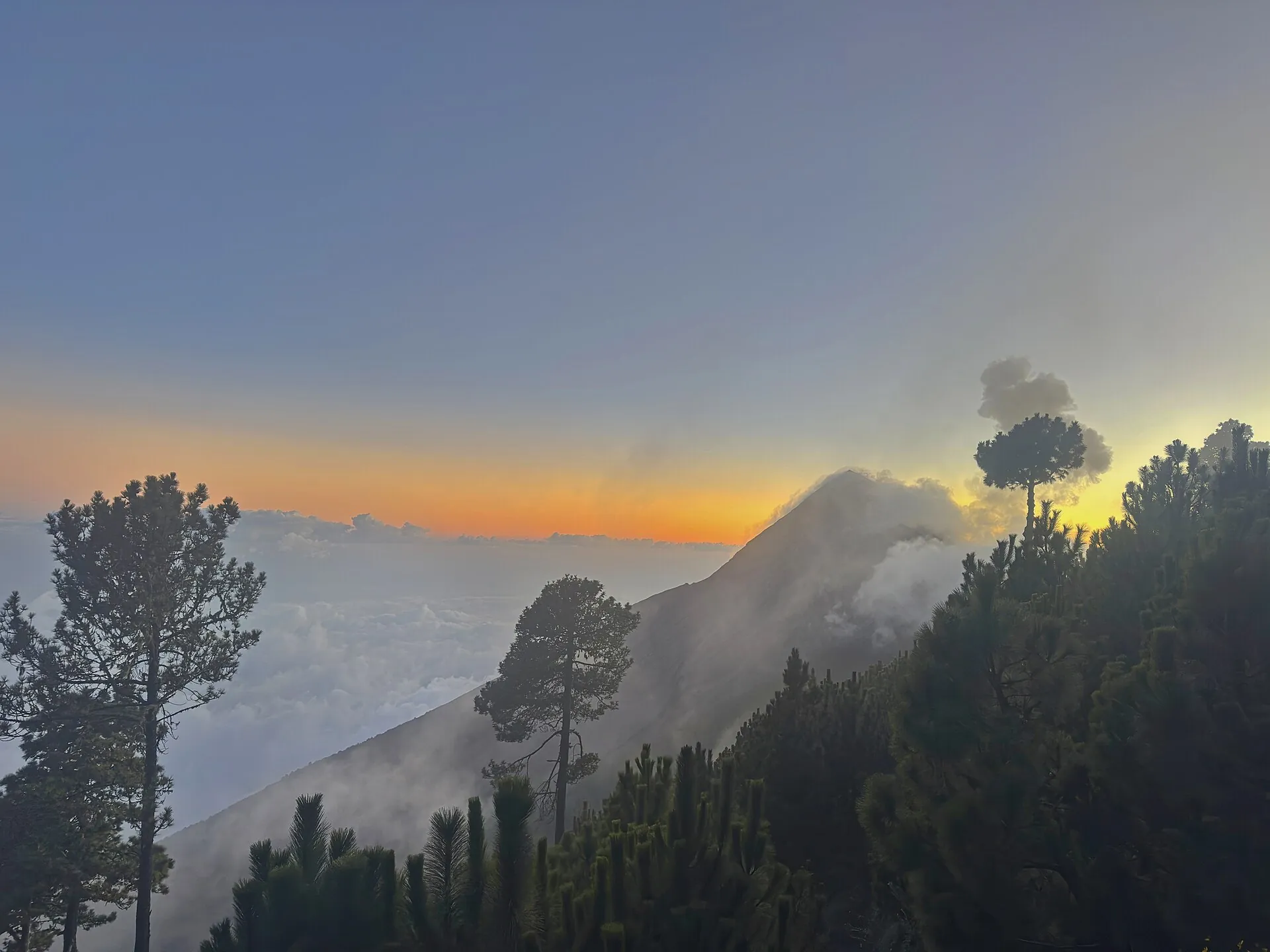
Afternoon view from the pine-covered slope of Acatenango: clouds drift around Volcán de Fuego, a pale ash cloud hangs over its crater Dusk on Acatenango: an orange horizon above a sea of clouds, Volcán de Fuego puffing ash, pine trees in silhouette Volcán de Fuego erupting at night, seen from Acatenango: glowing rock flies out of the crater and tumbles down the flank

Acatenango

You reach camp in the afternoon. The neighbor is smoking, half hidden in cloud.

Then the sun drops, and it gets cold fast.

After dark, Fuego shows why nobody up here goes to sleep.

Scroll –
night falls at camp

As of 21 September 2026Acatenango today: open – the Volcán de Fuego hike is banned

The Acatenango overnight hike is running. What is banned is the add-on hike across to Volcán de Fuego. The municipality of Acatenango prohibited the ascent through its park on April 1, 2026, with no end date, and confirmed the ban on August 7, 2026. Guatemala's volcano institute INSIVUMEH lists La Meseta and El Camellón as no-go zones in its bulletin of September 20. You still see Fuego – from camp, which is the reason people come.

Banned
3,763m

Fuego ridge: La Meseta and El Camellón

Do not approach, do not stay, do not camp – not even with a guide. Glowing blocks from the crater land on this ridge (3,763 m / 12,346 ft). Some operators still sell the add-on, sometimes only at camp for cash. Say no.

Municipal ban since April 1, 2026, open-ended
Open
3,976m

Acatenango: camps and summit

Since the reopening on August 7, 2026 the approved trails and campsites are open – with an authorized operator, a check at the La Soledad entrance and a wristband. The summit push (13,045 ft) starts around 4 am.

Entry for foreigners, cash at the gate · about $13Q100
Short notice
5–8per hour

Explosions: Fuego decides whether the park stays open

Bulletin of September 20, 2026: weak to moderate explosions, ash columns up to 4,800 m (15,750 ft), glowing ejecta at night. When activity picks up, the municipality closes the park “until further notice” – most recently August 3 to 7, 2026, with no warning.

Read the daily bulletin before you go
Sources: INSIVUMEH daily volcano bulletin of 20 September 2026 (the latest available on 21 September) · Municipality of Acatenango, ban of 1 April 2026 and Comunicado Oficial no. 09-08-2026 on the reopening of 7 August 2026 (both read via press reports; the municipality publishes on social media) · entry fee from acatenangovolcano.gt. No official notice dated after 20 September expressly confirms “open”; the bulletin lists only the Fuego zones as prohibited. Daily updates: insivumeh.gob.gt.
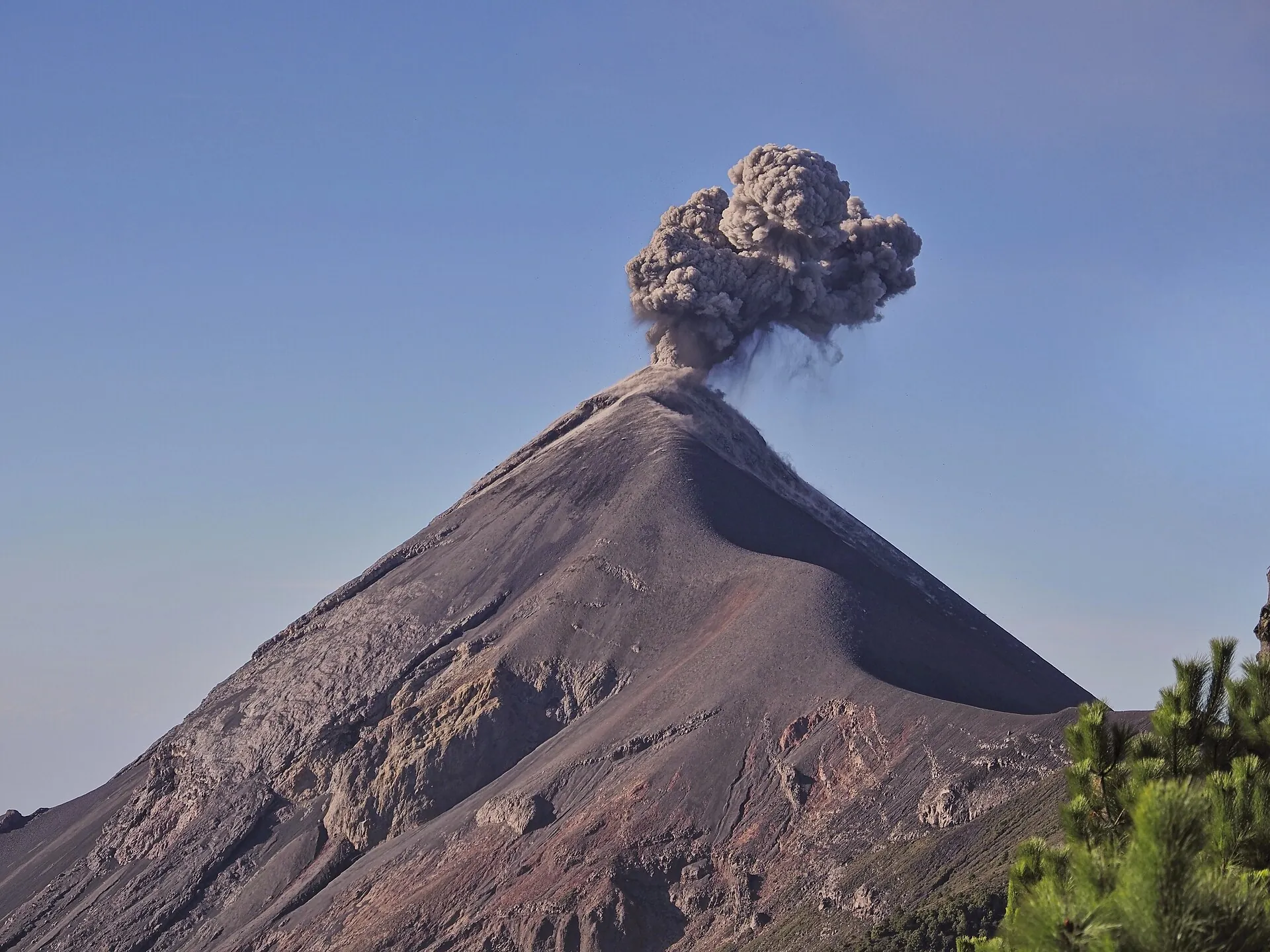
The cone of Volcán de Fuego in morning light, seen from Acatenango: a dark ash cloud rises from the crater
The cloud comes first. The rumble takes a few seconds longer.

Photo: Bex Walton · CC BY 4.0

What it is likeThe Acatenango overnight hike: a night facing Fuego

Acatenango itself is dormant. It is the grandstand: from camp you look across a saddle straight at the crater next door. Fuego is persistently active and, in busy phases, throws out ash and glowing rock several times an hour.

Your operator picks you up in Antigua in the morning. After about an hour's drive the climb starts at La Soledad, around 2,400 m (7,875 ft): steep, on loose volcanic sand, carrying your gear for the night. Operators allow four to five hours to camp, which sits between 3,400 and 3,700 m (11,150–12,140 ft) depending on the company.

By day you watch ash clouds rise and hear the rumble arrive late. Once it is dark, the gray cloud turns to fire: red arcs above the crater, glowing blocks rolling down the flank. How often that happens varies a lot, and clouds can block the view for hours. Nobody can promise it.

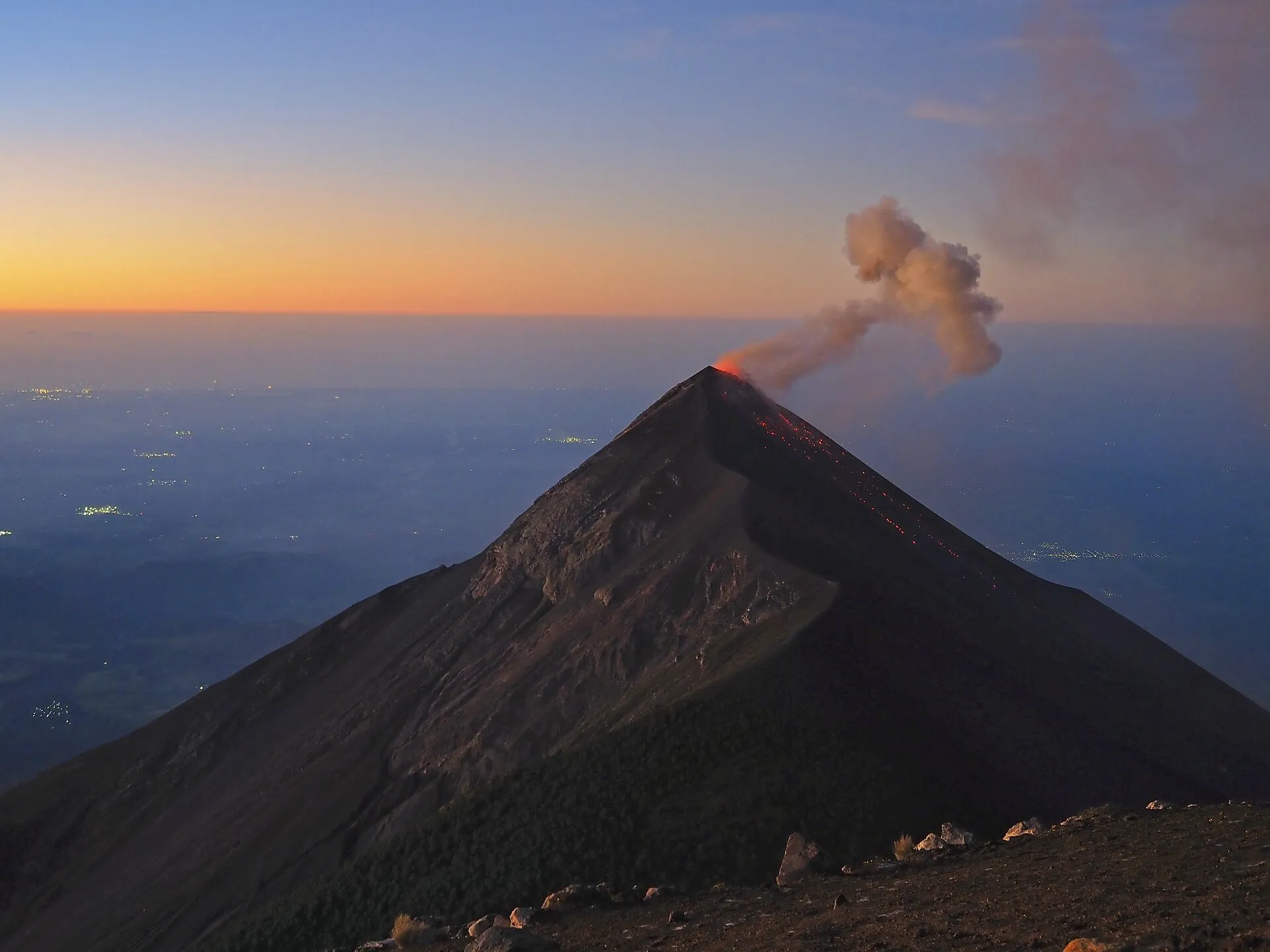
Around 4 am you walk by headlamp for an hour to an hour and a half to Pico Mayor, 3,976 m (13,045 ft). It is windy and bitterly cold on top, the clouds lie below you, and Fuego smokes in the first light. You are back in Antigua around noon.

From Antigua, two days, one nightAcatenango volcano tour from Antigua

An authorized operator is required at the gate, and there is practically no public bus to La Soledad. A tour is therefore the normal way to do this hike. Before you book, ask whether you sleep in a cabin or a tent and which warm gear is provided. The Q100 entry fee is usually not included.

Affiliate links to GetYourGuide: if you book, we earn a commission and the price stays the same. Prices and ratings as of 21 September 2026. Do not book a Fuego add-on (“Fuego hike,” “Double Whammy”), even if it is offered at checkout or at camp: it is banned. Whether you see Fuego at night is up to the mountain and the clouds.

The rulesEntry fee, guides, closed zones: what applies on Acatenango

The mountain lies in a protected area run by the municipality of Acatenango. It collects the fee, checks at the gate and orders closures. INSIVUMEH supplies the science; the tourism board INGUAT and the disaster agency CONRED weigh in. There is no reservation system and no visitor cap.

1

Pay cash at the gate

At La Soledad you pay Q100 in cash and show your passport or ID (a copy is enough). You get a wristband and a receipt. Keep the wristband on until the hike is over.

2

Authorized operators only

The reopening conditions of August 2026 require a booked tour and that you follow the guides' instructions. The full park regulations cannot be found online; the requirement is documented through official statements and press reports.

3

Approved trails and camps only

Camping is allowed on the approved sites on Acatenango. La Meseta and El Camellón on Fuego are off limits. CONRED also advises against climbing at night or in bad weather.

4

Closures come without warning

During Fuego crises, after earthquakes and in storms the municipality closes the park “until further notice.” There is no official refund rule. Ask your operator before booking whether they refund or rebook.

Entry fees, Parque Regional Municipal Volcán de Acatenango · as of 09/2026
Foreign visitors · about $13 (rate of 21 September 2026)Q100
Guatemalan nationalsQ25
Guatemalan students with valid IDQ10
Residents of the municipalityfree
Source: official park website acatenangovolcano.gt (run by the Municipalidad de Acatenango), accessed 21 September 2026. The municipality bases closures on Article 26 of its park regulations (notice of 3 August 2026). No fine amounts have been published.

The risk people underestimateCold and altitude: this is what kills people on Acatenango

The main danger on this hike is not Fuego. It is frost, wind and exhaustion at nearly 4,000 m (13,000 ft). In January 2017 six Guatemalan hikers died near the summit during a cold front; the storm had torn their tents away. On August 2, 2026 a 17-year-old died on the ascent from hypothermia and exhaustion.

< 0°C

It freezes at night

Operators report temperatures below freezing (32 °F) at camp, with strong wind on the summit. Bring base layers, fleece, a warm jacket, rain shell, hat, gloves and a headlamp. Good operators lend jackets, hats and gloves – confirm before you go.

1,500m of climbing

Steep, sandy, with a pack

About 4,920 ft of elevation gain. Operators rate the hike as hard. Poles help a lot in the loose sand. It is not suitable for children; there is no official minimum age. With heart or lung conditions, see a doctor first.

48hours before

Arrive in Antigua first

You sleep at roughly 3,400 to 3,700 m (11,150–12,140 ft). Operators recommend spending at least 48 hours in Antigua, at about 1,500 m (4,900 ft), beforehand. Headache with nausea or dizziness means: stop climbing.

Sources: Prensa Libre on the findings of the forensic institute Inacif (January 2017: three of the six died of hypothermia, three of injuries or pulmonary edema) · Infobae, 2 August 2026 · recommendations by CONRED, INSIVUMEH and INGUAT, August 2026. Camp temperatures and elevations are operator figures.

Travel advisoriesSafety: what the advisories say about volcano hikes

The U.S. State Department advises against hiking any volcano in Guatemala without a qualified local guide and notes that robberies are common and rescue capacity is limited. Germany's Foreign Office likewise names volcano visits as a robbery risk and recommends licensed guides or a police escort. In practice: stay with the group, leave valuables in Antigua (operators store luggage) and only park in guarded lots.

Sources: U.S. Embassy in Guatemala, travel advisory (version of 25 January 2022; the current page on travel.state.gov could not be read on 21 September 2026) · German Federal Foreign Office, as of 21 September 2026.

Ways upThe route – and the one that no longer exists

Routes on Acatenango · as of 09/2026 · hiking times from operators
Standard route from La Soledad (overnight hike)From the park entrance at about 2,400 m (7,875 ft), 4–5 hours to camp at roughly 3,400–3,700 m (11,150–12,140 ft). On the second morning, from about 4 am, 1–1.5 hours to Pico Mayor (3,976 m / 13,045 ft). Around 1,500 m (4,920 ft) of climbing in total, back in Antigua around noon. Year-round unless closed.
Add-on hike to the Fuego ridge (La Meseta / El Camellón) – bannedFormerly 3–4 hours round trip from camp for an extra Q200–250 (about $40). Prohibited by the municipality of Acatenango since April 1, 2026; INSIVUMEH still lists the ban in its bulletin of September 20, 2026. Offers of this kind contradict the ban.
  1. March 9, 2025Fuego eruption

    The municipality of Alotenango bans ascents of Fuego and Acatenango and any stay on El Camellón.

  2. June 5, 2025INGUAT ban

    Pyroclastic flows on Fuego. Acatenango, Fuego and El Camellón closed, reopened on June 6.

  3. April 1, 2026Fuego hike banned

    The municipality of Acatenango prohibits the ascent of Fuego through its park, with no end date.

  4. August 3, 2026Park closed

    Strong Fuego phase; CONRED declares an institutional orange alert. INGUAT bans ascents of both volcanoes.

  5. August 7, 2026Reopening

    Only the previously approved trails on Acatenango. Fuego stays banned.

Dawn on the summit of Acatenango: looking down on the cone of Volcán de Fuego with an ash plume, an orange band on the horizon
Up at four, well below freezing, sand in your boots. And then this.

Photo: Bex Walton · CC BY 4.0

Good to knowGetting there from Antigua, best time, tips

Getting there

Without a car: No workable public connection to La Soledad. The usual way is the tour operator's transfer from Antigua (departure between 6:30 and 9 a.m., depending on the operator).

By car: Possible with your own car as far as Aldea La Soledad; directions and guarded parking are not officially documented. Germany's Federal Foreign Office advises leaving vehicles only in guarded parking lots.

  • From Antigua Guatemala · approx. 1 hour (operator's figure)
    Tour operator's shuttle to the La Soledad park entrance
  • From Guatemala City
    First to Antigua (shuttle or taxi; INGUAT arranges vetted taxis via the short number 1500), the tour starts there in the morning – you need to arrive the evening before

Best time to go

Dry season from November to April: clear nights and the best chance of an unobstructed view of Fuego, but also the coldest temperatures (December–February with frost and storms at the summit). In the rainy season (May–October; hurricane season June to the end of November according to Germany's Federal Foreign Office), clouds and thunderstorms often move in during the afternoon, the trails get slippery, and INSIVUMEH warns of lahars in the Fuego ravines when it rains. The eruptions only make an impression in the dark – hence the overnight stay.

Who it suits

Children
No official minimum age found. Because of the altitude, the cold and 1,500 m (4,900 ft) of elevation gain, only for teenagers with stamina and mountain experience; on August 2, 2026, a 17-year-old died during the ascent of severe hypothermia and exhaustion.
Minimum age
none officially published; operators set their own limits
Fitness
Demanding: around 1,500 m (4,900 ft) of elevation gain on steep, loose volcanic sand while carrying a pack; operators rate the tour as 'hard'. Porters can be hired at the entrance (prices only from operator/information sites).
Altitude
Relevant: sleeping altitude around 3,400–3,700 m (11,150–12,140 ft), summit 3,976 m (13,045 ft). CONRED explicitly names headache, dizziness and nausea as warning signs. Operators recommend spending at least 48 hours in Antigua (around 1,500 m / 4,900 ft) beforehand. If symptoms appear, do not climb any higher.
Heart and lungs
Not advisable with heart or lung conditions; Germany's Federal Foreign Office advises people with respiratory conditions to protect themselves near active volcanoes (ashfall). Get medical clearance beforehand.
Wheelchair
not possible
Dogs
no rule published
Clothing
Frost at night: operators cite below 0 °C (32 °F) at camp, and at the summit strong wind adds to it; in the tragedy of January 2017, the temperature fell to about 0 °C (32 °F) and the wind tore the tents away. You need thermal base layers, fleece, a warm jacket, rain protection, a hat, gloves and a headlamp. CONRED recommends conspicuous, bright clothing, a whistle and an emergency blanket. Good operators lend out jackets, hats and gloves.
Footwear
Sturdy mountain or trekking boots (the municipality requires 'suitable mountain footwear'); poles help a great deal in the sand.

Tips you will need on site

  • Check the INSIVUMEH daily bulletin and the channels of the municipality of Acatenango the evening before and on the morning of the tour – closures come 'until further notice' and without warning.
  • Do not book a Fuego ridge hike, even if it is still offered for cash at camp: it is prohibited, and INSIVUMEH warns of glowing projectiles there that cause severe burns.
  • Have Q100 in cash for the entrance fee and your passport (or a copy) handy; wear the wristband until the end of the tour.
  • Sleep in Antigua for at least two nights beforehand, drink plenty, walk slowly on the mountain – with a headache plus nausea or dizziness, do not climb any higher.
  • Clarify with the operator in advance which warm gear is provided (jacket, sleeping bag with comfort rating, hut or tent); bring your own hat, gloves and a windproof layer.
  • Plan a buffer day: if the park is closed because of activity, the tour can often be moved to the following day; Pacaya is a good substitute.
  • Leave valuables in Antigua (operators store luggage) and hike only in a group with a guide – both Germany's Federal Foreign Office and the U.S. State Department warn of robberies on volcanoes.

A short history

  • Acatenango has two summits: Pico Mayor (3,976 m / 13,045 ft) and Yepocapa (3,880 m / 12,730 ft, also 'Tres Hermanas'). Fuego, adjoining it to the south, is 3,763 m (12,346 ft) high according to INSIVUMEH.
  • Historical eruptions of Acatenango: phreatic explosions in 1924–1927 and in December 1972, with bombs thrown in the summit area and ash carried as far as 25 km (16 miles).
  • January 2017: Six Guatemalan hikers die at the summit in a cold front; according to the forensic institute (Inacif), three of hypothermia and three of injuries or pulmonary edema. The storm had torn their tents away.
  • June 3, 2018: Eruption of Volcán de Fuego with pyroclastic flows through the Barranca Las Lajas; San Miguel Los Lotes and El Rodeo are buried. Officially at least 190 dead and more than 250 missing (as of July 2018); La Aurora airport was closed because of ash.
  • March 9 and June 5, 2025: Fuego eruptions with pyroclastic flows – ascents of Acatenango and Fuego as well as staying at the Camellón are temporarily prohibited each time.
  • April 1, 2026: The municipality of Acatenango prohibits the ascent of Fuego via its park indefinitely.
  • August 2, 2026: A 17-year-old dies during the ascent of hypothermia and exhaustion.
  • August 3–7, 2026: Strong Fuego phase, CONRED declares institutional alert level orange, park closed; reopening on August 7 with conditions (Comunicado 09-08-2026).

Outdated onlineWhat other sites get wrong

“For an extra Q200 you can hike to the Fuego ridge in the evening.”
Not anymore. The municipality of Acatenango banned the Fuego ascent through the park on April 1, 2026 and confirmed it on August 7, 2026. INSIVUMEH's bulletin of September 20, 2026 lists La Meseta and El Camellón as prohibited zones – approaching, staying and camping.
“The entry fee is 50 quetzales.”
Foreigners pay Q100 according to the municipality. The Q50 figure appears on private info sites as the total for Guatemalans (Q25 Acatenango plus Q25 Alotenango).
“You can hike it on your own without a guide.”
The August 2026 conditions require an authorized operator, and there is a check at the entrance. The U.S. State Department advises against hiking any volcano without a qualified local guide.
“Fuego erupts reliably every 15 to 20 minutes.”
The rate varies widely. The bulletin of September 20, 2026 reports 5–8 explosions per hour; before the eruption of March 9, 2025 Fuego had been almost quiet for more than 40 days. And clouds often hide it completely.
“It's the tropics – a light jacket will do.”
It freezes at camp at night. In 2017 six people died in a cold front near the summit, and in August 2026 a teenager died of hypothermia.

Quick answersBefore the hike

Can you do the Volcán de Fuego hike?

No. Some operators still sell it, but it is not allowed. Since April 1, 2026 the ascent of Fuego through the Acatenango municipal park has been banned, and INSIVUMEH lists La Meseta and El Camellón as closed zones. You watch Fuego from camp on Acatenango instead.

How much does an Acatenango volcano tour from Antigua cost?

On GetYourGuide, two-day tours started at about €50 per person on 21 September 2026; small-group tours with cabins run around €150. Operators in Antigua quote from about $49 to more than $200. The Q100 entry fee (about $13) is usually extra.

Do you really see lava from Acatenango?

At night you see Fuego's glowing ejecta when it is active and the view stays clear. Neither is certain: activity varies, and clouds can hide the mountain all night.

Can you hike Acatenango in one day?

A few day trips with a night-time start exist. But Fuego's glow only shows in the dark, which is why the overnight hike is the norm. CONRED advises against night ascents.

Acatenango or Pacaya – which volcano from Antigua?

Pacaya is a half day, easy and fine for families, but currently shows no glow. Acatenango takes two days, is hard and freezing at night – and looks onto an erupting volcano.

Is Acatenango open right now?

As of September 21, 2026: yes. After the Fuego crisis of August 3, the municipality of Acatenango reopened the park on August 7, 2026. The ascent of Fuego, including the La Meseta and El Camellón zones, remains prohibited. That can change within hours – check the INSIVUMEH daily bulletin before the tour.

How much is the Acatenango entrance fee?

Foreigners pay 100 quetzales (Q100, about $13 or €11.50, as of September 2026), Guatemalans Q25, students with ID Q10. You pay in cash at the entrance in La Soledad; with most tours the entrance fee is not included.

Can you hike Acatenango without a guide?

The working assumption is no: the municipality's conditions of August 2026 require a tour with an authorized operator, and checks are carried out at the entrance. Germany's Federal Foreign Office and the U.S. State Department also strongly advise using licensed guides because of robberies and route-finding problems.

How long is the Acatenango hike?

Two days is the norm: morning departure from Antigua, four to five hours of climbing to camp, views of Fuego at night, summit push at around 4 a.m. for sunrise and back in Antigua by midday. The times come from operators; there are no official figures.

How cold does it get on Acatenango?

At night the temperature at camp drops below freezing, and at the summit strong wind adds to it. A hat, gloves, several warm layers and a windproof jacket are essential; reputable operators lend them out.

Can you get altitude sickness on Acatenango?

It is possible, because you sleep at around 3,400 to 3,700 m (11,150–12,140 ft) and climb to 3,976 m (13,045 ft). Spend at least two days in Antigua at 1,500 m (4,900 ft) beforehand, walk slowly and drink plenty. With a headache plus nausea or dizziness, descend.

Is the Acatenango hike dangerous?

The main risks are cold, altitude and exhaustion – these killed six people in 2017 and a teenager in August 2026. On Acatenango itself you are outside Fuego's throwing range as long as you stay away from the closed zones. In addition, there is the general risk of robbery on volcanoes that the travel advisories mention.

Is Acatenango suitable for kids?

There is no official minimum age, but 1,500 m (4,900 ft) of elevation gain, frost and an altitude of almost 4,000 m (13,000 ft) are unsuitable for children. Pacaya is a much better fit for families.

How do you get from Antigua to Acatenango?

By the tour operator's shuttle in about an hour to Aldea La Soledad at around 2,400 m (7,875 ft). There are practically no public buses to the entrance. If you are coming from Guatemala City, travel to Antigua the day before.

When is the best time to hike Acatenango?

November to April: in the dry season the nights are clear and the chance of an unobstructed view of Fuego is highest – although it is also coldest then. In the rainy season, afternoon thunderstorms, clouds and slippery trails are likely.

What happens if the park closes at short notice?

The municipality closes 'until further notice' and usually reopens after a few days (August 2026: four days). There is no official refund rule; whether you get money back or are rebooked depends on the operator – ask before booking.
Half a day or two daysWhich volcano from Antigua?

Both trips start in Antigua and could hardly be more different. Pacaya: half a day, easy, doable with kids, currently no glow. Acatenango: two days, 1,500 m (4,920 ft) of climbing, frost at night – and a view of an active volcano. Pacaya is also the usual substitute when Acatenango closes at short notice.

Sources · accessed on 21 September 2026