Volcano·Guide
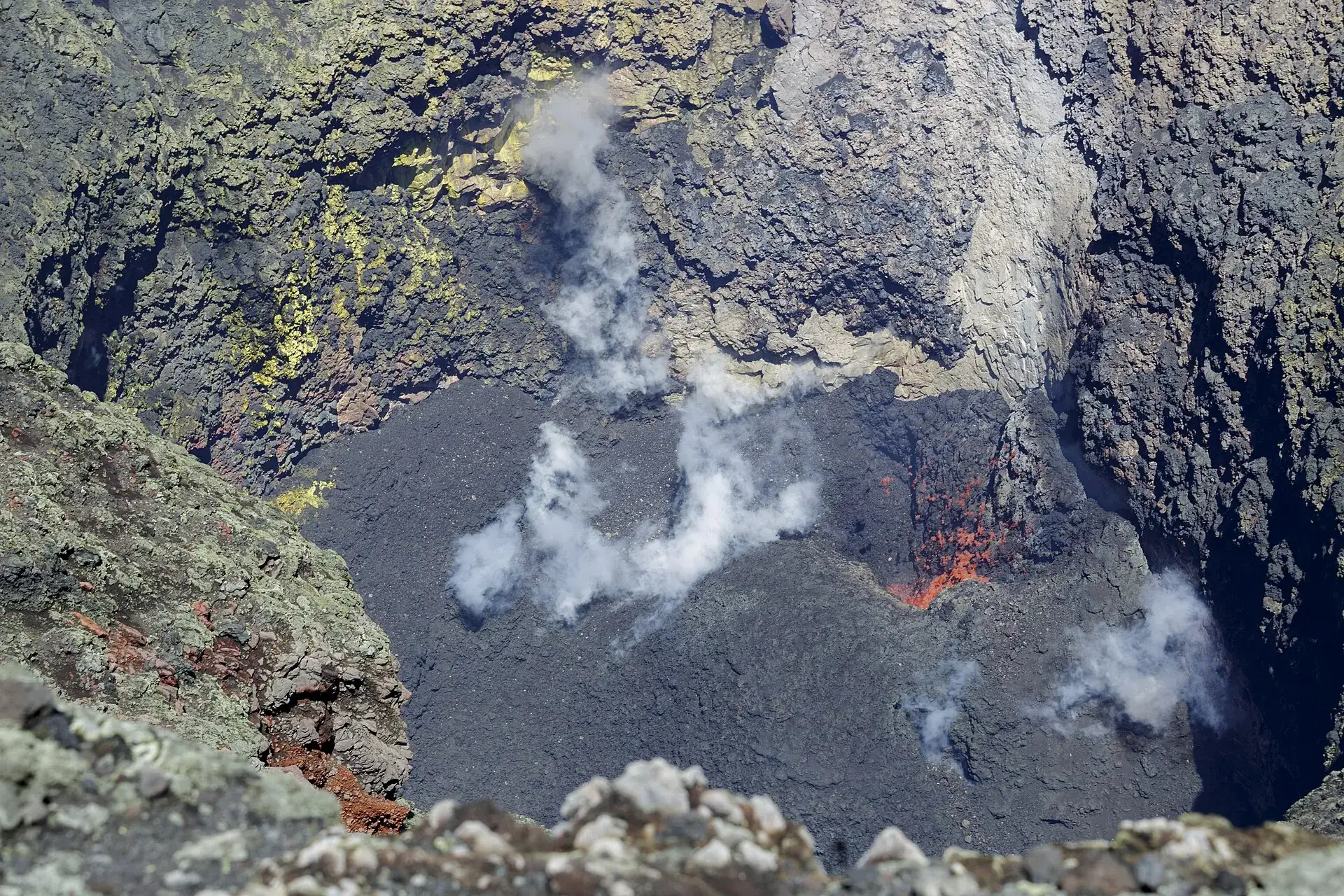
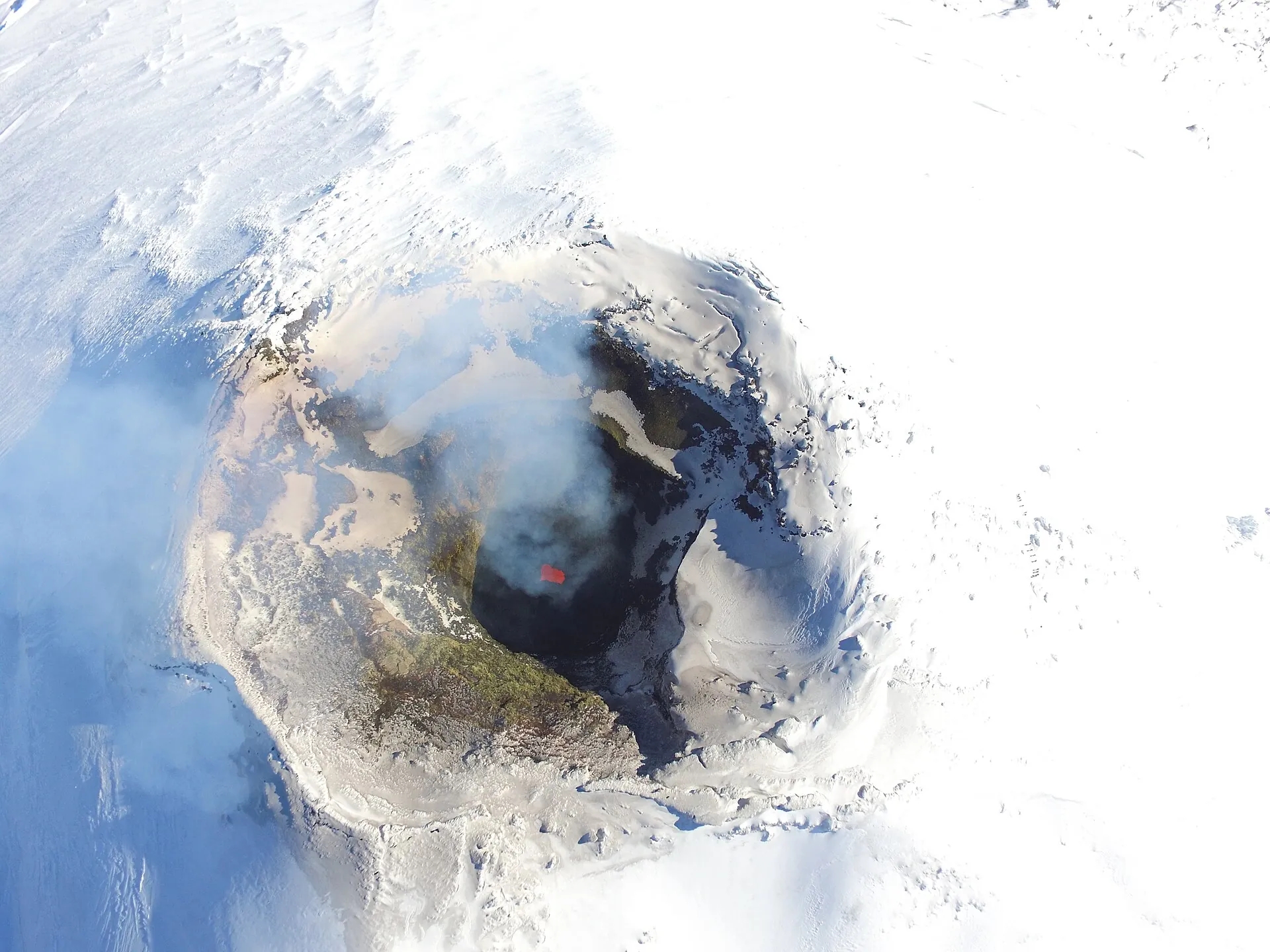
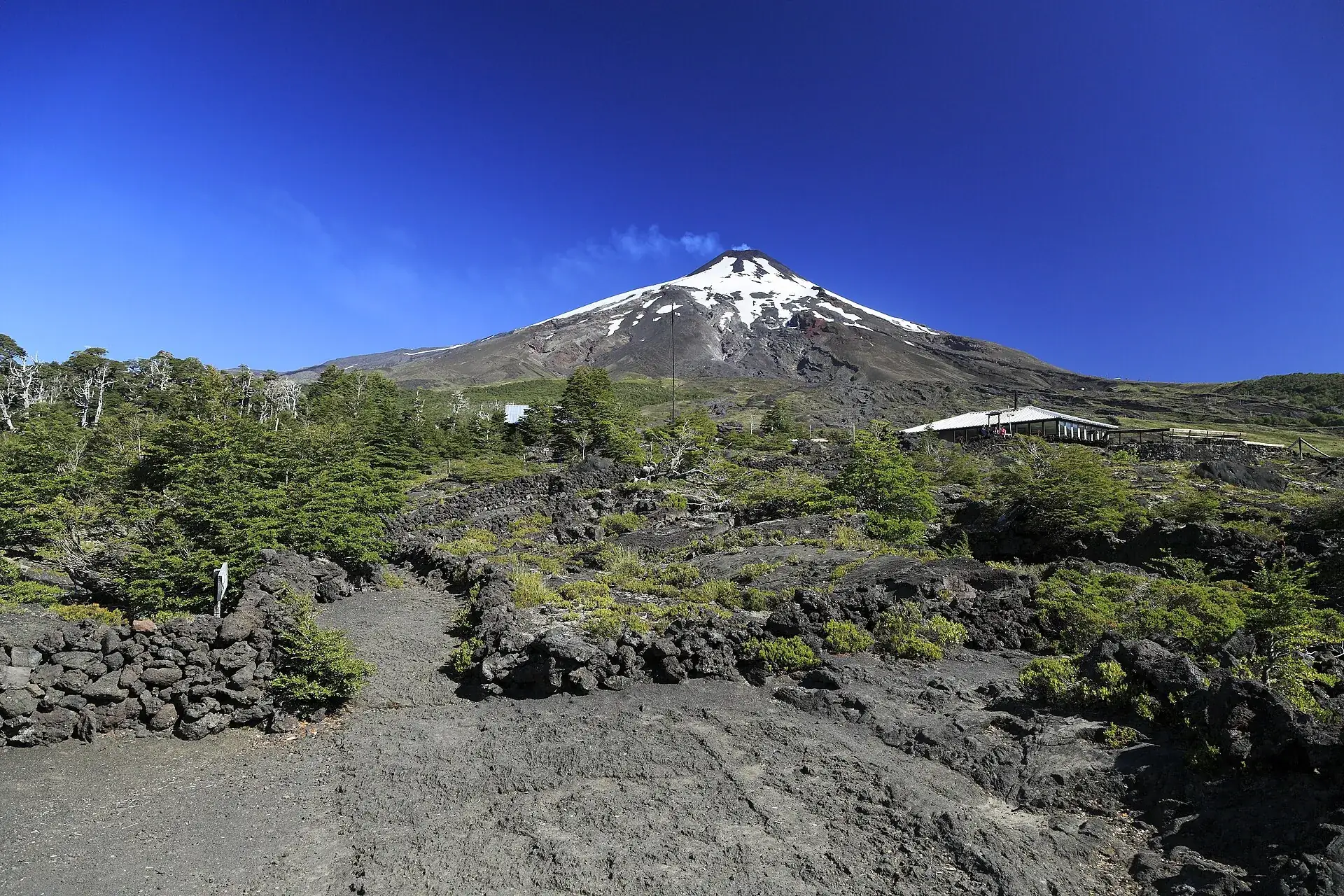
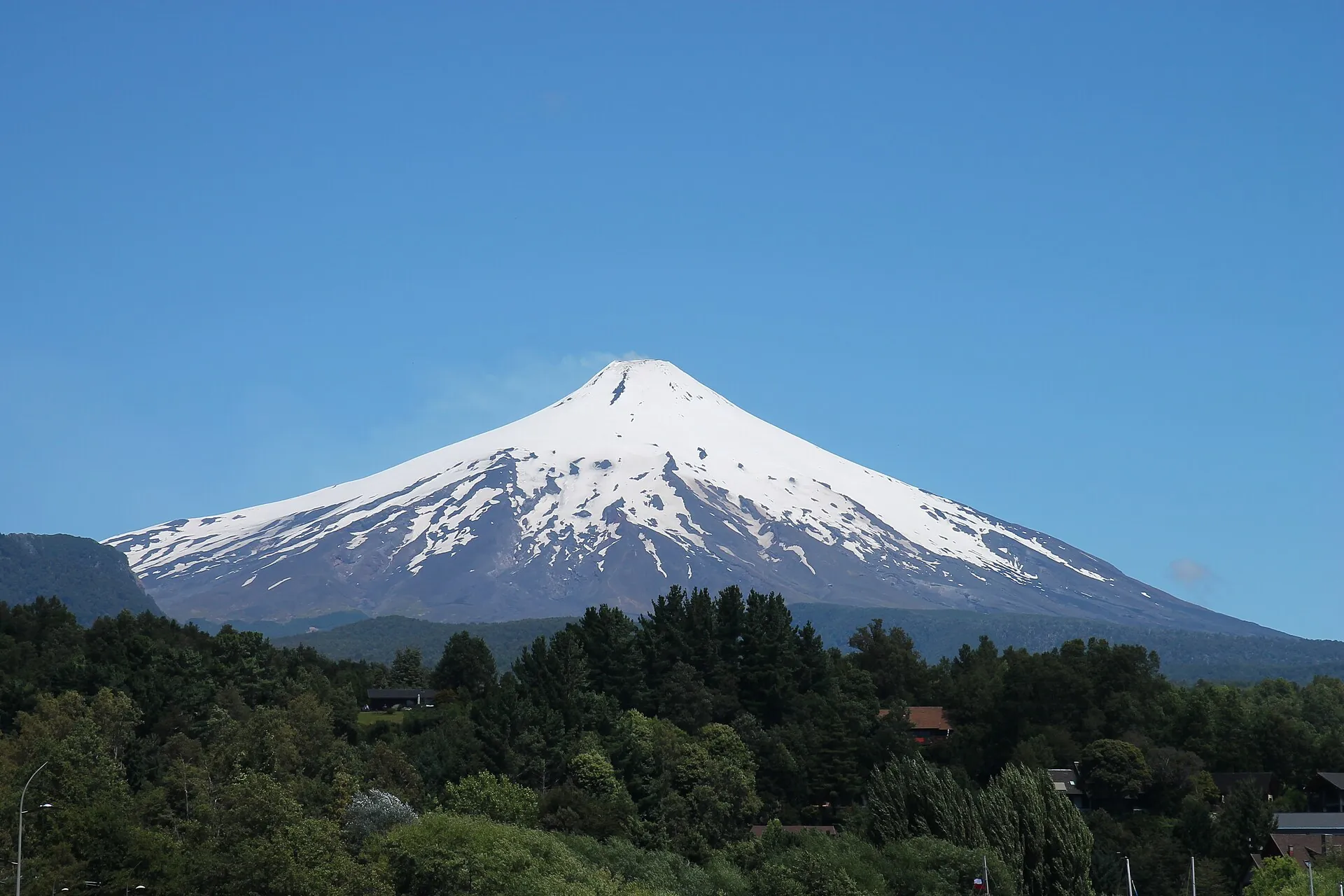
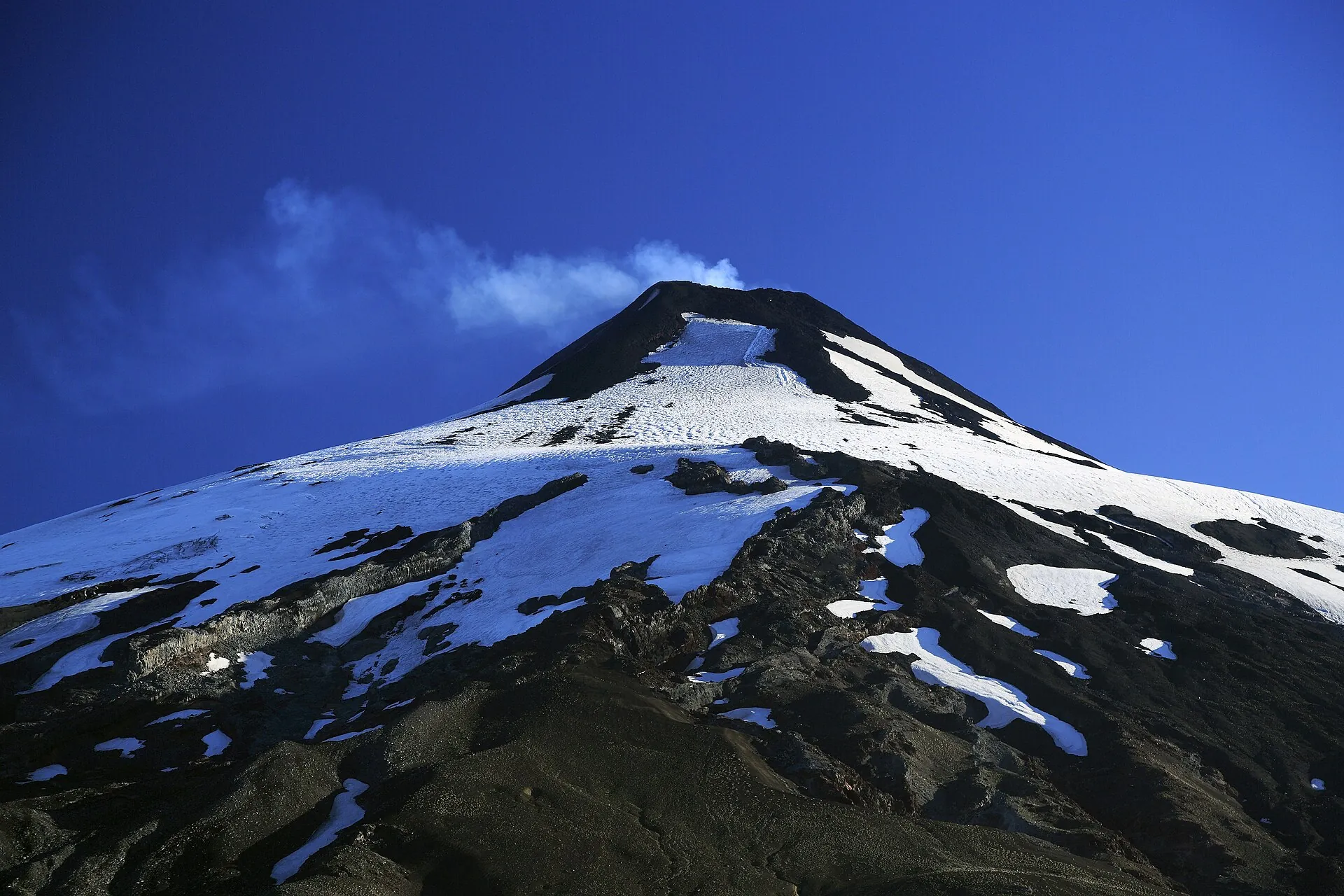
The snow-covered cone of Villarrica above the forests near Pucón, a small plume of steam at the summit The summit of Villarrica up close: firn, dark lava ribs and a cloud of steam above the crater rim Looking into the crater of Villarrica: black lava crust, white steam and a red glow from the vent

Villarrica Volcano

From Pucón it looks like a cone of snow with a small flag of steam on top.

Up high the snow has frozen to firn, and the air smells of sulfur.

Inside the crater sits a lava lake. Right now, that is exactly why nobody is allowed up.

Scroll –
the climb begins

As of September 22, 2026Alert level yellow: the crater is closed, the mountain is not

On September 4, 2026 SERNAGEOMIN raised Villarrica from green to yellow: the lava lake is rising, and small explosions are throwing rock over the crater rim. CONAF's climbing protocol applies only at green – so the crater climb is off. The ski center, the chairlift and the trails in the national park stay open.

No access
2,847m

The crater

The protocol allows climbs to the rim only at alert level green and without a safety perimeter. Neither has applied since September 4, 2026. How high guided tours currently go has not been set by any authority – in the last yellow phase they ended at 2,000 to 2,400 m (6,560–7,870 ft).

SERNAGEOMIN, Alerta Técnica Amarilla since September 4, 2026
Open
1,900m

Pillán ski center and chairlift

The road to the Juncalillo parking lot is public. The chairlift runs in winter for skiers and sightseers, 9 am–5 pm. In summer (mid-January to early March) there are scenic rides and sunset evenings.

Silla Panorámica from age 15 · high season CLP 25,000CLP 20,000
Open
1,400m

National park, Rucapillán sector

Trails to viewpoints and lava fields below the slopes, no guide needed. Entry Mon–Sun 8:30 am–5:30 pm, last entry 4 pm. Ticket online only from Pases Parques – nothing is sold at the gate.

Foreign adults · about €10CLP 11,000
Sources: SERNAGEOMIN, notice of September 4, 2026 and the “Alertas volcánicas” list; CONAF Parque Nacional Villarrica; Pases Parques (as of 09/2026); centropillan.cl (2026 rates); climbing protocol as published by the municipality of Pucón (November 22, 2024) and DAEM Villarrica (09/2025). A separate CONAF closure notice for the crater could not be found on September 22, 2026 – “no crater access” follows from the protocol. Daily status: sernageomin.cl/alertas-volcanicas.
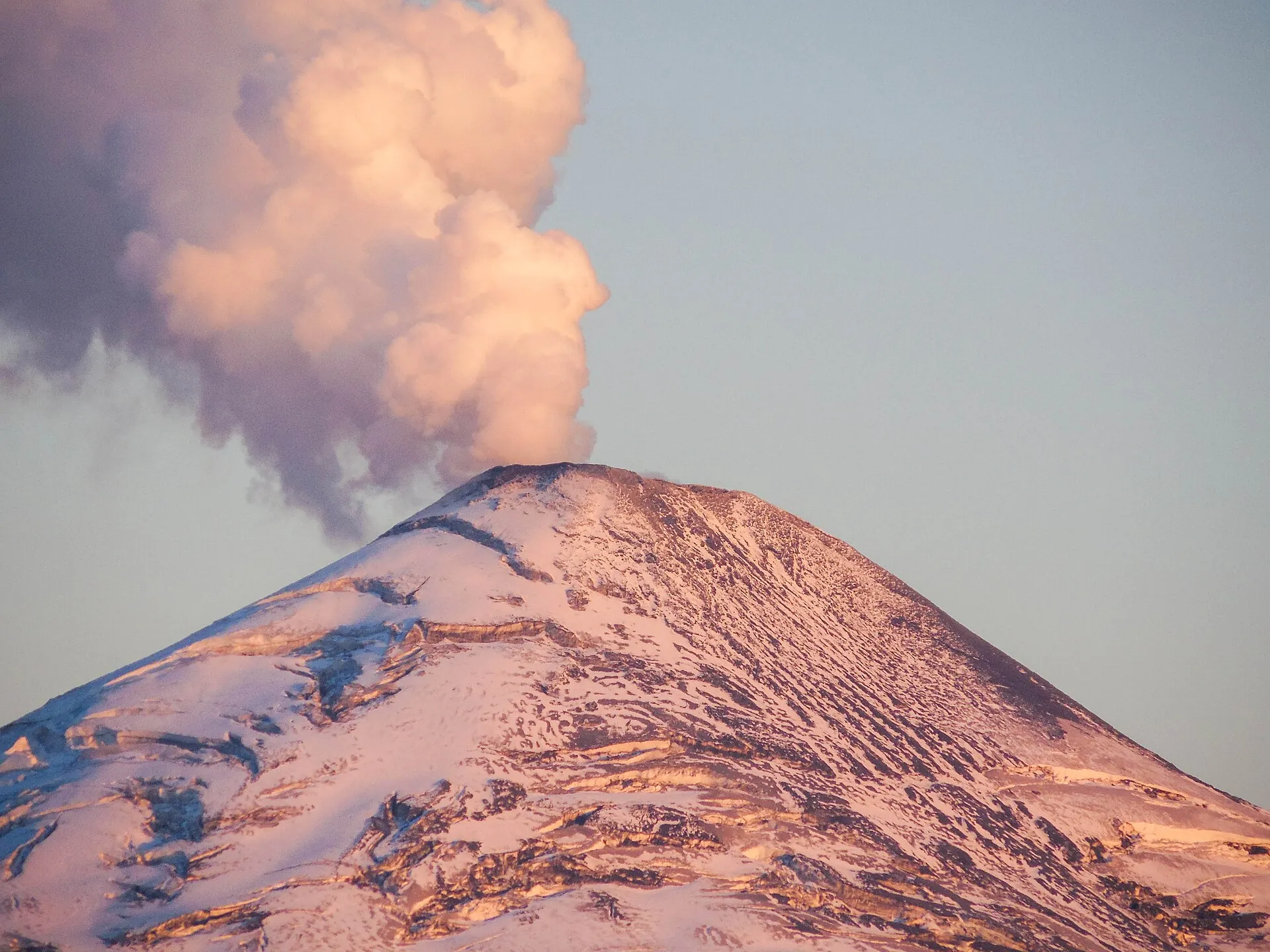
Villarrica in evening light, the snow cone tinted pink, a massive cloud of steam rising from the crater
What Pucón sees in the evening: the cloud above the crater – and, when the lava lake is active, its red glow. Nobody has to climb for that.

Photo: Natalia Reyes Escobar · CC BY-SA 4.0

The experienceA lava lake in the crater – and a rim you can reach in a day

At green, Villarrica is a long, honest day: leave Pucón at 6:30 am, chairlift to 1,900 m (6,230 ft), then four to six hours over firn and volcanic sand with crampons and an ice axe. At the top the plan allows ten minutes on the crater rim – sulfur, steam, and with luck a view of the lava lake. The descent is a slide down the snow on sliding pants. None of that is available right now. Agencies still sell the tour; before booking, ask how high it really goes at yellow.

What remains is not nothing: the trails in the Rucapillán sector between lava fields and araucaria trees, the chairlift ride with its view over Lake Villarrica, the lava tube at the Cuevas Volcánicas – and at night the lakefront in Pucón. From there you can see what the mountain is up to.

Affiliate links to GetYourGuide: if you book, we earn a commission and the price stays the same. Prices and ratings as of 22 September 2026. At alert level yellow no tour reaches the crater. Before booking, ask the operator where the tour currently ends and what is refunded if it is called off.

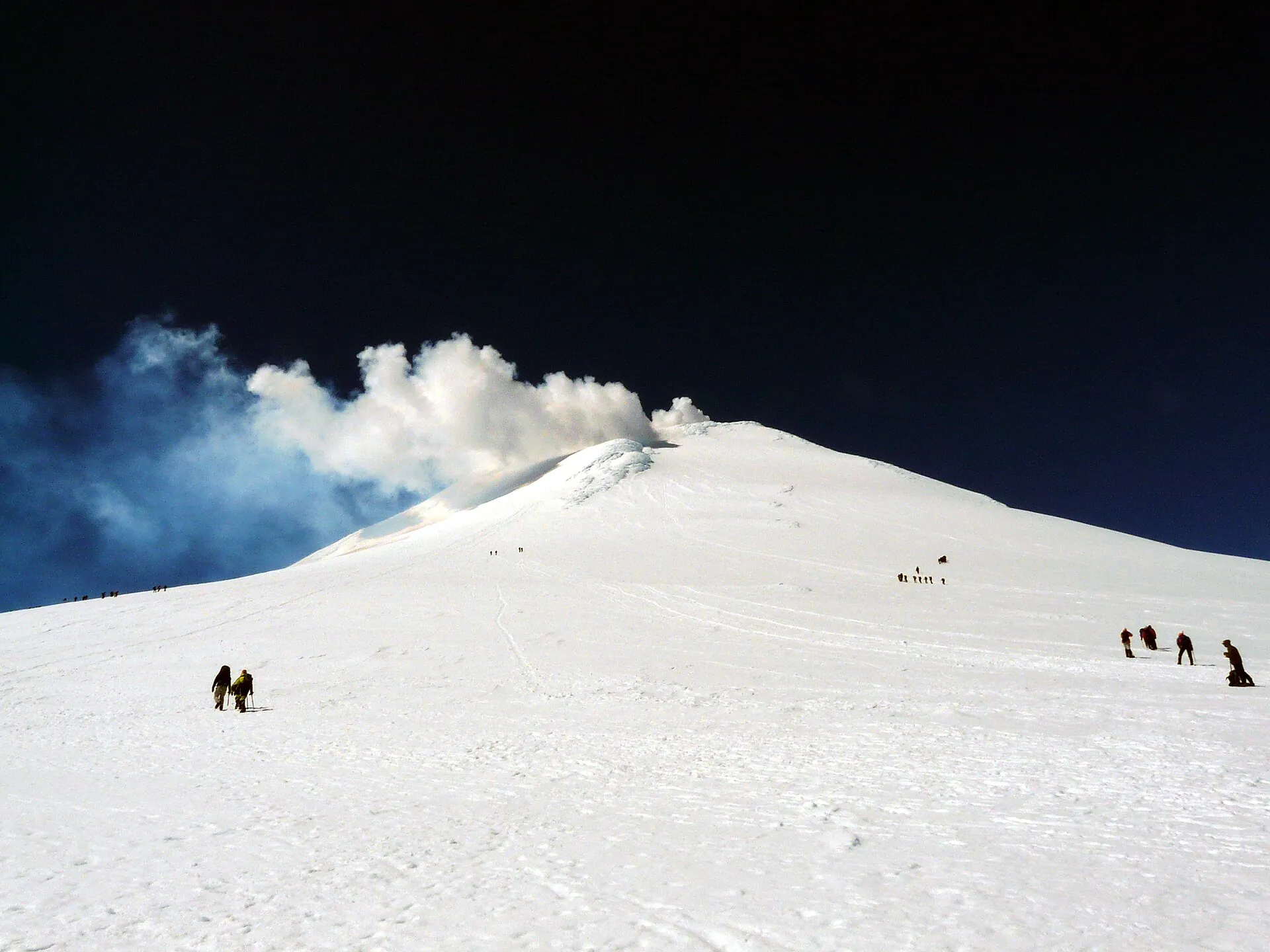
Climbers in small groups on the firn slope just below the summit of Villarrica, steam rising from the crater
The last meters at green: crampons, helmet, gas mask in the pack – and no more than ten minutes at the top.

Photo: Bkwillwm · CC BY-SA 3.0

The rulesCONAF's climbing protocol for Villarrica

Since the crater reopened on November 22, 2024 a safety protocol by CONAF, SERNAGEOMIN, SENAPRED, the municipality of Pucón and the mountain guides' association has been in force, tightened in September 2025. It sets who may go up, when and with what – and it applies only at green.

1

Register between 7 and 9 am

Every person signs in at the CONAF Rucapillán checkpoint; agencies register their groups. Anyone arriving later does not set out. The ascent cutoff is 2:30 pm.

2

Age 18+, with a guide or proof

Minimum age 18. Without a guide only with documented mountaineering experience (FEACH card, course certificate, club membership), emailed in advance to parque.villarrica@conaf.cl. Everyone else goes with an authorized agency.

3

Equipment is checked

Helmet, crampons, ice axe – plus GPS, proof of insurance and a gas mask. Agencies provide the technical gear; anyone going alone has to show it all.

4

At the top: 10 minutes, 20 m back

Waiting area 500 m below the crater, at least 20 m from the rim, no more than ten minutes at the top. A 1.5 km exclusion perimeter around the crater center whenever conditions require it.

Official prices · as of 09/2026 · €1 ≈ CLP 1,080
Villarrica National Park, north sector (Rucapillán): foreign adults, seniors, people with disabilities · about €10CLP 11,000
Foreign teenagers 13–17 · about €5CLP 5,500
Chilean adults 18–59 / teenagers 13–17CLP 5,000 / 3,400
Children up to 12 (all); Chilean seniors and people with disabilitiesfree
Pillán chairlift, scenic ride from age 15, regular / high season · about €18.50 / €23CLP 20,000 / 25,000
Adult ski day pass, low season / weekend / high seasonCLP 52,000 / 63,000 / 69,000
Parque Cuevas Volcánicas (private, km 14.5): adults · children 7–15 CLP 14,000, under 7 freeCLP 18,000
Sources: Pases Parques (ticket shop, as of 09/2026), centropillan.cl (2026 rates), Registro de Museos (Cuevas Volcánicas, price date not given). Registration at the checkpoint costs nothing extra. Guided tours run CLP 80,000–150,000 (about €75–140) including equipment; the chairlift (CLP 18,000–20,000, cash) is usually not included.

Ways upThree ways up Villarrica – one of them not right now

Routes from the Pillán ski center · as of 09/2026
Standard route to the crater (northwest face)From the Juncalillo parking lot (about 1,400 m / 4,600 ft) over the ski slopes and the firn to the crater rim at 2,847 m (9,341 ft). Ascent 4–6 hours, an hour less with the lift; descent 2–3 hours, often sliding on snow. Agencies plan 8 hours from Pucón, start 6:30 am. Only at alert level green – not since September 4, 2026.
Silla Panorámica chairliftFrom the Juncalillo base (about 1,400 m) to the top station with restaurant (about 1,900 m / 6,230 ft), a few minutes. CLP 20,000, in high season CLP 25,000, from age 15. Winter operations usually July–September, summer operations mid-January to early March, 9 am–5 pm. Snow chains mandatory in winter, Carabineros check.
Trails in the Rucapillán sectorFrom the checkpoint to viewpoints and lava fields below the slopes (about 1,400–2,000 m / 4,600–6,560 ft), 1–3 hours, no guide, year-round. Only the park ticket is needed. The “Cráter Villarrica” trail is listed as 3.3 km (2 miles) one way – that figure comes from a magazine, not from CONAF.
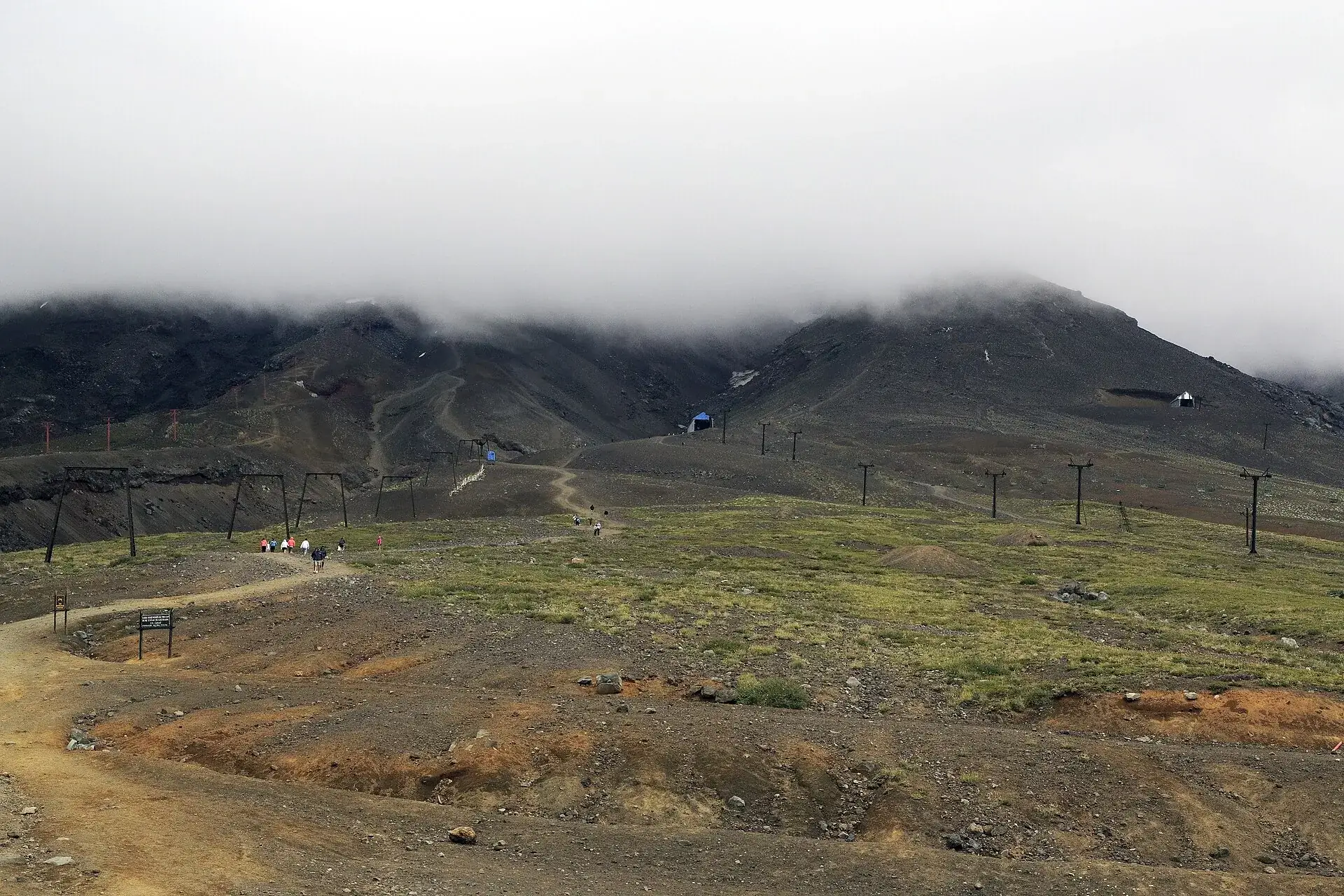
The chairlifts of the Centro de Montaña Pillán climbing over black volcanic sand, the summit of Villarrica hidden in cloud
The Pillán lifts save climbers an hour – and for everyone else they are the highest point reachable without crampons.

Photo: Falk2 · CC BY-SA 4.0

Why the alert level decides everythingFour years of Villarrica: yellow, green, yellow

Anyone planning the climb is planning against the alert level. The last time the crater was closed it stayed closed for two years – and the agencies in Pucón lost up to 90 percent of their clients.

  1. November 7, 2022Alert level yellow, for two years

    Exclusion radius 500 m, from January 6, 2023 1 km, briefly orange in September 2023 with 8 km. Tours end at 2,000–2,400 m.

  2. November 22, 2024Green again, crater open – with a protocol

    Registration, licenses, equipment checks. The protocol explicitly applies only at green and without a safety perimeter.

  3. May 30, 2025Fatal fall on the descent

    A 38-year-old tourist falls about 400 m. In September 2025 the protocol is tightened: ascent cutoff 2:30 pm, 10 minutes at the summit, GPS and gas mask mandatory.

  4. January 2026Crater ban because of wildfire risk

    Regional red alert until January 28, 2026. The municipality puts the loss at about 120 visitors a day.

  5. September 4, 2026Alert level yellow – applies today

    Increased seismicity since August, small explosions, incandescence, rising lava lake. SENAPRED: Alerta Temprana Preventiva for Villarrica, Pucón, Curarrehue and Panguipulli.

Sources: SERNAGEOMIN (September 4, 2026), municipality of Pucón (November 22, 2024; January 23 and 26, 2026), DAEM Villarrica (09/2025), Ladevi (yellow phase 2022–2024), Biobío Chile (May 30, 2025). What yellow means for visitors: observation and distance, not evacuation – that belongs to red.
The summit crater of Villarrica from above: a dark vent with steam inside a ring of snow and firn
From above you can see what this is about: an open vent in the middle of the ice. When the lava lake rises, rock flies over the rim.

Photo: Maxcostas · CC BY-SA 4.0

Good to knowGetting to Villarrica, best time, tips

Getting there

Without a car: No public bus to the ski center; agencies drive from Pucón. Pucón is reached by bus from Temuco (about 2 h) and Santiago (overnight bus, about 10–11 h); Temuco airport (La Araucanía) is about 100 km (62 miles) away.

By car: From Pucón take the Camino Internacional (Ruta 199) toward Argentina, after about 9 km (5.6 miles) turn off at 'Centro de Ski' and climb 11 km (7 miles) of gravel to the park entrance/ski center; chains mandatory in winter. Parking only at the Juncalillo base lot.

  • From Pucón · about 30 minutes
    Car or agency shuttle via the Camino al Volcán
  • From Villarrica · 50–60 minutes
    Ruta 199 to Pucón, then Camino al Volcán
  • From Temuco · about 2 hours
    Ruta 199 via Villarrica

Best time to go

For the crater climb October to April (southern summer): more stable weather, ascent on firn and volcanic sand, start at dawn. June to September is ski season at Pillán with avalanche risk on the climbing routes; climbs then only for experienced people on skis or crampons. What really decides is the alert level – as of September 2026 the crater is out of reach anyway because of yellow; the glow is visible at night from Pucón.

Who it suits

Children
Crater climb: minimum age 18 under the CONAF protocol (some agencies say 15). The chairlift, the trails in the sector and the Cuevas Volcánicas also suit families; under 12 the park is free.
Minimum age
18 for the crater climb (protocol of September 2025)
Fitness
About 1,400 m (4,600 ft) of climbing on snow, ice and volcanic sand, 4–6 hours uphill with crampons; agencies ask for 'moderate' fitness, in reality it is a long day.
Altitude
2,847 m (9,341 ft): mild symptoms possible but rarely relevant; the real hazard is the gas at the crater.
Heart and lungs
Sulfur dioxide and other gases at the crater rim irritate the airways; a gas mask has been mandatory equipment since 2025, time at the top is limited to 10 minutes. With asthma or heart problems, stay below.
Wheelchair
Climb no; chairlift and restaurant after checking with the ski center.
Dogs
Prohibited in the national park; violations are sanctioned.
Clothing
Wind- and waterproof layers, thermal underwear, hat, waterproof gloves, category 4 glacier glasses, sun protection; agencies provide helmet, crampons, ice axe, gas mask, sliding pants and backpack.
Footwear
Stiff, crampon-compatible mountain boots with gaiters; agencies rent them.

Tips you will need on site

  • Check the alert level before booking (sernageomin.cl/alertas-volcanicas): at yellow no reputable agency sells a crater climb – only a shorter tour or the chairlift ride.
  • Buy the park ticket online in advance from Pases Parques; there is no ticket office at the entrance and often no cell signal.
  • The chairlift (CLP 18,000–20,000) is not included with most agencies and is paid in cash – it saves about an hour of climbing.
  • Book only agencies with SERNATUR registration; since 2026 the municipality of Pucón checks with the Carabineros and shuts operators down after three violations.
  • Carry snow chains in winter – Carabineros check at the access road to the ski center.
  • At the crater never lean over the rim and never overstay the 10 minutes: gas bursts and ballistic ejecta are the reason for the yellow level.
  • Look from the lakefront promenade in Pucón at night: when the lava lake is active, the cloud above the crater glows – no climb needed.
  • For families: the Cuevas Volcánicas (lava tube) and the scenic chairlift are the alternatives when the crater is closed.

A short history

  • Villarrica is a stratovolcano with a permanently open vent and one of the few lava lakes in the world; SERNAGEOMIN ranks it no. 1 in Chile's risk ranking.
  • 1964 (March): eruption with lahars, 27 dead in Coñaripe; 1971/72 lahars again with at least 15 dead, sulfur gases made the air in the villages unbreathable.
  • November 28, 1940: Villarrica National Park founded (today 53,460 ha).
  • March 3, 2015: night-time lava fountain, about 3,400 people evacuated; several alert level changes afterwards.
  • November 7, 2022–October 12, 2024: alert level yellow, exclusion radius 500 m, from January 6, 2023 1 km, briefly orange in September 2023 (8 km) – two years without crater access, agencies lost up to 90% of their visitors.
  • November 22, 2024: crater tours resume under a new safety protocol (registration, licenses, equipment), valid only at green.
  • May 30, 2025: a 38-year-old tourist falls about 400 m on the descent and dies; the helicopter cannot land at La Capilla (about 2,000 m).
  • September 2025: tightened protocol – ascent cutoff 2:30 pm, maximum 10 minutes at the summit, 1.5 km exclusion perimeter, GPS and gas mask mandatory.
  • January 2026: crater ban because of a regional wildfire red alert; Pucón puts the loss at about 120 visitors a day at CLP 130,000 each.
  • August 21, 2026: SERNAGEOMIN special report on an explosion with a column over 40 m high, still green. September 4, 2026: raised to yellow because of the rising lava lake.
Solidified lava fields with young trees in the Parque Cuevas Volcánicas, the cone of Villarrica behind
The Cuevas Volcánicas on the Camino al Volcán: a lava tube for anyone who wants to see the mountain from the inside without climbing it.

Photo: Falk2 · CC BY-SA 4.0

When the crater is closedPucón without the summit

The region does not live off the climb alone: snowshoe hikes on the volcano, the hot springs nearby, the araucaria forest in the national park. None of these depend on an alert level.

Affiliate links to GetYourGuide: if you book, we earn a commission and the price stays the same. Prices and ratings as of 22 September 2026. The Pucón selection is small; these tours still have few reviews.

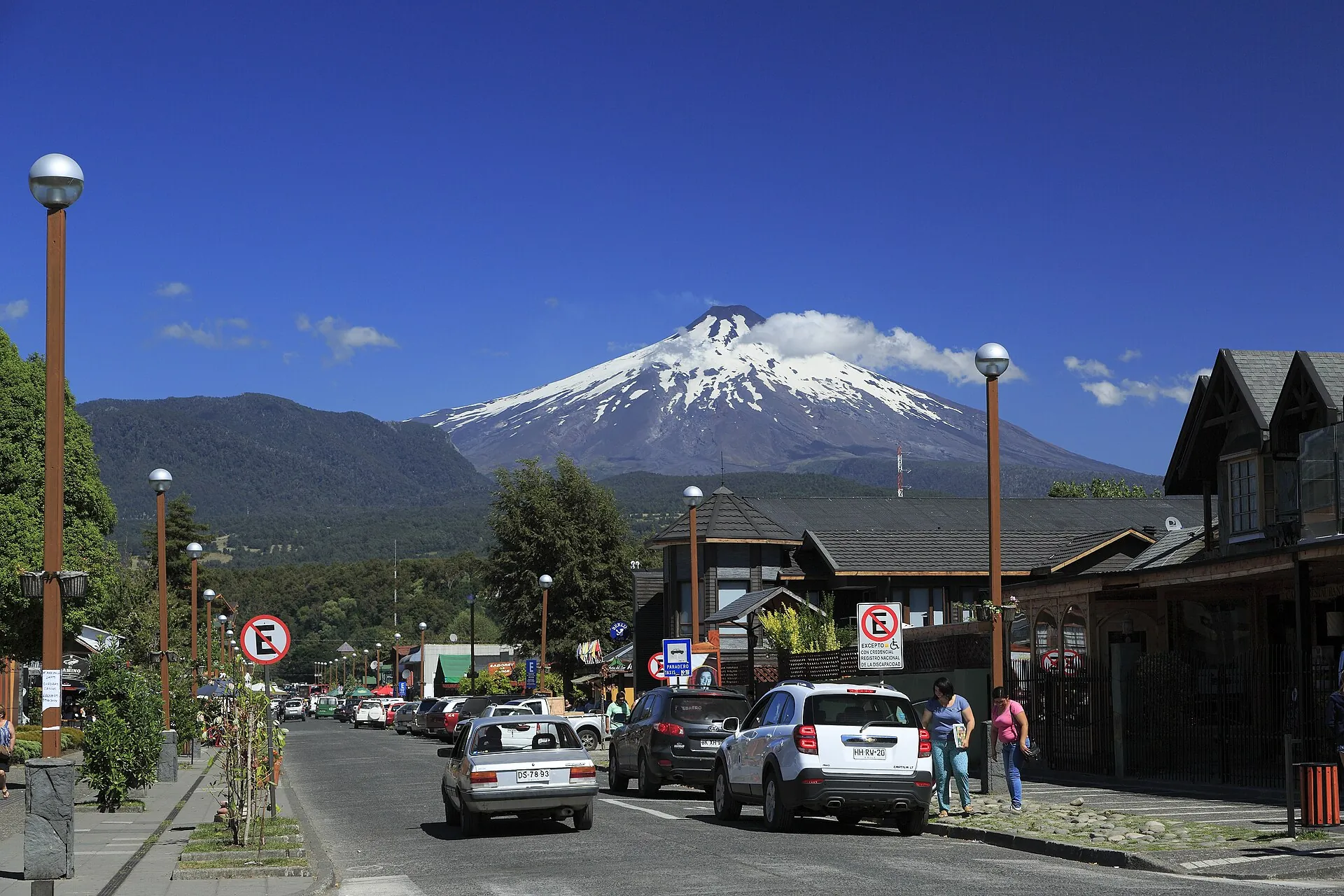
A street in Pucón with cars and wooden houses, the snow-covered Villarrica at the end of the street
Pucón is 20 km (12 miles) from the ski center – and the mountain stands at the end of every street.

Photo: Falk2 · CC BY-SA 4.0

Outdated onlineWhat other sites get wrong

“You can climb Villarrica to the crater with an agency any time.”
Crater access depends on the alert level. From November 2022 to October 2024 it was closed for two years, in January 2026 because of wildfire risk, and since September 4, 2026 yellow applies again – the protocol allows climbs only at green.
“You pay the entrance fee at the barrier.”
Nothing is sold at the Rucapillán access. Tickets are online only from Pases Parques – and there is often no cell signal up there.
“Foreigners pay 10,000 pesos.”
For September 2026 Pases Parques shows CLP 11,000 for foreign adults and CLP 5,500 for ages 13–17. The 10,000 or 10,400 figures are last year's rates.
“Guides are mandatory for everyone.”
Since 2024 CONAF has also admitted climbers without a guide – with proof of experience, full equipment and advance registration by email.
“With the chairlift the climb is a walk in the park.”
The lift saves about an hour. After that about 1,000 m (3,300 ft) of climbing on snow and ice with crampons remain. In 2025 a tourist died on the descent.

Quick answersBefore the trip to Pucón

Can you climb Villarrica volcano right now?

Not to the crater. Alert level yellow has applied since September 4, 2026, and the CONAF protocol allows crater climbs only at green. The park, the trails in the Rucapillán sector and the chairlift are open.

How much does the Villarrica volcano hike cost?

Guided tours CLP 80,000–150,000 (about €75–140) including equipment, plus the park ticket (CLP 11,000 for foreign adults) and usually CLP 18,000–20,000 in cash for the chairlift.

How do I buy the Villarrica National Park ticket?

Online only at pasesparques.cl, sector Villarrica Norte. There is no ticket office at the entrance. Chileans and foreigners are booked in separate steps and paid together.

When is the best time for the Villarrica climb?

October to April: more stable weather, ascent on firn and volcanic sand. June to September is ski season with avalanche risk on the routes. The alert level is what decides – as of September 2026 the crater is out of reach anyway.

Can you see lava at Villarrica?

When things are quiet, only the glow and gas in the crater floor, rarely the lava lake itself. Since August 2026 it has been rising – at night the glow is visible from Pucón, and that is exactly why the crater is closed.

Do you need snow chains for the Pillán ski center?

In winter, yes. The last 11 km (7 miles) to the ski center are gravel, and Carabineros check for chains on the access road.

Can you climb Villarrica without a guide?

Yes, but only with proven mountaineering experience (FEACH card, course certificate, club membership), emailed in advance to parque.villarrica@conaf.cl, with full technical equipment and registration at the Rucapillán checkpoint between 7 and 9 am. Everyone else goes with an authorized agency.

How long does the climb take?

About 4–6 hours uphill from the ski center (an hour less with the lift) and 2–3 hours down, often sliding on the snow. Agencies plan 8 hours from Pucón, start 6:30 am; under the protocol you must be at the top by 2:30 pm and may stay at most 10 minutes.

Is Villarrica suitable for children?

The crater climb is not: since September 2025 CONAF requires a minimum age of 18. For families there are the chairlift, the lower trails and the Cuevas Volcánicas; children up to 12 pay no park entry.

What should you wear?

Stiff mountain boots, waterproof layers, hat, gloves, glacier glasses and sun protection. Helmet, crampons, ice axe, gas mask and sliding pants are provided by the agencies; anyone going alone has to bring and show everything.

How do you get to Villarrica?

From Pucón about 20 km (12 miles): Camino Internacional toward Argentina, after 9 km turn left to the Centro de Ski, then 11 km of gravel to the park entrance and ski center. Agencies pick up in Pucón; snow chains are mandatory in winter.

Is Villarrica dangerous?

It is Chile's highest-risk volcano: lava lake, gas bursts, ejecta and avalanches in winter. That is why there are exclusion radii by alert level and a strict protocol. Most accidents, though, are falls on the descent – a tourist died that way in 2025.

What is the current alert level for Villarrica?

Alerta Técnica Amarilla since September 4, 2026 (SERNAGEOMIN); SENAPRED keeps Villarrica, Pucón, Curarrehue and Panguipulli under Alerta Temprana Preventiva. Daily updates at sernageomin.cl/alertas-volcanicas.

Do you need a ticket for the national park?

Yes, for the Rucapillán sector: CLP 11,000 for foreign adults, CLP 5,500 for ages 13–17, children free; Chileans CLP 5,000. Online only at pasesparques.cl – nothing is sold at the entrance.

Can you climb Villarrica in winter?

Yes, but then it is a ski mountaineering trip with avalanche risk (CONAF names June–September). The ski season at Pillán usually runs July to September, day passes CLP 52,000–69,000; the scenic ride costs CLP 20,000–25,000.
Sources · accessed on 22 September 2026