24h
Fumaroles in the village
Largo das Caldeiras in the middle of Furnas is always accessible: Caldeira Grande, Caldeira do Asmodeu, the corn-cooking springs. Stay behind the barriers – the springs reach 96 °C (205 °F).
publicfree
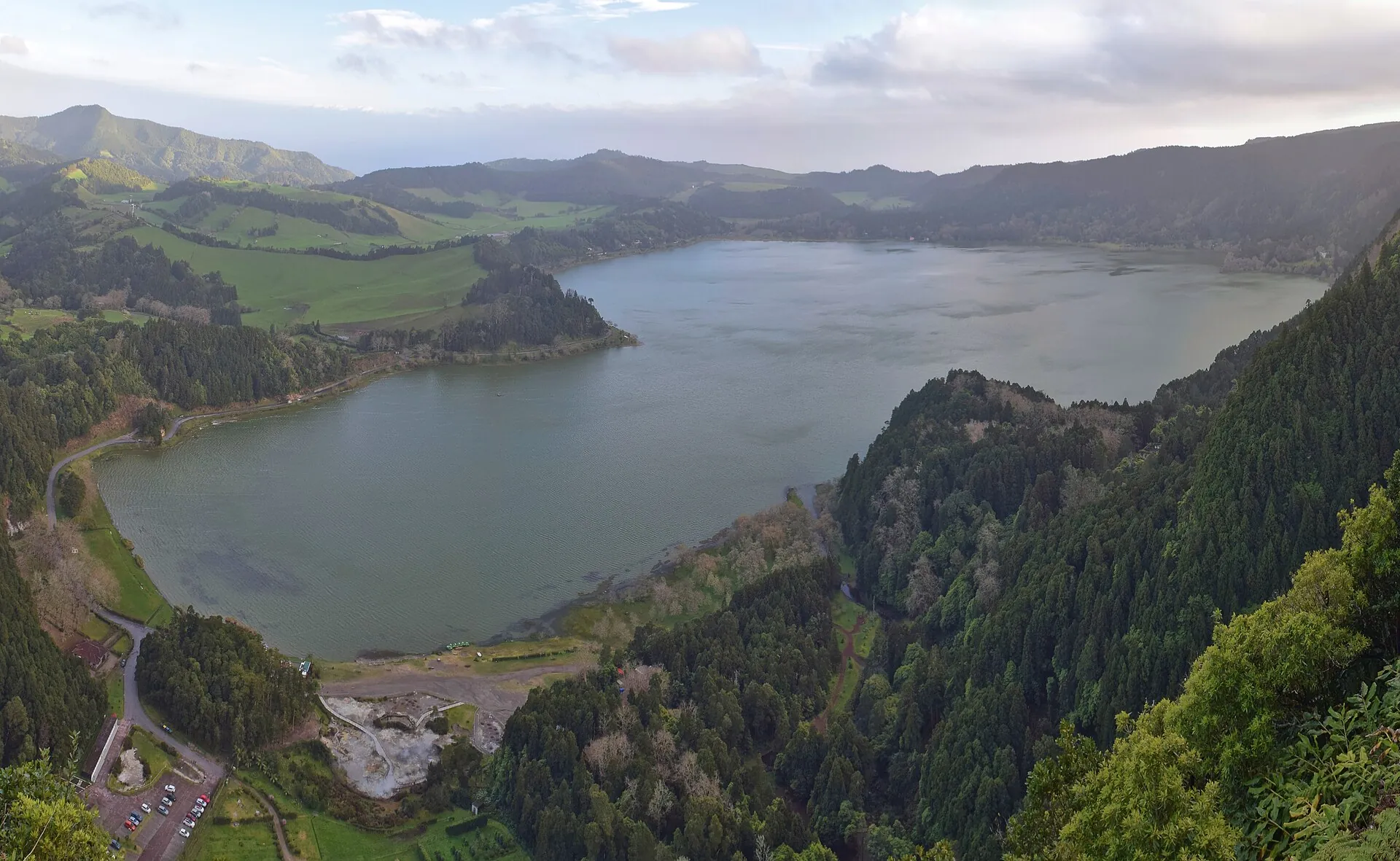
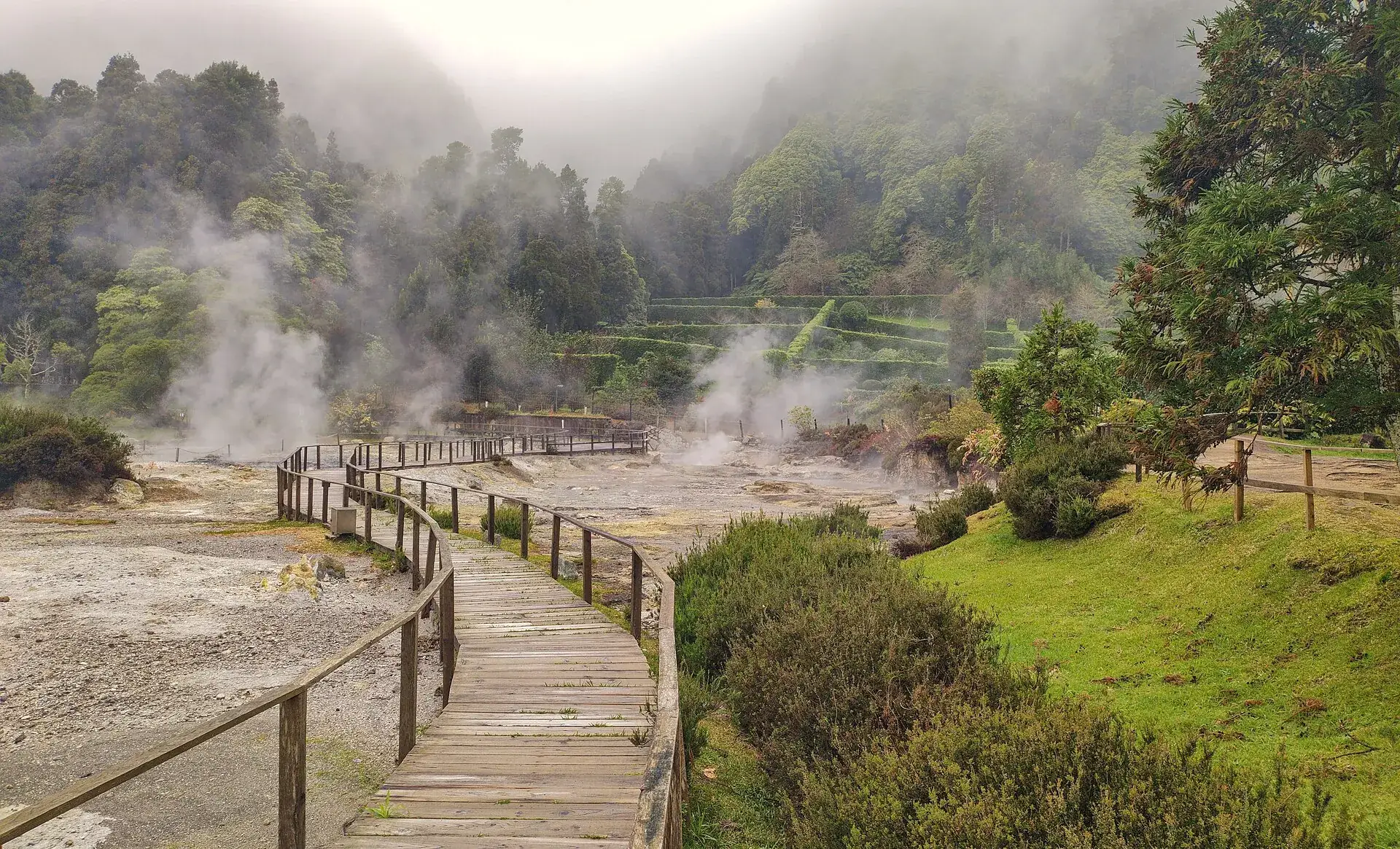
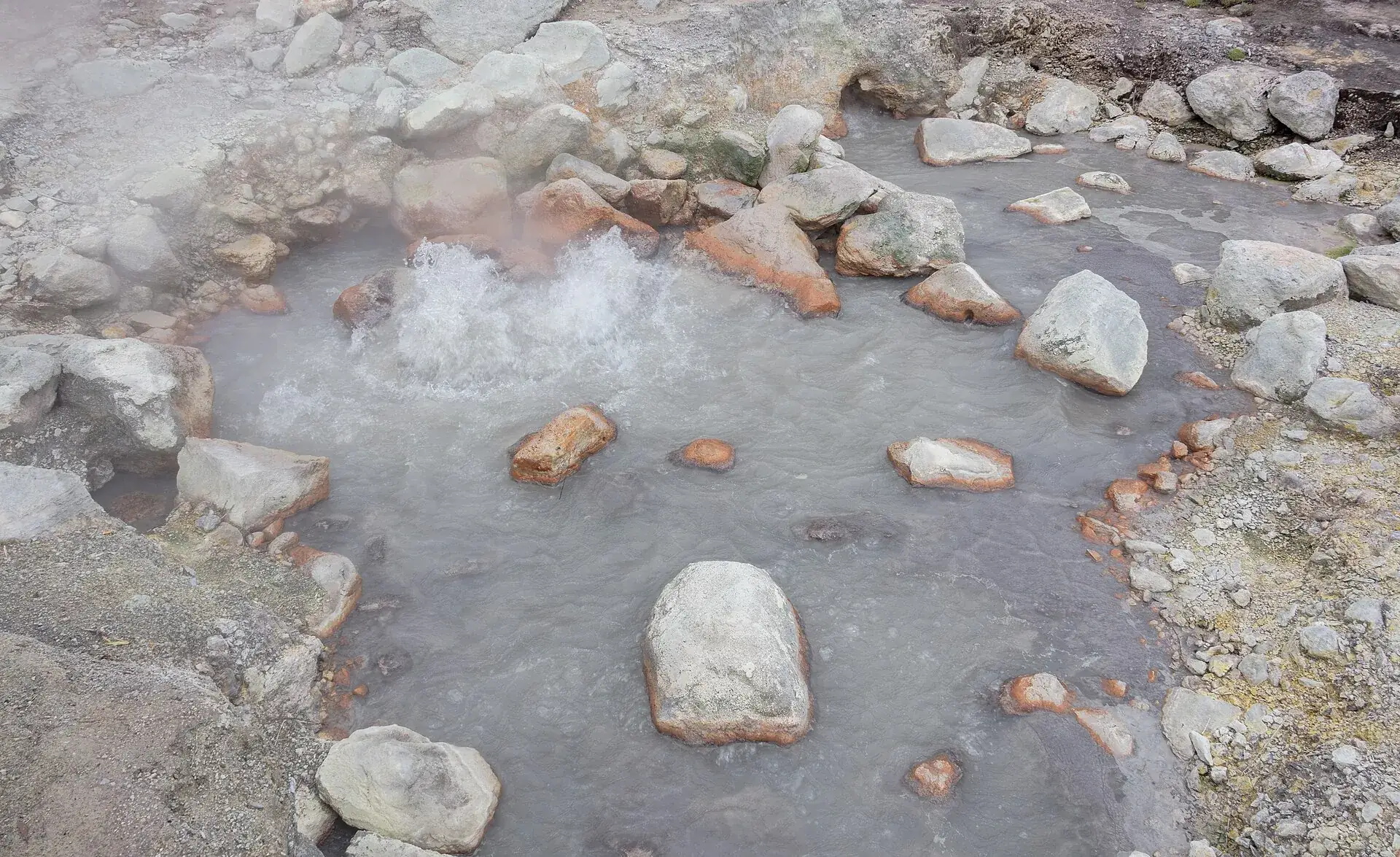
From above, a green valley with a lake in it.
Down below, steam rises out of the ground.
And up close, it boils. 96 degrees Celsius.
Scroll –
down into the valley
On 8 September 2026 CIVISA recorded a swarm of earthquakes under the Furnas volcano, the strongest magnitude 2.9, felt in the village with intensity V. The alert level rose to V1 for eight days – the first increase for Furnas in years. Since 17 September it is back at V0, seismicity is in the normal range. Nothing was closed; today the alert page no longer lists Furnas.
Swarm under the volcano, epicenter 4 km (2.5 miles) west-southwest of Furnas. CIVISA raises the alert to V1 the same day – metastable equilibrium.
Seismicity is back in the normal range. CIVISA lowers the alert; no closures of attractions were reported during the whole period.
The CIVISA alert page lists no system on São Miguel. V0 means normal activity – earthquakes, changes in degassing and small steam explosions remain possible at any time.
Largo das Caldeiras in the middle of Furnas is always accessible: Caldeira Grande, Caldeira do Asmodeu, the corn-cooking springs. Stay behind the barriers – the springs reach 96 °C (205 °F).
The fenced field on the south shore of the lake where the cozido cooks. Municipal staff daily 6 am–8 pm, ticket desk at the entrance; Azores residents and children under 12 free, parking free.
Parque Terra Nostra 10:30 am–4:30 pm, €17 (children/seniors €14.50). Poça da Dona Beija 8:30 am–11 pm, €12 until 5:30 pm, €16 from 6 pm, online only, 90-minute stay.
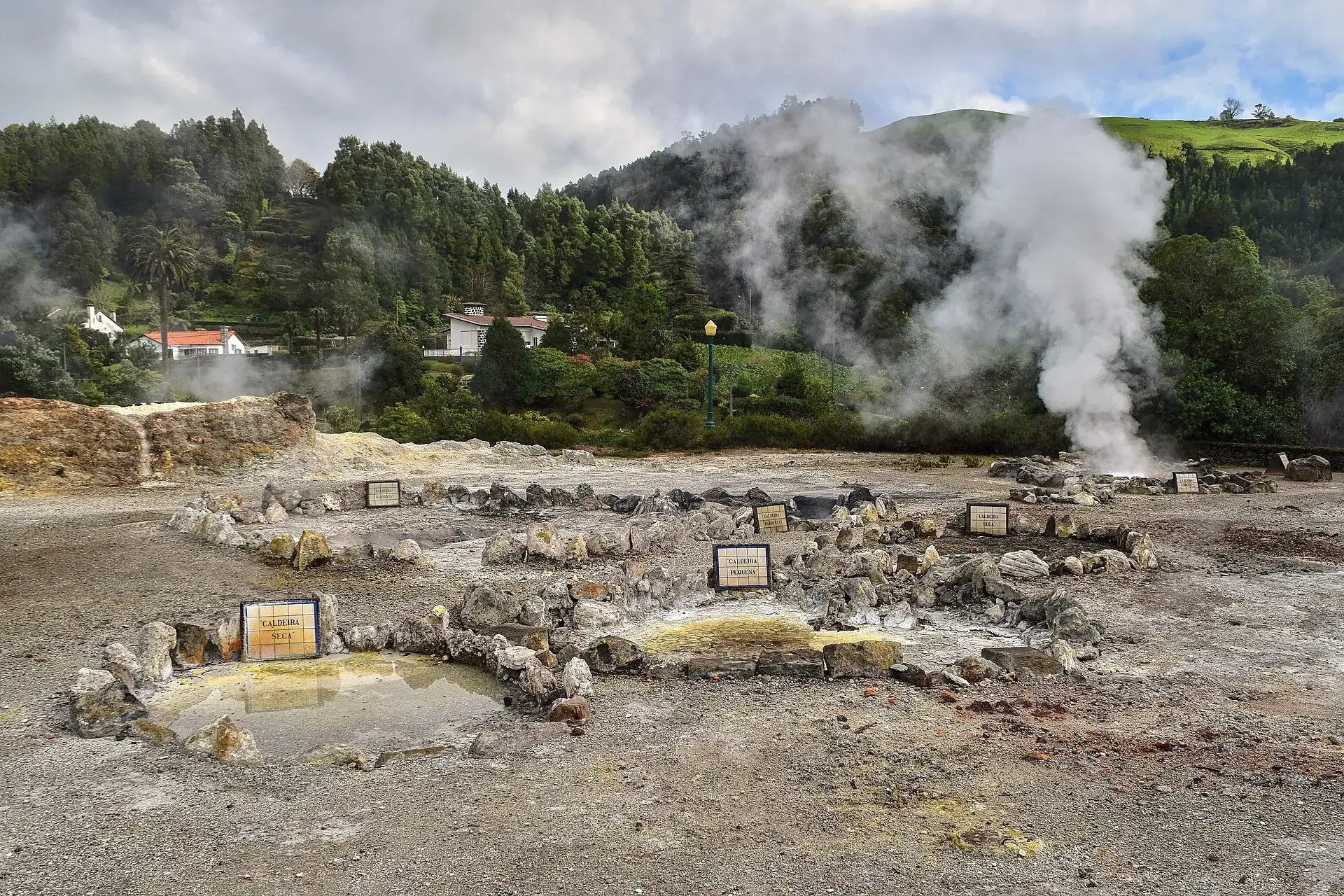
Photo: The Cosmonaut · CC BY-SA 4.0
You smell Furnas before you see it. Sulfur, wet stone, steam rising from drains and gardens. The village sits in a caldera that produced the largest historical eruption of the Azores in 1630 – and has not stopped steaming since.
At Largo das Caldeiras the Caldeira Grande bubbles behind a low railing, and next to it people lower corn cobs in nets into the hot water. Three kilometers (2 miles) further, on the south shore of the lake, lies the second field: yellow ground, steam from dozens of holes, and in between small earth mounds with wooden lids. The pots cook underneath.
Between 11 am and 1 pm the restaurants come and dig. A man with a shovel, a pot on a pole, steam bursting out of the ground – that is the cozido das Furnas, six hours in the volcanic soil at 64 to 96 °C (147 to 205 °F). By lunchtime it is often sold out in the restaurants.
Then into the water: iron-brown, 36 to 42 °C (97 to 108 °F), under tree ferns in Parque Terra Nostra or in the evening in the pools of Poça da Dona Beija. Bring dark swimwear. The iron stains.
Affiliate links to GetYourGuide: if you book, we earn a commission and the price stays the same. Prices and ratings as of 22 September 2026. Whether the cozido is included is in the operator's description – not every tour with lunch means the stew from the ground.
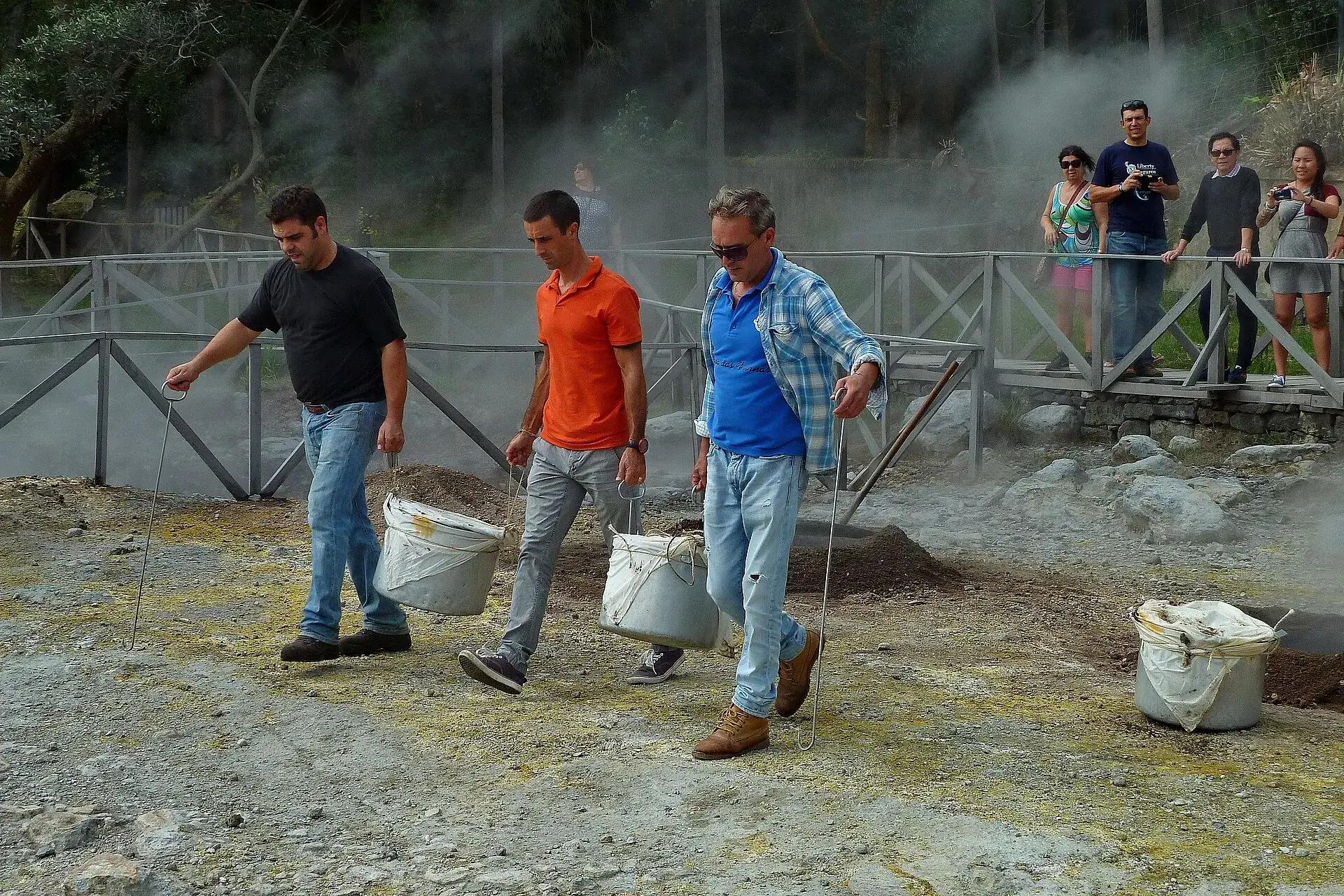
Photo: Schnobby · CC BY-SA 4.0
You do not have to go to a restaurant. If you have a heat-proof pot, you can register it with the municipality and have it cooked in the ground yourself. Povoação municipality has published the procedure – step by step.
At the municipal post on the south shore of the lake (tel. +351 926 381 798), daily 8 am–8 pm, year-round. Best the day before – the exact lead time is not published.
Municipal staff place private pots in the pits from 6 am. The pot must be heat-proof, lid tight, ingredients layered. Cooking time 6–7 hours at 64–96 °C (147–205 °F).
The pit costs €3 (restaurants €2.50), plus €3 admission to the zone for every person not resident in the Azores. Children under 12 free, parking free.
Between 11 am and 1 pm the restaurants collect their pots; private pots by arrangement. Eat at the picnic area next door – or take the pot back to where you are staying.
| Admission to the Lagoa das Furnas cooking-pit zone, non-residents · children under 12 and Azores residents free, parking free | €3 |
| Cooking a private cozido pot / restaurant pot | €3 / €2.50 |
| Environmental Interpretation Center: adults / juniors 7–14 and seniors / family · up to age 6 and residents free | €3 / €1 / €5 |
| Parque Terra Nostra: adults / children and seniors – park, thermal pool and jacuzzis | €17 / €14.50 |
| Poça da Dona Beija: adults until 5:30 pm / from 6 pm · children 2–6 €10 / €14 · under 2 free · 90 minutes | €12 / €16 |
| Dona Beija extras: towel / locker (each plus €20 deposit) / hot shower | €4 / €2 / €1 |
| Fumaroles in the village, lake shore, Pico do Ferro, PRC6SMI loop trail | free |
Furnas has no summit. It has two fumarole fields, a lake with a loop trail and a viewpoint from which you see all of it at once.
| Caldeiras da Vila – fumaroles at Largo das Caldeiras in the middle of the village, next to Parque Terra Nostra; always accessible | 20–40 minutes · free |
| Caldeiras da Lagoa – cooking-pit zone on the south shore, 3 km (2 miles) from the village, fenced, 56 pits, picnic area, café; staff daily 6 am–8 pm | 30–60 minutes · €3 |
| PRC6SMI Lagoa das Furnas – loop from Largo das Três Bicas over Pico do Milho around the lake, Nossa Senhora das Vitórias chapel, cooking pits; 9.4 km (5.8 miles), easy | 3 hours · free |
| Miradouro do Pico do Ferro (567 m / 1,860 ft) – turnoff from the ER2-1ª northwest of Furnas, parking, wheelchair ramp, benches; in the morning before the clouds | 15 minutes · free |
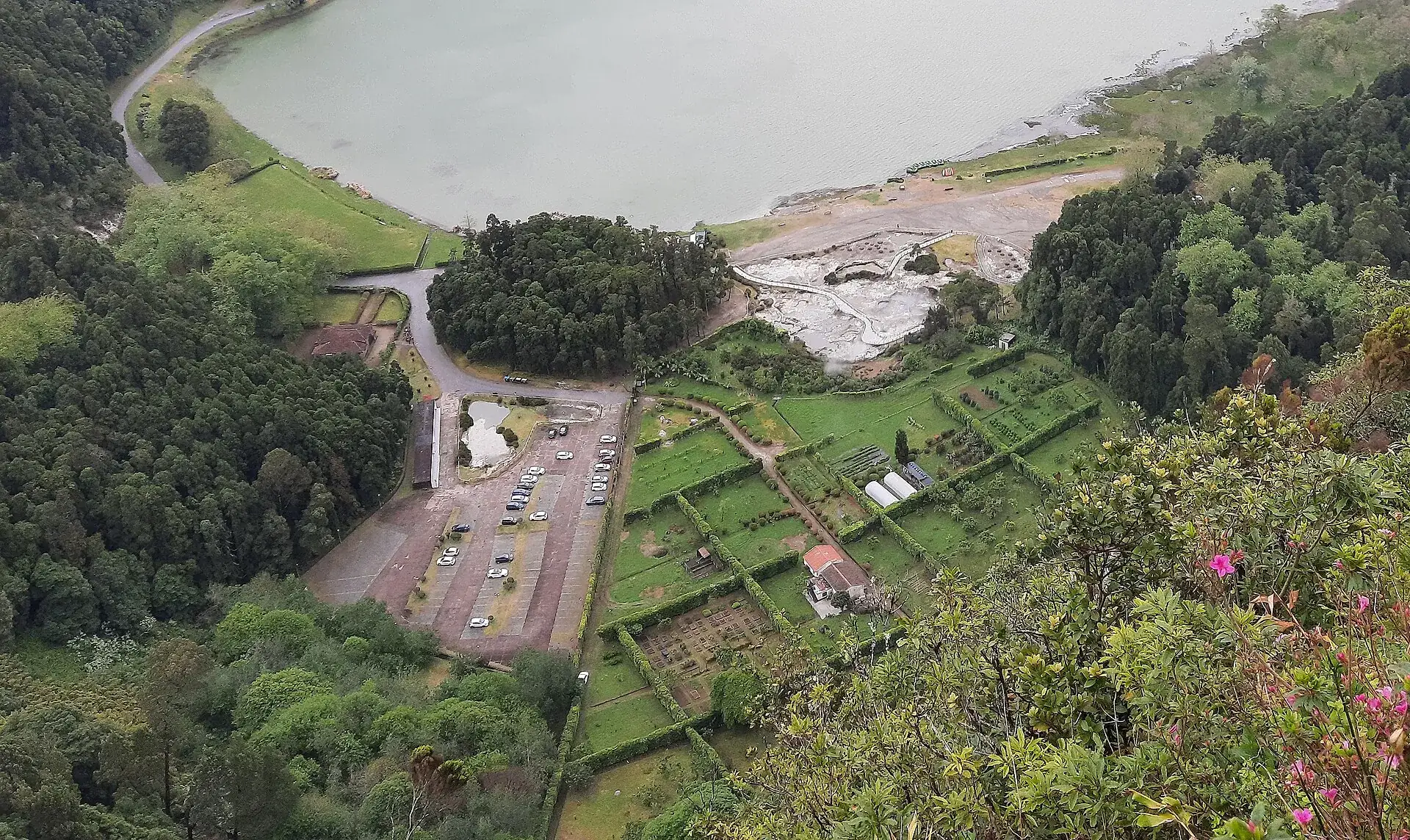
Photo: Bybbisch94, Christian Gebhardt · CC BY-SA 4.0
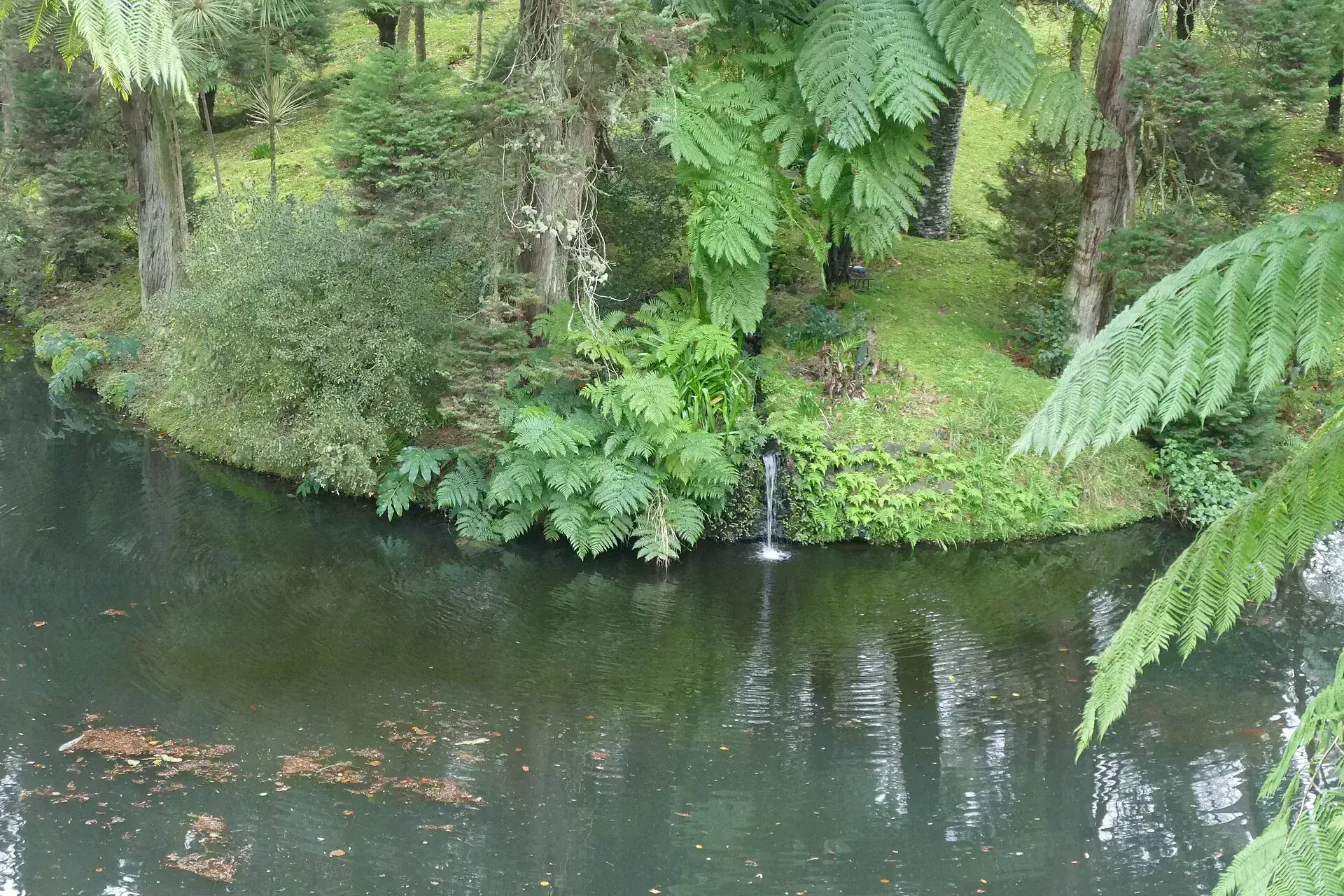
Photo: Kritzolina · CC BY-SA 4.0
Without a car: Public bus 318 (Varela & Cª) Ponta Delgada – Vila Franca – Furnas, about 1.5 hours; on weekdays four departures according to third-party timetables (6:40 am, 8:30 am, 10:15 am, 4:00 pm from Ponta Delgada), two on weekends – check locally. Alternatively day tours from Ponta Delgada.
By car: From Ponta Delgada on the expressway toward Vila Franca do Campo/Povoação, then ER1-1ª/ER2-1ª to Furnas, about 40 km (25 miles), 45 minutes. Parking: free at the cooking-pit car park at the lake (municipality), at Largo das Três Bicas (start of PRC6SMI), at Pico do Ferro; Terra Nostra: car park at the casino; Dona Beija: own car park subject to availability.
Year-round; Furnas often sits under cloud, so head for Pico do Ferro in the morning when it is clear. At the cooking pits, 11 am–1 pm is when the restaurant pots are dug out. The fumaroles in the village are most impressive on cool mornings (more steam). Poça da Dona Beija is more expensive from 6 pm but atmospheric; to save money, go before 5:30 pm. Terra Nostra closes at 4:30 pm – plan the bath and garden for the morning.
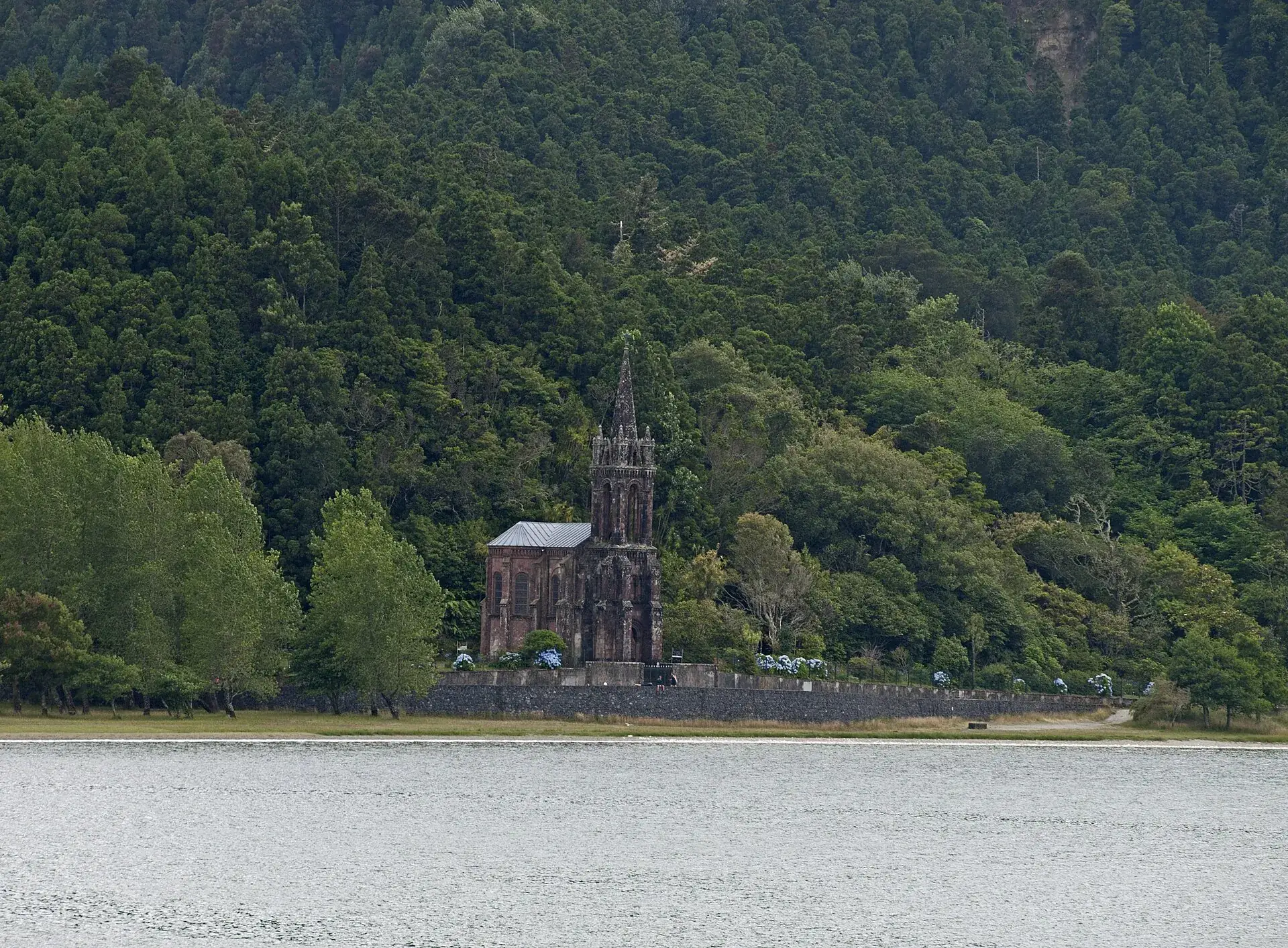
Photo: Ymblanter · CC BY-SA 4.0
Poça da Dona Beija is open until 11 pm, and the evening tours from Ponta Delgada combine the bath with dinner. If you want to use the whole day, combine Furnas with the tea plantations on the north coast.
Affiliate links to GetYourGuide: if you book, we earn a commission and the price stays the same. Prices and ratings as of 22 September 2026.
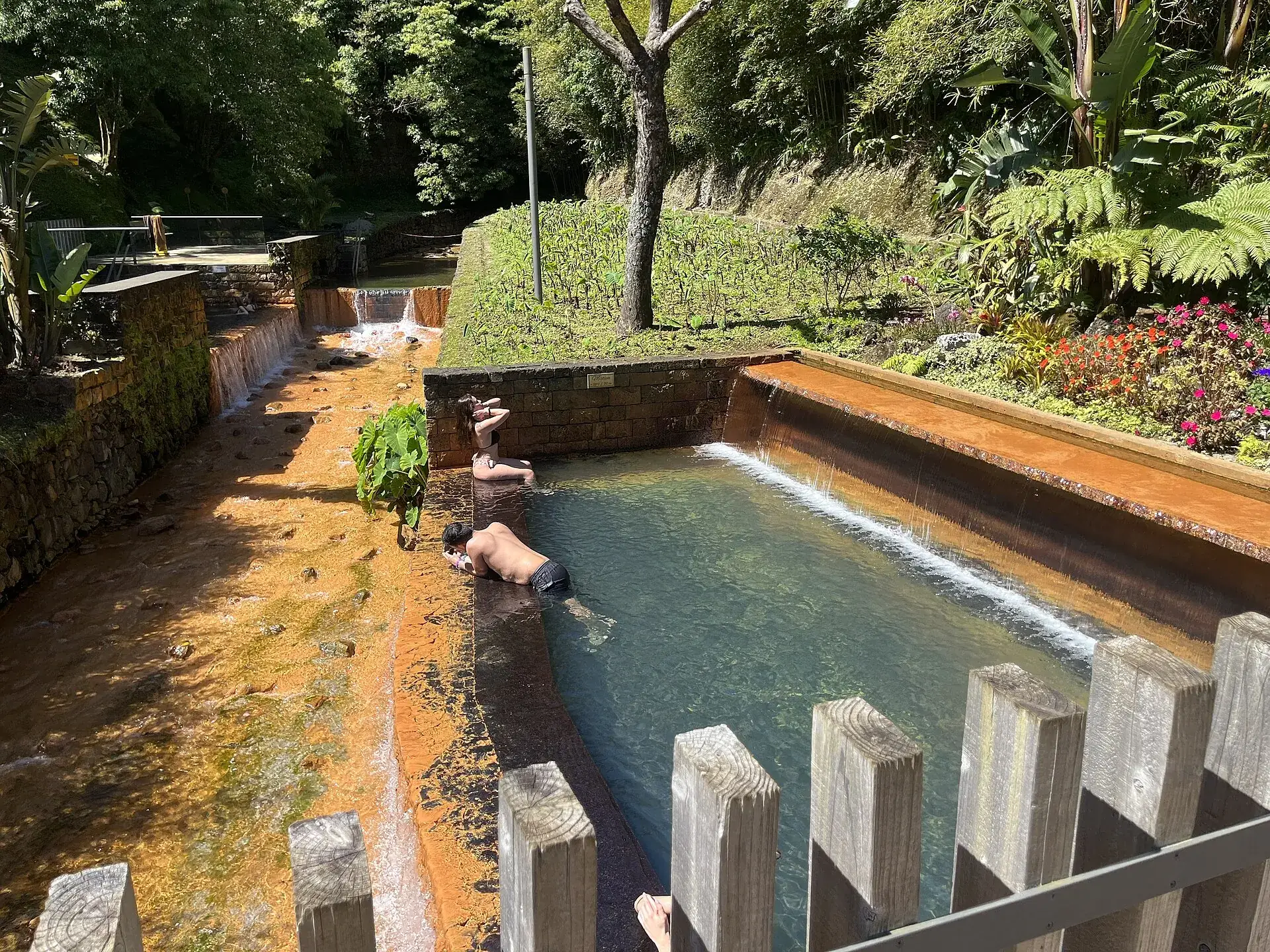
Photo: Carlos Pacheco from Toronto, Canada · CC BY 2.0
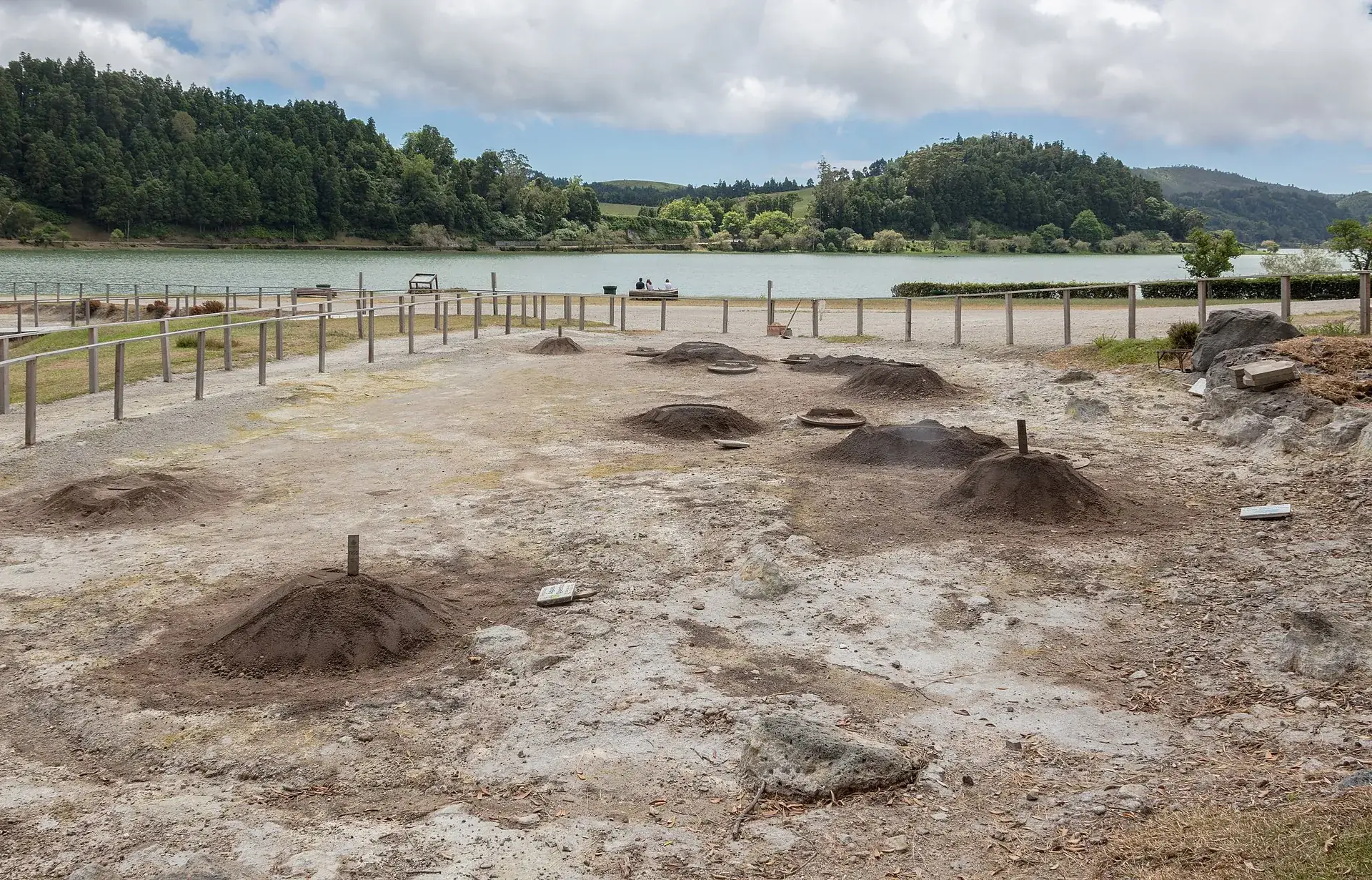
Photo: Diego Delso · CC BY-SA 4.0
CIVISA lowered the alert to V0 on 17 September 2026; seismicity is back in the normal range, and nothing was closed during the eight days at V1. V0 means normal activity – earthquakes and small steam explosions are never ruled out in a hydrothermal field. Today's status is at civisa.pt/alertas.
Not in the village but in the cooking-pit zone on the south shore of Lagoa das Furnas, 3 km (2 miles) from the center. Admission €3, parking free, municipal staff daily 6 am–8 pm.
Dona Beija yes – tickets are online only, entry in order of arrival, 90 minutes. Terra Nostra sells at the desk and online, but online only 15 days ahead; the ticket covers park and bath together.
Terra Nostra is a botanical park with one large iron-brown pool and two jacuzzis, open 10:30 am–4:30 pm, €17. Dona Beija is five smaller pools on a stream, open until 11 pm, €12–16, stay limited to 90 minutes.
Yes, the fumaroles smell of hydrogen sulfide. Outdoors that is not a problem; if you have asthma, keep your distance. The real danger is the boiling springs – so stay behind the barriers; in places the ground is only a thin crust.
As of 22 September 2026: everything is open. CIVISA had raised the alert to V1 from 8 to 17 September 2026 because of an earthquake swarm (strongest quake magnitude 2.9) and then lowered it to V0; the alert page no longer lists Furnas today. In everyday terms the only danger is the boiling springs – stay behind the barriers.
The fumaroles in the village are free. The cooking-pit zone at the lake costs €3 per person (Azores residents and children under 12 free), parking is free. The interpretation center costs €3, Terra Nostra €17, Dona Beija €12–16.
Yes. Register the pot with Povoação municipality (post at the lake, tel. +351 926 381 798, registration 8 am–8 pm), €3 fee, heat-proof pot; municipal staff place private pots from 6 am, cooking time 6–7 hours at 64–96 °C (147–205 °F).
The restaurants collect their pots between 11 am and 1 pm; that is when you see the most. If you want to eat, book a restaurant in Furnas beforehand.
€17 for adults, €14.50 for children and seniors, including the thermal pool and jacuzzis. Open 10:30 am–4:30 pm, last entry 4 pm, year-round except 25 December. Tickets at the desk or online (15 days ahead).
€12 per person until 5:30 pm, €16 from 6 pm; children aged 2 to 6 €10 or €14, under 2 free. Tickets are online only, the stay is limited to 90 minutes, open 8:30 am–11 pm (last entry 9:30 pm).
No. All sights are accessible on your own; guided tours are optional at the interpretation center (advance booking 72 hours, 45 minutes) and through tour operators.
By car about 40 km (25 miles) and 45 minutes along the south coast. Public bus 318 (Varela) takes about 1.5 hours and runs only a few times a day on weekdays; check the timetable locally.
Yes, very: short distances, warm bathing water, corn on the cob cooked in a fumarole. Hold children by the hand at the fumaroles and at the lake; in the cooking-pit zone children under 12 are free.
Rain jacket, dark swimwear (the iron water stains), towel, water shoes and small change for showers and lockers. Sturdy shoes for the lake loop.
The Miradouro do Pico do Ferro (567 m / 1,860 ft) on the ER2-1ª northwest of the village, overlooking the lake, fumaroles and valley, with parking and a wheelchair ramp. Drive up in the morning before clouds move into the valley.
1630: from 3 September to 2 November the strongest historical eruption of the Azores raged, with several hundred dead. Since then the volcano only steams; CIVISA monitors it permanently.
Sources · accessed on 22 September 2026


_3.JPG)


.jpg)
