Volcano·Guide
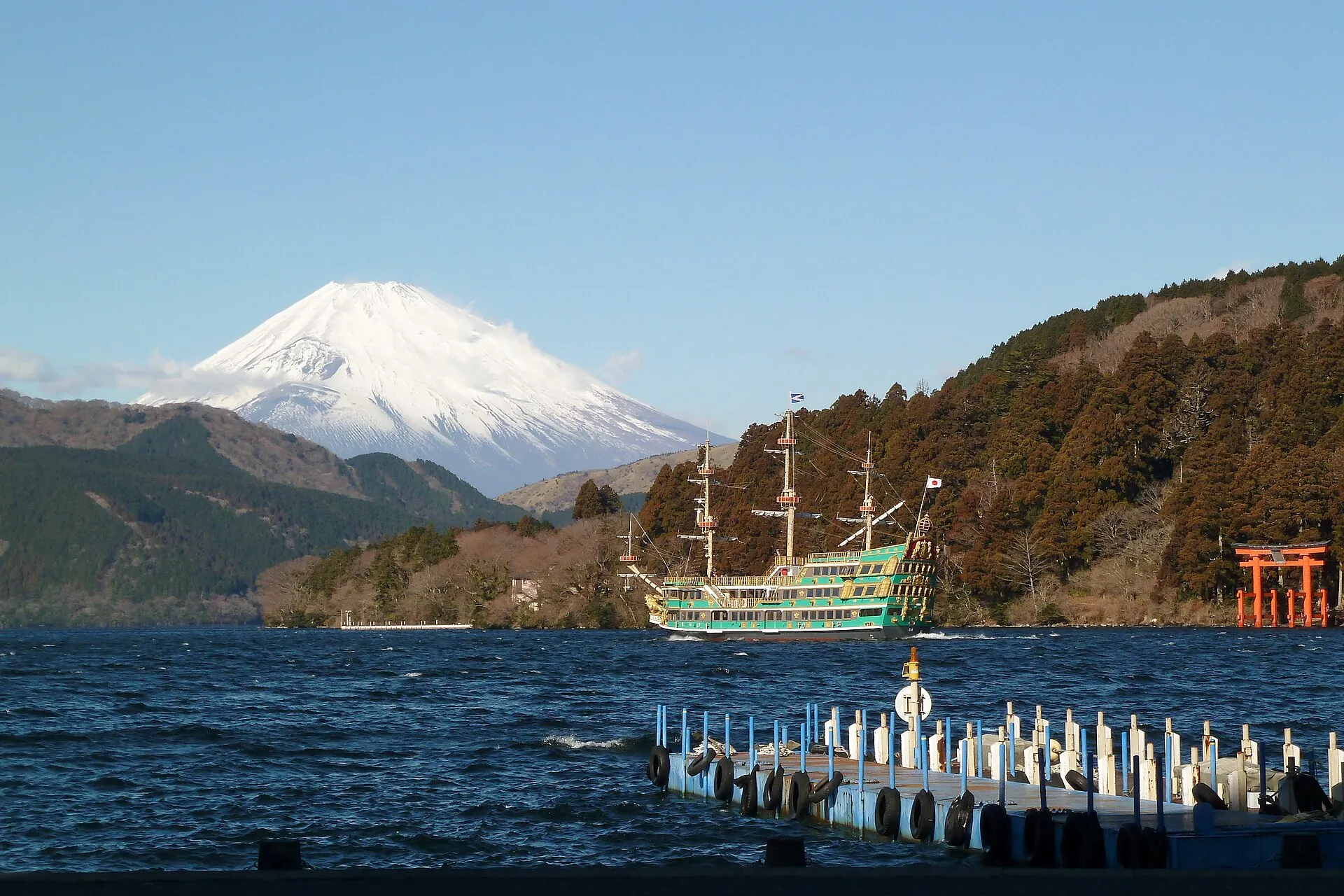
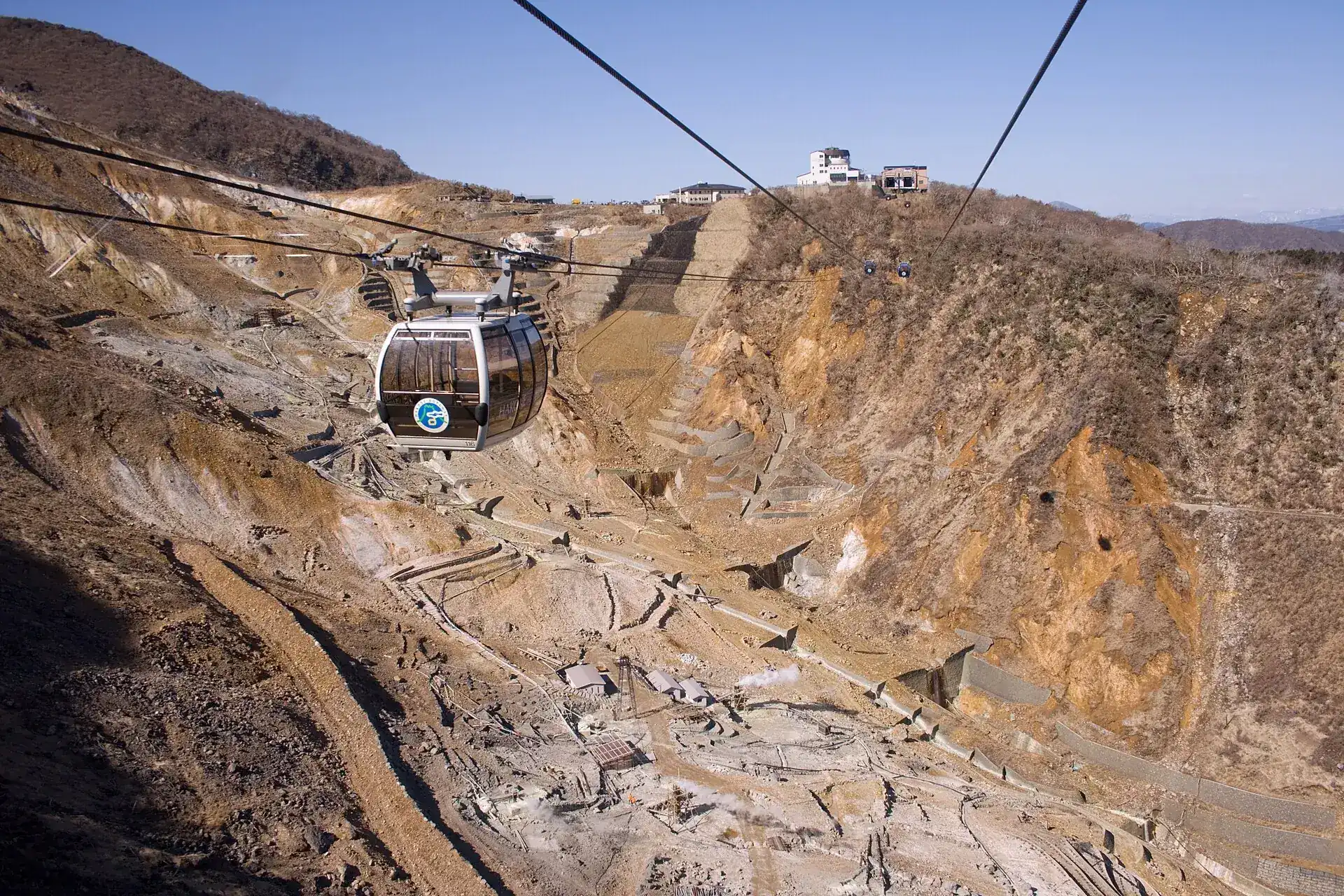
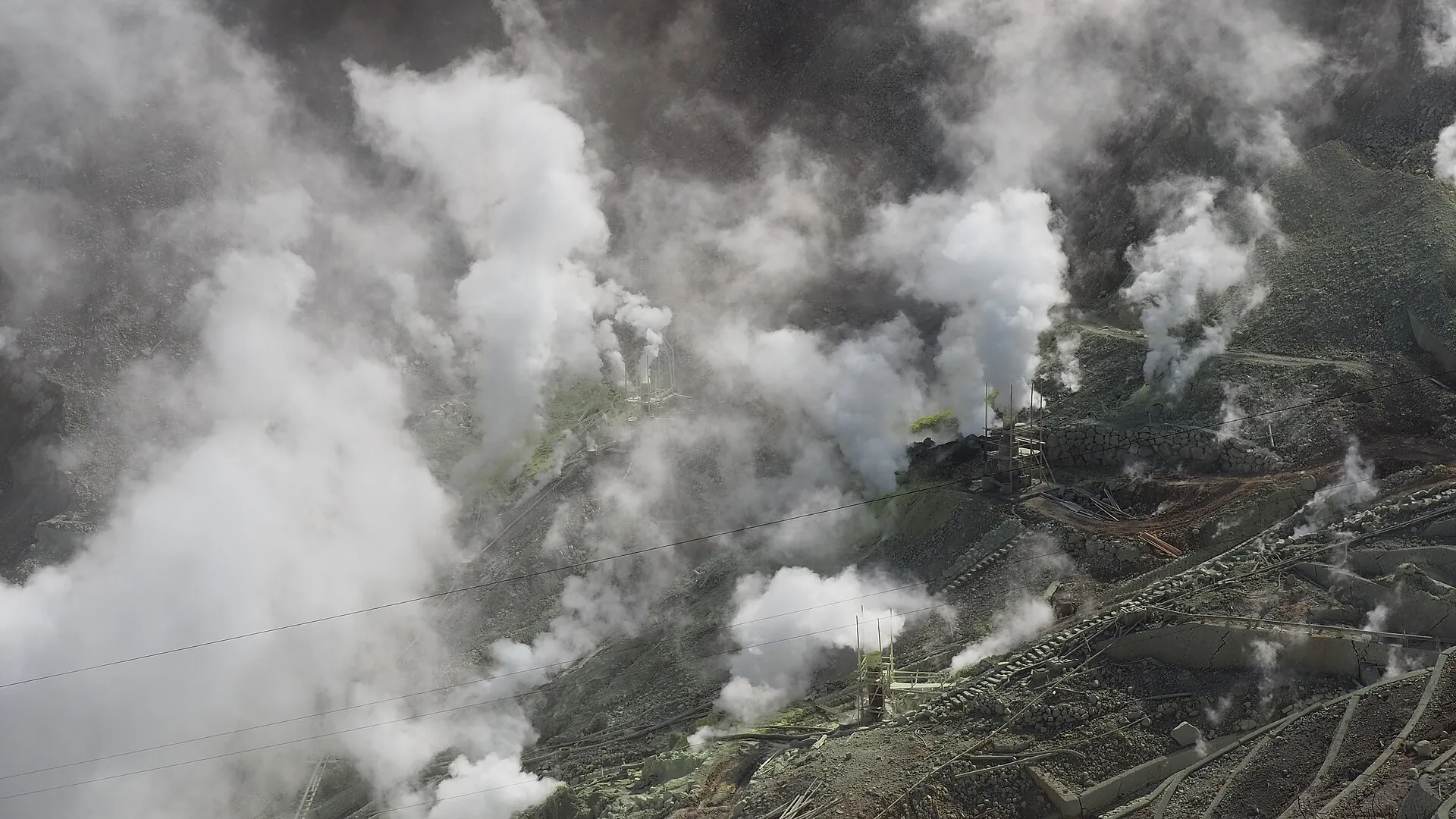
A Hakone Ropeway gondola above the bare, sulfur-yellow slope of Ōwakudani, with the station at the top Dense white clouds of steam rising from the fumarole field of Ōwakudani in Hakone A sightseeing ship styled like a sailing ship on Lake Ashi in Hakone, snow-covered Mount Fuji behind it and a red torii gate on the shore

Hakone

First you float over a slope where nothing grows anymore.

Then you smell it: sulfur. The mountain underneath is awake.

At the end of the ride there is a quiet lake – and, on a clear day, Mount Fuji.

Scroll –
across the valley to the lake

As of 21 September 2026Owakudani today: open – with gas monitoring around the clock

Hakone is an active volcano. The Japan Meteorological Agency (JMA) has it at Alert Level 1 of 5, unchanged since 7 October 2019. The Ōwakudani site is open daily from 9 am to 5 pm, free of charge. The fumarole field itself can only be entered on a guided walk – and for some people the whole valley is off limits.

Open
1,040m

Ōwakudani visitor area

Ropeway station, viewing area, the Kurotamago-kan with the black eggs, the Geomuseum and the information center. Reachable by ropeway, bus or car. If gas levels rise, the site is cleared by loudspeaker announcement – that can happen at any time.

daily 9 am–5 pmfree
Guided only
700m

Nature trail into the fumarole field

Four slots a day (10:00, 11:30, 1:00, 2:30), 30 people at most per slot, about 40 minutes. Online reservation required, elementary-school age and up, and you have to be able to run in an emergency.

cashless only¥800
Check today's status

Hakone Ropeway

Runs year-round, February to November 9 am–5 pm, in December and January until 4:15 pm. Wind of 30 m/s or more, thunderstorms, raised gas levels and the annual overhaul shut it down. Today's operating status is shown only on hakonenavi.jp – we were unable to read it out on 21 September.

one way¥2,000
Closed

Hiking trails from Ōwakudani

The trail from Bōgasawa to Sōunzan Station is fully closed, as is the nature observation trail from Ōwakudani to Kojiri – because of volcanic activity.

prefecture page as of 27 May 2026
Sources: JMA, Hakone-yama at Level 1 since 7 October 2019 · Kanagawa Prefecture (as of 27 May 2026) · Hakone Tourist Association (nature trail) · Hakone Ropeway, fares since 1 October 2025. From Level 2, Ōwakudani would be closed and the ropeway over the valley suspended – as happened in 2015–16 and from May to October 2019.

Not a formalityVolcanic gas at Owakudani: who should not go

The prefecture, the park administration and the ropeway operator all give the same warning – and more bluntly than most travel guides pass it on. Even traces of sulfur dioxide can trigger an asthma attack.

Do not visit

Asthma, lungs, heart

Anyone with asthma, a bronchial, respiratory or lung condition, a heart condition or a pacemaker, or who is feeling unwell, should not visit Ōwakudani: the gas can be life-threatening. The ropeway does not carry these passengers on the ride over the valley; the park administration asks them to stay in the car.

Think it over

Pregnant women, small children, older people, people with allergies

These groups can react to even small amounts of gas. The operators ask them to consider the visit carefully. If you notice a strong smell or irritation of the eyes, nose or throat, leave the area immediately.

On announcement

5 ppm: indoors. 10 ppm: out.

At 5 ppm sulfur dioxide or 10 ppm hydrogen sulfide, everyone has to go inside the buildings. At 10 ppm SO₂ or 50 ppm H₂S the site is cleared completely. The ropeway provides damp cloths for mouth and nose, and every station has a first-aid room.

Sources: Kanagawa Park Association (thresholds, risk groups) · Hakone Ropeway – volcanic gas notice · Kanagawa Prefecture. The thresholds apply to the visitor area; the operator does not state the levels at which the ropeway stops. If this affects you, plan Hakone without the valley: Lake Ashi, Hakone-Yumoto and the museums can be reached by bus.
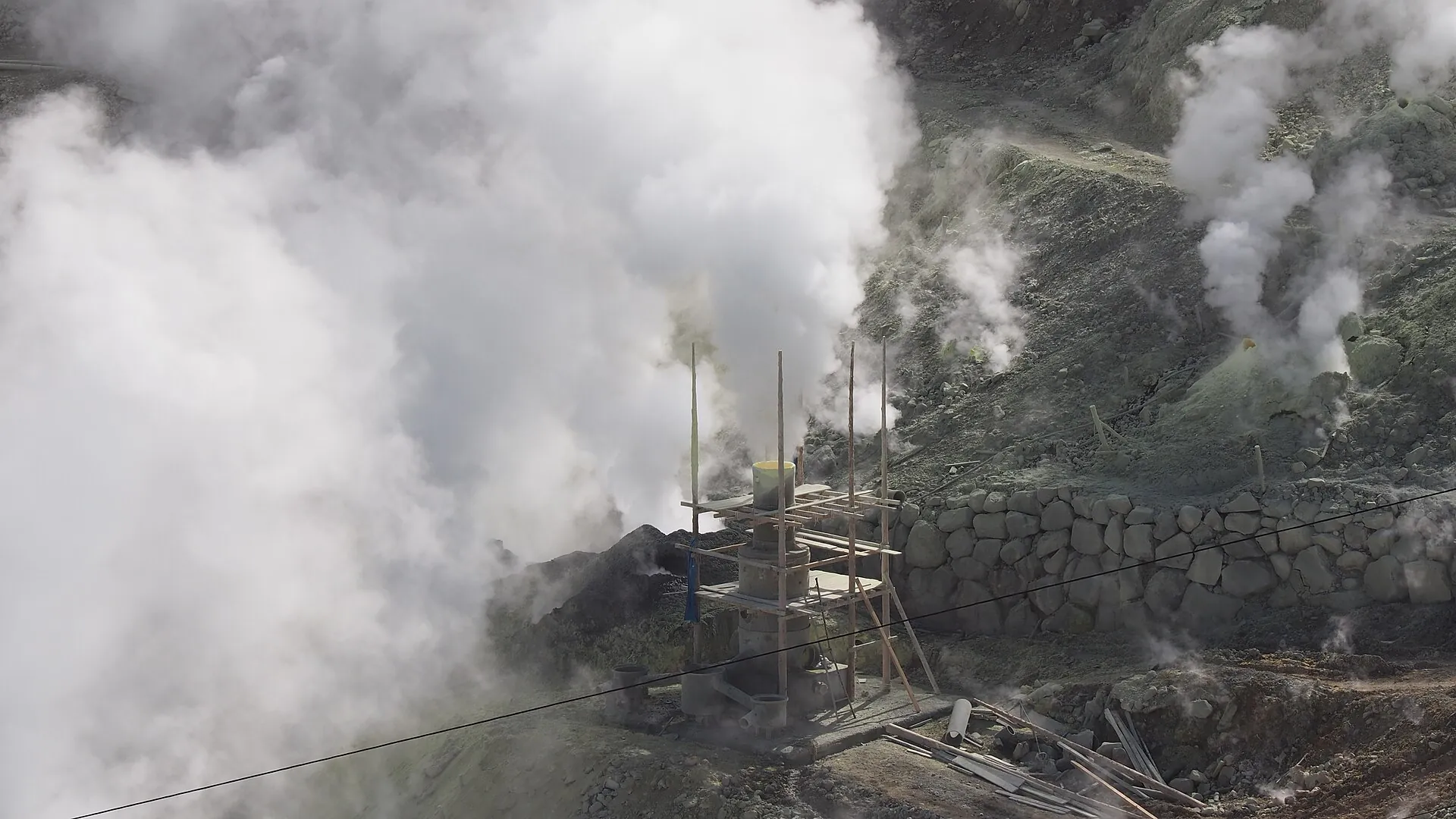
A steam well at Ōwakudani: a thick white column of steam rising next to a wooden scaffold on the gray-yellow slope
No fire, no lava. Just a mountain you can hear breathing out.

Photo: Ka23 13 · CC BY 4.0

The “great boiling valley”What Owakudani is like: steam, sulfur and black eggs

Ōwakudani was formed about 3,000 years ago in an explosion of the Hakone volcano. Today steam pours out of the slope without a break, the ground is yellow and bare, and the ropeway passes about 130 m (430 ft) above it.

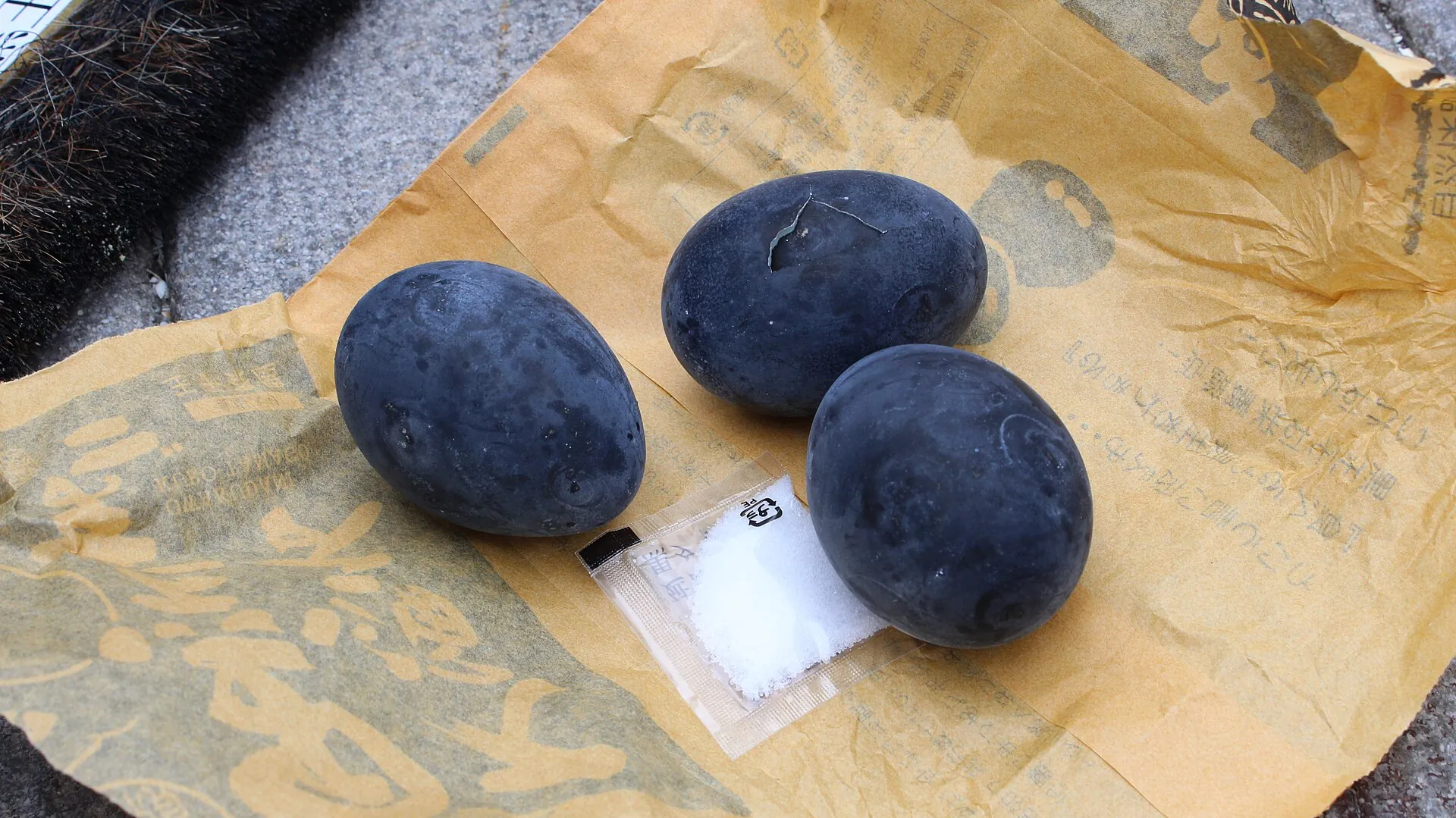
You smell the valley before you see it. At the station it is cool even in summer, often foggy and windy – pack a jacket. The Kurotamago-kan sells kuro-tamago: eggs boiled in the sulfurous hot-spring water, which turns the shell black. Local lore promises seven extra years of life per egg.

In clear weather Mount Fuji stands behind the steam. Your chances are best from November to February and early in the morning – so take the first gondola at 9 am. In summer the mountain is usually in cloud.

Affiliate links to GetYourGuide: if you book, we earn a commission and the price stays the same. Prices and ratings as of 21 September 2026. Almost every day tour from Tokyo combines Hakone with Mount Fuji – so the same tours also appear on our Mount Fuji page. Whether the ropeway runs and whether Mount Fuji is visible is up to wind, gas and weather. Prices were collected in euros.

Train, cable car, ropeway, shipHakone day trip from Tokyo: the loop, step by step

You do not visit Hakone at one spot; you ride a loop on four kinds of transport. The Hakone Free Pass covers all of them. Check the operating status on hakonenavi.jp first thing in the morning: if the ropeway is down for its annual overhaul, replacement buses run and the loop takes longer.

1

Shinjuku → Hakone-Yumoto

On the Odakyu Line. The Romancecar limited express runs direct in about 80 minutes, all seats reserved, ¥1,200 surcharge each way – on top of your ticket or Free Pass. Regular trains as far as Odawara are included in the pass.

2

Mountain railway to Gōra

The Hakone Tozan Railway climbs from Hakone-Yumoto up to Gōra. Included in the Free Pass.

3

Cable car to Sōunzan

From Gōra to the lower station of the ropeway. Included in the Free Pass.

4

Hakone Ropeway over Ōwakudani

One stop to Ōwakudani, where you change gondolas. Gondolas for 18 people roughly every minute, no reservation. Then on via Ubako down to Tōgendai on Lake Ashi.

5

Ship across Lake Ashi

Sightseeing ships leave from Tōgendai and cross the crater lake – also covered by the Free Pass. With Mount Fuji in the background when the sky is clear.

6

Back by bus

The Hakone Tozan Bus and the other bus lines inside the pass area are included. In December and January everything closes around 4 pm – start early.

More expensive since 1 October 2025Hakone Free Pass and Hakone Ropeway prices 2026

On 1 October 2025 the Odakyu Group raised prices sharply: the Hakone Free Pass (officially “Freepass”) from Shinjuku went from ¥6,100 to ¥7,100, the ropeway one way from ¥1,500 to ¥2,000. Many guides still quote the old numbers. For the classic loop the pass still pays off almost every time – the round-trip ropeway ticket alone costs ¥3,000.

Official prices · valid since 1 October 2025, checked 09/2026
Hakone Free Pass, 2 days from Shinjuku · children ¥1,600¥7,100
Hakone Free Pass, 3 days from Shinjuku · children ¥1,850¥7,500
Hakone Free Pass, 2 days from Odawara · children ¥1,500¥6,000
Romancecar surcharge Shinjuku – Hakone-Yumoto, one way · children ¥600 · not included in the Free Pass¥1,200
Free Pass, 2 days from Shinjuku, plus Romancecar round trip¥9,500
Hakone Ropeway one way · children ¥700¥2,000
Hakone Ropeway round trip, valid 2 days, stopovers allowed · children ¥1,000¥3,000
Guided Ōwakudani nature trail, per person, cashless only¥800
Ōwakudani parking lot, car, daily maximum weekdays / weekends¥1,300 / ¥2,600
Sources: hakonenavi.jp – Hakone Freepass · Odakyu · ropeway fares · Kanagawa Park Association (parking).

Three ways into the valleyHakone Ropeway, guided nature trail, car

The ropeway and the visitor area need no reservation. The nature trail does – and if you drive, keep an eye on the clock.

Way in → hours, price, conditions
Hakone Ropeway · Sōunzan – Ōwakudani – Ubako – TōgendaiFebruary–November 9 am–5 pm, December–January 9 am–4:15 pm. One way ¥2,000, round trip ¥3,000, included in the Free Pass. Tickets at all four stations, also as a digital ticket with QR code; no time slots. Wheelchair users can board in their wheelchair. Dogs only in a closed carrier.
Guided nature trail · loop of about 700 m (0.4 miles), roughly 40 minutesDaily at 10:00, 11:30, 1:00 and 2:30, 30 people per slot, two safety wardens per group. ¥800, card or IC card only. Reservation required with the Hakone Tourist Association. Meet at the Ōwakudani Information Center at least 20 minutes before. Whether a walk is canceled for weather or gas is decided 30 minutes before the start.
Car · Prefectural Road 734, parking lot with 147 spacesThe access road is open 9 am–5 pm only. Last entry 4:20 pm (December–January 4:00 pm), exit by 4:40 pm – after that the car is locked in. Weekdays ¥1,300 at most, weekends up to ¥2,600. No reservations; winter tires needed in winter.
Three black eggs (kuro-tamago) from Ōwakudani with a small packet of salt on the vendor's paper bag
Seven years per egg, they say. The only thing on record is the black shell.

Photo: Jaspermatt · CC BY-SA 3.0

Good to knowGetting to Hakone from Tokyo, best time, tips

Getting there

Without a car: From Tokyo's Shinjuku on the Odakyu Line. The Romancecar limited express runs direct to Hakone-Yumoto in about 80 minutes; all seats are reserved, and you need a surcharge ticket (¥1,200 one way) plus a regular ticket or Freepass. The Hakone Freepass includes one round trip Shinjuku–Odawara on regular Odakyu trains and then unlimited rides on eight kinds of transport: Hakone Tozan Railway, cable car, ropeway, sightseeing ship on Lake Ashi, Hakone Tozan Bus, Odakyu Highway Bus and Tokai Bus within the pass area. To Ōwakudani: Tozan Railway Hakone-Yumoto–Gōra, cable car to Sōunzan, then one stop on the ropeway. The pass also gives discounts at around 70 baths, museums and restaurants.

By car: Access via Prefectural Road 734, open 9 am–5 pm only. 147 car spaces, no reservations; the park administration recommends weekdays because there is less traffic and the rate is half as high. Exit by 4:40 pm.

  • From Tokyo (Shinjuku) · about 80 min to Hakone-Yumoto
    Odakyu Romancecar to Hakone-Yumoto, then Tozan Railway, cable car and ropeway

Best time to go

For the view of Mount Fuji from the ropeway and from Ōwakudani, the same patterns apply as at Mount Fuji itself: according to the long-term observations of the city of Fuji, the mountain is clear most often from November to February and least often from June to August, and more often in the morning than in the afternoon. So take the first gondola at 9 am. Weekdays are emptier and cheaper at the parking lot. In winter the ropeway goes out of service for several weeks for its section-by-section annual overhaul (2025: mid-January to end of February) – check the dates before a winter trip. In December and January everything closes around 4 pm.

Who it suits

Children
The ropeway and the site are suitable for families, and there are children's fares. Infants and toddlers, however, are among the groups that can react to even small amounts of gas – the operators ask parents to weigh up the visit. The guided nature trail is allowed only from elementary-school age.
Minimum age
Nature trail: elementary-school age. Site and ropeway: none.
Fitness
None for the site. On the nature trail you have to be able to run in an emergency.
Heart and lungs
The most important point about this destination. The prefecture, the park administration and the ropeway all give the same warning: anyone who has asthma, a bronchial, respiratory or lung condition, a heart condition or a pacemaker, or who does not feel well, should not visit Ōwakudani – the gas can be life-threatening. The ropeway does not carry these passengers on the ride over the valley, and the park administration asks them to stay in the car. Pregnant women, infants and toddlers, older people and people with allergies should weigh up the visit carefully, because even traces of sulfur dioxide can trigger an asthma attack. If you notice a strong smell or irritation of the eyes, nose or throat, leave the area immediately.
Wheelchair
The ropeway can be used in a wheelchair; all stations lend wheelchairs free of charge, as does the information center. Parking is free with a disability certificate. The nature trail requires that you can run.
Dogs
On the ropeway only in a closed carrier; assistance dogs are allowed.
Clothing
At 1,040 m (3,410 ft) it is cool even in summer, often foggy and very windy – bring a jacket. In winter there is snow and ice.
Footwear
Sturdy street shoes are enough for the site; for the nature trail, closed shoes with a good tread.

Tips you will need on site

  • If you have asthma or a heart condition, plan Hakone without Ōwakudani: Lake Ashi, Hakone-Yumoto and the museums can be reached by bus without crossing the valley.
  • Book the guided nature trail online in advance and be at the information center 20 minutes before the start. Payment is by card or IC card only – cash is not accepted.
  • Check the operating status on hakonenavi.jp first thing in the morning: wind, gas and the overhaul shut the ropeway down again and again; then replacement buses run and the loop takes longer.
  • The Freepass from Shinjuku pays off quickly: a round trip on the ropeway alone costs ¥3,000. Book the Romancecar surcharge (¥1,200 each way) separately – all seats are reserved.
  • If you drive, come on a weekday: half the parking rate, less congestion on the access road. And watch the clock – after 4:40 pm you cannot get out of the parking lot.
  • React to announcements immediately: at 5 ppm sulfur dioxide everyone has to go into the buildings, at 10 ppm the site is cleared. Hold the damp cloths from the ropeway over your mouth and nose.
  • For the view of Mount Fuji, take the first gondola and travel in the winter half of the year; in summer the mountain is usually in cloud.
  • A jacket belongs in your pack even in August – at 1,040 m it is windy, foggy and noticeably colder than in Tokyo.

A short history

  • Ōwakudani (“great boiling valley”) was formed about 3,000 years ago in an explosion of the Hakone volcano.
  • It is famous for kuro-tamago: eggs boiled in the sulfurous hot-spring water, which turns their shells black. Local lore promises seven extra years of life per egg.
  • On 6 May 2015 the JMA raised the alert level to 2 and Ōwakudani was closed. On 29 June 2015 a volcanic tremor lasting several minutes followed, with ashfall up to 1.2 km to the north and northeast; on 30 June Level 3 applied.
  • In April 2016 the site partly reopened – with continuous gas measurement, announcements and rules of conduct for risk groups.
  • On 19 May 2019 the alert level rose to 2 again; on 7 October 2019 the JMA lowered it to 1, and on 26 October 2019 the ropeway resumed service along its full length.
  • The nature trail into the fumarole field stayed closed for almost seven years and since 28 March 2022 can only be walked with a guide, a reservation and shelters along the way.
  • On 1 October 2025 the Odakyu Group raised prices sharply: the Freepass from Shinjuku from ¥6,100 to ¥7,100, the ropeway one way from ¥1,500 to ¥2,000.

Pass, bullet train or privateHakone on your own or on a tour from Tokyo

If you ride the loop yourself, a pass is basically all you need. If you want Hakone and Mount Fuji in one day, a bus tour is faster – the pricier ones return by bullet train. These Fuji–Hakone tours also show up on our Mount Fuji page.

Affiliate links to GetYourGuide: if you book, we earn a commission and the price stays the same. Prices and ratings as of 21 September 2026. With the pass, check before booking which station it is valid from and whether the Romancecar surcharge is included – the official Freepass does not include it. Prices were collected in euros.

Outdated onlineWhat other sites get wrong

“The Hakone Free Pass costs ¥6,100 (2 days from Shinjuku).”
Correct until 30 September 2025. Since 1 October 2025 it has been ¥7,100; three days cost ¥7,500 instead of ¥6,500, and from Odawara ¥6,000 instead of ¥5,000.
“The ropeway costs ¥1,500 one way and ¥2,500 round trip.”
Old fares. Since 1 October 2025: ¥2,000 and ¥3,000.
“At Ōwakudani you wander freely among the steam vents.”
Not since the 2015 closure. Since 28 March 2022 the nature trail has been open on guided walks only: four slots a day, 30 people each, online reservation, ¥800 cashless.
“The gas warning is a formality.”
No. The ropeway operator excludes people with asthma, bronchial, lung and heart conditions from the ride over the valley, and the prefecture asks them not to visit the site.
“The Free Pass gets you on the Romancecar for free.”
No. It covers regular Odakyu trains; the Romancecar costs a ¥1,200 surcharge each way on top.

Quick answersBefore you go to Hakone

Is Hakone an active volcano?

Yes. The last, very small eruption was on 29–30 June 2015 at Ōwakudani, with ashfall up to about 1.2 km (0.75 miles) away. Alert Level 1 of 5 has applied since 7 October 2019. The fumaroles at Ōwakudani are permanently very active – hence the gas monitoring around the clock.

How dangerous is the gas at Owakudani?

The site is open as normal at Alert Level 1. For people with asthma, lung or heart conditions, however, the gas can be life-threatening – the authorities say they should not go at all. At 5 ppm sulfur dioxide everyone has to go indoors; at 10 ppm the site is cleared. Follow announcements immediately.

How long do you need for a Hakone day trip from Tokyo?

A full day. The Romancecar alone takes about 80 minutes each way, and then come the mountain railway, cable car, ropeway and ship. The ropeway does not start until 9 am and in December and January runs only until 4:15 pm.

Can you buy the black eggs without a reservation?

Yes. The Kurotamago-kan is part of the freely accessible visitor area. Only the guided nature trail into the fumarole field has to be reserved.

When is the Hakone Ropeway closed for maintenance?

The annual overhaul is done section by section over several weeks in winter – in 2025 from mid-January to the end of February, bridged by replacement buses. Dates for 2027 could not be found on 21 September 2026; check hakonenavi.jp before a winter trip.

Can you do Mount Fuji and Hakone in one day?

On a bus tour from Tokyo, yes – many tours are built exactly that way. On your own it means two separate trips out of Shinjuku: highway bus or train to Kawaguchiko, Odakyu Line to Hakone. Better to plan two days.

Is Owakudani open right now?

As of 21 September 2026, yes: the Japan Meteorological Agency has Hakone at Alert Level 1, and the site is open daily from 9 am to 5 pm. If gas levels rise, in storms or if the level is raised, it can be cleared or closed at short notice. The day's status is shown on hakonenavi.jp and on the Kanagawa Prefecture page.

What is the volcanic alert level for Hakone?

Level 1 of 5 – that means no exclusion zone, but a reminder that this is an active volcano. It has applied since 7 October 2019. From Level 2, Ōwakudani would be closed and the ropeway over the valley suspended, as happened in 2015 and 2019.

Can I visit Owakudani with asthma or a heart condition?

The authorities clearly advise against it: with asthma, bronchial and lung conditions, heart conditions or a pacemaker, the volcanic gas can be life-threatening. The ropeway does not carry these passengers on the ride over the valley. Pregnant women, small children, older people and people with allergies should weigh up the visit carefully.

Do you need a reservation for Owakudani?

Not for the site, the ropeway station or buying eggs. Only the nature trail into the fumarole field requires a reservation: guided, four times a day, 30 people at most, ¥800. You book online with the Hakone Tourist Association.

How much is the Hakone Free Pass in 2026?

From Shinjuku ¥7,100 for two days and ¥7,500 for three; children pay ¥1,600 and ¥1,850. From Odawara the two-day pass costs ¥6,000. These prices have applied since 1 October 2025.

Is the Hakone Free Pass worth it?

For the classic loop, almost always. It covers the trip from Shinjuku, the mountain railway, cable car, ropeway, ship and buses – the round-trip ropeway ticket alone costs ¥3,000. It also gives discounts at around 70 baths, museums and restaurants.

How do I get from Tokyo to Hakone?

On the Odakyu Line from Shinjuku. The Romancecar takes about 80 minutes to Hakone-Yumoto and costs a ¥1,200 surcharge on top of a ticket or Freepass; all seats are reserved. Regular trains as far as Odawara are included in the Freepass.

What happens if the Hakone Ropeway is not running?

In wind of 30 m/s or more, thunderstorms, raised gas levels or during the annual overhaul, the ropeway stops entirely or in sections. During the overhaul the operator runs replacement buses, which can be used with a Freepass or ropeway ticket. The current situation is on hakonenavi.jp.

What are the Hakone Ropeway hours?

From February to November 9 am to 5 pm, in December and January 9 am to 4:15 pm. The 18-person gondolas run roughly every minute, and you change at Ōwakudani. No reservation is needed.

Can you see Mount Fuji from Hakone?

In clear weather, yes, especially from the ropeway and from Ōwakudani. The chances are highest from November to February and early in the morning; in summer the mountain is usually covered in cloud. The view can never be promised.

Is Owakudani OK with kids?

Yes, with limits. The ropeway and the site are straightforward, and there are children's fares. For infants and toddlers the operators advise caution because of the gas, and children are allowed on the guided nature trail only from elementary-school age.

Can you drive to Owakudani?

Yes, the access road is open from 9 am to 5 pm and the parking lot has 147 car spaces. It costs ¥1,300 at most on weekdays and up to ¥2,600 on weekends. Last entry is at 4:20 pm (4:00 pm in winter), and you have to be out again by 4:40 pm.
Sources · accessed on 21 September 2026