Volcano·Guide
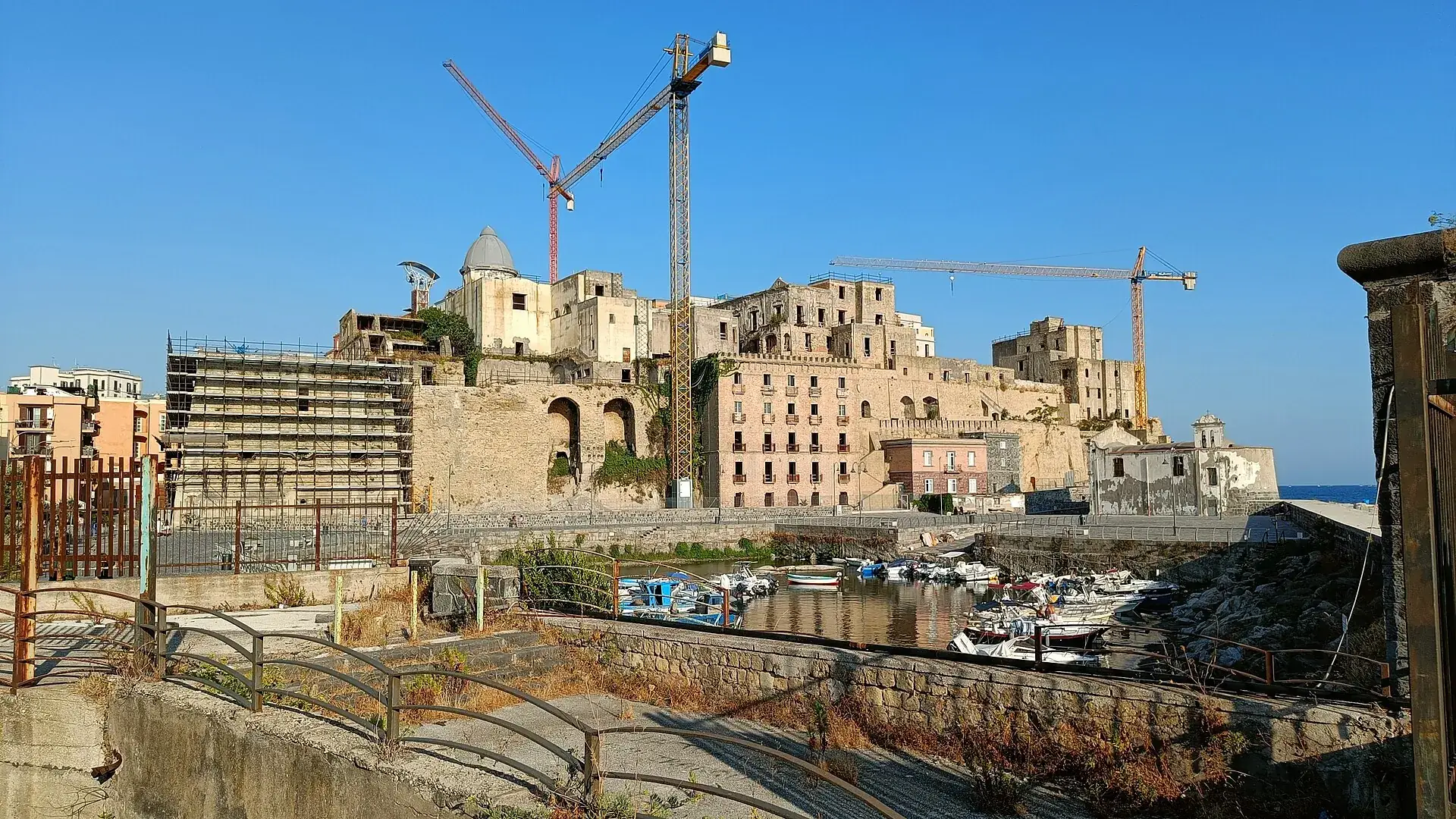
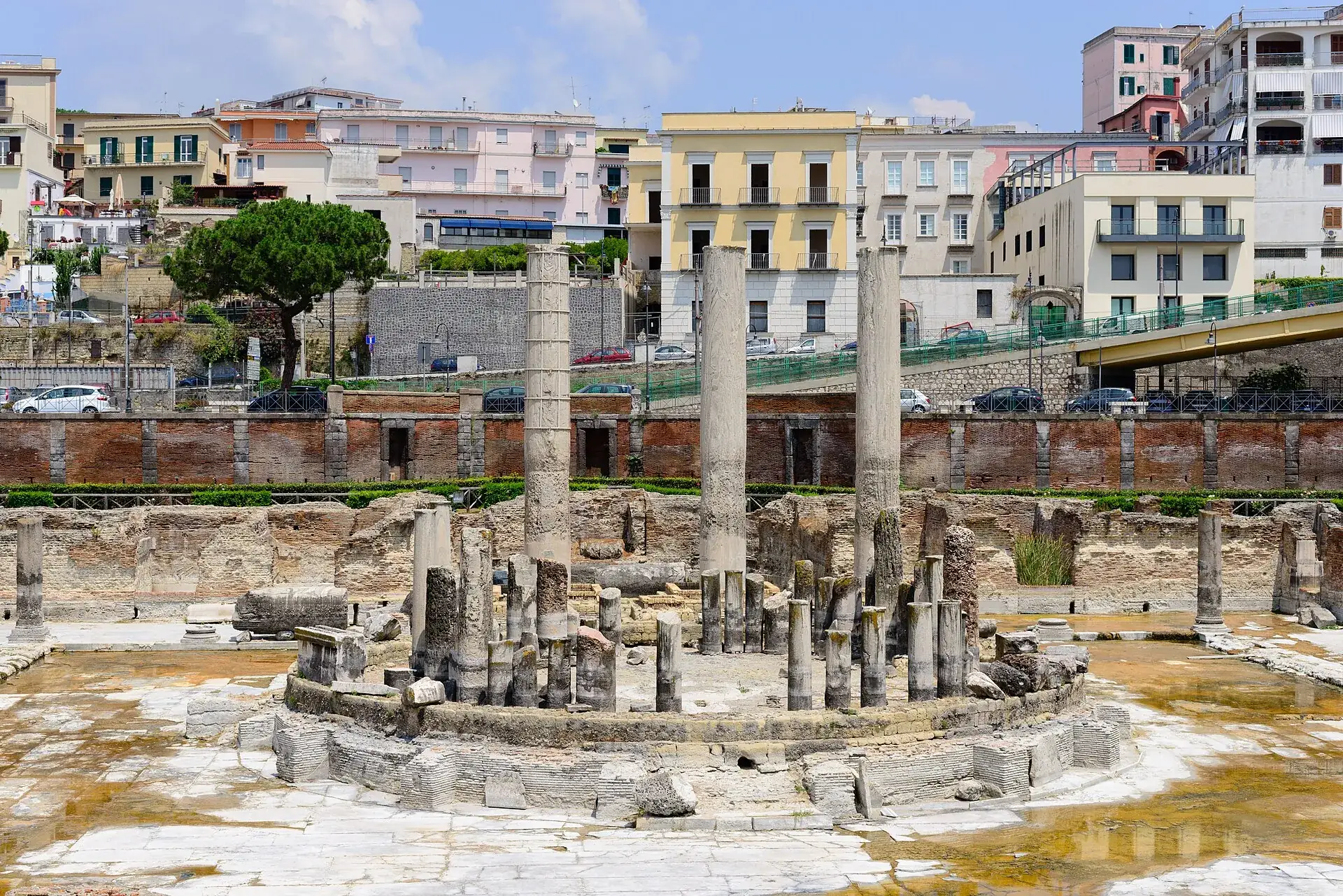
Steaming fumaroles in the Solfatara crater at Pozzuoli behind wooden fences, photographed in 2013 before the closure The columns of the Macellum in Pozzuoli with boring-mollusk traces, the town's houses behind The Rione Terra in Pozzuoli with construction cranes above the harbor

Campi Flegrei

There is no mountain here. The ground breathes – a caldera of 77 square miles, in the middle of a city.

The columns of the Macellum show how far it has already sunk and risen again.

Today it is rising once more: about half an inch a month, and the earth shakes.

Scroll –
the ground is moving

As of 22 September 2026Alert level yellow: what is open in the Campi Flegrei today

The INGV weekly bulletin of 22 September 2026 counts five earthquakes for the week of 14–20 September (Md 2.0 at most); the ground at Pozzuoli is rising 10 ± 3 mm per month. In the short term the institute sees “no elements suggesting a significant development”. The civil protection alert level has been yellow since 2012, and phase 2 since the emergency plan of 30 October 2025. For you this means: the excavations are open, the Solfatara is not – and after every stronger earthquake the park closes its sites for safety checks.

Yellow
Campi Flegrei alert levelCivil protection alert level (green/yellow/orange/red) · checked on 2026-09-22 · Dipartimento della Protezione Civile – Presidenza del Consiglio dei Ministri (CC BY 4.0)
since 12 Sep 2017

Solfatara

The best-known crater has been closed since three people died in 2017 when the ground gave way. The courts released the site in February 2025, and the regional park is planning guided visits with CO₂ meters – there is no date. On 13 July 2026 a fire burned on the crater slope.

Reopeningno date
online only

Baia, Cuma, amphitheater

The Castello di Baia with its museum, the Terme di Baia, Cuma and the Anfiteatro Flavio are open; the amphitheater with a restricted route since the earthquake. Since 8 April 2026 tickets are sold only through the “Musei Italiani” portal – no ticket office on site.

per site · 3-day combined ticket €10€5
free

Monte Nuovo and Averno

Europe's youngest volcano (born in 1538) has a loop trail onto the crater rim, free, from 9 am until one hour before sunset. The lakeside path around Lake Averno is always open. Both are on foot from the Cumana stop Lucrino.

Admission€0
since 31 Jul 2026

Rione Terra

The tuff spur of ancient Puteoli with its cathedral and underground route has been closed since the earthquake of 31 July 2026 (Md 4.7). Palazzo Migliaresi and Sedile dei Nobili are unusable; the opening of the restored quarter planned for summer 2026 did not happen.

most recently€5
Sources: INGV Osservatorio Vesuviano, weekly bulletin of 22 September 2026 and monthly bulletin August 2026; Dipartimento della Protezione Civile (alert level yellow, phase 2, decree no. 3236 of 30 October 2025); Parco Archeologico dei Campi Flegrei, “Info”, “Tariffe” and “News” pages (ticket office closure, reopenings 10 August 2026); Ente Parco Regionale dei Campi Flegrei (Solfatara). If a site is closed because of an earthquake, the park refunds the ticket.
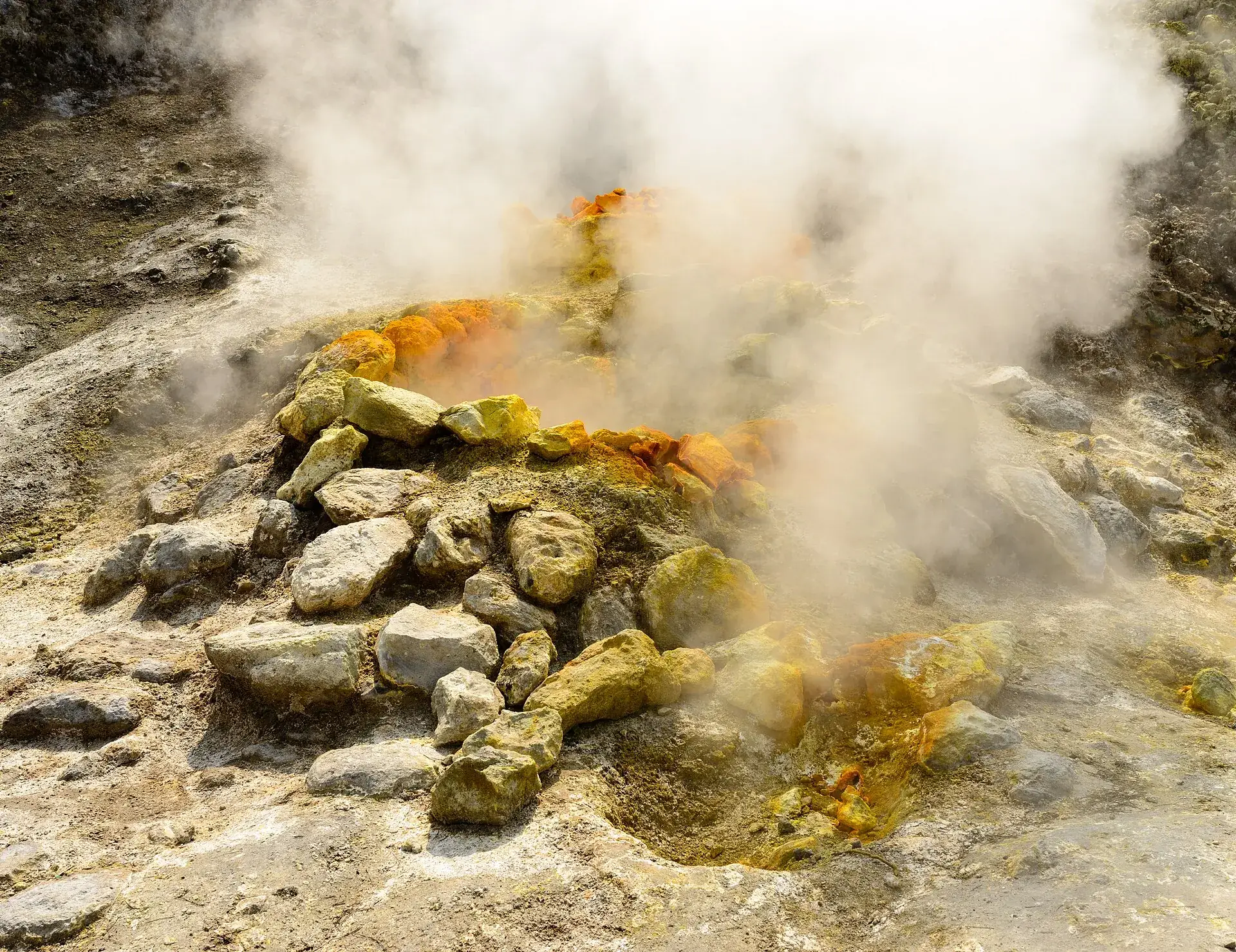
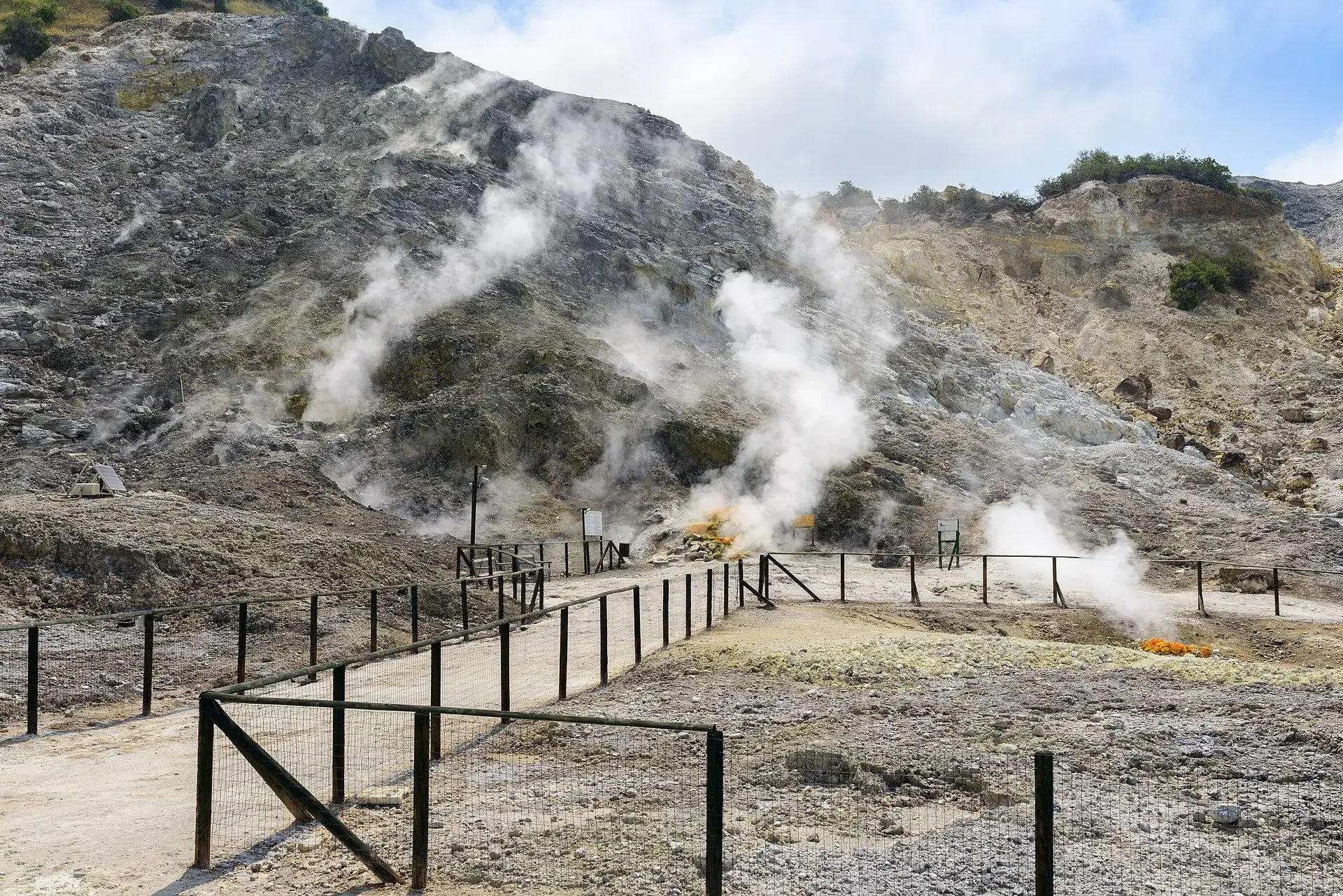
Yellow sulfur deposits at a steaming fumarole in the Solfatara crater at Pozzuoli
The Bocca Grande in the Solfatara keeps steaming at 173 °C (343 °F) – nobody has been allowed to see it since 2017. Photographed in 2013.

Photo: Norbert Nagel · CC BY-SA 3.0

What you actually experience hereBradyseism: the ground that rises and sinks

The Campi Flegrei are not a volcano you climb. You walk around inside it. Pozzuoli sits in the middle of the caldera, and the proof stands by the harbor: the three columns of the Macellum. Up to 7 m (23 ft) they are riddled with boring mollusks – that is how deep the Roman market once lay beneath the sea before the ground lifted it again. Since November 2005 it has been rising once more, about 1.7 m (5.6 ft) in total. You cannot see it. You feel it when the earth shakes.

The experience today is different from before 2017. Back then you stood in the Solfatara at the edge of boiling mud pools. Today you only smell the hydrothermal system: at Lake Averno, and on the road at Pisciarelli, where the caldera's most active fumarole field steams behind the fence of the INGV monitoring station. In return you get something no other volcano offers: Roman imperial palaces that bradyseism pushed into the sea. In Baia, villas, mosaics and statues lie at 2–5 m (7–16 ft) depth – seen from a glass-bottom boat, with a snorkel or on a dive.

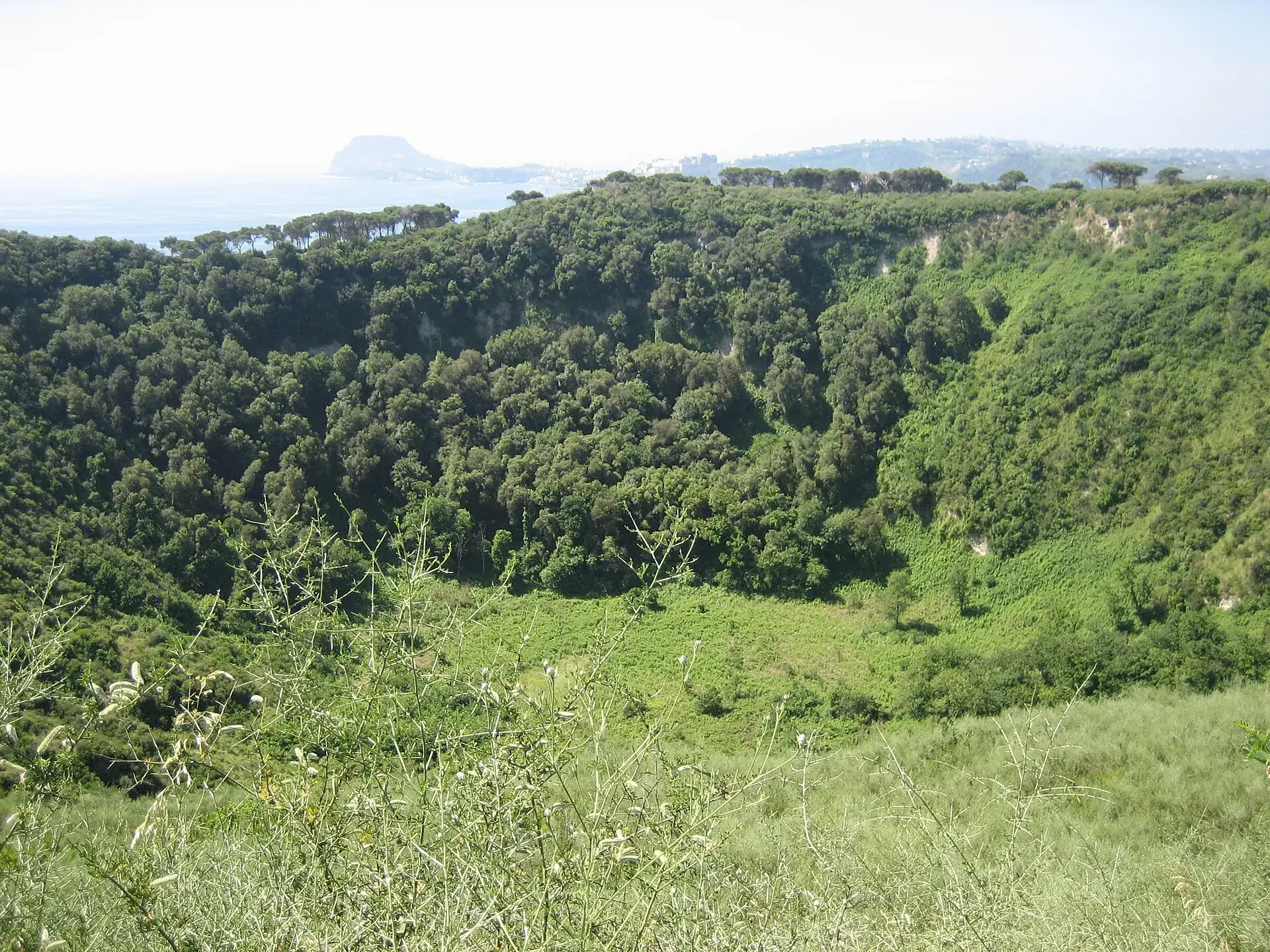
And Monte Nuovo: a cone 133 m (436 ft) high that grew in eight days in 1538 and buried a village. Its crater is a forest today with a loop trail, an hour and a half, free. From the rim you see Lake Averno, the gulf and Ischia – and understand that the next eruption of this caldera does not have to happen in a crater, but anywhere.

Affiliate links to GetYourGuide: if you book, we earn a commission and the price stays the same. Prices and ratings as of 22 September 2026. As of 09/2026 the submerged park lies outside any closure; trips are cancelled in wind and swell. None of these tours includes the Solfatara – it is closed.

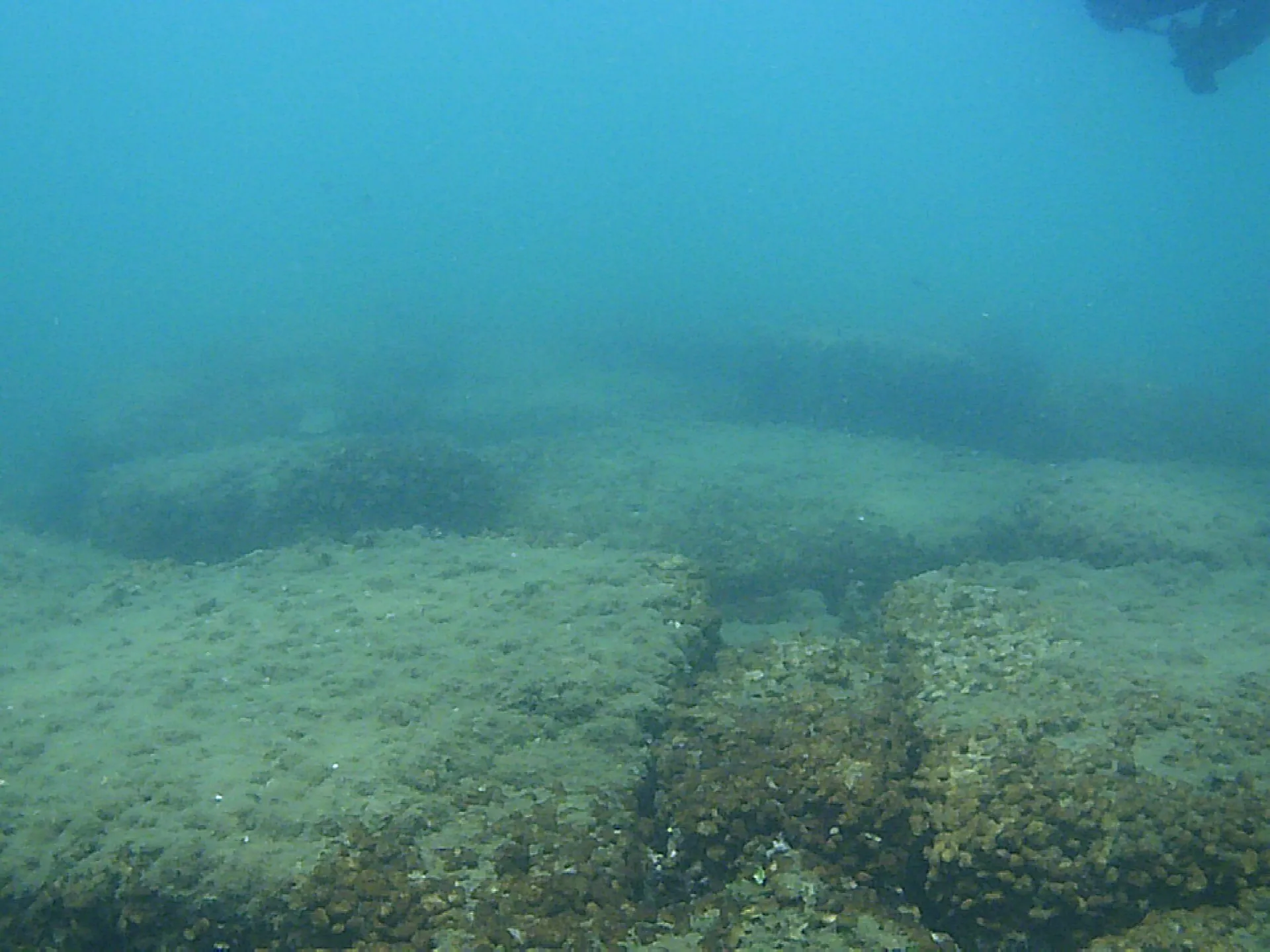
The sunken Via Herculanea in the submerged park of Baia: remains of Roman walls under clear water
The Via Herculanea in Baia lies underwater today – bradyseism put it there, and it can lift it again.

Photo: Ruthven · CC0

The ruleTickets online only, quotas per half hour

In 2026 the Parco Archeologico dei Campi Flegrei switched its ticket sales completely. Anyone who walks up to the ticket office as they used to finds a closed door.

1

Ticket at Musei Italiani

Since 8 April 2026 the park sells only through portale.museiitaliani.it or the “Musei Italiani” app; at Cuma the ticket office closed on 29 June 2026. The “Circuito flegreo” combined ticket (€10) is valid for three days at all four sites.

2

Quotas and length of stay

Castello, Terme di Baia and Cuma: at most 50 people per 30 minutes, stay 120 minutes. Anfiteatro Flavio: only 25 people per half hour, 30 minutes in the underground level. Groups of 10 or more book in advance.

3

Remember the closing days

Monday: Castello and Terme di Baia closed. Tuesday: Cuma and the amphitheater closed. Piscina Mirabilis in Bacoli only Wednesday, Saturday and Sunday with accompanied entry (CoopCulture, €5).

4

After an earthquake

After every stronger swarm the park closes its sites for safety checks (as on 24 June, 31 July and 10 August 2026) and announces reopenings on its news page. Tickets already bought are refunded.

Official prices · as of 09/2026
Single ticket per site (Castello di Baia with museum, Terme di Baia, Cuma, Anfiteatro Flavio) · reduced for EU citizens aged 18–25 €2 · under 18 free€5
“Circuito flegreo” combined ticket, four sites, valid three days · reduced €5€10
Annual pass myFleg (four sites, with reservation) / myCastello (Castello di Baia only)€20 / €10
Oasi naturalistica Monte Nuovo · lakeside path Lake Avernofree
Submerged park of Baia: park ticket per dive trip / per snorkel trip, plus operator · dive with the concession holder €35€5 / €3
Piscina Mirabilis, Bacoli, accompanied entry · ages 6–18 reduced, under 6 free€5
Metro Linea 2 Naples–Pozzuoli Solfatara: single ride / 90-minute integrated ticket / day pass€1.50 / €1.80 / €4.50
Sources: Parco Archeologico dei Campi Flegrei, “Tariffe” and “Info” (accessed 22 September 2026); Parco sommerso di Baia; CoopCulture (Piscina Mirabilis); Comune di Pozzuoli (Monte Nuovo). Opening hours: Castello di Baia Tue–Sun 9 am–6:30 pm, amphitheater Mon and Wed–Fri 9 am–6:30 pm, Sat/Sun 9 am–7 pm, Terme di Baia until one hour before sunset.
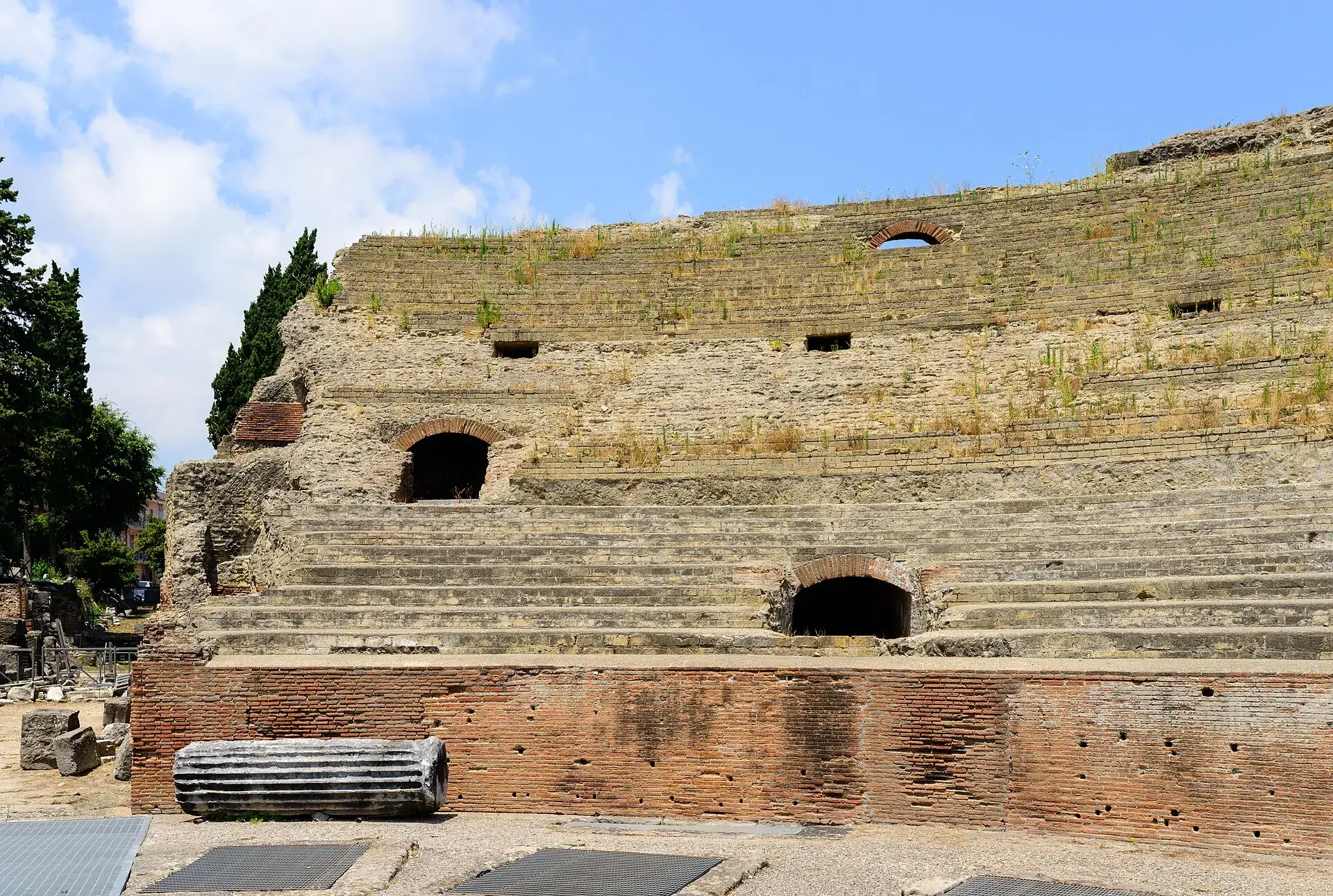
The tiers and arches of the Anfiteatro Flavio in Pozzuoli under a blue sky
Italy's third-largest amphitheater has admitted only 25 people per half hour since the earthquake – the restricted route is the price of staying open.

Photo: Norbert Nagel · CC BY-SA 3.0

On foot through the calderaCampi Flegrei trails: Monte Nuovo, Averno, Cuma

There is no summit and no cable car. There are loop trails, ruins and a submerged park. The elevation gain is modest; the summer heat is not.

436ft

Monte Nuovo loop

From the main gate on Via Virgilio (Cumana stop Lucrino, 10 minutes) onto the crater rim and into the wooded crater. About 120 m (390 ft) of climbing on loose tuff, 1–1.5 hours. On foot only, 9 am until one hour before sunset, Sundays and public holidays 9 am–1 pm.

Admissionfree
1.9miles

Lake Averno lakeside path

Flat loop around the crater lake, about an hour, always open, past the so-called Temple of Apollo (a bath hall, 2nd century). 15 minutes on foot from Lucrino. The Grotta della Sibilla on the shore is not accessible.

Admissionfree
2hrs

Cuma acropolis

The oldest Greek colony on the Italian mainland: the Antro della Sibilla (at most 25 people at a time), a climb to the acropolis with a view of the coast. From the Cumana stop Fusaro by bus or on foot. Closed Tuesday.

Ticket€5
−16ft

Submerged park of Baia

Dive or snorkel trip of 1.5 to 2.5 hours from Baia or Lido Montenuovo, usually April to October. Zone A only with a guide from a licensed center; groups of up to eight divers.

park ticket plus operator€3–5
View into the wooded crater of Monte Nuovo at Pozzuoli, the gulf in the background
Monte Nuovo grew in eight days in 1538. Today its crater is a forest – and the loop trail is the cheapest volcano day on the bay.

Photo: Gerd Fahrenhorst · Public domain

Good to knowGetting there from Naples, best time, tips

Getting there

Without a car: Two railways from Naples: (1) Metro Linea 2 (Trenitalia) from Napoli Piazza Garibaldi via Montesanto, Mergellina, Campi Flegrei, Bagnoli-Agnano to the terminus Pozzuoli Solfatara (about every 8 minutes, €1.50; Solfatara entrance and Anfiteatro Flavio 10–15 minutes on foot). (2) Cumana (EAV, line L9) from Napoli Montesanto via Fuorigrotta, Bagnoli, Pozzuoli (new station Via Fasano since 11 September 2026), Gerolomini, Arco Felice, Lucrino (Monte Nuovo, Averno), Baia (baths, castle), Fusaro (Cuma by bus/on foot) to Torregaveta; fares by zone about €1.50–2.60 (UnicoCampania), every 15 minutes to Bagnoli, every 30 minutes on the whole line. After the earthquake of 31 July 2026 the Bagnoli–Torregaveta section was interrupted until 10 September 2026. EAV buses also serve the Anfiteatro; the port of Pozzuoli has ferries to Ischia and Procida (operating again since 2 August 2026).

By car: Tangenziale di Napoli, exits Pozzuoli/Via Campana or Agnano; for Baia and Cuma continue on the SS7 quater/Via Domiziana. Parking: Anfiteatro (roadside, scarce), Castello di Baia (small lot at the ramp), Cuma (lot at the entrance), Monte Nuovo (lot at the gate). In Pozzuoli, streets and buildings have been cordoned off since the earthquake – follow the signs.

  • From Naples (center) · 25–45 minutes
    Metro Linea 2 to Pozzuoli Solfatara, or Cumana from Montesanto to Pozzuoli/Baia
  • From Naples Capodichino airport · about 1 hour
    Alibus to Piazza Garibaldi, then Metro Linea 2
  • From Pompeii · about 1.5 hours
    Circumvesuviana to Napoli Garibaldi, change to Metro Linea 2
  • From Rome · about 2 hours
    High-speed train to Napoli Centrale, then Linea 2 from Piazza Garibaldi

Best time to go

April to June and September/October: pleasant temperatures in the shadeless ruins of Baia and Cuma, clear views from the Castello di Baia across the gulf, underwater visibility in the submerged park usually good. For the sites, come in the morning right at opening at 9 am (quotas per 30 minutes). In high summer only early or in the evening (Saturday evening openings at the Castello di Baia in summer 2026); shorter hours in winter (the Terme di Baia close one hour before sunset).

Who it suits

Children
Good: short, flat walks (Averno, Baia), amphitheater with underground level, glass-bottom boat with no need to swim. Free admission under 18 in the excavations. Explain earthquake behavior to children (civil protection leaflet 'Sei preparato?').
Minimum age
none; diving in the submerged park according to the dive center's certification rules
Fitness
Low. Monte Nuovo about 120 m (390 ft) of climbing on a natural trail, Cuma with a climb to the acropolis, otherwise flat.
Heart and lungs
As long as the Solfatara is closed, no contact with gas. Occasional sulfur smell at Averno and Pisciarelli; people with respiratory conditions should keep their distance from fumaroles. Under the draft rules for the Solfatara, CO₂ levels will be measured in every group in future.
Wheelchair
Averno lakeside path is flat and usable; Monte Nuovo difficult because of the natural trail, according to the municipality; Castello di Baia partly, the underground level of the Anfiteatro and the acropolis of Cuma not accessible (no official accessibility statement found).
Dogs
no official rule found; common on the Averno lakeside path
Clothing
Very hot in summer with little shade in the ruins (Baia, Cuma): hat, water, sun protection. Rain jacket in winter.
Footwear
Sturdy shoes for Monte Nuovo (loose tuff) and Cuma; slippery marble and mosaic surfaces in the baths of Baia.

Tips you will need on site

  • Before you go, check the INGV weekly bulletin (Tuesdays) and the news page of the Parco Archeologico – after swarms, sites are closed for safety checks and tickets are refunded.
  • Buy the 'Circuito flegreo' combined ticket (€10, 3 days) online at Musei Italiani; the on-site ticket offices have been closed since April 2026, and the Anfiteatro admits only 25 people per half hour.
  • Remember the weekdays: on Monday the Castello and the Terme di Baia are closed, on Tuesday Cuma and the Anfiteatro.
  • Do not plan on the Solfatara and do not book a tour that promises it – closed since 2017, and as of September 2026 there is no date.
  • The Cumana stop Lucrino is the best starting point for a free volcano day: Monte Nuovo (crater in 1.5 hours) and the Averno loop (3 km / 1.9 miles) are side by side.
  • In the Rione Terra and parts of Pozzuoli, buildings are empty or cordoned off after the earthquake; respect the tape, and in an earthquake get into the open and away from façades (civil protection leaflet 'Sei preparato?').
  • You do not need a diving certificate to see the sunken town of Baiae: snorkel trip or glass-bottom boat from Baia/Lido Montenuovo, park ticket €3 on top of the operator's price.
  • Keep IT-alert active on your phone: civil protection uses the system for warnings in the red zone.

A short history

  • About 39,000 years ago: eruption of the Campanian Ignimbrite (430–680 km³ of material), the largest explosive eruption in the Mediterranean in the last 200,000 years; formation of the caldera.
  • About 15,000 years ago: eruption of the Neapolitan Yellow Tuff (about 40 km³), second caldera collapse.
  • Antiquity: Cuma as the oldest Greek colony on the Italian mainland (8th century BC), Puteoli a Roman colony from 194 BC and Rome's main port, Baiae the emperors' spa; Virgil places the entrance to the underworld at Lake Averno.
  • 29 September – 6 October 1538: eruption of Monte Nuovo after about 3,000 years of quiet, 24 dead, the village of Tripergole buried – the last eruption to date.
  • 1970–72 and 1982–84: bradyseism crises with uplift and earthquakes; in 1970 the Rione Terra is evacuated and the quarter stays empty for decades.
  • November 2005: start of the current uplift phase; December 2012: civil protection sets alert level yellow.
  • 12 September 2017: a couple from Veneto and their eleven-year-old son die in the Solfatara when the ground gives way; the crater is impounded and has been closed ever since.
  • 2023–2026: increase in seismicity with earthquakes of magnitude 4.4 (20 May 2024), 4.6 (30 June 2025) and 4.7 (31 July 2026, the strongest since records began, 21 injured, hundreds of buildings evacuated); 30 October 2025: updated national emergency plan with yellow/phase 2; 11 September 2026: Cumana running through again, new station in Pozzuoli.
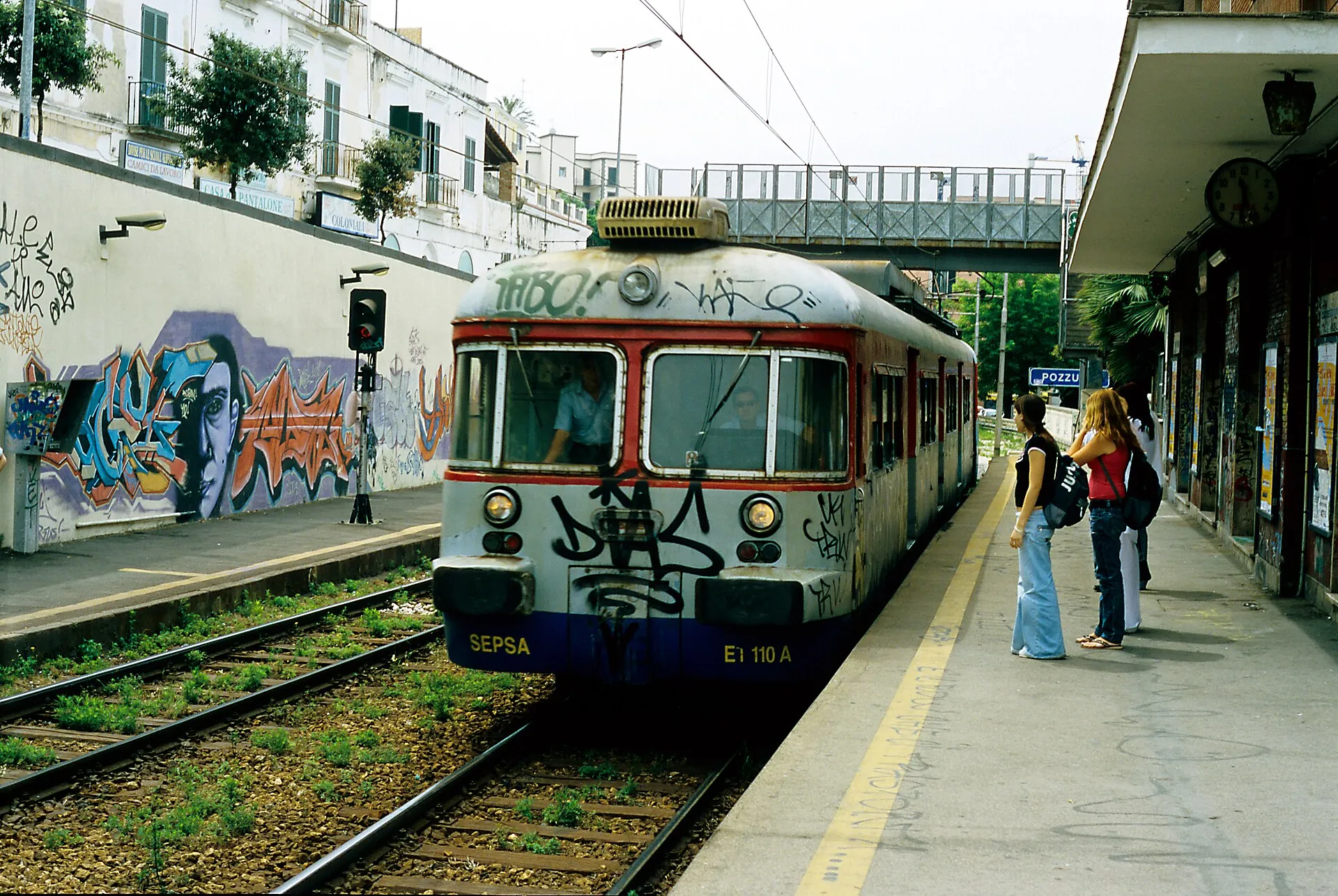
A Cumana train at Pozzuoli station, passengers waiting on the platform
The Cumana has been running through to Torregaveta again since 11 September 2026 – the Monte Olibano tunnel was closed for six weeks after the earthquake.

Photo: Falk2 · CC BY-SA 4.0

If you would rather not plan it yourselfPhlegraean Fields tours from Naples

The selection is thin: the Campi Flegrei are not a mass destination, and most offers are private or small. None of them includes the Solfatara.

Affiliate links to GetYourGuide: if you book, we earn a commission and the price stays the same. Prices and ratings as of 22 September 2026.

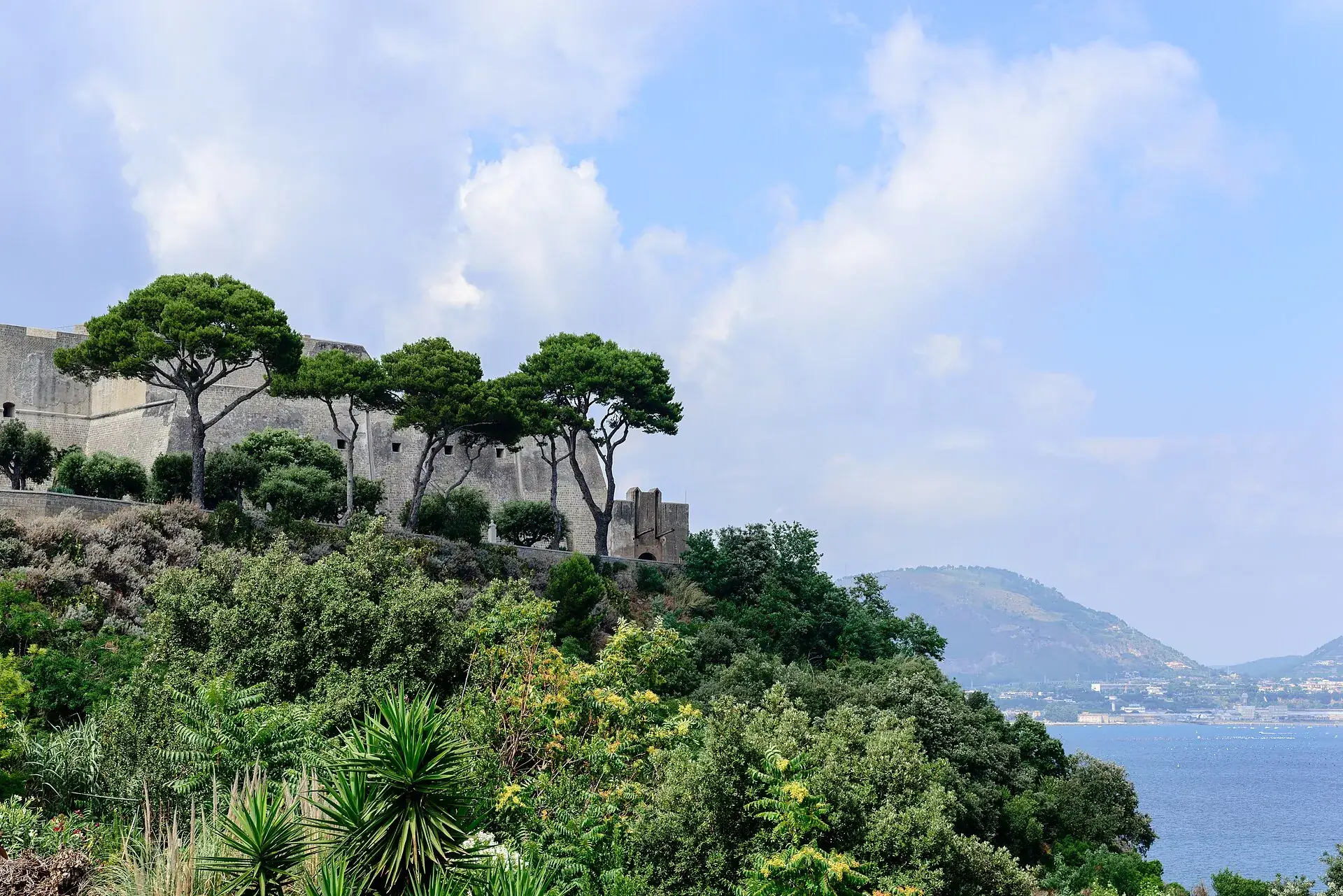
The Castello di Baia on its rock above the Gulf of Pozzuoli, the coast in the background
The Castello di Baia is the park's museum – and the best view over a caldera you cannot recognize as one from below.

Photo: Norbert Nagel · CC BY-SA 3.0

Outdated onlineWhat other sites get wrong

“The Solfatara is open again / reopens in 2025 or 2026.”
Wrong. The courts released the site in February 2025, and the Ente Parco is working on a set of rules (guided groups with CO₂ sensors, a boardwalk). As of 22 September 2026 there is no opening date; a fire on 13 July 2026 added to the delay.
“The Campi Flegrei are about to erupt – alert level orange.”
As of 22 September 2026 the level is yellow (phase 2); the INGV bulletin of the same day sees no signs of a short-term development. Conversely, “dormant volcano” is just as misleading: uplift of about 10 mm per month, earthquakes up to Md 4.7.
“Tickets are available at the ticket office.”
Since 8 April 2026 the Parco Archeologico sells only online through Musei Italiani; at Cuma the ticket office closed on 29 June 2026.
“You can visit the Rione Terra at the weekend.”
Closed since the earthquake of 31 July 2026, with the cathedral and Palazzo Migliaresi unusable. The planned opening of the restored quarter in summer 2026 did not happen.
“You cannot reach Baia by Cumana.”
True only until 10 September 2026. Since 11 September 2026 the line has been running in full again from Montesanto to Torregaveta, with the new station Pozzuoli Via Fasano.

Quick answersBefore you go

Can you visit the Campi Flegrei?

Yes. The excavations of Baia and Cuma and the Anfiteatro Flavio in Pozzuoli are open as of 22 September 2026, and Monte Nuovo and Lake Averno are freely accessible. Closed are the Solfatara (since 2017) and the Rione Terra (since the earthquake of 31 July 2026).

Is the Solfatara open?

No. The crater has been closed since 12 September 2017. The site was released in February 2025, and the regional park is planning guided visits with CO₂ meters – as of September 2026 without a date. Do not book tours that promise the Solfatara.

What is the current state of the bradyseism?

According to the INGV weekly bulletin of 22 September 2026, the ground at the Rione Terra station is rising about 10 ± 3 mm per month, about 31.5 cm (12 in) since January 2025 and about 168.5 cm (5.5 ft) since November 2005. In the week of 14–20 September 2026 there were five earthquakes up to Md 2.0; in August 2026 there were 428 up to Md 3.4.

How strong was the earthquake of 31 July 2026?

Md 4.7 (Mw 4.4), with its focus about 3 km (2 miles) deep between Pozzuoli and Quarto – the strongest since records began. 21 people were injured and hundreds of buildings evacuated; the port, the Cumana and the park sites were temporarily closed.

How do you get from Naples to Pozzuoli?

By Metro Linea 2 from Piazza Garibaldi to the terminus Pozzuoli Solfatara (€1.50, about 30 minutes), or by Cumana from Montesanto to Pozzuoli, Lucrino (Monte Nuovo, Averno), Baia or Fusaro (Cuma). The Cumana has been running through again since 11 September 2026.

Is a day in the Campi Flegrei worth it alongside Vesuvius and Pompeii?

Yes, as a second or third day on the bay: the amphitheater, Baia (castle and baths) and Monte Nuovo/Averno fit into one day. If you have only one day, stick with Mount Vesuvius and Pompeii – there the mountain stands on its own, here the city stands on top of it.

Are the Campi Flegrei currently open and safe?

The excavations (Castello di Baia, Terme di Baia, Cuma, Anfiteatro) are open as of 22 September 2026, the Rione Terra is closed, the Solfatara has been closed since 2017. The alert level is yellow; for the week of 14–20 September 2026 INGV reports only five weak earthquakes and sees no signs of a short-term escalation. Earthquakes like the one of 31 July 2026 (Md 4.7) are possible at any time, though.

What alert level applies to the Campi Flegrei?

Yellow ('Attenzione'), since December 2012, and since the plan of 30 October 2025 as phase 2 (medium disequilibrium). Orange would be pre-alarm, red means evacuation of the red zone (about 500,000 people) within 72 hours. The level is set by civil protection, the data come from the INGV Osservatorio Vesuviano.

How much is admission and where do you buy tickets?

Each site of the Parco Archeologico costs €5 (reduced €2, under 18 free); the combined ticket for all four sites costs €10 and is valid for three days. Since April 2026 online only at portale.museiitaliani.it. Monte Nuovo and Lake Averno are free.

How long do you need for the Campi Flegrei?

A full day is enough for the Anfiteatro, Baia (castle and baths) and Monte Nuovo/Averno; the quotas limit the stay at each site to 120 minutes (underground level of the Anfiteatro 30 minutes). Cuma and the submerged park need a second day.

Are the Campi Flegrei suitable for children?

Yes: short, flat walks, an amphitheater with cellars, a glass-bottom boat over the Roman villas, a crater loop on Monte Nuovo. Children and teenagers under 18 pay nothing in the excavations.

What should you wear?

Sturdy shoes (tuff on Monte Nuovo, slippery mosaics in Baia), in summer a hat, sun protection and plenty of water – the ruins have hardly any shade. For the submerged park the operator provides mask and wetsuit.

What happens if there is an earthquake during your visit?

Stay in the open, keep away from façades, walls and steep slopes; indoors get under door lintels or tables. Then wait for instructions from the staff – the park closes the sites for checks and refunds tickets. Follow IT-alert messages from civil protection.

Is there an evacuation plan?

Yes, the national civil protection emergency plan (updated 30 October 2025): at level red the red zone (Pozzuoli, Bacoli, Monte di Procida, Quarto, parts of Giugliano, Marano and Naples, about 500,000 people) is evacuated in 72 hours, and each municipality is assigned a host region. In addition there is the rapid plan for bradyseism (DL 140/2023) with drills in 2024 and in November 2025.

Can you see the sunken town of Baia?

Yes, by diving (€35 plus €5 park ticket with the concession holder), snorkeling (€3 park ticket plus operator) or glass-bottom boat. The ruins lie only 2–5 m (7–16 ft) deep; zone A may be visited only with a guide.
Sources · accessed on 22 September 2026