Pompeii
98 hectares (about 240 acres), roughly two thirds excavated. At least half a day, hardly any shade. Daily cap of 20,000, two time slots in summer, names on tickets. Vesuvius is in the picture at all times.
Admission · free under 1820 €
Volcanoes › Bay of Naples › Pompeii
One shows you an entire city. The other shows you how people lived in it.
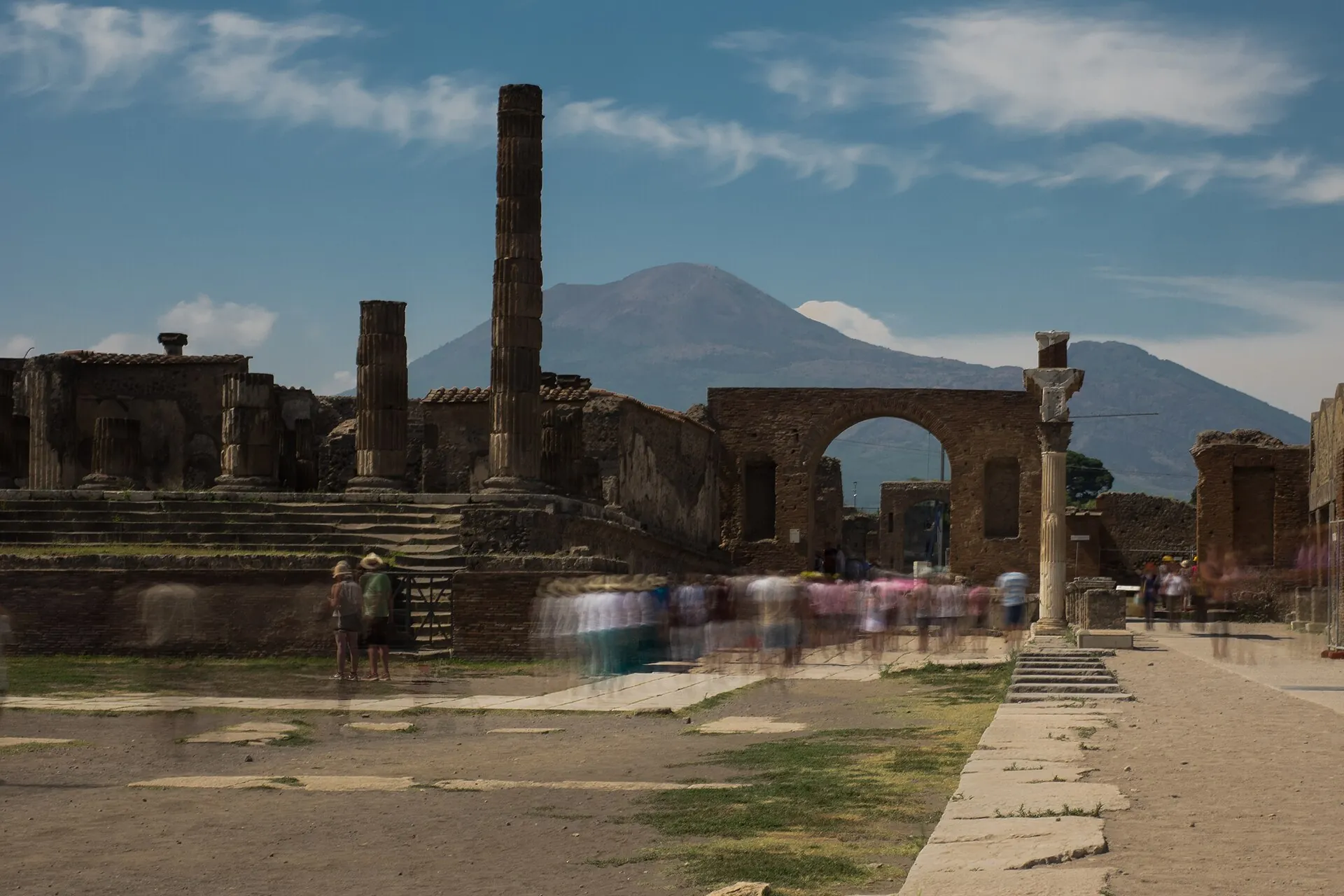
Photo: Sarahhoa · CC BY-SA 2.0
If you are after the picture in your head – Forum, columns, the volcano behind – go to Pompeii. If you are short on time, traveling with kids, or want to avoid heat and crowds, you are better off in Herculaneum.
98 hectares (about 240 acres), roughly two thirds excavated. At least half a day, hardly any shade. Daily cap of 20,000, two time slots in summer, names on tickets. Vesuvius is in the picture at all times.
9 hectares (22 acres), doable in two to three hours. Carbonized wood, upper floors and furniture survive. No cap, no time slot, ticket office at the entrance, six minutes from the station. Currently closed: the Villa of the Papyri and the theater.
Herculaneum. Manageable in size, lots to discover, and you are out again quickly. In Pompeii the paving is hard going with a stroller.
Herculaneum in the morning – or Pompeii right at 9:00 am and out by midday. Neither has much shade.
Herculaneum. In Pompeii the allocation can be gone in season; Herculaneum has none.
Pompeii. The scale – streets, squares, theaters, amphitheater – exists only there.
Herculaneum: the shuttle and the excavation site start from the same station. From Pompeii, bus 808 goes up in 55 minutes.
It works: Herculaneum in the morning (from 8:30 am), then about 15 to 20 minutes by train to Pompeii and into the afternoon slot from 1:00 pm – which has only 5,000 places. Book ahead.
Combined tours solve the problem of the afternoon allocation: the operator books the named tickets in advance.
Affiliate links to GetYourGuide: if you book, we earn a commission and the price stays the same. Prices and ratings as of September 21, 2026.
Herculaneum. The pyroclastic flows carbonized wood instead of burning it, and the material hardened into tuff – which is why upper floors, doors and furniture are still standing there.
Herculaneum costs €16, Pompeii €20 (Pompeii+ €25). Both are free for under-18s; EU citizens up to age 24 (Pompeii) or 25 (Herculaneum) pay €2.
We did not find a joint ticket for the two parks – they are run by separate administrations. Pompeii's 3-day ticket (€30) is valid for Oplontis, Stabiae and Boscoreale, not for Herculaneum. The regional Campania Artecard pass is activated at the ticket office in Herculaneum; check the conditions before you buy.
About 17 km (roughly 10.5 miles) by road. Both are on the Circumvesuviana line between Naples and Sorrento: Ercolano Scavi and Pompei Scavi – Villa dei Misteri, about 15 to 20 minutes apart by train.
Sources · accessed on September 21, 2026
.jpg)