Volcano·Guide
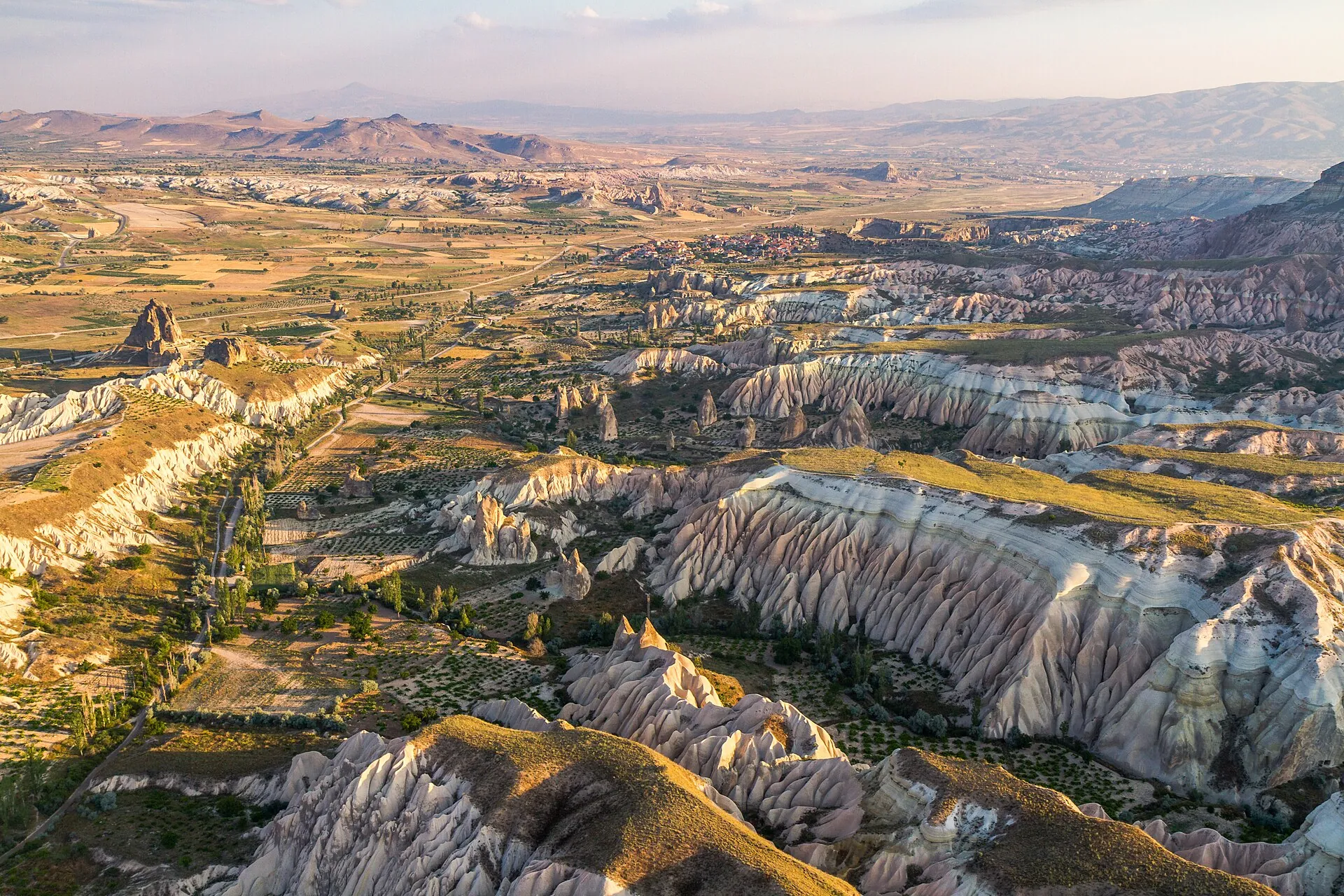
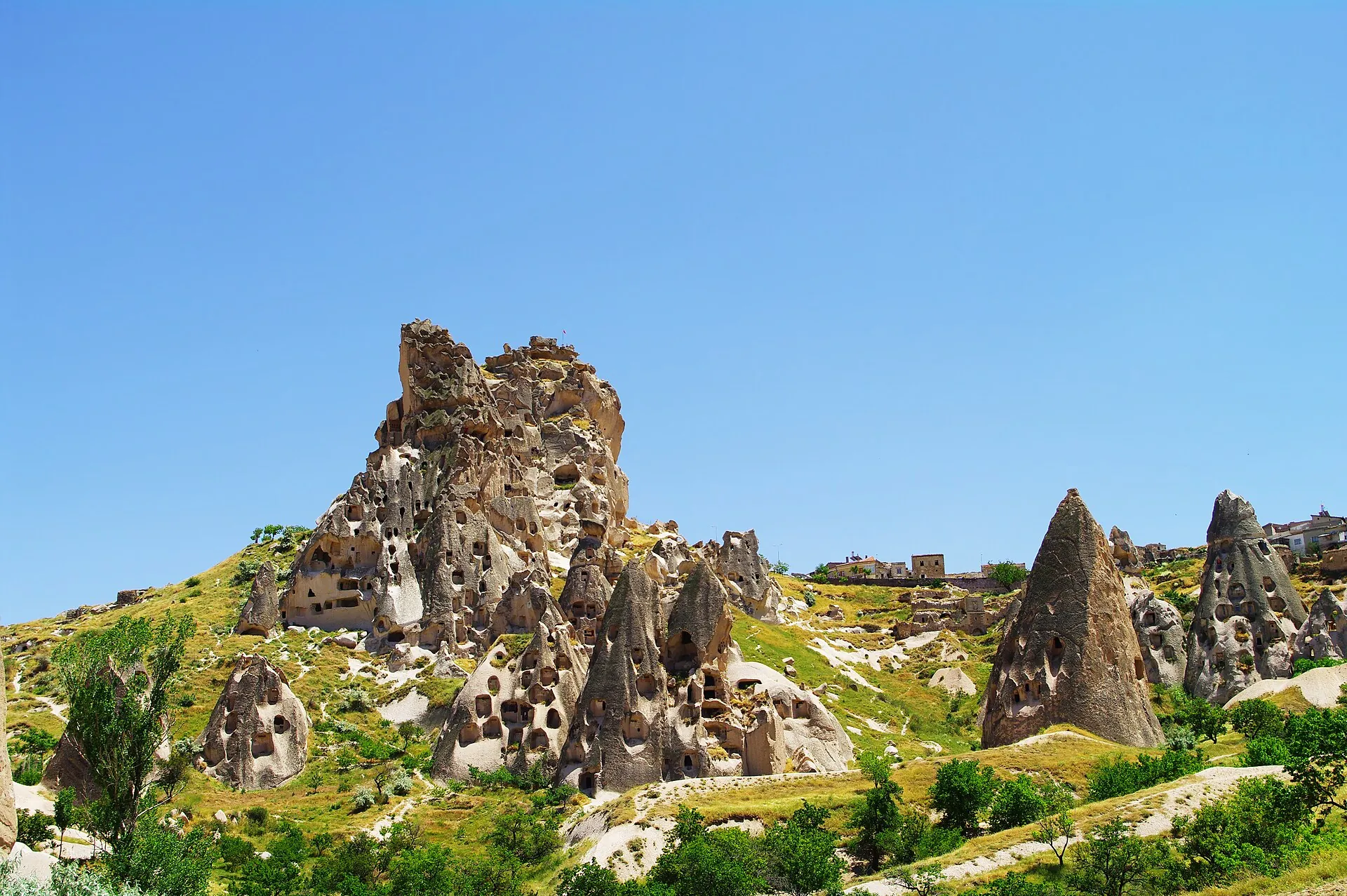
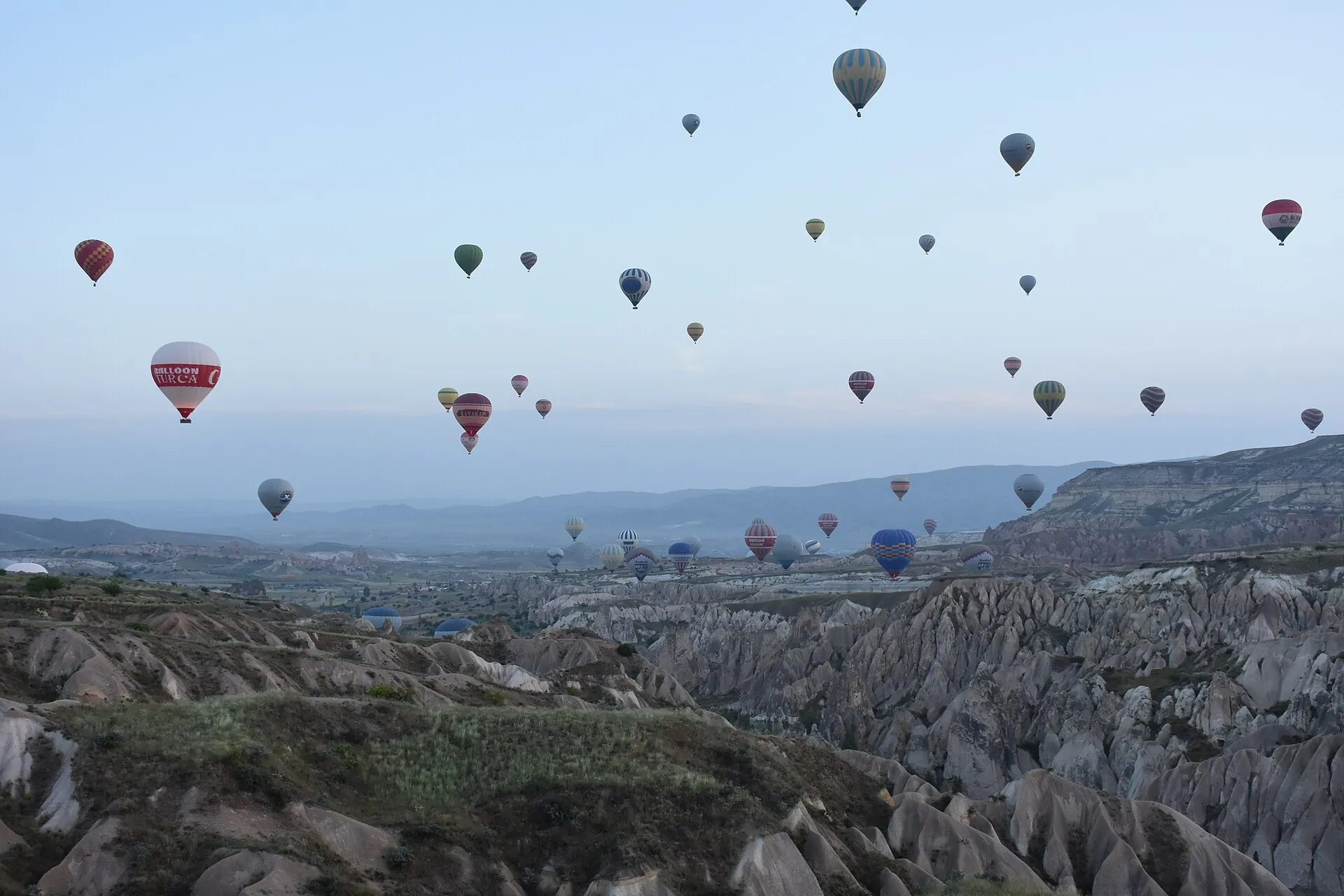
The castle rock of Uçhisar in Cappadocia: a tuff cone riddled with cave dwellings under a blue sky, with smaller fairy chimneys and green slopes in front Dozens of hot-air balloons at dawn over the valleys near Göreme, the pale, furrowed tuff ridges below Aerial view over the Rose Valley and the village of Çavuşin near Göreme: pink and white tuff ridges with fields and trees between them, mountains on the horizon

Cappadocia

From the ground they are rocks with windows.

Before sunrise a hundred balloons rise above them.

And from above you see what two volcanoes left behind.

Scroll –
you are lifting off

As of 21 September 2026Cappadocia today: no alert level – but a flight area with coordinates

No volcano closes anything here. The two that supplied the tuff are extinct; the landscape between them is free to walk. What Cappadocia regulates is the air above it: the Turkish civil aviation authority has defined a balloon flight area by four corner coordinates, with altitude limits that change at the weekend – and a slot system for every launch.

Free
0

Valleys, trails, viewpoints

The landscape costs nothing. The valleys between Göreme, Uçhisar, Çavuşin and Ürgüp can be walked without a ticket, and so can the viewpoints. Admission is charged only at the fenced cultural sites: Göreme Open Air Museum, Zelve-Paşabağları, the underground cities, individual churches.

World Heritage since 1985 · criteria (i), (iii), (v), (vii)
Regulated
8,000ft

Balloon ceiling at weekends

On weekdays balloons may climb to 6,000 ft above sea level, on weekends and public holidays to 8,000 ft. The flight area is defined by four corner coordinates, and coordination with Tuzköy and Erkilet air traffic control is mandatory before launch. In force since 1 August 2011.

SHGM, AIC B14/11 · about 1,830 and 2,440 m
Daily

Göreme Open Air Museum

8:00 a.m. to 6:45 p.m., ticket office closes 6:45 p.m., every day of the week. Plus a night opening from 7:00 to 11:00 p.m. with the ticket office closing at 10:30 p.m. – also daily. The Dark Church inside the museum is listed by the ministry as a separate site with its own ticket.

Ministry of Culture and Tourism · as of 09/2026
Extinct
12,851ft

The volcano behind it

Cappadocia is not a volcano but what two volcanoes left behind. UNESCO describes the landscape as bounded by extinct volcanoes – Erciyes Dağ at 12,851 ft (3,916 m) at one end and Hasan Dağ at 10,673 ft (3,253 m) at the other. Their tuff is the material everything here is cut from.

No alert level, no monitoring needed · UNESCO 357
Sources: SHGM – Nevşehir/Cappadocia balloon flight area (coordinates, altitude limits, coordination requirement), Ministry of Culture and Tourism – Göreme Archaeological Site (hours, night opening) and UNESCO – Göreme National Park and the Rock Sites of Cappadocia (World Heritage, volcanoes) – retrieved 21 September 2026.
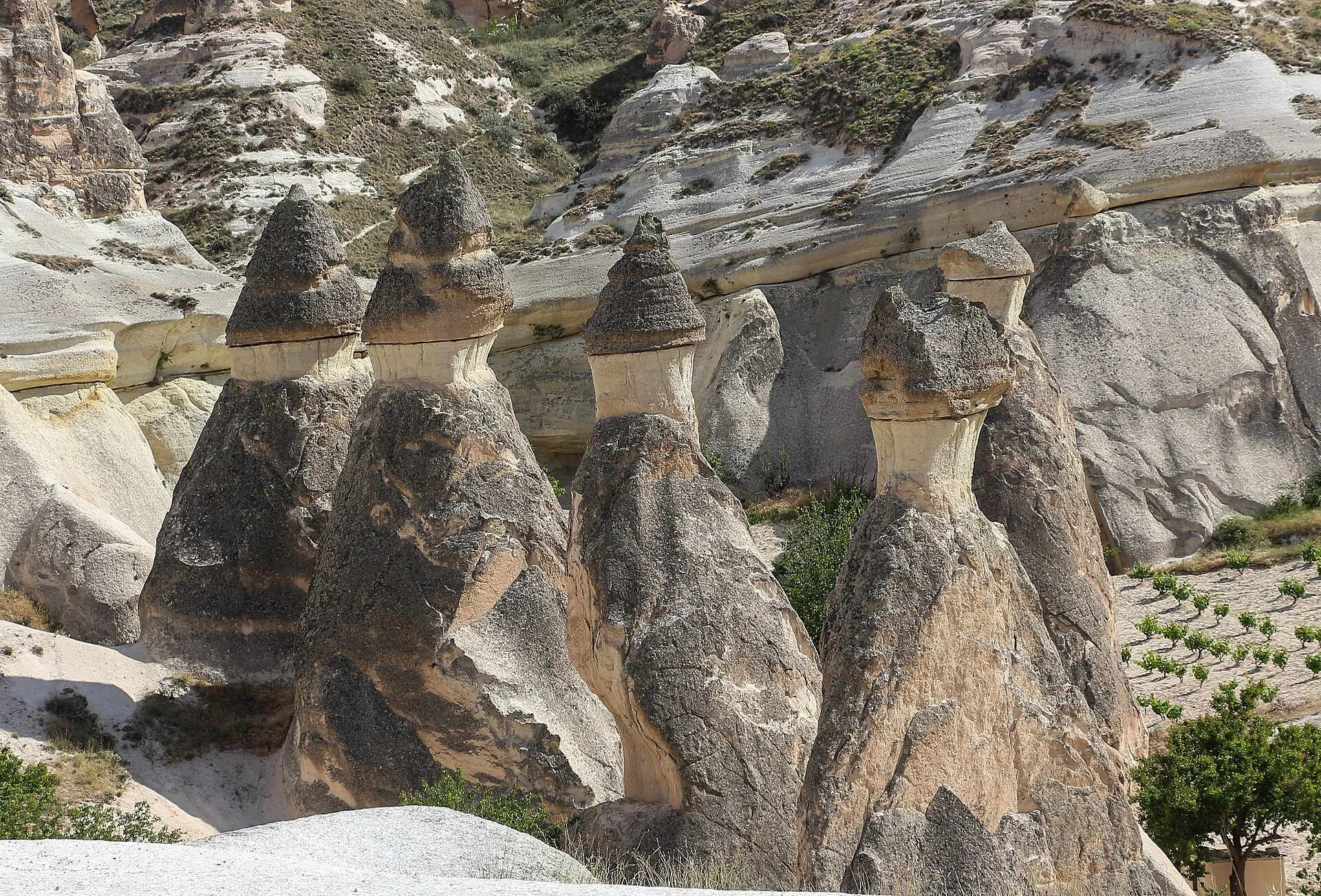
Four fairy chimneys at Zelve in Cappadocia: slender tuff cones with dark caprocks of harder stone, pale rock walls behind
The hard cap protects the soft tuff beneath – so the chimney stays standing while the land around it is worn away.

Photo: Bernard Gagnon · CC BY-SA 3.0

Before sunriseBalloon flight over Göreme: who flies, when – and why not always

The balloon flight is why most people come, and the most-booked product in the whole region. It is also the least reliable: wind, visibility and ground conditions decide on the morning itself. If you want it, stay two nights and book it for the first.

Affiliate links to GetYourGuide: if you book, we earn a commission and the price stays the same. Prices and ratings as of 21.09.2026. All four launch in the first window before sunrise and fly for about an hour; hotel pick-up is standard. The price range comes down to basket size and breakfast, not the route – you fly wherever the wind takes you, inside the flight area. If the launch is cancelled you get a new date or a refund; the terms are with the operator.

Aviation lawWho is allowed to fly balloons in Cappadocia

Ballooning over Göreme is not a leisure sport but commercial air transport – with the same authorities as an airline. A dedicated directive for balloon operators has applied since 2010, and the authority keeps a field office in Ürgüp that oversees operations on the ground.

Required
5balloons

Minimum fleet per operator

Every commercial balloon operation in Turkish airspace needs an authorisation from the civil aviation authority SHGM. The directive of 8 August 2010 raised the minimum fleet from two to five balloons and requires three responsible managers and a quality manager. Existing operators had until 1 March 2011 to comply.

Balonla Hava Taşıma İşletmeleri Talimatı · SHGM
Required
51%

Turkish pilots

More than 51 percent of an operator's pilots must be Turkish nationals. All pilots need region-specific training for Cappadocia and a refresher every three years – the valleys are narrow, the balloons many, and the wind shifts.

same directive · per the SHGM page
Since 29 Apr 2020

Slot system

Launch times are allocated: the SHGM keeps a slot allocation schedule for balloon flights, valid since 29 April 2020. How many balloons may be airborne at once per window is not stated on the authority pages retrieved – figures circulate, but they are not documented here.

SHGM field office in Ürgüp-Mustafapaşa
Sources: SHGM – New regulation of balloon flights (directive of 8 August 2010: minimum fleet, pilots, management, transition period), SHGM – Balloon operators (authorisation, slot schedule from 29 April 2020, Ürgüp office) and SHGM – Growth of balloon operations – retrieved 21 September 2026.

On the groundRed and Green Tour: the landscape for under 30 euros

The two standard loops are named after their colour on the map. Red is the north with Göreme, Çavuşin and the fairy chimneys of Paşabağları; Green is the south with an underground city and the Ihlara Valley. Together the four most-booked tours have more than ten thousand reviews – and cost a fraction of the balloon.

Affiliate links to GetYourGuide: if you book, we earn a commission and the price stays the same. Prices and ratings as of 21.09.2026. Admission to museums and underground cities is usually not included in these tours – check before booking. If you want the underground city, take Green or the Highlights tour; if you want the fairy chimneys, Red.

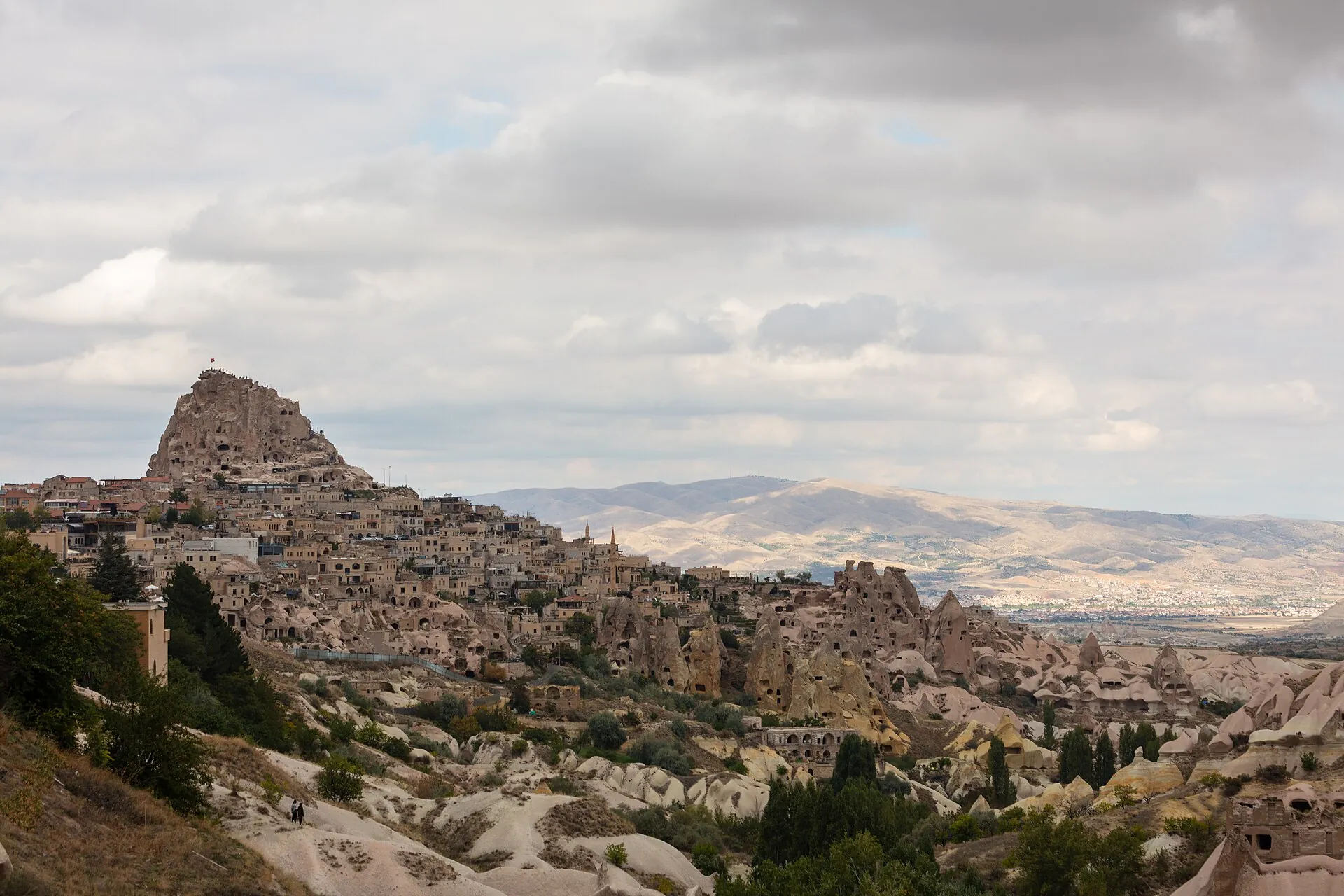
View over Uçhisar in Cappadocia: the castle rock above the village, cave houses and fairy chimneys in front, the plain stretching to the horizon behind
Uçhisar, the highest point of the region – first stop on the Red Tour, an hour's walk from Göreme.

Photo: Diego Delso · CC BY-SA 4.0

The World Heritage siteGöreme Open Air Museum: open until 11 p.m., the Dark Church extra

The museum is the core of the World Heritage site – rock churches and monasteries of the 10th to 13th centuries, open to visitors since 1967. Two things hardly anyone knows: there is a nightly opening, and the most famous church costs a separate ticket.

Daily

8:00 a.m. to 6:45 p.m.

The Ministry of Culture and Tourism lists the open air museum as open daily, ticket office closing at 6:45 p.m. The coach groups come in the morning – to have the churches to yourself, come after 4 p.m. or at night.

Nevşehir Museum Directorate · as of 09/2026
Daily

Night opening 7:00 to 11:00 p.m.

Also daily, ticket office closing at 10:30 p.m. For holders of the Turkish MüzeKart the night ticket costs 200 lira extra – the card itself is only issued against a T.C. identity number, i.e. to nationals and residence-permit holders.

Price for foreign visitors: not officially documented
Own ticket

The Dark Church

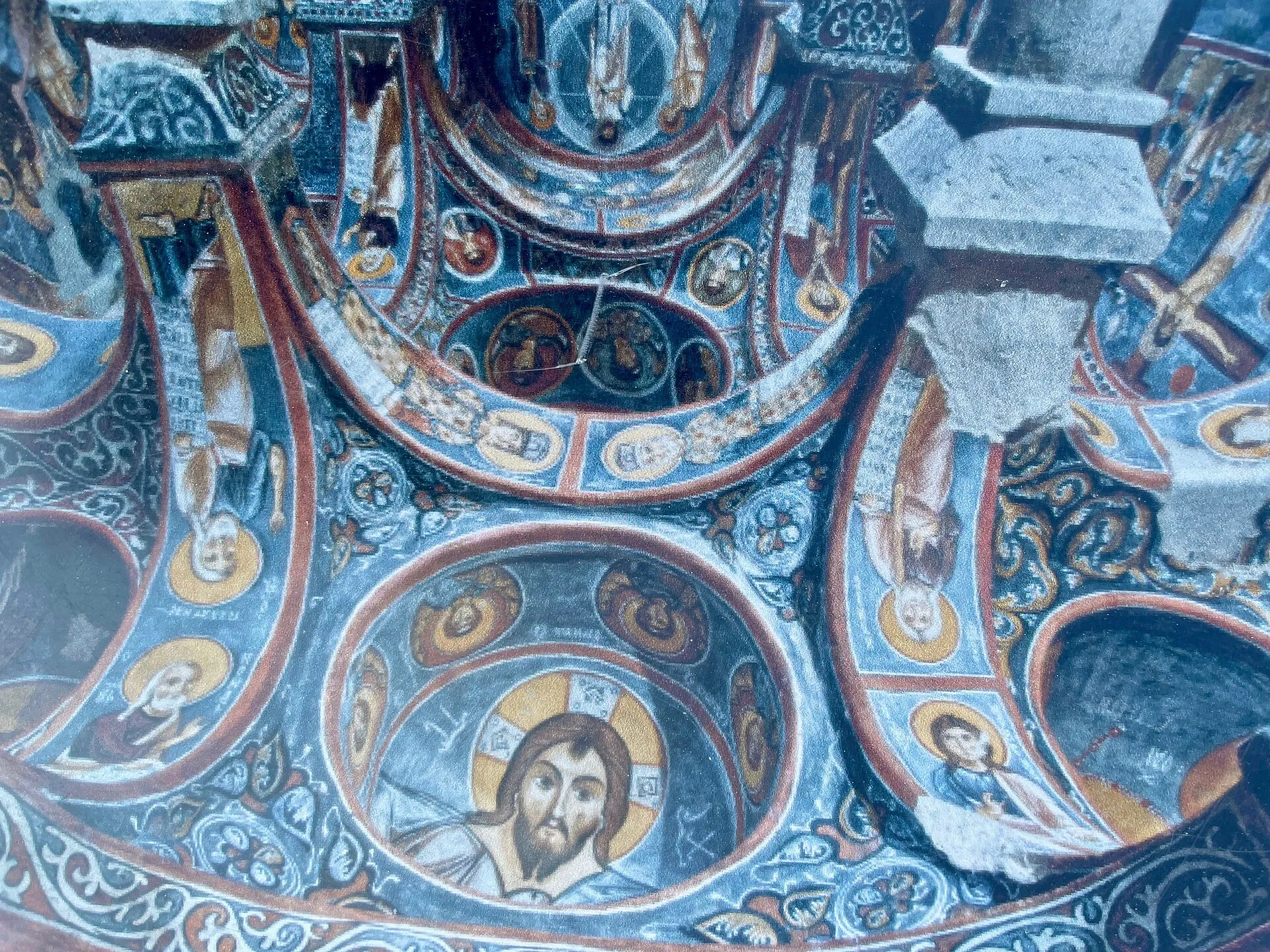
Karanlık Kilise, painted at the end of the 12th or beginning of the 13th century. Because hardly any daylight gets in, the colours are preserved as nowhere else in the museum. The ministry lists it as a separate site – the museum ticket alone is not enough.

UNESCO dating · ministry
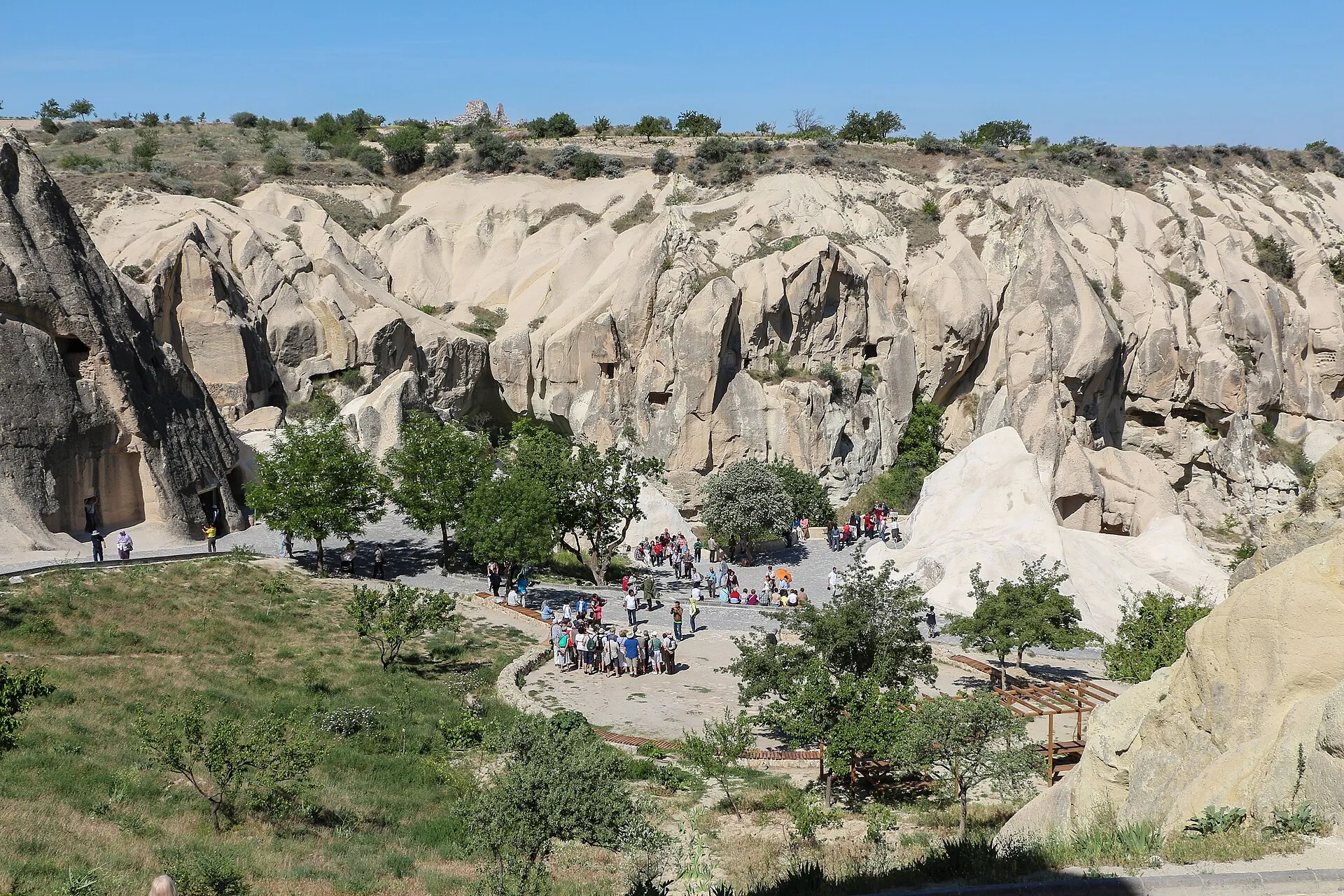
The Göreme Open Air Museum from above: pale tuff walls with the entrances of the rock churches, tour groups on the forecourt among trees
In the morning the forecourt belongs to the coach groups. Hardly anyone knows about the night opening until 11 p.m.

Photo: Bernard Gagnon · CC BY-SA 3.0

The vault of the Dark Church in Göreme: Byzantine frescoes on a deep blue ground with Christ Pantocrator in the dome, surrounded by saints and ornamental bands
Blue on rock: the Dark Church is the reason the museum sells a second ticket.

Photo: Sonse · CC BY 2.0

The geologyWhy the fairy chimneys stand – and who built them

The answer is in the UNESCO file: a volcanic landscape, cut by erosion into ridges, valleys and chimneys. What is missing is the eruption itself. That lies far back, and the two culprits stand as silhouettes on the horizon.

Erciyes Dağ, 12,851 ft

The higher of the two volcanoes, above Kayseri in the east. It carries a ski resort today. UNESCO calls it extinct; the volcanological literature considers it dormant – no reliable eruption dates are available for this page.

Elevation per UNESCO; other sources give 3,864 m

Hasan Dağ, 10,673 ft

The second giant, above Aksaray in the southwest. Together the two buried central Anatolia in ash and tuff over millions of years – the material into which churches, villages and underground cities were later dug.

UNESCO 357

The cap makes the chimney

A fairy chimney is a column of tuff with a block of harder rock on top. The cap keeps the rain off, the column beneath stays standing while the land around it is worn away. Once the cap falls, the chimney is gone within a few centuries. UNESCO lists this under criterion (vii) as a globally renowned display of erosion.

Tuff, not lava – consolidated ash
Source: UNESCO – Göreme National Park and the Rock Sites of Cappadocia (volcanic landscape, Erciyes and Hasan Dağ, erosion, criterion vii) – retrieved 21 September 2026.
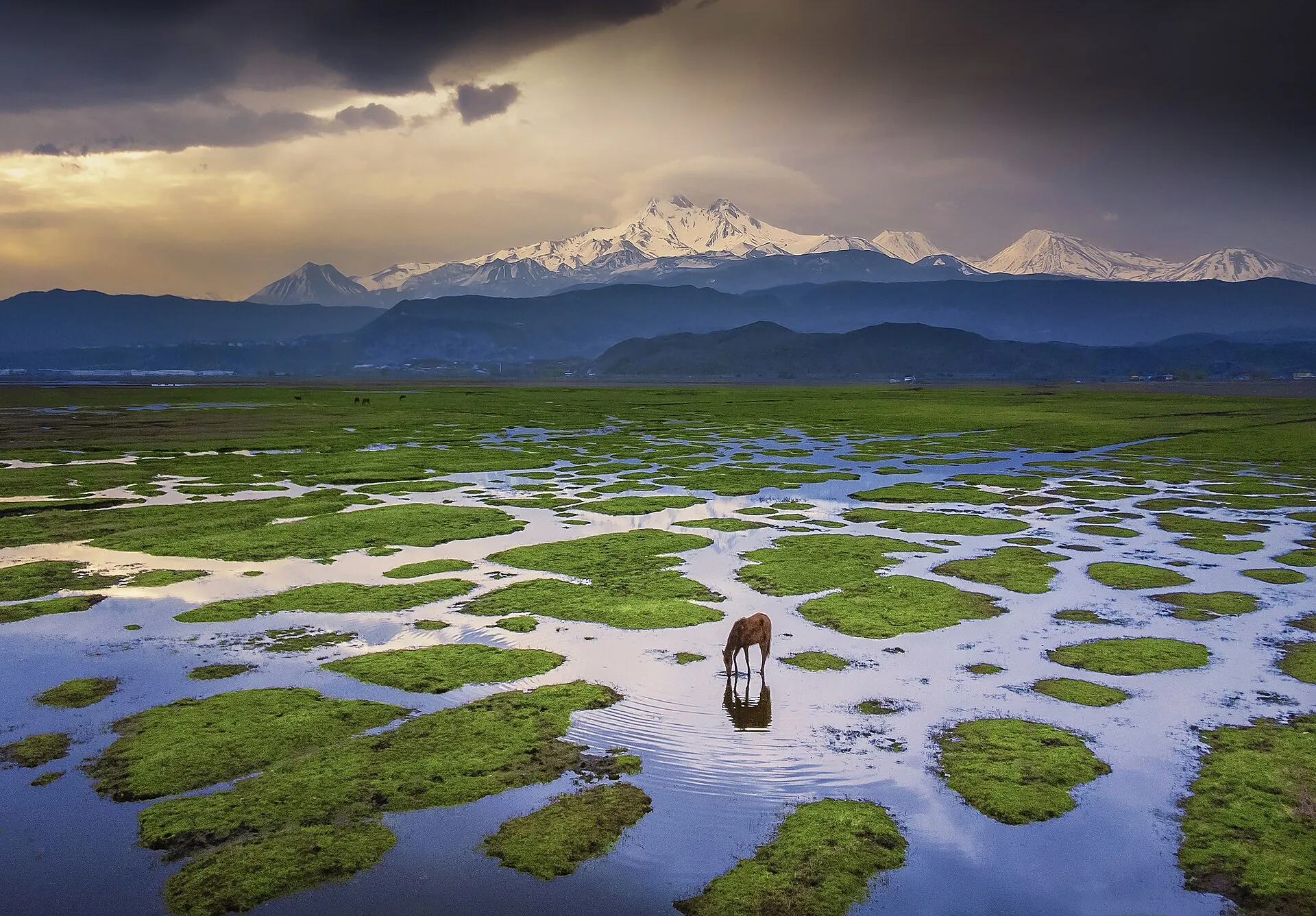
Snow-covered Erciyes Dağ under a dramatic evening sky, the Hürmetçi marsh in front with green islands of grass in the water and a horse drinking
Erciyes above the Hürmetçi marsh near Kayseri. What stands here as a silhouette supplied Cappadocia with its tuff.

Photo: Ismailtasgeldi · CC BY-SA 4.0

UndergroundKaymaklı and Derinkuyu: cities in the tuff

Soft tuff can be dug with hand tools – which is why there are not only churches in the rock here but whole cities beneath it. Both belong to the World Heritage site, both are cramped, and neither is for anyone with claustrophobia.

World Heritage

Derinkuyu

The deeper of the two, several storeys down into the tuff. According to UNESCO the underground cities arose when residents banded together against Arab raids from the 7th century – as refuges, not as permanent homes. About 40 minutes south of Göreme.

Admission · hours not checked individually
World Heritage

Kaymaklı

Closer to Göreme, more branched, and the better first step for anyone unsure whether they can take the confinement: the upper levels are roomier, deeper down it gets low and steep. Both cities are part of the Green Tour.

Admission · about 20 minutes from Göreme
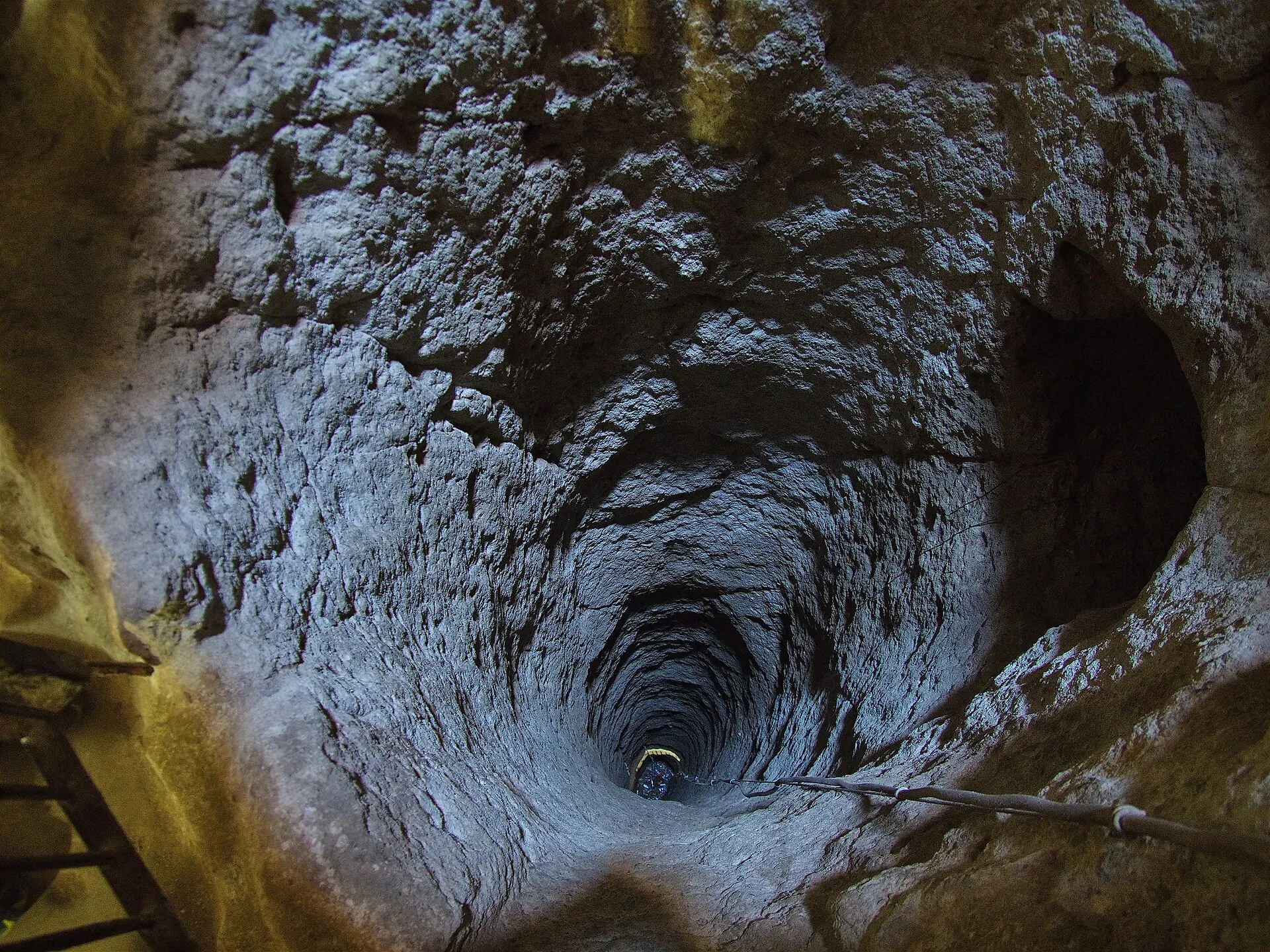
A vertical ventilation shaft in the Derinkuyu underground city, photographed from above: rough tuff walls narrowing many metres down to a point of light
The shafts supplied every storey with air – and doubled as wells. Look down one and you understand how deep the city goes.

Photo: Joe Wallace · CC BY-SA 2.0

PracticalGetting there, best time, who it suits, and tips

Getting there

Without a car: Two airports serve the region: Nevşehir Kapadokya (NAV) and Kayseri Erkilet (ASR). Shared transfers run from both to Göreme and Ürgüp. Intercity buses connect Cappadocia with Istanbul, Ankara and Izmir. Fares and timetables were not taken from an official source.

By car: Between the villages a rental car or scooter works best; the museums have parking, some of it paid. The roads are good, and the valleys are reached on foot.

  • From Nevşehir Kapadokya Airport (NAV) · about 45 minutes
    transfer or rental car to Göreme
  • From Kayseri Airport (ASR) · about 1.5 hours
    transfer or rental car to Göreme
  • From Istanbul · just over 1 hour by air, 11 to 12 hours by bus
    domestic flight to NAV or ASR; overnight bus as the alternative

Best time to go

April to June and September to October: mild, clear, and the balloons fly often. High summer is hot and crowded, winter is cold – but snow sometimes lies on the fairy chimneys, which makes for the most striking picture of the region. What matters is not the month anyway but the individual morning: balloon flights are cancelled at short notice for wind and poor visibility. If the flight is the point of the trip, plan at least two, better three nights and book for the first morning – that leaves backup dates.

Who it suits

Children
Very good: the valleys are easy walking, the fairy chimneys impress without explanation, and the underground cities are an adventure. For balloon flights operators set their own minimum ages and heights – that is not an official rule but the operator's own condition.
Minimum age
none found officially; for balloon flights the individual operator's conditions apply
Fitness
Everyday fitness is enough for museums, valleys and the balloon ride. In the underground cities you stoop through narrow, sometimes steep passages.
Altitude
Not an issue: Göreme sits at about 3,600 ft (1,100 m), the balloon climbs to at most 8,000 ft (about 2,440 m), and you stand still in the basket while it does.
Heart and lungs
The underground cities are cramped, the air is cool and the passages are low – anyone with heart or breathing problems should think twice. Above ground there is no restriction.
Wheelchair
The landscape and some viewpoints are reachable by car. The Göreme Open Air Museum sits on a slope with steps and uneven rock paths; the underground cities are not accessible.
Dogs
no documented rule found
Clothing
Central Anatolia is high and dry: hot summers, cold winters, cool mornings. For a balloon launch before sunrise a jacket belongs in the bag even in summer; sturdy shoes for the valleys.
Footwear
Sturdy shoes – the tuff is dusty and slippery, and the floors of the underground cities are uneven.

Tips you will need on site

  • Book the balloon for the first morning and stay at least two nights. If the launch is cancelled for wind, that leaves a second attempt – otherwise you go home without.
  • The landscape costs nothing. The valleys between Göreme, Uçhisar and Çavuşin are free to walk; you pay admission only at the fenced sites.
  • The Dark Church in the Göreme Open Air Museum has its own ticket. It is the reason the colours there are so well preserved – little light, little fading.
  • The open air museum has a night opening until 11 p.m. To avoid the coach groups, come in the evening instead of the morning.
  • Underground cities are cramped and low. If you are prone to claustrophobia, choose Kaymaklı over Derinkuyu and stay in the upper levels.
  • Balloons fly higher on weekends and public holidays – up to 8,000 ft instead of 6,000. That is a civil aviation rule, not a marketing promise.
  • To see the volcanoes themselves, head towards Kayseri: Erciyes carries a ski resort in winter and stands as a silhouette over the whole landscape.

A short history

  • The tuff that makes up the whole landscape came from the volcanoes on its edge: UNESCO names Erciyes Dağ at 12,851 ft (3,916 m) at one end and Hasan Dağ at 10,673 ft (3,253 m) at the other.
  • Erosion cut ridges, valleys and the fairy chimneys (hoodoos) out of the tuff – UNESCO lists this under criterion (vii) as a globally renowned display of erosional landforms.
  • 4th century: the first monastic communities dig cells into the rock; the teachings of Basil the Great, Bishop of Kayseri, shape the movement.
  • From the 7th century: to resist Arab raids, people band together in troglodyte villages and underground cities such as Kaymaklı and Derinkuyu.
  • Iconoclasm, 725 to 842: the churches of this period stay strictly plain, mostly decorated only with crosses.
  • After 842: numerous rock churches are dug and painted in colour – Tokalı and El Nazar in the 10th century, St. Barbara and Saklı in the 11th, Elmalı and the Dark Church around the turn of the 13th.
  • 1071: with the arrival of the Seljuks the Byzantine era of the region ends. UNESCO describes the rock sites as the fossilised image of a vanished civilisation.
  • 1967: the Göreme Open Air Museum opens to visitors.
  • 1985: inscription as UNESCO World Heritage «Göreme National Park and the Rock Sites of Cappadocia» under criteria (i), (iii), (v) and (vii).
  • 2010/2011: the civil aviation authority reorganises balloon operations – a minimum fleet of five balloons per operator, region-specific pilot training, and from 1 August 2011 a fixed flight area with altitude limits.
  • Since 29 April 2020 the SHGM has kept a slot allocation schedule for balloon flights; a field office in Ürgüp-Mustafapaşa oversees operations on the ground.

Setting it straightWhat other sites get wrong

“Cappadocia is a volcano.”
No – it is the landscape two volcanoes left behind. Erciyes Dağ and Hasan Dağ lie on the southern and eastern edges of the World Heritage area; Cappadocia itself is their eroded ejecta.
“The fairy chimneys are made of lava.”
They are tuff, consolidated volcanic ash, and erosion cut the shapes, not the eruption. A hard caprock protects each column.
“Balloons fly every morning.”
Often, but not reliably. Wind, visibility and ground conditions decide on the morning itself, and cancellations are part of the business. A flight booked for the only morning of the trip is a gamble.
“The pilot climbs as high as he likes.”
The civil aviation authority caps altitude in the flight area at 6,000 ft above sea level on weekdays and 8,000 ft on weekends and holidays. Coordination with Tuzköy and Erkilet control is mandatory before launch.
“Tourists save money with the MüzeKart.”
The MüzeKart is only issued against a Turkish identity number – to nationals and residence-permit holders. The ministry explicitly names the T.C. identity number as the requirement.
“The museum ticket covers all the churches.”
Not the Dark Church. The ministry lists it as a separate site with its own ticket – to see it, you pay twice.

Before you goFrequently asked questions about Cappadocia

How much does Cappadocia cost?

The landscape, nothing. Valleys, trails, viewpoints and the roads between the villages are free. You pay admission at the Göreme Open Air Museum, in the underground cities and at Zelve-Paşabağları; the Dark Church costs extra. We found no official prices – travel portals quote around €20 for Göreme, but that is not listed here as a documented price.

How many nights do I need for the balloon flight?

At least two, better three – and the flight belongs on the first morning. If it is cancelled for wind, a backup date remains. Stay one night and you get no second attempt.

Can you fly a balloon in Cappadocia when it rains?

That is decided not by the operator but by the weather on the morning and coordination with air traffic control. In wind, rain or poor visibility there is no launch. A cancellation is not sloppiness – it is the rule working.

Is Cappadocia a volcano?

Not itself. Cappadocia is a volcanic landscape: the tuff came from extinct volcanoes on the edge of the region – UNESCO names Erciyes Dağ (12,851 ft / 3,916 m) and Hasan Dağ (10,673 ft / 3,253 m). Erosion cut the valleys and fairy chimneys out of that tuff, and people then carved churches and cities into them.

Does Cappadocia charge admission?

Not the landscape – valleys, trails and viewpoints are free. Admission is charged at the fenced sites: the Göreme Open Air Museum, the underground cities of Kaymaklı and Derinkuyu, Zelve-Paşabağları. The Dark Church inside the open air museum has its own ticket.

How high do the balloons fly in Cappadocia?

The Turkish civil aviation authority caps altitude in the defined balloon flight area at 6,000 ft above sea level on weekdays and 8,000 ft on weekends and public holidays. The flight area is defined by four corner coordinates, and coordination with Tuzköy and Erkilet air traffic control is mandatory before launch.

How often are balloon flights cancelled?

Regularly. Wind, visibility and ground conditions decide on the morning of the flight. So: book the flight for the first morning and stay at least two, better three nights, so a backup date remains.

Who is allowed to operate balloons in Cappadocia?

Only operators authorised by the Turkish civil aviation authority SHGM. Under the directive on balloon air transport operations of 8 August 2010 an operator needs at least five balloons, three responsible managers and a quality manager; pilots need region-specific training with a refresher every three years, and more than 51 percent of them must be Turkish nationals. Launch times run through a slot system.

When is the best time to visit Cappadocia?

April to June and September to October – mild, clear and with many flying days. High summer is hot and crowded, winter is cold but occasionally puts snow on the fairy chimneys.

How do I get to Cappadocia?

Via Nevşehir Kapadokya airport (NAV, about 45 minutes to Göreme) or Kayseri Erkilet (ASR, about 1.5 hours). From Istanbul the flight takes just over an hour; overnight buses take 11 to 12 hours.

Are the underground cities suitable for people with claustrophobia?

Not really. The passages are narrow, low and sometimes steep; you walk stooped for stretches. If unsure, stay in the upper levels or skip the underground cities – the rock churches above ground are wide and bright.

Is Cappadocia doable with children?

Very much so. The valleys are easy walking, the fairy chimneys need no explanation, and the underground cities are an adventure. For balloon flights operators set their own minimum ages and heights – that is the operator's condition, not an official rule.

Why is Cappadocia a World Heritage site?

Since 1985 as «Göreme National Park and the Rock Sites of Cappadocia», under four criteria: the unique post-iconoclastic Byzantine painting in the rock churches, the fossilised image of a vanished civilisation, the traditional form of settlement – which UNESCO explicitly describes as vulnerable to erosion and tourism – and the beauty of the erosional landforms.
Sources · accessed on 21 September 2026