Volcano·Guide
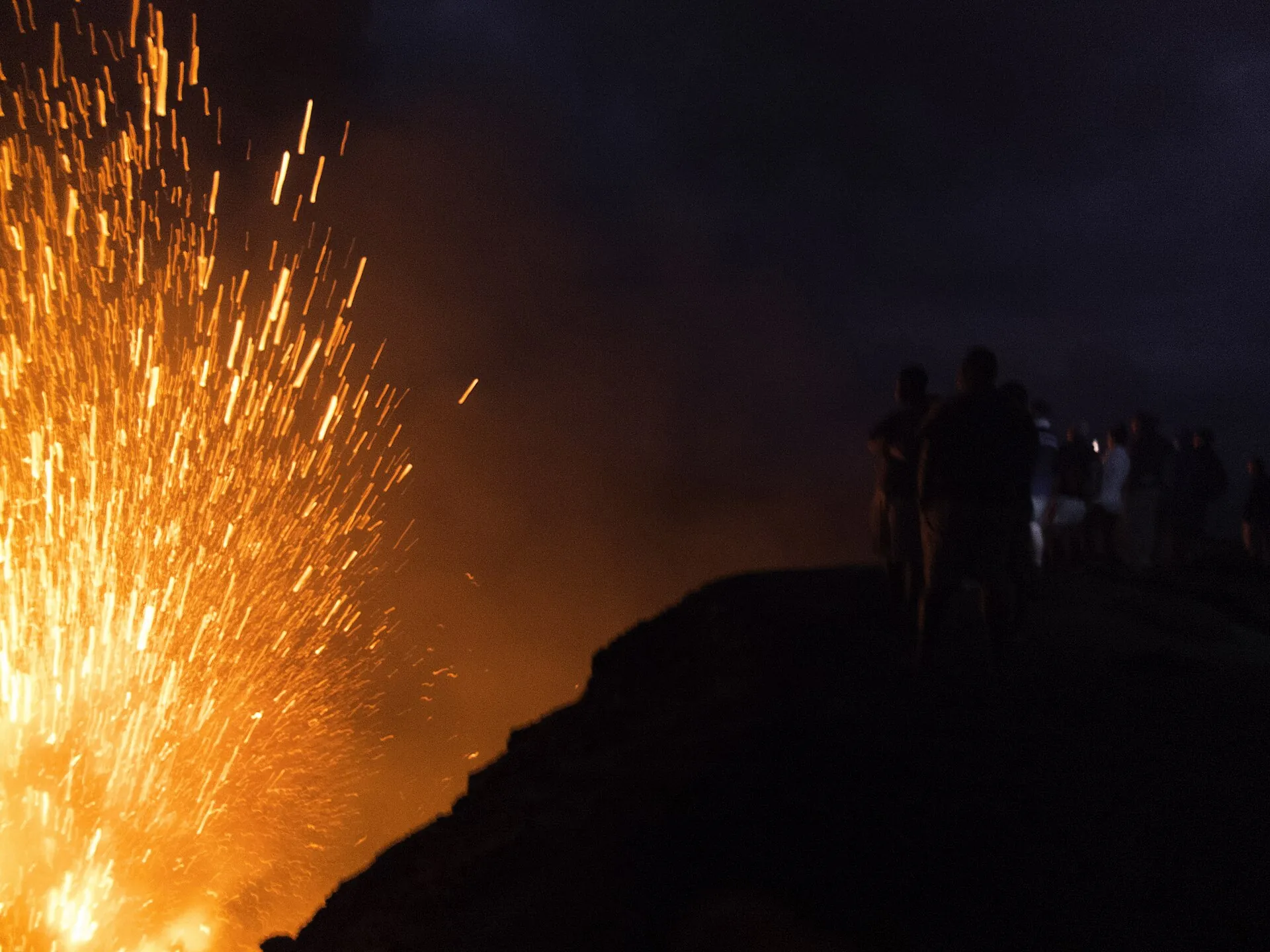
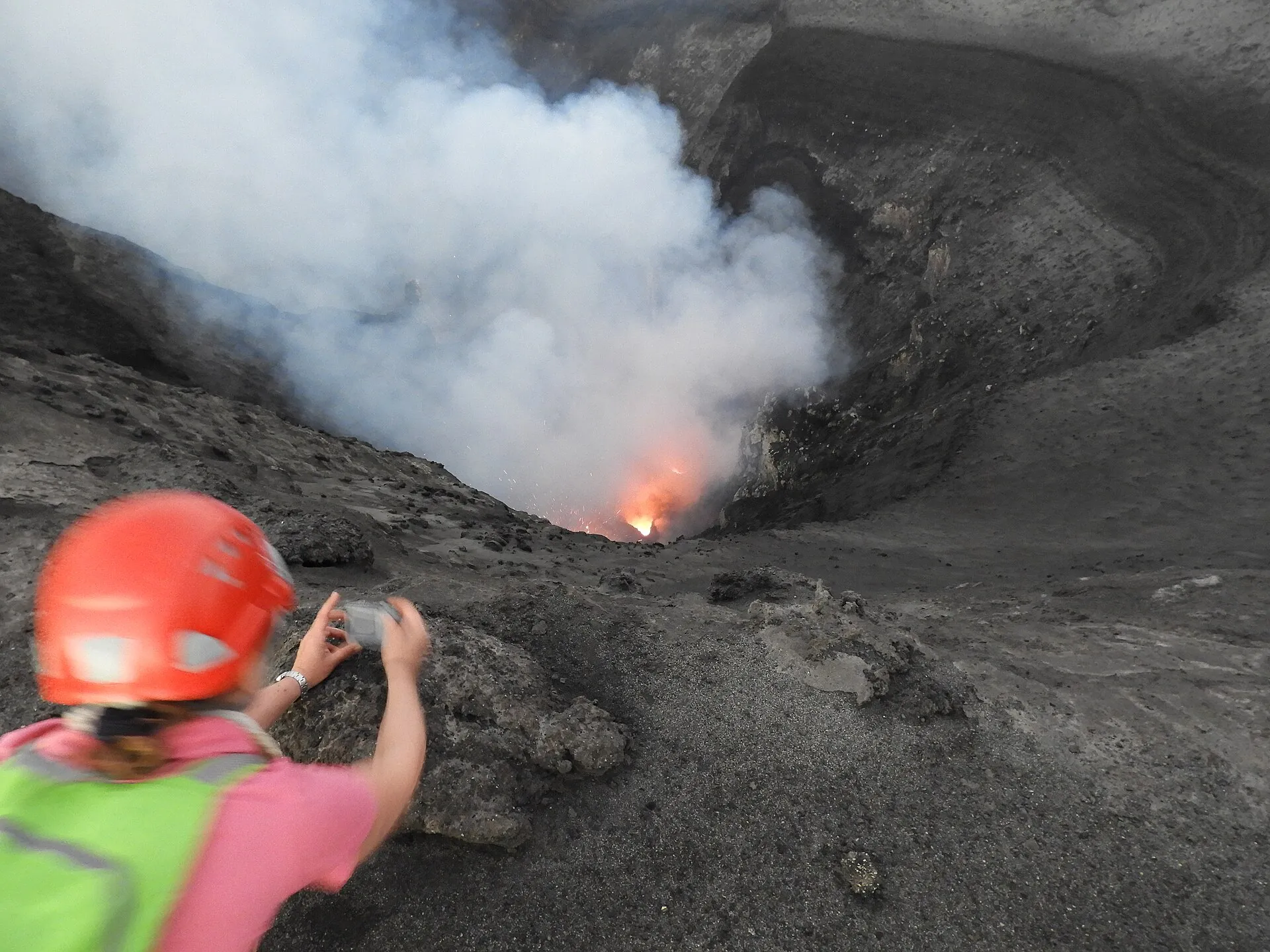
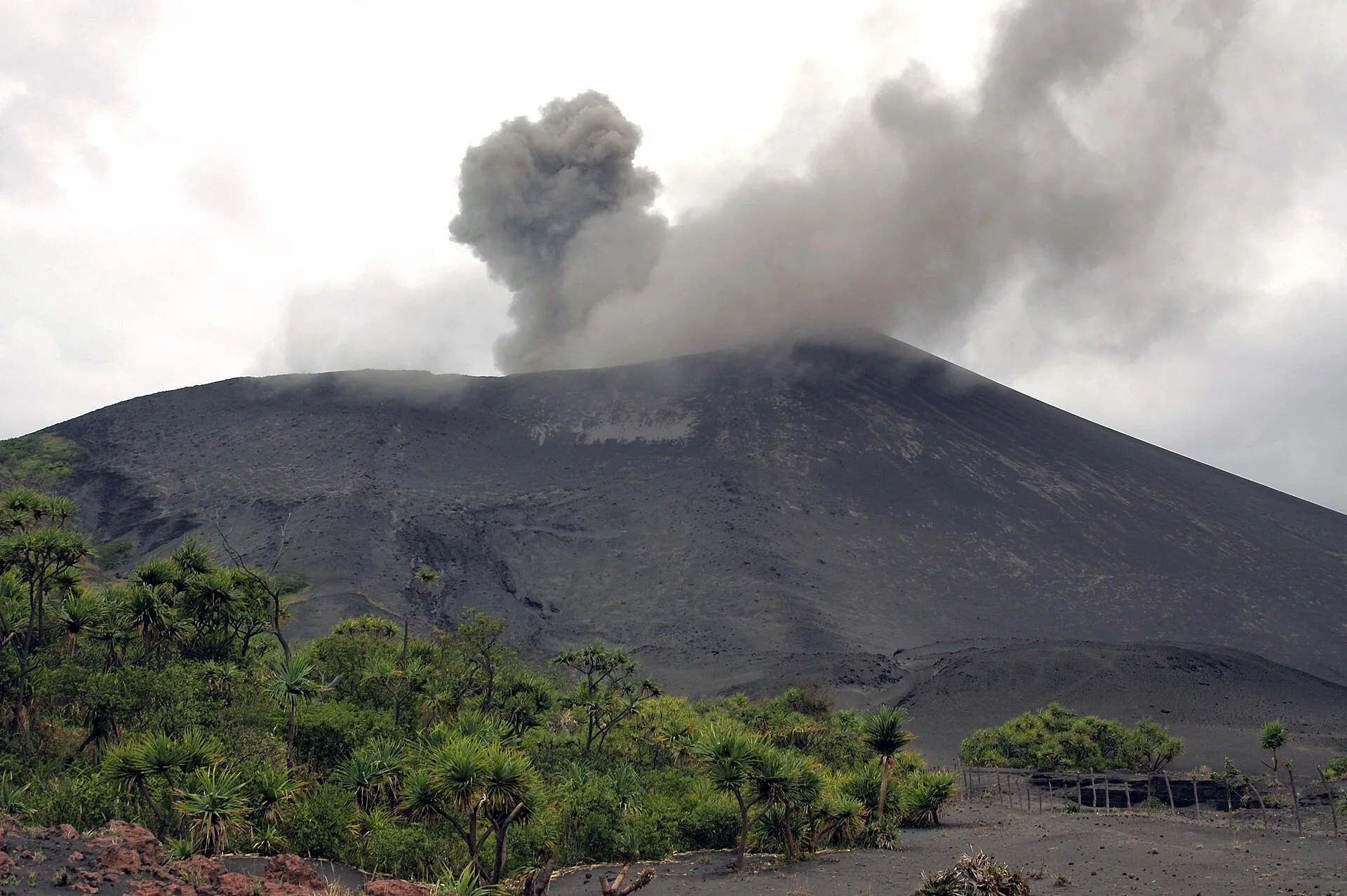
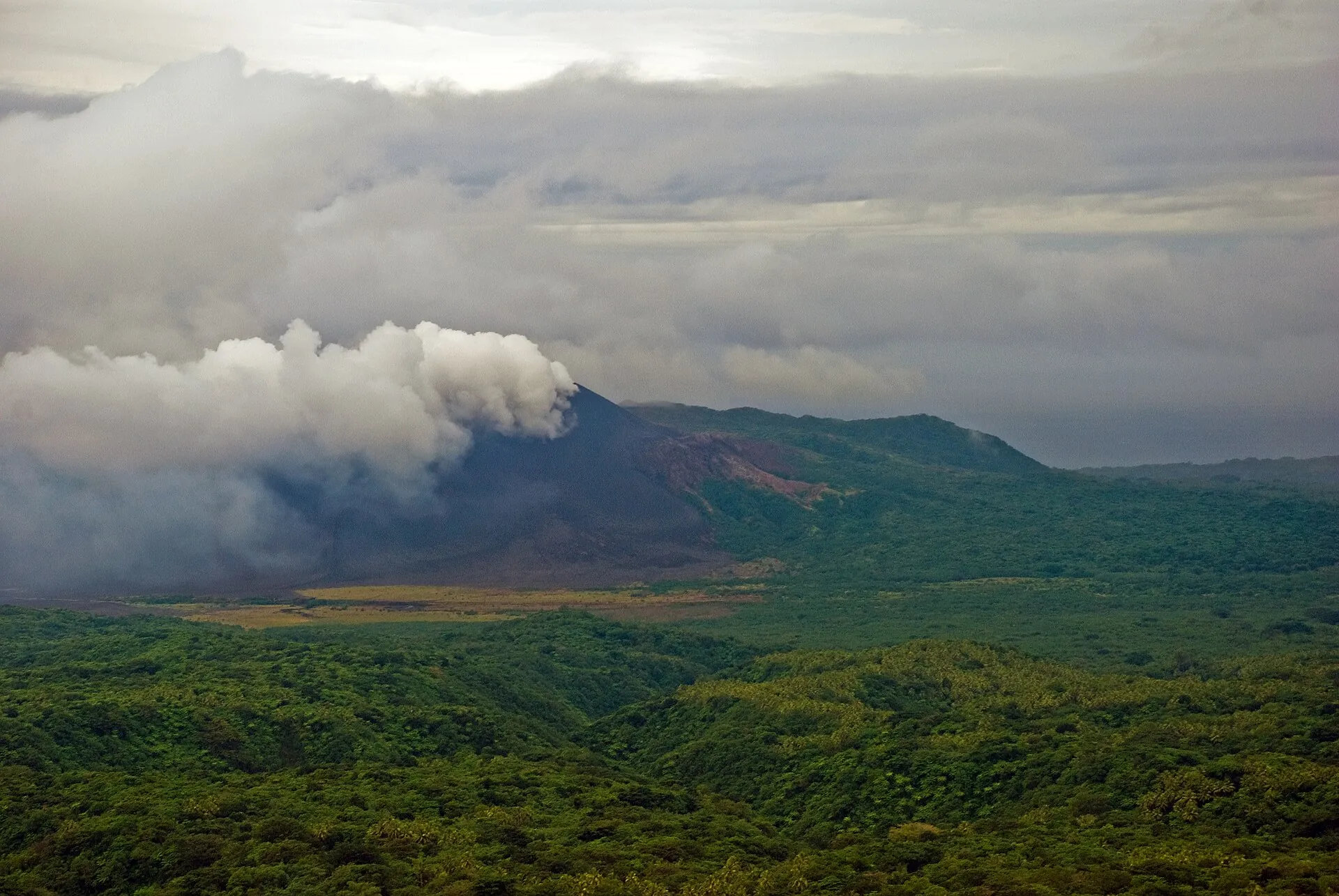
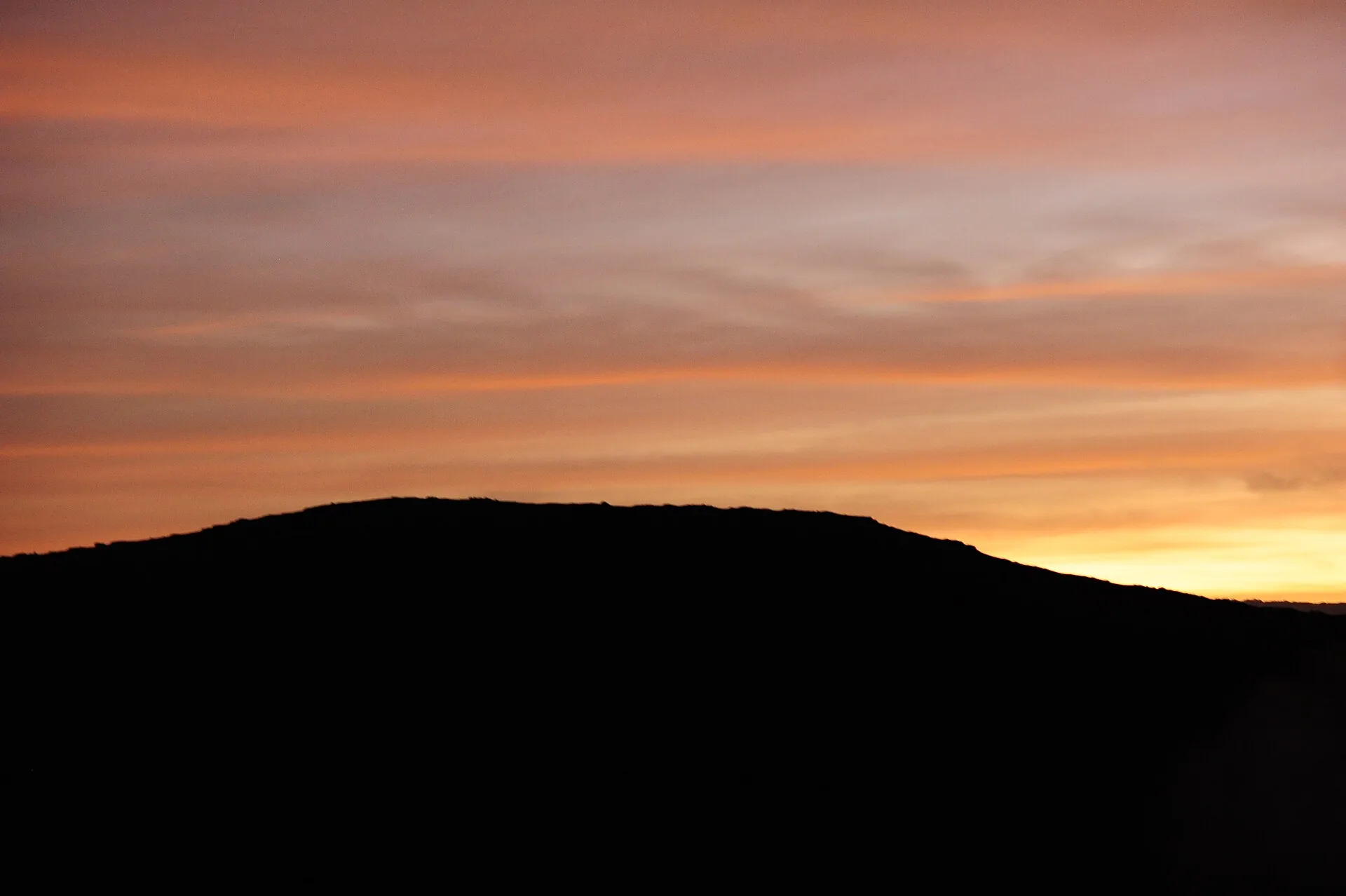
Approaching Mount Yasur across the gray ash plain on Tanna, the cone under a plume of steam The crater of Mount Yasur at dusk: smoke above the rim, the sky still blue, the ground already dark Night explosion in the crater of Mount Yasur: glowing shreds of lava fly above the crater rim

Mount Yasur

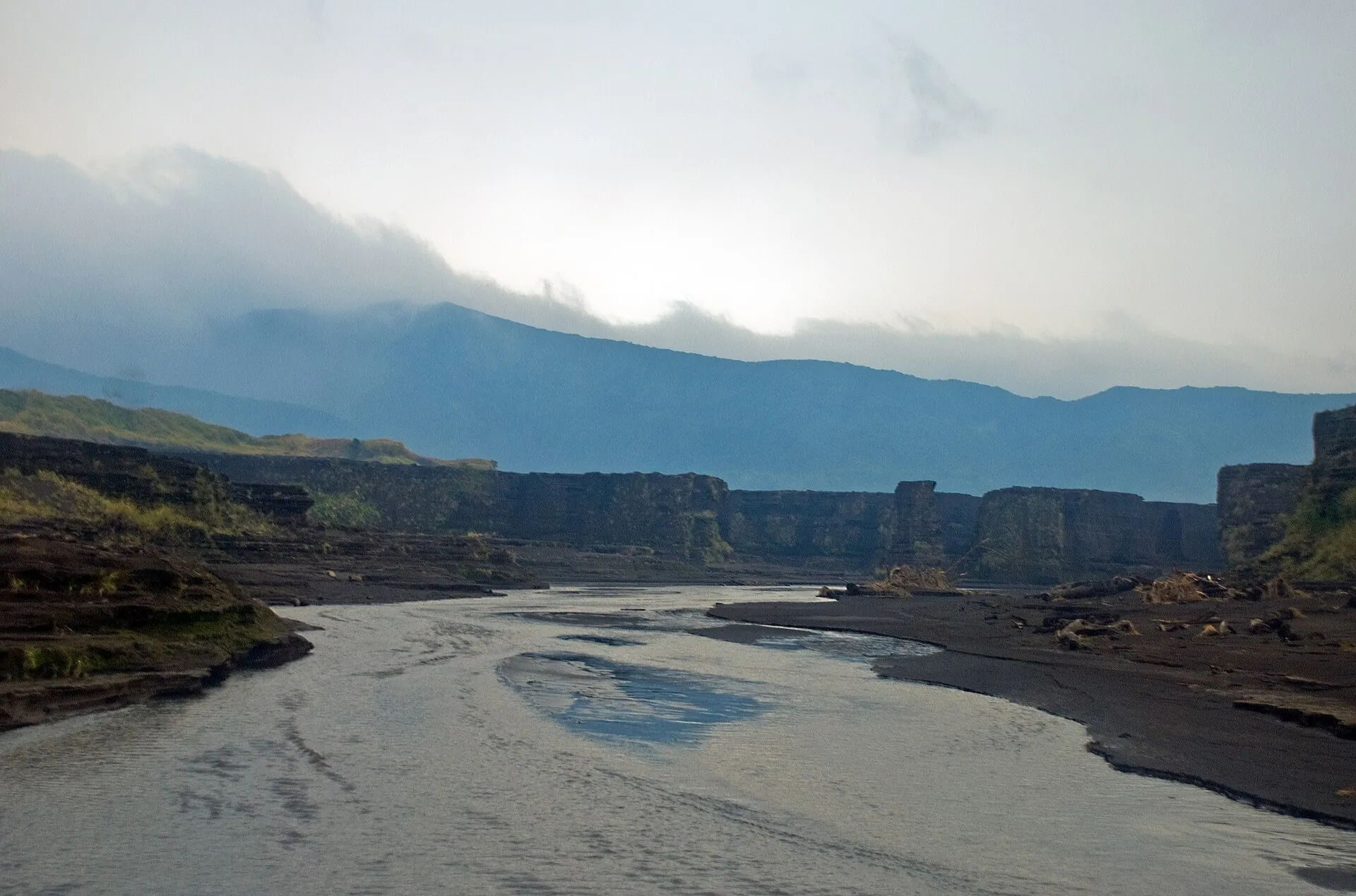
The road crosses an ash plain the size of a valley and about as empty as a parking lot.

At the rim you wait for dusk – before that there is only gray smoke.

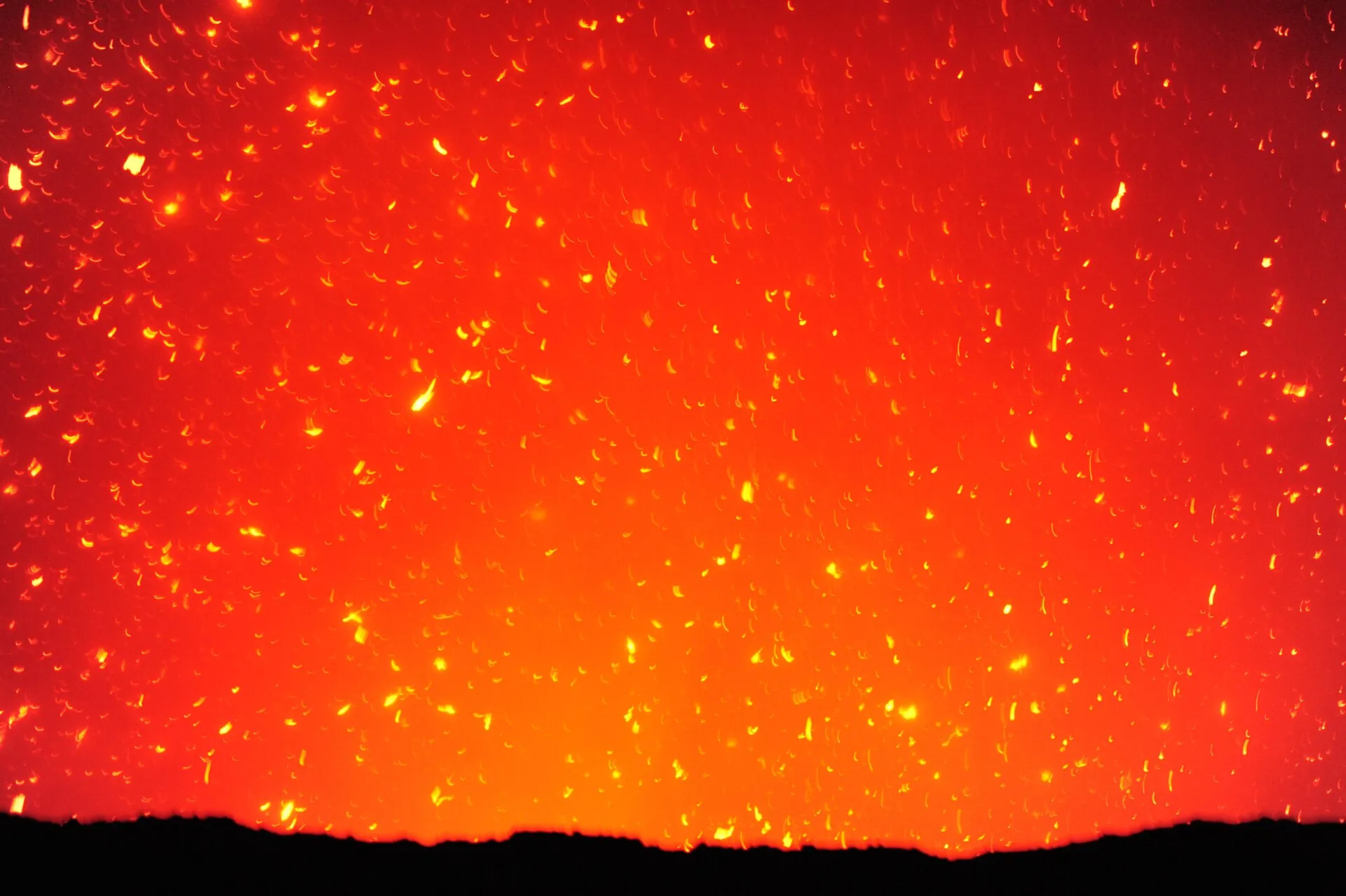
Then the rumble turns into a flash, and the lava goes over the edge.

Scroll –
until it gets dark

As of 23 September 2026What applies at Mount Yasur today

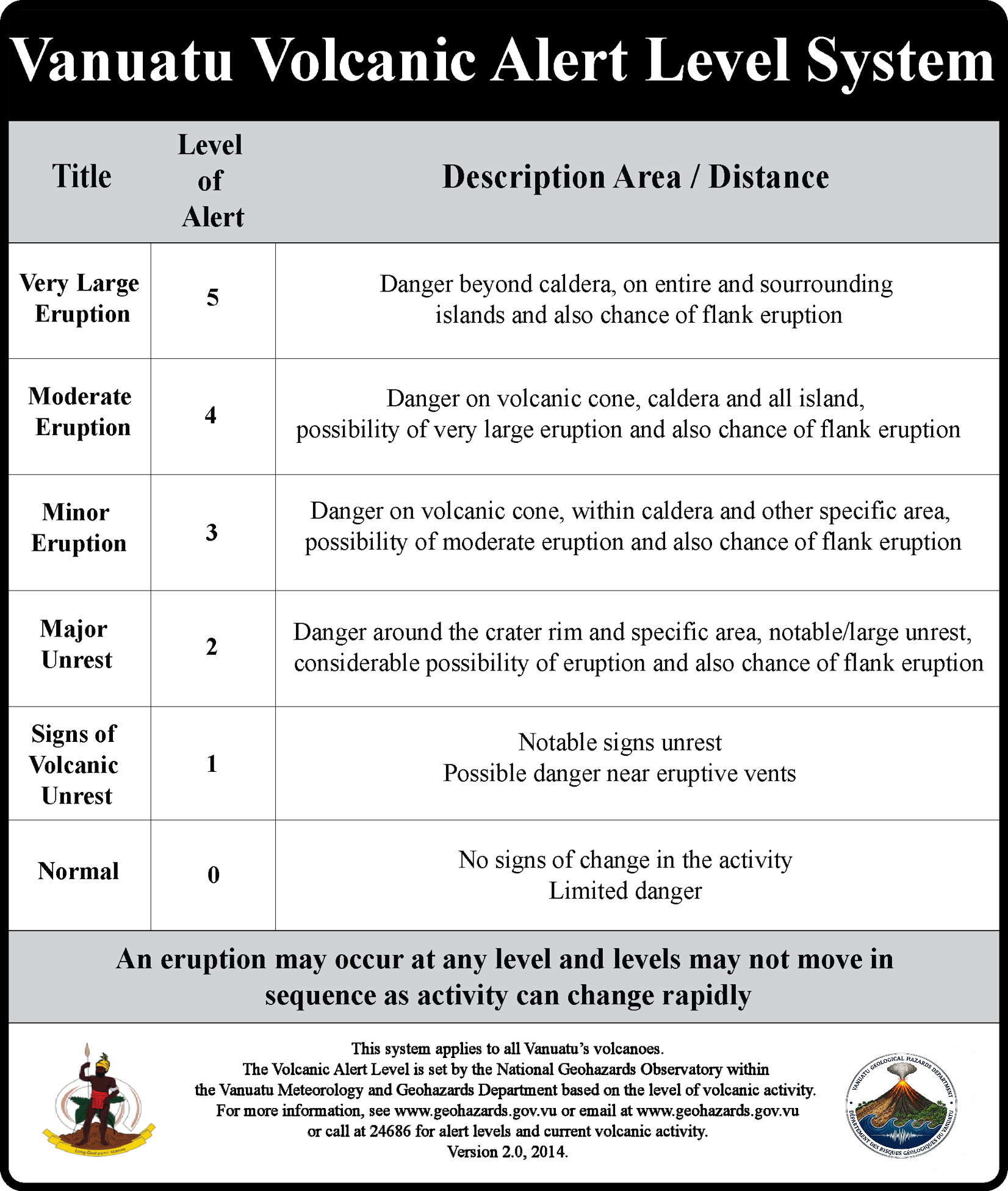
Mount Yasur on Tanna is considered the most easily reached continuously active volcano in the world: a 4x4 carries you across the ash plain almost to the crater rim, and from there it is ten to fifteen minutes on foot. Since 18 October 2016 it has stood at level 2 of 5 – “major unrest” on the scale of the Vanuatu Meteorology and Geo-Hazards Department. At that level the crater rim is usually accessible, and that is exactly where the risk sits: the department draws a danger zone of 600 m (1,970 ft) around the active vents, and the rim lies inside it. We found no dated Tanna bulletin from 2026 – the most recent one is from 27 March 2025.

Level 2 · major unrest
361m

The crater rim

At level 2 the rim is open in practice; which viewing area is released is decided by the department and the guides on the spot. The rim is slippery and has no barriers, and bombs can reach it. From level 3 only the parking area is used, from level 4 nobody drives up at all.

VMGD bulletin 03/2025: danger zone 600 m around the vents
Permanently closed

Permanent exclusion zone

The inside of the crater is permanently closed on the department's safety map, along with danger zones A and B, which are shut when activity rises. Going down into the crater: never, at any level, with any permit.

VMGD volcano fact sheet, version of July 2023
Open
9,750VUV

Entry paid to the landowners

The volcano sits on land held under traditional ownership. At the entrance station at the foot of the cone you register and pay cash in vatu. On top of that comes the kastom permission of the village chief, which the guide arranges.

Operator and traveler reports 2024–2026; no official rate table existsapprox. $82 per person
Daily

Flight Port Vila–Tanna

Air Vanuatu flies to Whitegrass daily under the schedule effective 9 March 2026: NF312 out at 11:00 am, NF313 back at 12:20 pm, 40 minutes. Because the tour ends in the evening, you need at least one night on the island.

Lead-in fares from the airline's website, as of 09/2026from 17,600 VUV one way
Sources: VMGD, Yasur page and volcano overview (level 2 on 22 September 2026, shown without a date) · VMGD Volcano Alert Bulletin no. 03/2025 of 27 March 2025 via ReliefWeb (level 2 since 18 October 2016, danger zone 600 m = danger zone A, bombs at the crater rim) · VMGD volcano fact sheet and Yasur survival guide, version of July 2023 (exclusion zones, helmet, what to do during an explosion). No dated Tanna bulletin exists for 2026; the level comes from the continuously maintained overview. Bulletins appear on the last Thursday of the month and whenever something changes.
Visitors stand on the unfenced crater rim of Mount Yasur, the smoking vent below them
No railing, no barrier, no net. The distance to the vent is all that stands between you and the bombs.

Photo: Vincent Albanese · CC BY 2.0

The experienceWaiting until the sky is dark enough

At first you only hear it: a rumble under your feet, then a bang like a heavy door. In daylight all you see is gray smoke, nothing more – which is why almost every tour leaves in the afternoon and stays until dark. At dusk the picture flips: glowing fragments rise out of the vent, slowly enough to follow with your eyes, and fall back as red dots. Several times an hour, sometimes every few minutes. It is windy up there, cold, and it smells of sulfur. At some point you notice that everyone around you has stopped talking.

Affiliate links to GetYourGuide: if you book, we earn a commission and the price stays the same. Prices and ratings as of 22.09.2026. All Yasur tours together carry 22 reviews – too few to call any of them most booked, so none is marked. One thing to settle before booking: is the entry fee of 9,750 vatu included? On resort tours it often is not. Whether the explosions glow depends on the mountain and the weather.

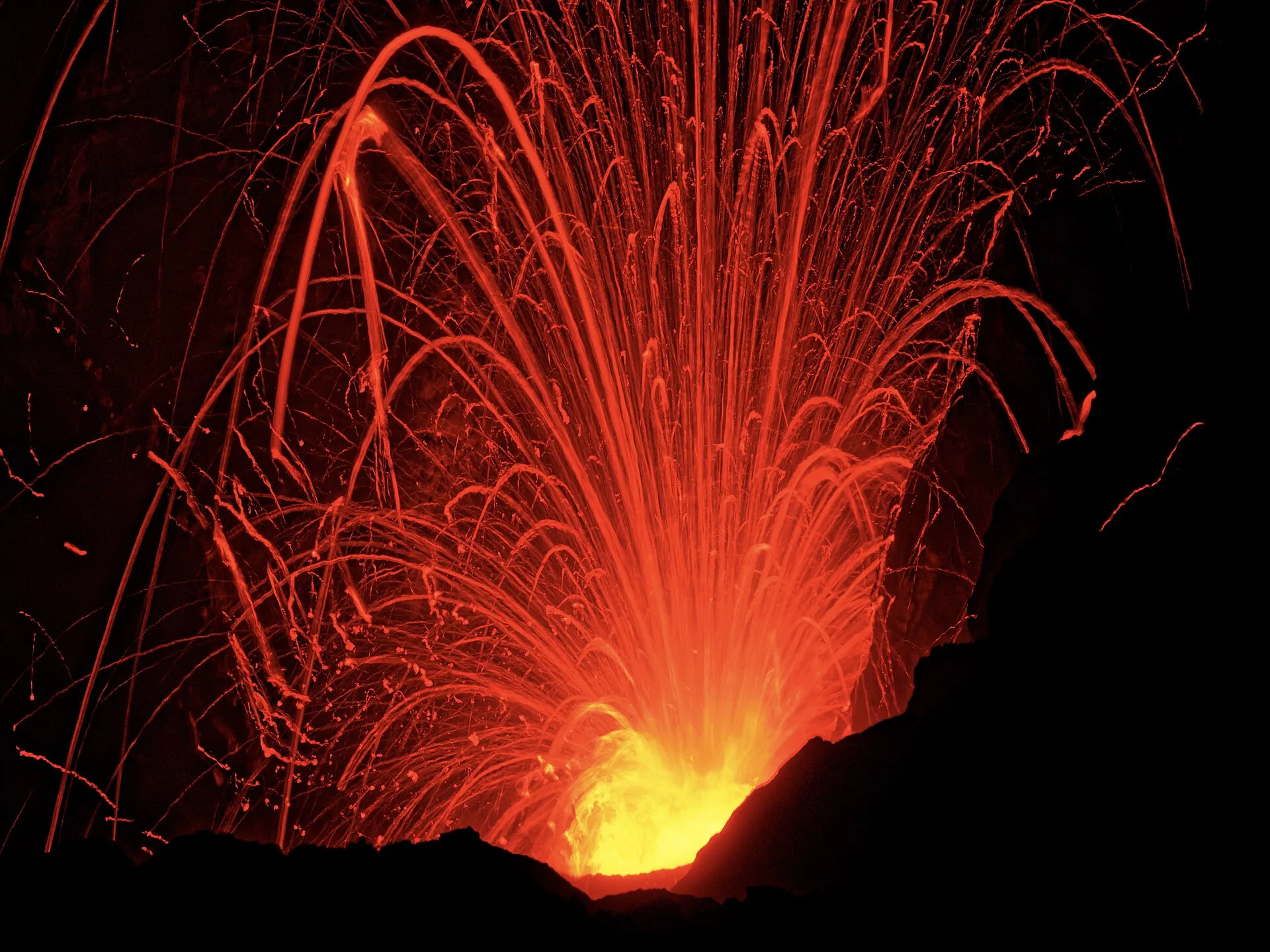
Long exposure at Mount Yasur: glowing lava traces arc above the dark crater rim
A long exposure shows what the eye reads as a shower of sparks: the flight paths of the bombs.

Photo: Romain Pontida · CC BY-SA 2.0

The ruleWho decides at Yasur – and what it costs

There is no national park, no park administration and no published ordinance. Two parties are in charge: the department for the alert level, the landowners for access.

1

VMGD sets the level

The scale runs from 0 to 5 (2014 version). Level 2 means major unrest: danger around the crater rim and in defined areas, with a considerable likelihood of eruption. The department states explicitly that an eruption can happen at any level and that levels do not have to move in sequence.

2

The landowners control access

The road to the cone runs across village land. At the entrance station visitors register by name and pay cash; in 2016 Entani Company Limited introduced the fee, then 7,500 vatu, part of it going to the communities. Who formally runs access today could not be documented.

3

Kastom permission and guides

Before the ascent the guide usually obtains the chief's permission – a short ceremony, sometimes with kava. He then takes the group to the rim. The department's fact sheet requires visitors to follow the instructions of guides and officials.

4

Helmet and covered skin

The fact sheet prescribes a helmet, long sleeves, long trousers and closed shoes. The helmet is usually provided; it protects against small fragments, not against large bombs. No fines are published – the rules are enforced by guides and barriers.

What Mount Yasur costs · as of 09/2026
Entry per person at the entrance station, cash in vatu9,750 VUV (approx. $82)
Ride from the entrance to the parking area on the cone, per person (instead of 35–45 minutes on foot)1,000 VUV (approx. $8)
Guided walk on the ash plain (operator figure) · volcano boarding: board 2,500 + guide 1,500 VUV1,000 VUV (approx. $8)
Flight Port Vila – Tanna, one way, lead-in farefrom 17,600 VUV (approx. $149)
Flight Port Vila – Tanna – Port Vila, lead-in farefrom 35,190 VUV (approx. $297)
Historical: the fee when it was introduced in April 20167,500 VUV
No official rate table has been published by the landowners, the operator or Tafea province. The 9,750 vatu comes from an operator (Volcano Island Paradise Bungalows) and matches traveler reports from 2024 to 2026 (9,750 or 9,800 vatu); one report gives 8,000 vatu, and a package from Port Resolution 11,500 vatu. Transfer and guide are billed separately by the accommodation. Converted at 1 VUV = $0.0084 (22 September 2026), rounded.
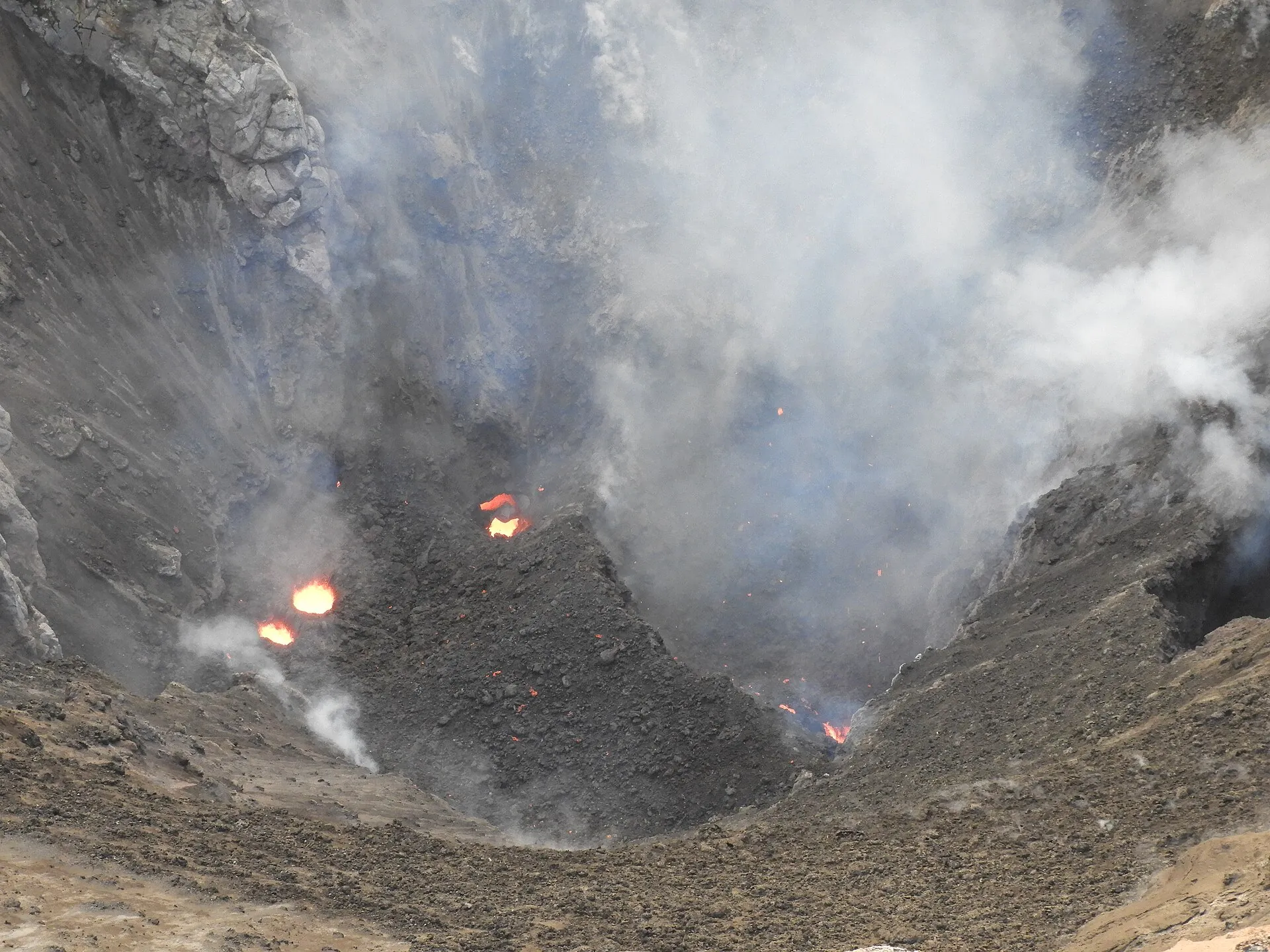
View into the roughly 400 meter wide crater of Mount Yasur with several steaming vents on the floor
The crater is about 400 m (1,310 ft) across, with up to five vents working on the floor. The danger zone radius: 600 m.

Photo: Marks6651 · CC BY 4.0

RoutesHow you get to the rim

There is exactly one way up – and two times of day when it is worth doing.

Standard

Afternoon tour by 4x4 across the ash plain

Departure on the west coast between 2 and 3 pm, about 1.5 hours over dirt tracks and three river fords; from Port Resolution in the east up to two hours. Entry at the volcano around 4:00 to 4:30 pm. Ten to fifteen minutes up from the parking area, usually 1 to 2.5 hours at the rim, back around 7 to 8 pm.

Walking from the entrance: 35–45 minutes up, about 45 down9,750 VUV + transfer
On request

Sunrise visit

Departure around 4:30 am, otherwise the same sequence. The advantage is a dark sky without the evening crowd. The entry fee is charged per visit, not per day. Booked through the accommodations; not offered everywhere.

Traveler reports 2024/2025same as the standard visit
Weather dependent

The ash plain at the foot of the cone

The drive crosses kilometers of gray plain below the cone; guides offer walks and volcano boarding on the ash slopes. Rain turns the plain to mud, and in the cyclone season from November to April tours are cancelled outright.

Operator figures; no official hoursfrom 1,000 VUV
A shallow stream runs across the gray ash plain at the foot of Mount Yasur, forested slopes in the background
The ash plain below the cone: gray for kilometers, threaded with shallow streams. After rain it turns to mud.

Photo: Phillip Capper · CC BY 2.0

Good to knowGetting there, best time, what to bring

Getting there

Without a car: There is no scheduled public transport on Tanna; transfers are arranged through accommodations (pickup truck/4x4). From Whitegrass Airport it is a few minutes to the resorts on the west coast, and 1–2 hours of dirt track with river fords to the lodges at the volcano.

By car: Rental cars are not common on Tanna; you book a vehicle with a driver. From the entrance at the volcano a pickup truck drives to the parking area below the crater rim (1,000 VUV per person).

  • From Port Vila (Bauerfield, VLI) · 40-minute flight
    Domestic flight with Air Vanuatu to Whitegrass (TAH), schedule from 9 March 2026: daily NF312 11:00 am–11:40 am, return NF313 12:20 pm–1:00 pm, on one weekday an additional NF264 12:50 pm–1:50 pm (continuing to Aneityum); charter with Air Taxi Vanuatu (10-seater, day tour and overnight tour to Yasur; overnight tour around 940 AUD according to a customer review), Unity Airlines, Belair Airways. Ferry: no regular passenger service documented.
  • From Lenakel / Whitegrass (west coast of Tanna) · about 1.5 hours
    4x4 over the island's dirt road and across the ash plain; Whitegrass Airport is 8 km (5 miles) north of Lenakel
  • From Port Resolution (east coast) · up to 2 hours (travel report, September 2024)
    Pickup truck over dirt track, with a steep mountain road at the end

Best time to go

Dry season May to October: less rain, firmer tracks, clearer views, and outside cyclone season (early November to late April according to the German Foreign Office (Auswärtiges Amt); the UK FCDO gives November to May). Time of day: afternoon tour with sunset – only at dusk do the explosions glow, before that you see ash plumes. Watch the wind direction: the southeast trade wind blows gas and ash across the western side; the guide picks the viewing area accordingly. Avoiding the full moon means darker nights and a stronger glow.

Who it suits

Children
Possible, but with restrictions: White Grass Ocean Resort does not recommend its volcano tour for children under 7. There are no railings at the rim, the ground is slippery, bombs can land at any time, and in the dark every child must be held by the hand. Not suitable for toddlers.
Minimum age
no official limit; resort recommendation from age 7
Fitness
Low: from the parking area 10–15 minutes uphill on ash and cinders; anyone walking from the entrance has a 35–45 minute climb. The drive in over dirt tracks and three river fords is rough – the resort asks guests with neck or back injuries to check in advance.
Altitude
irrelevant (361 m / 1,184 ft)
Heart and lungs
Gases (SO2), acid rain and fine ash irritate the airways and eyes; VMGD advises a gas mask or a cloth over mouth and nose. Anyone with asthma or cardiovascular problems should keep the stay short, avoid the downwind side and carry medication. The nearest hospital with basic care is in Lenakel; serious cases are flown to Port Vila or abroad.
Wheelchair
not possible (dirt track, ash, steep section)
Dogs
not customary; no rule published
Clothing
VMGD fact sheet: helmet (usually provided; protects against small fragments, not against large bombs), long sleeves, long pants, closed shoes – bomb fragments, hot ash and gas can burn the skin. Plus a windbreaker or fleece (windy at the rim and cool after sunset), rain jacket, headlamp for the descent in the dark, cloth or mask against gas, water.
Footwear
sturdy, closed shoes with tread; ash and cinders are loose and sharp-edged, and according to VMGD the crater edge is always slippery and unstable

Tips you will need on site

  • Stay overnight on Tanna: the volcano is only worthwhile at dusk, and the last flight back to Port Vila leaves at midday. Plan two nights in case a tour is canceled because of rain or activity.
  • Bring cash in vatu for the entrance fee (9,750 VUV) and the pickup truck (1,000 VUV); there are hardly any ATMs on Tanna (Lenakel), and card payment is rare.
  • Check the VMGD page before your flight: Level 2 means the rim is open, Level 3 means no rim. The danger zone can be extended without warning.
  • Never stand with your back to the crater at the rim: VMGD advises that during a large explosion you should track the bombs in the air, stand still and only dodge if a piece is coming toward you; afterwards leave the volcano promptly. The longer you stay at the rim or the parking area, the higher the risk.
  • Put on the helmet, wear long clothing, closed shoes, a headlamp and a windbreaker – up top it is cold, windy and pitch dark after sunset.
  • Health: in August 2026 the Ministry of Health reported a rotavirus outbreak on Tanna (260 cases by 30 August 2026, one death). Drink only boiled or bottled water, wash your hands; carry a travel medical kit with electrolytes.
  • Respect kastom: landowners and chiefs decide on access. Take part in the permission ceremony, enter villages only with a guide, ask before taking photos.
  • Book flights early: since the 2024 collapse of Air Vanuatu, usually only one aircraft a day flies to Tanna, and it is often full. Charter (Air Taxi Vanuatu) as an alternative; take out travel insurance that covers volcanic events and flight cancellations (advice of the UK FCDO).

A short history

  • Yasur is the youngest of several Holocene eruptive centers inside the 4 km (2.5 mile) wide, horseshoe-shaped Yenkahe Caldera, which collapsed in two large eruptions and covered almost all of southern Tanna with ash and cinders. A magma body a few kilometers beneath the caldera feeds Yasur and is uplifting the Yenkahe block – Port Resolution rose more than 20 m (66 ft) in 300 years.
  • Strombolian activity for about 800 years (VMGD/GVP); dated eruptive phases from about AD 1270.
  • August 1774: James Cook sees the glow at night, anchors with HMS Resolution in the bay named after the ship, Port Resolution, and describes ash eruptions – the beginning of the historical record.
  • 1930s/1940s: the John Frum movement emerges on Tanna, reinforced during World War II by the US troops in the country; followers in Sulphur Bay believe John Frum lives inside Yasur. 15 February is still John Frum Day.
  • January 1994 and February 1995: two visitors die at the crater rim each time after being hit by a lava bomb weighing about 15 kg (33 lb) (GVP bulletin 1995, readable only as a search-result summary). ORSTOM then begins producing information leaflets; today VMGD writes tersely of 'dangerous activity that has caused fatalities'.
  • October 1992: a seismic station is installed; today a seismograph, cameras and a microbarometer.
  • 13 March 2015: Cyclone Pam (Category 5) hits Tafea with full force – on Tanna nearly every building is damaged or destroyed. April 2016: Entani Company Limited introduces a 7,500 VUV entrance fee, the Tafea Tourism Council protests, the government approves the rate as a trial.
  • 18 October 2016: VMGD sets the alert level to 2, where it still stands (as of bulletin 27 March 2025, overview 22 September 2026).
  • 1–4 March 2023: Cyclones Judy and Kevin within 48 hours; Kevin hits Tanna and Erromango, Tanna is cut off for a week. October 2023: Cyclone Lola (the earliest Category 5 cyclone on record in the Southern Hemisphere) hits mainly Pentecost, Malakula and Ambrym.
  • 9/10 May 2024: Air Vanuatu enters voluntary liquidation (EY as liquidator, all flights canceled); from August 2024 domestic flights gradually resume with government money, no more international flights; 2026 schedule from 9 March with a daily Tanna flight, resumption of further island destinations planned for August 2026 (ch-aviation).
A visitor wearing a safety helmet stands at the crater rim of Mount Yasur at dusk, smoke rising behind him
Helmet, long clothing, closed shoes: that is what the department's fact sheet says – and it is not for show.

Photo: Marks6651 · CC BY 4.0

The rest of the islandTwo nights on Tanna – what else there is

If you are flying anyway, stay two nights: if one tour is cancelled by rain or activity, you still get a second attempt. During the day there is the Blue Cave on the west coast, Port Resolution with its hot springs and the bay where Cook anchored in 1774, and the giant banyan tree. Sulphur Bay, the center of the John Frum movement, is visited only with an invitation and a guide – and you ask before every photo.

Affiliate links to GetYourGuide: if you book, we earn a commission and the price stays the same. Prices and ratings as of 22.09.2026. The Blue Cave day tour has the weakest rating in the whole basket at 3.4 stars from six reviews – we still list it, because it is the only combination of cave and volcano. For all of these, check whether the volcano entry fee is included.

A dark ash cloud billows out of the crater of Mount Yasur into the blue sky above Tanna
By day it stays ash and smoke. That is exactly why hardly anyone drives up in the morning.

Photo: Rolf Cosar · CC BY 2.5

Out of date onlineWhat other sites get wrong

“Entry costs 3,350 or 7,500 vatu.”
That was the 2016 rate. Operators and traveler reports have given 9,750 to 9,800 vatu consistently since 2024, plus 1,000 vatu for the ride from the entrance to the parking area – roughly $90 per person in total.
“Air Vanuatu has collapsed, you cannot get to Tanna.”
The airline was liquidated in May 2024 but has flown domestic routes again since August 2024. The schedule effective 9 March 2026 lists a daily Port Vila–Tanna flight. What is still missing are the international routes; Port Vila is served by Qantas, Jetstar, Virgin Australia, Aircalin and Fiji Airways, among others.
“You can reach the crater without a guide, there is a road after all.”
The access road runs across private land and ends at an entrance station with registration. The landowners provide the guides, and the department requires visitors to follow their instructions. Without a vehicle and driver you would hardly get there anyway.
“Yasur is harmless – a volcano you could take a stroller to.”
Easy to reach is not the same as safe. In 1994 and 1995 two visitors died at the rim each time, hit by lava bombs; the department speaks of a history of dangerous activity with fatalities. Level 2 means danger around the crater rim, and the rim lies inside the 600 m zone.
“You can see lava flows at Yasur.”
Yasur throws shreds of lava and bombs – Strombolian to Vulcanian. Lava flows are untypical and, according to the hazard map, would only come from new fissures during large eruptions.
“The alert scale goes up to 4.”
Vanuatu uses a scale from 0 to 5 in the 2014 version. Older sources with a four-step scale are out of date.

Quick questionsBefore you fly to Tanna

Can you reach the crater rim of Yasur in 2026?

At level 2, in force since October 2016 and still shown on the VMGD overview on 22 September 2026, the rim is usually accessible. We found no dated Tanna bulletin from 2026, so the rule is: check the VMGD page before you travel. From level 3 only the parking area is used.

What does a Yasur visit cost in total?

About 9,750 vatu entry per person (roughly $82), plus 1,000 vatu if you take the ride up from the entrance. Transfer and guide are billed by your accommodation. The flight from Port Vila starts at about 17,600 vatu one way.

Do you have to stay overnight on Tanna?

In practice, always. The scheduled flight back leaves at 12:20 pm and the volcano tour ends in the evening. Only charter day tours manage the visit without an overnight stay. Two nights is better – it buys you a second attempt if it rains.

How close do you get to the explosions?

To the crater rim, which means inside the 600 m danger zone around the vents. Closer is not possible: the inside of the crater is permanently closed. How long you may stay up there is the guide's call – the shorter, the lower the risk.

Is Yasur suitable for children?

Only with limits. One resort does not recommend its volcano tour for children under seven. The walk is short, but the rim has no barrier, the ground is slippery, and it is dark, windy and full of gas.

When is the best time for Tanna?

May to October: dry season, firmer tracks, better visibility – and outside the cyclone season, which runs from early November to the end of April.

Is Mount Yasur currently open, and what is the alert level?

As of 22 September 2026, VMGD lists Yasur at Level 2 of 5 ('Major Unrest') – as it has been since 18 October 2016. At Level 2, visits to the crater rim are usual; the Permanent Exclusion Zone at the crater remains closed, and the 600 m (2,000 ft) danger zone around the vents can be extended at any time. Check the VMGD page before you travel.

How much does a visit to Mount Yasur cost?

Around 9,750 vatu entrance per person (about $82, rate 22 September 2026) plus 1,000 vatu if you have yourself driven from the entrance to the parking area at the cone. Add the transfer and guide through your accommodation. There is no official price list; the amounts come from operators and travel reports from 2024–2026.

Can you visit Mount Yasur without a guide?

Practically, no. The access track is on village land, you are registered and charged at the entrance, and the landowners provide the guides, who also obtain the chief's permission. Without a vehicle and driver you can hardly get there anyway, and the descent in the dark is not advisable on your own.

How long does a visit to Mount Yasur take?

From the west coast, count on about 1.5 hours of driving each way, then 10–15 minutes on foot from the parking area to the rim and usually 1–2.5 hours at the top. The typical tour starts between 2 and 3 pm and ends around 7–8 pm.

When is the best time to see the lava?

After sunset. In daylight you mainly see ash plumes and hear the explosions; at dusk the glowing bombs light up. That is why almost all tours go in the late afternoon; the alternative is sunrise from about 4:30 am.

Is Mount Yasur dangerous?

Yes, despite the easy access. In 1994 and 1995, two visitors died at the rim each time from lava bombs. VMGD classifies Level 2 as a hazard around the crater rim and warns that bombs can land in any zone – from the explosion to impact at the rim often only seconds pass. Wear a helmet, follow the guide, keep your time at the rim short.

What should you wear and bring?

Long pants, long sleeves, closed sturdy shoes, windbreaker or fleece, rain jacket, headlamp, cloth or mask against gas, water and cash. VMGD makes a helmet mandatory – it is usually provided, but only protects against small fragments.

How do you get to Tanna and Mount Yasur?

By plane from Port Vila to Whitegrass (40 minutes): according to the schedule from 9 March 2026, Air Vanuatu flies daily (NF312 at 11:00 am, return NF313 at 12:20 pm), one way from 17,600 vatu. Charters are offered by Air Taxi Vanuatu, Unity Airlines and Belair Airways. On Tanna your accommodation picks you up; from the west coast it is about 1.5 hours of dirt track to the volcano.

When is the best time to visit Mount Yasur?

May to October: dry season, firmer tracks, better visibility and outside the cyclone season, which according to the German Foreign Office (Auswärtiges Amt) runs from early November to late April. Cyclones such as Pam (2015) and Judy/Kevin (2023) hit Tanna hard and cut it off for weeks.

What does Mount Yasur mean to the people of Tanna?

It is a sacred place: followers of the John Frum movement in Sulphur Bay believe their prophet lives inside the volcano and celebrate every 15 February. The land belongs to the villages, which is why there is a permission ceremony and an entrance fee that is shared between the operator and the communities.
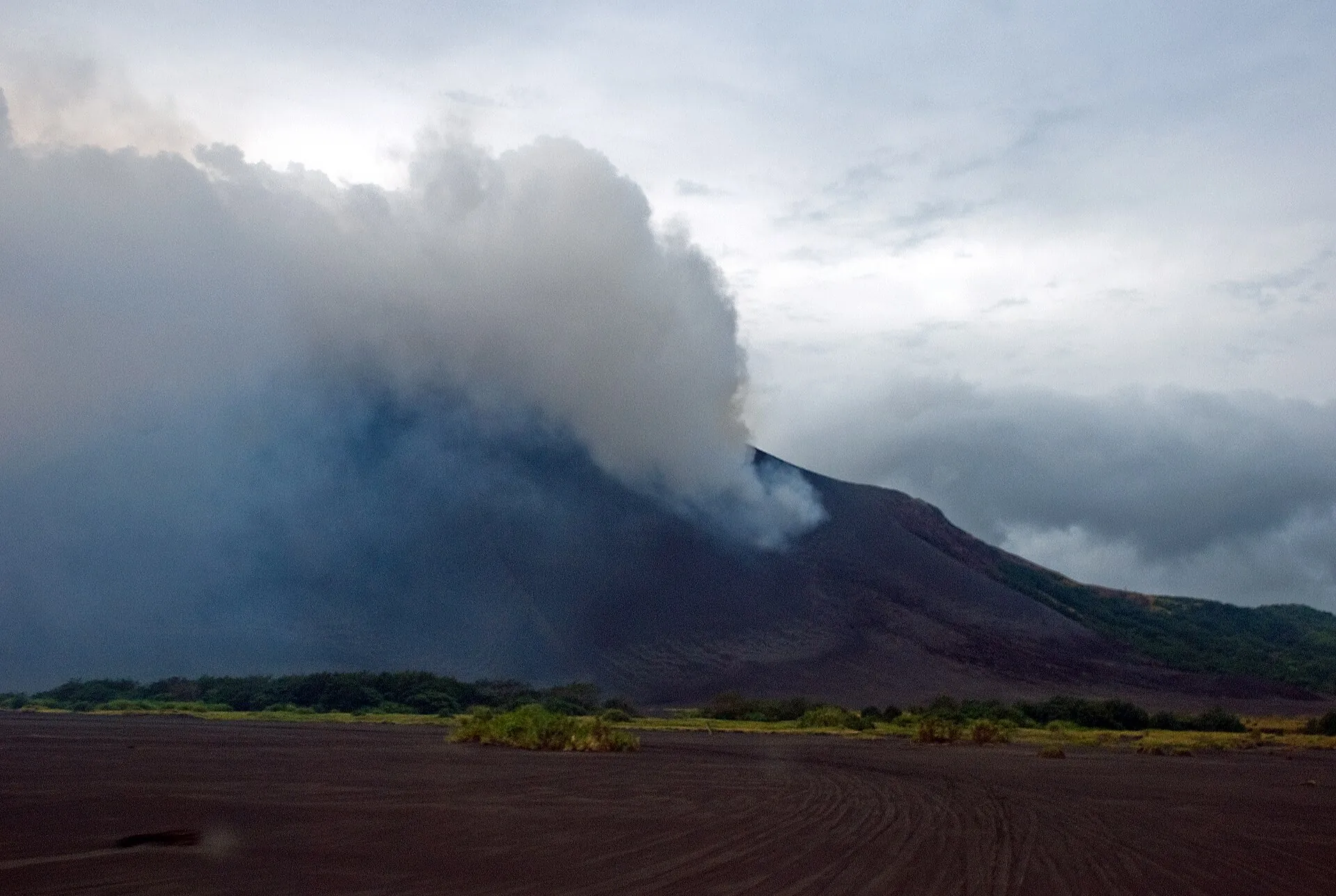
The cone of Mount Yasur seen from across the ash plain of Tanna, a wide steam plume above it
361 m (1,184 ft) – lower than many a hill. For at least 800 years it has done what it will do again tonight.

Photo: Phillip Capper · CC BY 2.0

Sources · accessed on 22.09.2026