Volcano·Guide
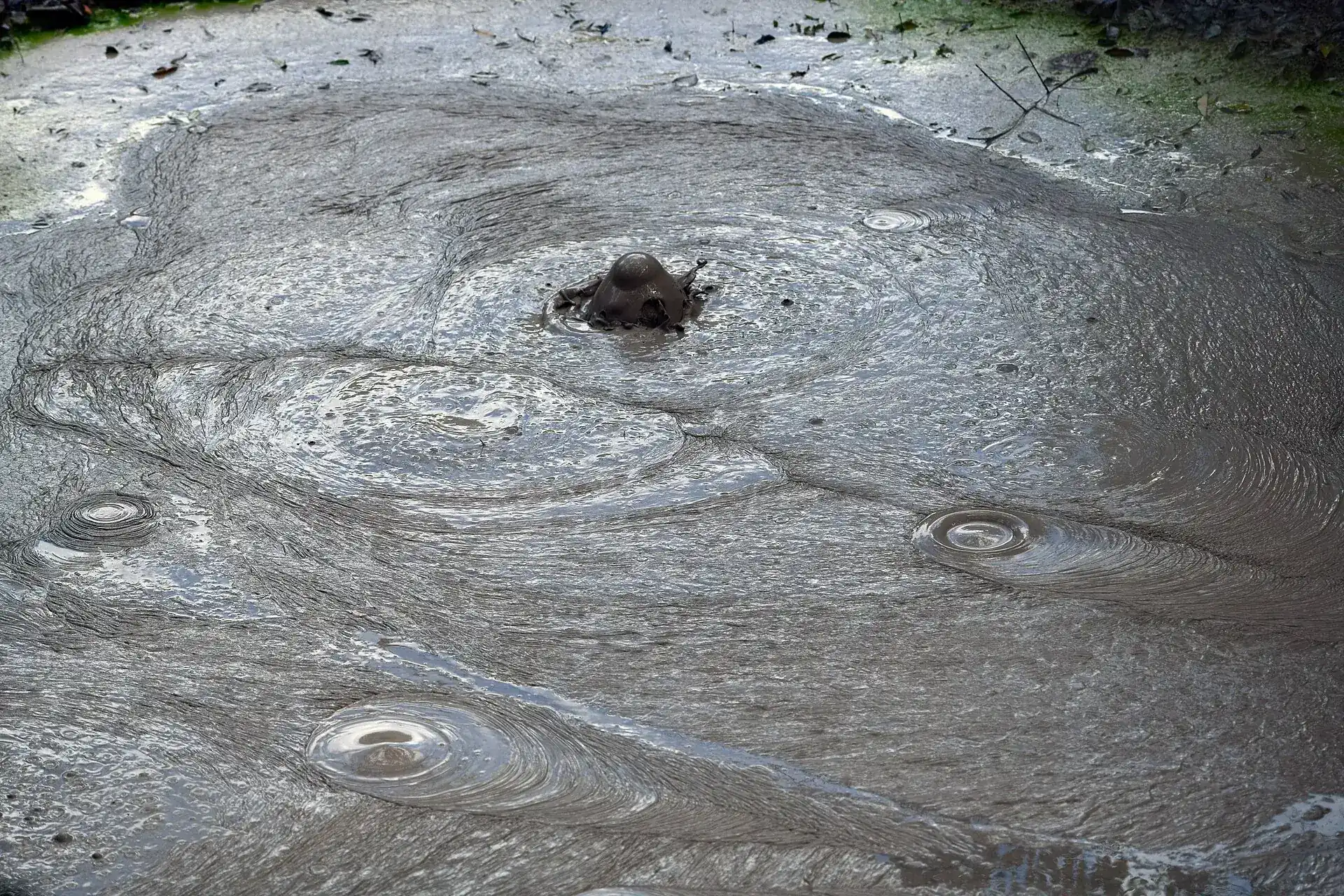
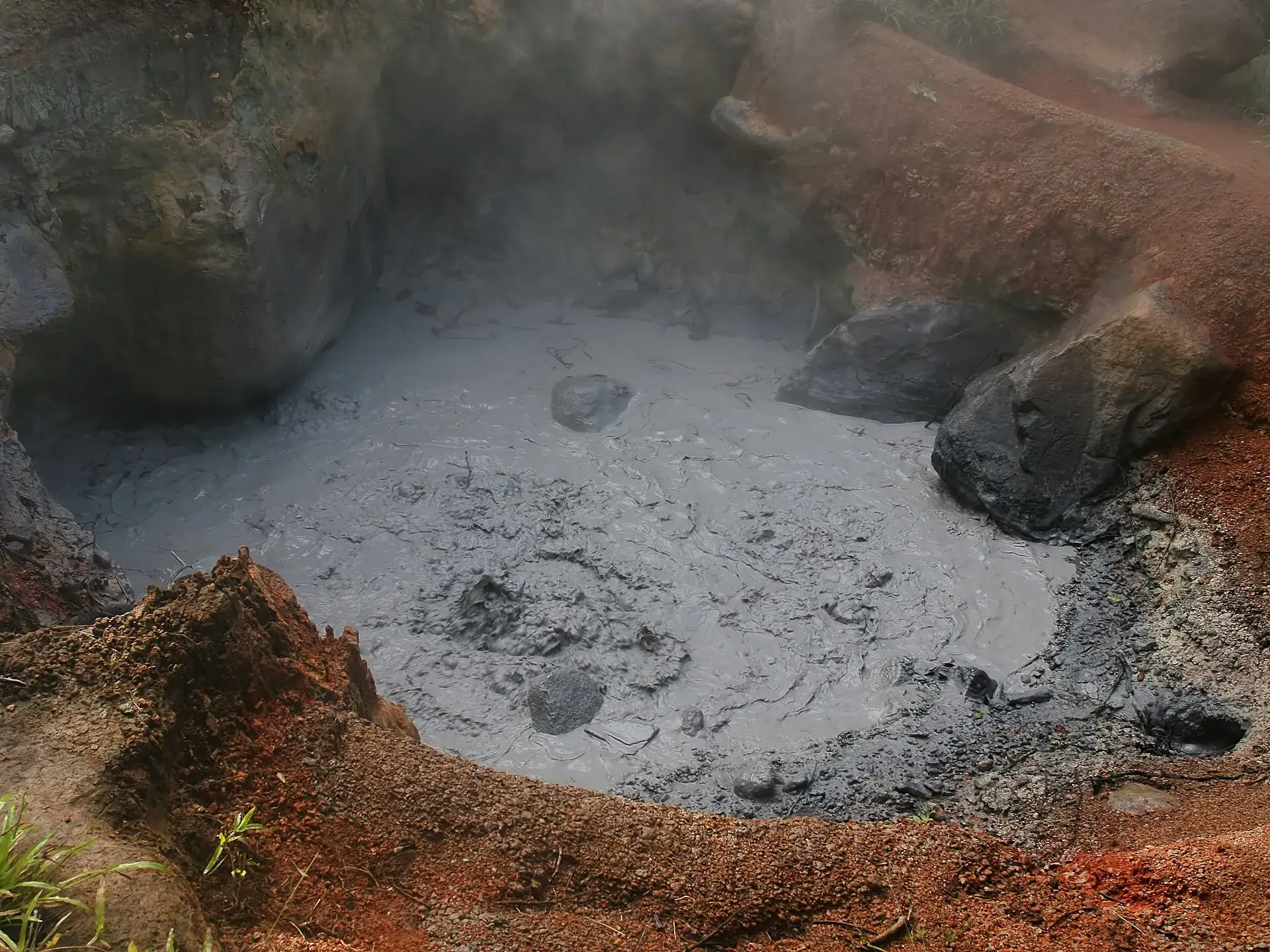
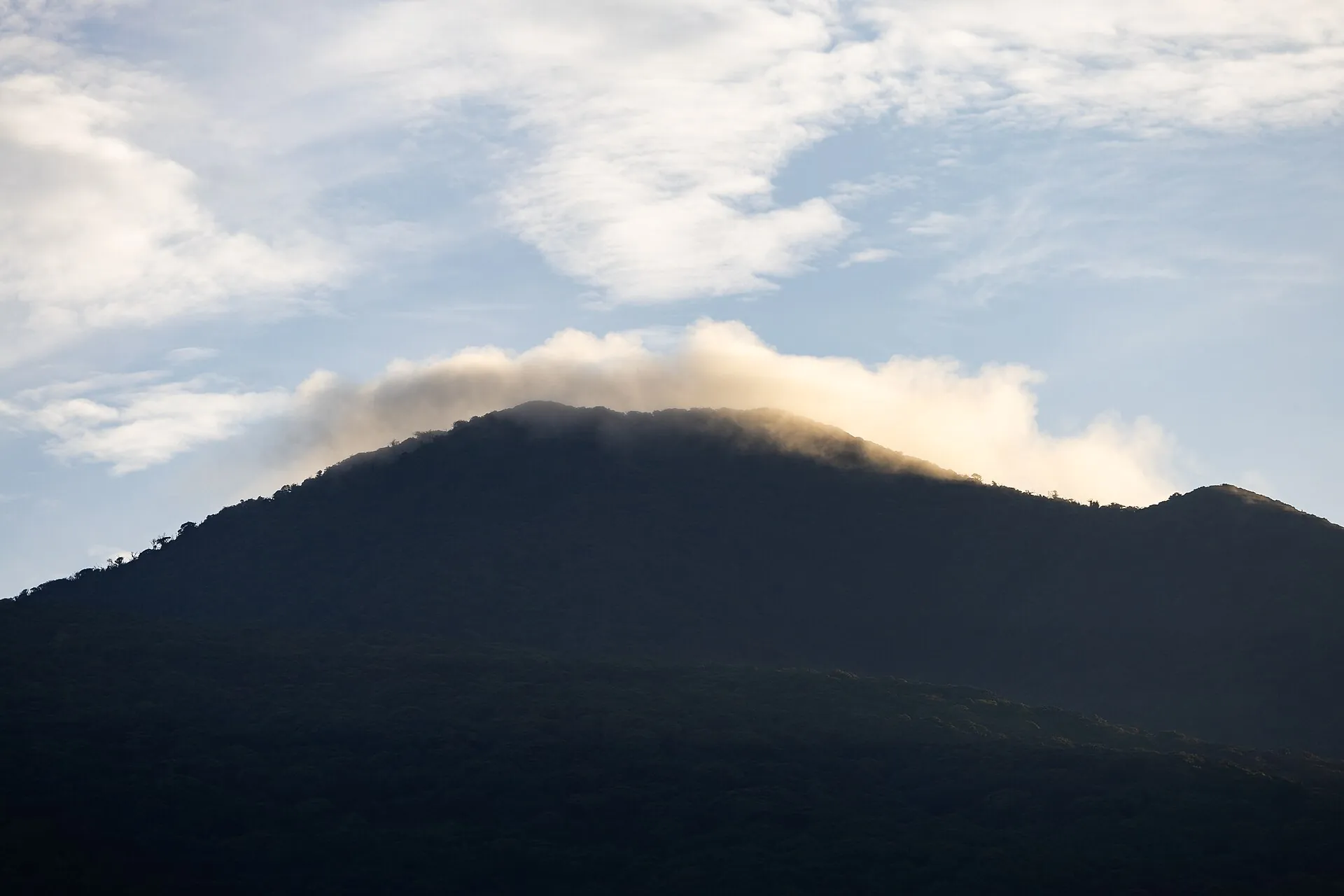
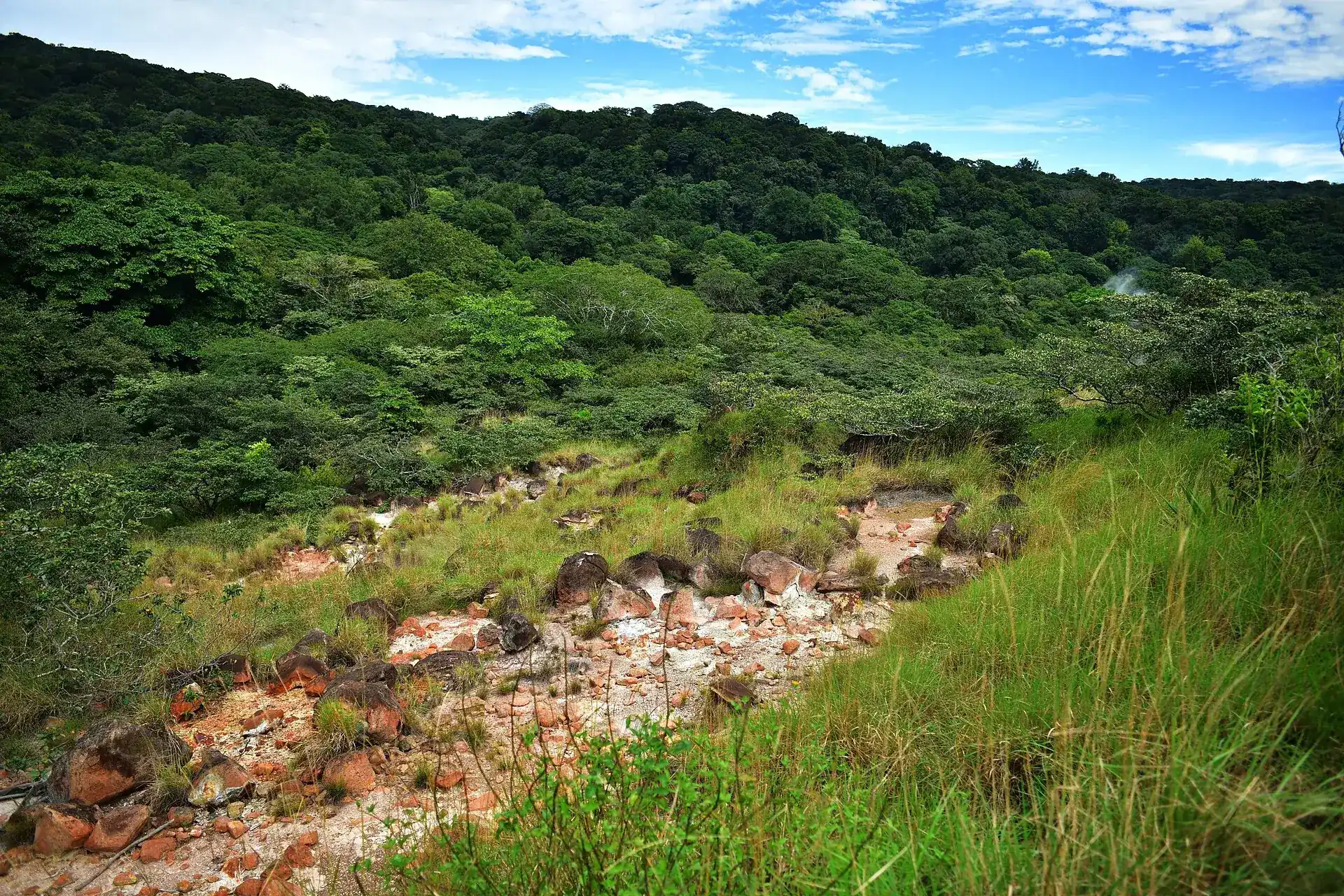
The summit of Rincón de la Vieja as a dark silhouette, clouds gathering over the crater A slope in Rincón de la Vieja National Park: reddish, steaming ground between grass and dense forest Gray, boiling mud in a mud pot in Rincón de la Vieja National Park, a bubble bursting at the surface

Rincón de la Vieja

Nobody has been allowed to the crater since 2011.

But further down, the heat reaches the surface on its own.

In the Las Pailas sector the ground boils – a 3 km (1.9 mile) loop, two hours.

Scroll –
from the summit down to the mud

As of 21 September 2026Rincón de la Vieja right now: volcano at level 3, park open

Rincón de la Vieja is currently Costa Rica's most active volcano. The OVSICORI observatory has had it at level 3 of 4 ("Precaución") since 24 July 2026 – the only volcano in the country at that level. Over 100 eruptions were counted between July and August, the last strong one on 18 September. Even so, both visitor sectors on the south flank are open: the eruptions affect the closed summit crater and the rivers on the north flank.

Important: we do not have an explicit "park open" notice from the park administration dated after 18 September – this status relies on the ACG's pages (with no closure notice) and press reports. So check the OVSICORI level and the ACG's channels the day before, or call the Las Pailas station: (506) 2666-5051, WhatsApp 8886-9510. Trails can be closed without warning.

Closed
1,916m

Crater trail and summit

The Sendero Cráter Activo has been closed since the eruption of September 2011 – officially "temporary," in practice for 15 years. There is no legal way to the summit, guided or not.

Fine since 30 April 2026 (Law No. 10.861, per La Nación)₡1,386,600
Open
Tue–Sun

Sector Las Pailas

A loop trail to fumaroles and boiling mud pots, plus the trails to the La Cangreja and Escondida waterfalls. 8 am to 3 pm, closed Mondays.

Admission, online only$16.95
Open
Thu–Mon

Sector Santa María

The quieter east sector with a historic Casona, cool mud pots and hot springs (swimming banned). 8 am to 3:30 pm, closed Tuesdays and Wednesdays.

Admission, online only · camping +$4$16.95
Avoid
North

Rivers on the north flank

Hot mudflows (lahars) can occur without visible warning, per OVSICORI, in the Pénjamo, Azul and Pizote rivers and the Quebrada Azufrada. Ask which waterway is used for tubing or horseback tours.

CNE: Green Alert (Alerta Verde) for five districts since early September 2026
Sources: OVSICORI-UNA, level 3 "Precaución" since 24 July 2026 (accessed 21 September 2026) · ACG/SINAC, Las Pailas and Santa María sector pages (09/2026) · CNE via Delfino.cr and El Observador (09/2026) · eruption of 18 September 2026: El Observador · Tico Times, 2 September 2026: the Green Alert does not close the park. sinac.go.cr and cne.go.cr were unreachable on 21 September 2026.
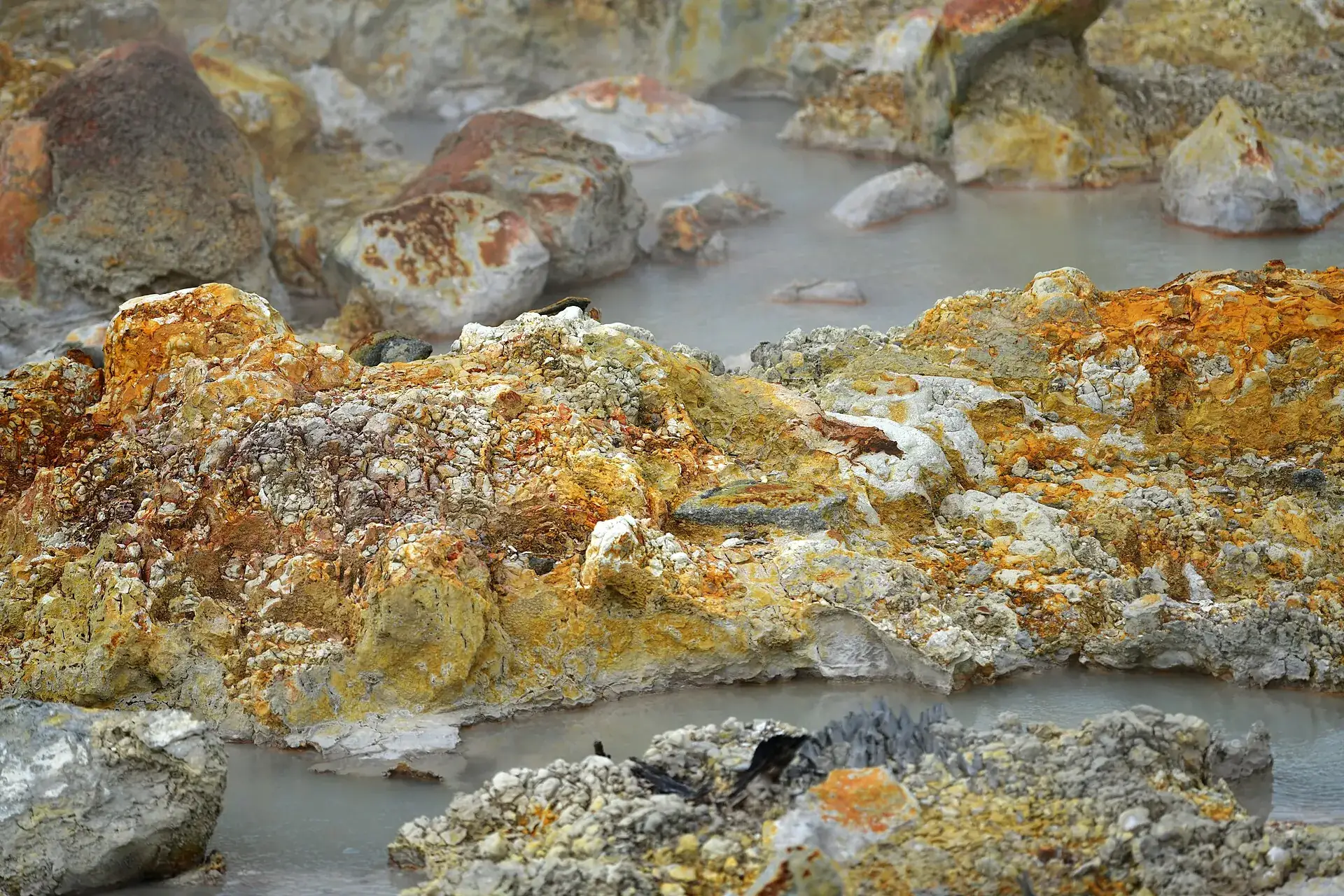
Yellow, orange and white encrusted rocks in a hot, gray pool in Rincón de la Vieja National Park
No lava, no glow. Just water that boils, and rock that sulfur has stained yellow.

Photo: Panegyrics of Granovetter · CC BY-SA 2.0

What you actually seeLas Pailas: mud pots, fumaroles, and a little volcano

"Pailas" means cauldrons – and that's exactly what the loop trail is: a forest where the ground itself is boiling. You smell the sulfur before you see anything. Then steam hisses from a crack, gray mud throws up slow bubbles, and in a hollow the "Volcancito" smokes – a small steaming crater in the middle of the dry forest.

The trail is 3 km (1.9 miles) long and takes about two hours; per the park administration, one section is wheelchair accessible. It alternates between shady forest and open, hot savanna. The mud and steam are scalding hot – the barriers are meant seriously, especially with kids.

What you don't see: the active crater, lava or glow. This year's eruptions are steam and mud explosions from the crater lake at the summit. The loop trail is far below, on the south flank.

Affiliate links to GetYourGuide: if you book, we earn a commission and the price stays the same. Prices and ratings as of 21 September 2026. The La Leona waterfall is not on the park administration's official trail list for the national park. For tubing, ask in advance which river is used. The selection for this volcano is small, and many tours still have only a few reviews.

The rulesRincón de la Vieja tickets: online only, nothing at the station

Since 1 August 2023, every visitor must buy a ticket in advance through the SINAC system SICORE – for both sectors. The ranger stations take neither cash nor card. Don't count on cell coverage on the mountain: book in Liberia or at your hotel.

1

Check the day of the week

Las Pailas is closed Mondays, Santa María Tuesdays and Wednesdays. If you're in the area on a Monday, switch to Santa María. Public holidays are regular opening days.

2

Create an account and book

At serviciosenlinea.sinac.go.cr, choose "Parque Nacional Rincón de la Vieja," then the sector, date and time. Enter each visitor's name, ID number and country, and pay by credit or debit card. Maximum 10 tickets per transaction.

3

No refunds

Not even for rain; tickets are non-transferable. If the park closes for an emergency, SINAC will rebook on request: reservaciones.sinac@sinac.go.cr.

4

Arrive early

It's coolest at 8 am, and Las Pailas already closes at 3 pm. If you're headed to a waterfall, you need to set off by noon.

Official prices · as of 09/2026 · per sector and day, incl. 13% VAT
Foreign adults$16.95 (approx. €15)
Foreign children 2–12$5.65 (approx. €5)
Costa Ricans and residents: adults / children₡1,130 / ₡565
Camping in Sector Santa María, in addition to admission$4 (approx. €3.50)
24 August, National Parks Dayfree admission
Sources: ACG/SINAC, Las Pailas and Santa María sector pages · SINAC booking system SICORE (FAQ), each accessed 21 September 2026. Euro figures per the ECB reference rate of 18 September 2026, rounded. Unclear: which time slots the system offers for this park, whether there's a daily cap, when the last entry to Las Pailas is, and whether one ticket covers both sectors the same day – as a precaution, plan for one ticket per sector.

On footHikes in the national park: the loop trail, waterfalls, Santa María

All open trails are marked and can be walked without a guide. Swimming is banned throughout the national park – at the waterfalls as well as in the Santa María hot springs. Doing the loop trail and a waterfall in one day only works with an 8 am start.

Trails per the ACG park administration · as of 09/2026 · all included in admission
Sendero Circular Las Pailas3 km (1.9 mile) loop, about 2 hours, easy. Fumaroles, boiling mud pots, hot pools, the Volcancito. One section wheelchair accessible.
Catarata La Cangreja5 km (3.1 miles), 4–5 hours round trip, moderate. Start only between 8 am and noon (dry season); in the rainy season the administration manages access by conditions. Open, shadeless savanna stretches. Swimming banned.
Catarata Escondida4.3 km (2.7 miles), 4–5 hours round trip, moderate. Same trailhead as La Cangreja, later fork. Start only 8 am–noon. Swimming banned.
Sector Santa MaríaSendero Colibrí 500 m (0.3 miles) · Pailas de Agua Fría 1 km (2 km/1.2 miles round trip) · hot springs about 3 km (1.9 miles) from the Casona, with river crossings · Bosque Encantado waterfall. Half a day for everything.
Sendero Cráter ActivoClosed since September 2011 due to volcanic activity and gases. No reopening in sight.
Source: ACG/SINAC, accessed 21 September 2026. The ACG gives "5 km" and "4.3 km" for the waterfall trails with 4–5 hours walking time round trip; that the kilometers are one-way follows from the walking time but isn't stated explicitly there.
The Volcancito in Rincón de la Vieja National Park: a steaming hollow of gray mud, surrounded by reddish-brown rock
The mountain above stays out of reach. Its small offshoot sits right on the trail.

Photo: Hans Hillewaert · CC BY-SA 3.0

Good to knowGetting there from Liberia, best time, tips

Getting there

By car: Las Pailas: from Liberia north on the Pan-American Highway, then up through Curubandé to the ranger station (the access road passes Hacienda Guachipelín). Santa María: 20 km (12.4 miles) from Liberia, reachable with a normal car; a vehicle with higher clearance helps in the rainy season. Parking at both stations.

  • From Liberia · about 45–60 minutes
    rental car or hotel transfer via Curubandé to Las Pailas; Santa María 20 km (12.4 miles) on its own access road
  • From La Fortuna · about 3.5 hours
    rental car via Tilarán and Cañas, then the Pan-American Highway to Liberia
  • From San José · about 4.5–5 hours
    Pan-American Highway (Route 1) to Liberia, then as above; alternatively a domestic flight to Liberia

Best time to go

Dry season, December to April: safer trails, open waterfall routes (start by noon) and a clear view of the summit – but with heat, wind and little water at the seasonal falls. In the rainy season (May to November) the forest is green and it's less crowded, but the waterfall trails are restricted by conditions, and Santa María calls for a higher-clearance vehicle. Always start early: it's coolest at 8 am, and Las Pailas closes at 3 pm already. When planning a route, keep Monday (Las Pailas closed) and Tuesday/Wednesday (Santa María closed) in mind.

Who it suits

Children
The Las Pailas loop is manageable and exciting with kids (3 km/1.9 miles, 2 hours). Respect the barriers at mud pots and fumaroles without exception – scalding risk. The waterfall trails (8–10 km/5–6 miles round trip) are too long for small children.
Minimum age
none
Fitness
Las Pailas: easy. Waterfalls: moderate, 4–5 hours in the heat with open, shadeless savanna stretches.
Heart and lungs
The sulfur smell near the fumaroles is normal. In ashfall the CNE recommends a mask and staying indoors; people with respiratory conditions should avoid ashfall days.
Wheelchair
One section of the Las Pailas loop is wheelchair accessible per the ACG.
Dogs
Pets are banned.
Clothing
Guanacaste is hot and largely shadeless in the dry season: hat, sun protection, plenty of water. Rain jacket in the rainy season. Smoking is banned in the park.
Footwear
Sturdy hiking shoes; the hot springs trail in Santa María involves river crossings.

Tips you will need on site

  • Book the ticket before leaving Liberia or from your hotel – nothing is sold at the ranger station, and you shouldn't rely on cell coverage on the mountain.
  • Check the day of the week: Las Pailas is closed Mondays, Santa María Tuesdays and Wednesdays. If you're in the area on a Monday, switch to Santa María.
  • For a waterfall you must set off by noon and expect to be out 4–5 hours. Doing both a waterfall and the loop trail in one day only works with an 8 am start.
  • At least two liters of water per person; the savanna stretches have no shade.
  • Don't swim: not at the waterfalls, not in the Santa María hot springs. Hot pools are available at the private haciendas outside the park.
  • Given the current activity, avoid the rivers on the north flank (Pénjamo, Azul, Pizote, Quebrada Azufrada) – ask which waterway is used for tubing or horseback tours too. Per OVSICORI, lahars can arrive without visible warning.
  • Check the OVSICORI status and ACG channels in the morning, or call the station: (506) 2666-5051.

A short history

  • Rincón de la Vieja is a complex stratovolcano with at least nine recognizable eruptive centers along its summit ridge, built up over more than a million years. The active crater holds a hot, acidic lake.
  • The name – "corner of the old woman" – comes from a legend about the chief's daughter Curabanda, whose lover was thrown into the crater and who then lived as a hermit on the mountain.
  • The national park was established on 23 October 1973; since 1999 it has been part of the Guanacaste Conservation Area UNESCO World Heritage Site.
  • In 1995 a lahar destroyed the bridge over the Río Pénjamo on the north flank.
  • In September 2011 an eruption threw ash and mud from the crater lake; the crater trail has been closed to visitors ever since.
  • On 23 May and 11 June 2017, phreatomagmatic eruptions produced hot lahars; on 21 April 2023 an eruption cloud rose about 7.5 km (24,600 ft).
  • In 2026 Rincón de la Vieja became the country's most active volcano: on 24 July, OVSICORI raised the level from 2 to 3; more than 100 eruptions were counted between July and August, and on 31 August the year's most energetic one so far, with a roughly 2,000 m (6,560 ft) steam column and hot lahars. In early September the CNE declared a Green Alert for five districts; on 18 September a further strong eruption followed (energy 4.7).

Outside the park boundaryHot springs and day passes at Rincón de la Vieja

Swimming is banned everywhere inside the national park. For warm water, head to the private haciendas and operators on the south flank – they sit outside the park, and their admission has nothing to do with the SINAC ticket.

Affiliate links to GetYourGuide: if you book, we earn a commission and the price stays the same. Prices and ratings as of 21 September 2026. For comparison: official admission through SINAC costs $16.95 (approx. €15).

Outdated onlineWhat other sites get wrong

“The hike to the crater is the highlight of the park.”
The Sendero Cráter Activo has been closed since the 2011 eruption. The park administration lists it as "temporarily closed," and with OVSICORI at level 3, no reopening is in sight.
“The park is closed because of the eruptions.”
No. Despite more than 100 eruptions since July 2026 and a Green Alert, Las Pailas and Santa María remain open; the activity affects the summit and the rivers on the north flank. Short-term trail closures are still possible.
“You pay admission at the ranger station, cash or card.”
Since 1 August 2023, online only through the SINAC system. Nothing is sold on site.
“Las Pailas is open daily, 7 am to 3 pm.”
The ACG park administration lists Tuesday through Sunday, 8 am–3 pm, closed Mondays. Santa María is closed Tuesdays and Wednesdays.
“You can swim in the hot springs and under the waterfalls in the park.”
Both are banned – at La Cangreja and Escondida as well as in the Santa María hot springs, to protect sensitive organisms. Swimming happens at private operators outside the park.

Quick answersBefore your visit

Is Rincón de la Vieja currently open?

As of 21 September 2026: yes, both sectors. The volcano is at OVSICORI level 3 of 4, but the eruptions affect the closed summit and the rivers to the north. No park notice dated after 18 September is available – check OVSICORI and the ACG the day before, or call the station: (506) 2666-5051.

Where can you swim in hot springs at Rincón de la Vieja?

Not in the national park – swimming is banned everywhere there, including the Santa María hot springs. Hot pools and mud baths are available at private haciendas outside the park boundary, with their own admission.

Las Pailas or Santa María – which sector is worth it?

For a first visit, Las Pailas: that's where the loop trail with fumaroles and mud pots and the waterfall trails are. Santa María is quieter, with a historic Casona, cool mud pots and a campground – and the fallback on Mondays, when Las Pailas is closed.

Can you see lava at Rincón de la Vieja?

No. The current eruptions are steam and mud explosions from the crater lake at the summit, which is closed. On the visitor trails you see fumaroles, boiling mud and hot pools.

Can you do Rincón de la Vieja as a day trip from Liberia?

Yes. It's about a 45- to 60-minute drive to Las Pailas, and the loop trail takes about two hours. With an 8 am start you can also fit in a waterfall trail (4–5 hours) – the sector closes at 3 pm.

Can you hike to the crater of Rincón de la Vieja?

No. The crater trail has been closed since an eruption in September 2011 and remains so given the current activity. Ignoring the closure risks a fine of about ₡1.39 million since April 2026.

How do I buy tickets for Rincón de la Vieja?

Only online at serviciosenlinea.sinac.go.cr, for both sectors. You need a user account, the passport numbers of everyone visiting, and a credit card. Nothing has been sold at the ranger station since August 2023.

What does admission cost in 2026?

$16.95 for foreign adults (about €15) and $5.65 for children 2 to 12, both including VAT. Camping in Santa María costs an extra $4.

Which days is the park closed?

Las Pailas is closed Mondays and otherwise open 8 am to 3 pm. Santa María is open Thursday through Monday, 8 am to 3:30 pm, so closed Tuesdays and Wednesdays.

How long does the Las Pailas loop take?

The loop is 3 km (1.9 miles) and takes about two hours. It passes fumaroles, boiling mud pots and a mini volcano, and is the real reason to visit.

Are the La Cangreja and Escondida waterfalls worth it?

If you have the time and stamina: yes, but they're 5 km and 4.3 km (3.1 and 2.7 miles) one way and four to five hours round trip. You must start by noon, and swimming is banned.

Do I need a guide?

No, all open trails are marked and can be walked alone. A nature guide helps spot wildlife but is optional and not included in the ticket.

Is the park suitable for children?

The Las Pailas loop, yes – short, varied and partly even wheelchair accessible. Kids must stay behind the barriers, though, since mud and steam are scalding hot. The waterfall trails are too long for small children.

How do I get from Liberia to the park?

By rental car via Curubandé in just under an hour to Las Pailas; the Santa María sector is 20 km (12.4 miles) from Liberia on its own access road. In the rainy season the park administration recommends a higher-clearance vehicle for Santa María.

Can you swim in the hot springs inside the park?

No. Swimming in the Santa María hot springs is banned to protect sensitive organisms, as it is at the waterfalls. Hot pools and mud baths are offered by private haciendas outside the park boundary.
Sources · accessed on 21 September 2026