Explosions last seconds
Stromboli throws out shreds of lava several times an hour, but each explosion is over within seconds. A still image every 30 minutes rarely catches one. The thermal image, on the other hand, always shows where it is hot.
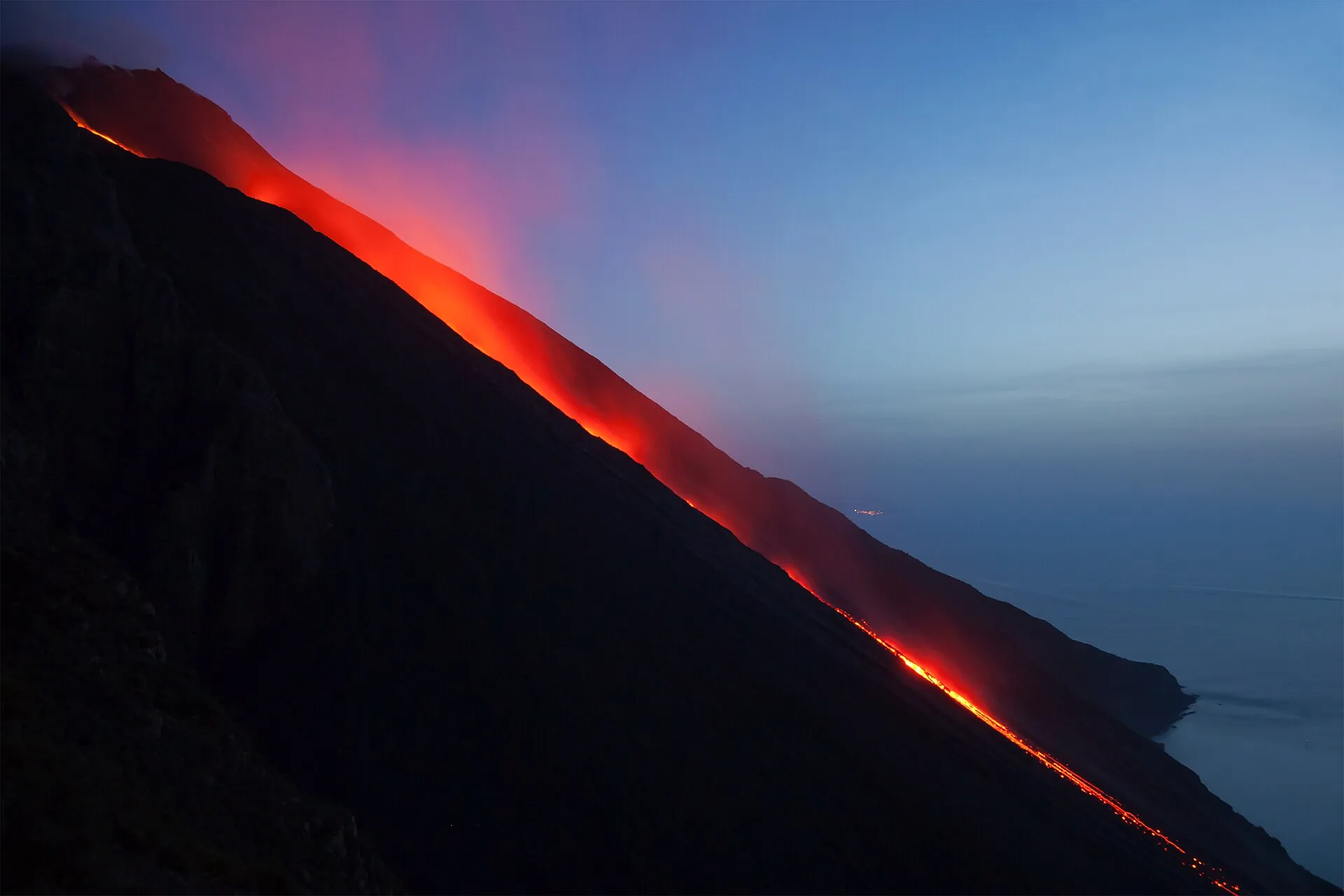
Stromboli erupts every few minutes. Two of the four cameras can see that in the dark, too.
Photo: Unukorno · CC BY 3.0
The official alert level from Italy's civil protection department, fetched automatically every morning. It also decides how far up the island you are allowed to go.
All cameras belong to the Istituto Nazionale di Geofisica e Vulcanologia, Catania section. They stand on the Pizzo sopra la Fossa and across from the Sciara, where nobody else stands. A code ending in V is a visible-light camera; one ending in T is a thermal camera, recognizable by the temperature scale on the edge.
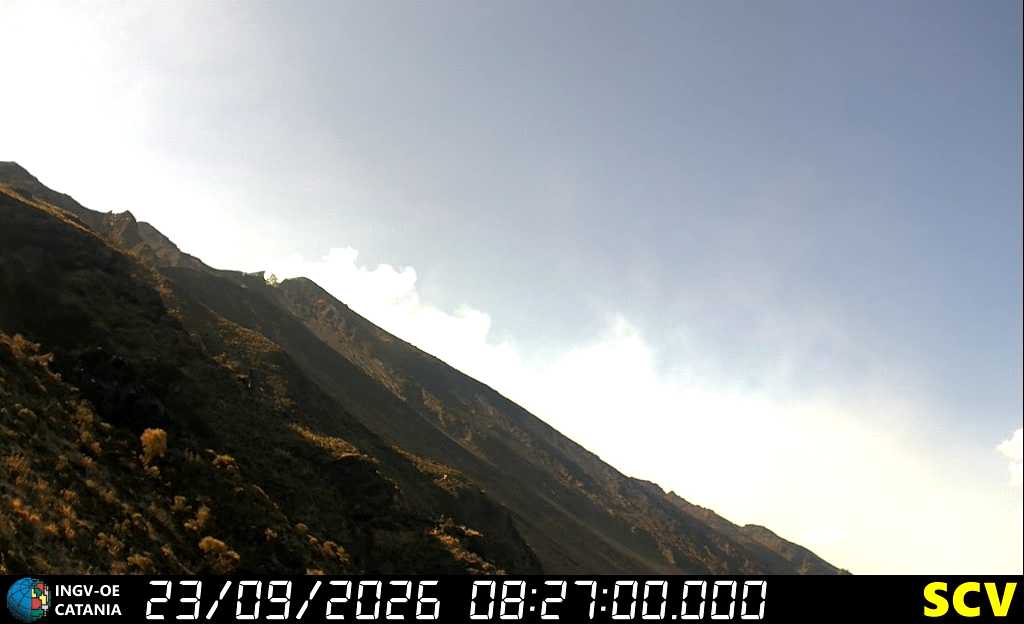
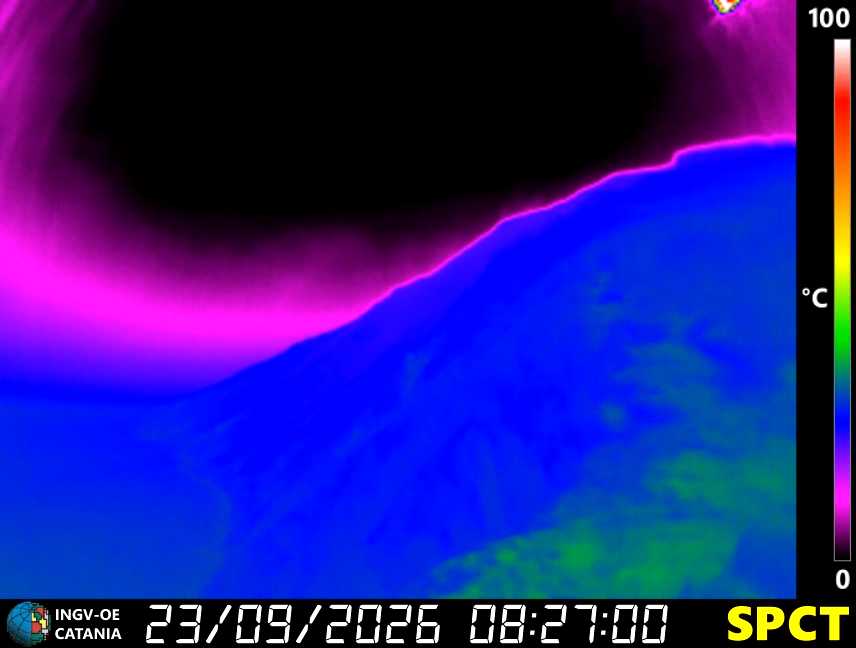
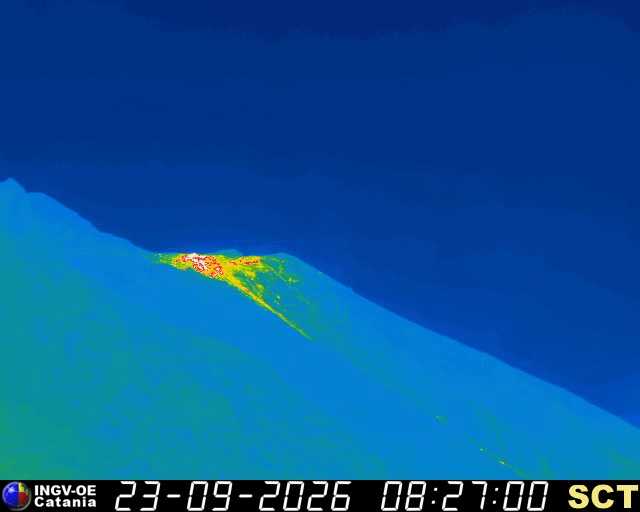
Still images, not live streams: we fetch them ourselves every 30 minutes and store them here, so no request leaves your browser for another server. Times in UTC.
Stromboli throws out shreds of lava several times an hour, but each explosion is over within seconds. A still image every 30 minutes rarely catches one. The thermal image, on the other hand, always shows where it is hot.
The black band in the picture drops more than 2,300 ft (700 m) steeply into the sea. Everything the volcano ejects slides down here. Entering it is forbidden, whatever the alert level.
In the thermal images, color is temperature, not light. A bright spot can be glowing material, but also just warm rock after a sunny day.
Sources · accessed on 27.09.2026
