Volcano·Guide
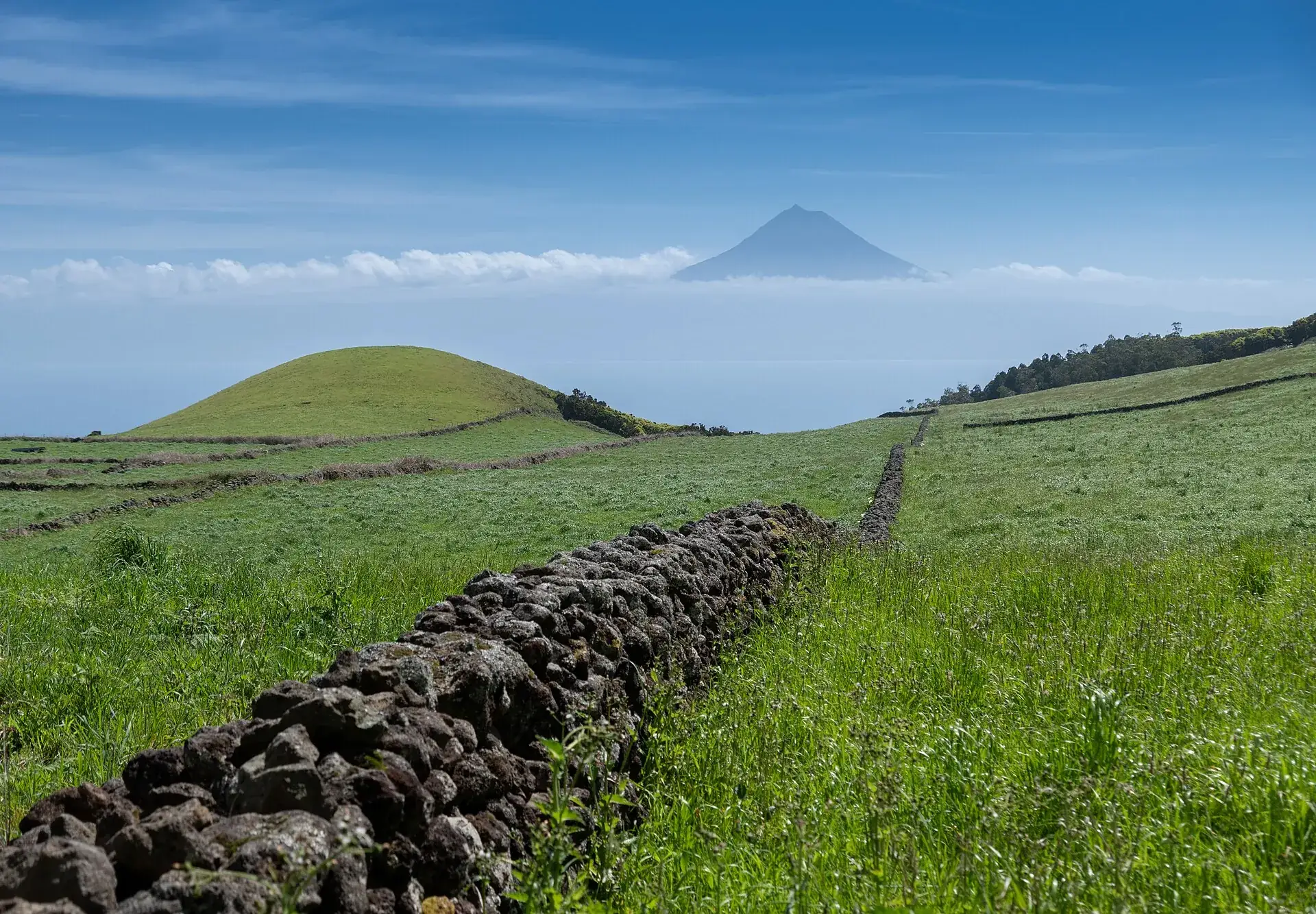
The volcanic cone of Mount Pico above the Atlantic, seen from the neighboring island of São Jorge, Azores

Volcanoes of the Azores

Three volcanoes on two islands: Portugal's highest mountain with mandatory registration, a valley where the ground boils, and a caldera with two lakes that costs nothing. All three without an alert on 22 September 2026.

Photo: Jules Verne Times Two · CC BY-SA 4.0

Today

Azores volcanoes today: no alert, everything open

The Azores are monitored by CIVISA, the volcanological center of the University of the Azores, on an eight-level scale from V0 (quiet phase) to V7. On 22 September 2026 the alert page lists neither Pico nor Furnas nor Sete Cidades – all three stand at V0. That was not a given this year: earthquake swarms under the Faial–Pico channel in April and from May brought V1 (access to the mountain was never affected), and under Furnas CIVISA raised the alert to V1 from 8 to 17 September after a swarm with a magnitude 2.9 quake – nothing was closed.

For your visit this means: the trail up Pico is open, the fumaroles in Furnas steam as always, the viewpoints over Sete Cidades are free. Today's status is at civisa.pt/alertas.

Which island

Which Azores island for volcanoes? Three destinations, three answers

We checked three destinations on two islands, and they answer three different questions: do you want to climb a summit, sit in hot water, or simply look into a crater? The island follows from that.

Climb a summit → Pico

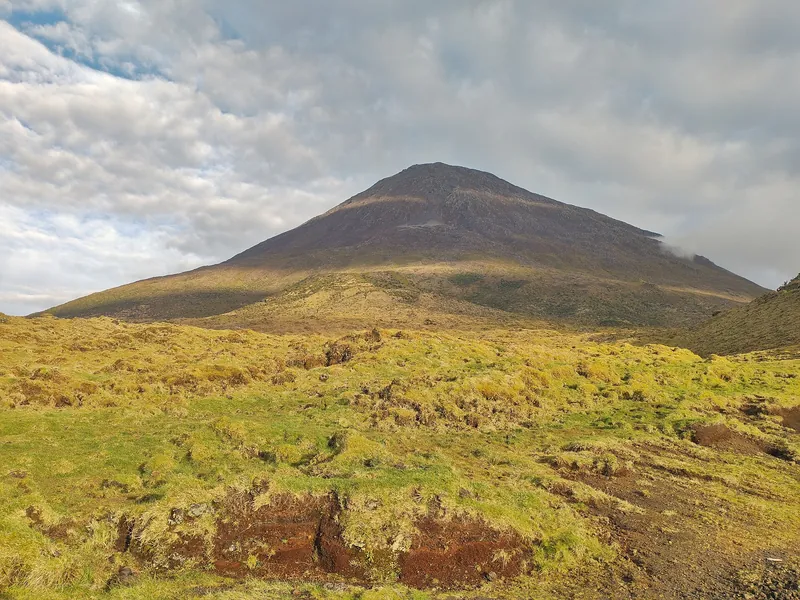
Mount Pico, Pico Island. 2,351 m (7,713 ft), the highest mountain in Portugal: 3.8 km (2.4 miles) and 1,150 m (3,770 ft) of ascent from the Casa da Montanha, three to four hours each way, and at the top the 70 m (230 ft) summit cone Piquinho with steaming cracks. Registration, a GPS tracker and a fee are mandatory; a guide is not – as long as the Casa da Montanha is staffed. 320 places a day. Too hard for children under ten; the short version to the Furna Abrigo takes 45 minutes.

from age 5 · 6–8 hours€15 + €107) + €10 (≈ $11

Hot springs and volcanic cooking → Furnas

Furnas, eastern São Miguel. A valley basin where steam rises from dozens of holes: fumaroles in the middle of the village (free), the cooking pits by the lake where the cozido simmers for six hours in the volcanic ground (€3), and iron-brown thermal water at 36–42 °C (97–108 °F) in Parque Terra Nostra (€17) or Poça da Dona Beija (€12–16). All on level ground, all without a guide, very good with children – just hold hands at the fumaroles.

year-round · bus 318 from Ponta Delgadafree to €17≈ $19

Crater lakes without effort → Sete Cidades

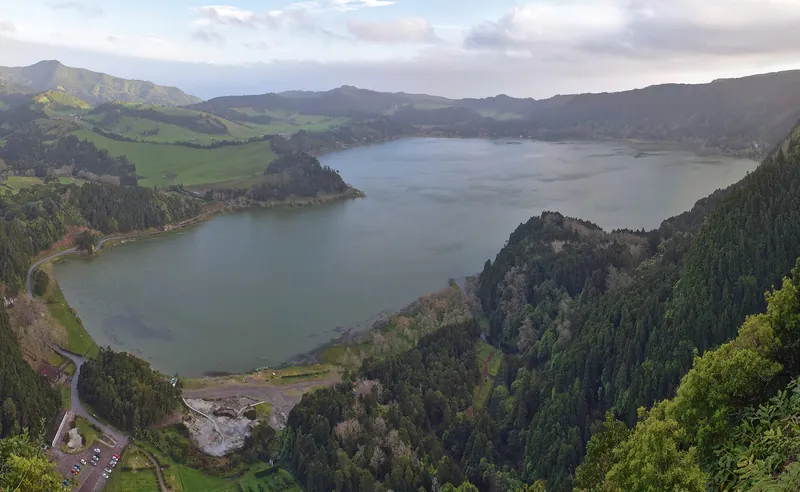
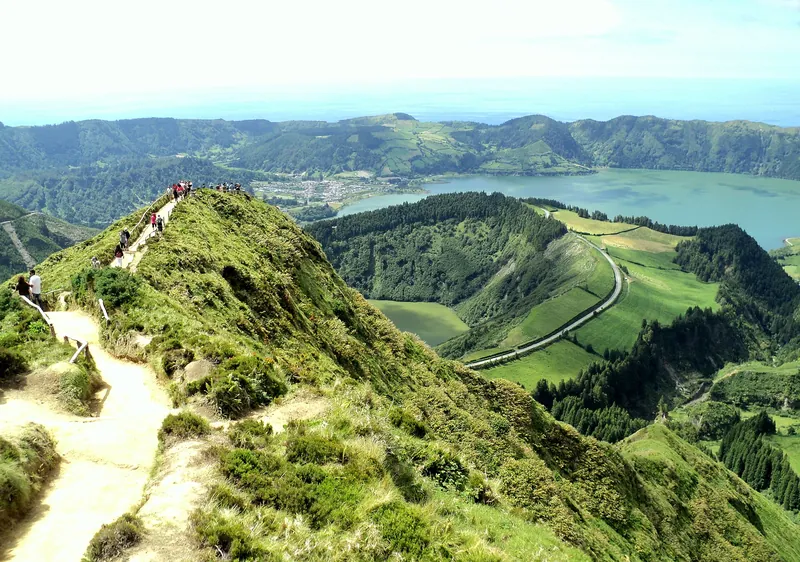
Sete Cidades, western São Miguel. A caldera 5 km (3 miles) across holding the twin lakes Lagoa Azul and Lagoa Verde. From Vista do Rei (656 m / 2,150 ft) and Boca do Inferno you look straight in without climbing a step – no ticket, no guide requirement, no opening hours. If you want to walk, take the PR3SMI (7.5 km / 4.7 miles) or the crater-rim trail PR4SMI (11.7 km / 7.3 miles). The only rule: be up there before 10 am, before the fog arrives.

25–30 minutes from Ponta Delgadafree

The numbers

Pico, Furnas and Sete Cidades compared

Three destinations that differ in almost everything: Pico is a mountain hike governed by a regulation, Furnas a day of admission tickets, Sete Cidades a viewpoint with a parking problem. The table puts side by side what the three fact sheets say.

Island · effort · official costs · time · with children · best time · as of 09/2026
Pico (Pico Island) – effort: high, 3.8 km and 1,150 m of ascent, officially “not technical, but moderately to highly difficult” · time: 6–8 hours · with children: allowed from age 5, realistically from 10–12; short version to the Furna Abrigo 45 minutes · best time: May to September, Casa da Montanha staffed around the clock€15 (≈ $17) + €10 (≈ $11) Piquinho · Furna Abrigo €5 (≈ $6)
Furnas (São Miguel, east) – effort: none, village and fumaroles on level ground; lake loop 9.4 km (5.8 miles), easy · time: half a day to a full day · with children: very good, cooking-pit zone free under 12, hold hands at the fumaroles · best time: year-round, pots dug out 11 am–1 pm, Pico do Ferro in the morningfumaroles free · cooking pits €3 (≈ $3) · Terra Nostra €17 (≈ $19) · Dona Beija €12–16 (≈ $13–18)
Sete Cidades (São Miguel, west) – effort: none at the viewpoints; PR3SMI 7.5 km easy, PR4SMI 11.7 km moderate · time: 15 minutes to half a day · with children: very good, kayak from age 5, hold hands on the crater rim · best time: before 10 am, April to June most reliablefree · kayak €15 (≈ $17) per hour
Pico fees per Portaria n.º 64/2023 (Art. 8), Furnas per Povoação municipality and operator FAQs, Sete Cidades per Miradouros dos Açores and the operator Futurismo; all checked on 22 September 2026. Details, discounts and sources are on the three pages.
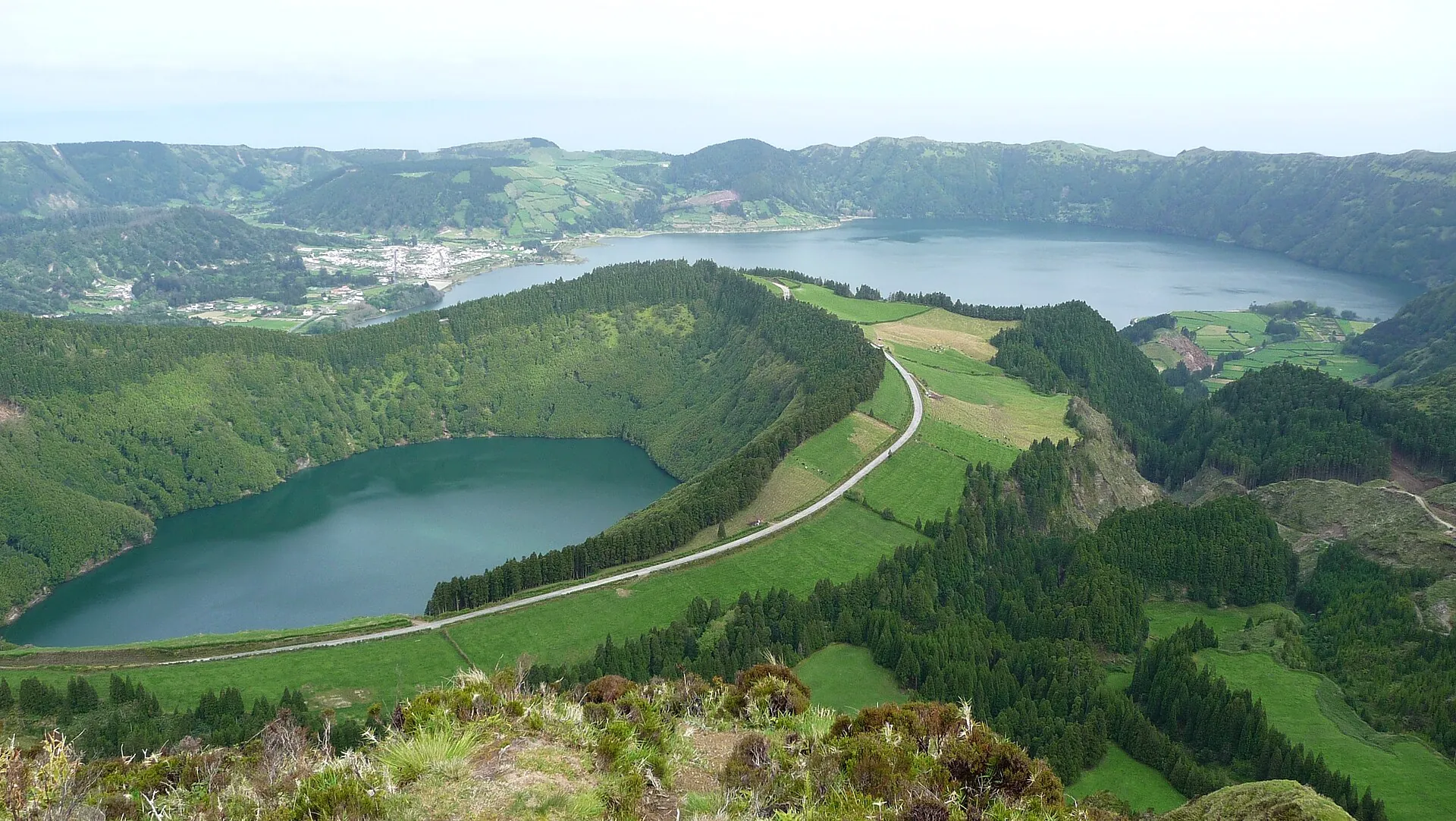
View from Boca do Inferno over the crater lakes of Sete Cidades in the Azores: Lagoa de Santiago in front, Lagoa Azul behind
Sete Cidades from Boca do Inferno: three lakes in one frame, a 15-minute walk, no ticket.

Photo: JopkeB · CC BY-SA 4.0

Active, dormant, watched

How active are the volcanoes of the Azores?

All three count as active – but in very different ways. Pico has been silent since 1720 and only steams at the summit. Furnas has been boiling without pause since its last eruption in 1630. Sete Cidades erupted explosively seventeen times in the last 5,000 years and lies quiet today, without a single fumarole in the caldera.

A twentieth-century eruption sits right across the water from Pico: on Faial the Capelinhos volcano formed in 1957/58, today with an underground interpretation center – 30 minutes by ferry from Madalena to Horta.

1720last eruption

Pico: dormant, the Piquinho steams

The summit structure is less than 6,000 years old. The historical eruptions of 1562–1564, 1718 and December 1720 all came from the flank, with lava flows reaching the sea – the “Mistérios”, the black lava fields at the foot of the mountain. The summit itself never erupted in historical times, but warm sulfur fumes still rise from cracks at the Piquinho. In 2026 two earthquake swarms under the Faial–Pico channel brought V1; access to the mountain stayed open.

1630last eruption

Furnas: the largest eruption of the Azores

From 3 September to 2 November 1630 pumice rained over the whole island, it was dark for three days, several hundred people died, and ash reached Flores 545 km (340 miles) away. Since then Furnas has been a hydrothermal field: fumaroles, boiling springs at up to 96 °C (205 °F), diffuse CO2 degassing from the soil. CIVISA calls it one of the most active volcanic systems in the North Atlantic. The September 2026 earthquake swarm brought V1 for eight days – the first increase in years.

1439last eruption in the caldera

Sete Cidades: quiet, but not extinct

The caldera formed by collapse about 36,000 years ago. At least 17 explosive eruptions in the last 5,000 years make it the most active system of the Azores over that period. It last erupted inside the caldera in 1439 (the Caldeira Seca pumice cone), in 1713 at Pico das Camarinhas on the outer flank, and in 1811 under water off Ponta da Ferraria, where the island of Sabrina appeared and vanished again after months. Today: V0, no fumaroles, seismicity and degassing monitored.

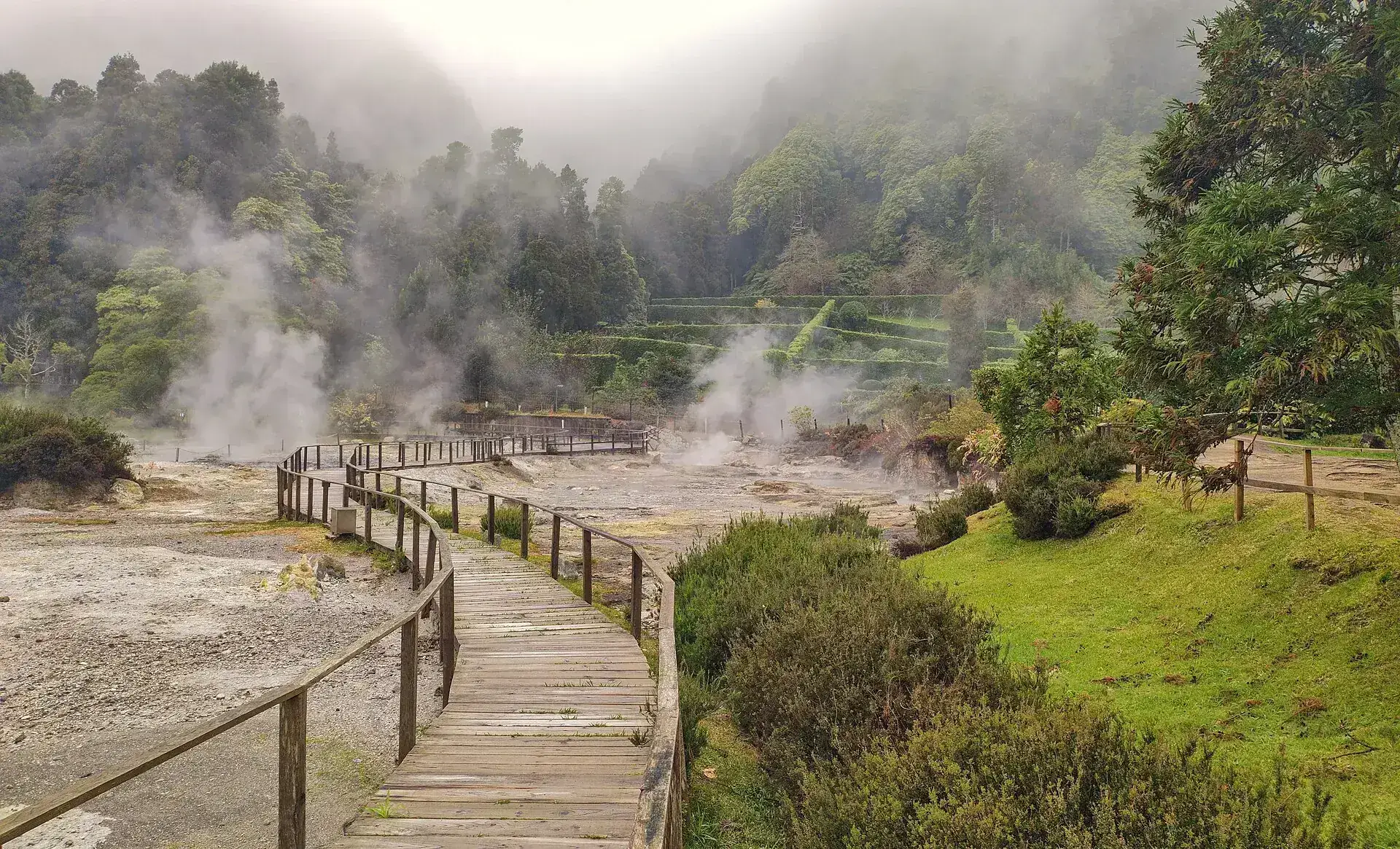
Boardwalk through the steaming fumarole field at Lagoa das Furnas, one of the active volcanoes of the Azores on São Miguel
Furnas: no eruption since 1630 – and not a day without steam since 1630.

Photo: The Cosmonaut · CC BY-SA 4.0

Planning

An Azores volcano trip: two islands, three destinations

Furnas and Sete Cidades are on the same island, São Miguel, at opposite ends: Furnas 40 km (25 miles) east of Ponta Delgada, Sete Cidades 20 km (12 miles) west. Pico is an island of its own in the central group, about 250 km (155 miles) away – a flight from Ponta Delgada or a ferry from Faial.

São Miguel: Sete Cidades and Furnas

Both from Ponta Delgada by rental car: Sete Cidades on the ER9-2ª in 25 to 30 minutes, Furnas along the south coast in 45 minutes. Without a car, bus lines 205–208 reach Sete Cidades in an hour (the village, not Vista do Rei) and bus 318 reaches Furnas in an hour and a half, only a few times a day on weekdays. Sete Cidades belongs to the morning, before the caldera clouds over; Furnas can stretch until 11 pm – that is how late Poça da Dona Beija stays open.

Pico: flight or ferry – and the registration

From Ponta Delgada, SATA Air Açores flies to Pico several times a day in about 55 minutes; the airport is 9 km (5.6 miles) from Madalena. From Horta on Faial, the Atlânticoline ferry crosses to Madalena several times a day in 25 to 30 minutes (€8.20 one way). For the climb, reserve online at servicos-sraa.azores.gov.pt/gamp, pay within 48 hours – and still show up in person at the Casa da Montanha, no later than two hours after your booked start time. From Madalena it is 15 to 20 minutes by taxi or rental car; there is no public bus.

Buffer days for the weather

Pico closes on orange and red IPMA weather warnings and is advised against on yellow ones; the fee is then refunded in full, and a date can be moved free of charge up to two hours before the start. If you want the summit, plan at least one spare day on Pico. On São Miguel the opponent is fog: check the “Sete Cidades Cumeeiras” webcam before driving up, and in Furnas head for Pico do Ferro in the morning. Best months: May to September for Pico, April to June for a clear view of Sete Cidades, Furnas year-round.

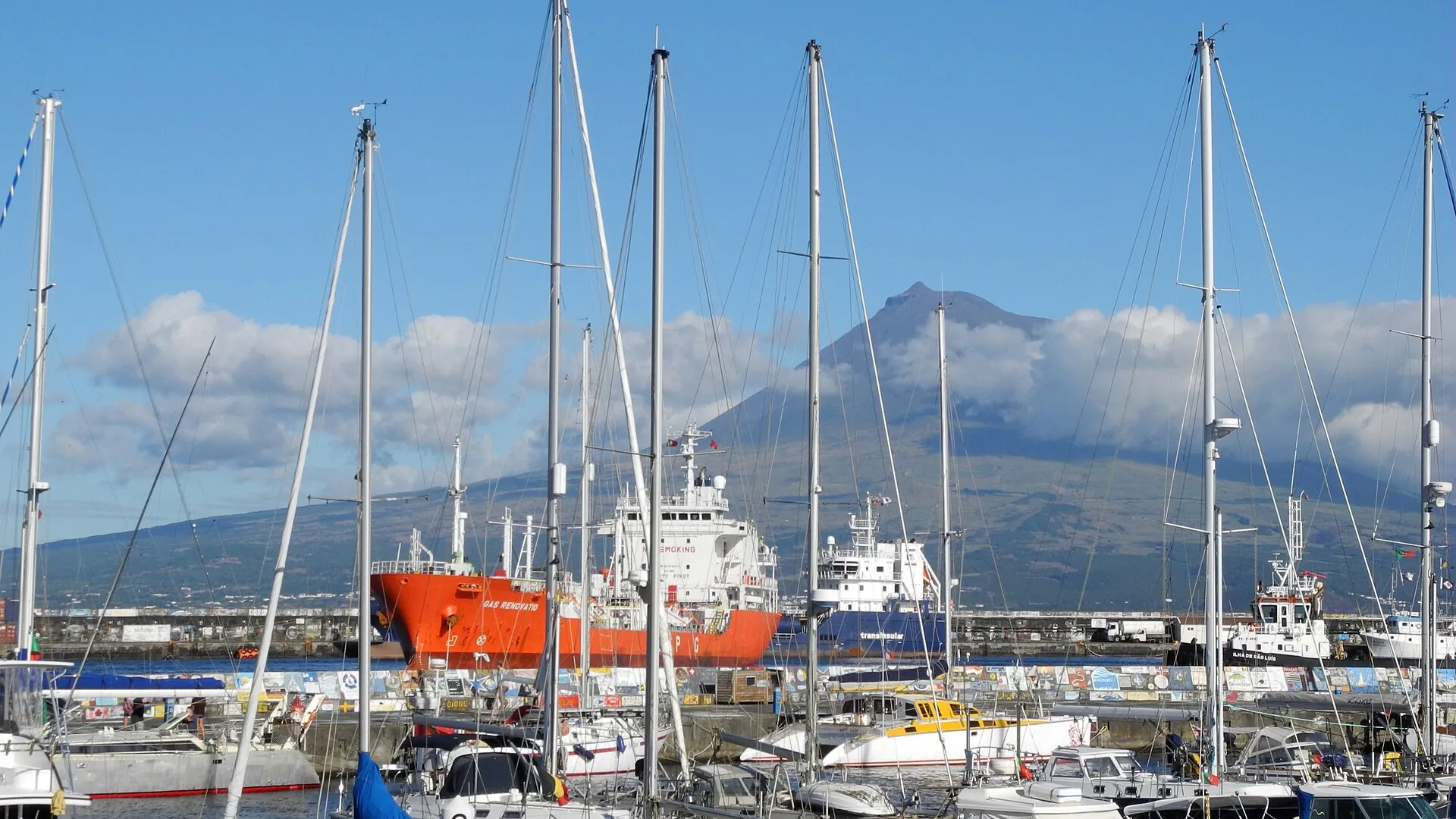
The marina of Horta on Faial with the volcanic cone of Mount Pico across the channel – the ferry link between the Azores islands
Horta to Madalena: a 25- to 30-minute ferry, €8.20 – the classic view of Pico is the one from the neighboring island.

Photo: Franzfoto · CC BY-SA 3.0

Quick answers

Common questions about the volcanoes of the Azores

Which Azores island is best for volcanoes?

It depends on what you want. For the summit: Pico, the highest mountain in Portugal (2,351 m / 7,713 ft), with registration and 320 places a day. For hot springs, fumaroles and cozido cooked in the volcanic ground: Furnas on São Miguel. For crater lakes without effort: Sete Cidades, also on São Miguel. Furnas and Sete Cidades are 45 and 30 minutes from Ponta Delgada; Pico is an island of its own, about 55 minutes away by plane.

Can you climb Pico without a guide?

Yes. The Azores government's regulation (Portaria 64/2023) allows the independent climb with registration, fee and GPS tracker as long as the Casa da Montanha is staffed – around the clock from May to September. A recognized mountain guide is mandatory only when the Casa is closed (for example at night from October to April) and for every commercial tour.

Are the hot springs in Furnas free?

The fumaroles at Largo das Caldeiras in the middle of the village are free and always accessible. Bathing costs money: Parque Terra Nostra €17 (children and seniors €14.50), Poça da Dona Beija €12 until 5:30 pm and €16 from 6 pm, online only, 90 minutes. The cooking-pit zone at the lake costs €3, free for children under 12 and Azores residents.

Does Sete Cidades charge admission?

No. Viewpoints, roads, trails, car parks and the lake shore are free; there is no ticket and no opening hours. The only things to spend money on are a kayak in the village (€15 per two-seat kayak per hour) and tours. The short-stay car park at Vista do Rei has a 20-minute limit.

How much does it cost to climb Pico?

On your own €15 to the crater plus €10 for the Piquinho, the true summit – €25 to the very top. Only to the Furna Abrigo €5. Through a licensed operator you pay the park €5 + €5, plus the tour price. Azores residents are free. A rescue after a rule violation, a climb advised against or without cause costs a flat €1,200.

Are the volcanoes of the Azores dangerous?

On 22 September 2026 none of the three appears on the CIVISA alert page; all count as V0. In everyday terms the dangers are different: on Pico weather changes, fog and the steep descent; in Furnas the boiling springs at up to 96 °C (205 °F) behind low railings; in Sete Cidades drop-offs on the crater rim and the unsafe Monte Palace hotel ruin.

When is the best time to visit the volcanoes of the Azores?

For Pico, May to September: the Casa da Montanha is staffed around the clock, the days are long, visibility is most stable – but book early in July and August, as the daily limit can be reached. From November to March there is often snow or ice on the summit, and crampons are mandatory. Sete Cidades is most reliably clear from April to June, always before 10 am. Furnas works year-round.

How do you get from São Miguel to Pico?

With SATA Air Açores from Ponta Delgada in about 55 minutes, several times a day; Pico airport is 9 km (5.6 miles) from Madalena (taxi €10–20). If you are on Faial, take the Atlânticoline ferry from Horta to Madalena: 25 to 30 minutes, several times a day, €8.20 one way, €16.40 round trip.
Sources · accessed on 2026-09-22